|
|
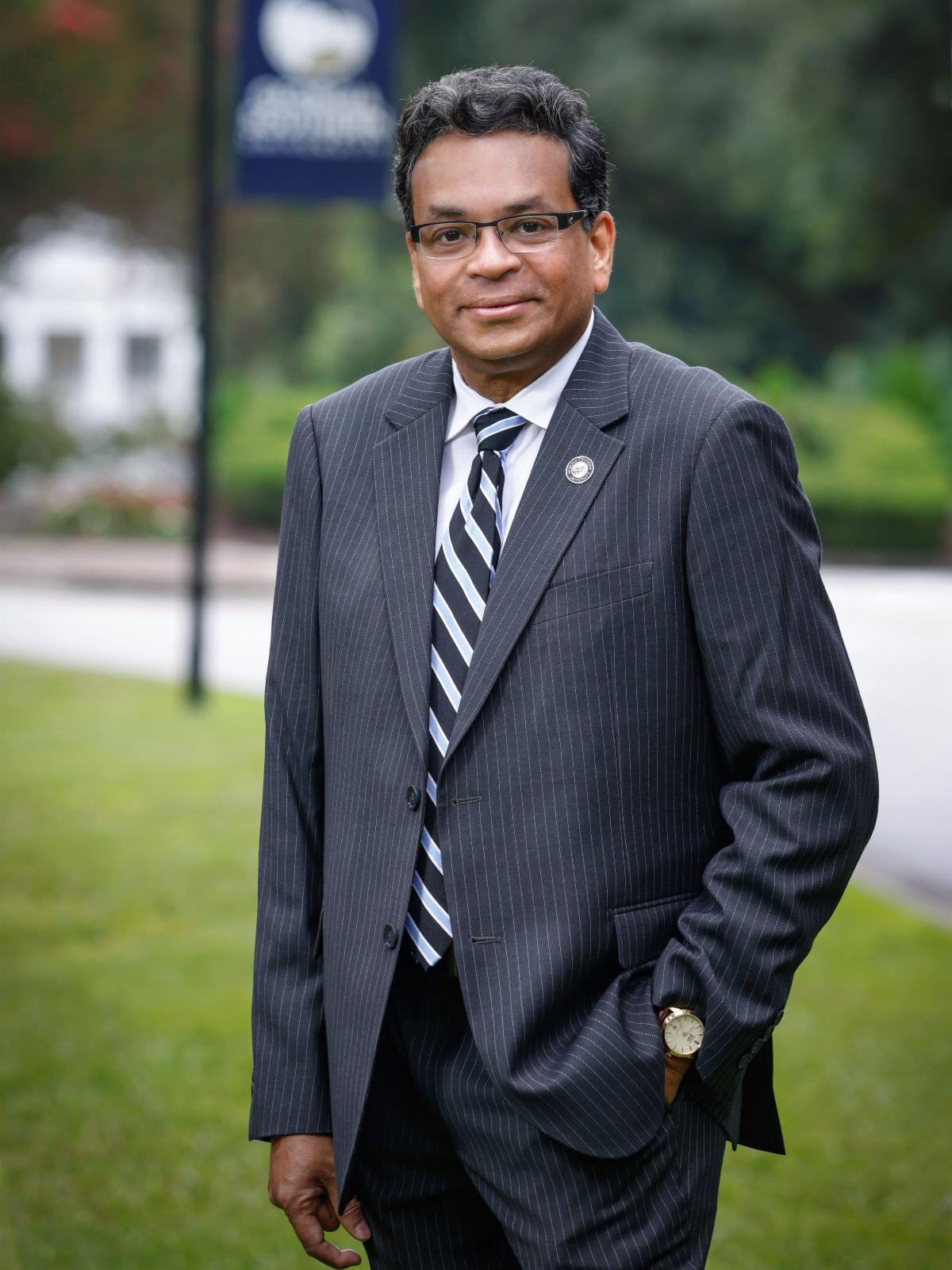
Message from the Provost
One of the privileges of my role is having a broad view of the many ways our faculty, staff, and students contribute—often quietly—to the strength of our institution and the communities we serve. As I read through this issue, I’m struck by how intentional much of this work is: thoughtful in design, responsive to real needs, and grounded in a clear sense of purpose.
At moments like these, it’s worth pausing to reflect on where we are placing our energy. Progress depends not only on identifying new opportunities, but also on being willing to step away from practices that no longer serve us well, and to deepen our commitment to efforts that are making a meaningful difference. That kind of discernment—knowing when to begin, when to let go, and when to invest more fully—strengthens both our impact and our sustainability.
The stories that follow illustrate this balance well. Georgia Southern’s continued rise in the U.S. News & World Report's Best Online Programs rankings reflects sustained focus on quality, access, and student success, an example of building thoughtfully on strengths over time. Similarly, our Ranger Challenge team’s recent performance at the 6th Brigade Ranger Challenge competition at Fort Benning speaks to what is possible when preparation, discipline, and collaboration come together. Competing against 43 teams from across the Southeast, including institutions from Puerto Rico and several military colleges, our cadets earned a 9th-place overall finish — an exceptional result that reflects their grit and professionalism.
That success was supported by a network of faculty, staff, and students working across disciplines. I am especially grateful to colleagues in Exercise Science and the Tactical and Occupational Performance (TOP) programs for their hands-on coaching and mentorship, which played a critical role in preparing our cadets for the physical and mental demands of the competition. It is a powerful reminder that student achievement is rarely the result of individual effort alone.
At the same time, I am pleased to share that Georgia Southern University has earned the 2026 Carnegie Community Engagement (CE) Classification, an elective designation awarded by the American Council on Education and the Carnegie Foundation for the Advancement of Teaching. Georgia Southern is among more than 230 institutions nationwide selected in this classification cycle, recognized for advancing civic engagement, developing practical knowledge, and creating meaningful, real-world learning experiences for students.
This recognition reflects years of steady, intentional work—partnerships nurtured over time, learning experiences grounded in community contexts, and a shared understanding that our role as a university extends beyond our campuses. It is an affirmation of efforts worth sustaining and expanding, and a reminder of the value of aligning our actions with our mission.
Thank you for the care, creativity, and commitment you bring to this work each day. I hope you find this issue both affirming and inspiring.
|
| |
Georgia Southern University rises to top 100 in Best Online Programs
Six of Georgia Southern University’s online programs were ranked in the top 100 in this year’s Best Online Programs rankings report by U.S. News & World Report, which focuses on midcareer distance learners.
Georgia Southern’s online master’s in education programs rose in the rankings again this year by more than 20 spots, landing at no. 64 on the best online graduate education programs list.
“Being recognized by U.S. News & World Report among the nation’s best online education programs underscores the strength of our online master’s programs and the commitment of our faculty and staff to delivering an exceptional educational experience,” said Amy Lingo, Ed.D., dean of the Georgia Southern University College of Education. “Our continued climb in the rankings—including a 21-point increase in this year alone—confirms our success in making high-quality education accessible to hundreds of educators and preparing them to make a lasting impact in their schools and communities.”
The online criminal justice and criminology graduate degree program remains in the top 30 of schools at no. 28 again this year.
In the “Grad Business” category, which encompasses a variety of non-MBA master’s degrees in fields such as business analytics, accounting and supply chain management, Georgia Southern ranked no. 89 (tie).
Georgia Southern was recognized for its online MBA and Best Online MBA for Veterans program, both of which ranked higher on the list than the previous year. The online MBA program rose to no. 93 (tie) in the nation while the Veterans MBA program edged up to no. 56 (tie).
“Our rise in the U.S. News & World Report rankings is a clear indicator of the Parker College’s dedication to academic excellence and student success,” said Nivine Richie, Ph.D., CFA, dean of the Parker College of Business. “By climbing in the Grad Business as well as the MBA and Veterans-MBA categories, we are demonstrating that our programs provide a high-value, flexible education that meets the demands of today’s competitive market. We remain focused on providing our students with the specialized skills necessary to lead in a global economy.”
Additionally, the University was recognized for its online Master’s in Information Technology program, which ranked at no. 80 this year on the publication’s list of best online master’s in formation technology programs.
|
|
Georgia Southern University Announces Establishment of University College
Georgia Southern University’s newest college, the University College, is a major milestone in advancing the institution’s access mission and supporting learner success across multiple campuses and modalities. The college was established upon the consolidation of Georgia Southern University and East Georgia State College.
The University College will be led by Delana Schartner, Ph.D., who has been appointed as the college’s founding dean. Schartner is an experienced academic leader committed to student access, success and interdisciplinary learning.
“University College strengthens Georgia Southern’s commitment to providing high-quality, affordable and accessible educational pathways for every student we serve,” said Avinandan Mukherjee, Ph.D., provost and executive vice president for academic affairs. “By unifying programs that support academic readiness, interdisciplinarity and applied learning, we are building a structure that not only empowers students from the moment they enroll but also amplifies the university’s role in driving innovation and regional workforce development.”
The new college will serve as the academic home for students in associate degree programs, interdisciplinary bachelor's degrees, dual enrollment, ROTC, Continuing and Professional Education, and a variety of minors, centers and academic pathways. The formation of the University College follows the recommendation of the Consolidation Action Team, a team of faculty, staff and administrators from Georgia Southern, East Georgia State College and University System of Georgia (USG) personnel, to formalize a unified structure that elevates and supports Georgia Southern’s access-focused programs and students.
“The establishment of University College represents a transformative step in how Georgia Southern provides opportunity, momentum and support for a wide range of learners,” said Delana Schartner, Ph.D., dean of the University College. “Our mission is to expand access, accelerate student success and connect educational experiences to careers, communities and lives of meaning.”
The consolidation provided an opportunity to align and envision programs in a way that strengthens student pathways and enhances regional workforce development. University College will provide seamless stackable pathways from non-credit learning, microcredentials and associate degrees into bachelor's and graduate programs—ensuring students maintain momentum even if their path to their goal is interrupted or not linear.
University College is poised to bring visibility, coherence and prominence to Georgia Southern’s longstanding commitment to educational access and attainment. No matter where or how students enroll at Georgia Southern University, they will benefit from a clearly defined academic home and a streamlined pathway from entry through graduation.
| | |
Hearing and Comprehension
New GS Study Shows Brain Speed May Be the Problem
By the time many adults reach their late 40s or 50s, they may notice something unsettling: they can hear sounds clearly, yet conversations—especially fast, noisy ones—feel harder to follow.
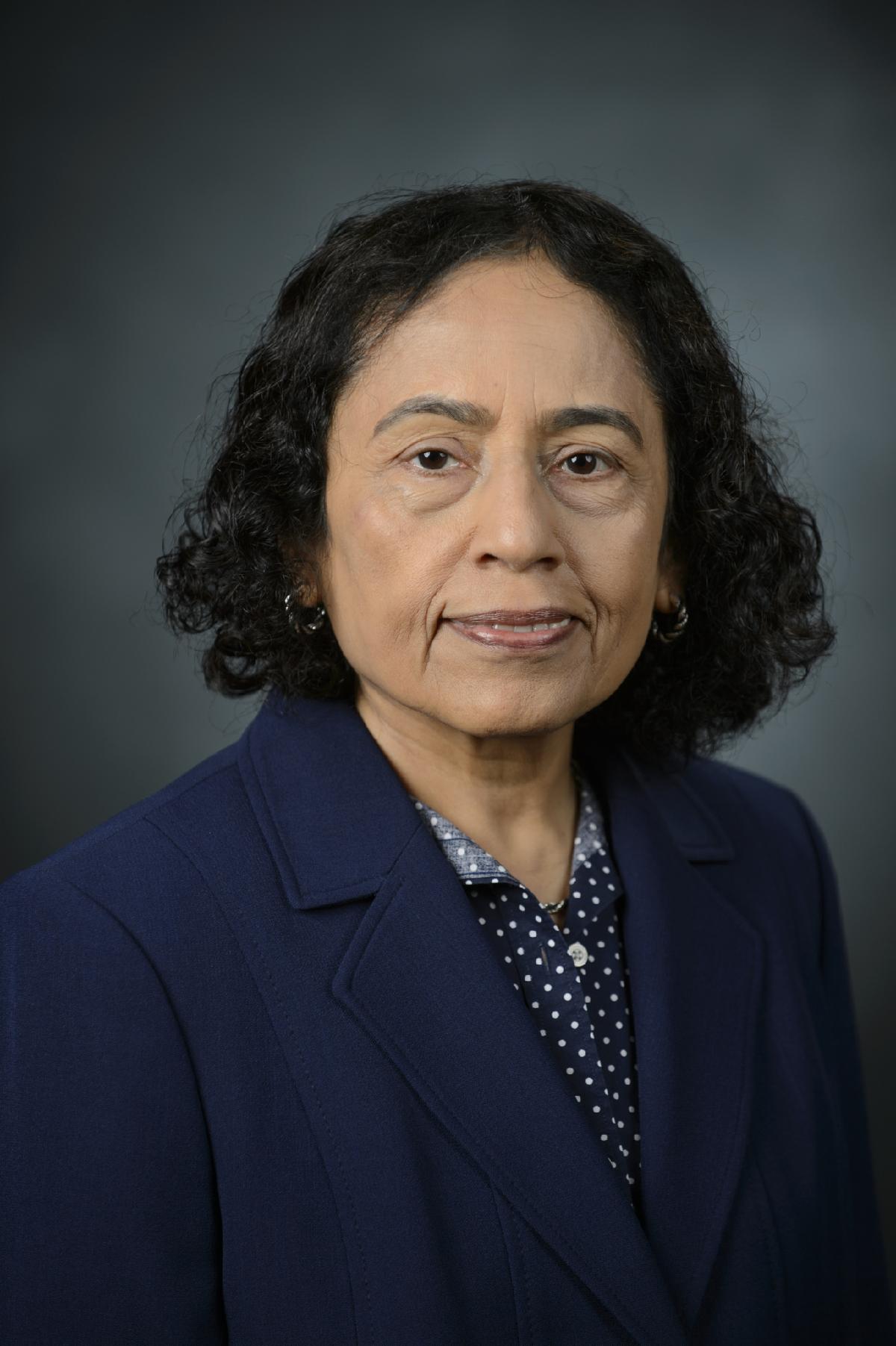
“I hear you, but I don’t understand you,” patients often tell audiologist Vishakha Rawool, Ph.D., CCC-A.
That disconnect is what inspired Rawool and her research team to look deeper—not at the ear itself, but at the brain.
A recent study led by Rawool, associate dean for research in the Waters College of Health Professions at Georgia Southern University, suggests that the brain’s ability to process sound begins to slow as early as middle age, even when traditional hearing tests still show “normal” results. The findings were published May 30, 2025, in the International Journal of Audiology.
| | |
Hearing Isn’t Just About the Ears
As an audiologist, Rawool has heard the same complaint repeatedly from patients whose hearing tests don’t explain their struggles.
“Some patients do show hearing loss,” she said. “But others test within normal limits, yet still have difficulty understanding speech.”
Rawool has spent years studying auditory processing—the way the brain interprets sound—both through clinical work and as the author of Auditory Processing Deficits: Assessment and Intervention. Her deep dive into the literature raised an important possibility: for some adults, the problem isn’t volume. It’s speed.
“When people say, ‘I hear you, but I don’t understand you,’ it usually comes down to one of two things,” Rawool explained.
In some cases, the ears pick up the sound, but the brain processes it too slowly, blurring the information. In others, subtle difficulty hearing high-frequency sounds—such as consonants like s, f or th—causes words to lose clarity. The result can feel like trying to read a sentence with missing letters.
Measuring the Brain’s “Hearing Speed”
| | | |
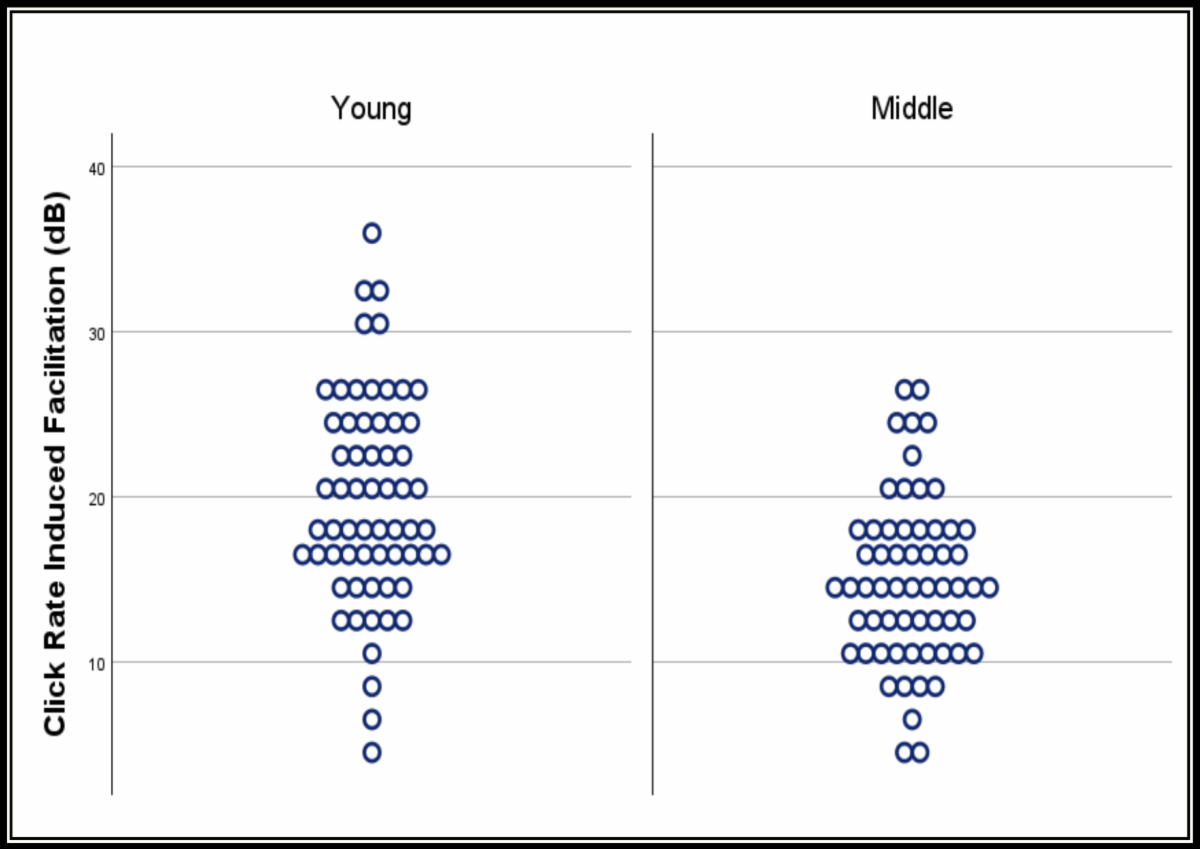
To study these early changes, Rawool’s team compared two groups: young adults ages 18 to 27 and middle-aged adults between 45 and 59. Importantly, participants had hearing sensitivity within normal limits.
“We wanted to catch the very first signs of change,” Rawool said. “By the time someone has significant hearing loss, they may already be dealing with social isolation, anxiety or difficulty at work.”
Instead of relying on tests that require participants to respond or repeat words—tasks that can be influenced by focus, intelligence or cognitive decline—the researchers used an objective measure: the middle-ear reflex.
When loud sounds are presented, tiny muscles in the middle ear contract automatically. In younger adults, Rawool’s previous research showed that this reflex becomes more efficient when sounds are presented rapidly. In older adults, that improvement is reduced because some faster sounds are effectively “missed” by the slower auditory system.
Applying this same technique to middle-aged adults revealed a clear pattern: even by midlife, the brain’s auditory processing speed had begun to slow.
“The most exciting part was that we could document this slowdown objectively,” Rawool said. “The patient doesn’t have to do anything. It shows us how the brainstem is actually functioning.”
| | |
Why it Matters in Everyday Life
The findings help explain a common experience: why someone may follow a conversation easily in a quiet living room but struggle in a busy restaurant or echo-filled meeting room.
Slower processing means the brain must work harder to keep up, especially when speech is fast or background noise is present. Rawool refers to the result as “brain drain.”
“By the end of a meeting or dinner party, people may feel much more exhausted than they used to,” she said. “The brain is overworking to make sense of sound.”
Over time, that extra effort can have serious consequences. If every conversation feels like a workout, people may begin avoiding social situations altogether—a pattern linked to loneliness and depression.
| | |
Rethinking Hearing Health in Midlife
One of the most significant implications of the research is what it means for hearing care.
“We need to stop thinking of hearing health as something that only matters when you’re 70,” Rawool said. “We should be checking in on ‘hearing speed’ in our 40s and 50s.”
Early identification could open the door to interventions that help people stay engaged longer. Auditory “brain training” programs, healthy exercise and nutrition, and—even for mild hearing loss—hearing aids can reduce the brain’s workload and listening fatigue.
Rawool also offers practical strategies for everyday life: choosing quieter spaces, softening echoes at home with rugs or curtains, asking speakers to use microphones and giving the brain regular breaks from noise.
Looking Ahead
Next, Rawool’s team plans to explore whether slower auditory processing is linked to slower visual processing—a clue that the brain may have a single internal “speedometer.” They are also interested in applying the same techniques to individuals with ADHD or dyslexia.
For now, Rawool hopes the research reassures adults who feel something has changed but can’t explain why.
“If you feel exhausted after a long day of listening, it’s not just in your head,” she said. “Your brain may simply be working harder—and that’s something we can begin to address.”
| | |
Georgia Southern University Earns 2026 Carnegie Elective Classification for Community Engagement
Georgia Southern University has earned the 2026 Carnegie Community Engagement (CE) Classification, an elective designation awarded by the American Council on Education (ACE) and the Carnegie Foundation for the Advancement of Teaching, in recognition of the University’s commitment to advancing civic engagement, developing practical knowledge, and sparking meaningful, real-world learning for students. Georgia Southern is among more than 230 U.S. colleges and universities selected in the 2026 classification cycle.
“Our dedication to our students and our community defines Georgia Southern’s purpose and direction,” said Georgia Southern President Kyle Marrero. “This classification affirms the work of our faculty, staff and students, alongside our community partners and neighbors, to address real-world challenges. We are honored to have the impact of that shared commitment recognized through this designation.”
The community engagement classification is awarded following a process of self-study by each institution. The classification has been the leading framework for institutional assessment and recognition of community engagement in U.S. higher education for the past 19 years.
Georgia Southern’s application demonstrated that the institution’s mission, culture, leadership, resources and practices supporting meaningful and sustained community engagement are closely aligned. The University’s submission provided clear evidence of its commitment to reciprocal partnerships that benefit students, faculty, staff and the communities it serves, enhanced by documented exemplary institutional practices.
The application was developed by a cross-divisional committee representing academic affairs, student affairs and administrative units across the University and co-chaired by Delana Schartner, Ph.D., dean of the University College and assistant provost of academic policy and initiatives, Urkovia Andrews, DrPH, interim director of the Office of Student Wellness and Health Promotion, and Jodi Kennedy, Ed.D., former director of the Office of Leadership and Community Engagement.
Provost and Executive Vice President for Academic Affairs Avinandan Mukherjee, Ph.D., emphasizes that the designation underscores the integration of community engagement across the University’s academic mission.
“Our teaching, research and service are deeply connected to the communities we serve,” Mukherjee said. “This recognition highlights the intentional ways community engagement is embedded in our curriculum, scholarship and institutional practices, creating meaningful learning experiences while advancing the public good.”
The Carnegie Elective Classification for Community Engagement is valid through 2032. A listing of all the institutions that currently hold the classification endorsement can be found here.
Georgia Southern University is also classified as a Research 2 (R2): High Research Spending and Doctorate Production institution through the Carnegie Classification of Institutions of Higher Education (CCIHE) Research Activity Designation. On average, Georgia Southern committed more than $40 million to institutional research and awarded 49 doctoral degrees annually during the three-year evaluation cycle.
Released every three years, the Carnegie Classification of Institutions of Higher Education was re-envisioned by the Carnegie Foundation for the Advancement of Teaching and ACE and most recently announced in 2025. Institutions are now classified based on a three-year average of doctoral degrees awarded and whether they meet a specified research funding threshold.
The Carnegie Classifications are the nation’s leading framework for categorizing and describing colleges and universities in the United States. Utilized frequently by policymakers, funders and researchers, the classifications are a benchmarking tool for postsecondary institutions. ACE and the Carnegie Foundation announced a partnership in February 2022 to reimagine the classifications to better reflect the diversity of postsecondary institutions and more completely characterize the impact that today’s institutions have in society.
| | | |
AI Fundamentals Builds a Foundation for Ethical AI Use in Higher Education
In Spring 2026, the Office of Adult and Online Learning launched AI Fundamentals, a required course for all newly admitted undergraduate and graduate students. The course reflects the university’s commitment to helping students soar beyond the basics by beginning their academic journey with a shared foundation in artificial intelligence literacy and a clear understanding of how AI is shaping learning, work, and society.
AI Fundamentals introduces students to what artificial intelligence is—and is not — how generative AI tools function, and how these technologies can be used appropriately and ethically in academic settings. Students also explore the opportunities and limitations of AI, building the critical awareness needed to engage with these tools thoughtfully and responsibly. Hosted in Folio, the course is completed asynchronously, allowing students to establish this foundation before beginning their studies.
A central focus of the course is the university’s AI policy, Use of Artificial Intelligence (AI) in Academic Contexts, which launched in September 2025. Through guided examples and applied scenarios, students learn how the policy relates to coursework, academic integrity, and responsible use of AI — setting clear expectations from the outset of their academic careers.
Developed in response to the rapid expansion of AI across higher education and the workforce, AI Fundamentals positions students to move forward with confidence. By proactively equipping learners with shared knowledge and expectations, the university reinforces its commitment to academic integrity, responsible innovation, and student success. The course ensures that all students are prepared to engage with AI ethically, intentionally, and in alignment with university values as they soar beyond the classroom and into their future careers.
Faculty interested in learning more about AI Fundamentals may contact the Office of Adult and Online Learning at GSAdultOnline@georgiasouthern.edu.
|
| | | | |