An alert from the US Section of the Women's International League for Peace and Freedom | | |
Dear WILPF US members,
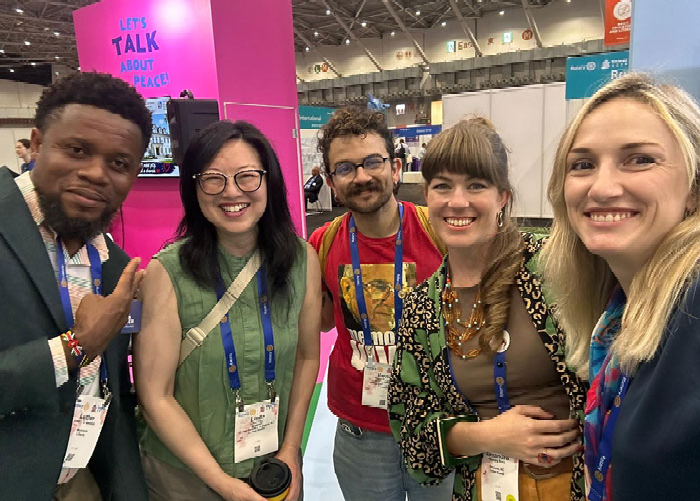
Last month I traveled to Taiwan where I spent two days with 30 Rotary Peace Fellows from around the world. Pictured above are Peace Fellows from Liberia, Colombia, Italy and the US representing organizations ranging from the World Food Program to universities and grassroots organizations. We all work in different fields, yet one sentiment united us: fatigue, and equally, a shared commitment not to yield to that fatigue. We are still striving for peace.
During our conversations, I spoke about WILPF US’s work and how our movement is growing (welcome to the more than 100 new members who have joined WILPF US this year!). For many, WILPF has become the activist home they didn't know they needed until now. I was especially proud when my Colombian counterpart told me that he mobilizes with LIMPAL, WILPF Colombia. It was a reminder that while we organize locally, we are part of a global movement building peace across continents.
I spent the following week in Taiwan learning about the country's democracy struggles and activist movement, waves of colonization and US foreign intervention, its complicated relationship with China, and its central role in the global semiconductor industry. I came away thinking that Taiwan is in a continual process of reclaiming its identity.
I reflected on this with my friend Ting, who is Taiwanese. She said something that has stayed with me ever since: "There has been so much foreign intervention that we didn't have the chance to develop our own identity. We're still a work in progress."
I've carried those words home with me. As America marks its 250th anniversary, I find myself asking similar questions. Are we still defining who we are? What do peace, freedom, and patriotism mean today? Where is the balance between standing firmly in our values while still reaching across divides? These reflections have shaped much of WILPF's work this summer, and you'll see echoes of them throughout this update.
| | |
"We are out of red flags," UN High Commissioner for Human Rights Volker Türk told the UN Human Rights Council last month. "All those with influence must help make the ceasefire a reality, end the unbearable suffering of Palestinians, and ensure accountability."
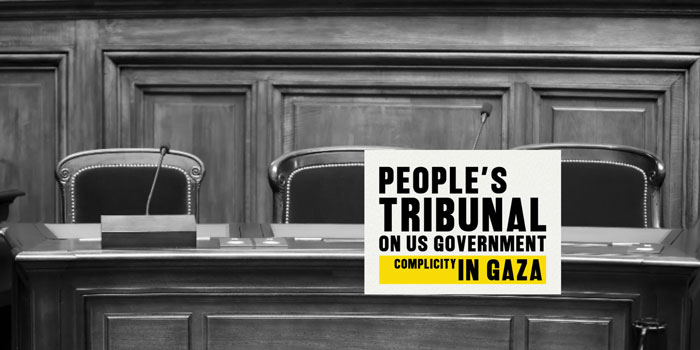
WILPF US is responding by organizing the People's Tribunal on US Government Complicity in Gaza, taking place October 10 in Seattle and livestreamed nationwide. Organized in partnership with Veterans For Peace (VFP), the American Friends Service Committee, and a Palestinian advisory committee, the tribunal will bring together testimony, legal analysis, lived experience, and public dialogue.
One of the most meaningful ways WILPF members can participate is by organizing local watch events. Imagine WILPF and VFP branches, congregations, students, and community groups gathering to learn, discuss, and consider what accountability requires. Visit www.peoplestribunalusgaza.org to register, host a watch event, receive updates, or invite ally organizations to endorse the tribunal.
Thank you to WILPF Programs Chair Tina Shelton, MEPJAC representatives Tura Campanella Cook and MacGregor Eddy, Field Organizer Shelby Young, and our partners who have helped build this initiative through nearly a year of organizing.
The tribunal reflects WILPF's work at every level. WILPF Palestine has organized since 1988. Nationally, MEPJAC continues educating members through webinars like Planting Seeds for Hope, highlighting realities Palestinian farmers face through checkpoints, settler violence, and restrictions on movement. Locally, branches continue leading marches, vigils, educational events, and boycott campaigns.
One recent example comes from Fresno member Cam Fanning, who volunteered with International Solidarity Movement in Palestine, living alongside a family whose land faces continual encroachment by settlers – to witness and provide support – in solidarity. Learn more about Cam’s experience in her presentation to WILPF US members here (Cam’s presentation starts at 21:40).
Our collective work is especially important as US military policy continues to evolve. This month, the Senate is debating the Fiscal Year 2027 National Defense Authorization Act, which includes provisions to further integrate US and Israeli military cooperation – funded by our tax payer dollars. Learn more through this analysis, then contact your Senators and urge them to invest in diplomacy rather than further militarization.
| | Crafting Justice – and beyond | | |
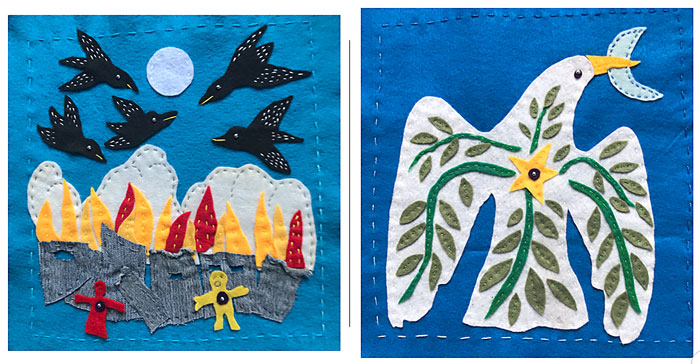
Over 50 quilt tiles have now arrived from across the country for Crafting Justice, WILPF's community art project and Gaza memorial quilt. Every package that arrived carried not only beautiful artwork but extraordinary care. One contributor wrote: "I am in my 80s and find it difficult to leave my house. This tile is my way of expressing my deep sorrow for the Palestinian people. It is my act of protest." Reading her note reminded me that activism takes many forms. Some people march, some testify, some write letters, and some sew. Every contribution helps build the movement.
Later this month, our project partner, City of Asylum Detroit will begin to assemble the quilt. In the coming weeks, we aim to share photos of the quilt build, launch an online gallery, and create opportunities for communities to host the quilt, to continue educating and organizing around Gaza.
Across the region, our concern extends beyond Gaza. Despite announced ceasefires, violence continues in Lebanon, and the US-led war in Iran. I recently connected with WILPF Lebanon. Thankfully, they are safe, though they shared that every day continues to bring new uncertainty.
I can’t close this update without mentioning Sudan. The International Rescue Committee's 2026 Emergency Watchlist identifies Sudan as the world's most severe humanitarian crisis, followed by the Occupied Palestinian Territory and South Sudan. Yet Sudan continues to receive only a fraction of the international attention. I invite you to read Lina Ghassan Abu Zayed's powerful article, where she draws humanitarian parallels between Gaza and Sudan. Her call to action to us all: “Do not leave Sudan alone as Gaza was left alone.”
| | Tech companies enabling ICE and genocide | | |
More than 60 people have died in ICE shootings or while in detention since Trump returned to office, including Joan Sebastián Durán Guerrero in Maine and Lorenzo Salgado Araujo in Texas this month. Last month alone, ICE arrested 10,000 people over five days. How is ICE identifying and tracking people? Increasingly, through technology.
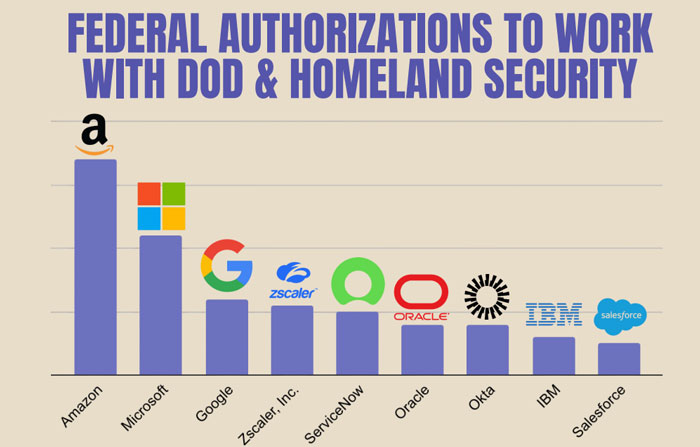
Last month I attended Shut It Down, a workshop hosted by Amnesty International in Seattle that brought together current and former technology workers to examine how major tech companies are enabling ICE in the US and supporting military operations in Gaza through cloud computing, artificial intelligence (AI), surveillance technologies, and data infrastructure.
Presenters from No Azure for Apartheid (Microsoft), Amazon Worker Intifada, Bridge to Humanity (Cisco), and UNCAGE (United Chips Against Global Exploitation) shared how technologies they once helped develop are being used in warfare, surveillance, and deportation systems.
We discussed the vast amount of personal data collected about all of us—our locations, purchases, communications, facial recognition data, and online activity—and how these technologies are increasingly integrated into military operations and law enforcement. We also explored AI-assisted targeting systems capable of identifying and selecting people for military strikes.
Human Rights Watch has documented several AI-assisted systems reportedly used by the Israeli military, including tools that generate lists of buildings for targeting, analyze mobile phone data, and identify individuals based on algorithmic assessments. These developments raise major ethical and legal questions that international humanitarian law has not yet caught up with.
My immediate question was: What can we do? The panelists acknowledged there are no simple answers but encouraged us to educate ourselves (see the workshop slides here), support technology workers who are speaking out, pressure corporations through shareholder and public campaigns, and divest where practical. They also noted how deeply embedded these technologies have become in our daily lives, and decoupling ourselves from them will take time and alternative solutions. For example, it is not lost on me that I wrote this ED update in Microsoft Word.
This conversation is also happening globally. In June, WILPF International and Reaching Critical Will joined more than 200 civil society organizations in Geneva, calling on governments to halt the use of AI in military targeting and decision-making. As the 2026 Global Peace Index reports the highest number of armed conflicts since World War II, AI will undoubtedly shape the future of war – and peace. The question before us is how we can help shape, and influence, the future of AI.
| | |
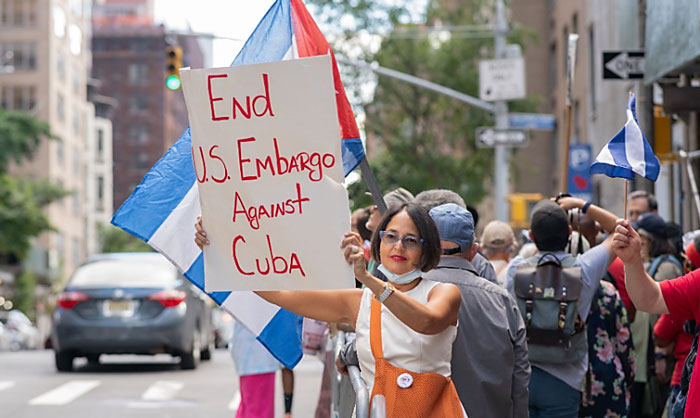
Across the globe, a different kind of war is being waged. WILPF US’s Cuba and Bolivarian Alliance committee reports that for 65 years, Cuba has lived under a US blockade that continues to expand through sanctions, financial restrictions, limitations on international trade, and direct military threats. These policies disproportionately affect ordinary Cubans—particularly women and children—by limiting access to health care and sustainable food systems.
WILPF believes these unilateral measures undermine international law and deepen humanitarian hardship. We oppose the war on Cuba: see our statement here and view this article where WILPF US members Leni Villagomez Reeves and Victoria Kill debunk myths about Cuba.
Our members continue to demonstrate international solidarity. Earlier this year, WILPF member Kim Poole traveled to Cuba and her Teaching Artist Institute explored a partnership focused on medical education, community health, and traditional healing knowledge. WILPF US member Cindy Domingo also advised Congresswoman Pramila Jayapal in planning her solidarity visit to Cuba. Learn more by watching Congresswoman Jayapal's humanitarian briefing on Cuba here (shared in a previous ED update).
| | Authoritarianism and Antidotes | | |
In these authoritarian times, one of the questions I hear most often is: What can we actually do? That question shaped last month’s School of Peace & Freedom, our quarterly national teach-in, under the theme Authoritarianism and Antidotes. WILPF members from across the country gathered to learn from women who have spent decades defending democracy.
WILPF member and Seattle organizer Cindy Domingo reflected on her decades of organizing against the Marcos dictatorship in the Philippines. Drawing on her family's long pursuit of justice following the assassination of her brother, labor leader Silme Domingo, Cindy reminded us that authoritarianism rarely arrives all at once. It weakens democratic institutions piece by piece.
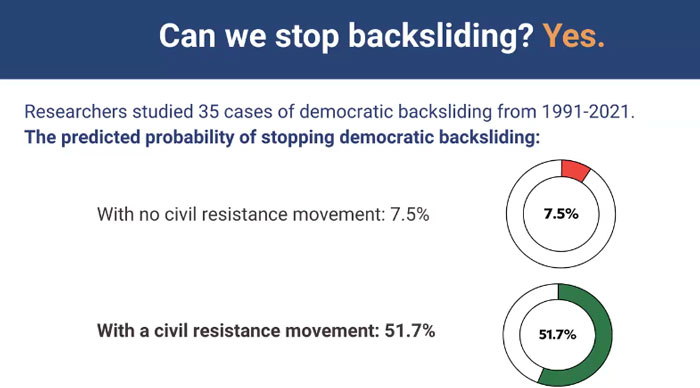
Kate Bitz, of the Western States Center, shared research on democratic backsliding in 35 countries over a 30-year period. One of Kate’s slides, pictured above, shows that countries were more likely to reverse democratic decline when civil resistance movements emerged (51.7% predicted probability). Kate shared that this increased to 80% when trade unions played a strong role in civil resistance: a key insight to consider when convening allies in organizing.
If you missed the session, I encourage you to watch the recording. It is one of the strongest School of Peace & Freedom programs we've offered and provides practical lessons on anti-authoritarian tactics and actions you can take today.
| | WILPF women are leading the way | | |
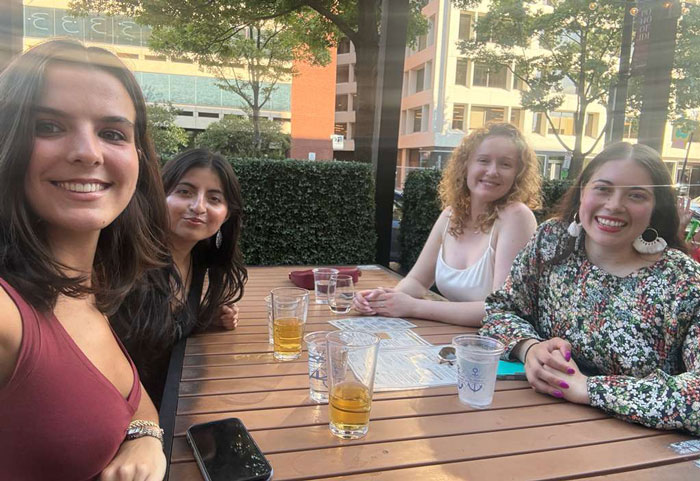
One of the best parts about my role at WILPF is witnessing members leading in so many ways – and increasingly, across generations. Pictured above in Washington, DC, left to right, are Young WILPF US members Isabel Belmonte, Natalia Lopez, Emily Costello, and Yadira Sanchez. They gathered to build relationships, exchange ideas, and imagine the future together.
Afterward, Natalia reflected on the gathering, writing: "Being surrounded by impassioned young women reminded me why I want to be in activist, community-building spaces. Sometimes the work can feel exhausting and emotional, but when I'm surrounded by others, I am rejuvenated."
Her wise words remind me that we are never doing this work alone. In a time when so many people are searching for belonging, that may be one of our movement's greatest strengths.
| |
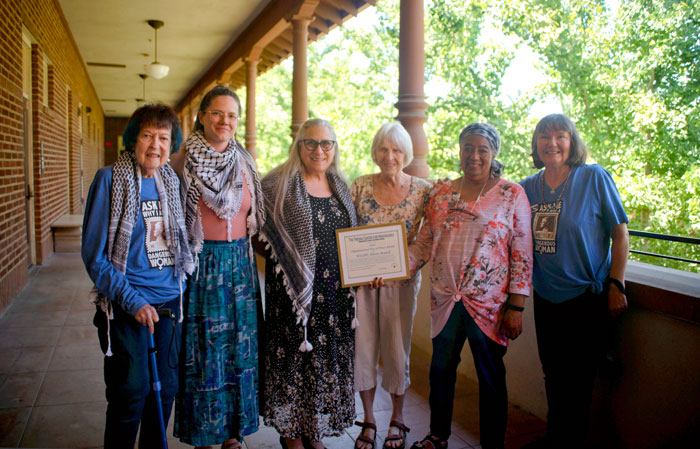
That same spirit of leadership runs across our movement. Congratulations to WILPF’s Fresno Branch for receiving the Way of Peace Award from the Center for Nonviolence, and to Cam Fanning who received the Individual Way of Peace Award!
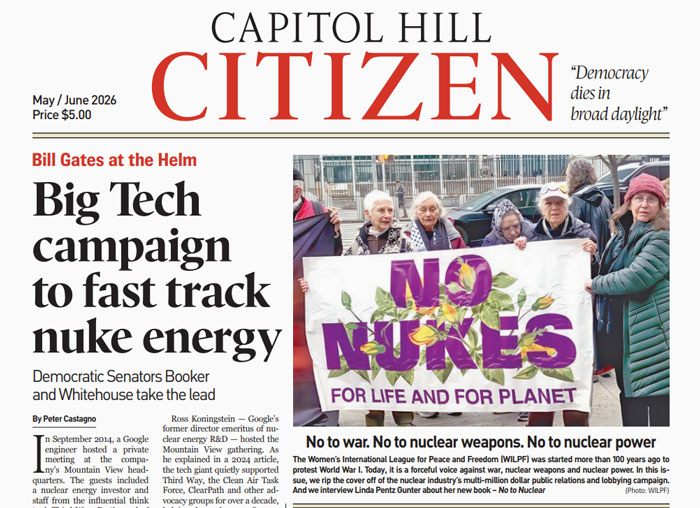
| | I take this opportunity to spotlight WILPF members including Judith Arnold and Odile Hugonot Haber who were featured on the front page of the Capitol Hill Citizen for their protest against nukes, and to WILPFers such as Cherrill Spencer and Echo who gathered in DC to commemorate the 45th anniversary of the White House anti-nuclear peace vigil. Because of your work, I understand that movements are built by people who continue showing up. I’m proud to follow in your footsteps. | | |
Let’s also celebrate WILPF US member Dr. Linda Ridley on the publication of her new book, Management Education and Slavery, which challenges how business education teaches history, race, and capitalism, deepening public understanding of the systems we seek to transform.
Finally, I pause to remember Jean Hays of our Fresno Branch and Libby Gerlach of our Boston branch, whose recent passing is a tremendous loss to our movement. Through their decades of activism, they helped build the WILPF that so many of us know today. We honor Jean’s and Libby’s legacy by continuing their work.
| | WILPF International Congress welcomes WILPF Senegal and WILPF Yemen | | |
WILPF International’s Virtual Congress – the decision-making body for global governance and policy matters – took place last week hosted by WILPF Cameroon under the theme Intergenerational and Intersectional. View the Congress reports and resolutions - ranging from UN reform to feminist climate preparedness to opposing wars - at the WILPF International resource center. To access the resource center, you must have a My WILPF account on the WILPF International portal. Sign up for a WILPF International account here.
Congress highlights include the adoption of an updated international program uniting global WILPF sections in 5 shared priorities, including strengthening WILPF, continuing to challenge militarism, and revitalizing multilateralism. A special Congress highlight was the addition of 2 new national sections to our global network: WILPF Senegal and WILPF Yemen. Delegates from 39 national WILPF sections participated in Congress. Representing WILPF US were co-presidents Martha Collins and Shilpa Pandey, board member Dee Murphy, and Tucson WILPF member Gloria McMillan. Alternate WILPF US delegates were Tina Shelton, George Friday, Peggy Dobbins, and Laura George. Thank you delegates for your round the clock representation (especially given the time difference between Cameroon and the US!) and to all WILPF US members who registered independently to engage in the Congress community.
| | After 250 years, the work is still unfinished | | |
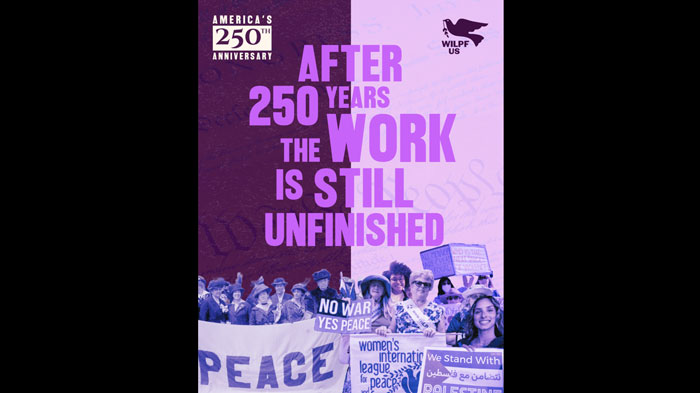
As America marks its 250th anniversary, WILPF US is helping shape a different conversation. Through our national campaign, Still Striving for Peace & Freedom, I invite members to convene dialogues in your branches and communities around questions that don't have simple answers. What does freedom mean today? Which constitutional promises are being fulfilled, and where do we still have work to do?
The campaign includes a constitutional analysis by WILPF member Trudy Reagan, exploring eight key themes, from free and fair elections to equal protection and conflicts of interest in public office. The toolkit also provides community conversation guides and tabling resources to help branches host discussions in libraries, schools, community centers, historical societies, and neighborhood events.
We're already seeing the campaign take root. Members in North Carolina are partnering with local historical associations and community organizations to facilitate conversations about peace, freedom, democracy, and patriotism. Young WILPFers in New York are exploring community dinner dialogues. In my own home, I have conversations regularly with my brilliant stepson, Chetan, founder of the Washington Youth Alliance. We don't always agree, but we remain grounded in shared values.
As you gather with family, friends, and neighbors this summer, I hope you'll use Still Striving for Peace & Freedom to spark conversations in your community. I'd also love to hear how you're using the campaign. Please send me your stories, photos, and reflections (lindalow@wilpfus.org) so we can continue learning from one another and sharing ideas across our movement. Together, we are still striving for peace and freedom.
| |
WILPF network news
🗓️ The 81st anniversary of the atomic bombings of Hiroshima and Nagasaki (August 6 and 9) is near. Join our Nuclear Bombs Never Again webinar August 4 at 8 pm ET (August 5, 9 am in Japan) which will feature peacebuilders working at the intersection of Japan-Korea-US policy and disarmament. Register here.
🗓️ Follow and engage with WILPF US on our updated Instagram, Facebook and LinkedIn pages. Invite your people to follow and engage with our social media posts too – to amplify issues and mobilize collective action.
🗓️ View the new WILPF US online event calendar (scroll 1/3 down the page)! You can submit your local branch or national event for posting on the calendar through this form. The event or meeting must be led, or co-led, by WILPF members/branches to be included in the calendar.
| | Wise words from WILPF members and allies | | |
I believe in the wisdom of the crowd, so I continue to seek insights from WILPF US members and allies. Here are some wise words I’ve heard, starting with words that I’ve shared before from an artivist (because their words are so poignant for this moment) as well as wisdom from our School of Peace & Freedom speakers.
“We’re training ourselves to do democracy like we’ve never done before. We’re navigating dissonance, dual realities. To get in shape, we need to put our body through stress. That’s what we’re doing now. We’re building mental and emotional muscle. And when we get to the other side, I’m excited to see what kinds of different governance models and practices we form. Because we can’t go back to what it was. Those of us that are resisting: we’re building the muscle; we’re building something new.” – TC, Artist and Activist
“Authority without responsibility is tyranny.” – Chenai Kadungure, Freedom Advocate, School of Peace & Freedom Speaker
“We need to stay united because they will try to divide us. We are each other's best chance at beating authoritarianism.” – Kate Bitz, Anti-Authoritarian Organizer, School of Peace & Freedom Speaker
Take care of yourselves, fearless WILPF women and WILPF allies, and let’s continue to take care of each other.
Linda Low
WILPF US Executive Director
| | | | |