Ask a PT
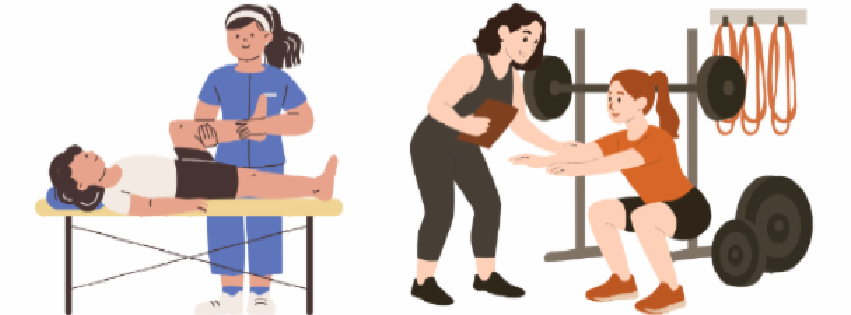
This month we are answering two reader questions. One answer comes from a UHS Physical Therapist while the second answer comes from a RecWell Personal Trainer. For differences between Physical Therapy and Personal Training, check out our December 2025 Newsletter!
“How to improve posture and relieve strain put on the (aching) neck and lower back?”
This is a great question that I’m sure many students wonder about. I will assume you are talking about long study sessions and classes. Either way, these are good tricks for everyone.
- Remember, "Motion is Lotion". Much of the stiffness and achiness comes from being in one position (sometimes poor positions).
- Get up every hour or two and walk around. If you are going between classes, take a longer route. If able, take the stairs.
- Avoid jumping on your phone and continuing to sit when you have a break - move!
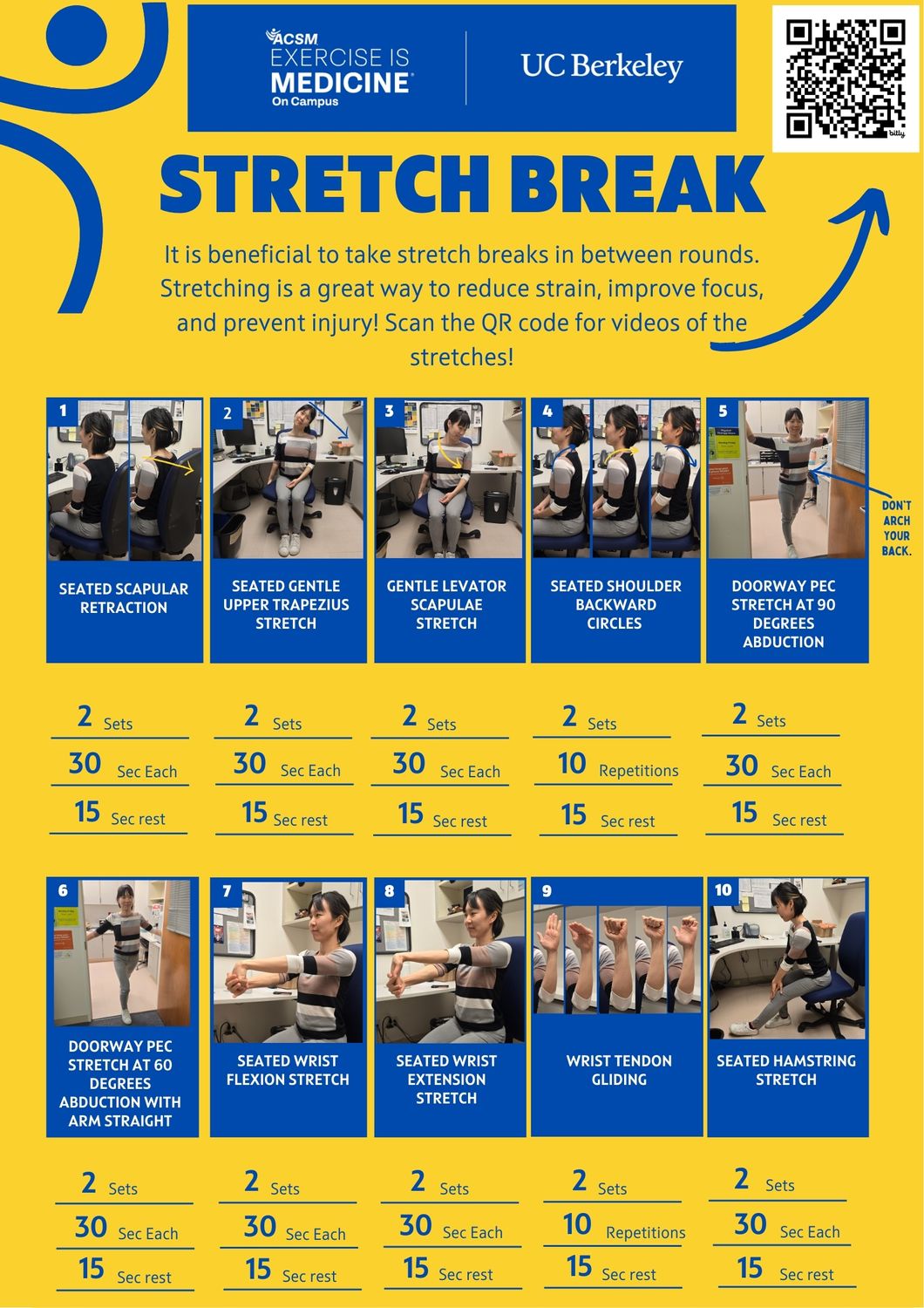
- Have a look at the stretch break exercises included in this issue. They are a great way to get some movement without getting up.
- Go to the gym or get out and walk/run/play. If you can't, doing stretches or exercises like marching in place, jumping jacks, push ups in your room will help.
- Rotate study activities with household chores rather than doing all school and then chores.
- If you keep having problems, working with a Physical Therapist would help to improve mobility, work on postures and give you specific activities/exercises to achieve your goals.
-Mary Popylisen, Physical Therapy Manager at UHS
“No matter how much physical exercise I do, I can't seem to improve my stamina. It's as if I'm capped already, even though I do a lot of cardio. Can you help me?”
Stamina takes time and consistency to improve. When you hit a plateau, start by getting specific about your goal. Is it running a mile under a certain time? Cycling a specific distance? Improving your VO₂max? Once you define that goal, you can better structure your training.
Here are a few things I recommend to improve cardiovascular endurance:
Know your maximum heart rate and resting heart rate.
Estimate your HRmax using:
- 220 − age
-
(Keep in mind this is a general estimate and can vary between individuals.)
Next, measure your resting heart rate. Lie down for 10–15 minutes, stay relaxed, and breathe steadily. Check your radial pulse for 30 seconds and multiply by 2.
Now you can calculate heart rate reserve (HRR):
HRR = HRmax − HRrest
Example:
- Age: 20
- HRmax: 200
- HRrest: 60
- HRR = 200 − 60 = 140
Now calculate your training intensity. Let’s say you want to work at a moderate aerobic intensity (60–70% of HRR):
- 60% of 140 = 84
- 70% of 140 = 98
Add back resting HR:
-
Lower: 84 + 60 = 144 bpm
-
Upper: 98 + 60 = 158 bpm
-
So your target range would be 144–158 bpm.
You can also use the Karvonen Heart Rate Calculator to find your target zone. Train in this range for a set duration, such as 20 minutes, and gradually increase time as tolerated. To measure your heart rate, you can use the sensors on the cardio equipment on the machines at the RSF. The sensors use bioelectrical impedance which is closely accurate to using a smart watch or fitness tracker.
Over time, you’ll notice you can perform the same work at a lower heart rate, which is a strong indicator of improved aerobic fitness.
-Christian Chhom, RecWell Personal Training Program Specialist
Do you have a question for a UHS Physical Therapist? Ask us here.
|