|
|
HUMANS IN SPACE
Exploring the Lunar South Pole
| | |
NASA is steadily advancing work on the Moon Base — a resilient outpost planned for the Moon’s South Pole that will support science, technology development, and future human operations.
To help build essential infrastructure on the lunar surface, commercial partners including Blue Origin, Firefly Aerospace, Intuitive Machines, and Voyager Lunar Systems are preparing to deliver landers by 2028. These spacecraft will transport the foundational architecture needed for a sustained presence on the Moon.
Their progress marks a major step forward for commercial lunar delivery and sets the stage for the systems and surface capabilities the Moon Base will rely on.
MOON BASE
| | | |
PODCASTS
From Space Station to Orion
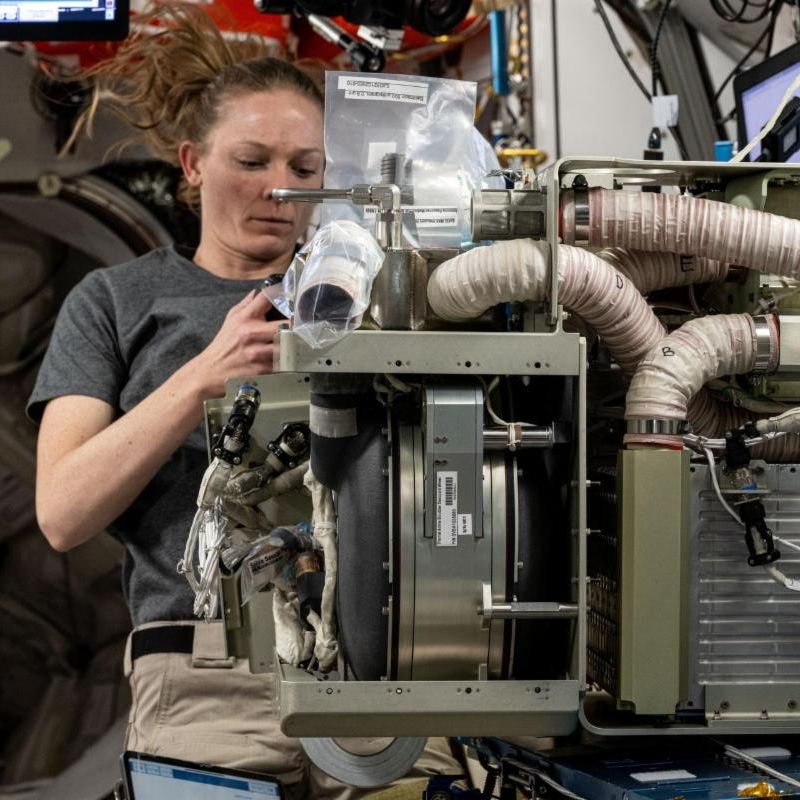
Astronauts aboard the International Space Station depend on life support systems to provide a safe, livable environment. These systems are what make long-duration spaceflight not only possible but also comfortable. In the latest episode of NASA'S Small Steps, Giant Leaps podcast, hear how lessons from the space station are preparing NASA for long-duration missions to the Moon and beyond.
LISTEN
| | |
THE SOLAR SYSTEM
Summer Star Shower
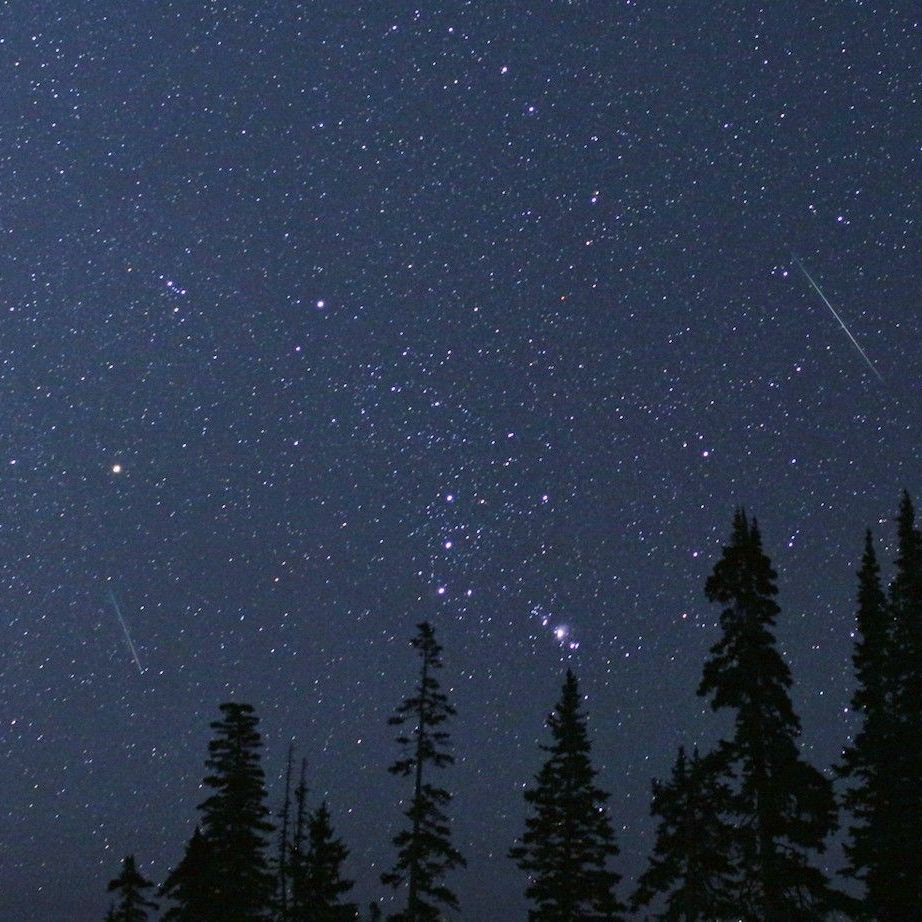
The Perseids are back! One of the year’s brightest and most popular meteor showers has been building since early July and will continue through the end of August. The shower reaches its peak overnight on Aug. 12–13, and we’re staying up late to catch the show on our sky cameras — and you’re invited! Join us for a live meteor watch party beginning at 12 a.m. EDT on Thursday, Aug. 13 as we chat with meteor experts, provide real-time views of the sky, and answer your questions.
WAYS TO WATCH
| |
| |
THE SOLAR SYSTEM
PUNCH Sharpens Forecasting
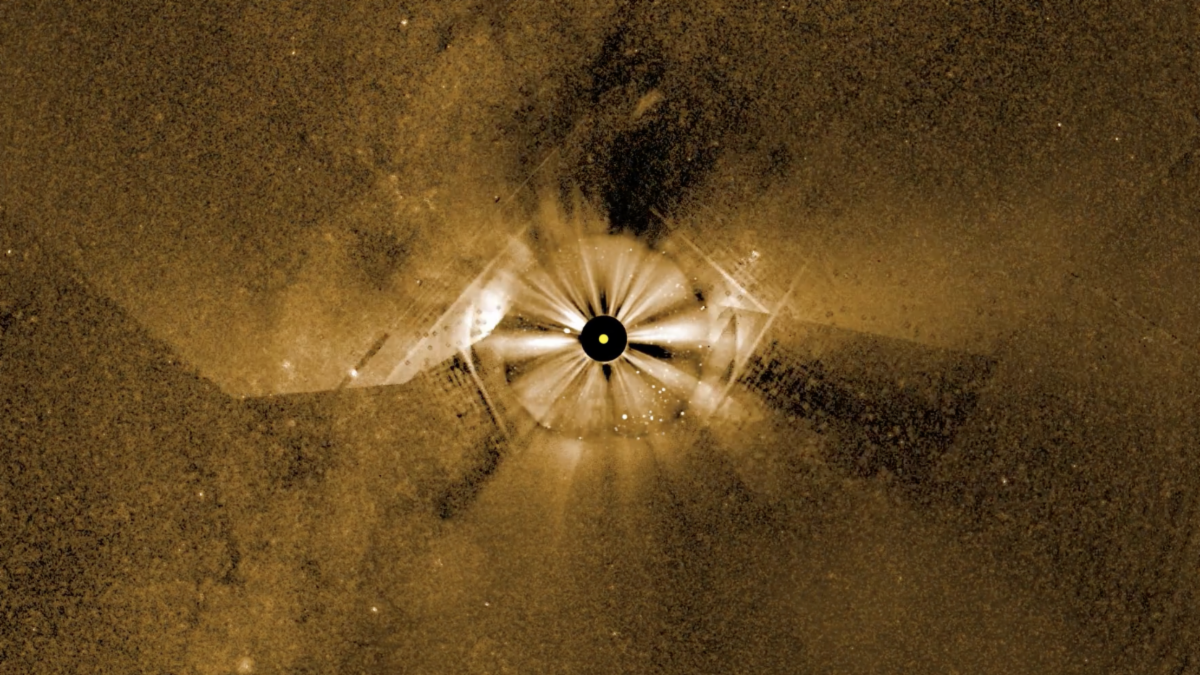
Using continuous imagery from NASA’s PUNCH, or Polarimeter to Unify the Corona and Heliosphere mission, scientists demonstrated in an initial proof‑of‑concept test that they could predict the near‑Earth arrival time of a solar eruption within about 30 minutes. Using data from a coronal mass ejection that left the Sun on May 31, 2025, the team retroactively tested whether continuous imaging could improve forecast modeling. About twelve hours after the eruption left the Sun, the model produced a final prediction indicating the storm would arrive eight hours later. That arrival time ultimately proved accurate to within half an hour — making the method roughly ten times more precise than currently used techniques, which offer only a five‑hour window.
LEARN MORE
| |
THE SOLAR SYSTEM
Phobos Photobombs Earth
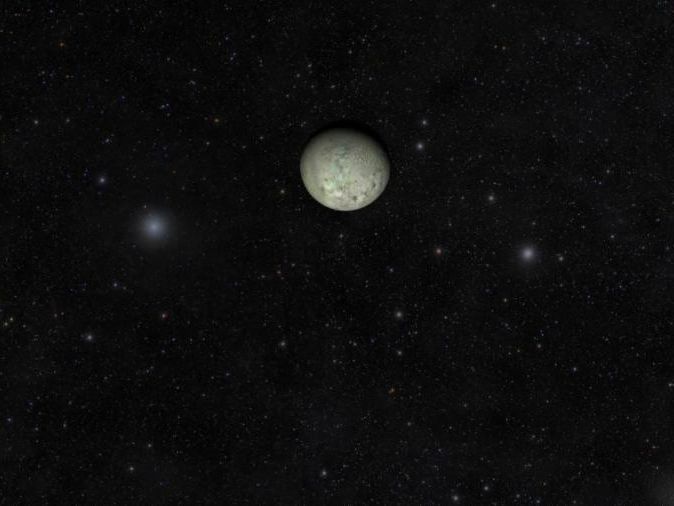
Earth and the Martian moon Phobos appear to dance together in a new series of images captured by NASA’s Perseverance rover. It marks the first time humanity has observed Earth disappearing behind another object from the surface of a different planet. The rover’s Mastcam-Z instrument took the image sequence on July 2 at about 7 p.m. local solar time. In the composite, Earth moves from the upper left toward the lower right of the frame, while Phobos travels from the lower left toward the upper right. In the third frame of the sequence, the two meet, and our planet winks out behind the little moon’s shadowed edge.
LEARN MORE
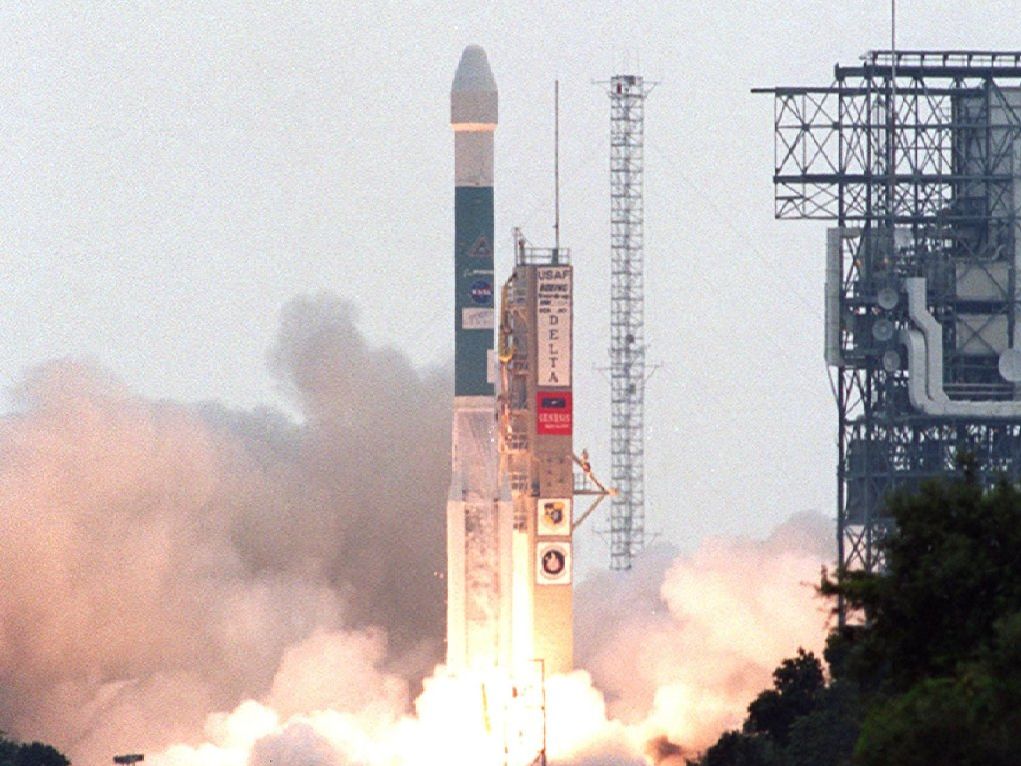
| | NASA launched its Genesis mission 25 years ago this week, the agency’s first sample return mission since the Apollo program. Genesis captured samples of the solar wind — the continuous stream of ions emitted by the Sun that preserve the original chemical makeup of the early solar system. To collect these tiny ions, the Genesis spacecraft deployed special collectors when it was beyond Earth’s magnetosphere. | |
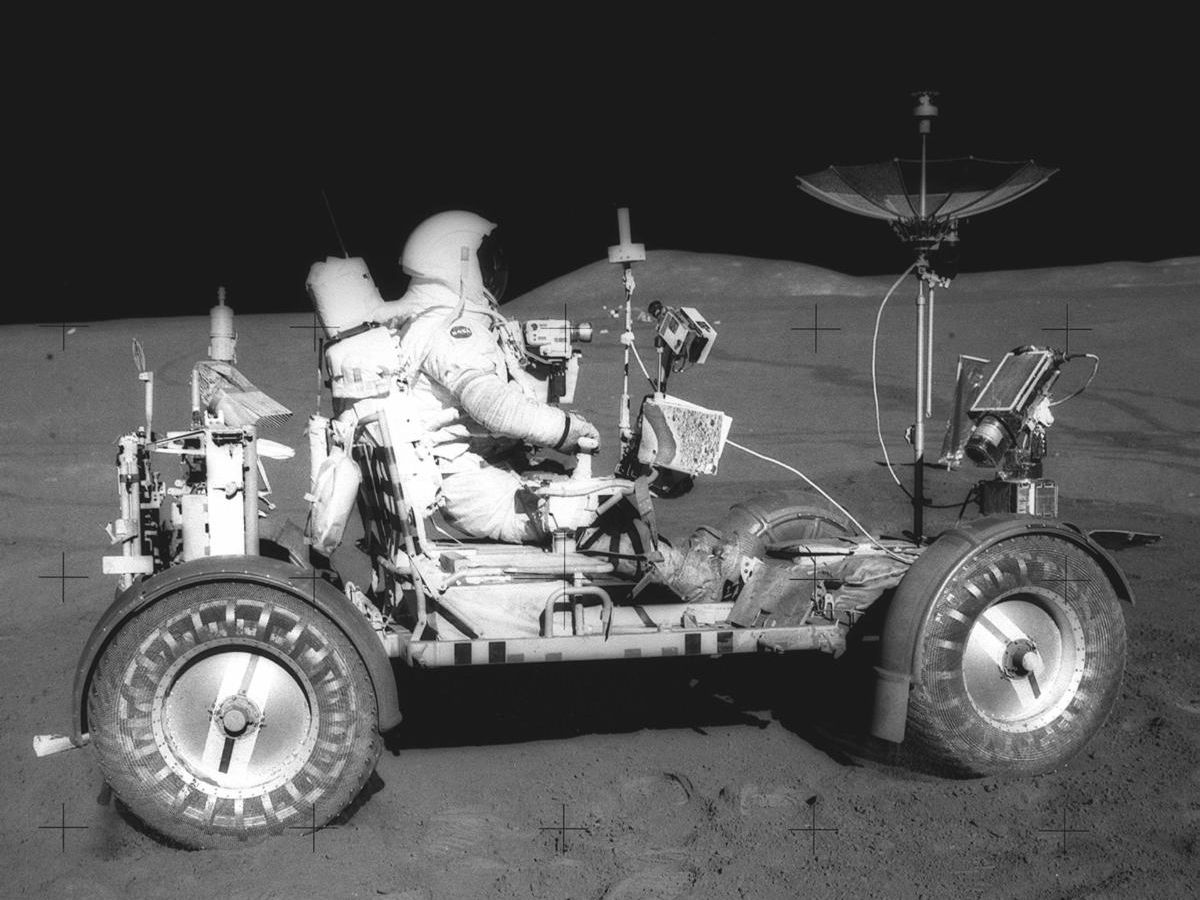
| What did Genesis use to capture the solar wind particles? | | | | Find out the answer in next week's NASA newsletter! 🤓 | | | | Last week, we commemorated the 55th anniversary of the first time astronauts drove on the Moon by asking how the Lunar Roving Vehicle was powered. The answer? Batteries. This electric vehicle used two silver-zinc batteries and was designed for a top speed of 6 miles per hour. During Apollo 15 the rover was driven for a total of 3 hours and covered approximately 17 miles. | | |
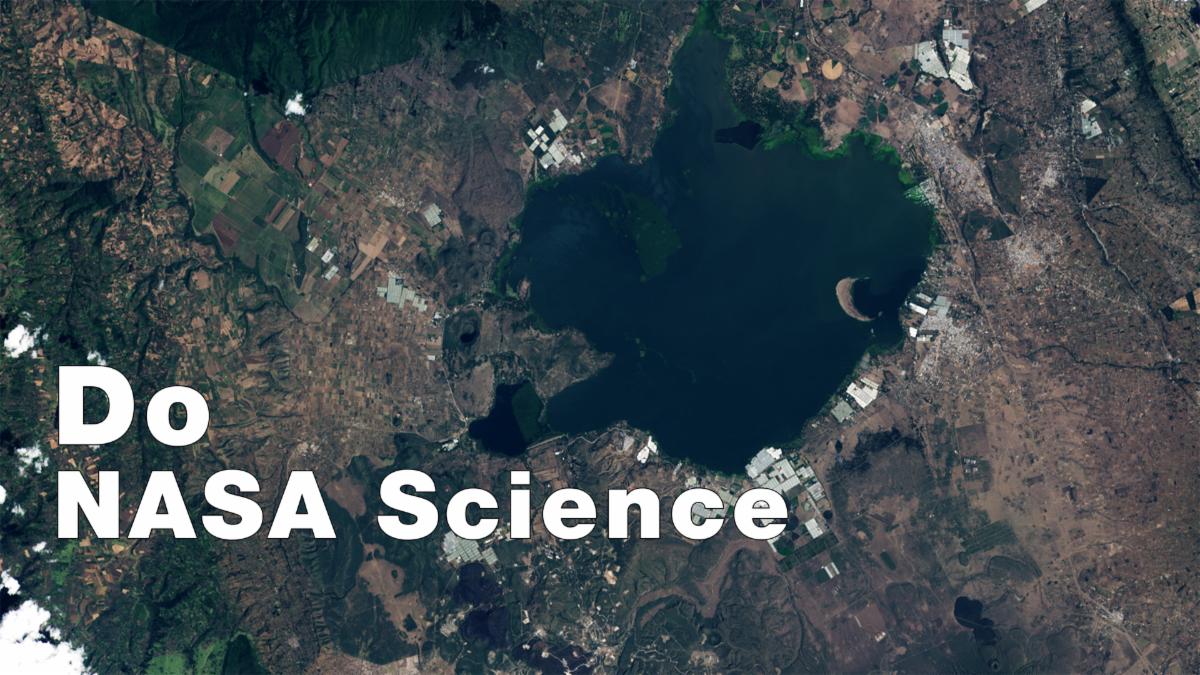
In the citizen‑science project Lake Observations, volunteers will help track how lake levels change over time by reading simple gauges to report lake height. These measurements are then combined with lake surface‑area estimates derived from satellite imagery. By knowing how both lake height and surface area change, researchers can determine how the total volume of water in each lake is shifting. Understanding these changes provides insight into how water moves between lakes and surrounding landscapes, and what that means for local ecosystems and the people who rely on these lakes.
Through NASA's citizen science projects, volunteers help with cutting-edge research in Earth science, planetary science, astrophysics, biological and physical sciences, and heliophysics. With just your phone or computer, you can help NASA expand our understanding of the universe — including life here on Earth. Projects are available in 18+ languages beyond English and open to anyone, regardless of country of origin or citizenship status, and need no special gear, just curiosity and a willingness to learn.
JOIN THE PROJECT
| | |
National Aeronautics and Space Administration
NASA explores the unknown in air and space, innovates for the benefit of humanity, and inspires the world through discovery.
Visit nasa.gov
| | | | | |