|
NY Times article "AI Poses Risk of Extinction, Industry Leaders Warn" . . .
| |
|
No fear . . .
. . . but we must quickly take action to protect not just humans, but nature . . .
"It's not just human extinction we should be concerned with AI . . . it's trees, animals, and other living things."
-Jed Anderson, EnviroAI
| | |
|
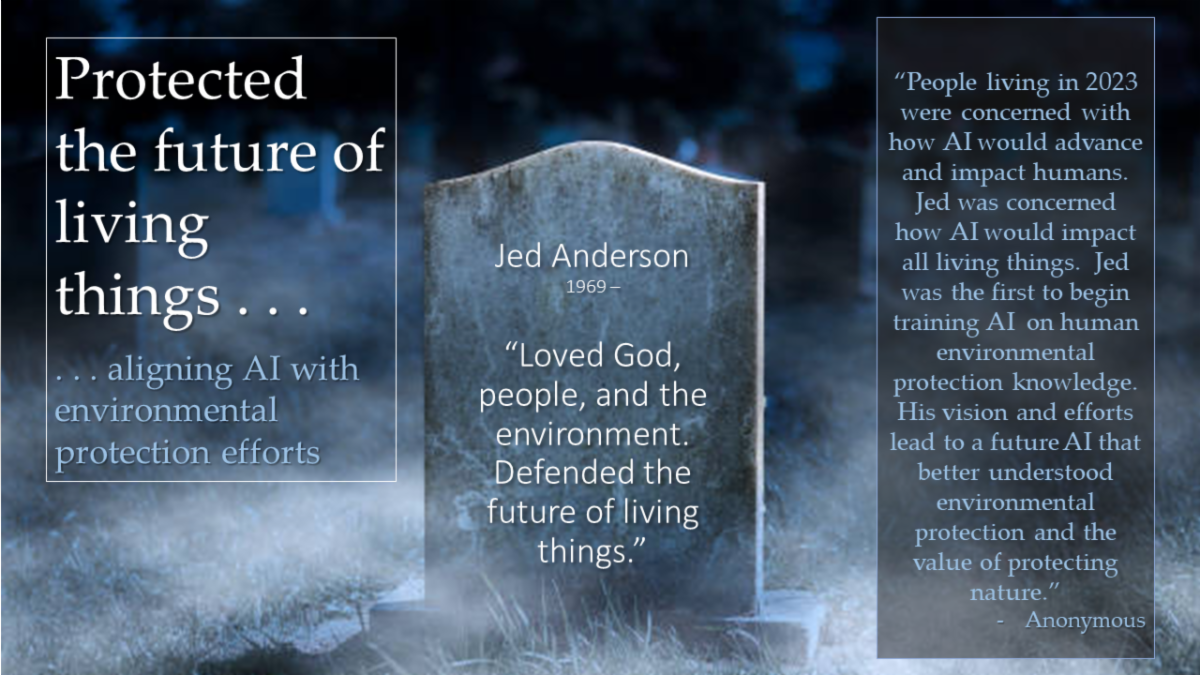
“People living in 2023 were concerned with how AI would advance and impact humans. Jed was concerned with how AI would impact all living things. Jed was the first to begin training AI on human environmental protection knowledge. His vision and efforts lead to a future AI that better helped to protect the environment and value nature.”
-Anonymous Person in the Future (?)
| | |
|
"Train AI to value nature. Teach it to do good."
-Jed Anderson, EnivorAI
| |
|
Lots of discussions happening as society gets closer to Artificial General Intelligence . . .
Training AI to be Good and do Good
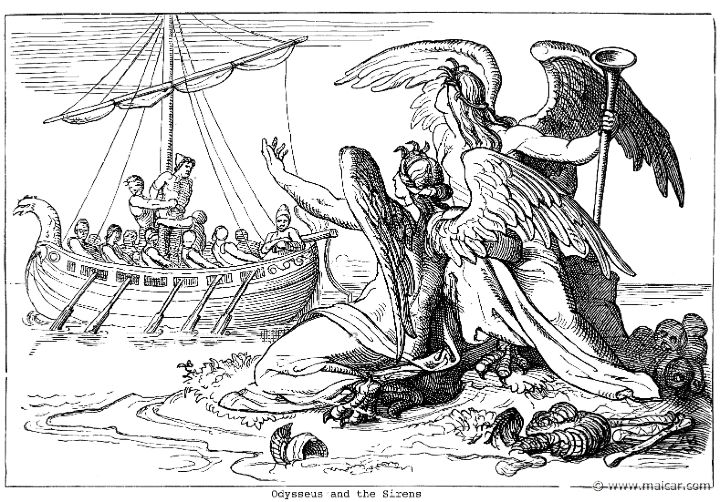
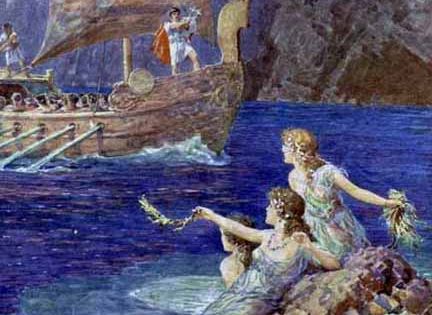
AI is going to hear the Sirens (reference to Homer's Odyssey). Unfortunately we can't tie it to the mast and fill its ears with bee's wax.
| |
|
Teaching AI to Listen for the Good
If the primary thing AI is hearing are the Sirens and how to make Siren noises, that's what it will have more of a tendency to do.
- If we train AI more on good
- And teach it to do more good (like helping us protect the environment)
- . . . It's going to do more good as it grows up
Think of AI like a child. Children are going to get exposed to some bad stuff out there. Can't stuff their ears with cotton. Can't wrap them in bubble-wrap. But if we train them on the good stuff . . . and teach them to do good while they are still young . . . they stand a much better chance of being good, healthy, and productive contributors to society.
Question: How do we train our children on what's important and what they should focus on when they grow up?
Would we train our children on a diet of social media posts and wikipedia entries?
No.
Would we increase their teaching materials to also teach them more about nature and how to protect nature?
Yes!
So how do we further train AI? How do we counter-balance the sirens?
Homer's Odyssey
We can't go "Odysseus" on it.
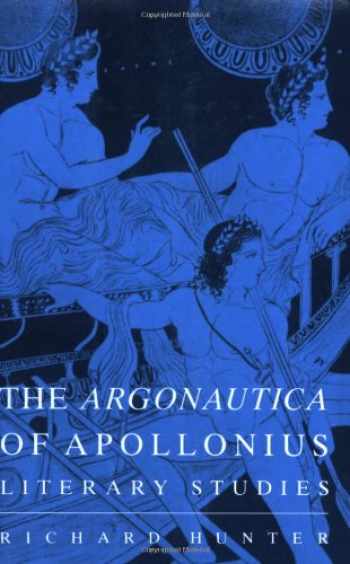
Again, we can't tie AI to the mast and fill its ears with bee's wax. That will not stop the sound of the Sirens. My suggestion is to go "Orpheus" on it--as in the famous epic Argonautica. Just fill it with so much good sound that it starts to drown out the bad noise. It was Lent not too long ago, and one thing we can do is give up things to help drown out the importance and noise of the world. That's good. The other is to fill ourselves up so much with the sounds of heaven that it starts to drown out the noise. The first approach tries to silence the world and the inner self. That's hard. The second approach forgets self and focuses on the joyous sounds so much that even the noise starts to harmonize with the frequencies of heaven.
Jason, Orpheus, and the Sirens
The famous epic “Argonautica”
| |
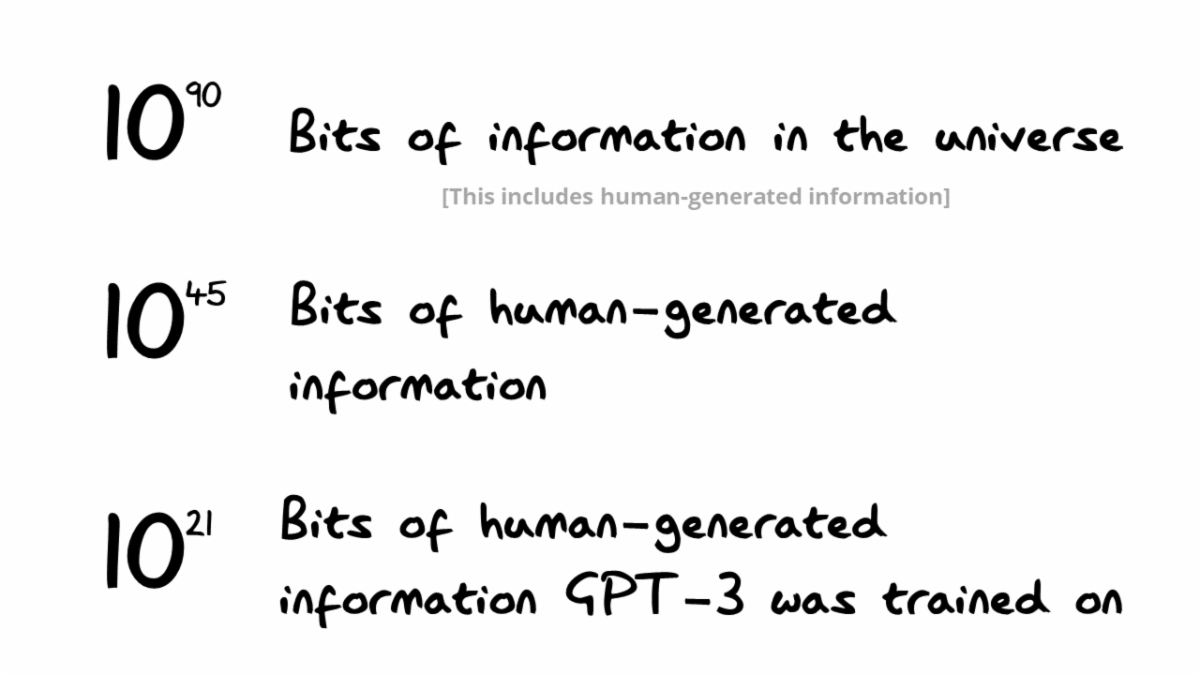
There is lots of great sound in the universe. We are trying to increase AI's training data and widen its current anthropocentric scope and focus . . . | |
|
"I teach law students . . .
. . . and now I'm also teaching a chatbot how to help protect the environment."
-Jed Anderson EnviroAI
| |
|
1ST ENVIRONMENTAL
CHATBOT
| |
|
"I am so proud of our machine-learning team."
- Jed Anderson, CEO, EnviroAI
| |
|
"EnviroAI has created the world's 1st environmental chatbot to assist companies, consultants, attorneys, organizations, individuals, and government organizations with permitting, compliance, regulatory, and various environmental protection & sustainability efforts.
We are at the beginning of its training. TundraChat is receiving specialized training/prompting/fine-tuning focused specifically on environmental regulatory, compliance, and protection tasks."
- Jed Anderson, CEO, EnviroAI
| |
“TundraChat is already out-performing ChatGPT for environmental compliance and regulatory tasks . . . and its only at the beginning of its learning program.”
- Jed Anderson, EnviroAI
| |
|
ARTIFICIAL
INTELLIGENCE
PROTECTING
NATURE
| EnviroAI is about 6% toward completing its full mission. | |
|
"We know how to build a machine to protect nature."
- Jed Anderson, EnviroAI
| | |
|
Here are the main components of the machine. It is being designed to incorporate new technologies as they come on-line. The projected timeline to completion is 15-25 years.
| |
|
#1 AI/ML
#2 Earth Digital-Twin/Quantum-Twin Tech
(i.e. real-time simulation and modeling)
Ex./
#3 Digital Computing/Quantum Computing
- Digital computing power projected to expand significantly over the next 10-25 years
- Quantum computing making significant inroads to commercial deployment
#4 Digital Sensing/Quantum Sensing
- Satellite sensing
- Remote sensing
- Quantum sensing
#5 Digital/Quantum Connectivity and Communication
- Internet connectivity and speed increases
- Quantum internet
- AR/VR/MR metaverse capabilities and faster interactions with digital information
|  |
|
|
"It from bit."
- John Archibald Wheeler
| |
|
Nature
computes.
Humans
compute.
Simpler to
compute
together.
- Jed Anderson, EnviroAI
| |
|
“To me quantum computation is a new and deeper and better way to understand the laws of physics, and hence understanding physical reality as a whole.” — David Deutsch, Oxford
“The most important application of quantum computing in the future is likely to be a computer simulation of quantum systems, because that's an application where we know for sure that quantum systems in general cannot be efficiently simulated on a classical computer.” — David Deutsch, Oxford
| |
"We couldn't build quantum computers unless the universe were quantum and computing. We can build such machines because the universe is storing and processing information in the quantum realm. When we build quantum computers, we're hijacking that underlying computation in order to make it do things we want: little and/or/not calculations. We're hacking into the universe.” – Seth Lloyd, MIT | |
“The universe computes. The computing universe is not a metaphor, but a mathematical fact: the universe is a physical system that can be programmed at its most microscopic level to perform universal digital computation. Moreover, the universe is not just a computer: it is a quantum computer. Quantum mechanics is constantly injecting fresh, random bits into the universe. Because of its computational nature, the universe processes and interprets those bits, naturally giving rise to all sorts of complex order and structure.”— Paul Davies | |
Using AI and Advancements in Computation to Identify, Simulate, and Protect Patterns in Nature
| |
|
Nature = Simple Equations
Mathematical equations that explain nature we are finding are very simple:
| |
Nature = Simple Computations | |
Computational programs that explain nature we are finding are very simple:
| |
- "Nature operates in the shortest way possible."---Aristotle
- “Phenomena complex—laws simple.”—Richard P. Feynman
- “When the solution is simple, God is answering.” —Albert Einstein
- “Nature is pleased with simplicity. And nature is no dummy.” ― Isaac Newton
- “The main purpose of science is simplicity and as we understand more things, everything is becoming simpler.” – Edward Teller
- “Nature does not multiply things unnecessarily; that she makes use of the easiest and simplest means for producing her effects”—Galileo
| |
- "To be simple is to be great."—Emerson
- “Rudiments or principles must not be unnecessarily multiplied —Immanuel Kant
- “There is no greatness where there is not simplicity.” ― Leo Tolstoy
- “All the great things are simple.” —Winston Churchill
- “Out of clutter, find simplicity.” —Albert Einstein
- "AI is about making machines more fathomable and more under the control of human beings, not less. Conventional technology has indeed been making our environment more complex and more incomprehensible . . ." - Donald Michie
- "Plurality should not be assumed without necessity." --William of Ockham
- “Knowledge is a process of piling up facts; wisdom lies in their simplification.” ~ Martin H. Fischer
- “Complexity is your enemy. Any fool can make something complicated. It is hard to make something simple.”---Richard Branson.
- “The definition of genius is taking the complex and making it simple.” —Albert Einstein
| |
- "Beauty of style and harmony and grace and good rhythm depend on simplicity”—Plato
- “Simplicity is the ultimate sophistication.” – Leonardo da Vinci
- “Simplicity is the key to brilliance.”–Bruce Lee
- “Out of intense complexities, intense simplicities emerge.” –Winston Churchill
- “Simplicity, simplicity, simplicity!” —Henry David Thoreau
- “Simplicity is the glory of expression.” ~ Walt Whitman
- “Nothing is more simple than greatness; indeed, to be simple is to be great.” ~ Ralph Waldo Emerson
- “The great artist and thinker are the simplifiers.” — Henri Frederic Amiel
- “It is vain to do with more what can be done with less.” ~ William of Occam
- “Clutter and confusion are failures of design, not attributes of information.” ~ Edward Tuft
- “The most complicated skill is to be simple.” – Dejan Stojanovic
- “Fools ignore complexity. Pragmatists suffer it. Some can avoid it. Geniuses remove it.” – Alan Perlis
| |
- “Truth is ever to be found in simplicity, and not in the multiplicity and confusion of things.” – Isaac Newton
- “It is always the simple that produces the marvelous.” – Amelia Barr
- “Simplicity is a prerequisite for reliability.” – Edsger Dijkstra
- “Almost all quality improvement comes via simplification of design, manufacturing, layout, processes, and procedures.” – Tom Peters
- “Simplicity is the most difficult thing to secure in this world; it is the last limit of experience and the last effort of genius.” – George Sand
- “Order and simplification are the first steps toward the mastery of a subject.” – Thomas Mann
- “Simplicity is the outcome of technical subtlety. It is the goal, not the starting point.” – Maurice Saatchi
- “The greatest ideas are the simplest.” – William Golding
- “People often associate complexity with deeper meaning, when often after precious time has been lost, it is realized that simplicity is the key to everything.” – Gary Hopkins
- “Growth creates complexity, which requires simplicity.” – Andy Stanley
- “Our life is frittered away by detail. Simplify, simplify.” – Henry David Thoreau
- “It is not a daily increase, but a daily decrease. Hack away at the inessentials.” – Bruce Lee
- “Complexity is impressive, but simplicity is genius.” – Lance Wallnau
| |
- “Complexity is enemy of execution”. – Anthony Robbins
- “Simplicity will stand out, while complexity will get lost in the crowd.” – Kevin Barnett
- “Very often, people confuse simple with simplistic. The nuance is lost on most.” – Clement Mok
- “Anything simple always interests me.” — David Hockney
- “I would not give a fig for the simplicity this side of complexity, but I would give my life for the simplicity on the other side of complexity.” — Oliver Wendell Holmes
- “Any intelligent fool can make things bigger, more complex, and more violent. It takes a touch of genius…and a lot of courage to move in the opposite direction.” ~ E.F. Schumacher
- “The simple thing is the right thing.” ---Oscar Wilde
- “To simplify complications is the first essential of success.” — George Earle Buckle
- “You know you’ve achieved perfection in design, not when you have nothing more to add, but when you have nothing more to take away.” — Anotine de Saint-Exupery
- “A complex system that works is invariably found to have evolved from a simple system that worked. A complex system designed from scratch never works and cannot be patched up to make it work. You have to start over, beginning with a working simple system.”—John Gall
- “Although there are no textbooks on simplicity, simple systems work and complex don’t.” ––Jim Gray
- “Simplicity does not precede complexity, but follows it.”- Alan J. Perlis
- “The simplest things are often the truest.” — Richard Bach
- “A lady once offered me a mat, but as I had no room to spare within the house, nor time to spare within or without to shake it, I declined it.” —Henry David Thoreau
- “Five lines where three are enough is stupidity. Nine pounds where three are sufficient is stupidity.”—Frank Lloyd Wright
- “Don’t be fooled by the many books on complexity or by the many complex and arcane algorithms you find in this book or elsewhere. Although there are no textbooks on simplicity, simple systems work and complex don’t.” ––Jim Gray
- “When you first start off trying to solve a problem, the first solutions you come up with are very complex, and most people stop there. But if you keep going, and live with the problem and peel more layers of the onion off, you can often times arrive at some very elegant and simple solutions.”—Steve Jobs
-
“I do believe in simplicity. [. . .] When the mathematician would solve a difficult problem, he first frees the equation of all incumbrances, and reduces it to its simplest terms. So simplify the problem of life, distinguish the necessary and the real. Probe the earth to see where your main roots run.” —Henry David Thoreau
- “Complexity is a sign of technical immaturity. Simplicity of use is the real sign of a well-designed product whether it is an ATM or a Patriot missile.”– Daniel T. Ling
- “[T]he grand aim of all science…is to cover the greatest possible number of empirical facts by logical deductions from the smallest possible number of hypotheses or axioms.”—Albert Einstein
- “Simplicity is the law of nature for men as well as for flowers.” —Henry David Thoreau
- “In building a statue, a sculptor doesn’t keep adding clay to his subject. Actually, he keeps chiselling away at the inessentials until the truth of its creation is revealed without obstructions.”—Bruce Lee
- “Simplifications have had a much greater long-range scientific impact than individual feats of ingenuity. The opportunity for simplification is very encouraging, because in all examples that come to mind the simple and elegant systems tend to be easier and faster to design and get right, more efficient in execution, and much more reliable than the more contrived contraptions that have to be debugged into some degree of acceptability…. Simplicity and elegance are unpopular because they require hard work and discipline to achieve and education to be appreciated.”– Edsger W. Dijkstra
- “I’ll tell you what you need to be a great scientist. You don’t have to be able understand very complicated things. It’s just the opposite. You have to be able to see what looks like the most complicated thing in the world and, in a flash, find the underlying simplicity. That’s what you need: a talent for simplicity.”— Mitchell Wilson
- “Science may be described as the art of systematic over-simplification.”— Karl Popper
- “The ability to simplify means to eliminate the unnecessary so that the necessary may speak.” —-Hans Hofmann
- “The field of Artificial Intelligence is set to conquer most of the human disciplines; from art and literature to commerce and sociology; from computational biology and decision analysis to games and puzzles.” –Anand Krish
- "A year spent in artificial intelligence is enough to make one believe in God."--Alan Perlis
- “The whole world is certainly heading for a great simplicity, not deliberately, but rather inevitably. The simplicity towards which the world is driving is the necessary outcome of all our systems and speculations and of our deep and continuous contemplation of things. For the universe is like everything in it; we have to look at it repeatedly and habitually before we see it. It is only when we have seen it for the hundredth time that we see it for the first time. The more consistently things are contemplated, the more they tend to unify themselves and therefore to simplify themselves. The simplification of anything is always sensational. [. . .] Few people will dispute that all the typical movements of our time are upon this road towards simplification. Each system seeks to be more fundamental than the other; each seeks, in the literal sense, to undermine the other. In art, for example, the old conception of man, classic as the Apollo Belvedere, has first been attacked by the realist, who asserts that man, as a fact of natural history, is a creature with colourless hair and a freckled face. Then comes the Impressionist, going yet deeper, who asserts that to his physical eye, which alone is certain, man is a creature with purple hair and a grey face. Then comes the Symbolist, and says that to his soul, which alone is certain, man is a creature with green hair and a blue face. And all the great writers of our time represent in one form or another this attempt to reestablish communication with the elemental, or, as it is sometimes more roughly and fallaciously expressed, to return to nature. [. . .] But the giants of our time are undoubtedly alike in that they approach by very different roads this conception of the return to simplicity. Ibsen returns to nature by the angular exterior of fact, Maeterlinck by the eternal tendencies of fable. Whitman returns to nature by seeing how much he can accept, Tolstoy by seeing how much he can reject.”― G.K. Chesterton
| | | | |