|
Week 2 of the 2026 Session
Welcome to week 2 of the 2025 legislative session! With 49 days to go until Sine Die, stay on top of county priorities with this weekly legislative bulletin and our comprehensive Bill Tracker.
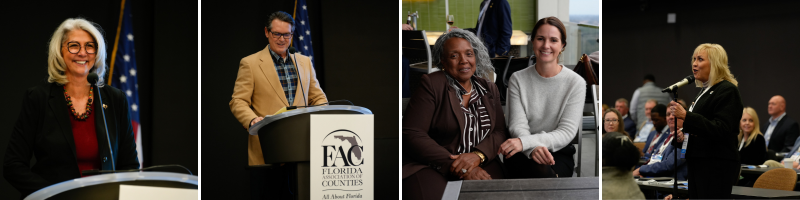
| | FAC Legislative Day - Thank You! | Thank you to the county commissioners and staff attended FAC's Legislative Day! With over 160 attendees coming together from every corner of the state, we made an impact and amplified our voice to advocate for our local communities. | |
Homestead Elimination “Phase Out” Clears Last House Stop
| | |
On Thursday, 1/22, the House Ways and Means Committee passed HB 203 Phased Out Elimination of Non-School Property Tax for Homesteads favorably by Representative Miller. This bill proposes a constitutional amendment to significantly expand the homestead exemption from all ad valorem taxes other than school district levies. Beginning January 1, 2027, the exemption would increase by $100,000 annually for ten years and, by January 1, 2037, would fully exempt homestead property from county and municipal ad valorem taxation (excluding school taxes).
If approved by voters, the measure would remove over 40% of all homestead property taxes in 40 counties with many counties experiencing full homestead elimination by year four. The proposal represents a tax shift from homestead property owners to businesses and renters while not contemplating implementation or replacement of local revenues to provide core essential services.
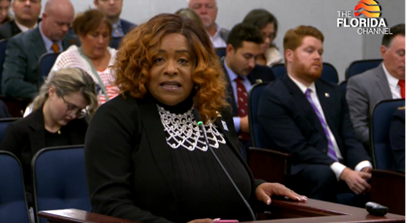
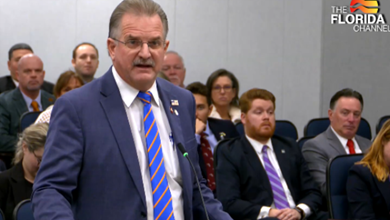
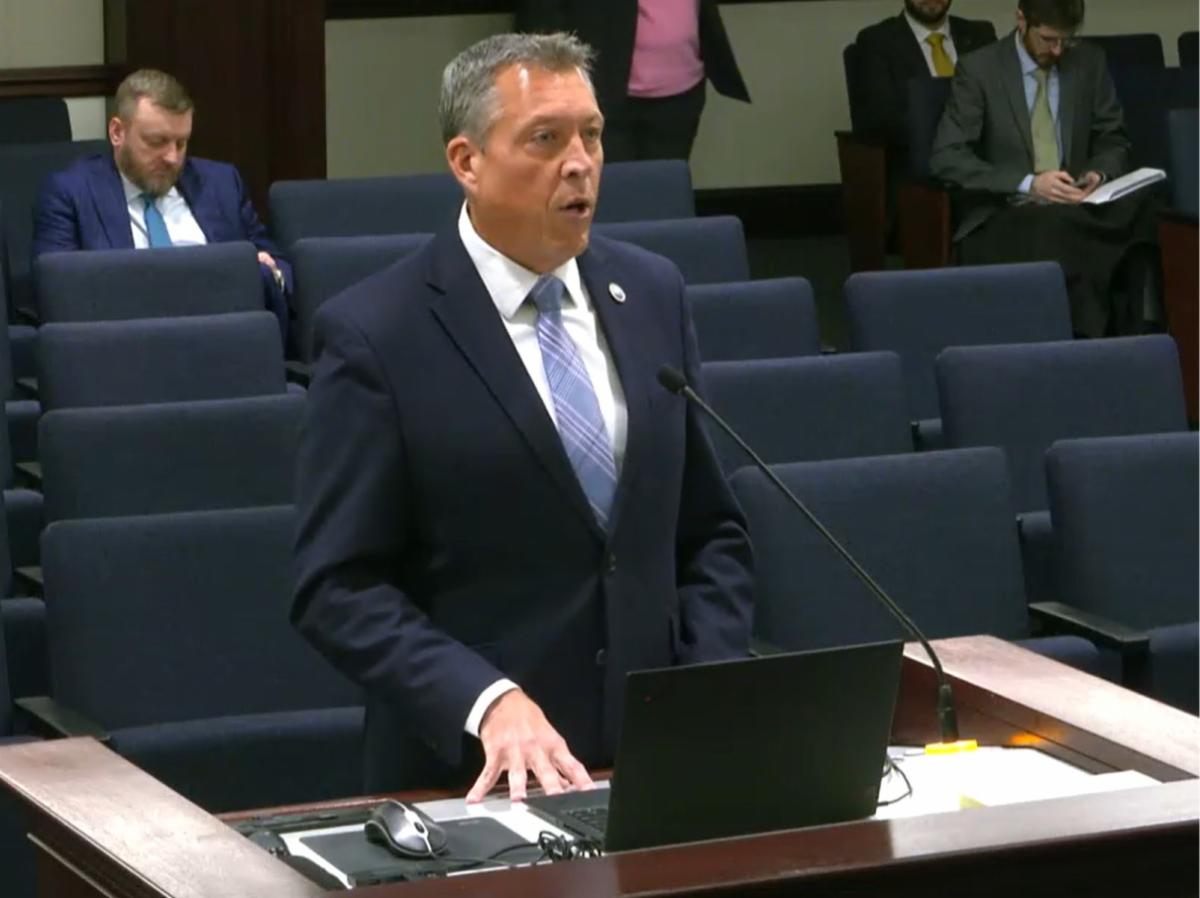
FAC opposed the bill in committee along with FAC President-Elect Rene Flowers (Pinellas), FAC 2nd Vice President Larry Harvey (Putnam), Commissioner George Kruse (Manatee), Commissioner Nicole Wilson (Orange), Commissioner Jack Mariano (Pasco), and the Small County Coalition, and staff from Glades, Leon, and Putnam Counties.
| |
Assessment Limitation Modification Clear House Committee
| | |
On Thursday, 1/22, the House State Affairs Committee passed HB 213 Modification of Limitations on Property Assessment Increases favorably by Representative Griffitts. This bill proposes a constitutional amendment that would significantly modify property tax assessment limitations and impose new fiscal constraints on counties and municipalities. HJR 213 changes how assessed values increase for both homestead and non-homestead property by shifting from annual assessment increases to increases that occur only once every three years for levies other than school district taxes. For homestead property, the existing “Save Our Homes” cap would still apply, but increases would be calculated over a three-year period rather than annually at the same 3% cap. For non-homestead residential and other non-homestead property, the assessment cap would be reduced from 15 percent to 10 percent over a three-year period.
Like other House Property Tax proposals, the bill creates a new constitutional prohibition preventing counties and municipalities from reducing total law enforcement, firefighters, and other first responders, as provided by general law, funding below the higher of their FY 2025-26 or FY 2026-27 budgeted levels, beginning in FY 2027-28, regardless of any reduction in ad valorem revenues resulting from the assessment changes.
To watch the committee hearing, click here.
|
Local Government Enforcement Actions Bill Clears First Committee
| | |
On Wednesday, 1/21, the House Civil Justice and Claims Subcommittee unanimously passed HB 105, sponsored by Representative Brackett. HB 105 creates a new process that allows people or businesses to challenge a county, city, or special district if they believe local rules are being enforced in an unfair or unreasonable way. The bill would stop local governments from starting or threatening enforcement actions that a court later says are unfair, unreasonable, or not allowed by local law. It also sets up a formal review process with specific steps and deadlines and allows court challenges in certain situations. This bill would be the main way to challenge unfair enforcement, replacing other legal options. It also cancels any local rules that prevent the government from following the bill.
HB 105 could limit how much flexibility local governments have in enforcing codes and regulations. It may also create more paperwork, stricter timelines, and added costs for counties, including possible legal expenses. The bill also extends Whistle-blower’s Act protections to certain people involved in these cases. If passed, the bill would take effect October 1, 2026.
The Senate companion, SB 588 Local Government Enforcement Actions by Senator Stan McClain has not been heard in committee this session, yet.
To watch the committee hearing, click here.
| |
Impact Fee Reform Passes First Senate Committee
| | |
On Tuesday, 1/20, the Senate Community Affairs Committee unanimously passed CS/SB 548 Growth Management by Senator McClain. The bill implements new requirements for local governments seeking to increase impact fee rate beyond the base phase-in limitations due to extraordinary circumstances based on a demonstrated-need study. The demonstrated-need study must utilize plan-based methodology.
In order to demonstrate “extraordinary circumstances” under the bill, the demonstrated need study must specify the capacity standards used to support the existence of such extraordinary circumstances, and be accompanied by a declaration of the method and timeframe by which the impact fee increase will increase capacity.
The bill further prohibits local governments, including school districts and special districts, from utilizing data that is older than 4 years, including in the impact fee increase any deduction authorized by a previous or existing impact fee. Lastly, a local government cannot increase an impact fee rate utilizing the extraordinary circumstances provisions by more than 100 percent in a 4-year period.
The bill provides for refunds and reasonable attorney fees and costs to a petitioner in an action challenging an impact fee imposed in violation of the statute. The bill also provides that an interlocal agreement between a county and municipality regarding the coordination of development and redevelopment fees for transportation capacity impacts that were entered into before October 1, 2024, may not extend beyond October 1, 2031.
The House companion HB 1139 by Representative Gentry has not been heard yet this session.
To watch the committee hearing, click here.
| |
Senate Passes Qualified Contractors Bill
| | |
On Tuesday, 1/20, the Senate Community Affairs Committee passed SB 1138 Qualified Contractors by Senator Massullo Jr. The bill requires local governments to create and maintain a framework of pre-approved qualified contractors available to perform building plans reviews, permits, and plat approval. Under the framework, a person applying to a local government for a permit, plans review, or plat approval may have a qualified contractor undertake a pre-application review, which results in the contractor certifying to the local government that items within the application meet the requirements for approval. The local government may then approve the application without duplicative reviews.
The bill also forbids a local government from creating or establishing any additional regulations or requirements that a platting applicant must meet for the approval of a final plat. Finally, the bill makes various changes to the expedited building permit process based on preliminary plats, introduced in the 2024 legislative session. The amendments include expansion to planned unit developments, procedures for when a local government fails to create or follow the required process, and clarification of the section’s preemption on the process and the limitations on local governments’ more stringent procedures.
The House companion HB 927 by Representative Sapp has not been heard yet this session.
To watch the committee hearing, click here.
| |
FAC Supports SB 180 Glitch Fix Through Second Committee Stop
| | |
The bill amends certain provisions in CS/CS/SB 180 (2025) relating to restrictions on local government power to regulate land use following hurricanes. The bill reduces the number of “impacted local governments” under s. 252.422(1), F.S., by redefining the term to include only counties located entirely or partially within 50 miles, instead of 100 miles, of the track of a hurricane listed in a federal major disaster declaration, and the municipalities located within those counties. The bill revises s. 252.422(2), F.S., to allow impacted local governments, within 1 year after a hurricane makes landfall, to propose or adopt moratoriums, amendments to comprehensive plans or land use regulations, or procedures concerning review, approval, or issuance of a site plan, development permit, or development order. The bill outlines that a impacted local government may not enforce these provisions if a structure was damaged by such hurricane.
CS/CS/SB 180 similarly restricted the regulatory powers of local governments listed within the federal disaster declaration for Hurricane Debby, Hurricane Helene, and Hurricane Milton. These restrictions, as revised by SB 840, expire on June 30, 2026. Without SB 840, the restrictions on local governments within the disaster declarations for Hurricane Debby, Hurricane Helene, and Hurricane Milton will not expire until June 30, 2028.
To watch the committee hearing, click here.
The House companion, HB 1465 by Representative Andrade has not been heard this session.
| |
Senate Committee Advances Data Centers Regulation Bill
| | |
On Tuesday, 1/20, the Senate Regulated Industries Committee passed SB 484 Data Centers favorably by Senator Avila. This bill revises state law governing large-scale data centers and other large electricity users. Most importantly, Section 2 of the bill affirms that hyperscale data centers raise unique planning and infrastructure considerations that must be addressed through local comprehensive planning and land development regulations. In other words, the section explicitly preserves local governments’ existing authority to regulate these facilities through their adopted land use, infrastructure, compatibility, and public facilities standards. The bill also directs the Public Service Commission to establish minimum large-load tariffs to ensure that data centers and similar users fully pay their cost of service, protecting general ratepayers, and prohibits public utilities from serving large load facilities owned or controlled by foreign counties of concern.
The bill also establishes a dedicated consumptive use permitting (CUP) process for large-scale data centers, prohibiting water withdrawals that conflict with local zoning or would harm water resources, and requiring applicants to demonstrate that the proposed use is reasonable-beneficial, will not interfere with existing legal uses, and is consistent with the public interest. The section also mandates the use of reclaimed water when it is available and feasible, requires detailed disclosure of all water sources and uses along with a conservation plan, and directs that any CUP modification for these facilities be processed as a new permit and cannot be approved without a hearing.
The bill takes effect July 1, 2026.
The House Companion, HB 1007 by Rep. Griffitts has not yet been heard this session.
To watch the committee hearing, click here.
|
Local Business Tax Repeal Clears Second House Committee
| | |
On Tuesday, 1/20, the House Intergovernmental Affairs Subcommittee passed HB 103 Local Business Taxes favorably by Representative Botana. The bill would repeal Ch. 205, Local Business Taxes, removing the authority for local governments to levy a local business tax. Counties have broad home-rule authority to levy taxes authorized by the Legislature. Chapter 205 is already a capped and limited revenue source, not an expansive local tax. Eliminating this revenue stream removes one of the few locally authorized, business-specific tools in statute. Preliminary 2023-24 data shows a roughly $27.5 million impact to counties statewide, representing a reduction of 9.3% year-over-year. Eliminating a business-based revenue source shifts costs from businesses to residential taxpayers, worsening affordability challenges. These impacts are compounded by the ongoing property tax discussion and local funding concerns. FAC opposed this bill along with other local governments.
To watch the committee hearing, click here.
|
Bill Requiring Government Electronic Payments Passes First House Committee
| |
On Tuesday, 1/20, the House Intergovernmental Affairs Subcommittee passed HB 967 Electronic Payments Made to Units of Local Governments unanimously by Representative Buchanan. This bill revises s. 215.322, F.S., to require units of local government—including counties, constitutional officers, municipalities, and special districts—to accept electronic payments and to make such payments available online. While current law authorizes local governments to accept credit cards, debit cards, and electronic funds transfers, the bill changes legislative intent to mandate acceptance “to the maximum extent practicable” and expressly requires online payment options for financial obligations owed to local governments. Covered payments include taxes, fees, fines, court costs, and other statutorily prescribed revenues. Counties may face fiscal and administrative impacts associated with upgrading or expanding online payment systems, ensuring cybersecurity, maintaining compliance across multiple departments and constitutional offices, and managing vendor contracts. The bill takes effect July 1, 2026.
The Senate companion, SB 1612 by Senator DiCeglie has not been heard yet this session.
To watch the committee hearing, click here.
|
Permitting Deregulation Legislation Passes First House Stop
| | |
On Tuesday, 1/20, the House Intergovernmental Affairs Subcommittee passed HB 1049 Building Permit Requirements by Representative Esposito. The bill provides that a local government may not require a single-family dwelling owner or the owner’s contractor to pull a building permit for work that is valued at less than $7,500 on the lot containing the single-family dwelling; however:
- A local government may require a building permit for electrical, plumbing, or structural work, not including the repair or replacement of exterior doors or windows, regardless of the value of such work.
- A contractor who performs work that is exempt from needing a building permit must keep a record in writing of the work he or she performed, the property address where the work was performed, and the value of such work.
The bill also provides an exemption from building permit requirements for “backup power systems,” which the bill defines as equipment and associated components installed at or serving a one-family or two-family dwelling or townhouse for the purpose of providing on-site electrical power during utility outages, load management, resiliency, or other similar purposes that is capable of providing no more than 50 kilowatts of output to a dwelling or townhome or with an aggregate storage capacity of no more than 100 kilowatt hours, if the system includes energy storage.
The Senate companion, SB 968 by Senator McClain has not been heard this session.
To watch the committee hearing, click here.
|
Building Permit and Private Provider Bills Clear First Committee in Both Chambers
| |
On Tuesday, 1/20, the House Industries and Professional Activities Subcommittee passed CS/HB 803 Building Permits and Inspections by Representative Trabulsy. The Senate also passed the companion, SB 1234 by Representative DiCeglie, passed unanimously in the Senate Community Affairs on Tuesday, 1/20.
The bill amends provisions related to the Florida Building Code and local building permit requirements and substantially amends requirements related to the services of private providers. The bill exempts residential hurricane and flood protection walls or barriers meeting certain requirements or certain work valued at $7,500 or less from permitting requirements and provides that permits may not be required for retaining walls on single- or two-family dwellings or townhouses. The bill also requires the Florida Building Commission to develop a uniform building permit application, limits inspection fees from exceeding the local enforcement agency's actual costs, and prohibits them from being based on the total cost of the project.
House - To watch the committee hearing, click here.
Senate - To watch the committee hearing, click here.
| |
Agricultural Enclaves Passes First Committee Stop
| | |
On Tuesday, 1/20, the Senate Community Affairs Committee passed CS/SB 686 Agricultural Enclaves by Senator McClain. The bill provides a substantially new public hearing process for development on agricultural enclaves. An agricultural enclave, generally, is agricultural land mostly surrounded by existing development which statutes provide certain benefits to assist development to match its environs. Under the bill, the owner of an agricultural enclave may apply for certification of land as an agricultural enclave, subject to public hearing and approval. Upon certification, property owners may submit development plans for single-family residential housing consistent with land use requirements of adjacent parcels. A local government may not enact or enforce a law or regulation for an agricultural enclave which is more burdensome than for other types of applications for comparable uses or densities. The bill otherwise removes the existing process related to agricultural enclaves. The bill also expands the definition of “agricultural enclave” to include that an agricultural enclave may include multiple parcels, and amends the requirements related to surrounding parcels that make land eligible for development benefits. Agricultural enclaves are also limited to those lands within a county with a population of 1.75 million or less. The bill also provides that the bill’s provisions relating to agricultural enclaves shall expire January 1, 2028, and the text of those subsections shall revert to that in existence on June 30, 2026.
To watch the committee hearing, click here.
The House companion, HB 691 by Representative Botana has not been heard this session.
|
Public Records Exception for County Administrators Passes First Senate Committee
| | |
On Tuesday, 1/20, the Senate Community Affairs Committee passed SB 830 Public Records/County Administrators and City Managers unanimously by Senator Leek. This bill creates a new public records exemption protecting sensitive personal identifying and location information of senior local government executives, including county administrators, deputy and assistant county administrators, and their municipal counterparts. The bill limits public access to home addresses, telephone numbers, and dates of birth of covered officials, as well as extensive personal information related to their spouses and children, including names, photographs, places of employment, and school or day care locations. FAC supported the bill as a part of our Legislative Action Plan.
To watch the committee hearing, click here.
|
Supporting Safety: FAC Endorses Body Cameras for Code Inspectors
| | |
On Wednesday, 1/21, the Senate Appropriations Committee on Criminal and Civil Justice passed SB 504 Code Inspector Body Cameras and SB 506 Public Records/Body Camera Recordings by a Code Inspector unanimously by Senator Burgess. Together, SB 504 and SB 506 create a statutory framework for the use of body cameras by local government code inspectors. SB 504 authorizes, but does not require, counties and other local governments to allow code inspectors to wear body cameras and mandates that any entity doing so adopt detailed policies on use, training, storage, retention, and periodic compliance review. It also clarifies that Florida’s wiretapping laws do not apply to code inspector body camera recordings.
SB 506 addresses public records implications of those recordings by creating a new exemption for body camera footage recorded by code inspectors in private residences, health care or social service facilities, or other places where a reasonable expectation of privacy exists. Counties must retain recordings for at least 90 days and manage disclosure requests under new, detailed statutory standards, including mandatory disclosures to recorded individuals and court-ordered access. The exemption applies retroactively and sunsets in 2031 unless reenacted.
The House companion, HB 509/ HB 511, respectively by Representative Partington, passed its first committee on Wednesday, 1/14.
FAC supported the bills in committee. To watch the committee hearing, click here.
|
Senate Committee Approves PFAS Foam Phase-Out and New Biosolids Testing Requirements
| |
On Tuesday, 1/20, the Senate Environment and Natural Resources Committee passed CS/SB 1230 Perfluoroalkyl and Polyfluoroalkyl Substances unanimously by Senator Harrell. On Tuesday, the Senate Environment and Natural Resources Committee advanced CS/SB 1230 by Senator Harrell, which establishes a statewide phase-out of aqueous film-forming foam (AFFF) containing PFAS chemicals and creates new PFAS monitoring requirements for wastewater utilities. Beginning July 1, 2026, AFFF may no longer be used for nonemergency training or testing, and all entities possessing AFFF must report existing inventories to DEP. Effective July 1, 2027, the sale, purchase, or distribution of AFFF is prohibited, and any remaining inventories must be accompanied by a DEP-approved disposal plan. By July 1, 2028, both possession and use of AFFF are fully banned, except for federal aviation facilities, military applications lacking alternatives, and emergency firefighting incidents where PFAS-free foam is unavailable.
The bill directs DEP to adopt disposal and containment rules, maintain a registry of PFAS-free foam alternatives, and administer grants or cost-share assistance to help local fire departments and airports transition to safer products. CS/SB 1230 also requires public wastewater facilities with flows of 25,000 gallons per day or more to conduct annual biosolids sampling for PFAS compounds and submit results to DEP. Violations of the act may result in civil penalties of up to $10,000 per day, and DEP may seek injunctive relief to enforce compliance.
The House companion HB 1019 by Rep. Conerly has not yet been heard this session.
To watch the committee hearing, click here.
| |
House Committee Passes Amended Cybersecurity Liability Bill
| | |
On Tuesday, 1/20, the House Information Technology Budget and Policy Subcommittee passed CS/HB 635 Cybersecurity Standards and Liability unanimously by Representative Giallombardo. As originally filed, the bill would have limited counties and other local governments to adopting only the cybersecurity standards and processes established by the Florida Digital Service (FLDS) within the Department of Management Services and expressly prohibited the state from delegating authority to set cybersecurity standards to local governments.
As amended, the bill removes those mandates and retains the bills original liability protections for counties and other local governments arising from cybersecurity incidents, shielding them from lawsuits if they substantially comply with recognized cybersecurity standards or frameworks, maintain disaster recovery plans, and implement multi-factor authentication. However, the bill still limits county contracting authority by prohibiting local governments, for contracts entered into or amended on or after July 1, 2026, from imposing cybersecurity standards or processes on vendors that exceed those established by the Florida Digital Service, unless required by other state or federal laws or industry-specific regulations. FAC supported the bill as amended.
The Senate companion SB 692 by Senator Leek is on the Senate Government Oversight and Accountability committee agenda for Monday 1/26/26.
To watch the committee hearing, click here.
|
DACS Package Passes first House Committee Stop
| | |
On Wednesday, 1/21, the House Commerce Committee passed CS/HB 433 Department of Agriculture and Consumer Services unanimously by Representative Alvarez. HB 433 is the House companion to the Senate’s SB 290, which has already moved to its final committee stop. HB 433 is an omnibus bill and serves as the Department of Agriculture and Consumer Services bill. The bill prohibits counties from enacting or enforcing any ordinance, resolution, rule, or policy that restricts or prohibits the use of gasoline-powered farm or landscape equipment. Counties may still encourage the use of alternative technologies but may not regulate or limit the use of gasoline-powered equipment within their jurisdiction.
Additionally, Section 3 of SB 290 makes changes to how state and local governments handle the surplus of public lands, particularly those with agricultural potential. The bill requires the Acquisition and Restoration Council (ARC) to review any locally surplused lands and determine whether those lands are suitable for bona fide agricultural purposes. If the ARC finds a property to be suitable for commercial agriculture, future development rights may not be transferred for that land. In addition, the bill directs the Department of Environmental Protection (DEP) to work jointly with the Department of Agriculture and Consumer Services (FDACS)—to identify state-owned conservation lands that could be used for bona fide agriculture. The DEP is then authorized to surplus those lands for agricultural use, but the state must retain a rural-lands protection easement to ensure the property remains in agricultural production rather than being developed. A committee amendment was adopted to clarify that these requirements apply only to lands surplused or acquired on or after January 1, 2024 (removing retroactive application).
Finally, the bill amends s. 403.0855, F.S., to require that any biosolids land application site permitted after July 1, 2020, may apply only Class AA biosolids, eliminating the current ability to land-apply Class A or Class B biosolids under an approved nutrient management plan. A committee amendment was adopted to extend the compliance date for permits from July 1, 2022 to July 1st 2028, providing more time to implement the necessary changes. The same committee amendment also builds on the current preemption related to agritourism by limiting a local government’s ability to require an agricultural property owner to obtain a rural event venue permit or license.
To watch the committee hearing, click here.
| |
First Transportation Package of the Session Passes House Committee
| | |
On Wednesday, 1/21, the House Commerce Committee passed CS/HB 543 Transportation by Representative McFarland.
The bill addresses several matters related to state transportation policy, including:
- Increasing yellow light signals to increase by 0.4 seconds the minimum perception-reaction time of all steady yellow traffic signals in the state located at an intersection equipped with a traffic infraction detector.
- Requires FDOT to implement a “Next-generation Traffic Signal Modernization Grant Program” for the purpose of assisting counties and municipalities in upgrading eligible signalized intersections with artificial intelligence/machine learning-enabled (AI/ML) technology.
- Provides technical requirements related to electronic credentialing systems for purposes of establishing an optional digital proof of driver’s license or identification card.
- Provides that a private entity may install an automated license plate recognition system solely for use on and within the property owned or controlled by the entity and for a public safety-related purpose.
- Authorizes vehicles displaying a valid disabled parking permit or plate and equipped with permanently installed mobility access equipment to occupy more than one parking space
- Provides counties and municipalities the flexibility to set lower speed limits at any level below the maximum speed limit prescribed by law for local streets and highways in a residential district.
- Provides that the use of a license plate frame or decorative border device is not a criminal offense, provided the device does not obscure the visibility of the alphanumeric designation or license plate number and the registration decal or validation sticker located in the upper right corner
- Authorizes FDOT to make direct payments to first-tier subcontractors and deduct such amounts otherwise due the contractor under certain circumstances.
- Repeals sections 316.272 and 316.293, F.S., which regulate noise levels produced by motor vehicle exhaust systems based on specified decibel levels.
- Narrows the definition of “micromobility device” by removing traditional bicycles and generally limiting the scope to electric bicycles and motorized scooters.
- Allows a golf cart that is converted into a low-speed vehicle to be titled and registered for operation on roads with speed limits not exceeding 35mph without inspection by DHSMV, if the owner of the converted vehicle submits a written affidavit that the vehicle complies with the requirements of Chapter 316, F.S., for classification as a low-speed vehicle.
- Provides requirements for seaports that are located in counties with designated spaceport territory and that use land, facilities, or infrastructure for the purpose of supporting spacecraft launch and recovery operations
To watch the committee hearing, click here.
The Senate companion, SB 174 Transportation by Senator DiCeglie has not been heard this session.
|
New Rules and Safety Steps for E-Bikes in Florida
| | |
HB 543 (CS/HB 243), which passed unanimously on 1/21, is meant to improve safety rules for electric bicycles (e-bikes) across Florida. It creates a 9-person E-bike Safety Task Force to study e-bike laws and recommend improvements by October 1, 2026, and it requires local law enforcement to collect and report e-bike crash data to the state. The bill also adds new riding rules, like yielding to pedestrians, using an audible signal when passing, and keeping speeds under 10 mph near pedestrians on sidewalks, with violations treated as noncriminal traffic tickets. The bill specifically gives FAC a role by requiring that one member of the task force be a representative from FAC, meaning counties will have a direct voice in the state’s recommendations and future e-bike policy decisions.
To watch the committee hearing, click here.
| | | | |