|
“The true meaning of life is to plant trees, under whose shade you do not expect to sit.” — Nelson Henderson
Happy April! As Spring gets into full bloom, we should take this opportunity to look at what we've accomplished so far this year and look ahead to continue our journey. As a Section, we continue striving towards our goal of diversity and inclusion and supporting others for a better tomorrow, educating family lawyers while guiding and mentoring emerging family lawyers, and getting students excited about a potential future in family law. This month we celebrate major religious holidays, as well as World Autism Awareness Day, Earth Day and Arbor Day. Let us continue to support others for a better tomorrow.
We just concluded our last live section event/service for the Bar Cycle, our Live CLE, 'The Money Maze: Untangling Finances in Divorce and Custody Cases,' at Sandestin Golf and Beach Resort in the Panhandle. As a Section, we have been to every region of the state this Bar year, and have had the chance to meet many lawyers who previously weren't involved in the Section. We are excited to have the participation of all these attorneys. I want to thank our Live CLE Event Co-Chairs, Tiffany Nicole Mody and Anya Cintron Stern, along with Cash Eaton for assisting as well as being a speaker. I want to again thank all the speakers that traveled to the Panhandle to support this great education, including the judges who made time in their busy schedules.
We have an excellent CLE coming up, 'From Conflict to Care: Constructively Addressing Psychiatric and Personality Disorders in Parenting Disputes,' on April 9. Click here to learn more.
Our Emerging Family Lawyers committee continues to grow and we have monthly Zoom happy hours, so if you'd like to join, please reach out to emerginglawyers@familylawfla.org. The Committee has started engaging with students who are interested in practicing in this area. Our last panel of Trish Armstrong, Tina El-Fadel, Marck Joseph and myself spent time answering insightful and thoughtful questions about the Section and the practice of family law from students at the University of Miami. We have students interested in being members already! If you know students at law schools throughout Florida interested in having a meet and greet, please let us know!
Thank you to all those who submitted your committee preference form. For those who missed the deadline for submission, we'll be adding a link to the website soon that allows you to sign up to be a member of any of our substantive committees.
I look forward to a final quarter of my year as Chair continuing to support others and doing great work on behalf of Florida's families and attorneys.
To your success,
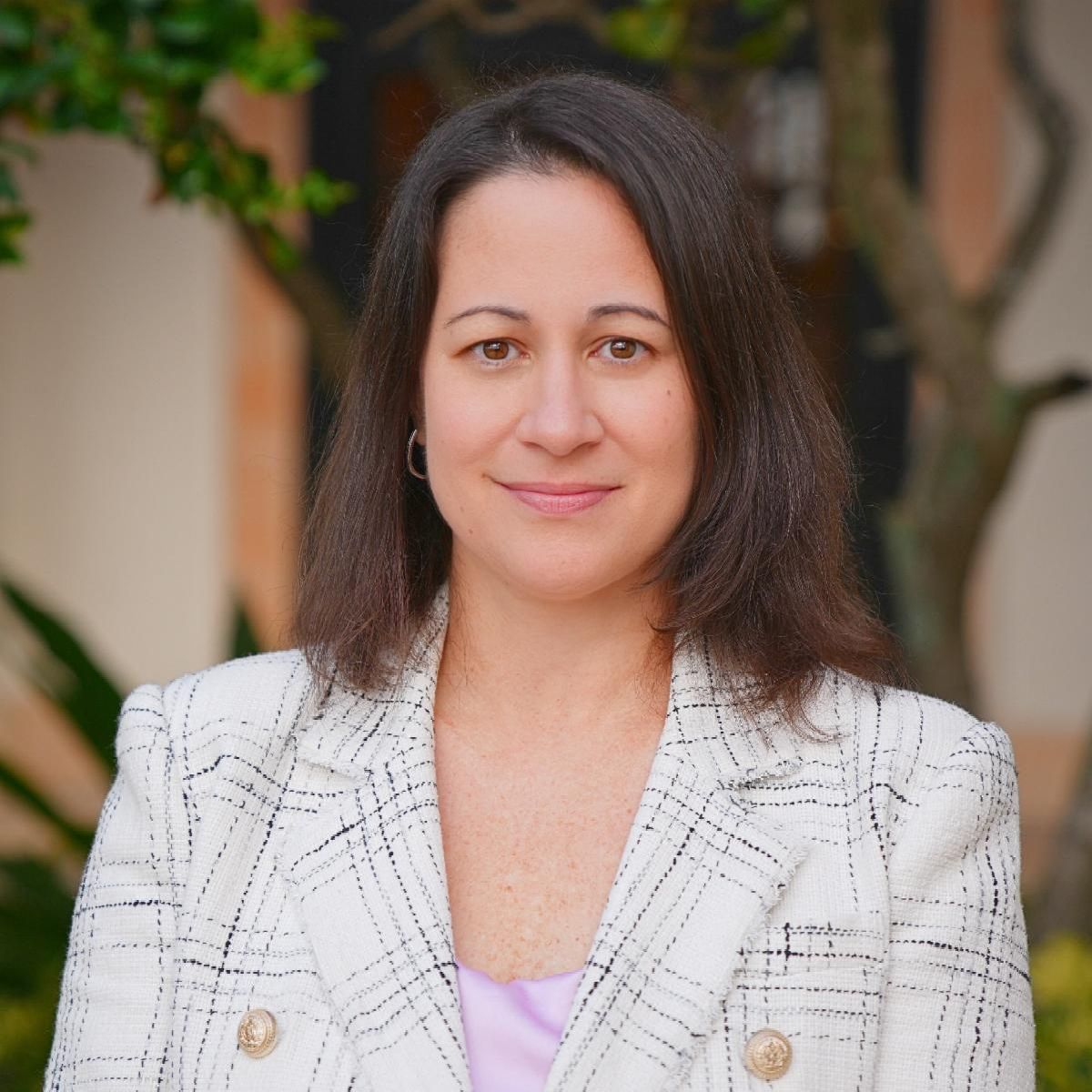
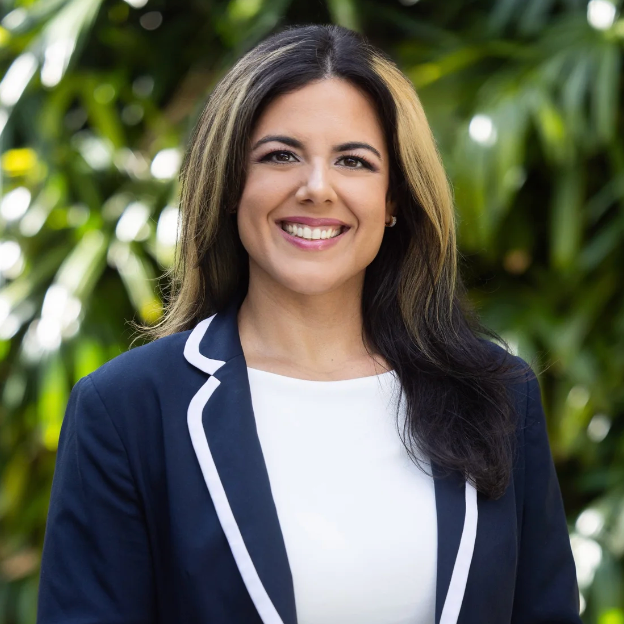
Aimee Gross, B.C.S.
Section Chair, 2025-2026
| |
| |
Bylaws Now Online
The Family Law Section’s bylaws are posted on our website and available for all members to review. We encourage you to take a moment to read them to learn more about the Section’s structure, leadership, and how it operates on behalf of its members.
For downloadable Approved and Proposed bylaws, CLICK HERE
| | | | 'From Conflict to Care: Constructively Addressing Psychiatric and Personality Disorders in Parenting Disputes' - Thursday, April 9, 12PM EDT | | |
Discussion on how psychiatric and personality disorders shape family court cases involving children. Gain insight on common diagnoses and their impact on parenting and litigation strategy and the development of trauma-informed parenting plans. This program equips legal professionals with practical tools to navigate complex custody disputes while highlighting therapeutic justice. Designed for judges, attorneys, magistrates and paralegals.
12:00 PM-12:05 PM
From Conflict to Care: Constructively Addressing Psychiatric and Personality Disorders in Parenting Disputes
Taghrid G. Hassan Hassan Law PA, Sunrise, FL
12:05 PM-12:35 PM
Definition and Types of Psychiatric Disorders
Options for Treatment of Psychiatric Disorders
Potential Impact of Psychiatric Disorders on Family Law Litigation
Dr. Miguel A. Firpi, PhD, Miami, Florida
Sarah E. Kay, Esq. Kay Family Law PLLC, Tampa, Florida
12:35 PM-12:50 PM
Adverse Childhood Experiences (ACEs) & Trauma
Impact of Trauma in Family Law Litigation
Practical Approaches for Trauma-Informed Decision-Making
Dr. Miguel A. Firpi, PhD
Sarah E. Kay
12:50 PM-1:10 PM
Case Strategies for Addressing Psychiatric & Personality Disorders
& Trauma Options for Therapeutic Justice
Dr. Miguel A. Firpi, PhD
Sarah E. Kay
1:10 PM- 1:25 PM
Strategies for designing stable, sustainable parenting arrangements
Best practices for crafting workable parenting plans
Dr. Miguel A. Firpi, PhD,
Sarah E. Kay
1:25 PM-1:30PM
Facilitated Question and Answer Period Closing Remarks
Taghrid G. Hassan
| | | | | Nominating Committee Meeting | | | | | Nominations Due: Alberto Romero Making a Difference Award. | | | |
It’s that time of year!
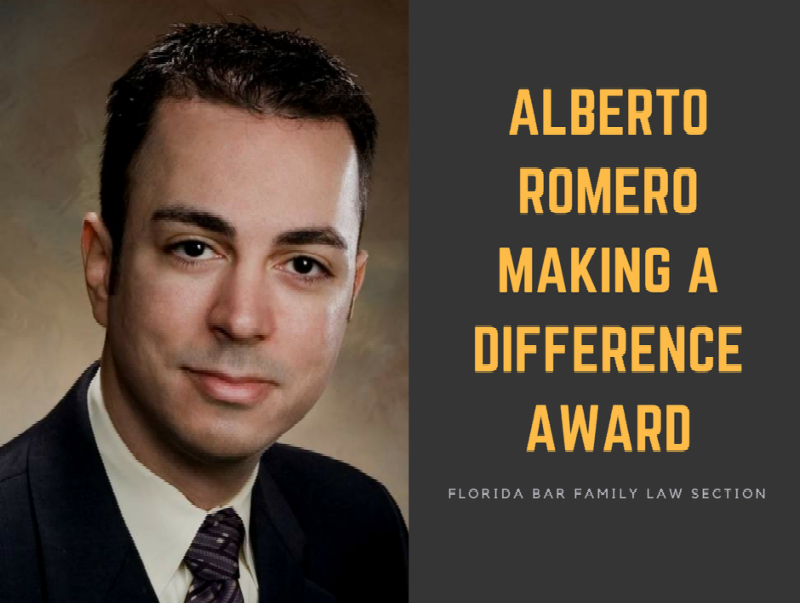
We are now accepting nominations for the Family Law Section of The Florida Bar's 2026 Alberto Romero Making a Difference Award and will do so through May 1, 2026.
The Award recognizes the work of Section members and affiliates who provide outstanding pro bono services, engage in significant volunteer community activities that improve the lives of Florida's children and families, and encourage other Section members to volunteer. Recent recipients of this distinguished award are Kim Rommel Enright of West Palm Beach (2020), co-winners, Sarah Kay and Caryn Stevens (2021), Robin J. Scher (2022), Bonnie Sockel-Stone (2023), and Brittany Lindsay (2024).
The Chair, on behalf of the Family Law Section of The Florida Bar, presents the Alberto Romero Making a Difference Award at the annual awards and installation luncheon at The Florida Bar Annual Convention in June. For more information, please contact Tina El Fadel, Esq. at: (561) 939-8042 or membership@familylawfla.org.
| | Committee Spotlight: Support Issues | |
Chaired by Marck Joseph, B.C.S., and Michael Mendoza, Esq.
The Support Issues Committee of the Family Law Section of The Florida Bar is dedicated to addressing critical questions and challenges related to financial support in family law cases. As a collaborative body of attorneys, judges, and professionals, the Committee focuses on matters involving child support, spousal support, and other financial obligations that arise during divorce, paternity, and related proceedings. Through ongoing research, discussion, and education, members work to identify emerging trends, clarify legislative changes, and develop best practices that enhance the fair and effective administration of support issues in family cases across Florida.
The Committee regularly reviews statutes, case law, and administrative rules to ensure practitioners and judicial officers have access to up-to-date guidance and resources. It also provides a forum for members to share experiences and propose solutions to complex support-related matters. By fostering communication and professional development, the Committee takes an active role in shaping policy and advocating for improvements that benefit families and the legal community alike.
If you are interested in making a difference in support-related issues and expanding your expertise in family law, we warmly invite you to attend our upcoming meetings. Whether you are a seasoned practitioner or just starting your journey in family law, your perspective is valuable. Join us as we work together to address support issues and promote positive outcomes for Florida’s families! For meeting schedules and details on how to participate, please contact support@familylawfla.org.
| | Tech Tip: Quirky Ideas to Make Zoom a Little More Enjoyable | |
By Jennifer Patti, Esq.
Do you feel like you’re spending more time on Zoom for hearings, depositions, and meetings than you are spending time with your family? Have you become comfortable wearing pajama pants and a nice jacket to Motion Calendar on Zoom? Zoom has become the easiest way to meet with clients, attend hearings, and take depositions. While most of us know the basics, such as screen share and to not appear as a cat avatar, there are a few quirky tricks you should know:
Tip #1: Closed Captioning for Zoom
Do you struggle to hear people on Zoom? The host can enable closed captioning by going to Settings, then Meetings, then In Meeting (Advanced), and it’s called “automated captions.” What if you don’t like “automated captions?” You can turn them off on your own screen after the host has enabled them. Fair warning: they are not 100% accurate. But they’re passable if you want to look at your emails on another screen and keep (somewhat) focused on the Zoom.
Tip #2: Automatically Muting Yourself (or Turning Off Your Camera)
Did you open the Zoom early and worry that that the Zoom meeting will open and you’re in the middle of a conversation that you don’t want your judge or opposing counsel to hear? You can mute yourself in advance! Click on Settings, then Audio, and you should then see a box: “Mute my microphone when joining a meeting.” You can also keep your video off by clicking on Settings, then video, then “Turn off my video when joining a meeting.”
Tip #3: Mute Yourself With the Click of a Spacebar
Did you know you can mute and unmute yourself by simply holding the spacebar? Now you do! No, you cannot hold the spacebar and silence someone else in the Zoom.
A few more of my favorite keyboard shortcuts:
-
I to invite. Press Alt+I (Windows) or Cmd+I (Mac) to see the Invite window. You can copy the link to the meeting or send invitations to others via email.
-
M to mute. Press Alt+M (Windows) or Cmd+Ctrl+M (Mac) when you are the host and want to mute everyone else in the meeting. (I know a few judges already who know this shortcut).
Tip #4: Try Immersive View!
Tired of looking at everyone in little boxes? A little too Hollywood Squares for you? (Thank you to everyone who understood the reference). Try Immersive View! Click the View button in the top right corner, then Immersive, and try a new virtual background so it looks like you are in the same virtual space as the other participants.
Tip #5: Using PowerPoint as a Virtual Background
Most of us are familiar with Share Screen, but what about PowerPoint as a Virtual Background? Make the most out of your presentation! If the host has enabled Share Screen, then click Share Screen, then Advanced. Double-click PowerPoint as Virtual Background and then select your PowerPoint file.
| | |
Beyond The Case File: Culture, Context, and Compassion in Legal Practice
By Rachel Gonzalez, Esq.
In family law and community-centered legal work, cultural understanding is not a bonus skill, it is foundational. The families we serve do not come to us as blank slates. Every individual arrives at the courthouse steps carrying histories shaped by culture, ethnicity, migration, religion, language, and lived experience. These influences shape how families define roles, resolve conflict, express emotion, and understand authority, parenting, and even justice itself.
When attorneys take the time to understand different cultural dynamics, we move from simply providing legal services to offering meaningful advocacy. A parenting practice that appears unusual through one cultural lens may be deeply rooted in tradition through another. Expressions of grief, discipline, respect, or independence may look different, but difference does not mean dysfunction. Without cultural awareness, legal systems risk misinterpreting families, and worse, harming them.
Respecting cultural context allows us to communicate more effectively, build trust more quickly, and craft solutions that actually work in real life, not just on paper. It helps us avoid imposing our own assumptions, and instead, meet families where they are with dignity and humility. This is especially critical when working with immigrant families, multigenerational households, and communities historically marginalized by legal institutions.
At its core, culturally responsive lawyering is about service. It asks us to listen before judging, to learn before labeling, and to advocate with both skill and humanity more conscientiously. When we honor the full complexity of the families we serve, we do more than practice good law, we practice justice.
| | |
Case Law Update
By Ronald Kaufman, B.C.S.
Jhackelin Martinez, Appellant, v. Carlos I. Bustamante, Appellee., No. 3D25-0286, 2026 WL 816936, at *2 (Fla. 3d DCA Mar. 25, 2026).
The Wife, Jhackelin Martinez, and Husband, Carlos I. Bustamante, entered into a premarital agreement before their wedding in October 2020. Martinez filed for divorce in 2022.
The parties stipulated to a partial final judgment of dissolution of marriage in late 2024 leaving unresolved the provision: “[t]he marital domicile shall be occupied by Wife until her death or occupied by Husband until his death.”
The court took parol evidence and ultimately declined to give the disputed provision any effect in the supplemental final judgment, finding the provision was “ambiguous, and clearly was a mistake.” Wife appealed, arguing that parol evidence established the parties’ intention to give her a life estate in the marital domicile.
The Third District Court of Appeal affirmed, finding that a court generally can't resolve a “patent ambiguity” in contractual language by examining extrinsic evidence. A patent ambiguity is readily discernible on the face of the instrument, arising from language that is “defective, obscure, or insensible.”
Here, the language is readily discernible as defective - it purports to give both parties the same right to occupy the same property. The language is also insensible because occupying a property generally means to the exclusion of others, presumably, and perhaps especially, including a newly divorced ex-spouse.
The language is therefore patently ambiguous. And the patent ambiguity must be resolved, if possible, by relying on the language of the contract as a whole and canons of construction.
Despite having reviewed parol evidence, the trial court still reached the correct result, and the term therefore cannot be enforced when a patent ambiguity exists in a material term. Additionally, the court noted, the appellate court should affirm a trial court that reaches the right result, but for the wrong reasons.
| |
Part X: '12 Habits of Highly Successful Family Law Attorneys' | | |
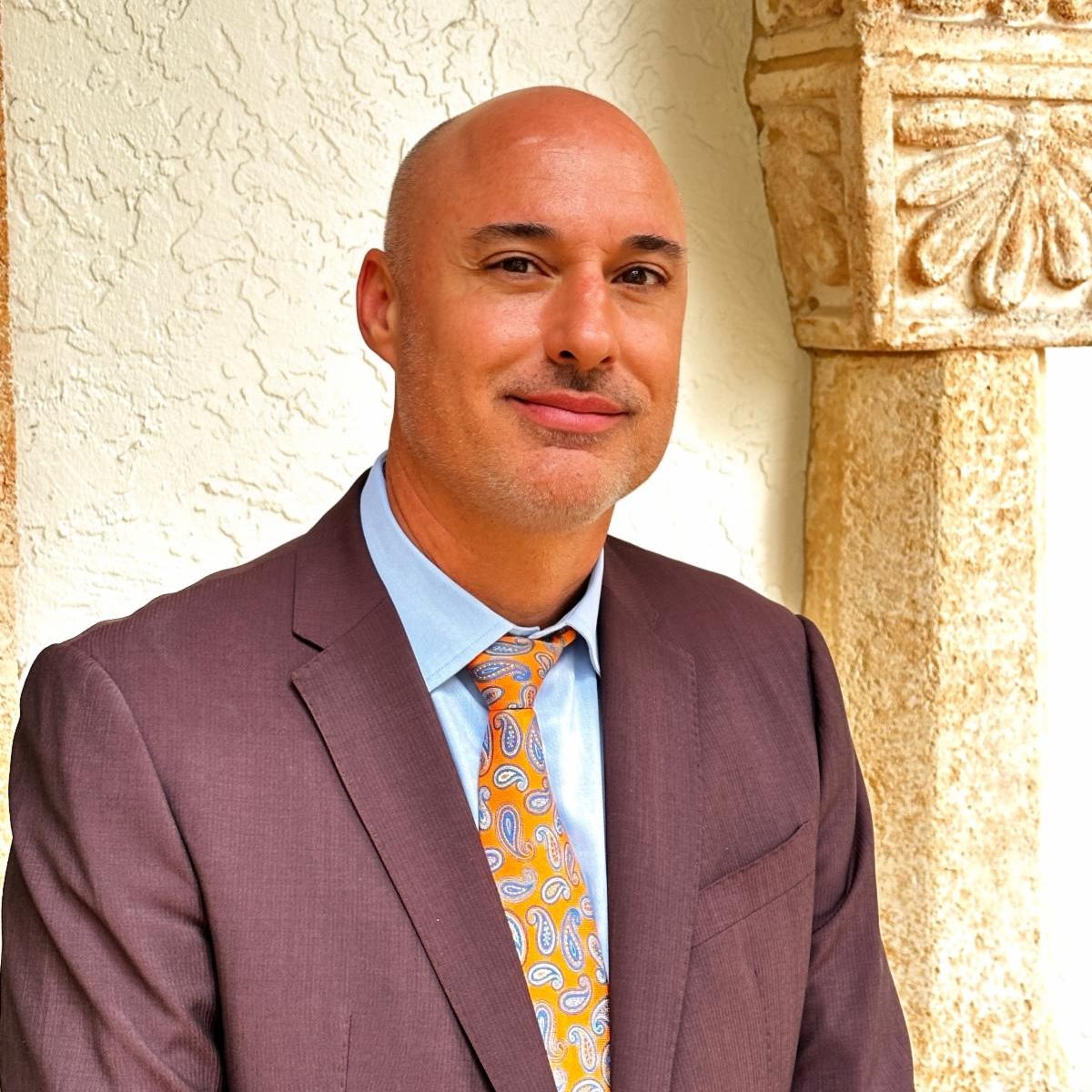
In our 10th article, we learn from Christopher W. Rumbold, founder of Law Offices of Christopher W. Rumbold, PLLC and Immediate Past Chair of the Family Law Section. Christopher is Board Certified in Marital & Family Law and a Fellow of the American Academy of Matrimonial Lawyers. As a Florida Supreme Court Certified Family Law Mediator, he advises and promotes the benefits of simultaneously seeking amicable dispute resolution.
Christopher is a former Assistant Public Defender with extensive trial experience defending misdemeanor and felony cases. Since 2005, Christopher has restricted his practice to complex, high income/high net-worth matrimonial and family law matters. He regularly practices in Palm Beach, Broward and Miami-Dade County.
| |
Live Intentionally, Not by Default
By Christopher W. Rumbold, B.C.S.
As marital and family law practitioners there is a perception (or a feeling) that we should always be available, at the ready, primed to solve the world’s problems. But what about us? How do we stay afloat on the days the sky is falling, or the universe is conspiring against us? I have found that living intentionally (not by default), within my morals and values (not according to others’), and with a robust appreciation for life (even life on life’s terms), helps me endure life’s storms – from drizzles to hurricanes.
Rise intentionally – Instead of jumping on your phone first thing, give yourself time to adjust; start a gratitude list or simply just think about the things in your life that bring you joy, peace and contentment; enjoy the pleasure a hot cup of coffee brings; spend an extra minute or two in the shower; or listen to relaxing music on the way to work. It is important to me to start each day with a clear head. As such, I wake up fifteen (15) minutes early to ensure my morning routine is not harried, and it specifically does not include time for doom scrolling on social media or reading the news. Admittedly, I am still working on this.
Work intentionally – Instead of putting out one fire after another, schedule specific blocks of time for emails, drafting, research and telephone conferences; review your calendar at least seven (7) days in advance to avoid any “last minute emergencies;” meet with your team to ensure reasonable and appropriate delegation of tasks; set reasonable expectations for yourself and your team mates; build “catch up days” into your calendar; encourage short mental health breaks for all team members and prioritize kindness. It is important to me that I dictate my schedule, and that my schedule does not dictate me. As such, I review the case list and calendar daily and weekly to avoid last-minute catastrophes. And, if an emergency arises in your practice notwithstanding your diligence and foresight, give yourself grace, treat yourself with kindness and compassion, and meet the challenge with a clear mind. You can do this, even when you feel like you cannot. Admittedly, I am still working on this.
Live intentionally – Instead of blending work with family time, step away from your cell phone and computer; take a bath (without your cell phone); go for a walk (without your cell phone); sit at the dining room table (and not in front of the TV) with family for dinner (without cell phones); work in the yard (without your cell phone); or plan and attend a special event (without your cell phone). Make the moments count. It is important to me that I have a work-life balance, even if most of the time it is an imbalance. And, if you are like me, and you have separation anxiety from your cell phone, schedule fifteen (15) minutes each evening, before you get into bed (at a reasonable hour), to review your emails or texts – the rest is family/private time. Admittedly, I am still working on this.
We are only a value to ourselves, our clients, opposing counsel and the court if we meet life’s demands with an even keel. We can only be us. We are not Marvel action heroes, regardless of what we may think. We can only do what we can do. There are not twenty-eight (28) hours in a day, even if we wholeheartedly believe or wish it. We are each enough, just as we are – take a quiet moment today to cherish yourself, your family, your practice, and your life.
| | | | | | |