|
We are one month in.
The bar year officially launched on July 1, and our Section has continued to gain momentum. The July FAMSEG introduced our theme, Empower. Elevate. Excel., and our new Level Up series. Our Committee Leadership Meeting brought together chairs, vice chairs, and secretaries from all 24 committees for the first time this year. Committees are holding their planning meetings, welcome emails are going out, and the work of this year is beginning to take shape. I am grateful for the energy and the engagement I have seen from our members in these early weeks.
This month, the Level Up series turns to courtroom presence. It is one of those topics that experienced attorneys sometimes take for granted and newer attorneys sometimes underestimate. How you carry yourself in front of a judge, your preparation, your demeanor, your command of the record, is not separate from your legal argument. It is part of it. I hope you will read this month's article and find something useful in it, whether you have tried one case or a hundred.
Before the end of August, our Leadership Retreat and Fall Meetings will bring the Section together at Sunseeker Resort in Charlotte Harbor. This is our first live gathering of the bar year, and it sets the tone for everything that follows. Committee chairs and officers will meet, report, and plan. Our leadership speakers will challenge us to think differently about what it means to serve in our profession and/or this Section. And we will have time to reconnect with colleagues and remember why we do this work.
If you are registered, I look forward to seeing you there. If you have not yet registered, there is still time. The retreat is open to all Section members, and I encourage you to come.
We also have exciting things on the horizon this fall. Our Out-of-State Retreat takes us to New Orleans in October for Jazz and Justice, an event I am genuinely looking forward to and one I think you will be too. Registration details are below.
One of the things I committed to this year is staying accessible. If you have ideas, questions, or things you want to see from this Section, I want to hear from you. I mean it when I say – reach out.
August is a good month. Let’s make it count!
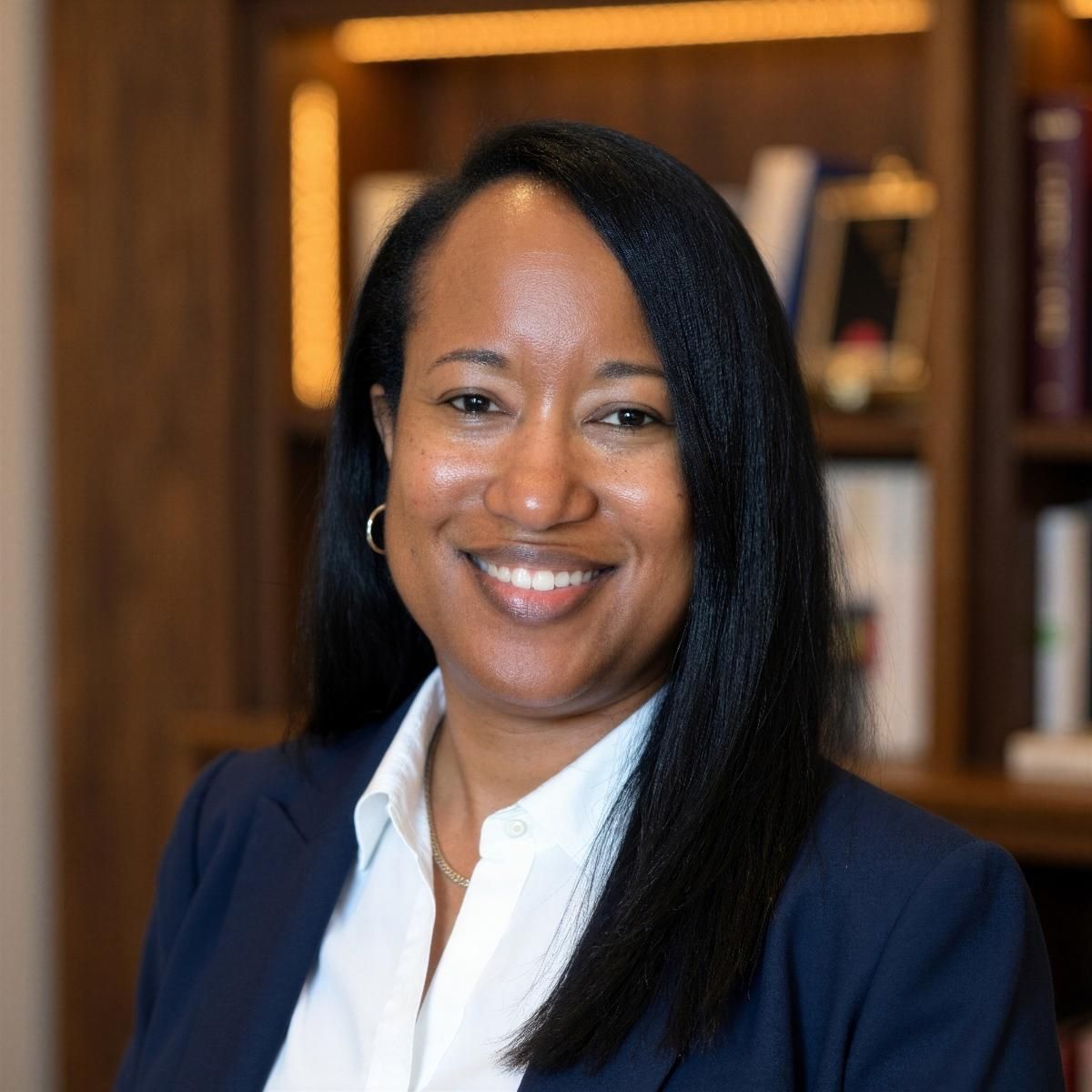
Tenesia C. Hall, Esq.
Chair, 2026-2027
| | FREE SECTION MEMBER BENEFIT:
Mechanics of Board Certification - Tuesday, Aug. 4, 11:30 a.m. - 1:00 p.m. EDT | | |
Join us to learn what it takes to be board-certified in Marital and Family Law from board-certified attorneys and a member of the BLSE! There will be time for questions and answers. (No CLE credits for this complimentary session, which is benefit of your Section membership.)
Speakers
Maritza McGill – BLSE
Laura Davis Smith, B.C.S.
Judge Christopher Sprysenski, B.C.S.
Olivia Brooks, B.C.S.
Andrea Reid, B.C.S.
Join Zoom Meeting
https://us02web.zoom.us/j/84175724510?pwd=OwvaWZEEx7fG3FqKp5cJM9XQulShqa.1
Meeting chat link
https://us02web.zoom.us/launch/jc/84175724510
Meeting ID: 841 7572 4510
Passcode: 191727
| | | | Mechanics of Board Certification - Free Zoom Session for Section members only | | | | | 2026 Leadership Retreat & Fall Meetings - Sunseeker Resort Forida Gulf Coast - ROOM BLOCK SOLD OUT | | | | | |
Out-of-State Retreat - The Royal Sonesta, New Orleans, LA
| | | | | |
Marital & Family Law Review Course and Mid-Year Meetings - Gaylord Palms, Orlando. (Registration opens in September.)
| | | | | |
Live CLE: Inside the Guardian ad Litem Role: Practical Skills for GALs and What Attorneys Need to Know. The Dalmar, Fort Lauderdale. More info coming soon!
| | | | | |
In-State Retreat: Three Waters Resort and Marina, Islamorada. More info coming soon!
| | | LEVEL UP! #2 - Courtroom Presence | | |
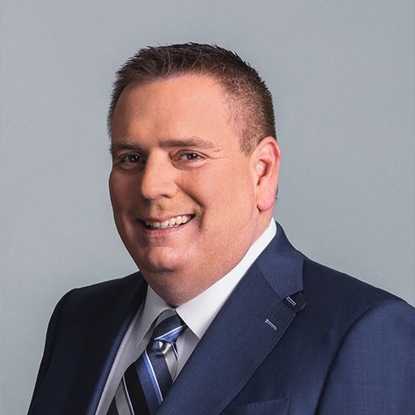
By Gerard Virga
I lost a hearing early in my career that I had no business losing. The law was on my side. My preparation was the problem.
My client had a sympathetic story to tell, and more to the point, a truly compelling and touching one. So, I did what any committed young lawyer does and went over her direct with her again and again until she could recite it in her sleep. We ran her direct over and over until every answer came out clean and polished. I thought that was the job.
We sat through a long morning docket to be heard, and by the time she took the stand, the polish worked against us. Her answers came a half-second too fast and a little too smooth, and I watched the judge quit taking notes. What I had built as credibility was landing on the bench as coaching. My honest witness sounded rehearsed because I had rehearsed the honesty right out of her.
We did not lose the case, but we lost that afternoon. What I remember most came after that hearing. As I packed up, the judge stopped me and said, “Gerard, everybody who walks through that door has a few dents in them. It’s the ones who come in looking perfect that I stop believing.”
That one sentence did more to level up my trial work than any seminar I have sat through. A family court judge spends all day sorting out who is telling the truth, and real testimony has some grit to it. The pause. The correction. The answer that wanders before it lands. Sand all of that off and you have not helped your witness. You have taken away the one thing the judge was listening for: AUTHENTICITY.
If you want to level up your practice, start there. I still prep witnesses hard. I just prep them to tell their truth now, which means staying true to their own story, in the way only they can tell it, in their own voice. Authenticity cannot be coached, and it is often the single most important element in winning your case.
| | |
Case Law Update
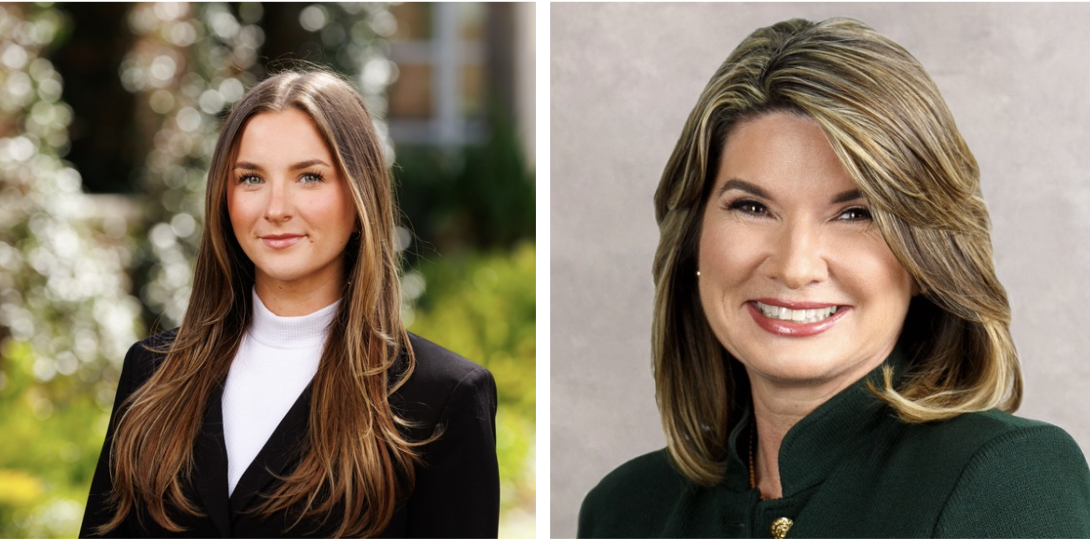
By Cameron Carlyle and Shannon McLin, B.C.S.
In Stewart v. Vindel, No. SC2024-0428 (Fla. July 9, 2026), the Florida Supreme Court resolved a district conflict and held that trial courts have discretion under section 61.075, Florida Statutes to award prejudgment interest when necessary to achieve an equitable distribution of marital property. The Court emphasized, however, that prejudgment interest is not automatic. Whether prejudgment interest should be awarded depends on the particular facts and equitable considerations presented in each case.
The case arose from a dissolution of marriage proceeding filed by the former husband in 2018. An uncontested judgment dissolved the marriage approximately nine months later, but the trial court reserved jurisdiction over equitable distribution, alimony, and attorney’s fees. The equitable distribution issues were not resolved until 2022. The trial court valued the marital property as of the date the petition was filed. The former wife requested prejudgment interest on her share of the marital assets from the date of filing through the eventual distribution. The trial court denied the request, reasoning that it would be inequitable to charge the former husband interest for delays largely caused by the COVID-19 pandemic.
The Third District reversed, concluding that the trial court’s reason for denying prejudgment interest lacked evidentiary support. The Court’s decision conflicted with Iarussi v. Iarussi, 353 So. 3d 75 (Fla. 1st DCA 2022), which held that prejudgment interest was unavailable in equitable distribution proceedings because section 61.075, Florida Statutes did not expressly authorize it. The Supreme Court approved the Third District’s decision and disapproved Iarussi. The Court focused on section 61.075(1), Florida Statutes, which provides that the statute’s equitable distribution provisions are “in addition to all other remedies available to a court to do equity between the parties.” The Court concluded that this broad language encompasses prejudgment interest as an equitable remedy. The Court also rejected the argument that the statute’s express authorization of interest on postjudgment installment payments implied that prejudgment interest was prohibited.
The Court explained that prejudgment interest may be appropriate when one spouse has been deprived of meaningful access to significant marital property during the dissolution of marriage proceeding. Joint ownership does not necessarily mean that both spouses had equal possession, use, control, or economic benefit from the property. When sufficient facts exist, the trial court retains discretion to determine whether prejudgment interest is an appropriate means of achieving equity.
The Dissent
Justice Labarga dissented, reasoning that section 61.075, Florida Statutes expressly authorizes a trial court to consider the time value of money when an equitable distribution award is paid in installments after judgment, but it does not expressly authorize prejudgment interest. Therefore, in his view, the Legislature’s inclusion of postjudgment interest and omission of prejudgment interest demonstrated that the prejudgment interest was not available. He cautioned that courts may not add relief to a statute that the Legislature did not provide. The majority rejected that negative-implication analysis, concluding that the statute’s broader authorization of other remedies necessary to do equity was sufficient.
Practice-Pointer
Family law practitioners should now evaluate prejudgment interest as a potential component of equitable distribution, particularly in cases involving lengthy proceedings, an early valuation date, exclusive control of income-producing or appreciating assets, or one spouse’s prolonged inability to access marital funds. A party seeking prejudgment interest should expressly request it in the pleadings, pretrial filings, or at trial, and present evidence establishing the period of deprivation, the assets involved, who controlled or benefited from them, and why interest is necessary to achieve equity. Counsel should also request specific findings supporting the ruling. Conversely, a party opposing prejudgment interest should present evidence identifying delays not attributable to that party and explaining why an award would be inequitable. A generalized request or argument, unsupported by evidence and a clear trial court ruling, may be insufficient to preserve the issue for appellate review.
| |
Tech Tip: The Invisible Witness - Metadata Fabrication of Evidence in Family Law
By Fritznie Jarbath
Your client hands you a screenshot — timestamped, seemingly authentic — showing the other party sending a threatening message at 2:47 a.m. It looks real. It may not be.
Every digital file carries metadata: an invisible layer of embedded data encoding when a file was created, modified, and on what device. For a photograph, it includes GPS coordinates, camera settings, and timestamp. For a Word document, it includes the author’s name, creation date, and full revision history. Most practitioners never look. Most opposing parties know that.
Free tools available online allow anyone to alter timestamps, strip GPS data, and rewrite document properties in minutes — without leaving traces visible to the naked eye. Add AI-generated images and deepfake technology into the mix, and the digital evidence your client is up against may be entirely fabricated while appearing entirely legitimate. Florida courts are already confronting this. In early 2026, a Miami-Dade virtual hearing was terminated when the presiding judge raised concerns that a witness may have been AI-generated.
Family law cases run on digital evidence: texts, emails, financial records, photographs. The digital evidence makes our clients uniquely vulnerable. The first line of defense is simple: stop treating digital exhibits as self-authenticating. Demand native file production in discovery — not screenshots, not PDFs — so forensic metadata analysis remains possible. Sometimes, the matter is a bit more complex, and you should know when a certified digital forensics expert belongs on your team.
| |
Sponsor Spotlight: Rothschild Capital Partners | |
|
By Margo A. Cook, CFP, CDFA, CAP and John S. Dame, Esq., CDFA
1. Tell us about your company and the services you provide to family law attorneys and their clients.
Rothschild Capital Partners is an investment advisory, wealth, and engagement planning firm. Within the firm, our Divorce Wealth Planning Team pairs a CFP®/CDFA® with a former family law litigator who is also a CDFA®, so clients benefit from both financial and legal fluency in one team. We support attorneys and their clients from the earliest stages of a case through post-judgment.
Our team:
(a) Builds an initial financial road map from bank statements and tax returns;
(b) Models settlement scenarios;
(c) Analyzes complex compensation and business interests;
(d) Evaluates the sustainability of proposed terms; and
(e) Implements the settlement afterward through what we call Next Chapter Architecture.
Next Chapter Architecture includes supporting the client through the asset division, portfolio buildout, estate planning, and future cash flow planning processes.
We work collaboratively with counsel, adapting our role to each attorney’s strategy and case needs.
2. What sets your company apart, or what’s something about your services that family law practitioners might not know to ask about?
Our mission is to support the non-financial spouse through divorce and reduce the information and control asymmetry they often feel. We are there to create more certainty during one of the most uncertain periods of their life.
Most experts in the divorce world are compensated per case, but our team's economics point the other way. We hope to develop a long-term relationship with the client and manage the client's assets after the divorce concludes, so we are not incentivized to run up fees during the litigation itself. Many of our services during a case are offered at a fixed fee.
Attorneys also may not realize how far our involvement goes beyond the settlement itself. A settlement is only as good as its execution, and we stay engaged through the post-divorce transition and beyond.
3. What trends are you seeing in your industry that family law attorneys should be paying attention to?
Two trends stand out. First, client financial circumstances keep getting more complex. More cases involve restricted stock, deferred comp, and private fund interests, which carry vesting, forfeiture, and liquidity risk that is easy to misvalue if treated as guaranteed rather than contingent. Second, economic abuse is emerging as a distinct, litigable concept. The Violence Against Women Act of 2022 (VAWA) reauthorization codified a federal definition, and states and locales are beginning to recognize it. Attorneys who can spot the fact pattern (restricted account access, forced financial ignorance, coerced debt) and know how to substantiate it, including through tools like the Revised Scale of Economic Abuse (SEA2), have a real advantage.
4. What do you wish more family law attorneys understood about working with financial planners/investment managers?
That our role is to reinforce your strategy, not compete with it. Good financial analysis has to sit inside the legal framework (equitable distribution rules, spousal support factors, what a court will likely order) rather than anchoring clients to outcomes the law does not support. We would also encourage attorneys to vet an adviser’s divorce-specific experience and set clear rules of engagement up front (what gets discussed with the client, how projections are presented) so financial input consistently supports your advocacy instead of accidentally working against it.
| | | | | | |