|
“If you stand on the shoulders of others, you have a reciprocal responsibility to live your life so that others may stand on your shoulders.” - Vernon Jordan
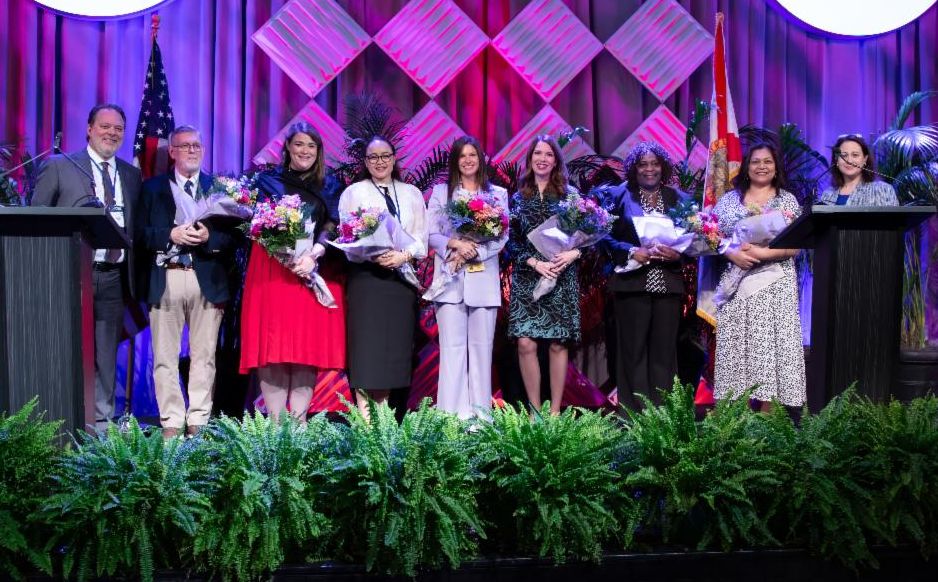
We began the new year on a high note as we continue to “Support Today, Reshaping Tomorrow.” In partnership with the AAML Florida Chapter, the Family Law Section successfully concluded our annual Marital & Family Law Review Course at the Walt Disney World Dolphin Resort. This year’s program was a tremendous success, and I extend a heartfelt thank you to Committee Chair Jack Moring, who devoted four years of substantial time, leadership, and dedication to make this event the exceptional educational experience it has become. I also thank the outstanding committee members—Magistrate Autumn Graham, Carolyn Ware, and Jamie Epstein—as well as all the speakers and contributors who shared their expertise through presentations and written materials – Jeff Weissman, Judge Thomas Einemann, Kristin Adamson, Andrea Reid, David Manz, Mark Sessums, Charles Fox Miller, Judge John Guy, Sarah Kay, Alex Caballero, Heather Apicella, Natalie Lemos, Maria Gonzalez, Meghan Clary, Reuben Doupe, Ralph ‘R.T.’ White, Abigail Beebe, and Thomas Sasser.
As part of the Section’s ongoing commitment to supporting family law practitioners and serving Florida’s families, we awarded nearly 20 scholarships to lawyers and general magistrates to attend this program, including two diversity scholarships. We were also privileged to host eight law students with an interest in family law, who participated in the mid-year committee meetings, attended the Review Course, and concluded the weekend by observing a very full Executive Council meeting. Engaging and mentoring the next generation of family lawyers remains a priority for our Section. To all the mentors that had mentees and law students shadowing them, thank you for your commitment and willingness to support others.
February may be the shortest month of the year, but it is filled with meaningful moments, including Black History Month, the Super Bowl, Valentine’s Day, Presidents’ Day, and even Groundhog Day. Against this busy and reflective backdrop, the work of the Family Law Section continues at full speed. With the Florida Legislative Session underway and the end of the Bar cycle just five (5) months away, we are actively advancing numerous projects focused on education, advocacy, and practitioner support. The Legislation Committee has been working around the clock and the Chairs, William “Trace” Norvell and Kimberly Rommel-Enright, are leading the way. Thank you to the Committee for their hard work and participation.
This month, our fast-growing Emerging Family Lawyers Committee is expected to start visiting several law schools across the state as we continue our efforts to engage law students and newer attorneys, introduce them to the practice of family law, and provide guidance and resources to help them build successful and sustainable careers in this field. If you are an emerging family lawyer, with less than five (5) years of experience and you want to get involved in the section or are seeking some additional guidance in your practice, please contact us at emerginglawyers@familylawfla.org. We would love to have you participating in a way that works for your schedule.
I want to thank all the sponsors and exhibitors of the Marital & Family Law Review Course. Your continued support of the program helps with its success. And finally, thank you to our committee leaders, volunteers, and members for your continued dedication and service. Your time, energy, and commitment are what make the Family Law Section’s work impactful and meaningful.
To your success,
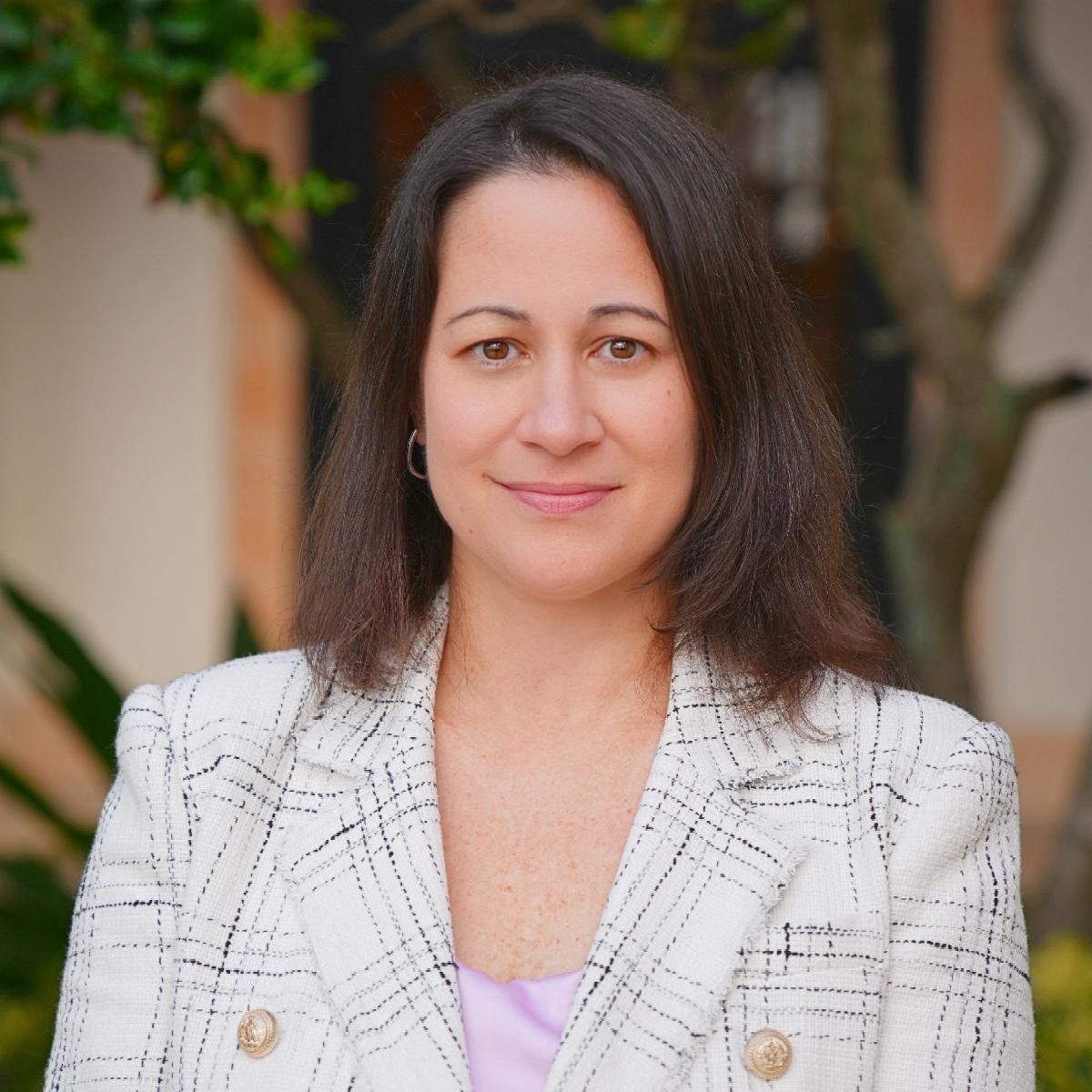
Aimee Gross, B.C.S.
Section Chair, 2025-2026
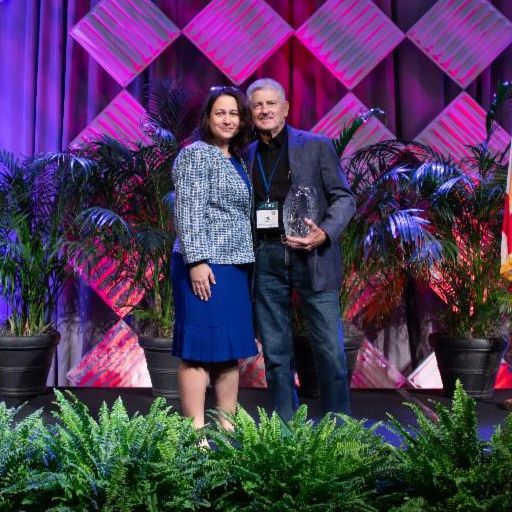
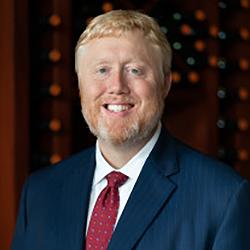
| | Congratulations to our 2026 Visionary Award Recipient John Foster, who was presented the award at the Marital and Family Law Review Course. Thank you for your incredible contributions to the advancement of family law in Florida. | | Congratulations to the 2026 Melinda P. Gamot Award recipient Stann Givens, seen here with Joseph Hunt and Aimee Gross. Thank you for your inspiration and tireless support for the lawyers and leaders of the next generation. | | LIVE CLE IN THE PANHANDLE: 'The Money Maze: Untangling Finances in Divorce and Custody Cases,' March 27, 2026 | | |
This seminar provides a comprehensive overview of the key financial issues that arise in Florida family law cases, such as alimony, good fortune, child support, business valuations, valuations of retirement accounts, and utilizing financial experts.
Our experts will also cover how to ethically and effectively utilize technology during family law proceedings and the importance of professionalism in all stages of family law proceedings.
To learn more, see the schedule, register, and make hotel reservations, click below!
| | | | SOLD OUT! Out of State Retreat. The Landing Tahoe Resort & Spa, Lake Tahoe. | | | | | Committee Preference Forms Due! 2026 Committee Forms and Leadership Applications are due on Sunday, March 15 at 5:00PM EST. Click below and sign up to take your membership to the next level! | | | | | LIVE CLE: ‘Solving the Money Maze: Financial Insights for Family Law Attorneys’ in Sandestin, FL. Click below to learn more and register! | | | |
This month we're featuring our Platinum Annual Sponsor, Our Family Wizard, a longtime supporter of the Family Law Section.
Our Family Wizard offers a seamless platform that allows parents to communicate, share calendars and journals, track expenses, and transmit payments through its shared parenting application. Its website, iOS, and Android applications have been used by over one million parents and family law professionals since the company was founded in 2001.
Thank you so much for your support, and we look forward to seeing you at an upcoming Section event!
| | Tech Tip: Electronic Trial Exhibits | |
By Matthew E. Thatcher, B.C.S.
Evidentiary hearings are a fact of daily life for most family law practitioners. Whether it is temporary relief, a motion for enforcement or a final hearing, at some point we will be conducting an evidentiary hearing during which we have to utilize documentary exhibits. In terms of the actual in-court presentation, we generally will be using a physical exhibit binder with paper exhibits. This way the court, the witness and opposing counsel all will have an identical paper copy in front of them to follow along with the presentation. But we don’t have to do it that way.
For every evidentiary hearing that you conduct, strongly consider maintaining an electronic copy of all exhibits that you can reference on your laptop, even if everyone else is following along with a paper copy. If you have each of the exhibits saved in a directory on your laptop (or on a flash drive) in a searchable PDF format, you can stage your line of questions by having each of the exhibits opened up in the order you seek to present your case. I often have my exhibits opened on my screen in multiple tabs in the order that I intend to go through them. You can highlight (for your benefit) the text and sections you want to emphasize. You can also, during cross examination, perform a word search of the exhibits to find the specific thing that you want to reference or show a witness.
Presenting an evidentiary hearing in this manner will avoid you needing to have cumbersome physical binders at the podium with you or at counsel table. It will make your presentation more efficient and allow you to jump to specific pages in voluminous exhibits far quicker than someone turning physical pages following bates numbers. This technique will also improve your ability to conduct an evidentiary hearing by Zoom because you will be comfortable in using electronic exhibits (yours and the other party’s) which will make sharing those on the screen and conducting an effective evidentiary presentation that much easier.
| Spotlight: Children's Issues Committee | |
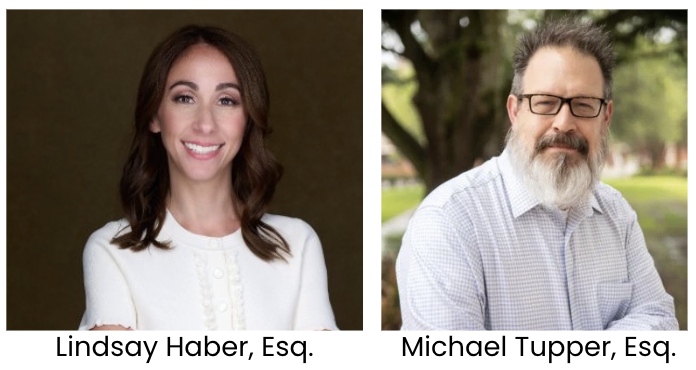
Chaired by Lindsay B. Haber and Michael A. Tupper
The Children’s Issues Committee is a dedicated, hands-on working committee of the Family Law Section of The Florida Bar. Our mission is to advocate for the best interests of children within the legal system by analyzing legislation, developing practical resources, and refining the standards that govern the lives of Florida’s families.
Each year, new legal challenges and legislative proposals shape the landscape of children’s advocacy. The Children’s Issues Committee works diligently to monitor these developments and provide expert feedback to ensure that the practice of family law remains focused on the welfare of minors. Our committee is currently divided into several active subcommittees tackling complex issues such as:
- Adoption Standards: Subcommittees are developing Fictive Kin Adoption language and evaluating Quasi-Stepparent Adoption.
- Parenting and Support: We are evaluating Parenting Plan Modification standards and legal procedures for the Disestablishment of Parentage.
- High-Conflict and Therapy: Ongoing work includes reports on High-Conflict Cases and the role of Child Therapy in legal proceedings.
- Legislative Monitoring: We maintain a watch on legislation affecting children through our dedicated liaisons.
Additionally, the Committee looks to the broader legal landscape to anticipate procedures affecting children. We are currently monitoring significant appellate matters, such as the Attorney General’s suggestion of certification to the Florida Supreme Court regarding the enforceability of gestational surrogacy contracts without a best-interest analysis under the Florida and U.S. Constitutions.
The Committee works closely with other Section committees and Florida Bar liaisons, including the Special Needs Children Liaison, to bring uniformity and professional excellence to the practice across the state.
| | |
Case Law Update
By Cash A. Eaton, B.C.S.
Paniry v. Paniry, 2026 WL 157991 (Fla. 3d DCA 2026)
This month’s case update involves a party’s motion to vacate a final judgment of dissolution of marriage, and by extension invalidating a Marital Settlement Agreement, based on a fraudulent financial affidavit, pursuant to Fla. Fam. L. R. P. 12.540(b)(3).
The Former Wife’s motion to vacate an agreed final judgment alleged fraud based on the Former Husband’s failure to update his financial affidavit. After the affidavit was prepared, but prior to the final hearing, the Former Husband received a promotion. The Former Wife’s motion alleged that the Former Husband received a promotion that increased his income. However, the Former Wife’s motion did not contain any facts as to the amount his income increased. The issue on appeal was whether the Former Husband should be compelled to produce discovery as to his new income.
The Third DCA reaffirmed that, “the trial court was duty-bound to determine the validity of the marital settlement agreement prior to granting the Wife's discovery requests.” (Emphasis added). Moreover, it held that before allowing any discovery, the trial court MUST determine whether the Former Wife’s allegations sufficiently establish a prima facie case of fraud.
Although the Third DCA would not determine the merits of the Former Wife’s motion/fraud claim, the opinion addressed that the Former Wife may not be able to establish an essential element of fraud. Reliance on an alleged false statement is an essential element of fraud. Therefore, the Former Wife was required to show that the Former Husband intentionally made a false statement/misrepresentation AND that the Former Wife relied upon that false statement. This is especially true when the party claiming fraud knew about inaccuracies or inconsistencies prior to entering into an agreement.
| |
Part VIII: '12 Habits of Highly Successful Family Law Attorneys' | | In our eighth article, we learn from Douglas A. Greenbaum of Law Offices of Douglas A. Greenbaum, P.A. in Fort Lauderdale, founded in 1992. Mr. Greenbaum handles all areas of family law as well as probate and guardianship. He is also outside counsel to the Department of Children and Families Alcohol, Drug Abuse, and Mental Health Program and is a Florida Supreme Court certified mediator for family law. Mr. Greenbaum is a parenting coordinator, an arbitrator, and a Guardian Ad Litem, volunteering his time in all three areas. He has also served on The Florida Bar Grievance Committee and has arbitrated fee disputes for The Florida Bar. Mr. Greenbaum has served in numerous leadership positions within the Family Law Section, including as Section Chair, 2020-2021. | |
Exhibit Professionalism with Accountability and Candor
By Douglas Greenbaum, Esq.
I have been a member of The Florida Bar since 1987, and after nearly four decades of practice, I still remember the words of my first mentor, Jean Booher: a lawyer’s reputation is built on their words. We only get one chance to make a first impression. When we stand before a judge or address opposing counsel, our words define who we are, not just in that moment, but throughout our legal careers.
Every lawyer, at some point, will miss a deadline, mis‑calendar a hearing, respond late to a pleading or email, or react in a way they later regret. We are all human. When these moments occur, the appropriate response is not to blame staff or offer excuses, but to accept responsibility. There is no shame in imperfection; there is, however, a professional obligation to be accountable - for our errors, our filings, our representations, and especially our words.
We must also remember that we are not our clients; we are their advocates. Clients come and go throughout our careers, and they may say or do things we would not have chosen for them. If a client acts inappropriately, our role is not to excuse the behavior but to counsel them to take ownership of it. When we appear in court, we must be candid with the Court and with opposing counsel. This does not mean we cannot explain our client’s actions in a way that serves their interests, but we must acknowledge those actions honestly.
As my practice has expanded to include serving as a Guardian Ad Litem in contested family matters and as an expert witness, I have observed many attorneys zealously representing their clients. Too often, I am dismayed to see lawyers omit material facts, knowing full well that the opposing party will bring those facts to the Court’s attention. These moments are opportunities to show the Court who you are as a lawyer and as a person. A lack of candor, whether by commission or omission, damages not only your reputation but also your client’s case.
I encourage each of you to be forthright with the facts and to remember that when a judge rules against your motion or issues a decision you disagree with, professionalism - not petulance - is the appropriate response.
Your integrity and reputation will follow you throughout your legal career. Your words matter.
| | | | |
Personal Goodwill: You Can't Pour from an Empty Cup
By: Jason Soman, CPA/ABV, CFE, ASA, CDFA®
Time and time again, a sophisticated client walks into our office having done their research on business valuations for divorce in the State of Florida. Depending on who you ask, you may hear, “The business is nothing without me!” or “The business runs itself!”
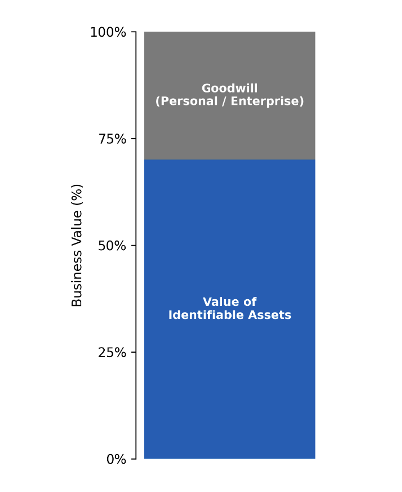
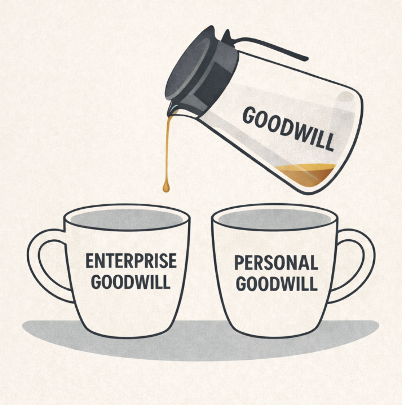
Oftentimes, this conversation is premature, as it is easy to lose sight of basic valuation concepts in this setting. Before we can discuss whether a company’s goodwill relates to a person (and therefore non-marital) or the enterprise (and therefore includable in the marital estate), we must first determine whether the company has any goodwill to begin with. Because you can’t pour from an empty cup.
Goodwill, by definition, is an intangible asset representing future economic benefits arising from a business or a group of assets that are not individually identified or separately recognized. Goodwill may arise as a result of name recognition, reputation, customer loyalty, location, products, among other factors.
From a valuation perspective, goodwill is typically reflected in excess earnings generated above and beyond a fair return on identified assets. In other words, the total value of a business must exceed the value of its identifiable net assets before goodwill can exist. Often, the total value of a business, including any resulting goodwill, is determined by using a market-based or income-based approach to valuation.
Florida Statute § 61.075 provides that the standard of value of a closely held business in a Florida divorce is Fair Market Value, which “means the price at which property would change hands between a willing and able buyer and a willing and able seller, with neither party under compulsion to buy or sell, and when both parties have reasonable knowledge of the relevant facts.”
A business valuation under the fair market value standard must measure three things from the perspective of a willing and able buyer and seller: (i) expected economic benefits, (ii) the risk of achieving those economic benefits, and (iii) the expectation of growth in those economic benefits.
In seeking the answer to the question, “What is the business worth?”, business valuators must address numerous issues, including: Are owners paying themselves a fair market wage? Are there any economic benefits that are not expected to recur? Is the risk of the business disproportionately dependent on the continued involvement of the owners, key employees, major customers, or critical suppliers?
Before debating whether goodwill is personal or enterprise, it is essential that practitioners first confirm that goodwill actually exists. When earnings are properly normalized and business risks are assessed from a buyer’s perspective, the personal versus enterprise goodwill distinction often becomes far less significant.
Jason Soman, CPA/ABV, ASA, CFE, CDFA® is the Managing Partner of Soman Forensic & Valuation CPAs in Boca Raton, Florida, with offices in Naples, Tampa and satellite locations in Orlando and the Panhandle. Mr. Soman specializes in advising legal counsel and clients on issues relating to business valuation, spousal support, and other financial forensic matters in divorce. Learn more at www.somanforensics.com.
| | | | |