|
“The future belongs to those who believe in the beauty of their dreams.” - Eleanor Roosevelt
I hope everyone enjoyed a wonderful holiday season and is off to a strong start in the New Year. As we turn the calendar, many of us reflect on goals, fresh starts, and the work ahead. The Family Law Section is no different. We are looking forward to a dynamic second half of the Bar year and are focused on outstanding CLE programming, meaningful legislative efforts impacting Florida’s families, and continued support of emerging family lawyers and law students.
We have two exceptional Live CLE opportunities coming up. The Marital & Family Law Review Course is just weeks away, and registration remains open for those who wish to attend. Click here to learn more and register. NOTE: The room block expires on Wednesday, Jan. 7 at 5:00 p.m. EST so if you're planning to attend, book your room TODAY!
Later this spring, on March 27, we head to Northwest Florida for a Live CLE at the Sandestin Golf and Beach Resort, featuring a strong focus on financial issues in family law, including business valuations, prenuptial agreements, and retirement accounts. Click here to register for the CLE, 'The Money Maze: Untangling Finances in Divorce and Custody Cases.'
The Family Law Section is also proud to continue its support of the Wm. Reece Smith, Jr. Leadership Academy Fellowship, which is now accepting applications for the 2026–2027 Bar cycle. The deadline to apply is January 30, 2026. As a Fellow, I highly recommend this program to anyone interested in future leadership within the Section, The Florida Bar, or their broader community. The program is now in its 14th year and remains a cornerstone of leadership development within our Section. Click here to learn more and apply.
Amid all this learning and forward momentum, we will also take time to connect and recharge at our Out-of-State Retreat in Lake Tahoe, March 4–8. Hosted at The Landing Resort & Spa, this retreat offers an inspiring lakeside setting near Heavenly Village, world-class skiing, dining, and entertainment. Programming will be thoughtfully balanced with opportunities to explore Lake Tahoe, enjoy festive gatherings, and connect with colleagues in a relaxed environment. Space is extremely limited. While the full brochure and registration link will be available shortly, hotel reservations are now open at an excellent ski-season rate! Sponsorship opportunities are also available.
Our Emerging Lawyers Committee will be hosting some fun get togethers at the Review Course, so be sure to email emerginglawyers@familylawfla.org to get in on the fun!
We look forward to a productive, engaging, and memorable year ahead and again, thank you ALL for your commitment to the Family Law Section and our mission!
Cheers to a fantastic 2026!
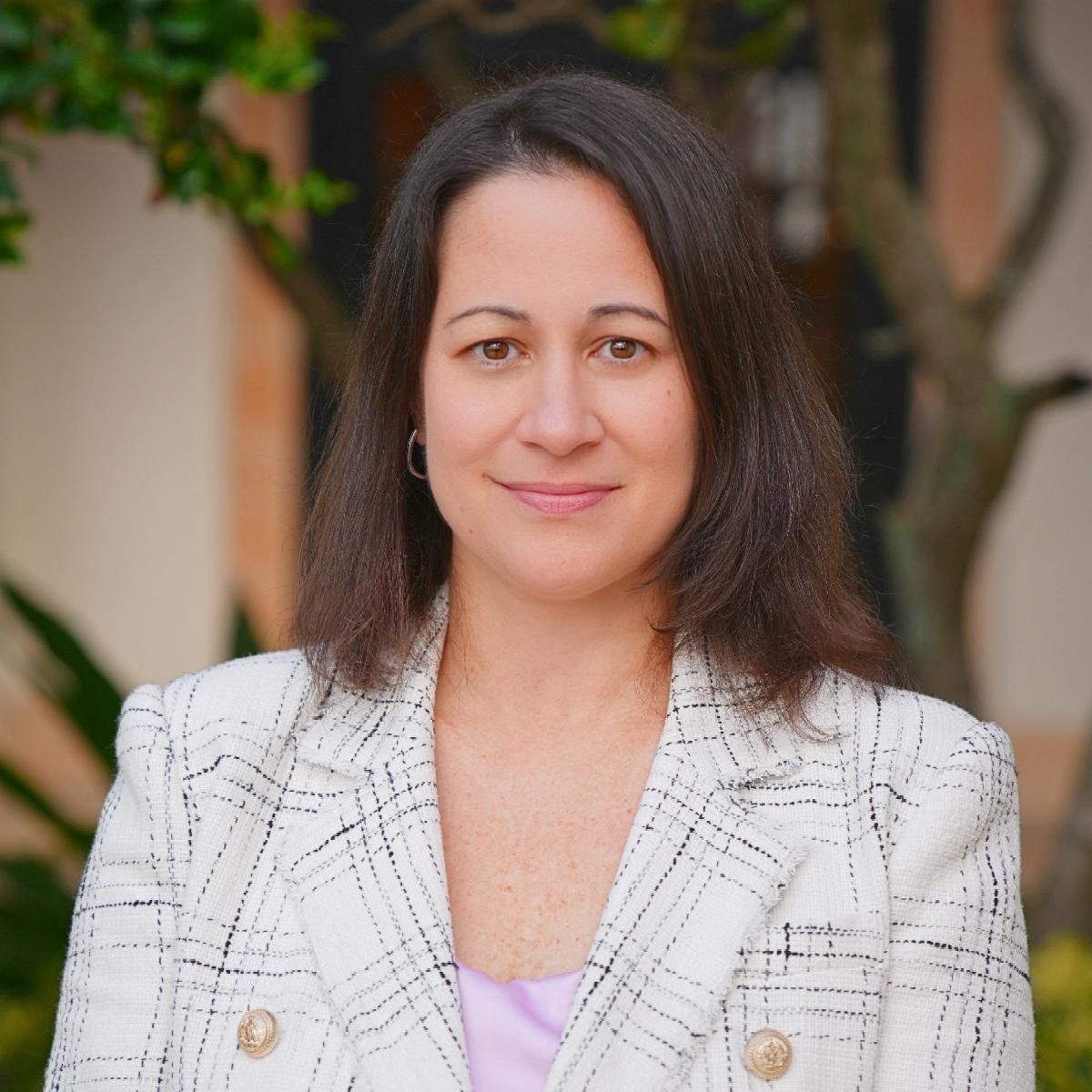
Aimee Gross, B.C.S.
Section Chair, 2025-2026
| ROOM RESERVATIONS NOW LIVE: Out-of-State Retreat in Lake Tahoe, March 4-8, 2026 | |
This is where productive conversations meet postcard-perfect views! Our Out-of-State Retreat is March 4-8, 2026 at The Landing Tahoe Resort & Spa in breathtaking Lake Tahoe.
Sponsorships are available now, and room reservations are now LIVE! Reserve your room(s) today and don't miss this spectacular Section event! (NOTE: The booking link has a glitch - even if you're reserving a room for 2 or more guests, just select 1 guest in order to get our special room rate. Use the name of the payor on the reservation.)
NOTE: Registration will be open soon, so check our socials and our website for updates!
| | | | Mid-Year Meetings and Marital and Family Law Review Course. Registrations are still available. Note: The room block expires on Wednesday, Jan. 7 at 5:00 p.m. EST. | | | | | Application Deadline - The Florida Bar Wm. Reece Smith, Jr. Leadership Academy Fellowship. | | | | | Out of State Retreat. The Landing Tahoe Resort & Spa, Lake Tahoe. Hotel reservations now open! Registration will be live soon! | | | | | LIVE CLE: ‘Solving the Money Maze: Financial Insights for Family Law Attorneys’ in Sandestin, FL. Click below to learn more and register! | | | |
Rothschild Capital Partners is the result of more than one hundred years of the Rothschild family’s involvement in business and investing. At Rothschild Capital Partners, we believe that empathy and engagement catalyze purpose and lead to connection. Integrating purpose, profit, engagement, and civil discourse can mitigate polarization and facilitate a journey from feeling divided to feeling united. Moreover, engagement and purpose including sustainability, justice, and diversity enhance long-term business performance and reduce risk.
Thank you so much to the Rothschild team for their support of the Family Law Section as a Signature Annual Sponsor, and we look forward to seeing you at an upcoming Section event!
| | Tech Tip: Dealing with A.I. "Informed" Clients | |
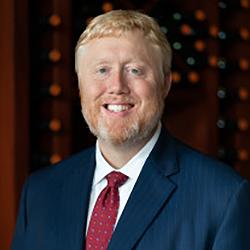
By Matthew E. Thatcher, B.C.S.
Daily in our practices we engage with people who lack the years of legal training and experience that comes from completing law school, passing the Bar exam, and engaging in a legal practice. Those people are our clients. They are trying to understand their cases and their options (without incurring legal fees) and often turn to generative AI platforms and Google services. We have all had that conversation or e-mail where our client confidently raises a wrong point of law or misstates a statute based upon their independent “research.” Their confident misstatement is the result of the basic programing principle of “garbage in – garbage out.” As any 1st year law student could tell you, if you fail to include sufficient accurate detail in your search query, you won’t get a correct answer.
When this happens, you should view it as an opportunity and not a frustration. We want our clients to be fully informed in their cases. We want them to have a correct understanding of the issues, options, and the legal strategies that we are presenting to them. They are paying us on an hourly basis for our knowledge and expertise to guide them through their legal issues. This is your opportunity to shine and validate the confidence that they placed in you. Since they are reaching out to “see” answers, you should give them something tangible. Send them a highlighted copy of a published decision emphasizing the correct point of law that you are relying upon in their case. Provide them a highlighted copy of the statute, rule of procedure, or administrative order which governs the matter. The better we are at doing this, the more informed our clients will be about their cases and thus able to make informed decisions about how to move forward.
| Spotlight: Rules and Forms Committee | |
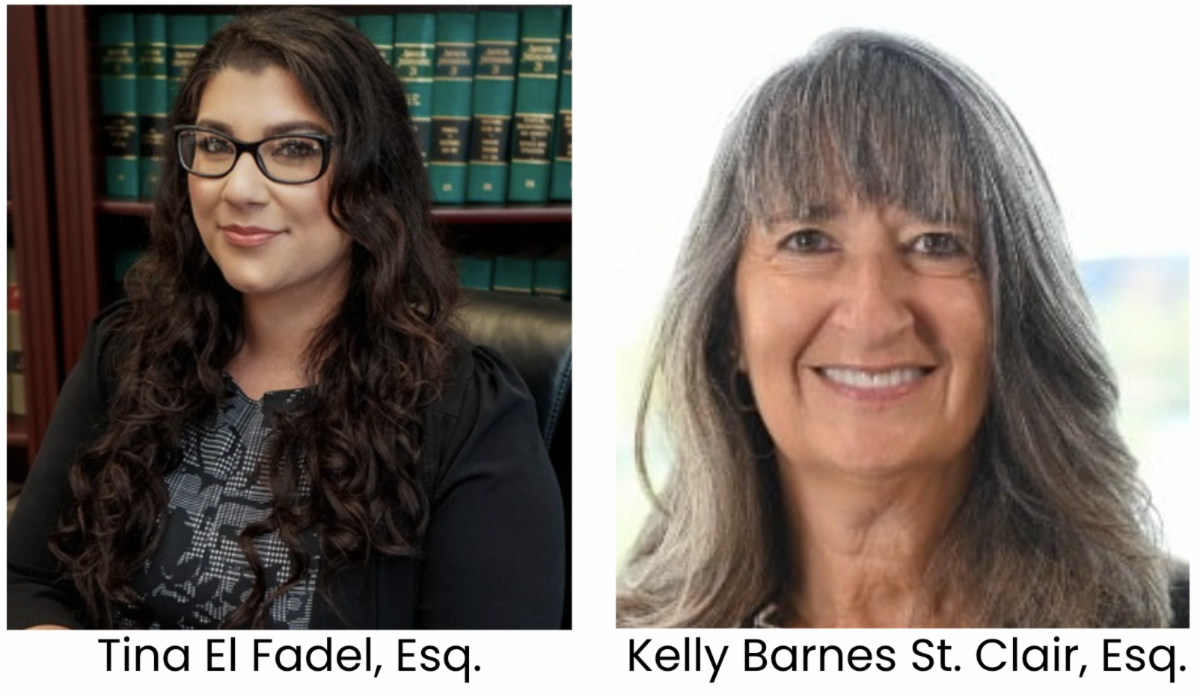
Chaired by Tina El Fadel
and Kelly Barnes St. Clair
The Rules and Forms Committee is a hands‑on, working committee dedicated to reviewing existing and newly enacted family law rules and forms to evaluate practicality, consistency, and applicability within the practice of family law.
Each year brings new legislation, appellate decisions, and practical challenges that shape the practice of family law in Florida. The Rules and Forms Committee works diligently to analyze new, proposed, or possible rule changes or enactments to make recommendations or provide feedback when appropriate. In tandem with new or changed rules, the Committee reviews the Family Law Forms to ensure the same remain current, relevant, and workable for the judiciary, practitioners, and pro se litigants. The Committee will be proposing changes to the Instructions of a number of forms in light of recent rule changes related to Financial Affidavits.
Additionally, the Committee looks to the broader legal landscape to anticipate new rules or procedures which may affect the family law landscape. For example, there is currently a subcommittee reviewing Rule 1.202 of the Civil Rules of Procedure, which requires conferral before filing motions, to discuss ramifications should a similar rule be proposed to be added to the Family Law Rules of Procedure. There is also a subcommittee working on the creation of forms for Dependent Adult Children to align with section 61.1255 of the Florida Statutes.
The Committee works closely with fellow Family Law Section Committees and Florida Bar Committees to discuss, develop, or refine rules and forms to keep pace with the realities of modern practice. A subcommittee is currently working with the Guardian Ad Litem Ad Hoc Committee to draft proposed rules for Guardians Ad Litem, similar to the rules for parenting coordinators and mediators, to bring uniformity to the practice of Guardians Ad Litem across the state.
The Rules and Forms Committee thrives on the insight and experience of our colleagues across the state. If you encounter a rule or form that seems outdated, unclear, or ripe for improvement, please email rules@familylawfla.org, or you are welcome to join one of our meetings. We meet the first Wednesday of the month via Zoom at noon.
| | |
Case Law Update
By Ronald Kauffman, B.C.S.
Webking v. Webking, 1D23-0771, December 31, 2025
The Father filed an appeal to a trial court's Final Judgment on Paternity, Time-sharing, and Child Support on multiple grounds.
The trial court's child support and retroactive child support awards were reversed, due to its failure to make the required finding that the Father has the ability to pay the ordered support.
Specifically, and more importantly, the Father argued that the trial court erred in requiring him to pay 60 percent of the costs of the child's extracurricular activities because that provision could subject him to the expense of any extracurricular activity in which the Mother could unilaterally involve the child, without regard to the father’s ability to pay for the child’s activity.
On appeal, the First District agreed. Relying on Gordon v. Gordon, 63 So. 3d 824, 827 (Fla. 5th DCA 2011), which construed a similar provision ordering the father to cover 61.47% of the costs of the children's extracurricular activities as applying only to those activities that the parties agree upon, the First District similarly construed the extracurricular child support provision here as applying only to those extracurricular activities that the parties agree upon pursuant to shared parental responsibility.
Finally, the trial court's post-judgment Order on Motion for Contempt and Income Withholding Order for Support pursuant to Florida Rule of Appellate Procedure 9.600(c)(3) was reversed because the contempt order failed to recite the facts upon which the court's finding of the Father's present ability to pay child support is based.
| |
Part VII: '12 Habits of Highly Successful Family Law Attorneys' | | In our seventh article, we learn from Evan R. Marks, founding partner in Marks & West, P.A. in Miami, Florida. Mr. Marks earned his Bachelor’s and Law degrees from the University of Miami, has been a Member of the Florida Bar since 1981 and Board Certified by the Florida Bar as a specialist in Marital and Family Law since 1995. He is AV rated by Martindale-Hubbell. Mr. Marks is the Past President of the Collaborative Family Law Institute (CFLI), a former Chair of the Family Law Section of the Florida Bar (2004), former Member of the Commission on Responsible Fatherhood (1996-2002), and former President of the First Family Law Inn of Court (2000-01), Mr. Marks teaches and is a frequent lecturer on family law and ethics including at the Florida Family Law Section’s Marital & Family Law Board Certification Review Course, the "Master’s Seminar on Professionalism" at the Annual Florida Bar Convention, and at the Advanced Judicial Studies College. | |
Managing Clients' Expectations
By Evan R. Marks, Esq., B.C.S.
Our clients rely upon us as skilled family law practitioners to give them the best advice; however, oftentimes, the “best” advice is not the advice that they want to hear. The client comes to you with certain expectations and unless you are able to “manage” those expectations, the client will not be satisfied, your level of stress will increase and the results that you obtain for the client will be deemed insufficient.
To avoid this, you must identify the client’s expectations and the time to do this is in the initial consultation. After you have received sufficient background information, ask the client what they are seeking as the ultimate result in their case. This information will not only allow you to evaluate whether their expectations are reasonable vs. unreasonable, but more importantly, whether their expectations are attainable vs. unattainable.
For example, if the client says that they want “the house,” and the house is the only marital asset of the parties, this is probably an unreasonable expectation, because you cannot achieve this result for the client in court. Consider though that this outcome might not be an unattainable expectation if the parties agree to this outcome in mediation or in a collaborative law setting. By explaining this to the client you both let the client know what you believe can and cannot be accomplished in court and are also charting a strategy with the client to try to attain the desired result in a different way.
If the client’s expectation is simply something that cannot be accomplished, you must say so and explain why. For example, tell the client that the law in Florida has changed in July 2023 and that permanent alimony is no longer awarded. Explain what a judge can and cannot do within the bounds of the law. Explore with the client other available options to try to address the client’s stated objectives (i.e. financial security). If the client is insistent that the stated objective is the only result that will satisfy the client, this is not a client for you to take.
By managing the client’s expectations at the outset, you and the client can work together to obtain results which the client will understand were the best that could be achieved under the circumstances unique to the client’s case. The client will appreciate your candor and will be a future referral source.
| | | | | | |