"Do your little bit of good where you are; it's those little bits of good put together that overwhelm the world." - Desmond Tutu
As we welcome the month of May, we have an opportunity to reflect on two meaningful observances: Mental Health Awareness Month and National Law Week. While different in focus, both are important reminders of the responsibility we carry as members of the legal profession, not only to advocate for and support others, but also to care for ourselves and one another.
Mental Health Awareness Month encourages us to acknowledge the very real challenges that many in our profession face. The practice of family law, in particular, often places us alongside clients during some of the most personal and emotional moments in their lives. Taking time to prioritize mental health is essential to sustaining the compassion, clarity, and professionalism our work requires. It also helps us continue showing up for those who need us most.
This year, National Law Week runs from May 1–7, centering on May 1, which is recognized as Law Day. This year’s theme, “The Rule of Law and the American Dream,” highlights the legal system’s role in protecting rights, ensuring equality, and supporting the communities we serve. While Law Day has passed, this year’s focus remains closely aligned with the work we do every day to support families and help shape better tomorrows.
Together, these observances invite us to lead with both purpose and perspective - to continue striving for excellence in our practice while also extending grace to ourselves and our colleagues. When we make room for both well-being and professional responsibility, we strengthen not only our Section, but the broader legal community we serve.
As we head toward the end of the Bar cycle, the Section continues working diligently to complete the meaningful projects and priorities we set out to accomplish at the beginning of the year. We also look forward to gathering in Orlando for our upcoming meetings and luncheon, where we will have the chance to celebrate the work of the Section, recognize our colleagues, and look ahead to the year to come. Be sure to purchase your tickets to the Membership Awards & Installation Luncheon on Wednesday, June 17. See the info box below.
We also continue to welcome new members and are especially excited to meet the summer fellows focusing on family law through the FFLA, made possible in part by the six stipends the Section helped create through its donation for the summer of 2026.
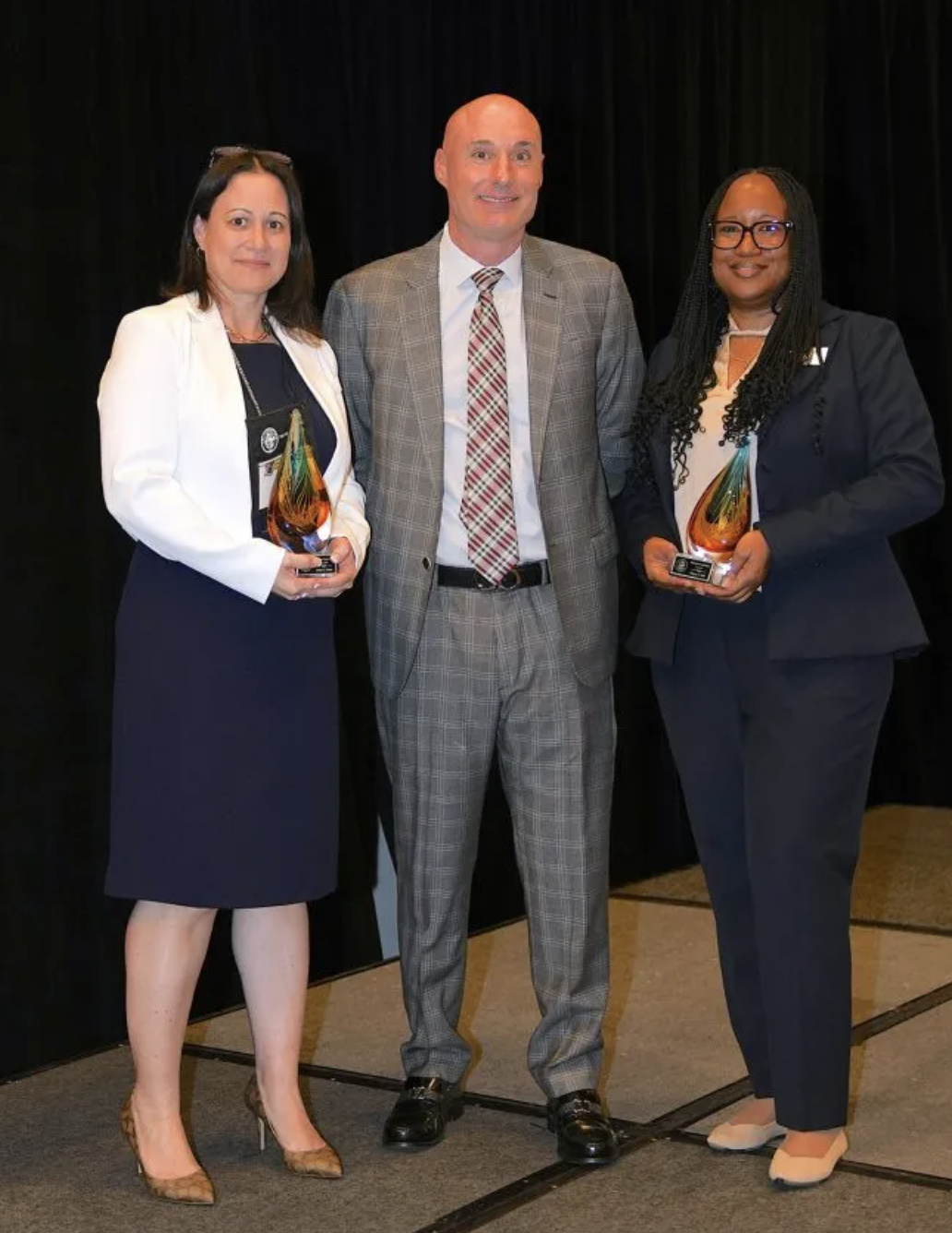
As we continue to support others, we also want to recognize one of the Section’s very own Trustees, Maria Gonzalez, who is President-Elect of the FFLA. Maria was recently named Alumna of the Year by Nova Southeastern University Shepard Broad College of Law. She is also my mentor, and someone who has done so much to support the Section and Florida’s families throughout the years. It is such a blessing to know her. Congratulations, Maria!
We hope to see everyone in Orlando at our next meetings!
To your success,
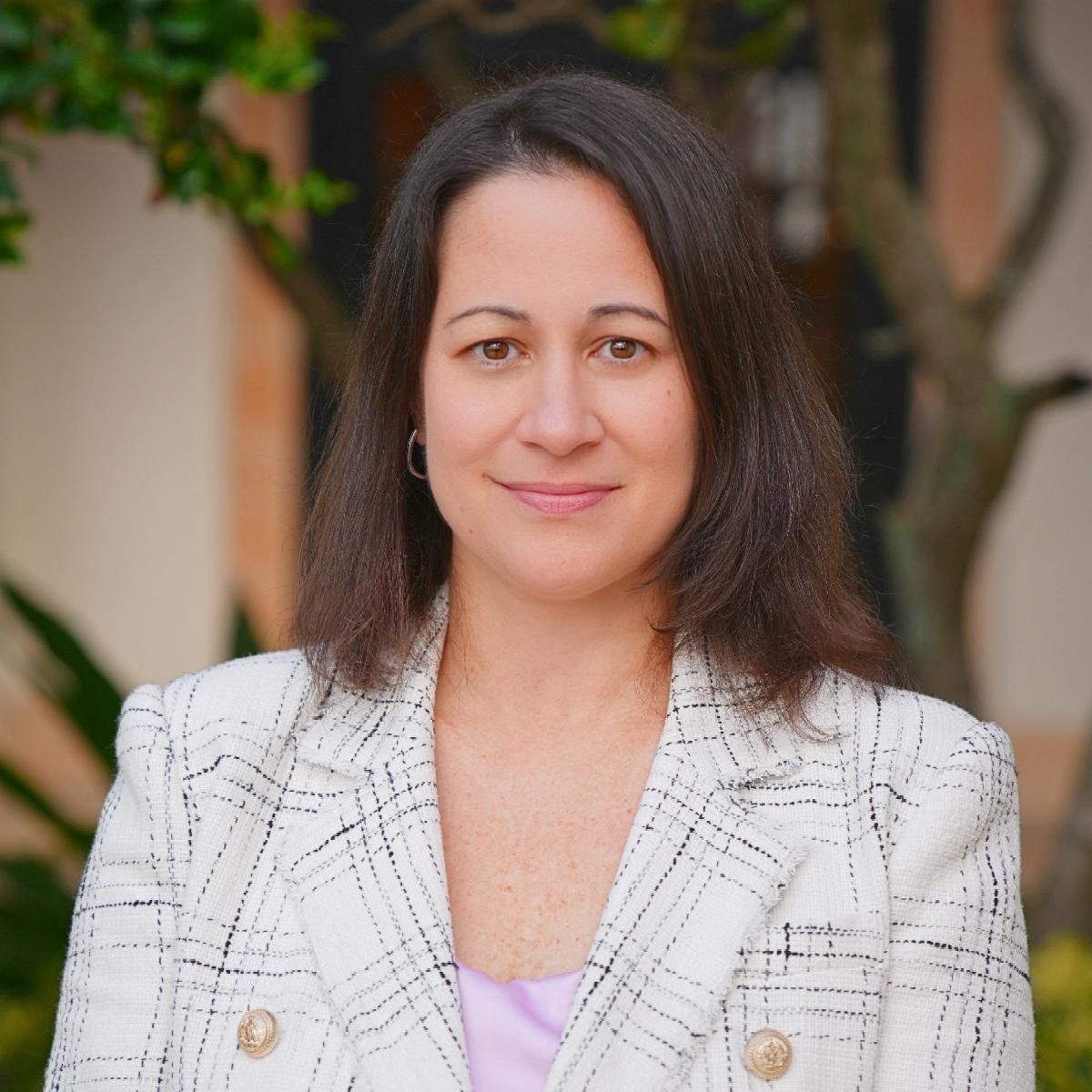
Aimee Gross, B.C.S.
Section Chair, 2025-2026
| |
| |
Our Membership Awards & Installation Luncheon is June 17!
Our Annual Membership Awards and Installation Luncheon takes place on Wednesday, June 17 at 12PM in conjunction with the Annual Bar Convention in Orlando.
Join us as we honor outstanding lindividuals in family law, and welcome our new leadership! You're also invited (and encouraged!) to attend our Committee meetings (schedule below.)
✅ Click thebutton on the left
✅ Click the blue Register button on the top right of the page
✅ Log in to with your membership info
✅ If you're not attending the Convention, click "Limited Access Pass" (no fee) and you can purchase your Luncheon tickets there ($65 each)
| | | | CLE: "Temporary Custody Matters: Legal Standards, Evidentiary Challenges and Best Practices" - Thurs., May 14, 12:00 p.m. - 1:00 p.m. EDT | | |
Temporary custody determinations can set the tone for an entire family law case - and the decisions made in those critical early stages often have lasting consequences for your client and their children. This webinar provides family law practitioners with a comprehensive overview of temporary custody in contested proceedings, from the initial emergency or ex parte order through contested temporary hearings and potential modifications.
Moderator:
Chelsea Miller, Esq., Vero Beach
Speakers:
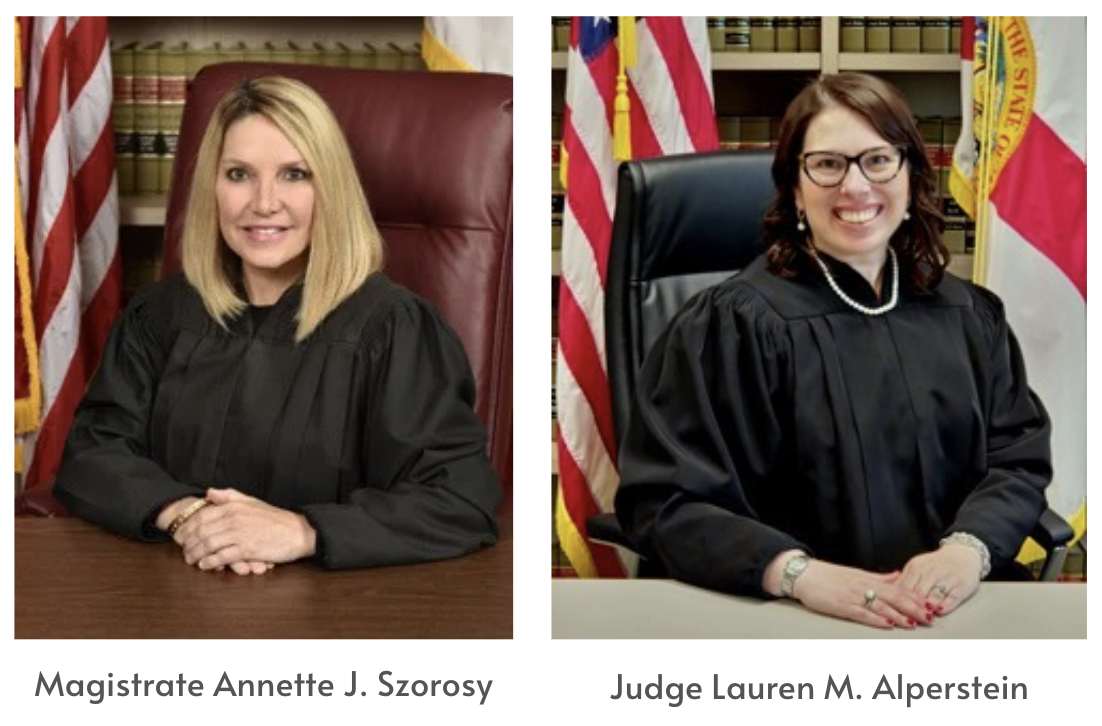
Judge Lauren Alperstein, 17th Judicial Circuit
General Magistrate Annette Szorosy, 17th Judicial Circuit
|
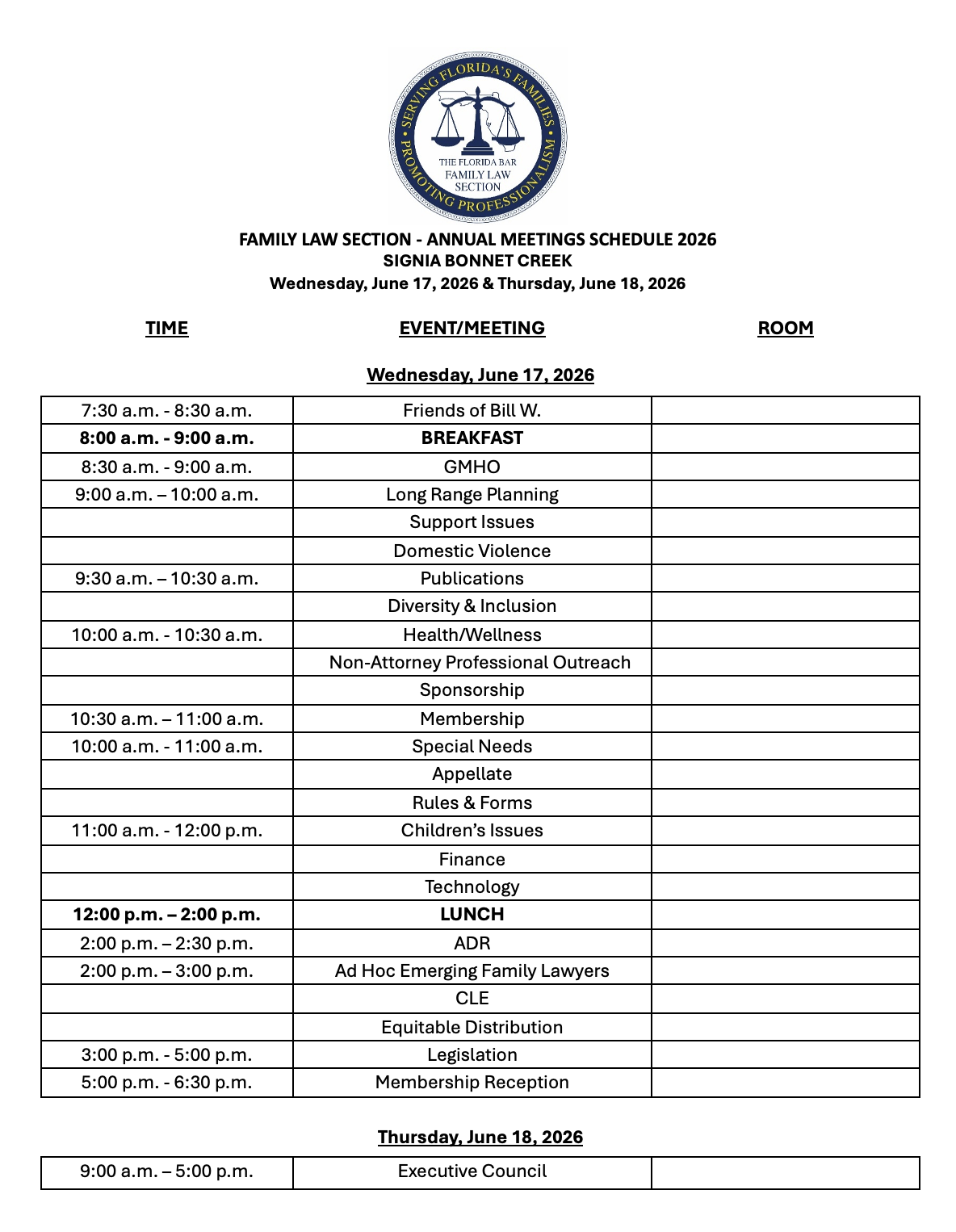
Annual Committee Meetings - June 17 & 18, 2026 | While in Orlando for The Florida Bar Annual Convention, we encourage all members to join us for the Membership Awards & Installation Luncheon and to take part in one or more of the Section’s Annual Committee Meetings. These gatherings are a wonderful opportunity to connect with colleagues, expand your network, learn more about the important work of the Section, and get involved in ways that can strengthen both your practice and the families we serve. To see the schedule of the Committee Meetings, see below and stay tuned for updates! | | | | CLE: -"Temporary Custody Matters: Legal Standards, Evidentiary Challenges and Best Practices," 12PM- 1PM EDT. | | | | | Annual Committee Meetings - In conjunction with The Florida Bar's Annual Convention in Orlando. | | | | | Membership Awards & Installation Luncheon - Orlando, FL | | | | | Executive Committee Retreat - Orlando, FL | | | IMPORTANT UPDATE FROM DCF REGARDING PRIVATE ADOPTIONS | | |
The Department of Children and Families (DCF) has received notification recently that attorneys who facilitate private adoptions may not be in compliance with the reporting requirements under Fla. Stat. §63.097.
The agency would like to notify attorneys of the following laws that went into effect July 1, 2024, related to private adoptions:
1. Fla. Stat. § 63.097(3): “The court must issue an order pursuant to s. 63.132(3) if the total of amounts permitted under subsection (2) exceeds:
(a) $5,000 in legal or other professional fees;
(b) $800 in court costs; or
(c) $5,000 in reasonable and necessary living and medical expenses.
2. Fla. Stat. § 63.097(4): “Any fees, costs, or expenses not included in subsection (2) require court approval and entry of an order pursuant to s. 63.132(3) before payment and must be based on a finding of extraordinary circumstances.”
3. Fla. Stat. § 63.097(5)(c): “The following fees, costs, and expenses are prohibited: . . . Any fee on the affidavit which is not a fee of the adoption entity; is not supported by a receipt; does not specify the service that was provided and for which the fee is being charged, such as a fee for facilitation, acquisition, or other similar service; or which does not identify the date the service was provided, the time required to provide the service, the person or entity providing the service, and the hourly fee charged.
4. Fla. Stat. § 63.097(7): “Beginning January 1, 2025, an adoption entity shall report quarterly to the department information related to the age, race, ethnicity, sex, and county of birth of the adopted child and the county of residence of the adoptive family for each finalized adoption. The adoption entity shall also report for each finalized adoption the fees, costs, and expenses that were assessed by the adoption entity or paid by the adoption entity on behalf of the prospective adoptive parents, itemized by the categories enumerated in subsection (2), and any fees, costs, and expenses approved by the court under subsection (4). The confidentiality provisions of this chapter do not apply to the fees, costs, and expenses assessed or paid in connection with an adoption. In reporting the information required by this subsection to the department, the adoption entity shall redact any confidential identifying information concerning the child, the child’s biological parents, and the child’s adoptive parents. The department shall report quarterly on its website information for each adoption entity, including the actual fees, costs, and expenses of finalized adoptions. The department shall adopt rules to implement this subsection.”
The link for the online tool will be on https://www.myflfamilies.com/services/licensing to obtain an account prior to entering information into the dashboard. This tool will be used to capture information for each finalized adoption completed by an adoption entity, pursuant to Florida Statute 63.097. Information must be submitted no later than the 15th day of the month following the preceding quarter. Reporting quarters are:
1. Quarter 1 is January – March
2. Quarter 2 is April- June
3. Quarter 3 is July – September
4. Quarter 4 is October - December
| | Committee Spotlight: Continuing Legal Education (CLE) | |
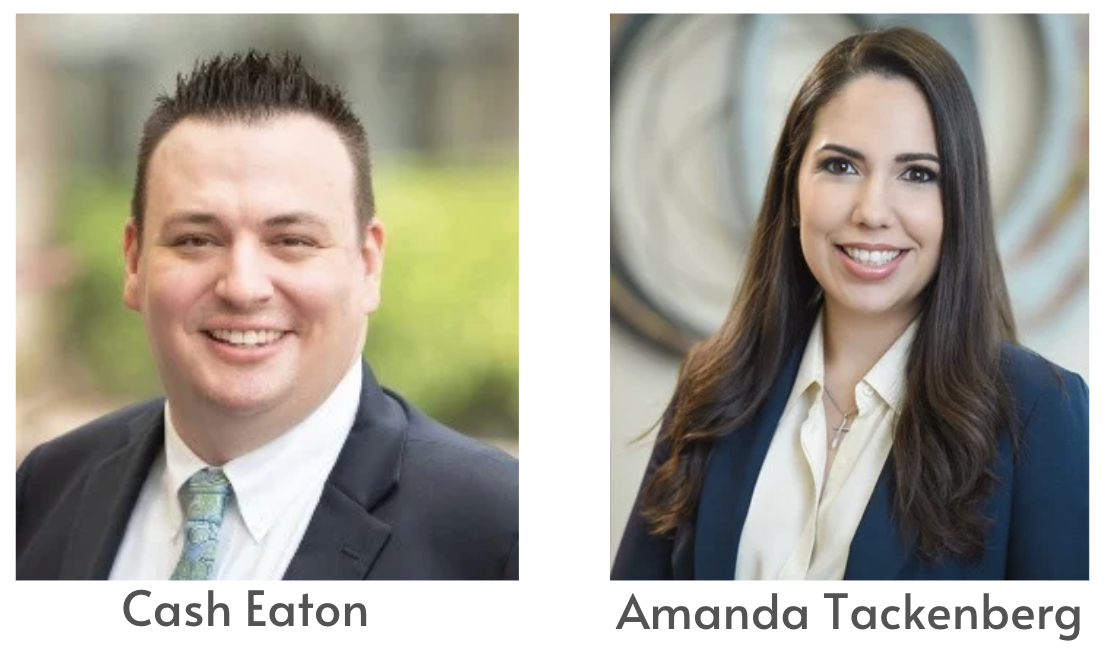
Chaired by Cash Eaton and Amanda Tackenberg
The Continuing Legal Education (CLE) Committee is proud to deliver one of the Family Law Section’s most valuable member benefits: high-quality, practical programming designed to keep family law attorneys informed, prepared, and ahead of the curve. Through a mix of live events, webinars, and signature annual programs, the Committee is dedicated to providing meaningful learning opportunities that enhance everyday practice.
The CLE Committee is led by Co-Chairs: Cash Eaton and Amanda Tackenberg; Co-Vice Chairs: Tiffany Mody and Anya Cintron Stern; Co-Secretaries: Kristin Kirkner and Amber Kornreich; and Special Advisor/Member: Jamie Epstein. Together, this leadership team works collaboratively to ensure the Section continues to deliver timely, relevant, and high-quality CLE programming.
This year’s programming highlights the Committee’s continued impact on the practice of Marital & Family Law in Florida. Our annual Case Law Update in November remains a cornerstone event, offering critical insights into recent legal developments. In March, the Section hosted a well-attended live CLE program in Destin, Florida focused on financial issues - an essential topic for practitioners across all experience levels. The Committee has also presented engaging webinars, including recent programs on Title IV-D children’s issues and addressing psychiatric and personality disorders in parenting disputes. Together, these offerings reflect a commitment to both foundational knowledge and emerging issues in family law.
Beyond attending programs, involvement in the CLE Committee provides members with opportunities to grow professionally, collaborate with colleagues, and develop leadership and speaking experience within the Section. It is an excellent way to build skills, expand your network, and distinguish yourself as an active leader in the family law community.
The Committee welcomes new members, program ideas, and speakers. Whether you are interested in helping shape future CLEs, presenting on a topic, or simply attending and learning, there are many ways to get involved. Your participation strengthens both your own practice and the Section as a whole.
| | Beyond the Financial Statements: The Value of General Ledgers | |
By Christopher Aglio, CPA/ABV, ASA, CFE
You are in the middle of a litigious matter. One of the parties is a small business owner. The business owner provides the corporate documents and agreements. Profit and loss statements, balance sheets, and tax returns for the last 5 years have also been produced.
Do you have what you need to assess the profitability of this business?
Turning to the profit and loss statements, the company reports “office expense” of $50,000 per year. What is that balance comprised of? Is it paper and toner purchases at Office Depot, or is it personal grocery purchases at Publix?
With only standard financial statements, what you are reviewing is a summary, often aggregated on an annual basis. You do not see the underlying transactions that make up those balances, and without that level of detail, you cannot fully evaluate the nature, accuracy, or appropriateness of the reported expenses.
That is where the general ledger comes in. By examining the “office expense” account in the general ledger, you can see each underlying transaction throughout the period that makes up the total reported on the profit and loss statement.
While certain adjustments can be made based solely on the name of an expense account (for example, meals and entertainment expense is often an obvious adjustment), other categories such as office expense, travel, repairs and maintenance, and miscellaneous are far more difficult to evaluate without access to the underlying transactions.
The general ledger is not just a supporting document; it is key to understanding a company’s financial condition and profitability. It provides the detail necessary to move beyond summarized figures and evaluate the true nature of a business’s transactions. Without it, important adjustments may be missed, and conclusions may be based on incomplete or misleading information. In any valuation or litigation context, where accuracy and supportability are paramount, the general ledger is an essential component of a reliable analysis.
Christopher Aglio, CPA/ABV, ASA, CFE is a Partner at Soman Forensic & Valuation CPAs in Naples, Florida, with offices in Boca Raton, Tampa and satellite locations in Orlando and the Panhandle. Mr. Aglio specializes in advising legal counsel and clients on issues relating to business valuation, spousal support, and other financial forensic matters in divorce. Learn more at www.somanforensics.com.
| | |
Case Law Update
By Cash Eaton, B.C.S.
Martinez v. Bustamante, 2026 WL 816936 (Fla. 3d DCA 2026).
In this divorce appeal, the Third DCA affirmed a supplemental final judgment refusing to enforce a disputed occupancy provision in the parties' premarital agreement.
The Parties signed a premarital agreement shortly before their October 2020 wedding. Martinez filed for divorce in 2022, and the parties entered a stipulated partial final judgment of dissolution in late 2024. One provision of the premarital agreement remained unresolved: it stated that, upon divorce, "[t]he marital domicile shall be occupied by Wife until her death or occupied by Husband until his death." The trial court took parol evidence and declined to give the provision any effect, concluding it was "ambiguous, and clearly was a mistake." Martinez appealed, arguing the parol evidence showed the parties intended to grant her a life estate in the marital home.
The appellate court affirmed, but on different reasoning. It held the provision contained a patent ambiguity because it purported to give both parties the same exclusive right to occupy the same property—language that was both defective and insensible on its face. Under Florida law, patent ambiguities generally cannot be resolved by parol evidence, so the trial court erred by considering extrinsic evidence. However, applying the "tipsy coachman" rule, the court affirmed because, after reading the contract as a whole and applying canons of construction, the provision's meaning could not be discerned without rewriting the agreement and inserting absent terms. The term was therefore unenforceable.
The court also noted neither party had sought reformation, which carries a higher clear and convincing evidence standard. A cause of action for reformation must allege that, as a result of a mutual mistake or a unilateral mistake by one party coupled with the inequitable conduct of the other party, the contract fails to express the agreement of the parties. The Third DCA’s dicta suggests that this could have been available to the parties.
| |
Part XI: '12 Habits of Highly Successful Family Law Attorneys' | | In our 11th article, we learn from Richard West, of West Family Law Group in Orlando, and former Chair of the Family Law Section in 2003-04. Richard is board certified in Marital and Family Law by the Florida Bar. He has extensive experience in the representation of professional athletes and other public figures with the utmost regard for protecting his clients from media exposure and overly invasive discovery practices. His experience includes cases dealing with complex financial matters, such as the valuation of closely held corporations, professional practices, trusts, and incentive stock options. | |
Use A Daily Checklist For Calmer, More Productive Days
By Richard West, B.C.S.
“Under conditions of complexity, not only are checklists a help, but they are also required for success.” — Atul Gawande
About 15 years ago, for some unknown reason, I read a book called The Checklist Manifesto by Dr. Atul Gawande. From this, I developed my own daily checklist.
The concept is simple: complex tasks require a checklist to ensure that mistakes are not made. Rather than having my day ruled by the next pending emergency, I spent several hours focusing on exactly what the highest and best use of my time was. This checklist is the result of that exercise.
Over the years, I found that when I utilized this tool, my practice ran smoothly, and I was free from stress and worry. Everyone's checklist may be a little different depending on what their role is in their practice. If I stick with it religiously, I find that I have much more free time to enjoy my life instead of worrying about what didn't get done.
Generally, when I complete my daily checklist, regardless of what time it is, I feel free to leave and enjoy myself. Let's take a quick look at what I came up with:
1. Start the day (whenever possible) with meditation or a workout.
2. Update my voicemail so callers understand my availability and expectations stay realistic.
3. Review my calendar two weeks out to set my priorities. I am a big believer in proactively managing my time (management by crisis is stressful).
4. Set today’s focus: the two or three outcomes I’m committed to completing.
5. Connect with key team members to maintain face time and remove obstacles.
6. Batch email: set specific times to read and respond instead of keeping inbox open all day to constant interruptions.
7. Review and sign documents electronically that my team has prepared.
8. Keep a running task list so nothing slips through the cracks.
9. Making a marketing contact and asking for a referral is something that was ingrained by my years spent as an Atticus devotee: Never stop marketing!
10. Close out the day:
a. Confirm all time is captured (and check in with team members who bill time).
b. Plan tomorrow by setting the next day’s focus.
c. Clear my desk so I can start the next morning with a clean workspace.
I can leave my office with a clear mind, and I am ready to play.
If you haven’t read The Checklist Manifesto, it’s worth adding to your list (even an executive summary is helpful). Then draft a checklist that fits your role and try it for one week. Keep what works, adjust what doesn’t, and watch how much lighter your days feel. Good luck, have fun.
| | | | | | |