|
I am still riding the high of our annual Marital & Family Law Review Course in Orlando, are you? What an unparalleled experience. We had record-breaking attendance this year. This was vibrant example of investing in the next generation. I saw countless examples of mentoring, collegiality, and professionals invested in strengthening their understanding of Florida Family Law so they could better serve Florida’s families by being the best version of themselves they can be. A heartfelt thank you to the professionals without whom the event would not have been possible: AAML Florida Chapter Executive Director Susan Stafford, Association Assistant Almira Malley, Committee Chair Michelle Klinger Smith, Committee Members Julia Wyda, Jack Moring, and Autumn Graham, and all our speakers. Congratulations on a job exceptionally well done.
Congratulations, also, to The Hon. Jack Helinger of the Sixth Judicial Circuit, Pinellas County, Florida on having received the Section’s 2024 Visionary Award. Judge Helinger had the first-of-its-kind vision of The Family Law Section of The Florida Bar partnering with the Office of State Courts Administrator (“OSCA”) to present, during the 2023-2024 bar cycle, eleven day-long workshops throughout the State of Florida designed to create and sustain partnerships between the local court, practitioners, and resources to form trauma-informed and trauma responsive family courts in each circuit. The workshops are already creating positive change in our state-wide court system. The workshops will be in Ft. Walton Beach & Tallahassee in March, in Palm Beach, Ft. Lauderdale, and Miami in April, then Ft. Myers and Hillsborough County in June. Visit the Section’s website for more information.
Please also join me in congratulating David Manz, a Section Trustee and a Past President of the Florida Chapter of the AAML, on having received the Section & AAML’s 2024 Malinda P. Gamot Award. David personifies inspiration and tireless support for the lawyers and leaders of the next generation. He has mentored many members of the Section and the AAML as attorneys and leaders within both organizations. He has donated hundreds, if not thousands, of hours to educate other legal professionals on a variety of topics at our annual Marital & Family Law Review Course. Most impressively, this past year, he deservingly earned both the Florida Bar President’s Pro Bono Service Award for the 16th Judicial Circuit and the Family Law Section’s Alberto Romero Jr.’s Making a Difference Award.
The Section does not rest in the meaningful work we do. We have two live CLEs offered in West Palm Beach, FL in February. I am thrilled that the Section is reviving its day-long workshop for paralegals, law clerks, and new associates titled From A to Z: A Paralegals’ Guide from Start to Finish in a Family Law Case on February 22nd. Then, on February 23rd we will present Family Matters providing an in-depth examination of all children’s issues in family law cases. These CLEs will be offered in-person and live streamed as a webinar. Register today! Thank you to Jamie Epstein, Kristin Kirkner, Jennifer Patti, Anastasia Mahone, and William “Trace” Norvell for their remarkable work on these events.
I save the best for last. I am elated to report that the Section’s Executive Council recently voted to donate $37,500 to the Funding Florida Legal Aid (FFLA) earmarked for their Civil Legal Services Summer Fellowship Grant Program in 2024 to create four additional summer fellowships for law students with expressed interest in marital and family law. In her thank you e-mail to the Section, Donny MacKenzie, Executive Director of the FFLA stated “The Section’s designated gift is a ‘win-win’ on so many levels and we are most grateful. I think this is just another prime example of your section leading by example and showing how others can help, not only the cause of increasing access to our justice system, but by creating innovative and effective ways to introduce our younger lawyers – the leaders of tomorrow – to the value and power of service to others.” Well done, Family Law Section, on continuing to invest in the next generation in our golden anniversary year. Bravo!
Sarah E. Kay, B.C.S.
Chair, 2023-2024
| |
FLORIDA SUPREME COURT STEERING COMMITTEE SURVEY:
Possible Change to Florida Family Law Rules of Procedure 12.610(b)(3)A and 12.610(b)(3)B | |
|
The Florida Supreme Court Steering Committee on Families and Children in the Court is currently studying whether or not Florida Family Law Rules of Procedure 12.610(b)(3)A and 12.610(b)(3)B should be amended, and they want YOUR input!
It's a very quick survey, so we encourage you to complete this as soon as possible. The deadline for survey responses is February 16, 2024.
| |
SECTION FORMS & APPLICATIONS DUE MARCH 15 | |
|
Take your Section involvement to the next level! Submit your 2024-25 Committee Preference Form, 2024-25 Legislation Committee Application, 2024-25 Section Secretary Application, and/or Executive Council Application today! (Deadline is Friday, March 15 at 5PM EST, but why wait!)
Committee Preference Form HERE
Legislation Committee Application HERE
Section Secretary Application HERE
Executive Council Application HERE
| |
|
HOTEL ROOMS NOW OPEN FOR IN-STATE RETREAT
Disney's Yacht & Beach Club Resort, April 11-14, 2024
| |
|
Come for a magical time with your colleagues, friends, and family as the Section enjoys its in-state retreat at Disney’s Yacht & Beach Club Resorts.
Included in the cost of event reservation: Welcome reception, breakfast on Friday and Saturday, CLE, painting class experience, dinner buffet with Ariel, family movie night, family game time with snacks, welcome gift, and game prizes.
Hotel rooms are now available, so reserve yours today! (And, we have a special theme park ticket deal just for attendees!)
| |
TWO LIVE CLEs COMING TO WEST PALM BEACH | |
|
✅ Thursday, Feb. 22: From A To Z: A Paralegal's Guide From Start To Finish In A Family Law Case
From the first phone call to the final hearing, this one-day CLE will discuss tips, strategy, and procedures for a paralegal to navigate through a family law case as presented by attorneys, paralegals, and experts with input from the bench. Paralegals can submit questions before and during the seminar.
Registration and Hotel Information is HERE.
✅ Friday, Feb. 23: Family Matters
An in-depth examination of all children’s issues in family law cases, including the 2023 legislative changes and case law, best interest factors, post-judgment actions, and parenting support. Panelists include presiding members of the Judiciary as well as Board Certified Family Law Practitioners from around the State of Florida.
Registration and Hotel Information is HERE.
| |
|
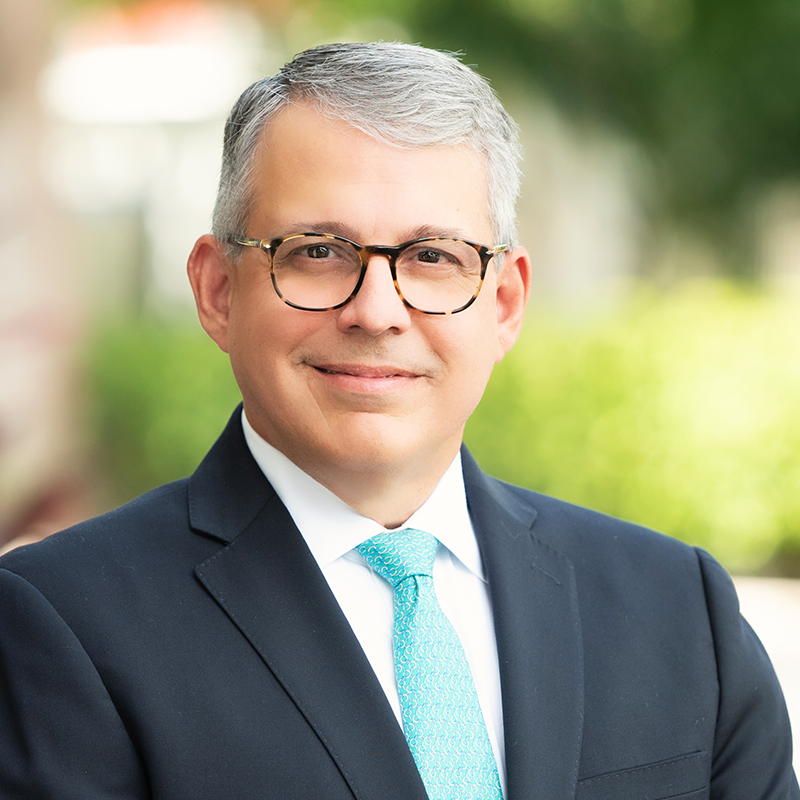
TRUSTEE SPOTLIGHT:
Jorge M. Cestero, Esq., Section Chair 2005-2006
| |
 | |
What was the “theme” for your year and why?
My theme was that every Family Law Section member could “add value”. That meant making life better for the citizens of Florida through lawyer education, public education, participation in the legislative process and representing people on a pro bono basis where necessary. Every Section member had (and has) the ability to “add value.”
What does the Section mean to you?
Baseball Hall-of-Famer Reggie Jackson once said that he was “the straw that stirs the drink” for the Yankees. The Section is really the straw that stirs the drink for the family law practitioner. It is the gateway to participation in family law on a statewide level. It allows us to participate in all the things that “add value.” It is the essential building block for a successful career in family law. It is the place where every practitioner can foster and cultivate professional and personal relationships.
Where do you see the Section in the next 50 years?
I see the Section continuing to be a leader and innovator in family law education. I see the Section continuing to be a voice of reason in family law legislation. I see the Section growing to well over 5,000 members, and I see the Section becoming a greater resource for the education of legislators.
How have you seen the Section change in the past 50 years?
I’m not that old, but in the years that I have been a member, I have seen the further professionalization of the way the Section participates in the legislative process. I have seen the Section become a stalwart in supporting the rights of all individuals in the family law process. The Review Course partnership with the AAML Florida Chapter has spawned an educational behemoth, that in the end, has benefitted more Florida lawyers, which in turn benefits Florida’s citizens.
How has the Section stayed the same in the last 50 years?
The Section continues to be inclusive. Any member who wants to become active has the ability to participate and move into leadership. As such, stagnation is avoided.
How has your participation in the Section changed the way you practice law?
It has allowed me to become “in the law” as opposed to “of the law” if that makes sense. Section participation has, in one way or another, allowed me to participate in the many legislative changes that have happened since my Section membership.
What’s the funniest memory you have from your Section involvement?
There was a time when my mother-in-law chided me for having an alcoholic beverage in my hand in most Commentator photos. There are many others that I am glad to discuss in a private setting. 😊
Share a favorite memory from one of the retreats from your year.
My out of state retreat was in Las Vegas. A hurricane hit eastern Florida. Most Section members stayed in Vegas!
| |
CHANGING THE WAY WE LEARN ABOUT BLACK HISTORY | |
|
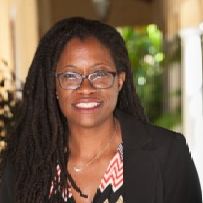
By: Sonja Jean, Esq.
Every year when February stumbles upon us, we are reminded of – and our children in school are taught about – Black History Month. It is the one time during the year in which people pause to reflect upon the history and contributions of Black people in shaping America as we know it today. Children often come home with lessons and a project to do about either Harriet Tubman, Rosa Parks, or Martin Luther King, Jr. However, there is so much more to Black History than slavery and the Civil Rights Movement. There are so many Black inventors and entrepreneurs that most of our children never learn about. It is worth mentioning some of those great leaders here, in the hopes that someone reading this article may learn something new and spread the knowledge to others.
While people may be familiar with Madame CJ Walker (Sarah Breedlove Walker) as being a self-made millionaire who created hair products for Black people, very few people know anything about Sarah Rector. I encourage anyone reading this article to research and learn about her. She became the first Black woman millionaire in America in 1913 when oil was discovered on her land. Even fewer people know about Dana “D.A.” Dorsey. He was the first Black millionaire in Miami, Florida. A businessman and entrepreneur, he was the original owner of what is now known as Fisher Island. He wanted to purchase a land that could be a retreat for well-to-do Black people. When Dorsey acquired the property back in 1918, he experienced “pressure” from wealthy white people who took issue with Black people owning land in certain locations. One of those whites was Carl Fisher – to whom Dorsey sold the property. Again, I encourage readers to research him. He left a legacy here in Miami, Florida and if my own mother was not related to him, it is highly likely that I would know absolutely nothing about him. I most certainly was not taught about him in school. Our children are widely familiar with television and social media, but they are not being taught about Robert “Bob” L. Johnson, who was a co-founder of B.E.T. (Black Entertainment Television). He was named a billionaire back in 2001. It is now 2024! That is still history – it is Black history and is something our children should be taught as part of their lessons during Black History Month.
The people I have referenced are but a few of many Black people who should be mentioned, considered, and taught about during the shortest month of the year. There are of course better ways to deal with Black history altogether. Perhaps we can incorporate Black history all year long as part of overall history lessons instead of simply limiting Black history to one month. Our past is rich with stories of Black writers, artists, entrepreneurs, engineers, doctors, researchers and inventors worth mentioning not because they were Black, but because of their excellence measured against any other. If anything, I am hopeful that this article has demonstrated that it takes much more than one month to learn about Black history.
| |
|
By: Cash A. Eaton, Esq.
Glegg v. Hurk, 2024 WL 103678 (Fla. 4th DCA 2024).
Glegg involves the parents of a child and the child’s Stepfather, Richard Peacey. The Father filed civil tort claims against the Mother and the Stepfather for intentional interference with custodial rights and intentional infliction of emotional distress (IIED).
The Mother and Stepfather moved for summary judgment of both claims. The trial court granted summary judgment in favor of both the Mother and the Stepfather as to both causes of action. This appealed follow.
As to the claim against the Mother intentional interference with custodial rights, the Appellate Court held that, “Florida recognizes a cause of action for the tortious interference of a parent's custodial rights but only in the context of a parent suing a third-party for such interference.” The Appellate Court affirmatively advised that custody disputes between parents are best addressed in the family court. Therefore, the trial court was affirmed in granting summary judgment on this claim.
The Father was able to bring the claim against the Stepfather for intentional interference with custodial rights, as he was an applicable third party. But to prove a claim for intentional interference of custodial rights, a plaintiff must show:
(1) the complaining parent has a right to establish or maintain a parental or custodial relationship with his/her minor child;
(2) a party outside of the relationship between the complaining parent and his/her child intentionally interfered with the complaining parent's parental or custodial relationship with his/her child by removing or detaining the child from returning to the complaining parent, without that parent's consent, or by otherwise preventing the complaining parent from exercising his/her parental or custodial rights;
(3) the outside party's intentional interference caused harm to the complaining parent's parental or custodial relationship with his/her child; and
(4) damages resulted from such interference.
These claims stemmed from the Father’s allegations of an alleged conspiracy, which included the Stepfather's failure to prevent the daughter's enrollment in a Florida high school, and his acquiescence and failure to intervene in the daughter's and the Mother's plans to have the child remain in Florida. This included allowing the daughter to stay in his home, driving the daughter to attend classes after enrolling in her Florida high school, allowing the purchase of the daughter's school supplies and uniforms, and failing to intervene as the daughter pursued early admission to attend the University of Miami. The Father also accused the Stepfather of assisting the Mother in allegedly persuading the daughter to obtain her emancipation from the Father in Canada.
However, the evidence showed the Stepfather was not involved in the relationship between the daughter and her parents. He left all decisions relating to custody and the daughter's residence to her parents. The Appellate Court reasoned that the alleged conduct simply was not enough to show tortious interference with the Father’s custody rights. Seemingly, there was no evidence on how the Stepfather actively interfered with the Father’s custody. Therefore, the summary judgment was affirmed.
Similarly, the Father's IIED claim against the Stepfather also was not supported with sufficient evidence to pass the high threshold for IIED claims under Florida law. To support a claim for IIED, a plaintiff must prove:
(1) the wrongdoer's conduct was intentional or reckless, that is, he intended his behavior when he knew or should have known that emotional distress would likely result;
(2) the conduct was outrageous, that is, as to go beyond all bounds of decency, and to be regarded as odious and utterly intolerable in a civilized community;
(3) the conduct caused emotional distress; and
(4) the emotional distress was severe.
In its review, the Appellate Court commented that, “[The] Father wildly exaggerates when describing the Stepfather's conduct as a conspiracy to ‘kidnapping.’” This is important for an IIED claim because trial courts do not focus on the alleged victim's subjective response to, or description of, the actor's conduct. The conduct must be “outrageous” based on a reasonable person standard. The Appellate Court reasoned that the Stepfather's actions and inactions are nowhere near the level of “outrageous” conduct necessary to establish an IIED claim under Florida law. Therefore, the summary judgment was affirmed.
These are not the typical claims practitioners deal with in a family law context. Nevertheless, it is important to know the viability of such claims, whether you represent the party bringing or defending such claims. Therefore, some important take aways from the case are as follows:
(1) Claims for tortious interference of a parent's custodial have only been recognized when suing a third-party for such interference;
(2) When bringing such a claim against a third-party, there must be sufficient evidence to show true interference, not a disagreement over the raising of a child; and
(3) Intentional Infliction of Emotional Distress (IIED) must be based on objectively “outrageous” conduct. It is not a subjective standard.
| |
RULES AND FORMS LEGISLATIVE UPDATE | |
|
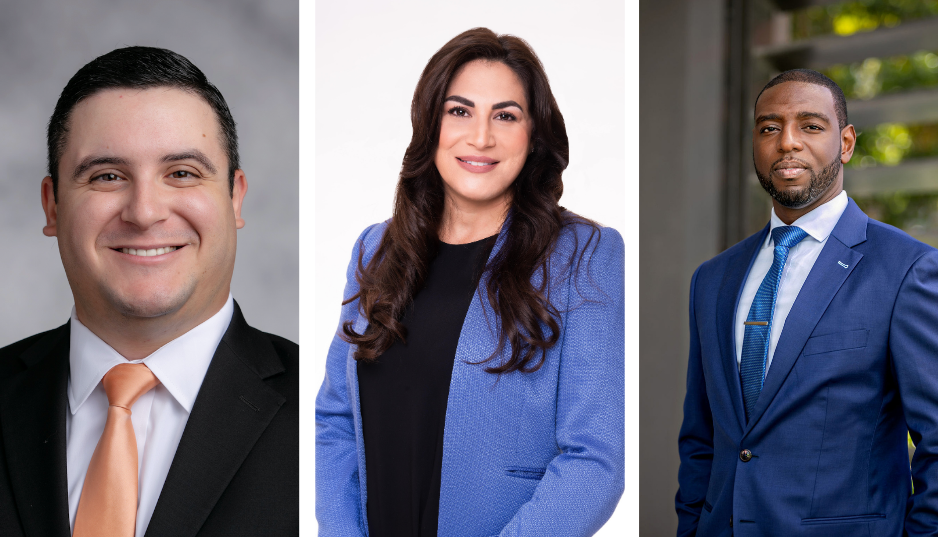
By: Alex Bottone, Esq., Temi Zeitenberg, Esq., and Marck Joseph, Esq.
As some of you may know, the Florida Supreme Court has been very busy addressing many proposed rule and form changes to the Florida Family Law Rules of Procedure:
-
In Re: Amendments to Florida Supreme Court Approved Family Law Form 12.915, 370 So. 3d 286 (Fla. 2023) [regarding changes to Form 12.915];
-
In Re: Amendments to Florida Supreme Court Approved Family Law Forms 12.980(a), 12.980(f), 12.980(q), and 12.980(t), 370 So. 3d 890 (Fla. 2023) [regarding changes to Forms 12.980 (a), (f), (n), (q), and (t)];
-
In Re: Amendments to Florida Supreme Court Approved Family Law Forms 12.902(k) and 12.902(l), 373 So. 3d 283 (Fla. 2023) [regarding new Forms 12.902(k) and 12.902(l) resulting from the recent change to 12.285 and the ability to jointly waive filing of Financial Affidavits]; and
-
In Re: Amendments to the Florida Family Law Rules of Procedure – Rules Package, Case No. SC2023-1472 [regarding changes to 12.400, 12.470, 12.490, 12.491, and 12.740].
As of the date of this article, the Florida Supreme Court has approved and finalized the proposed changes found in In Re: Amendments to Florida Supreme Court Approved Family Law Forms 12.990(a), 12.980(f), 12.908(n), 12.980(q) and 12.980(t), 370 So. 3d 890 (Fla 2023), which changed Florida Family Law Forms 12.980 (a), (f), (n), (q), and (t).
Form 12.980(a): Petition for Injunction for Protection Against Domestic Violence
An additional factor was added to paragraph 4 (“l”) of Form 12.980(a) to comport with the following underlined language which was added to section 741.30(3)(b)(m), Florida Statutes, as of July 1, 2023:
- Evidence of domestic violence, sexual violence, child abuse, child abandonment, or child neglect or evidence that a parent has or has had reasonable cause to believe that he or she or his or her minor child or children are in imminent danger of becoming victims of an act of domestic violence, regardless of whether a prior or pending action relating to those issues has been brought. If the court accepts evidence of prior or pending actions regarding domestic violence, sexual violence, child abuse, child abandonment, or child neglect, the court must specifically acknowledge in writing that such evidence was considered when evaluating the best interests of the child.
Reference to “Deputy Clerk” has been added back in notary block Form(s) 12.980(f),(n),(q), and (t):
The reference to “Deputy Clerk” has been added back to the forms after being incorrectly omitted with prior amendment to these forms.
Instructions to Forms 12.980(a), (f), (n), (q), and (t):
- Instructions to all Forms referenced above were changed to comport with a recent change to Florida Rule of General Practice and Judicial Administration 2.516 requiring self-represented litigants to serve documents by e-mail unless in custody or excused by the clerk after declaring a lack of e-mail account or regular internet access.
Finally, we are happy to report that The Family Law Section filed an official comment to the Florida Supreme Court in an attempt to clarify and ensure that the proposed Forms 12.902(k) and 12.902(l) comport with new subsection (c)(1) & (2) of rule 12.285, which went into effect on November 1, 2023. We are currently awaiting a response and/or opinion from the Florida Supreme Court on the comment that was submitted to them without oral argument on January 25, 2024.
We encourage anyone who may be interested in joining the Rules and Forms Committee to please reach out to us at rules@familylawfla.org.
| |
|
TECH TIP:
Rocketbook: No More Lost/Misplaced Notes
| |
|
By: Jack Moring, Esq.
Has this ever happened to you? You recall having made some notes about a particular case, and you look for them, only to discover they are not where you thought they were. You start looking on legal pads (on your desk, in your conference room(s), in the bathroom (yuck, by the way!), etc. Nowhere! Now, you’re frantic, thinking, were they misfiled? Did I accidentally throw them away? Now you’re going through every legal pad in your office looking for these notes. Sometimes, you’re lucky and you find them. Sometimes, you don’t.
A solution exists, Rocketbook. Rocketbook is a letter-size spiral binder with high quality reusable dotted paper (it’s waterproof and tear-resistant too). You take notes (with a Pilot FriXion erasable pen). You download the free Rocketbook app, set up an account, and, at the bottom of every page is a QR code. Scan it with your camera and it downloads an image which you can quickly transfer to your file. No more lost notes.
Rocketbook also has rudimentary optical character recognition (OCR) and the ability to bundle multiple pages into one file. Having used Rocketbook for a month or so, erasing a page (which you do with a provided microfiber cloth, which you must dampen first) is a pain. If your handwriting is atrocious, don’t expect the OCR to work very well. At around twenty bucks on Amazon, Rocketbook doesn’t reinvent the wheel, but if you think you might benefit having to keep track of only one easily findable notebook, give it a try. One tip though: don’t leave it in your car. The erasable ink can disappear at 140°F (60°C).
Other options for a reusable notebook include reMarkable, scribe, and numerous others, all of which are distinctly pricier than Rocketbook.
| |
FLORIDOM ANNOUNCES YOUNG LAWYERS
SCHOLARSHIP AWARD RECIPIENT | |
|
Floridom, a longtime Family Law Section Sponsor, has awarded the inaugural Norman D. Levin Young Lawyers Scholarship Award to Staci Danielle Sciandra of Legal Aid Society of the Orange County Bar Association. Congratulations, Staci!
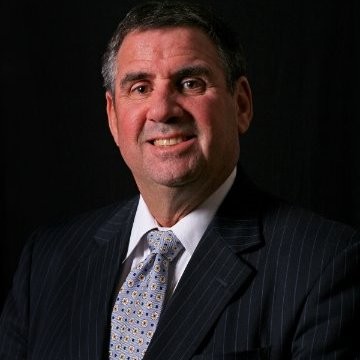
The new, annual award is in honor of Floridom's late founder, Norman D. Levin (pictured here), who was a passionate practitioner of family law in Florida. His wife, Marlene, announced the award at the 2024 AAML/Family Law Review Course, stating, "We are keeping Norm’s legacy alive through his love and dedication for Family Law which means the world to me and my family."
The scholarship includes registration fees and red books to the AAML/Family Law Section Annual Review Course. (Note: The scholarship does not include travel and lodging.)
Qualification requirements:
- Must be a member in good standing of the Family Law Section
- Practicing for 5 years or less
- Submit entries to Floridom by August 1, 2024
Interested applicants can apply HERE.
| |
Want to submit an article for our monthly FAMSEG e-news, or our quarterly magazine, The Commentator? We can always use Tech Tips, Case Law Updates, and other relevant family law-related news for our 4,000+ members. Just email publications@familylawfla.org for more information. Thank you for your interest in contributing to our member publications! | |
Did you know that our Section Sponsorship has grown over the years? We have received 8 times the number of sponsorships that we had 7 years ago! Thank you to all of our past and current sponsors for supporting the mission of the Family Law Section! To learn more about getting involved, click HERE. | | | | |