Upcoming Events
Wednesday, Jan 31
Ocean Science Lecture Series:
"
Cuba's Forbidden Depths: Permission Granted!
"
|Presented by Shirley Pomponi | FAU Harbor Branch | 4:00 p.m
. [
More info
]
Wednesday, Jan 31
Harbor Branch Immersion Tour | Ocean Discovery Visitors Center | 10:30 a.m. [
More info
]
Friday, Feb 2
Marine Science Fridays:
"
Oh The Places They Go: Spotted Eagle Ray Movement Throughout Florida"
| Presented by Breanna DeGroot | Harbor Branch Ocean Discovery Visitors Center | 12:00 p.m. [
More info
]
Wednesday, Feb 7
Indian River Lagoon Boat Tour | Ocean Discovery Visitors Center | 10:00 a.m. [
More info
]
Thursday, Feb 8
Indian River Lagoon Poster Session | FAU Harbor Branch | 5:30 p.m. | No Registration Required [
More Info
]
Friday, Feb 9
Thursday, Mar 15
Marine Science and Oceanography Graduate Program now accepting applications for Fall 2018 admission. Apply by March 15, 2018. [
More info
]
|
|
2017 Annual Impact Report Now Available
|
The 2017 Annual Impact Report is
now available digitally here. The Report highlights the research, education and outreach efforts at Harbor Branch during FY17.
|
R/V Hogarth Visits FAU Harbor Branch
|
On January 19 students, staff and faculty enjoyed the opportunity to tour the R/V Hogarth while it was docked at FAU Harbor Branch's channel.
The ship is replacing the nearly 50-year-old R/V Bellows, which had a hand in educating thousands of Florida’s marine science and oceanography degree-seeking students during its time at sea.
The R/V Hogarth is a $6.3 million floating laboratory designed to advance scientific education for the Florida Institute of Oceanography (FIO) member institutions, including FAU. The new ship is both longer and wider than its predecessor, offering more working space, a larger work deck and more comfortable arrangements. Students in FAU’s Semester by the Sea course, headquartered at HBOI, will spend a week at sea aboard the R/V Hogarth next spring as part of their curriculum.
|
|
|
|
Bonefish Restoration Research Project Induces Spawning in Wild Bonefish
|
The
Bonefish Restoration Research Project
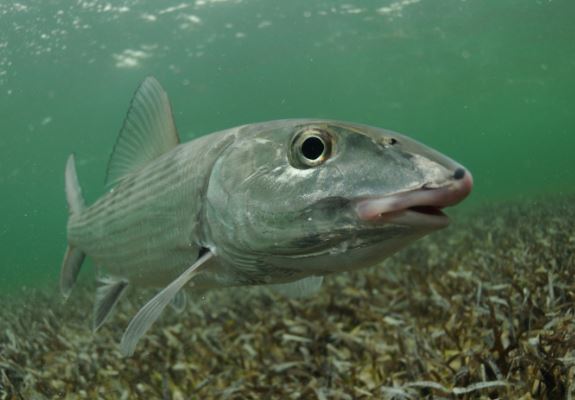
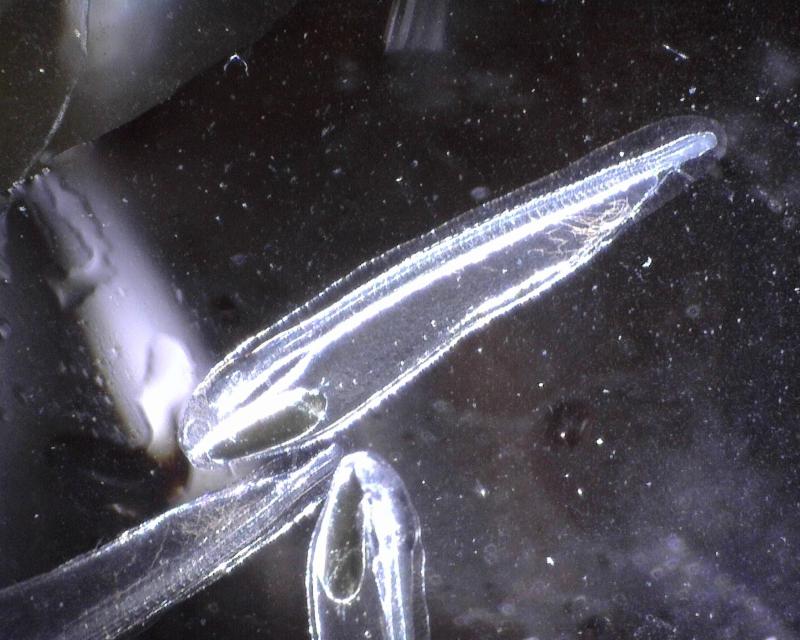
(BRRP), a major initiative sponsored by Bonefish & Tarpon Trust, has successfully induced spawning of wild bonefish and hatched the fertilized eggs into larvae. This is a first for this species, and a major step in the organization’s efforts to spawn and raise bonefish in captivity.
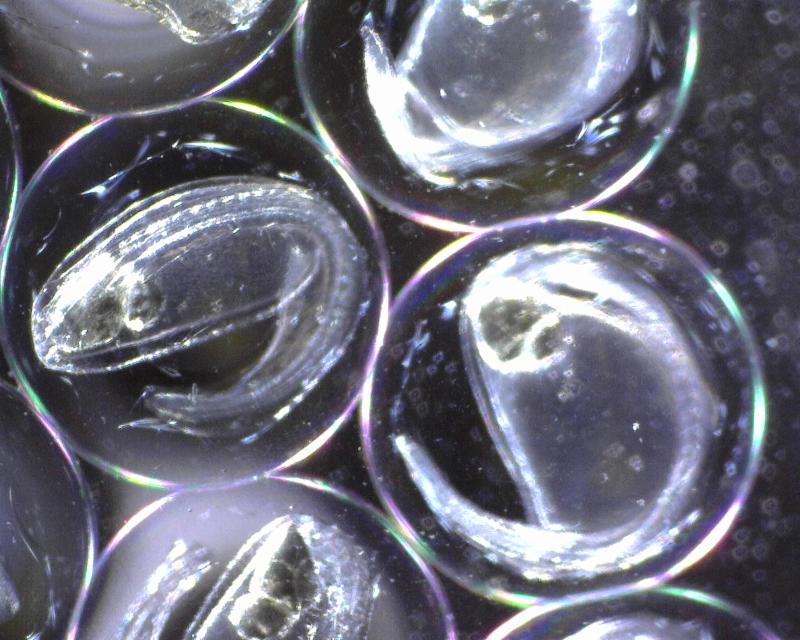
The project, which is based at FAU Harbor Branch, achieved this milestone with assistance from Cape Eleuthera Institute from during field experiments earlier this month in the Bahamas. A team led by Dr. Paul Wills, FAU Harbor Branch, and Dr. Jon Shenker, Florida Institute of Technology, successfully used reproductive hormone injections to induce final mature eggs in a female that had been captured from the wild in a pre-spawning state of development. The female was stripped spawn and the eggs fertilized by a stripped spawned male, which resulted approximately 24 hours later in live bonefish larvae.
Top Image: Bonefish
Middle Image: Embryo 25 hours post fertilization
Lower Image: 0 hours post hatching (= 26 hours post fertilization) - the backbone and bands of muscle are evident along the body; the beginning of the eye is at the left.
|
|
 |
Study Finds Cause of Algal Blooms and the Results Stink
|
Water samples gathered and tested in the year-long study by researchers at FAU’s Harbor Branch provide multiple lines of evidence that human wastewater nitrogen from septic systems was a major contributor to the high nitrogen concentrations in the estuary and downstream coastal reefs.
“It has long been thought that the algal blooms found in Lake Okeechobee, which are caused by pollution such as runoffs from farms, were solely responsible for driving the blooms and their toxins in the St. Lucie Estuary,” said Brian E. Lapointe, Ph.D., lead author of the study and a research professor at FAU Harbor Branch, who recently presented these findings at the ninth U.S. National Harmful Algal Bloom Conference. “We wanted to investigate the role of on-site septic systems, which have previously been overlooked.”
From the study samples, Lapointe and his collaborators clearly identified that wastewater contamination is a significant driver of water quality decline and ecological dysfunction in the St. Lucie Estuary and downstream nearshore reefs. Evidence from the samples they gathered and tested showed that human wastewater nitrogen from septic systems was a major contributor to the high nitrogen concentrations in the estuary and downstream coastal reefs, the latter representing the northernmost extent of coral growth in South Florida.
(Photo credit: Bob Hogensen, Martin County, Florida)
|
|
|
|
NOAA Report Documents Amazing U.S. Deep-Sea Coral and Sponge Ecosystems
|
NOAA’s new report,
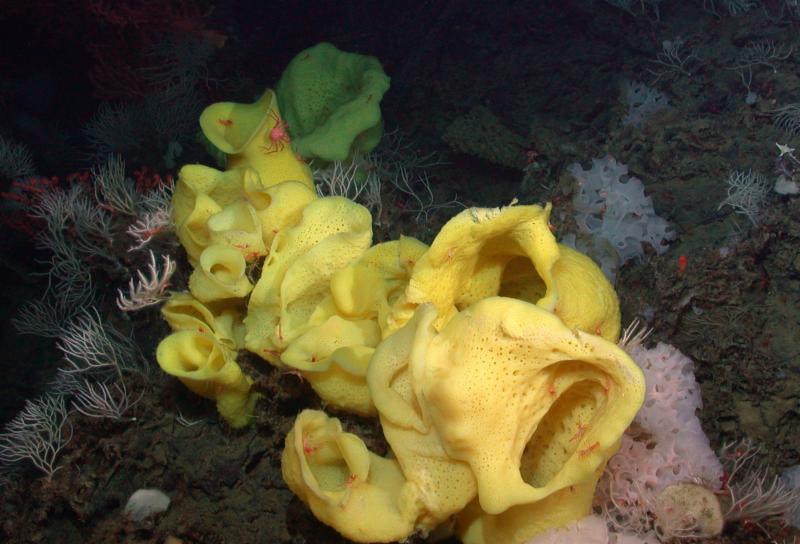
State of Deep-Sea Coral and Sponge Ecosystems of the United States, explains advances in deep-sea coral research over the past decade and how this new information is shaping deep-sea conservation. Each of the report’s 13 peer-reviewed chapters was written by leading U.S. researchers, including a chapter each by FAU Harbor Branch's own John Reed and Shirley Pomponi, Ph.D.
Six regional chapters summarize new research—much of it led by NOAA—and explain how results have led to improvements in deep-sea management. It also shares an understanding of coral and sponge taxonomy, species distributions, fisheries habitats, and the effects of human activities.
These chapters serve as a ten-year update to the first State of Deep Coral Ecosystems of the United States report, published in 2007, and provide the first look at U.S. deep-sea sponge ecosystems.
|
|
|
|
|
DNA ‘fingerprinting’ Helps Monitor Whale Numbers in Alaska
|
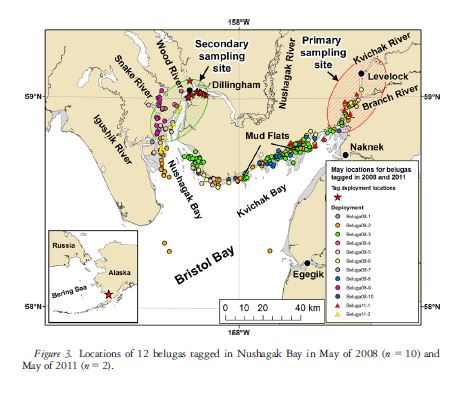
FAU Harbor Branch’s Population Biology and Behavioral Ecology Program is using DNA ‘fingerprinting’ to monitor the population size of beluga whales in Alaska. Collaborating with Alaska Natives and with scientists from the Alaska Department of Fish and Game and the National Marine Fisheries Service, the FAU team of Greg O’Corry-Crowe, Tatiana Ferrer and Brooke Potgieter co-authored a paper that was recently published in
Marine Mammal Science.
The small population of beluga whales in Bristol Bay, Alaska has received increasing attention in recent years over concerns about the potential impacts of climate change, oil and gas development and mining within the headwaters of Bristol Bay rivers, home to the largest commercial sockeye salmon fishery in the world. Efficient, reliable estimates of abundance and trend are critical to effective management of this population. However, almost every aspect of studying marine mammals, especially in the seasonally ice covered waters of the North, is challenging. Estimating abundance and monitoring trends in beluga whales has relied on aerial surveys which are both costly and prone to many sources of bias.
The team, therefore, took a radically different approach: Genetic Mark-Recapture. This approach adapts the principals of mark-recapture abundance estimation by using DNA profiling of individual whales to detect genetic ‘recaptures’ from subsequent sampling efforts. By systematically collecting tiny tissue biopsies from free-swimming whales over several years and conducting the DNA ‘fingerprinting at the Harbor Branch lab, the team was able to estimate the size of the population from the frequency of ‘recaptured’ (i.e. re-sampled) individuals in their sample set. The study has established the method as an effective alternative approach to population monitoring of beluga whales worldwide and of other cetacean species.
|
|
|
|
Chérubin Publishes Paper in Journal of the Acoustic Society of America
|
The paper, entitled "An Approach for Automatic Classification of Grouper Vocalizations with Passive Acoustic Monitoring," was recently accepted in the Journal of the Acoustic Society of America (JASA) and was authored by FAU Harbor Branch Associate Research Professor, Laurent Chérubin, Ph.D., and his student Ali Ibrahim from the Department Computer & Electrical Engineering and Computer Science, College of Engineering at FAU. Co-authors of the paper are Hanqi Zhuang (FAU), Michelle Schärer (University of Puerto-Rico), F. Dalgleish (FAU Harbor Branch), Nurgun Erdol (FAU), B. Ouyang (FAU Harbor Branch), and A. Dalgleish (FAU Harbor Branch).
The paper describes a method to automate the detection and classification of courtship associated sounds produced by four species of groupers of the western tropical Atlantic Ocean. This method is based on machine-learning and voice recognition algorithms. The method is currently being implemented on Harbor Branch's SV3 wave glider and for two years has been used to discover fish spawning aggregations in the Virgin Islands and Puerto-Rico.
The team also built a small app called FADAR (Fish Acoustic Detection Algorithm Research), which has been shared with various research entities who are monitoring spawning aggregations in the Caribbean (Cayman Islands, Department of Environment) and in the U.S. (University of the Virgin Islands, University of Puerto-Rico, Scripps Institution of Oceanography). Chérubin and Ibrahim continually work on the development of FADAR, adding new species and retraining the algorithm with new data, and adding new methods that are species specific, all in one package.
This work has been possible thanks to grants from the Harbor Branch Oceanographic Institute Foundation, National Oceanic and Atmospheric Administration (NOAA) Saltonstall-Kennedy, and NOAA's Office of Ocean Exploration and Research through the Cooperative Institute for Ocean Exploration, Research & Technology.
[Image] Nassau grouper CAS spectrogram: distribution of the sound energy in frequency-time space
|
|
|
|
Click each image for more information.
|
|
View a PDF of this newsletter here.
|
|
|
|
|
|
|