I-site newsletter is a global educational newsletter launched in 2009, that monthly provides independent updates from the international literature on specialty (R)GP lenses such as corneal, orthokeratology and scleral lenses and related topics. View as Webpage
|
|
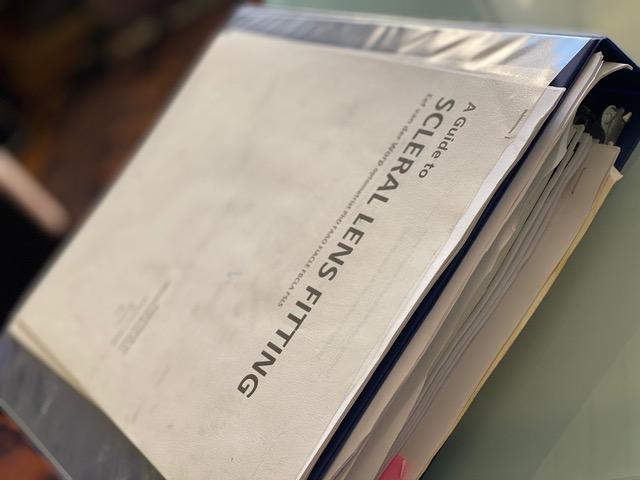
This month marks the 10th anniversary of the introduction of the scleral lens guide. It first saw the light of day at GSLS 2011 in Las Vegas, as mentioned in the February 2011 newsletter. I just can't help but share my enthusiasm, and it just shows the incredible interest in the modality: the guide which is available at the Pacific University website has since been downloaded more than 100k times (in various languages available), and an additional half of that has become available as hard-copy. But even more striking is the image below: it represents the original work-version of 'scleral lens guide' and ALL of the relevant literature that was available at the time, anywhere.
|
|
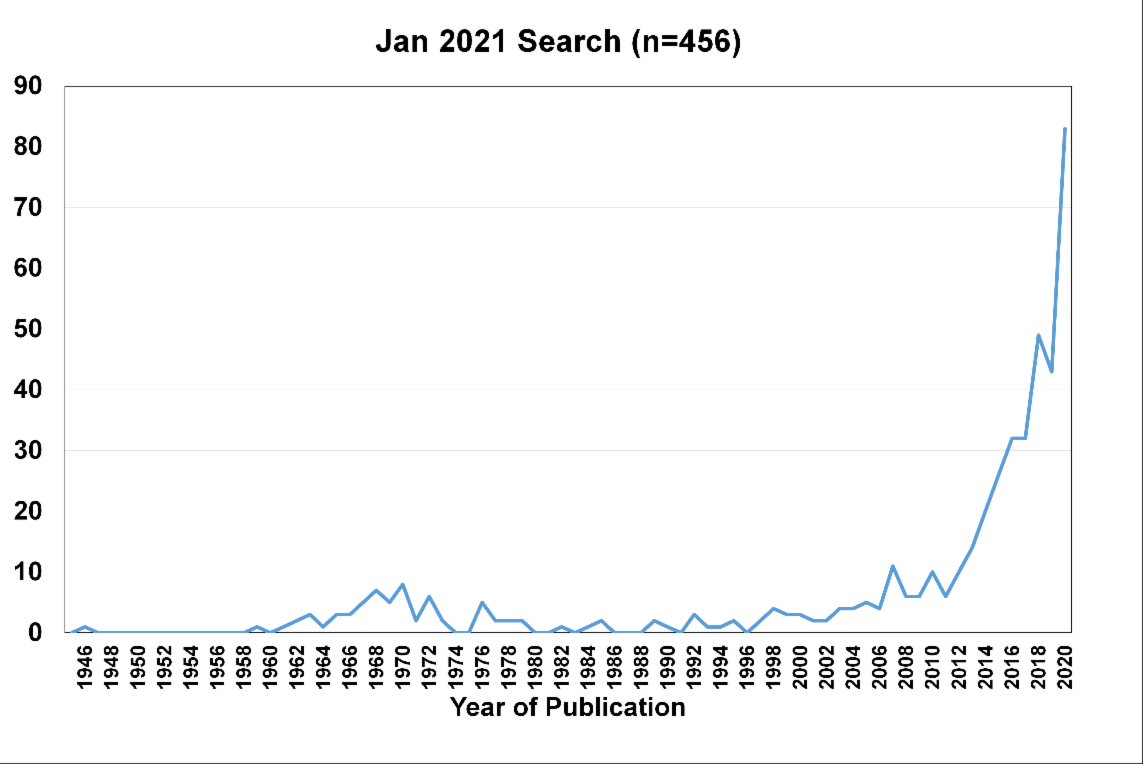
While I see Steve Vincent from QUT as a true visionary, I wonder if he could have envisioned the true impact when he wrote 'The rigid lens renaissance: a surge in sclerals' back in February 2018 in an editorial for Contact Lens & Anterior Eye. Look at where we are today! Rute Macedo-de-Araújo from Portugal did the annual 'scleral lens publication count' - a thorough process of Pubmed search and handpicking of peer-reviewed publications that are applicable to the inclusion criteria. Look at the 2020 surge in papers. Words are inadequate to describe it. All I can say is thanks. Thanks to Craig Norman and B+L, the international board of experts and everyone involved in the original scleral lens guide, and kudos to everyone involved in scleral lens fitting, eduction and research - on behalf of so many patients that benefit from these and for whom it often is a life-changing event.
Eef van der Worp
|
|
Global Specialty Lens Symposium 2021 |
|
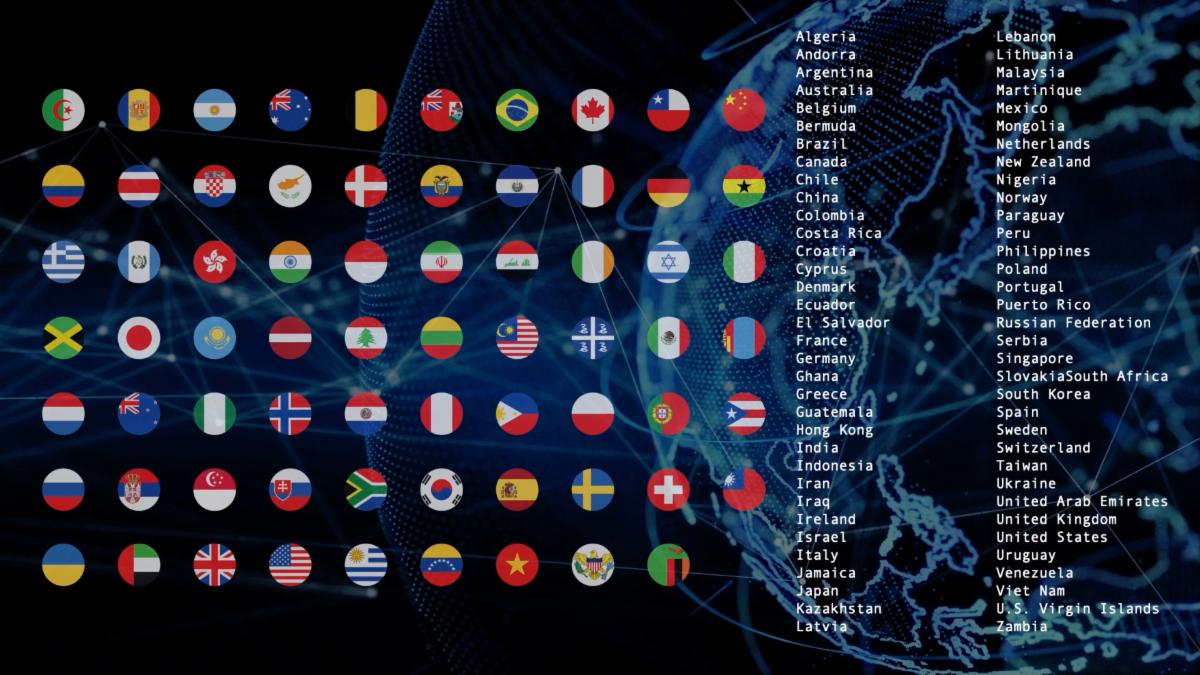
The online Global Specialty Lens Symposium was a record setting success, with over 4000 delegates registered and 83 countries represented. Needless to say, sclerals were prominent on the agenda there too, but other topics including myopia management and new technology in specialty contact lens practice were other highlights. The 2021 GSLS program remains available online until April 30.
|
|
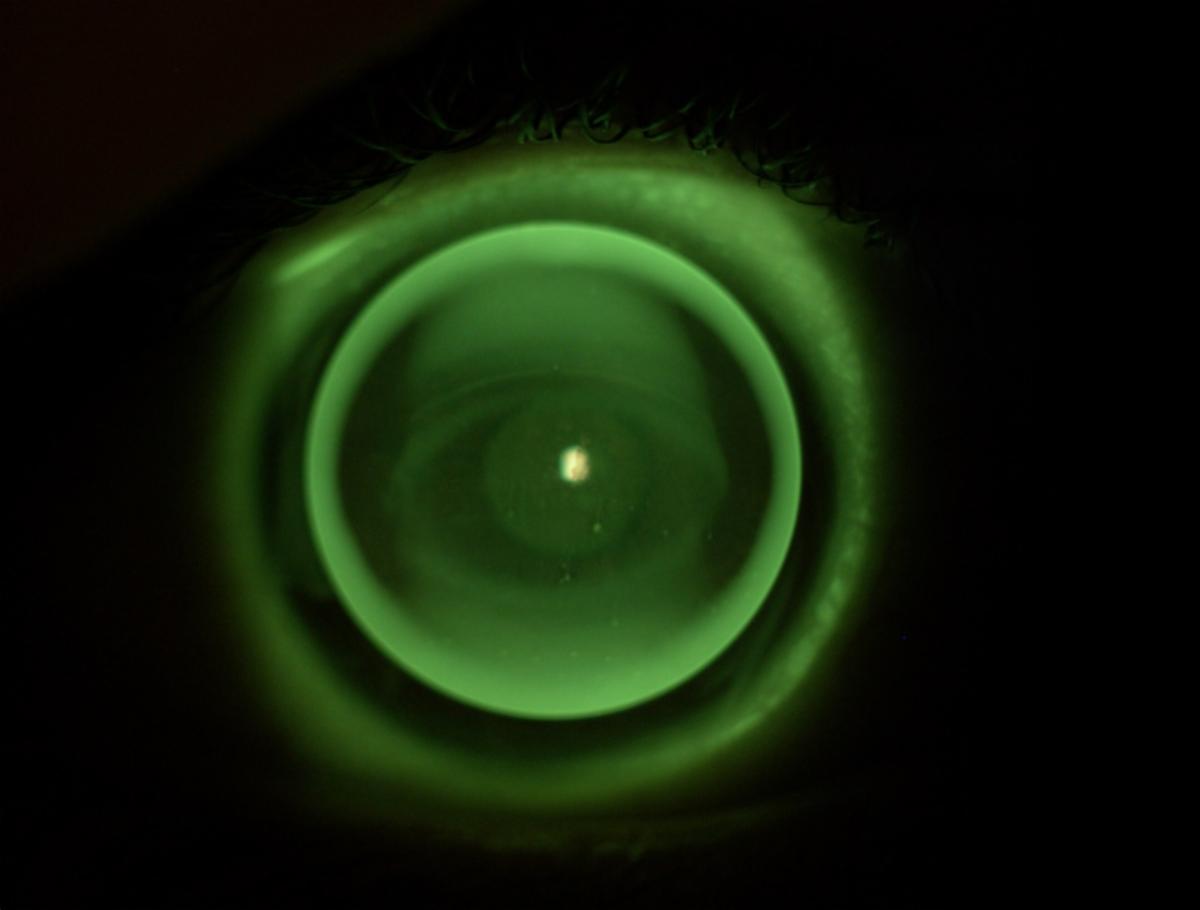
A recent comment from a colleague overseas was, and I quote: "I-site newsletter is my favorite lunchtime read." Love that comment. Regarding midday, or lunchtime, fogging in scleral lens wear: a recent discussion was initiated by Daddi Fadel with a group of scleral lens enthusiasts that resulted in some interesting insights. The initial question was: 'As a general rule, do you have patient remove their lenses?' The reasoning behind this would be to prevent 'midday fogging' and accumulation of toxic waist behind the lens. Would this justify, precautiously, having the lenses removed once, twice or even more times a day? The general consensus seemed to be that in the "healthy" ectatic eye with an uncompromised ocular surface, this is probably not justified. In the challenging eye, such as as with GVHD/OCP and in hypoxic conditions, this could be a different story. One concern to take very seriously, of course, is whether patients have hygienic conditions when taking lenses out and reapplying them around lunchtime. Daddi Fadel published a nice article and overview of Midday Fogging on her website. Hope this makes a good lunchtime read. Bon appetite.
|
|
Effect of Corneal Lenses in Keratoconus |
|
Two interesting papers from Japan focus on the effect that corneal (R)GP lens wear potentially can have on keratoconic eyes. Satoko Araki et al studied the effect of long-term corneal (R)GP lens wear on keratoconus progression. The ‘Global consensus on keratoconus and ectatic corneal diseases’ states that corneal (R)GPs are important for visual rehabilitation and that their use does not slow or halt the progression of corneal ectasias. However, little is known regarding the effect of long-term corneal (R)GP lens wear on keratoconus progression over a long follow-up period. Based on corneal tomographic evaluation over 5–6 years, they found the effects of long-term corneal (R)GP wear to have no effect on keratoconus progression. Shizuka Koh et al studied the effect of wearing spherical corneal (R)GPs (with or without apical touch or three-point touch) on the posterior corneal surface to determine whether the corneal biomechanical properties of keratoconus correlate with corneal flattening induced by wearing corneal (R)GPs. They found spherical, regular astigmatism and asymmetry components of the cornea to be significantly smaller with corneal (R)GP wear than without (R)GP lens wear.
Image: Hogeschool Utrecht, the Netherlands
|
|
Customizing the Treatment for Myopia |
|
One thing that was made clear at the recent Global Specialty Lens Symposium 2021 regarding myopia was that pretty much every child and approach to myopia management should be different. In other words, customization of the myopia therapy is warranted. What also is becoming clear is that myopia onset and the amount of progression are slowed if the therapy is started as early as possible. A study from China found that with each year that the onset of myopia is delayed, the chance of high myopia later in life is reduced. Of the children with myopia onset at age 7–8, 53,9% developed high myopia in later in life. Among kids aged 9 at myopia onset, 32,4% developed high myopia; for 10 years of age, this was 19,4%; at 11 years 14,1%. In kids with myopia onset at the age of 12 years, this was only 1,3%. |
|
Myopia Progression in COVID-19 Confinement |
|
Time spent in outdoor activities has decreased because of home confinement for the COVID-19 pandemic. Concerns have been raised about whether home confinement may have worsened the burden of myopia owing to decreased time spent outdoors and increased screen time at home. This study by Wang et al in JAMA Ophthalmology looked into this and found that in the 123.535 children included in the study, a substantial myopic shift was seen (approximately −0.3D) in the school-based photoscreenings in 2020 compared with previous years (2015-2019) for younger children aged 6 (−0.32 D), 7 (−0.28 D), and 8 (−0.29 D) years. Numerous limitations warrant caution in the interpretation of these associations, including use of non-cycloplegic refraction and lack of orthokeratology history or ocular biometry data. But the authors do concluded that home confinement during the COVID-19 pandemic appears to be associated with a significant myopic shift for children aged 6 to 8 years. In addition, younger children’s refractive status may be more sensitive to environmental changes compared to those of older ages, given that the younger children are in a critical period for the development of myopia. |
|
A Special Handbook on Special Lenses |
|
It is hard to attend a large international conference on specialty contact lenses without at least once seeing or hearing a reference to the Visser name, mostly related to scleral lenses. There is now the Visser Contact Lens Handbook. In an educational way, impressive case reports are described that are of interest to eye care practitioners from around the world. It is not just the cases themselves that are the focal points; the introduction to medical contact lens indications and the overview of all specialty lens modalities available are comprehensive in nature and useful. The chapters regarding contact lens care systems (a highly undervalued part of specialty lenses) and an overview of complications and how to manage them are very applicable as well. The international specialty contact lens community isn’t very big, and the general idea is to learn from each other where we can. The learning curve for many of the specialty lenses is generally pretty steep. To draw a parallel, the goal of the Global Specialty Lens Symposium is exactly that: to ‘show and tell’ and to learn from each other. This handbook resonates as almost a paper version of that meeting and is a valuable contribution to anyone working in the field of eye care involved in the anterior ocular segment. Compliments to the editor Karolien Elving-Kokke and co-editor Simone Visser – and to the entire team – for this compilation. For more information: handbook@vissercontactlenzen.nl. Simone Visser also features in the newest Podcast GlobalEyes by Melissa Barnett and Tom Arnold (available via link below).
|
|
Amsterdam, Netherlands
Copyright © 2020. All Rights Reserved
This newsletter is kindly supported by:
|
|
|
I-site is an educational newsletter that is distributed on a monthly basis and provides an update on rigid gas permeable-related topics (scientific research, case reports and other publications worldwide). I-site is objective and non-political. Disclosure: I-site's editor Eef van der Worp, optometrist PhD FAAO FBCLA FIACLE FSLS, receives educational grants from a number of industry partners but is not related to any specific company. Please contact us at:
|
|
|
|
|
|
|