Coast Posts
- A Newsletter From FEC
| |
News from Future Earth Coasts International Project Office
Shanghai | East China Normal University
| | |
Highlights:
- Future Earth Coasts 2025 in a Snapshot
- FEC Building Future Leadership Dialogues: Voices of Experience
- First Session of the Innovation & Technology Transfer Webinar Series Highlights Drone-Enabled Blue Carbon Mapping
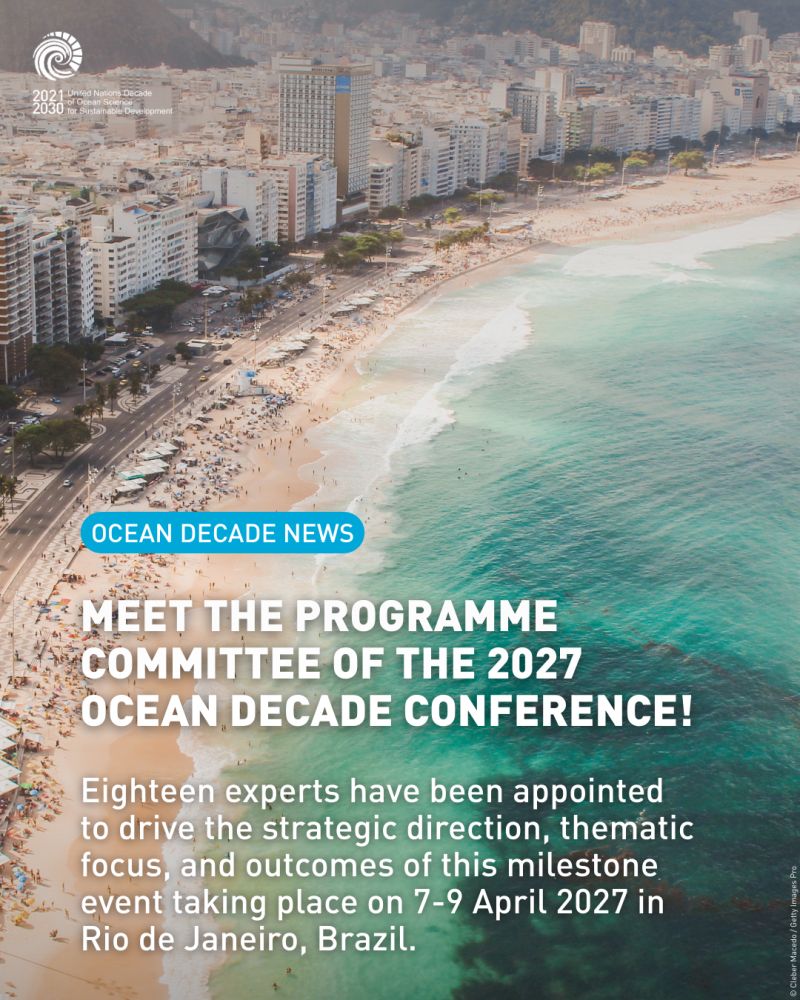
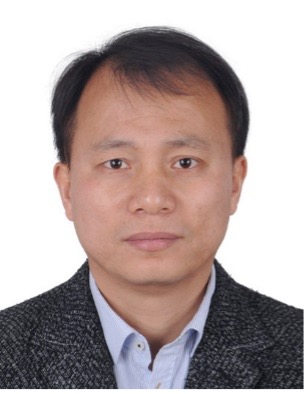
- Dr. Xiaoyu Fang Appointed to Programme Committee for the 2027 Ocean Decade Conference
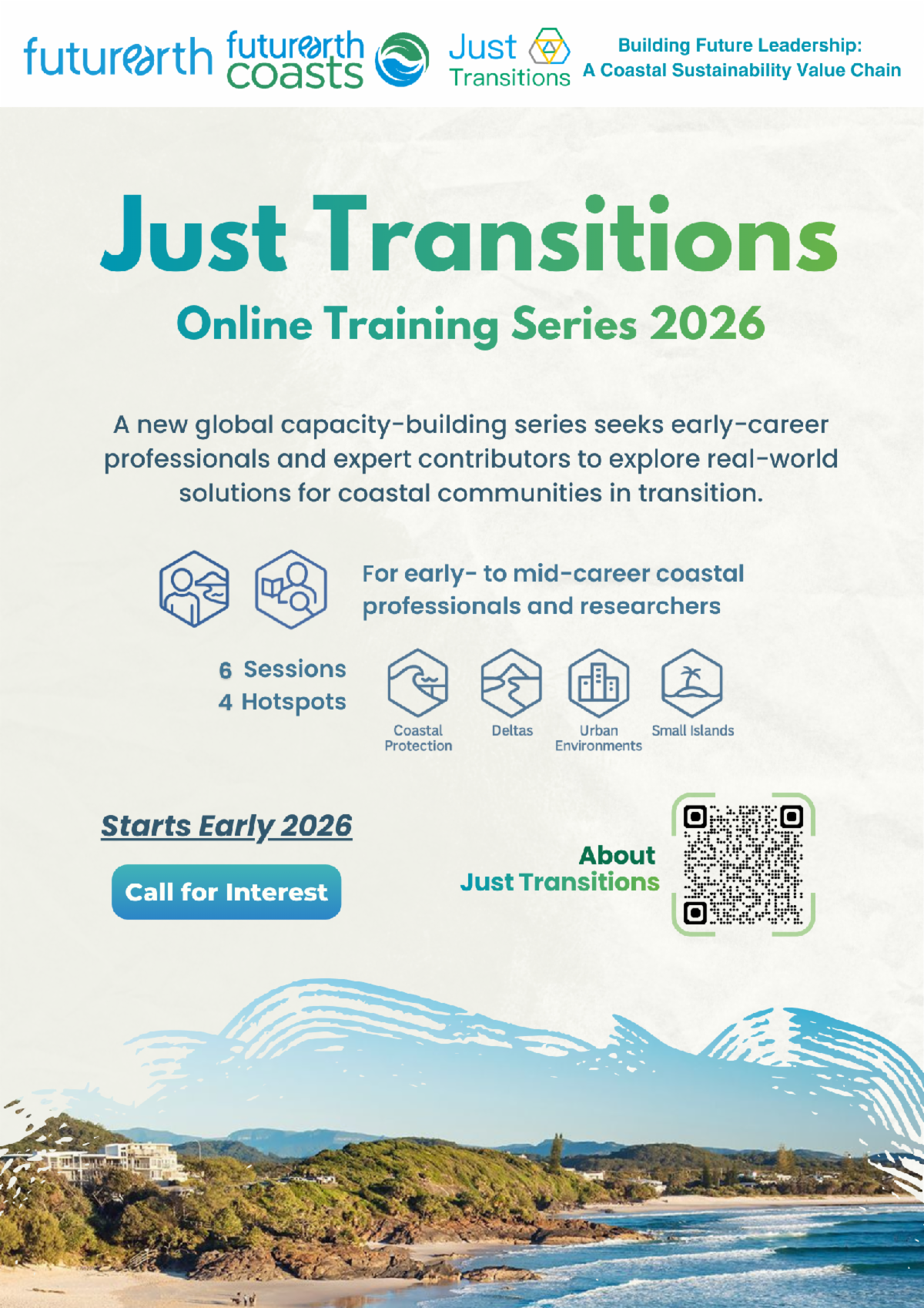
- Shaping a Just Future for Our Coasts: A Call for Participants & Contributors to a New Global Training Series on Just Transitions
- Anthropocene Coasts: Call for Papers – Tour de Coasts
- FEC New Publication | Social-ecological contributions of protected areas to their surroundings
- FEC New Publication | Reservoir artificial flood discharge is a critical driver for the compositional and functional shifts of dissolved organic matter in river mouth
- FEC New Publication | Integrating human and natural systems from a global systems perspective
- FEC New Publication | Reconstructing 3100 years of extreme coastal flooding events from Emau Island, Vanuatu
- Updates from FEC Affiliated Projects: Building community resilience to coastal climate hazards
- Updates from FEC Supported Networks: EU-CONEXUS
- Call for Proposals: Shanghai Sci-tech Co-research Program
- Call for sessions: deadline extended! “Towards a just and habitable world: exploring the role of technology” | Lausanne, 2-5 June 2026
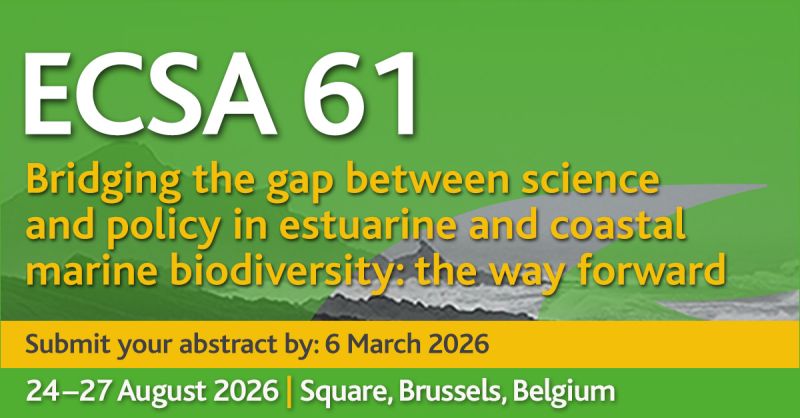
- Call for Abstract Submission for ECSA 61 in Brussels
- Special Issue of Revista TOMO | Coastal Squeeze: Beaches under Socio-Economic and Ecological Pressure
| | Future Earth Coasts 2025 in a Snapshot | | |
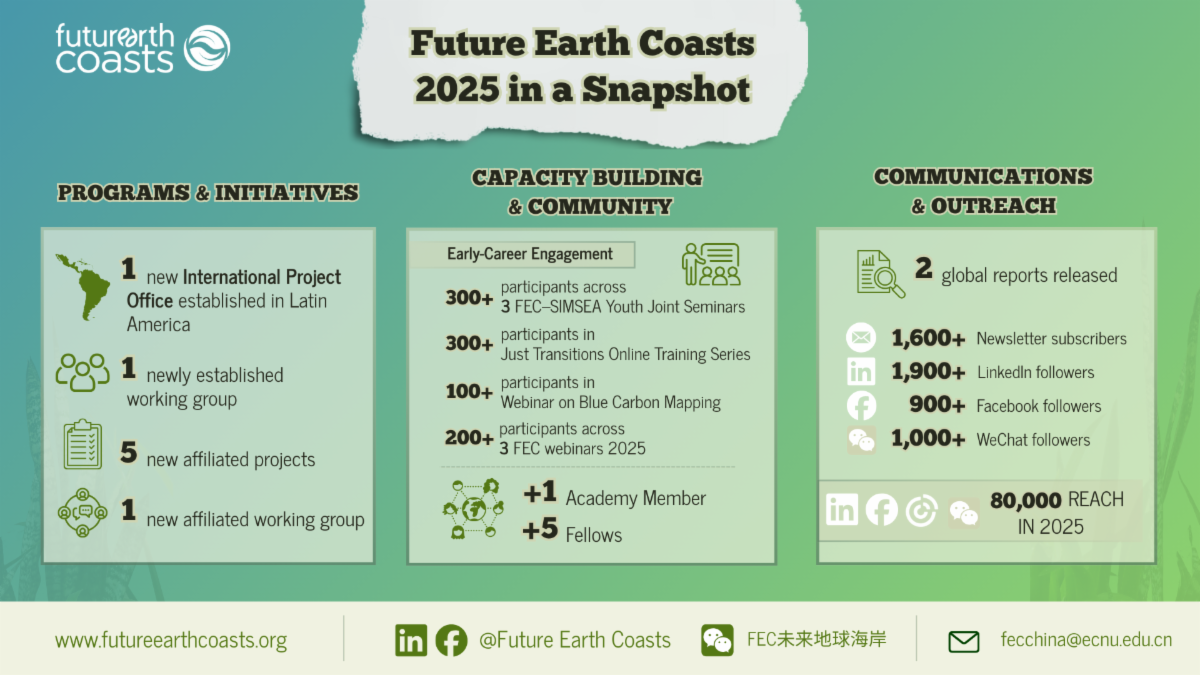
FEC is excited to share the Future Earth Coasts 2025 Snapshot—a visual summary of our collective momentum across initiatives, capacity building, and global outreach.
From establishing a new International Project Office in Latin America to engaging over 900 participants in capacity‑building events and reaching 80,000+ through our communications, 2025 was a year of connection, growth, and impact.
Grateful to all our partners, fellows, and community members who made this possible. Let’s keep building resilient coastal futures together.
| | FEC Building Future Leadership Dialogues: Voices of Experience | | |
A new conversation series launched by Future Earth Coasts
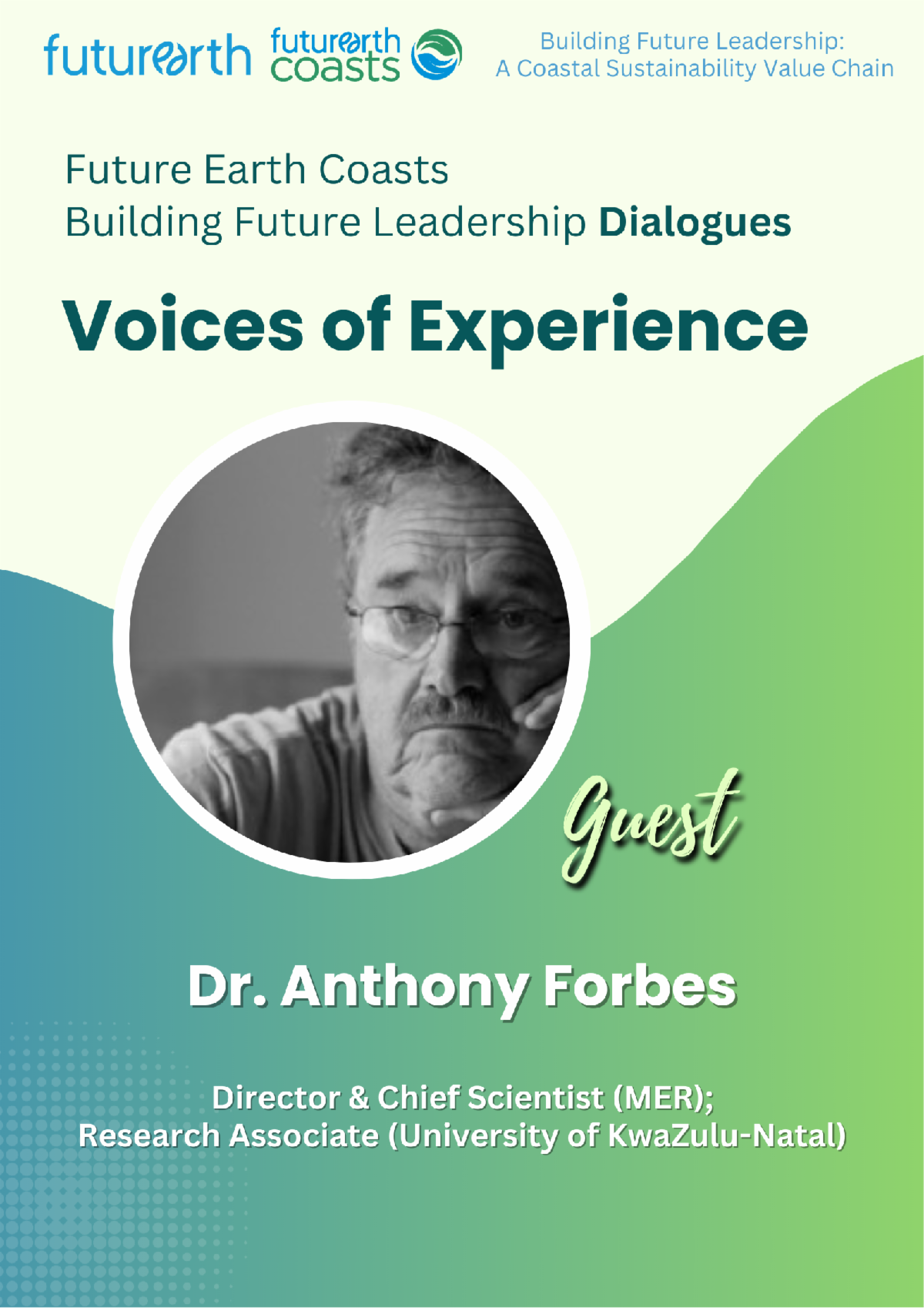
Future Earth Coasts is pleased to launch Building Future Leadership Dialogues: Voices of Experience, a new conversation series that explores leadership through the lens of lived experience. Designed to inspire and guide emerging coastal professionals, the series brings together seasoned practitioners, researchers, and policy leaders to reflect on the choices, values, and turning points that have shaped their careers.
As coastal sustainability challenges grow increasingly complex, leadership is no longer defined solely by titles or technical expertise. Therefore, this series invites honest reflections on learning, responsibility, and the challenges of leading in complex and uncertain contexts. By sharing stories from those who have walked the path before, the series seeks to inspire emerging leaders, encourage intergenerational exchange, and highlight how experience can inform more sustainable and just futures for our coasts.
To open the series, we are honored to feature Dr. Anthony (Ticky) Forbes, Director and Chief Scientist at Marine & Estuarine Research (MER) and Research Associate at the University of KwaZulu-Natal, South Africa.
| |
Interview Highlights
Could you share what first motivated you to enter the field of oceanography and coastal sciences, with a particular interest in marine and estuarine systems?
I grew up in a coastal city in South Africa, in a family that spent summers on the beach where I first learnt to snorkel dive. As the first member of my family to go to a university, there was no-one to advise me and I was actually rather unprepared for the switch from a school to a university environment. Consequently, I went to the nearest which happened to be Rhodes, still the smallest in the country. The most active researchers in the Zoology Department happened to be aquatically oriented, did a lot of field work, and once I reached a post-graduate level, I became involved in their research programmes in coastal lakes and estuaries and never looked back.
Click here to read more.
| | First Session of the Innovation & Technology Transfer Webinar Series Highlights Drone-Enabled Blue Carbon Mapping | | |
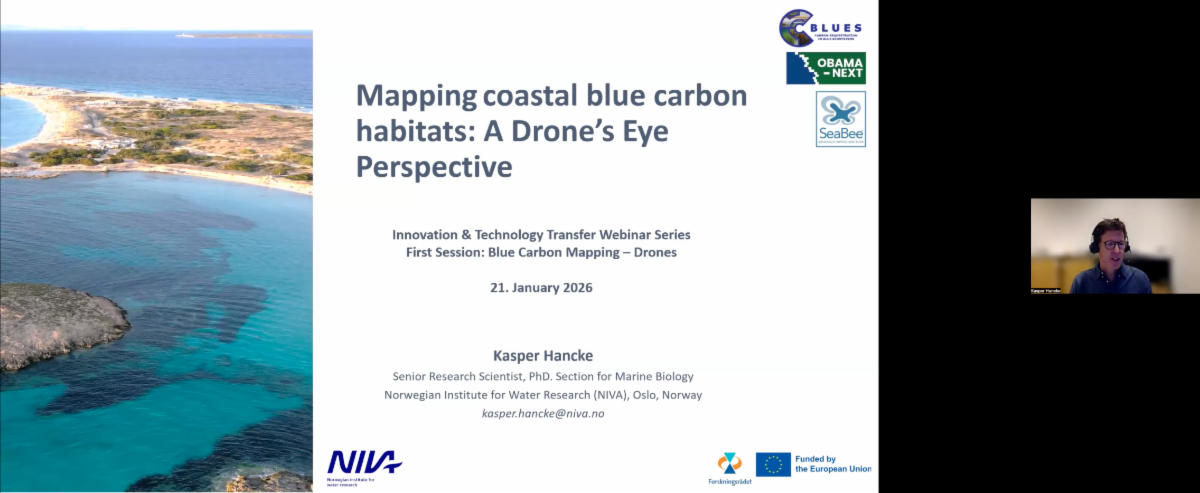
The Innovation & Technology Transfer Webinar Series, jointly organized by FEC and C-BLUES/Blue-Seas, successfully opened with its first session, Blue Carbon Mapping – Drones, bringing together researchers from Europe and China to share cutting-edge advances in blue carbon observation and assessment.
Moderated by Dr. Sung-Ching Lee, the webinar featured two keynote presentations. Dr. Kasper Hancke, Senior Research Scientist at the Norwegian Institute for Water Research (NIVA), presented recent advances in drone-based remote sensing for coastal blue carbon habitats. He demonstrated how RGB, multispectral, and green LiDAR sensors mounted on drones enable high-resolution underwater 3D terrain and canopy structure mapping, supporting biomass and carbon stock estimation for seagrass meadows, macroalgal forests, and salt marshes. Dr. Hancke emphasized that drone observations, when combined with machine-learning classification and satellite upscaling, provide a powerful and scalable framework for national and regional blue carbon monitoring.
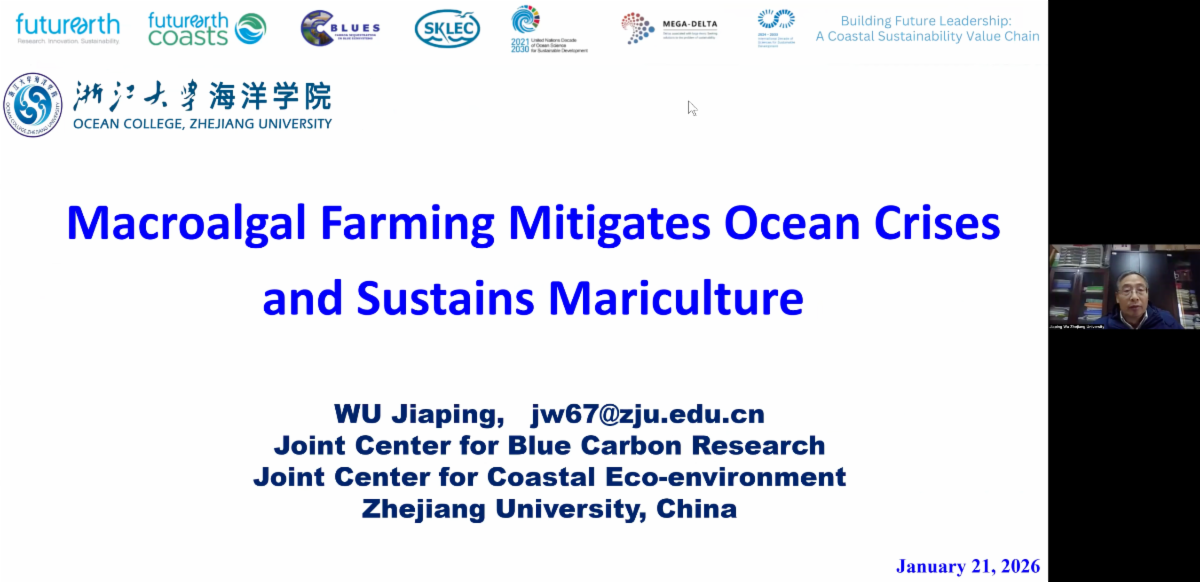
| The second presentation was delivered by Prof. Wu Jiaping from Zhejiang University, who focused on the role of seaweed aquaculture in mitigating ocean crises and supporting sustainable mariculture in China. Drawing on long-term production statistics and remote-sensing evidence, Prof. Wu highlighted the substantial contributions of large-scale seaweed farming to nutrient removal, carbon sequestration, coastal water quality improvement, and local livelihoods. He further demonstrated how satellite observations and drone surveys can overcome data lags and inconsistencies in traditional statistical reporting, enabling more accurate and timely assessments of blue carbon ecosystems along China’s extensive coastline. | | Dr. Xiaoyu Fang Appointed to Programme Committee for the 2027 Ocean Decade Conference | | Future Earth Coasts (FEC) is delighted to announce that Dr. Xiaoyu Fang, Co‑Executive Director of FEC and Assistant Research Professor at the State Key Laboratory of Estuarine and Coastal Research (SKLEC), East China Normal University, has been appointed as a member of the Programme Committee for the 2027 Ocean Decade Conference. The appointment was announced by the UN Ocean Decade on 15 January 2026, alongside the selection of 18 global experts who will guide the strategic direction of the 2027 Conference. | | (source: https://www.linkedin.com/posts/un-ocean-decade_oceandecade-activity-7417597819773046784-RmNV?utm_source=share&utm_medium=member_desktop&rcm=ACoAABovY-ABBWvwtbVQ7mtJYAvQ-X2yuGnrv0k) | |
Dr. Fang’s appointment reflects both FEC’s four decades of dedication to advancing coastal sustainability and SKLEC’s leading role in the UN Ocean Decade’s Mega‑Delta Programme, one of the Decade’s endorsed actions addressing the world’s most vulnerable delta regions. Her work has been central to strengthening science‑policy interfaces, fostering regional collaboration, and advancing nature‑based solutions for coastal resilience.
Click here to read more.
| | Shaping a Just Future for Our Coasts: A Call for Participants & Contributors to a New Global Training Series on Just Transitions | | Participants and contributors are sought for a new online training series on just transitions in coastal regions, to be launched by the Just Transitions Working Group of Future Earth Coasts in early 2026. The series forms part of the “ Building Future Leadership: A Coastal Sustainability Value Chain” cross-cutting project supported by Future Earth. | | |
The idea of a ‘just transition’ has broadened out beyond its initial focus on workers in high-emitting sectors, to ensuring that people and places involved in all kinds of resource-dependent activity are not left behind in the transition to a zero-carbon and sustainable society. Striving towards a just transition is especially challenging for coastal societies, which both rely on natural resources for livelihoods, yet may also find themselves as the site of ‘solutions’ such as offshore renewables and coastal defences.
The aim of the training series is therefore to explore multiple aspects of just transitions in the coastal zone, across six two-hour sessions: an introduction to just transitions; coastal protection; deltas; urban environments; small islands; and synthesis. The sessions will feature a series of short expert contributions, followed by guided discussion and interactive group tasks. By the end of the series, participants will have gained an understanding of the breadth of ways just transition challenges are being tackled in coastal zones globally, and of how to apply these to the places they themselves live and work in. Although there is no formal assessment, participants will be asked to share a short presentation to the group on opportunities and challenges for a coastal just transition in their own locality in the final week of the module.
To register your interest in participating, please sign up here for updates in the first instance.
To register an interest in contributing to one or more of the sessions as an expert, please sign up here.
Click here to read more.
| | |
Anthropocene Coasts:
Call for Papers – Tour de Coasts
| | Anthropocene Coasts is launching a new special collection titled Tour de Coasts. | | |
This special collection is supported by FEC and provides a forum for knowledge exchange about priority coastal sustainability concerns and aims to create a comprehensive understanding of coastal sustainability challenges and opportunities from a global perspective.
For this Special Collection, Anthropocene Coasts invites manuscripts of all aspects of coastal sustainability challenges and opportunities globally including but not limited to: governance; individual, cultural, community, and ecological health; effective and inclusive communication; human behavioral change; food, water, and housing security; ecological analyses; economics and financial incentives; potential for managed coastal retreat; technology and increased connectivity; coastal disease threats and health benefits; use crises to inform; and modeling.
| The submission deadline for this collection has been extended to March 31, 2026. You can access the topical collection via this link. | | Dr. Katya Altman, Bureau of Ocean Energy Management, USA | Dr. Dwayne Porter, University of South Carolina, USA | | Dr. Heath Kelsey, University of Maryland, USA | Dr. Anja Scheffers, Southern Cross University, Australia | Dr. Xiaoyu Fang, East China Normal University, China | | |
New Article Published in This Special Collection
Dutta, S., Al Balushi, M., Al Harbi, F., & Paul, S. (2025). Fisheries management of the Arabian Peninsula region with special emphasis to the Sultanate of Oman: perspectives of climate change adaptations. Anthropocene Coasts, 8(1), 1-14.
https://doi.org/10.1007/s44218-025-00088-8
| |
Social-ecological contributions of protected areas to their surroundings
| Graeme S. Cumming, Abbie A. Rogers, Teigan G. Collins, Michael V.W. Cuttler, Carmen E. Elrick-Barr, Ilaria Gliottone, Siwat Kongwarakom, Ryan J. Lowe, Valeria Y. Mendez Angarita, Matthew L. Navarro, Natasha Pauli, Shaun K. Wilson | |
Dr. Carmen E. Elrick-Barr
| | |
Summary
Global expansion of protected areas is widely seen as a vital response to declines in biodiversity. Protected areas affect adjacent societies, economies, and ecosystems via spillovers, but these secondary benefits and costs are often inconsistently and incompletely described and evaluated. The absence of interdisciplinary conceptual and methodological frameworks for spillover identification and analysis limits the integration and generalizability of spillover research. To address this problem, we summarize the literature to identify a core of existing research that provides a foundation for a more consistent comparative approach to spillovers across locations, ecosystems, and research disciplines. This core identifies seven categories of spillover and four direct mechanisms by which they occur. Integration with existing social-ecological systems approaches provides a general framework with broad relevance and applicability. Adoption of a more standardized social-ecological approach to spillovers will support better scientific practice, planning, and legislation under the Global Biodiversity Framework’s 30 × 30 Target.
Click here to read more.
|
| Reservoir artificial flood discharge is a critical driver for the compositional and functional shifts of dissolved organic matter in river mouth | Donglei Niu, Yang Tan, Chao Ma, Yulin Qi, Yanan Li, Yanfang Li & Jianhui Tang | | | |
Abstract
While dam-based regulation modifies the natural transport rhythm of riverine materials, the effects of artificial flooding on river mouth dissolved organic matter (DOM) dynamics remain poorly constrained. The Water-Sediment Regulation Scheme in the Yellow River provides a unique snapshot. Distinct organic matter signatures were observed between the water release and sediment flushing phases using optical and molecular techniques. Here we show that during water release phase, rapid discharge of upper-layer water from Xiaolangdi Reservoir increased the proportion of bio-labile DOM in the Yellow River mouth. Conversely, during sediment flushing phase, resuspension and then release of bottom sediments from the reservoir enhanced aromatic DOM components. Although the relative abundance and composition of particulate organic matter remained unchanged during water release phase, it increased during sediment flushing phase. These findings demonstrate that reservoir operations reconfigure river-ocean carbon flows, emphasizing the need to integrate dam management strategies into global carbon cycling models.
Click here to read more.
|
|
Integrating human and natural systems from a global systems perspective
| John W. Day, William H. Conner, Katherine C. Ewel, Rachael Hunter, G. Paul Kemp, Robert Lane, Jay Martin, William Mitsch, Victor H. Rivera-Monroy, John Rybczyk | | | |
Abstract
During his long career, Howard Odum focused on both conceptual and theoretical issues such as maximum power and the development of energy circuit language as well as ecosystem-level studies of natural systems and human interactions with these systems. He and colleagues carried out large macrocosm studies on a variety of ecosystems. We review here studies initiated by Howard Odum as well as whole system studies carried out by a number of post docs, his students and their students. We focus on studies involving John Day, Katherine Ewel, and William Mitsch. Ewel and Mitsch worked on fertilized cypress systems in Florida. While at Ohio State University, Mitsch initiated a wetland research park on the university campus. He and Day carried out a series of holistic studies of the Mississippi basin to address water quality issues caused by agricultural runoff and developed a basin-wide plan for wetland reclamation to reduce nutrient inputs to streams and rivers. More recently, studies have been carried out on the long-range and large-scale effects of hydrology and macrophyte planting on phosphorus removal by wetlands adjacent to Lake Erie. Major ecosystem-scale studies in coastal Louisiana have investigated the value of coastal wetland and aquatic systems in improving water quality and restoring lost landscapes. These studies in the Midwest and Mississippi delta form the basis of determining design standards for creating and restoring wetlands in the Mississippi Basin to reduce Gulf of Mexico hypoxia and regain many lost ecosystem functions over a large part of North America. Studies have also been conducted of the use of mangroves to treat effluent from shrimp ponds. These studies were intended to increase our understanding of water quality improvement and ecosystem budgets, demonstrating the importance of pulsing, self-design, and emergy analysis.
Click here to read more.
| | Reconstructing 3100 years of extreme coastal flooding events from Emau Island, Vanuatu | Yanan Li, Jeffrey P. Donnelly, Shu Gao, Jianhua Gao, James F. Bramante, Krishna K. Kotra | | | |
Abstract
Tropical cyclones (TCs) are posing growing threat to coastal populations and property, thereby necessitating more millennial paleoclimatic reconstructions. This study presents a 3100-year record from Marou Lagoon, Emau Island, Vanuatu. Using coarse anomalies as the main proxy, 36 intense tropical cyclones are identified (∼1.2/century). Active TC phases occurred during 1550–1750 CE, 350–750 CE, and the 20th century, contrasting with a pre-Common Era quiescent period. Comparative analysis with five paleotempestological records across the tropical South Pacific reveals multidecadal-to-centennial TC variability is dominantly governed by ENSO-driven shifts in the South Pacific Convergence Zone (SPCZ). La Niña-like periods cause southwestward SPCZ displacement and expansion, causing basin-wide enhanced cyclogenesis, while persistent strong El Niño conditions collapse the SPCZ into a zonal structure near French Polynesia, concentrating activity at eastern sites and suppressing western ones. Weak-to-moderate El Niño states exhibit stochastic dominance. Critically, sedimentological analysis reveals the most prominent event bed represents the cataclysmic Kuwae eruption in mid-15th. This deposit exhibits a five-stage sequence reflecting eruption progression, providing unprecedented resolution of eruption dynamics and tsunami impacts that surpass subaerial records. Typical diagnostic features of tsunami deposits (e.g., hummocky cross-stratification) are absent due to lagoon barrier/reef sheltering, and the heterogeneous density and shape of dominant pyroclastic materials (especially pumice) invalidate standard hydraulic grain-size models. This study demonstrates that sheltered lagoons preserve high-fidelity records of both extreme TCs and volcanogenic tsunamis. Such archives offer critical insights into regional climatic drivers and geohazard mechanisms but require environment-specific sedimentological frameworks, particularly where low-density pyroclastics dominate coarse fractions.
Click here to read more.
| |
Updates from FEC Affiliated Projects
| | Building community resilience to coastal climate hazards | | | |
The project website has been recently updated to include links to early research findings. www.unisc.edu.au/coastalresilience
Follow the link above, click on Research Impact and Findings.
| | |
Updates from FEC Supported Networks
| | | | Coastal Sustainability Told Through Comics: An EU-CONEXUS Initiative | | | |
The EU-CONEXUS Comic Strip in Science initiative invites PhD students and researchers working on coastal sustainability to collaborate with professional artists, transforming research into engaging three-page comic stories with cover illustrations for non-expert audiences. EU-CONEXUS is a European University Alliance bringing together nine universities committed to smart urban coastal sustainability through education, research and innovation. The project aims to raise public awareness of coastal sustainability challenges and showcase how science connects with society in creative ways. In the first phase (June–November 2025), four teams from France, Greece, Spain and Lithuania have begun developing comics, with five additional teams from Croatia, Romania, Ireland, Germany and Cyprus to follow through April 2026. An intermediate magazine compiling the first four comic strips is already available, and the final magazine bringing together all nine comics will be published at a later stage.
Click here to read more.
| | | Open Calls & Opportunities | | Call for Proposals: Shanghai Sci-tech Co-research Program | |
Call for Proposals: Shanghai Sci‑tech Co‑research Program Offers Opportunities for Early‑Career Scientists
The Call for Proposals for the 2026 Shanghai Sci‑tech Co‑research Program has been launched by the Science and Technology Commission of Shanghai Municipality (STCSM). This program supports international collaboration by inviting outstanding early‑career foreign scientists to work with Shanghai‑based institutions on high‑value basic research and cutting‑edge technologies.
With RMB 400,000 in fixed funding per project and a two‑year implementation period, the program aims to strengthen Shanghai’s global research environment and foster meaningful scientific exchange.
Eligible young researchers and host institutions are encouraged to explore this opportunity and contribute to advancing global science together.
Click here to read more.
| |
Call for sessions: deadline extended!
“Towards a just and habitable world: exploring the role of technology” | Lausanne, 2-5 June 2026
| |
The deadline to submit your session to the conference “Towards a just and habitable world: exploring the role of technology” has been extended to 15 February 2026!
Submit a session proposal to contribute to discussions and critical reflections on how we might transform technological systems towards sufficiency, equity, and resilience.
We welcome proposals for poster presentations, thematic sessions, workshops and cultural events to critically examine the role of technology in shaping sustainability.
The conference is organised by University of Lausanne, Centre des Politiques de la Terre (Université Paris-Cité) and Future Earth Pathways Initiative.
Deadline: 15 February 2026
Learn more about our call and submit your session! → Click here
| Call for Abstract Submission for ECSA 61 in Brussels | |
Abstract submission for ECSA61 in Brussels in August is now open.
ECSA 61 brings together a global multi-disciplinary community of researchers and professionals. For the first time ECSA invites participants for a 'Science-meets-Policy' day (27 August 2026), during which participants will have the chance to discuss research findings and applications for a sustainable future of coasts with managers and decision-makers from Europe and all over the world, and the ways in which these can be used in current monitoring and assessment policies.
The Estuarine and Coastal Sciences Association provides travel support for researchers from DAC countries and students from all countries.
Click here to read more.
| Special Issue of Revista TOMO | Coastal Squeeze: Beaches under Socio-Economic and Ecological Pressure | |
The issue brings together interdisciplinary contributions examining how beaches are increasingly shaped by socio-economic pressures, environmental risks, governance arrangements, and real estate dynamics.
Click here to read more.
| | | New FEC Publications (Since April 2025) | | |
○ Adhiambo, R., Mensah, P. K., Koomson, A., & Acheampong, E. (2025). Navigating stress: Impacts of temperature, polycyclic aromatic hydrocarbons, and heavy metals on the diatom Thalassiosira weissflogii adapted to tropical waters of the Gulf of Guinea. Aquatic Toxicology, 107388.
https://doi.org/10.1016/j.aquatox.2025.107388
○ Celliers, L., Ferse, S., Bruns, A., Eisenack, K., Hornidge, A. K., Klepp, S., ... & Rölfer, L. New rationalities, inner logic, and hope for sustainable future coasts. Global Sustainability, 1-21.
https://doi.org/10.1017/sus.2025.10041
○ Cumming, G. S., Rogers, A. A., Collins, T. G., Cuttler, M. V., Elrick-Barr, C. E., Gliottone, I., ... & Wilson, S. K. (2025). Social-ecological contributions of protected areas to their surroundings. One Earth, 8(12).
https://www.cell.com/one-earth/abstract/S2590-3322(25)00288-X
○ Cunha, J., Elliott, M., Villasante, S., Balbi, S., Cabecinha, E., & Ramos, S. (2025). Assessing cumulative risks to coastal and marine habitats under management and climate change scenarios: The case of northern Portugal. Ocean & Coastal Management, 268, 107756.
https://doi.org/10.1016/j.ocecoaman.2025.107756
○ Davies-Vollum, K. S., Puttick, S., Agyekhumene, A., Amolegbe, T., Aneyo, I., Boateng, I., ... & Sohou, Z. (2025). A stakeholder-informed framework for the sustainable management of coastal lagoons in West Africa. Anthropocene Coasts, 8(1), 1-11.
https://link.springer.com/article/10.1007/s44218-025-00093-x
○ Day, J. W., Conner, W. H., Ewel, K. C., Hunter, R., Kemp, G. P., Lane, R., ... & Rybczyk, J. (2025). Integrating human and natural systems from a global systems perspective. Ecological Modelling, 510, 111351.
https://doi.org/10.1016/j.ecolmodel.2025.111351
○ Defeo, O., Corte, G., Barboza, C. A., Debiasi, P., Costa, L. L., Elliott, M., ... & McLachlan, A. (2025). Sandy beaches within meta-social-ecological systems: An integrated framework for ecology, management, and conservation. Estuarine, Coastal and Shelf Science, 109350.
https://doi.org/10.1016/j.ecss.2025.109350
○ Duan, Y., Sanchez-Azofeifa, A., Chen, C., Tian, B., Li, X., Sengupta, D., & Zhou, Y. (2026). S2Coast-2023: The first global 10-meter resolution coastline dataset derived from enhanced Sentinel-2 composite imagery using Google Earth Engine. Remote Sensing of Environment, 334, 115186.
https://doi.org/10.1016/j.rse.2025.115186
○ Dutta, S., Al Balushi, M., Al Harbi, F., & Paul, S. (2025). Fisheries management of the Arabian Peninsula region with special emphasis to the Sultanate of Oman: perspectives of climate change adaptations. Anthropocene Coasts, 8(1), 1-14.
https://doi.org/10.1007/s44218-025-00088-8
○ Elliott, M., Borja, Á., & Cormier, R. (2025). Managing marine resources sustainably–But how do we know when marine management has been successful?. Ocean & Coastal Management, 265, 107623.
https://doi.org/10.1016/j.ocecoaman.2025.107623
○ Elliott, M., Cormier, R., & Borja, Á. (2025). Making sense of marine management–The ten-tenets revisited. Marine Pollution Bulletin, 221, 118580.
https://doi.org/10.1016/j.marpolbul.2025.118580
○ Elrick-Barr, C. E., Smith, T. F., & Thomsen, D. C. (2025). Practitioner perspectives of wellbeing in rapidly changing Australian coastal communities. Ocean & Coastal Management, 266, 107668.
https://doi.org/10.1016/j.ocecoaman.2025.107668
○ Galparsoro, I., Montero, N., Mandiola, G., Menchaca, I., Borja, Á., Flannery, W., ... & Stelzenmüller, V. (2025). Assessment tool addresses implementation challenges of ecosystem-based management principles in marine spatial planning processes. Communications Earth & Environment, 6(1), 55.
https://doi.org/10.1038/s43247-024-01975-7
○ Genchi, S. A., Vitale, A. J., & Perillo, G. M. (2025). Coastal cliff erosion: a bibliometric analysis and literature review. Anthropocene Coasts, 8(1), 1-18.
https://doi.org/10.1007/s44218-025-00072-2
○ Gutierrez, D., Calado, H., Toor, F. v., Moreira, M., Paramio, M. L., Martins, F., Santos, N., Melo, N., & Newton, A. (2025). Empowering Maritime Spatial Planning and Marine Conservation Efforts Through Digital Engagement: The Role of Online Platforms. Sustainability, 17(14), 6371.
https://doi.org/10.3390/su17146371
○ Jiang, W., Huang, Z., Dai, Z., Luo, J., Zeng, W., & Liang, X. (2025). Attenuation of hydro‐sediment dynamics progradation over mangrove wetland. Journal of Geophysical Research: Oceans, 130(2), e2024JC021531.
https://doi.org/10.1029/2024JC021531
○ Li, Y., Donnelly, J. P., Gao, S., Gao, J., Bramante, J. F., & Kotra, K. K. (2026). Reconstructing 3100 years of extreme coastal flooding events from Emau Island, Vanuatu. Quaternary Science Reviews, 373, 109733.
https://doi.org/10.1016/j.quascirev.2025.109733
○ Li, Y., Robinson, S. V., Nguyen, L. H., & Liu, J. (2023). Satellite prediction of coastal hypoxia in the northern Gulf of Mexico. Remote Sensing of Environment, 284, 113346.
https://doi.org/10.1016/j.rse.2022.113346
○ Li, Y., Xia, Z., Nguyen, L., Wan, H. Y., Wan, L., Wang, M., ... & Liu, J. (2025). Spatiotemporal dynamics of coastal dead zones in the Gulf of Mexico over 20 years using remote sensing. Science of The Total Environment, 979, 179461.
https://doi.org/10.1016/j.scitotenv.2025.179461
○ Liang, X., Dai, Z., Mei, X., Wang, R., Zeng, W., & Fagherazzi, S. (2025). Hurricanes induced irreversible large‐scale loss of mangrove forests. Geophysical Research Letters, 52(9), e2025GL115692.
https://doi.org/10.1029/2025GL115692
○ Matovu, B., Bleischwitz, R., Lukambagire, I., Alkoyak-Yildiz, M., Tarek, R., Etta, L., ... & Hsieh, Y. L. (2025). Examining the perceptions and attitudes toward Women's employment and leadership in the blue economy: A case study of India. Social Sciences & Humanities Open, 11, 101537.
https://doi.org/10.1016/j.ssaho.2025.101537
○ Matovu, B., Mim, T. A., & Lutalo, B. (2025). Where and how can Africa and India leverage the blue economy opportunities of the Indian Ocean region as a driver for sustainable development and partnerships?. Sustainable Futures, 10, 101218.
https://doi.org/10.1016/j.sftr.2025.101218
○ Niu, D., Tan, Y., Ma, C., Qi, Y., Li, Y., Li, Y., & Tang, J. (2025). Reservoir artificial flood discharge is a critical driver for the compositional and functional shifts of dissolved organic matter in river mouth. Communications Earth & Environment, 6(1), 996.
https://doi.org/10.1038/s43247-025-02920-y
○ Niu, D., Li, Y., Tan, Y., Ma, C., Qi, Y., Li, Y., & Tang, J. (2025). The impact of water-sediment regulation scheme (WSRS) on the chemistry of dissolved organic matter in the Yellow River estuary and adjacent waters. Water Research, 123669.
○ Nogueira, S. F., Vitale, A. J., Genchi, S. A., Roth, A., Vargas, S. M., Siben, A., ... & Perillo, G. M. (2025). Design and development of a cost-effective buoy using 3D printing for coastal monitoring. HardwareX, e00657.
https://doi.org/10.1016/j.ohx.2025.e00657
○ Ogier, E. M., Pecl, G. T., Hughes, T., Lawless, S., Layton, C., Nash, K. L., & Morrison, T. H. (2025). Novel marine-climate interventions hampered by low consensus and governance preparedness. Nature Climate Change, 1-10.
https://doi.org/10.1038/s41558-025-02291-4
○ Ogier, E. M., Pecl, G. T., Hughes, T., Lawless, S., Layton, C., Nash, K. L., & Morrison, T. H. (2025). Enhance responsible governance to match the scale and pace of marine–climate interventions. Nature Climate Change, 1-2.
https://doi.org/10.1038/s41558-025-02292-3
○ Onwubiko, C. C., & Aheto, D. W. (2025). Assessing the Role of Coastal Habitats in Flood Reduction in Selected Communities of Rivers State. Coasts, 5(2), 17.
https://doi.org/10.3390/coasts5020017
○ Salazar, Y. C. A., Genchi, S. A., Nuciari, L., Perillo, V. L., Piccolo, M. C., & Perillo, G. M. (2025). MiSMoS (MicroScale Morphology System): an inexpensive new method to survey 3D surface micromorphology. Latin American Journal of Sedimentology and Basin Analysis.
https://lajsba.sedimentologia.org.ar/lajsba/article/view/264
○ Valiela, I., Chenoweth, K., & Day, J. (2025). Meta-analysis of vegetation responses to experimental nitrogen enrichments done in salt marshes under different sea level rise regimes reveal interaction of N supply and sea level rise. Science of The Total Environment, 975, 179198.
https://doi.org/10.1016/j.scitotenv.2025.179198
○ Vivian, C., Boettcher, M., Elliot, M., Mengis, N., Merk, C., Oschlies, A., ... & Gupta, A. (2025). The State of the Science for Marine Carbon Dioxide Removal (mCDR)–A Scientific Summary for Policy-Makers.
https://doi.org/10.5281/zenodo.15490407
○ Wu, S., Hu, Y., Zhao, W., Gong, L., Song, Y., Li, C., ... & He, Q. (2025). Human flood adaptation characteristics: A comparative study of three global river deltas. Journal of Hydrology, 133531.
https://doi.org/10.1016/j.jhydrol.2025.133531
○ Yang, J., Dai, Z., Mei, X., Lou, Y., & Fagherazzi, S. (2025). Wetland gain and loss in the Mississippi River bird‐foot delta. Earth's Future, 13(6), e2024EF005003.
https://doi.org/10.1029/2024EF005003
○ Zhao, X., Kaniewski, D., Wang, Y., Marriner, N., Salem, A., Alassal, S. E., ... & Chen, Z. (2025). On the long and winding road: unravelling the late emergence of Neolithic agriculture in the Nile Delta. Quaternary Science Reviews, 359, 109368.
https://doi.org/10.1016/j.quascirev.2025.109368
○ Zhao, X., Kaniewski, D., Wang, Y., Marriner, N., Salem, A., Liu, Y., ... & Chen, Z. (2025). Holocene trends in Nile Delta fire regimes driven by cropland expansion and reduced precipitation. Quaternary Science Reviews, 361, 109412.
https://doi.org/10.1016/j.quascirev.2025.109412
| | FEC Publications (April, 2024 - March, 2025) | | |
○ Anthony, E., Syvitski, J., Zăinescu, F., Nicholls, R. J., Cohen, K. M., Marriner, N., ... & Maselli, V. (2024). Delta sustainability from the Holocene to the Anthropocene and envisioning the future. Nature Sustainability, 1-12.
https://doi.org/10.1038/s41893-024-01426-3
○ Backler, S., Davies-Vollum, K. S., & Raha, D. (2025). An evaluation of coastal resilience policies in Anglophone West Africa through a regional comparative analysis. Marine Policy, 176, 106648.
https://doi.org/10.1016/j.marpol.2025.106648
○ Baker, M., Bleischwitz, R., Lukambagire, I., Etta, L. A., & Lutalo, B. (2025). Decomposing sand mining complexities to chart ocean sustainability narratives and pathways in the coastal zones of Africa. The Extractive Industries and Society, 23, 101646.
https://doi.org/10.1016/j.exis.2025.101646
○ Banerjee, S., Lahiri, R., Choudhury, A. K., Mondal, A., Kim, J. W., MubarakAli, D., & Satpati, G. G. (2024). Unraveling the potential of cyanobacteria as food and investigating their production and nutritional properties. Biocatalysis and Agricultural Biotechnology, 103421.
https://doi.org/10.1016/j.bcab.2024.103421
○ Day, J., Anthony, E., Costanza, R., Edmonds, D., Gunn, J., Hopkinson, C., ... & White, J. R. (2024). Coastal Wetlands in the Anthropocene. Annual Review of Environment and Resources, 49.
https://doi.org/10.1146/annurev-environ-121922- 041109
○ Day, J. W., Xu, Y. J., Keim, B. D., Brown, V. M., Giosan, L., Mann, M. E., & Stephens, J. R. (2024). Emerging climate threats to the Mississippi River Delta: Moving from restoration to adaptation. One Earth.
https://doi.org/10.1016/j.oneear.2024.03.001
○ Elegbede, I. O., Al Jufaili, S. M., Jolaosho, T. L., Tesleem, B., Adekunle, A. F., Modupe, O. O., ... & Halimat, A. A. (2025). Health-related dimensions of fishers for sustainable commercial fisheries in the Atlantic Gulf of Guinea: Ecological and social assessments. One Health, 20, 100972.
https://doi.org/10.1016/j.onehlt.2025.100972
○ Eriksen, S. H., Simpson, N. P., Glavovic, B., Ley, D., Carr, E. R., Fernández-Carril, L., ... & Degvold, F. (2024). Pathways for urgent action towards climate resilient development. Nature Climate Change, 1-4.
https://doi.org/10.1038/s41558-024-02190-0
○ Fivash, G. S., Stoorvogel, M. M., de Smit, J. C., van Rees, F., van Dalen, J., Grandjean, T. J., ... & van Belzen, J. (2024). Abiotic origins of self‐organized ridge‐runnel patterns on tidal flats. Limnology and Oceanography, 69(6), 1378-1389.
https://doi.org/10.1002/lno.12581
○ Harvey, N and Thom, B (2024) Coastal Governance in Federated Countries. In: Baird, Daniel and Elliott, Michael (eds.) Treatise on Estuarine and Coastal Science, 2nd Edition, vol. 7, pp. 307–326. Oxford: Elsevier.
https://doi.org/10.1016/B978-0-323-90798-9.00098-6
○ Issifu, I., Dahmouni, I., & Sumaila, U. R. (2025). Assessing the ecological and economic transformation pathways of plastic production system. Journal of Environmental Management, 374, 124104.
https://doi.org/10.1016/j.jenvman.2025.124104
○ Khalifa, A., Meselhe, E., Hu, K., Day, J., & Allison, M. (2025). The Great Mississippi River Flood of 1927: Morphodynamic Analysis of The Caernarvon Crevasse Event. Estuarine, Coastal and Shelf Science, 109234.
https://doi.org/10.1016/j.ecss.2025.109234
○ Leyva Ollivier, M. E., Newton, A., & Kelsey, H. (2024). Assessment of the Chesapeake Bay watershed socio-ecological system through the Circles of Coastal Sustainability framework. Frontiers in Water, 6, 1269717.
https://doi.org/10.3389/frwa.2024.1269717
○ Liu, P., Zhang, J., Liu, Y., Sun, Q., Zhang, D., Li, Y., ... & Chen, J. (2024). Sediment source-to-sink patterns along the Southeast China coast during the late quaternary: New insights from sediment geochemistry and OSL ages in the Ningde Bay. Palaeogeography, Palaeoclimatology, Palaeoecology, 112577.
https://doi.org/10.1016/j.palaeo.2024.112577
○ Liu, S., Hu, Z., Grandjean, T. J., Wang, Z. B., van Zelst, V. T., Qi, L., ... & Bouma, T. J. (2025). Dynamics and drivers of tidal flat morphology in China. Nature Communications, 16(1), 2153.
https://doi.org/10.1038/s41467-025-57525-y
○ Maire, E., Robinson, J. P., McLean, M., Arif, S., Zamborain-Mason, J., Cinner, J. E., ... & Hicks, C. C. (2024). Managing nutrition-biodiversity trade-offs on coral reefs. Current Biology.
https://doi.org/10.1016/j.cub.2024.08.031
○ Matovu, B., Bleischwitz, R., Lukambagire, I., Etta, L. A., Alkoyak-Yildiz, M., Tarek, R., ... & Suresh, A. S. (2025). Linking the blue economy to Women's empowerment to create avenues for the realization of ocean sustainability targets in the global south. Ocean & Coastal Management, 262, 107582.
https://doi.org/10.1016/j.ocecoaman.2025.107582
○ Matovu, B., Lee, M. A., Mammel, M., Lukambagire, I., Lutalo, B., Mwangu, A. R., ... & Muhoozi, Y. (2024). Mobilizing Evidence-based Knowledge for Sustainable Wetlands Co-management and Co-governance amidst increasing Anthropogenic and Environmental Stressors: Key Lessons from Mityana District, Uganda. Environmental Challenges, 17, 101014.
https://doi.org/10.1016/j.envc.2024.101014
○ Perillo, G.M.E., Piccolo, M.C., 2024. Global variability in estuaries and coastal settings. En: Whitfield, A.K., Elliott, M. (eds.) Treatise on Estuarine and Coastal Science, 2nd Ed. Vol.1 18-24 Elsevier.
DOI 10.1016/B978-0-323-90798-9.00038-X
○ Perillo, G.M.E., Gao, S., Cuadrado, D.G., 2024. Tidal flats: geomorphology and dynamics. En: Uncles, R.J., Mitchell, S., French, J. (eds.) Treatise on Estuarine and Coastal Science, 2nd Ed. Vol.2 809-842 Elsevier
DOI10.1016/B978-0-323-90798-9.00034-2
○ Politi, E., Brito, A. C., Gomes, M. R., Lebreton, C., & Falcini, F. (2024). Listening to stakeholders: Development of water quality indicators for transitional environments using satellite data. Ocean & Coastal Management, 253, 107140. https://doi.org/10.1016/j.ocecoaman.2024.107140
○ Raha, D., Davies-Vollum, K. S., Hemstock, S. L., Boateng, I., Islam, M. T., & Pierce, C. A. (2024). We need collaboration and co-creation to address challenges facing coastal communities. Nature Human Behaviour, 1-9.
https://doi.org/10.1038/s41562-024-01875-y
○ Scordo, F., Seitz, C., Abasto, B., Spetter, C. V., Cintia Piccolo, M., Buria, L., & Perillo, G. M. (2024). Nutrients limiting the growth of planktonic and benthic-littoral primary producers in Patagonian Andean Lakes. Inland Waters,1-31.
https://doi.org/10.1080/20442041.2024.2418681
○ Scordo, F., Seitz, C., Buria, L., Piccolo, M. C., & Perillo, G. M. (2025). Climatic and human impacts on Patagonian terminal lakes. Science of The Total Environment, 966, 178714.
https://doi.org/10.1016/j.scitotenv.2025.178714
○ Stoorvogel, M. M., de Smit, J. C., Wiesebron, L. E., van Belzen, J., van de Koppel, J., Temmerman, S., & Bouma, T. J. (2025). Plant species, inundation, and sediment grain size control the development of sediment stability in tidal marshes. Ecological Applications, 35(1), e3078.
https://doi.org/10.1002/eap.3078
○ Stoorvogel, M. M., van Belzen, J., Temmerman, S., Wiesebron, L. E., Fivash, G. S., van IJzerloo, L., ... & Bouma, T. J. (2024). Salt marshes for nature-based flood defense: Sediment type, drainage, and vegetation drive the development of strong sediment beds. Ecological Engineering, 207, 107335.
https://doi.org/10.1016/j.ecoleng.2024.107335
○ Stoorvogel, M. M., Willemsen, P. W., van Belzen, J., Temmerman, S., de Jonge, J. M., van de Koppel, J., & Bouma, T. J. (2025). Nature-based mitigation of shoreline erosion risks in tidal marshes created by managed realignment vs. sediment nourishment. Ecological Engineering, 210, 107439.
https://doi.org/10.1016/j.ecoleng.2024.107439
○ Valderrama-Landeros, L., Flores-de-Santiago, F., Ávila-Flores, G., Flores-Verdugo, F., Alcántara-Maya, J. A., Troche-Souza, C., ... & Suarez, E. (2024). IUCN Red List of Ecosystems, Mangroves of the Warm Temperate Northeast Pacific.
https://doi.org/10.32942/X2B03V
○ van Belzen, J. (2024). Ragworms Anecdotes. Journal of Trial and Error.
https://doi.org/10.36850/d17f-489b
○ Velilla, E., Snethlage, J., Poelman, M., van der Meer, I. M., van der Werf, A., Deolu‐Ajayi, A. O., & van Belzen, J. (2025). Too salty to farm: rethinking coastal land use in response to soil salinization. Restoration Ecology, e70006.
https://doi.org/10.1111/rec.70006
○ Venevsky, S., Berdnikov, S., Day, J. W., Sorokina, V., Gong, P., Kleshchenkov, A., ... & Giosan, L. Don River Delta Hydrological and Geomorphological Transformation Under Anthropogenic and Natural Factors: Century and Decadal Perspectives. Available at SSRN 4474057.
https://doi.org/10.1016/j.ocecoaman.2024.107364
○ Wolanski, E., & Kingsford, M. J. (Eds.). (2024). Oceanographic processes of coral reefs: Physical and biological links in the Great Barrier Reef (2nd ed.). CRC Press.
https://www.routledge.com/Oceanographic-Processes-of-Coral-Reefs-Physical-and-Biological-Links-i/Kingsford-Wolanski/p/book/9781032340746
○ Xue, L., Li, T., Li, X., Bi, Y., Su, L., Song, Y., ... & Shi, B. (2024). Short-term evolution pattern in salt marsh landscapes: the importance of physical constraints. Landscape Ecology, 39(5), 1-16.
https://doi.org/10.1007/s10980-024-01898-w
○ Zhang, W., & de Vriend, H. (Eds.). (2024). Delta sustainability: A report to the Mega-Delta Programme of the UN Ocean Decade. Springer Singapore.
https://doi.org/10.1007/978-981-97-7259-9
○ Zhao, Y., Peng, Z., Chen, X., Fang, D., Liu, S., Wang, X., & He, Q. (2024). Parameterisation and evolution of non-breaking wave nonlinearity over flexible vegetation. Coastal Engineering, 192, 104543.
https://doi.org/10.1016/j.coastaleng.2024.104543
○ Zhou, Z., Grandjean, T. J., de Smit, J., van Belzen, J., Fivash, G. S., Walles, B., ... & Bouma, T. J. (2024). Sediment dynamics shape macrofauna mobility traits and abundance on tidal flats. Limnology and Oceanography, 69(10), 2278-2293.
https://doi.org/10.1002/lno.12669
○ Zhu, Q., Xing, F., Wang, Y. P., Syvitski, J., Overeem, I., Guo, J., ... & Gao, S. (2024). Hidden delta degradation due to fluvial sediment decline and intensified marine storms. Science Advances, 10(18), eadk1698.
https://doi.org/10.1126/sciadv.adk1698
|
| |
Anthropocene Coasts
special column
| | | | |  | |
Anthropocene Coasts, the official journal supported by Future Earth Coasts, is archived by 17 databases, such as Emerging Sources Citation Index (ESCI), SCOPUS, Google Scholar, Catalogue of Chinese High-Quality Sci-Tech Journals (Geosciences), CLOCKSS, CNKI, Wanfang, CNPIEC, Dimensions, EBSCO Discovery Service, Naver, EBSCO Discovery Service, OCLC WorldCat Discovery Service, Portico, ProQuest-ExLibris Primo, ProQuest-ExLibris Summon, TD Net Discovery Service.
Official Website:
https://www.springer.com/journal/44218
Submission system:
https://www.editorialmanager.com/anth/default1.aspx
| | |
Anthropocene Coasts Seeks Associate Editors
| | |
Anthropocene Coasts, Future Earth Coasts' first official journal, is a Green Open Access journal hosted by East China Normal University. The journal publishes multidisciplinary research addressing the interaction of human activities with our estuaries and coasts.
To help build on the success of Anthropocene Coasts and to explore more exciting international opportunities representing the journal, we’re seeking more international Associate Editors who will recruit high-quality papers and increase the journal’s impact. Candidates will also be expected to coordinate with the Editors-in-Chief, Prof. Shu Gao and Prof. Ian Townend, to oversee manuscript review and make recommendations for manuscript reviewing.
Main responsibilities:
- Secure high-quality journal content. Actively support the journal during your term of office by soliciting submissions to the journal, leading or encouraging others to lead special collections and promoting the journal to peers, colleagues, and the wider coastal research community.
- Raise the journal’s profile in your country and internationally.
- Safeguard the integrity of the peer review process. Ensure it is rigorous, timely, unbiased, and confidential.
- Attend our editorial board webinars and work with the Editors-in-Chief to help journal develop.
Click here to read more.
| |
Special Collection: Coastal governance in the Global South
GUEST EDITORS:
Professor Sian Davies-Vollum
Dr Debadayita Raha
Dr Steve Puttick
For this Special Collection, Anthropocene Coasts invites manuscripts of all aspects of coastal governance and management in the Global South including but not limited to: coastal policy, governance for sustainable development, resource management, managing climate change (adaptation and mitigation), human-centred and community led governance, strategies for sustainable coastal livelihoods, health and wellbeing, and studies generating primary data that can inform coastal management.
Anthropocene Coasts is especially interested in studies that bridge basic theoretical research and management sciences. We encourage submissions from the Global South.
Update Milestones:
- August 30, 2024: Open call for abstracts closes; submit MS for 2x independent review
- December 1st, 2025: Manuscript submission deadline
Click here to read more.
| | "World Large River and Delta Systems Source-to-Sink Online Talk Series" continue to update! | | Most of our subscribers are coasts-related researchers. If you would like to put some recruitment information or share some latest news about coastal research in FEC monthly newsletter, please feel free to contact us through fecchina@ecnu.edu.cn. | | | | |