Coast Posts
- A Newsletter From FEC
| |
News from Future Earth Coasts International Project Office
Shanghai | East China Normal University
| | |
Highlights:
- A Unified Vision for Asia’s Deltas: FEC and Asia Science Mission Cement Long-Term Partnership through the Delta Accelerator
- Innovation & Technology Transfer Webinar Series Session 2: Blue Carbon Mapping – Satellite
- Highlights from Session 1 of the FEC Just Transitions Online Training Series: Introducing Just Transitions in Coastal Regions
- FEC-SIMSEA Youth Joint Seminar: Mixing Dynamics and Eddy Formation Around Sri Lanka
- Anthropocene Coasts: Call for Papers – Tour de Coasts
- Updates from FEC Affiliated Projects: Novara One Planet
- Updates from FEC Supported Networks: Decade Collaborative Centre for Coastal Resilience (DCC-CR), European University for Smart Urban Coastal Sustainability (EU-CONEXUS)
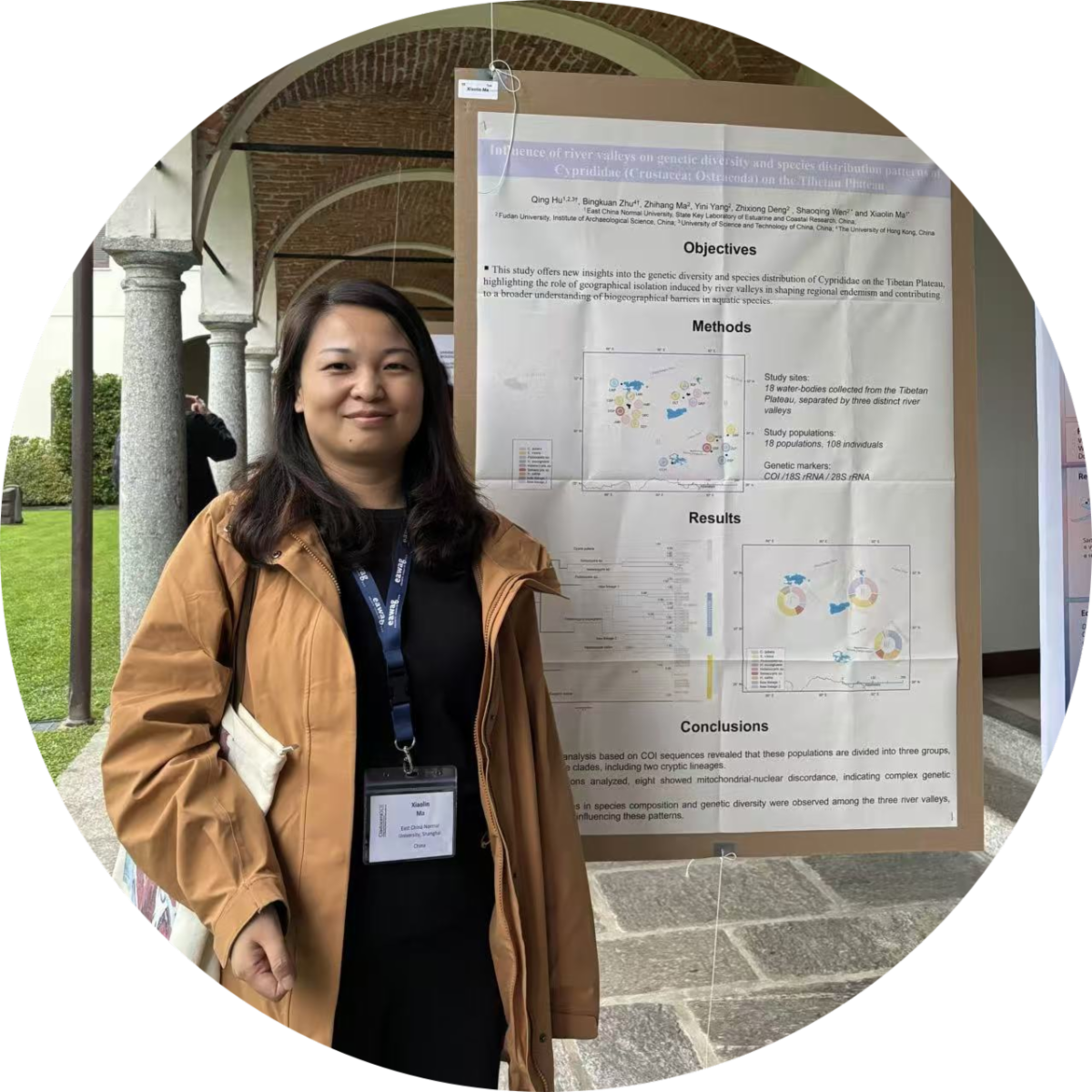
- Updates from FEC Communities: Drs. Zhanghua Wang and Xiaolin Ma
- Survey Opens: Help Shape the Future of Biogeochemical EOV Observations
- Call for Participation: OCEAN OF TOMORROW: SCIENCE FOR A PLANET IN EQUILIBRIUM (Reunião Magna da ABC 2026)
| | A Unified Vision for Asia’s Deltas: FEC and Asia Science Mission Cement Long-Term Partnership through the Delta Accelerator | |
The Asia Impact Forum 2026, held on February 25th in Bangkok, marked a pivotal moment for regional climate action. Hosted by the Asia Science Mission (ASM), in collaboration with PMU-B and Future Earth Thailand, the forum brought together 135 senior leaders from across the scientific, financial, and governmental sectors to address the “delivery problem” stalling climate resilience in Asia.
Future Earth Coasts Leads the Charge
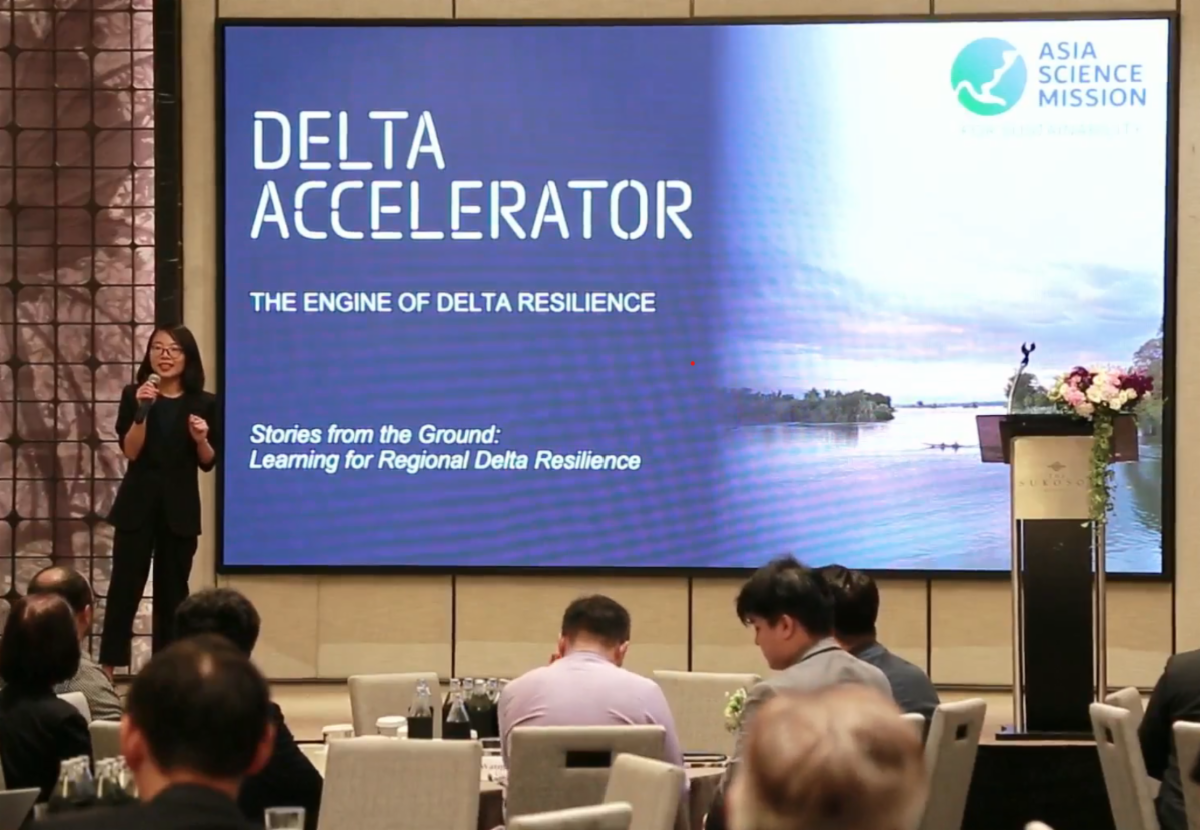
Dr. Xiaoyu Fang, Executive Director of Future Earth Coasts, delivered a presentation on the Delta Accelerator—a flagship initiative of Future Earth Coasts.
| |
Dr. Fang’s pitch transformed the conversation from abstract delta resilience goals to a concrete, operational model. By conceptualizing the Delta Accelerator as a “Refinery”—an architectural mechanism designed to convert fragmented environmental and socioeconomic data into bankable investment pathways—she demonstrated how Future Earth Coasts is addressing the “missing middle” of climate finance. The presentation articulated that deltas across Asia require a shift from isolated pilot projects to a unified, sequence-based delivery system.
Beyond the technical pitch, Dr. Fang, speaking on behalf of Future Earth Coasts, called for a shift toward “Live Science”—a dynamic, adaptive approach that evolves alongside real-world challenges. She emphasized strengthening regional architectures by closing critical gaps and building the connective tissue needed for cross-border learning and collaboration, rather than reinventing existing efforts.
Click here to read more.
| Innovation & Technology Transfer Webinar Series Session 2: Blue Carbon Mapping – Satellite | | |
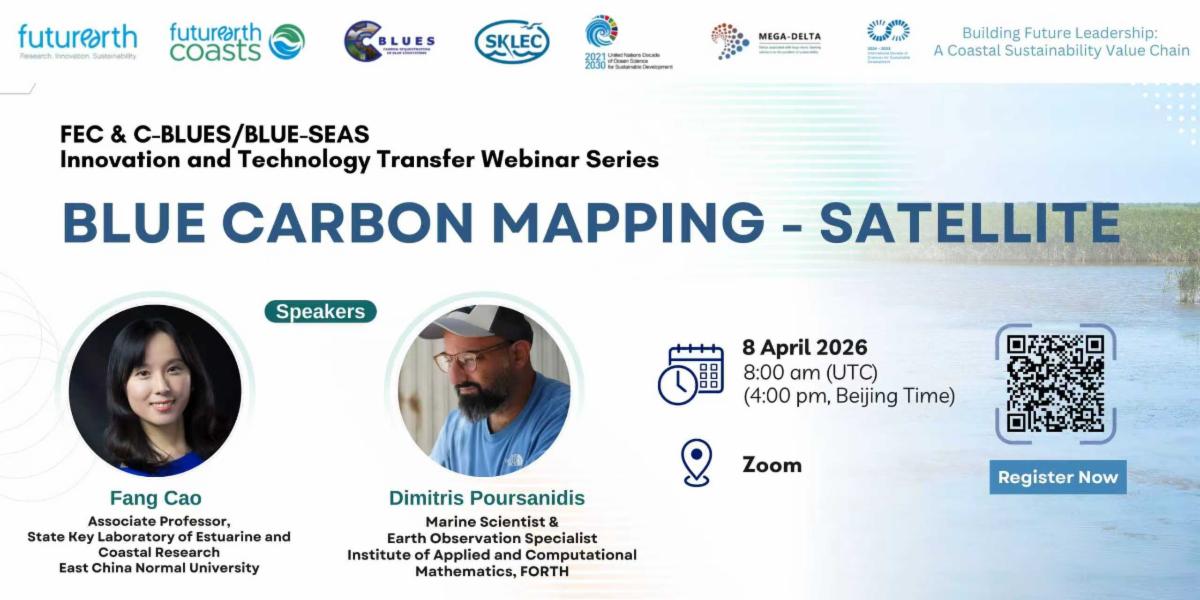
Future Earth Coasts (FEC), in collaboration with the C-Blues and Blue-Seas initiatives, is pleased to welcome you to the second session of the Innovation and Technology Transfer Webinar Series. Through this series, researchers and practitioners from around the world share innovative approaches, emerging technologies, and transferable methodologies that strengthen blue carbon research, monitoring, and management.
This session centers on Blue Carbon Mapping – Satellite, exploring how satellite-based Earth observation is expanding our capacity to detect, map, and monitor coastal blue carbon ecosystems across wider geographic extents and over longer time periods. By enabling consistent and scalable observations, satellite tools are opening new possibilities for ecosystem assessment, conservation planning, and climate-relevant blue carbon accounting.
Date & Time: April 8, 8:00–9:00 AM UTC
Registration
The event is free to attend and open to all. Click the link below to register. Please note that registration will close on April 6 at 9:00 AM UTC.
Click here to register.
Click here to read more.
| | Highlights from Session 1 of the FEC Just Transitions Online Training Series: Introducing Just Transitions in Coastal Regions | | |
Future Earth Coasts (FEC) successfully launched Session 1 of the Just Transitions Online Training Series on 11 March 2026, bringing together a global cohort of coastal practitioners, researchers, policymakers, early‑career professionals, and community leaders. With more than 370 registrants, the session marked a strong start to this six‑part programme designed to deepen shared understanding and practical capacity for justice‑centred coastal transformations.
The two‑hour session combined featured presentations, a live roundtable discussion, and interactive breakout groups—creating a highly participatory learning environment where attendees exchanged experiences from diverse coastal contexts.
From Concepts to Communities: What Just Transitions Mean in Practice?
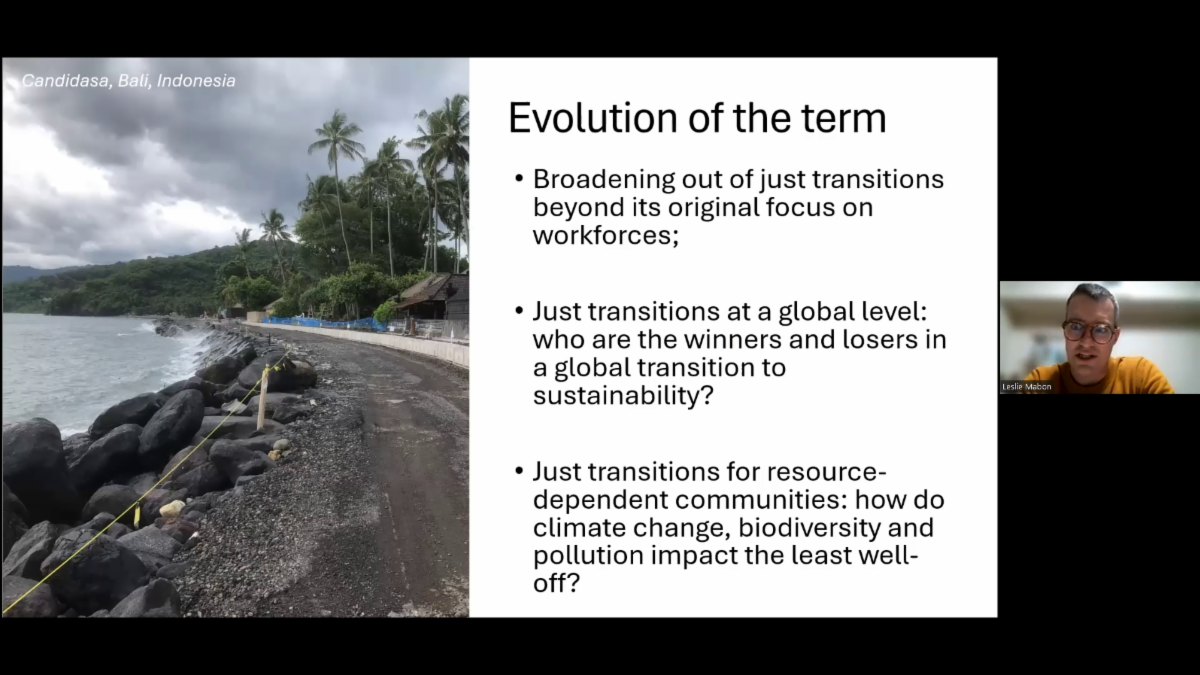
Dr Leslie Mabon introduced the evolution of just transitions, explaining its origins in labour movements seeking to ensure workers were not “left behind” as high‑emitting industries declined. He highlighted how the concept has broadened to address uneven impacts of climate, biodiversity, and pollution‑related actions. Leslie emphasized that coastal regions face unique justice challenges due to multi‑jurisdictional governance, climate exposure, and resource‑dependent livelihoods—where even well‑intentioned measures “can intentionally or unintentionally create disadvantage.”
| | |
Roundtable and Breakout Discussions: Shared Challenges, Shared Learning
The live roundtable and breakout sessions revealed strong commonalities across regions:
Need for meaningful participation
Participants repeatedly emphasized that communities must be involved early and continuously—not only consulted after decisions are made. Many noted “consultation fatigue” when external actors extract information without delivering tangible benefits.
Importance of Indigenous and local knowledge
Several groups highlighted tensions between scientific expertise and local knowledge, especially in coastal protection and erosion management. Participants stressed that solutions must be co‑designed and culturally grounded.
Click here to read more.
| | FEC-SIMSEA Youth Joint Seminar: Mixing Dynamics and Eddy Formation Around Sri Lanka | | |
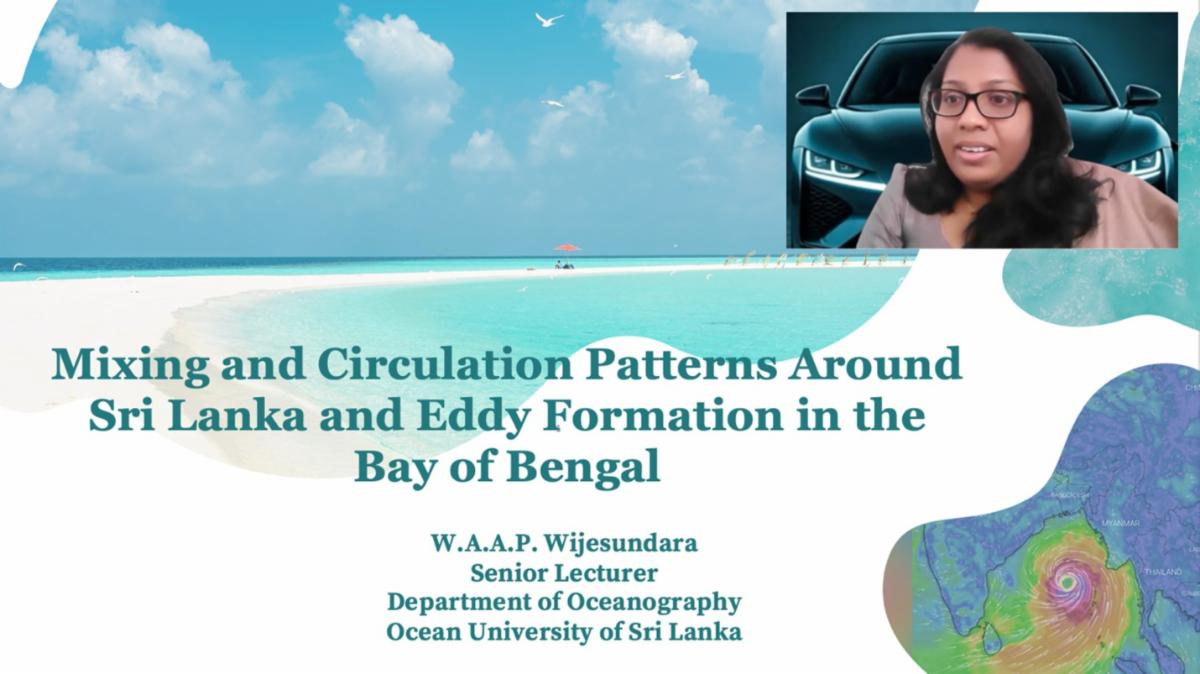
3:30-4:30 (UTC), Mar 19, 2026 (Online)
Dr. Wijesundara gave a brief introduction of the complex and diverse hydrography in the Indian Ocean affected by monsoon winds, tectonic activities, and river discharge. She described spatial patterns of ocean temperature, salinity, surface currents, and eddies during southwest monsoon season (above figure). She stressed a key role of ocean mixing in redistribution of heat, nutrients, gases, and biogeochemical properties in the Bay of Bengal, in particular, the formation of barrier layer between the mixed-layer and thermocline. Among several processes, southwest monsoon winds, and the associated upwelling and downwelling strongly affect ocean mixing in the Bay of Bengal. The Indian Ocean Dipole, which is characterized warm and cold temperature anomalies in the western and eastern Indian Ocean, also modulates the ocean mixing through changes in the zonal temperature gradients on an interannual timescale.
Click here to read more.
| | |
Anthropocene Coasts:
Call for Papers – Tour de Coasts
| | Anthropocene Coasts is launching a new special collection titled Tour de Coasts. | | |
This special collection is supported by FEC and provides a forum for knowledge exchange about priority coastal sustainability concerns and aims to create a comprehensive understanding of coastal sustainability challenges and opportunities from a global perspective.
For this Special Collection, Anthropocene Coasts invites manuscripts of all aspects of coastal sustainability challenges and opportunities globally including but not limited to: governance; individual, cultural, community, and ecological health; effective and inclusive communication; human behavioral change; food, water, and housing security; ecological analyses; economics and financial incentives; potential for managed coastal retreat; technology and increased connectivity; coastal disease threats and health benefits; use crises to inform; and modeling.
| The submission deadline for this collection has been extended to June 30, 2026. You can access the topical collection via this link. | | Dr. Katya Altman, Bureau of Ocean Energy Management, USA | Dr. Dwayne Porter, University of South Carolina, USA | | Dr. Heath Kelsey, University of Maryland, USA | Dr. Anja Scheffers, Southern Cross University, Australia | Dr. Xiaoyu Fang, East China Normal University, China | | |
New Article Published in This Special Collection
Dutta, S., Al Balushi, M., Al Harbi, F., & Paul, S. (2025). Fisheries management of the Arabian Peninsula region with special emphasis to the Sultanate of Oman: perspectives of climate change adaptations. Anthropocene Coasts, 8(1), 1-14.
https://doi.org/10.1007/s44218-025-00088-8
| |
Updates from FEC Affiliated Projects
| |
| | |
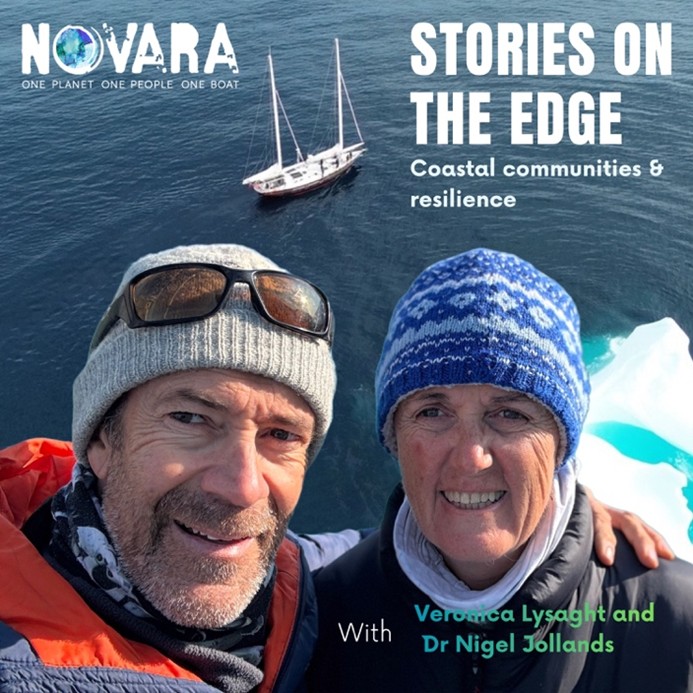
Novara Stories on the Edge: New Episodes Spotlight Coastal Resilience Around the World
Novara One Planet, an FEC‑affiliated project, continues to amplify the lived experiences of coastal communities through its podcast series Novara Stories on the Edge to shares stories from coastal communities living on the frontline of climate change.
Hosted by Veronica Lysaght and Nigel Jollands, the series centres the voices of local people – fishers, community leaders, elders, entrepreneurs, families – who are adapting, responding, and building resilience as their environments change.
Rather than focusing on outside experts, each episode invites community members to tell their own stories: what makes their home special, what changes they’ve witnessed over time, how those changes affect daily life, and the local solutions they are proud of.
| | | |
Updates from FEC Supported Networks
| | Decade Collaborative Centre for Coastal Resilience (DCC-CR) | | | | | |
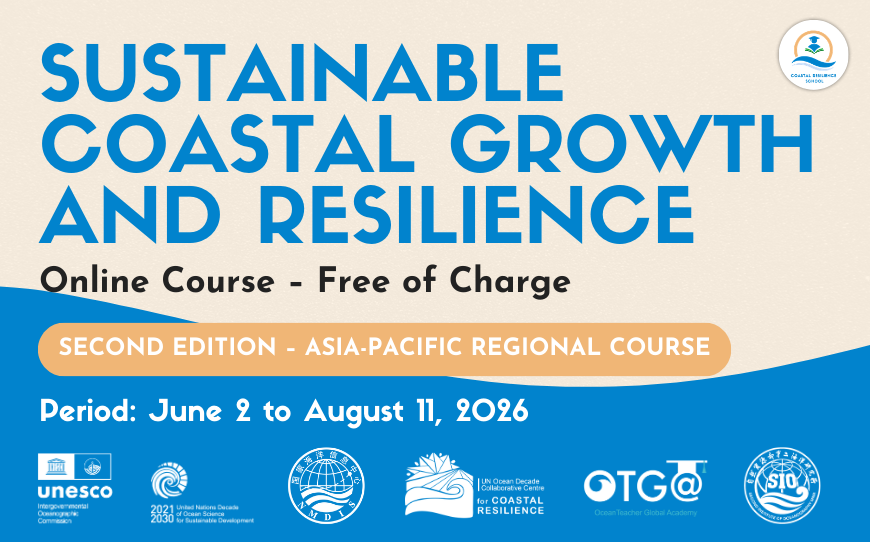
Sustainable Coastal Growth and Resilience – Second Edition (Asia-Pacific)
| | | |
The DCC-CR is launching the second edition of its training course “Sustainable Coastal Growth and Resilience”, a fully online programme tailored to the Asia-Pacific region, taking place online from 2 June to 11 August 2026. The course is jointly delivered by an international partnership including DCC-CR and is designed for early-career ocean professionals, researchers, and practitioners in coastal management, environmental agencies, and marine services. Through five interactive modules combining self-paced learning, live sessions, and collaborative activities, participants will develop skills to assess coastal hazards, apply operational oceanography tools, manage risks, and design resilience solutions for coastal systems.
The application deadline has been extended to 2 April 2026 (23:59 CET).
Click here to read more.
| | | European University for Smart Urban Coastal Sustainability (EU-CONEXUS) | | | | | EU-CONEXUS Research Conference 2026: Challenges, Innovative Solutions and Collaborative Actions for Sustainable Urban Coastal Development | | | |
Researchers and practitioners working on coastal and marine sustainability are invited to join the EU-CONEXUS Research Conference 2026: Challenges, Innovative Solutions and Collaborative Actions for Sustainable Urban Coastal Development.
The conference will bring together an international community to share research, exchange ideas, and explore solutions to key challenges in coastal regions.
Click here to learn more and register.
| | |
Updates from FEC Communities
| |
Click here to listen to the full podcast episode. | | Drs. Zhanghua Wang and Xiaolin Ma Featured on “Dive & Dig” to Discuss A Tale of Three Typhoons: Unearthing a Qing Dynasty Merchant Ship in the Yangtze Estuary, China | |
Prof. Zhanghua Wang and Dr. Xiaolin Ma of East China Normal University recently joined the archaeology podcast “Dive & Dig” for an in‑depth conversation about the remarkable Yangtze River Estuary No. 2 shipwreck. In this episode, titled A Tale of Three Typhoons: Unearthing a Qing Dynasty Merchant Ship in the Yangtze Estuary, China, they were interviewed by Professor Lucy Blue, offering global audiences a rare, first‑hand look into one of China’s most significant underwater archaeological discoveries.
During the podcast, Prof. Wang and Dr. Ma discuss the meticulous recovery of the wreck—lifted in its entirety inside a massive steel container along with surrounding sediments—and its ongoing excavation in a disused Shanghai shipyard. They highlight how the team’s scientific analyses are revealing extraordinary details about the ship’s cargo and life history. This includes the use of sedimentary environmental DNA analysis, which allows researchers to identify genetic material preserved inside sealed pottery jars and uncover traces of cargo no longer visible in the archaeological record.
| | | | Survey Opens: Help Shape the Future of Biogeochemical EOV Observations | | |
To advance global monitoring of biogeochemical Essential Ocean Variables (EOVs), the BioGeoSea project is seeking community feedback on how to improve the performance of current observational technologies.
We invite colleagues across the global ocean observation community to share their insights through the survey below:
Improving Performance of EOV Observational Technologies | SurveyMars
|
Call for Participation: OCEAN OF TOMORROW: SCIENCE FOR A PLANET IN EQUILIBRIUM (Reunião Magna da ABC 2026)
| | | | | |
The Brazilian Academy of Sciences will have its annual meeting (Reunião Magna 2026) in Rio de Janeiro, from 5-7 May. The theme of this year's meeting will be: The Ocean of Tomorrow: Science for a Planet in equilibrium".
Click here to read more.
| | | New FEC Publications (Since April 2025) | | |
○ Adhiambo, R., Mensah, P. K., Koomson, A., & Acheampong, E. (2025). Navigating stress: Impacts of temperature, polycyclic aromatic hydrocarbons, and heavy metals on the diatom Thalassiosira weissflogii adapted to tropical waters of the Gulf of Guinea. Aquatic Toxicology, 107388.
https://doi.org/10.1016/j.aquatox.2025.107388
○ Celliers, L., Ferse, S., Bruns, A., Eisenack, K., Hornidge, A. K., Klepp, S., ... & Rölfer, L. New rationalities, inner logic, and hope for sustainable future coasts. Global Sustainability, 1-21.
https://doi.org/10.1017/sus.2025.10041
○ Cumming, G. S., Rogers, A. A., Collins, T. G., Cuttler, M. V., Elrick-Barr, C. E., Gliottone, I., ... & Wilson, S. K. (2025). Social-ecological contributions of protected areas to their surroundings. One Earth, 8(12).
https://www.cell.com/one-earth/abstract/S2590-3322(25)00288-X
○ Cunha, J., Elliott, M., Villasante, S., Balbi, S., Cabecinha, E., & Ramos, S. (2025). Assessing cumulative risks to coastal and marine habitats under management and climate change scenarios: The case of northern Portugal. Ocean & Coastal Management, 268, 107756.
https://doi.org/10.1016/j.ocecoaman.2025.107756
○ Davies-Vollum, K. S., Puttick, S., Agyekhumene, A., Amolegbe, T., Aneyo, I., Boateng, I., ... & Sohou, Z. (2025). A stakeholder-informed framework for the sustainable management of coastal lagoons in West Africa. Anthropocene Coasts, 8(1), 1-11.
https://link.springer.com/article/10.1007/s44218-025-00093-x
○ Day, J. W., Conner, W. H., Ewel, K. C., Hunter, R., Kemp, G. P., Lane, R., ... & Rybczyk, J. (2025). Integrating human and natural systems from a global systems perspective. Ecological Modelling, 510, 111351.
https://doi.org/10.1016/j.ecolmodel.2025.111351
○ Defeo, O., Corte, G., Barboza, C. A., Debiasi, P., Costa, L. L., Elliott, M., ... & McLachlan, A. (2025). Sandy beaches within meta-social-ecological systems: An integrated framework for ecology, management, and conservation. Estuarine, Coastal and Shelf Science, 109350.
https://doi.org/10.1016/j.ecss.2025.109350
○ Duan, Y., Sanchez-Azofeifa, A., Chen, C., Tian, B., Li, X., Sengupta, D., & Zhou, Y. (2026). S2Coast-2023: The first global 10-meter resolution coastline dataset derived from enhanced Sentinel-2 composite imagery using Google Earth Engine. Remote Sensing of Environment, 334, 115186.
https://doi.org/10.1016/j.rse.2025.115186
○ Dutta, S., Al Balushi, M., Al Harbi, F., & Paul, S. (2025). Fisheries management of the Arabian Peninsula region with special emphasis to the Sultanate of Oman: perspectives of climate change adaptations. Anthropocene Coasts, 8(1), 1-14.
https://doi.org/10.1007/s44218-025-00088-8
○ Elliott, M., Borja, Á., & Cormier, R. (2025). Managing marine resources sustainably–But how do we know when marine management has been successful?. Ocean & Coastal Management, 265, 107623.
https://doi.org/10.1016/j.ocecoaman.2025.107623
○ Elliott, M., Cormier, R., & Borja, Á. (2025). Making sense of marine management–The ten-tenets revisited. Marine Pollution Bulletin, 221, 118580.
https://doi.org/10.1016/j.marpolbul.2025.118580
○ Elrick-Barr, C. E., Smith, T. F., & Thomsen, D. C. (2025). Practitioner perspectives of wellbeing in rapidly changing Australian coastal communities. Ocean & Coastal Management, 266, 107668.
https://doi.org/10.1016/j.ocecoaman.2025.107668
○ Galparsoro, I., Montero, N., Mandiola, G., Menchaca, I., Borja, Á., Flannery, W., ... & Stelzenmüller, V. (2025). Assessment tool addresses implementation challenges of ecosystem-based management principles in marine spatial planning processes. Communications Earth & Environment, 6(1), 55.
https://doi.org/10.1038/s43247-024-01975-7
○ Genchi, S. A., Vitale, A. J., & Perillo, G. M. (2025). Coastal cliff erosion: a bibliometric analysis and literature review. Anthropocene Coasts, 8(1), 1-18.
https://doi.org/10.1007/s44218-025-00072-2
○ Gutierrez, D., Calado, H., Toor, F. v., Moreira, M., Paramio, M. L., Martins, F., Santos, N., Melo, N., & Newton, A. (2025). Empowering Maritime Spatial Planning and Marine Conservation Efforts Through Digital Engagement: The Role of Online Platforms. Sustainability, 17(14), 6371.
https://doi.org/10.3390/su17146371
○ Herrera-Silveira, J. A., Pech-Cárdenas, M., Cinco-Castro, S. G., Pech-Poot, E., Árcega-Cabrera, F., Iturria-Dawn, R., ... & Teutli-Hernández, C. (2025). Mangrove blue carbon in Laguna de Términos, México, a protected area: spatial variability, sources and factors related. Regional Studies in Marine Science, 104390.
https://doi.org/10.1016/j.rsma.2025.104390
○ Jiang, W., Huang, Z., Dai, Z., Luo, J., Zeng, W., & Liang, X. (2025). Attenuation of hydro‐sediment dynamics progradation over mangrove wetland. Journal of Geophysical Research: Oceans, 130(2), e2024JC021531.
https://doi.org/10.1029/2024JC021531
○ Li, Y., Donnelly, J. P., Gao, S., Gao, J., Bramante, J. F., & Kotra, K. K. (2026). Reconstructing 3100 years of extreme coastal flooding events from Emau Island, Vanuatu. Quaternary Science Reviews, 373, 109733.
https://doi.org/10.1016/j.quascirev.2025.109733
○ Li, Y., Robinson, S. V., Nguyen, L. H., & Liu, J. (2023). Satellite prediction of coastal hypoxia in the northern Gulf of Mexico. Remote Sensing of Environment, 284, 113346.
https://doi.org/10.1016/j.rse.2022.113346
○ Li, Y., Xia, Z., Nguyen, L., Wan, H. Y., Wan, L., Wang, M., ... & Liu, J. (2025). Spatiotemporal dynamics of coastal dead zones in the Gulf of Mexico over 20 years using remote sensing. Science of The Total Environment, 979, 179461.
https://doi.org/10.1016/j.scitotenv.2025.179461
○ Liang, X., Dai, Z., Mei, X., Wang, R., Zeng, W., & Fagherazzi, S. (2025). Hurricanes induced irreversible large‐scale loss of mangrove forests. Geophysical Research Letters, 52(9), e2025GL115692.
https://doi.org/10.1029/2025GL115692
○ Matovu, B., Bleischwitz, R., Lukambagire, I., Alkoyak-Yildiz, M., Tarek, R., Etta, L., ... & Hsieh, Y. L. (2025). Examining the perceptions and attitudes toward Women's employment and leadership in the blue economy: A case study of India. Social Sciences & Humanities Open, 11, 101537.
https://doi.org/10.1016/j.ssaho.2025.101537
○ Matovu, B., Mim, T. A., & Lutalo, B. (2025). Where and how can Africa and India leverage the blue economy opportunities of the Indian Ocean region as a driver for sustainable development and partnerships?. Sustainable Futures, 10, 101218.
https://doi.org/10.1016/j.sftr.2025.101218
○ Niu, D., Tan, Y., Ma, C., Qi, Y., Li, Y., Li, Y., & Tang, J. (2025). Reservoir artificial flood discharge is a critical driver for the compositional and functional shifts of dissolved organic matter in river mouth. Communications Earth & Environment, 6(1), 996.
https://doi.org/10.1038/s43247-025-02920-y
○ Niu, D., Li, Y., Tan, Y., Ma, C., Qi, Y., Li, Y., & Tang, J. (2025). The impact of water-sediment regulation scheme (WSRS) on the chemistry of dissolved organic matter in the Yellow River estuary and adjacent waters. Water Research, 123669.
○ Nogueira, S. F., Vitale, A. J., Genchi, S. A., Roth, A., Vargas, S. M., Siben, A., ... & Perillo, G. M. (2025). Design and development of a cost-effective buoy using 3D printing for coastal monitoring. HardwareX, e00657.
https://doi.org/10.1016/j.ohx.2025.e00657
○ Ogier, E. M., Pecl, G. T., Hughes, T., Lawless, S., Layton, C., Nash, K. L., & Morrison, T. H. (2025). Novel marine-climate interventions hampered by low consensus and governance preparedness. Nature Climate Change, 1-10.
https://doi.org/10.1038/s41558-025-02291-4
○ Ogier, E. M., Pecl, G. T., Hughes, T., Lawless, S., Layton, C., Nash, K. L., & Morrison, T. H. (2025). Enhance responsible governance to match the scale and pace of marine–climate interventions. Nature Climate Change, 1-2.
https://doi.org/10.1038/s41558-025-02292-3
○ Onwubiko, C. C., & Aheto, D. W. (2025). Assessing the Role of Coastal Habitats in Flood Reduction in Selected Communities of Rivers State. Coasts, 5(2), 17.
https://doi.org/10.3390/coasts5020017
○ Paul, S., Karan, S., & Bhattacharya, B. D. (2026). Short-term impact of cyclone Yass on the copepod community of Muriganga estuary of India. Discover Ecology, 2(1), 7.
https://doi.org/10.1007/s44396-026-00024-1
○ Salazar, Y. C. A., Genchi, S. A., Nuciari, L., Perillo, V. L., Piccolo, M. C., & Perillo, G. M. (2025). MiSMoS (MicroScale Morphology System): an inexpensive new method to survey 3D surface micromorphology. Latin American Journal of Sedimentology and Basin Analysis.
https://lajsba.sedimentologia.org.ar/lajsba/article/view/264
○ Valiela, I., Chenoweth, K., & Day, J. (2025). Meta-analysis of vegetation responses to experimental nitrogen enrichments done in salt marshes under different sea level rise regimes reveal interaction of N supply and sea level rise. Science of The Total Environment, 975, 179198.
https://doi.org/10.1016/j.scitotenv.2025.179198
○ Vivian, C., Boettcher, M., Elliot, M., Mengis, N., Merk, C., Oschlies, A., ... & Gupta, A. (2025). The State of the Science for Marine Carbon Dioxide Removal (mCDR)–A Scientific Summary for Policy-Makers.
https://doi.org/10.5281/zenodo.15490407
○ Wu, S., Hu, Y., Zhao, W., Gong, L., Song, Y., Li, C., ... & He, Q. (2025). Human flood adaptation characteristics: A comparative study of three global river deltas. Journal of Hydrology, 133531.
https://doi.org/10.1016/j.jhydrol.2025.133531
○ Yang, J., Dai, Z., Mei, X., Lou, Y., & Fagherazzi, S. (2025). Wetland gain and loss in the Mississippi River bird‐foot delta. Earth's Future, 13(6), e2024EF005003.
https://doi.org/10.1029/2024EF005003
○ Zhao, X., Kaniewski, D., Wang, Y., Marriner, N., Salem, A., Alassal, S. E., ... & Chen, Z. (2025). On the long and winding road: unravelling the late emergence of Neolithic agriculture in the Nile Delta. Quaternary Science Reviews, 359, 109368.
https://doi.org/10.1016/j.quascirev.2025.109368
○ Zhao, X., Kaniewski, D., Wang, Y., Marriner, N., Salem, A., Liu, Y., ... & Chen, Z. (2025). Holocene trends in Nile Delta fire regimes driven by cropland expansion and reduced precipitation. Quaternary Science Reviews, 361, 109412.
https://doi.org/10.1016/j.quascirev.2025.109412
| | FEC Publications (April, 2024 - March, 2025) | | |
○ Anthony, E., Syvitski, J., Zăinescu, F., Nicholls, R. J., Cohen, K. M., Marriner, N., ... & Maselli, V. (2024). Delta sustainability from the Holocene to the Anthropocene and envisioning the future. Nature Sustainability, 1-12.
https://doi.org/10.1038/s41893-024-01426-3
○ Backler, S., Davies-Vollum, K. S., & Raha, D. (2025). An evaluation of coastal resilience policies in Anglophone West Africa through a regional comparative analysis. Marine Policy, 176, 106648.
https://doi.org/10.1016/j.marpol.2025.106648
○ Baker, M., Bleischwitz, R., Lukambagire, I., Etta, L. A., & Lutalo, B. (2025). Decomposing sand mining complexities to chart ocean sustainability narratives and pathways in the coastal zones of Africa. The Extractive Industries and Society, 23, 101646.
https://doi.org/10.1016/j.exis.2025.101646
○ Banerjee, S., Lahiri, R., Choudhury, A. K., Mondal, A., Kim, J. W., MubarakAli, D., & Satpati, G. G. (2024). Unraveling the potential of cyanobacteria as food and investigating their production and nutritional properties. Biocatalysis and Agricultural Biotechnology, 103421.
https://doi.org/10.1016/j.bcab.2024.103421
○ Day, J., Anthony, E., Costanza, R., Edmonds, D., Gunn, J., Hopkinson, C., ... & White, J. R. (2024). Coastal Wetlands in the Anthropocene. Annual Review of Environment and Resources, 49.
https://doi.org/10.1146/annurev-environ-121922- 041109
○ Day, J. W., Xu, Y. J., Keim, B. D., Brown, V. M., Giosan, L., Mann, M. E., & Stephens, J. R. (2024). Emerging climate threats to the Mississippi River Delta: Moving from restoration to adaptation. One Earth.
https://doi.org/10.1016/j.oneear.2024.03.001
○ Elegbede, I. O., Al Jufaili, S. M., Jolaosho, T. L., Tesleem, B., Adekunle, A. F., Modupe, O. O., ... & Halimat, A. A. (2025). Health-related dimensions of fishers for sustainable commercial fisheries in the Atlantic Gulf of Guinea: Ecological and social assessments. One Health, 20, 100972.
https://doi.org/10.1016/j.onehlt.2025.100972
○ Eriksen, S. H., Simpson, N. P., Glavovic, B., Ley, D., Carr, E. R., Fernández-Carril, L., ... & Degvold, F. (2024). Pathways for urgent action towards climate resilient development. Nature Climate Change, 1-4.
https://doi.org/10.1038/s41558-024-02190-0
○ Fivash, G. S., Stoorvogel, M. M., de Smit, J. C., van Rees, F., van Dalen, J., Grandjean, T. J., ... & van Belzen, J. (2024). Abiotic origins of self‐organized ridge‐runnel patterns on tidal flats. Limnology and Oceanography, 69(6), 1378-1389.
https://doi.org/10.1002/lno.12581
○ Harvey, N and Thom, B (2024) Coastal Governance in Federated Countries. In: Baird, Daniel and Elliott, Michael (eds.) Treatise on Estuarine and Coastal Science, 2nd Edition, vol. 7, pp. 307–326. Oxford: Elsevier.
https://doi.org/10.1016/B978-0-323-90798-9.00098-6
○ Issifu, I., Dahmouni, I., & Sumaila, U. R. (2025). Assessing the ecological and economic transformation pathways of plastic production system. Journal of Environmental Management, 374, 124104.
https://doi.org/10.1016/j.jenvman.2025.124104
○ Khalifa, A., Meselhe, E., Hu, K., Day, J., & Allison, M. (2025). The Great Mississippi River Flood of 1927: Morphodynamic Analysis of The Caernarvon Crevasse Event. Estuarine, Coastal and Shelf Science, 109234.
https://doi.org/10.1016/j.ecss.2025.109234
○ Leyva Ollivier, M. E., Newton, A., & Kelsey, H. (2024). Assessment of the Chesapeake Bay watershed socio-ecological system through the Circles of Coastal Sustainability framework. Frontiers in Water, 6, 1269717.
https://doi.org/10.3389/frwa.2024.1269717
○ Liu, P., Zhang, J., Liu, Y., Sun, Q., Zhang, D., Li, Y., ... & Chen, J. (2024). Sediment source-to-sink patterns along the Southeast China coast during the late quaternary: New insights from sediment geochemistry and OSL ages in the Ningde Bay. Palaeogeography, Palaeoclimatology, Palaeoecology, 112577.
https://doi.org/10.1016/j.palaeo.2024.112577
○ Liu, S., Hu, Z., Grandjean, T. J., Wang, Z. B., van Zelst, V. T., Qi, L., ... & Bouma, T. J. (2025). Dynamics and drivers of tidal flat morphology in China. Nature Communications, 16(1), 2153.
https://doi.org/10.1038/s41467-025-57525-y
○ Maire, E., Robinson, J. P., McLean, M., Arif, S., Zamborain-Mason, J., Cinner, J. E., ... & Hicks, C. C. (2024). Managing nutrition-biodiversity trade-offs on coral reefs. Current Biology.
https://doi.org/10.1016/j.cub.2024.08.031
○ Matovu, B., Bleischwitz, R., Lukambagire, I., Etta, L. A., Alkoyak-Yildiz, M., Tarek, R., ... & Suresh, A. S. (2025). Linking the blue economy to Women's empowerment to create avenues for the realization of ocean sustainability targets in the global south. Ocean & Coastal Management, 262, 107582.
https://doi.org/10.1016/j.ocecoaman.2025.107582
○ Matovu, B., Lee, M. A., Mammel, M., Lukambagire, I., Lutalo, B., Mwangu, A. R., ... & Muhoozi, Y. (2024). Mobilizing Evidence-based Knowledge for Sustainable Wetlands Co-management and Co-governance amidst increasing Anthropogenic and Environmental Stressors: Key Lessons from Mityana District, Uganda. Environmental Challenges, 17, 101014.
https://doi.org/10.1016/j.envc.2024.101014
○ Perillo, G.M.E., Piccolo, M.C., 2024. Global variability in estuaries and coastal settings. En: Whitfield, A.K., Elliott, M. (eds.) Treatise on Estuarine and Coastal Science, 2nd Ed. Vol.1 18-24 Elsevier.
DOI 10.1016/B978-0-323-90798-9.00038-X
○ Perillo, G.M.E., Gao, S., Cuadrado, D.G., 2024. Tidal flats: geomorphology and dynamics. En: Uncles, R.J., Mitchell, S., French, J. (eds.) Treatise on Estuarine and Coastal Science, 2nd Ed. Vol.2 809-842 Elsevier
DOI10.1016/B978-0-323-90798-9.00034-2
○ Politi, E., Brito, A. C., Gomes, M. R., Lebreton, C., & Falcini, F. (2024). Listening to stakeholders: Development of water quality indicators for transitional environments using satellite data. Ocean & Coastal Management, 253, 107140. https://doi.org/10.1016/j.ocecoaman.2024.107140
○ Raha, D., Davies-Vollum, K. S., Hemstock, S. L., Boateng, I., Islam, M. T., & Pierce, C. A. (2024). We need collaboration and co-creation to address challenges facing coastal communities. Nature Human Behaviour, 1-9.
https://doi.org/10.1038/s41562-024-01875-y
○ Scordo, F., Seitz, C., Abasto, B., Spetter, C. V., Cintia Piccolo, M., Buria, L., & Perillo, G. M. (2024). Nutrients limiting the growth of planktonic and benthic-littoral primary producers in Patagonian Andean Lakes. Inland Waters,1-31.
https://doi.org/10.1080/20442041.2024.2418681
○ Scordo, F., Seitz, C., Buria, L., Piccolo, M. C., & Perillo, G. M. (2025). Climatic and human impacts on Patagonian terminal lakes. Science of The Total Environment, 966, 178714.
https://doi.org/10.1016/j.scitotenv.2025.178714
○ Stoorvogel, M. M., de Smit, J. C., Wiesebron, L. E., van Belzen, J., van de Koppel, J., Temmerman, S., & Bouma, T. J. (2025). Plant species, inundation, and sediment grain size control the development of sediment stability in tidal marshes. Ecological Applications, 35(1), e3078.
https://doi.org/10.1002/eap.3078
○ Stoorvogel, M. M., van Belzen, J., Temmerman, S., Wiesebron, L. E., Fivash, G. S., van IJzerloo, L., ... & Bouma, T. J. (2024). Salt marshes for nature-based flood defense: Sediment type, drainage, and vegetation drive the development of strong sediment beds. Ecological Engineering, 207, 107335.
https://doi.org/10.1016/j.ecoleng.2024.107335
○ Stoorvogel, M. M., Willemsen, P. W., van Belzen, J., Temmerman, S., de Jonge, J. M., van de Koppel, J., & Bouma, T. J. (2025). Nature-based mitigation of shoreline erosion risks in tidal marshes created by managed realignment vs. sediment nourishment. Ecological Engineering, 210, 107439.
https://doi.org/10.1016/j.ecoleng.2024.107439
○ Valderrama-Landeros, L., Flores-de-Santiago, F., Ávila-Flores, G., Flores-Verdugo, F., Alcántara-Maya, J. A., Troche-Souza, C., ... & Suarez, E. (2024). IUCN Red List of Ecosystems, Mangroves of the Warm Temperate Northeast Pacific.
https://doi.org/10.32942/X2B03V
○ van Belzen, J. (2024). Ragworms Anecdotes. Journal of Trial and Error.
https://doi.org/10.36850/d17f-489b
○ Velilla, E., Snethlage, J., Poelman, M., van der Meer, I. M., van der Werf, A., Deolu‐Ajayi, A. O., & van Belzen, J. (2025). Too salty to farm: rethinking coastal land use in response to soil salinization. Restoration Ecology, e70006.
https://doi.org/10.1111/rec.70006
○ Venevsky, S., Berdnikov, S., Day, J. W., Sorokina, V., Gong, P., Kleshchenkov, A., ... & Giosan, L. Don River Delta Hydrological and Geomorphological Transformation Under Anthropogenic and Natural Factors: Century and Decadal Perspectives. Available at SSRN 4474057.
https://doi.org/10.1016/j.ocecoaman.2024.107364
○ Wolanski, E., & Kingsford, M. J. (Eds.). (2024). Oceanographic processes of coral reefs: Physical and biological links in the Great Barrier Reef (2nd ed.). CRC Press.
https://www.routledge.com/Oceanographic-Processes-of-Coral-Reefs-Physical-and-Biological-Links-i/Kingsford-Wolanski/p/book/9781032340746
○ Xue, L., Li, T., Li, X., Bi, Y., Su, L., Song, Y., ... & Shi, B. (2024). Short-term evolution pattern in salt marsh landscapes: the importance of physical constraints. Landscape Ecology, 39(5), 1-16.
https://doi.org/10.1007/s10980-024-01898-w
○ Zhang, W., & de Vriend, H. (Eds.). (2024). Delta sustainability: A report to the Mega-Delta Programme of the UN Ocean Decade. Springer Singapore.
https://doi.org/10.1007/978-981-97-7259-9
○ Zhao, Y., Peng, Z., Chen, X., Fang, D., Liu, S., Wang, X., & He, Q. (2024). Parameterisation and evolution of non-breaking wave nonlinearity over flexible vegetation. Coastal Engineering, 192, 104543.
https://doi.org/10.1016/j.coastaleng.2024.104543
○ Zhou, Z., Grandjean, T. J., de Smit, J., van Belzen, J., Fivash, G. S., Walles, B., ... & Bouma, T. J. (2024). Sediment dynamics shape macrofauna mobility traits and abundance on tidal flats. Limnology and Oceanography, 69(10), 2278-2293.
https://doi.org/10.1002/lno.12669
○ Zhu, Q., Xing, F., Wang, Y. P., Syvitski, J., Overeem, I., Guo, J., ... & Gao, S. (2024). Hidden delta degradation due to fluvial sediment decline and intensified marine storms. Science Advances, 10(18), eadk1698.
https://doi.org/10.1126/sciadv.adk1698
|
| |
Anthropocene Coasts
special column
| | | | |  | |
Anthropocene Coasts, the official journal supported by Future Earth Coasts, is archived by 17 databases, such as Emerging Sources Citation Index (ESCI), SCOPUS, Google Scholar, Catalogue of Chinese High-Quality Sci-Tech Journals (Geosciences), CLOCKSS, CNKI, Wanfang, CNPIEC, Dimensions, EBSCO Discovery Service, Naver, EBSCO Discovery Service, OCLC WorldCat Discovery Service, Portico, ProQuest-ExLibris Primo, ProQuest-ExLibris Summon, TD Net Discovery Service.
Official Website:
https://www.springer.com/journal/44218
Submission system:
https://www.editorialmanager.com/anth/default1.aspx
| | |
Anthropocene Coasts Seeks Associate Editors
| | |
Anthropocene Coasts, Future Earth Coasts' first official journal, is a Green Open Access journal hosted by East China Normal University. The journal publishes multidisciplinary research addressing the interaction of human activities with our estuaries and coasts.
To help build on the success of Anthropocene Coasts and to explore more exciting international opportunities representing the journal, we’re seeking more international Associate Editors who will recruit high-quality papers and increase the journal’s impact. Candidates will also be expected to coordinate with the Editors-in-Chief, Prof. Shu Gao and Prof. Ian Townend, to oversee manuscript review and make recommendations for manuscript reviewing.
Main responsibilities:
- Secure high-quality journal content. Actively support the journal during your term of office by soliciting submissions to the journal, leading or encouraging others to lead special collections and promoting the journal to peers, colleagues, and the wider coastal research community.
- Raise the journal’s profile in your country and internationally.
- Safeguard the integrity of the peer review process. Ensure it is rigorous, timely, unbiased, and confidential.
- Attend our editorial board webinars and work with the Editors-in-Chief to help journal develop.
Click here to read more.
| |
Call for Papers:
Understanding Coastal Processes and Human-Environmental Interactions in the Anthropocene: Multidisciplinary Perspectives
GUEST EDITORS:
Dr. Qiang Yao
Prof. Kai Tan
Prof. Haibo Zou
Prof. Cheryl Harrison
Dr. Érika Ferreira Rodrigues
This special collection is designed to explore the complex human-environmental interactions within coastal settings, emphasizing the wide spectrum of processes shaping coastal landscapes and human responses to these changes. We invite contributions from traditional geoscience studies, field investigations, ecological assessments, and remote sensing analyses, along with innovative DL and ML methodologies. By accommodating diverse scientific perspectives and methods, this issue seeks to foster a deeper understanding of the complexities surrounding coastal hazard dynamics and resilience strategies, ultimately contributing valuable insights toward more informed and sustainable coastal restoration efforts.
In alignment with the United Nations Sustainable Development Goals (SDGs), this collection particularly supports: • SDG 11 – Sustainable Cities and Communities • SDG 13 – Climate Action • SDG 14 – Life Below Water • SDG 15 – Life on Land • SDG 17 – Partnerships for the Goals
Submission deadline
31 May 2026
Click here to read more.
| | "World Large River and Delta Systems Source-to-Sink Online Talk Series" continue to update! | | Most of our subscribers are coasts-related researchers. If you would like to put some recruitment information or share some latest news about coastal research in FEC monthly newsletter, please feel free to contact us through fecchina@ecnu.edu.cn. | | | | |