| |
| |
| |
| |
|
Greetings Spring Gardeners!
You Don’t Want to Miss This: FGCCT Annual Meeting & Luncheon, Featuring Guest Floral Aficionado Ace Berry of Ace in Bloom!
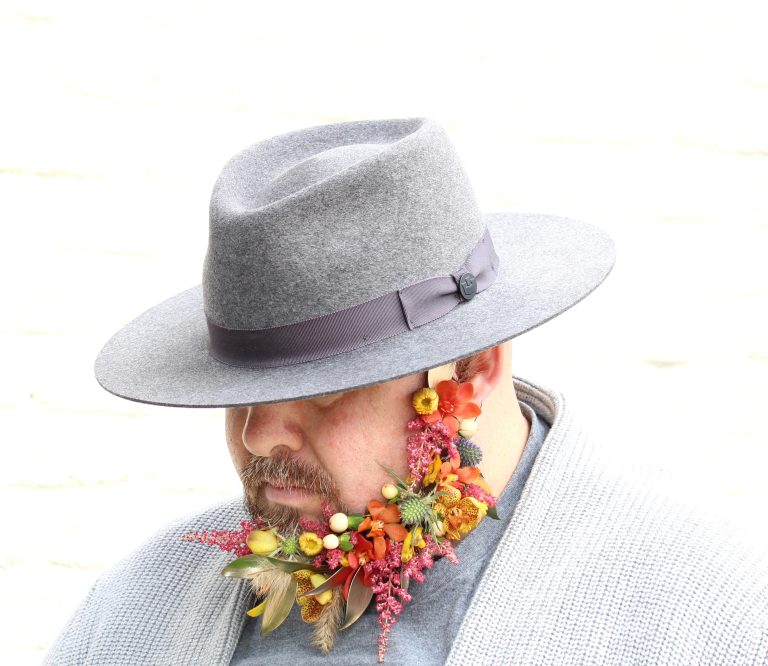
Register now for the FGCCT 97th Annual Meeting and Luncheon on Wednesday, April 15, at the beautiful Aqua Turf Club, 556 Mulberry Street, Plantsville, CT—it promises to be a truly special day! We are thrilled to welcome international award-winning florist, Ace Berry as our keynote speaker for "Ace in Full Bloom ~ Turning Passion into Petals." Ace is known for his extraordinary creativity and dynamic presentations. His inspiring and entertaining program will feature the live creation of 8-10 stunning floral designs, which he has generously offered to donate for our raffle—a wonderful opportunity for attendees! Ace recently captivated audiences at the Philadelphia Flower Show and at the New York Botanical Garden. We feel incredibly fortunate to have him join us. Doors open at 9 am for coffee, shopping with our vendors and entering our popular raffle. The program begins at 10 am. Following the program, a delicious three-course luncheon will be served. Reserve your seat soon—it could possibly sell out!
We just had an interesting Federation Fridays Zoom workshop on March 20: “NGC Youth Contests and Starting a Youth Gardening Program.” I want to sincerely thank our panel of Youth Gardening Program Chairs from North Haven Garden Club, Rowayton Gardeners, and Wilton Garden Club, who presented helpful advice on starting and running a Youth program. PDF files of the PowerPoint slides used for all Federation Friday workshops can be found here.
The next Federation Fridays Zoom workshop will be April 24 at 10:00 am: “BEE RESILIENT ~ Garden for Nature: The President’s Project.” If your Club is interested in creating one of these delightful small native gardens in your community, this workshop will describe project objectives, how to get started, online and local resources, and guidelines for applying online for advance funding from The Federation. In addition, a Panel of Club Project Managers will share their experiences in planning and creating BEE RESILIENT garden projects in their towns. Register here.
There were two very successful Regional Roundtables in March. Many thanks to our gracious host clubs, Danbury Garden Club and Old Saybrook Garden Club and Duck River Garden Club of Old Lyme. These are excellent opportunities for Club Officers and Committee Chairpersons to exchange information and ideas in person with their counterparts in nearby Clubs. Look for announcements of upcoming dates on our website.
Thank you for all you do in your communities. I know this is a busy time as many clubs prepare for their May Markets and Plant Sales—wishing you much success and enjoyable, rewarding events.
| | | | Let’s go out and BEE RESILIENT and Garden for Nature, and maybe we’ll help save the planet, one garden at a time! | |
Bee Resilient: Garden for Nature
By Wayne Gura and Anne Djupedal Gura, co-chairs, FGCCT President’s Project
It’s a pleasure to report that since January 1 of this year another ten clubs have joined the list of awardee clubs that have been implementing marvelous BEE RESILIENT visions for their communities! The following ten clubs have been awarded funding for their garden projects:
-
Black Rock Garden Club, to replant the foundation gardens at three senior centers in the city of Bridgeport with all native plants while providing info on creating pollinator habitats. For this, working with BEEport and senior center volunteers.
-
Easton Garden Club, to plant an all-native-plants rainwater garden and riparian buffer at Aspetuck Park to support native pollinators and birds, increase biodiversity, and help educate the community on how they may do the same. For this, working with UConn master gardeners and interns.
-
West Hartford Garden Club, to plant a 6x38 ft mixed shrubs-and-perennials border mostly using native species (over 70%) for an attractive, supportive pollinator garden and habitat attractively sited along the road behind a grassy expanse at the Cornerstone Community Gardens in West Hartford.
-
Danbury Garden Club, for a sustainable landscape of native species at the Danbury Library plaza and adjacent West St. median. The two spaces totaling 2,800 sq ft are to be listed on the Master Gardeners website for MGs willing to help. Signage and QR codes will access plant info and library display.
-
Enfield Garden Club, for a 10x4 ft teaching and sensory garden for children from kindergarten to 5th grade in a raised bed at Hazardville Elementary School. To learn about keystone species, pollinators and to support sensory activities, working with the school, with benches supplied by the town.
-
Manchester Garden Club, to create a visually-appealing 60x40 ft native pollinator garden at Woodbridge Farmstead Museum, with educational walks, workshops, demos and signage to teach native planting for residential gardens, working with Pollinator Pathway, master gardeners, museum volunteers.
-
Westport Garden Club, to upgrade mostly to native species the largest two of its five herbaceous gardens at Grace K Salmon Park, located along the Saugatuck River; includes removing select non-natives. Working with Parks & Rec, Sustainable Westport, Westport Arts Committee; with signage throughout, including a QR code for additional (plant) info.
-
Orange Garden Club, to create a memorial garden 100% planted with native perennials and shrubs, to run beside a pathway in the historical Stone-Otis property’s West Garden area, located at the heart of town, to serve as an attractive, pollinator-friendly example and learning tool for schools, scouts, community.
-
Greenfield Hill Garden Club, to create two new pollinator-garden plantings flanking the entryway to the Fairfield Environmental Education & Field Station, a building for use by the local schools and open to the public. Plants will be labelled for visitors to be able to identify what is growing; working together with the town conservation dept, which is clearing the beds and providing soil and water.
-
Arbor Garden Club of Clinton, for its recently-completed restoration of the garden adjacent to the snack bar at Town Beach to commemorate its 65th year; partnering with Parks & Rec and a local nursery. The 20-ft-square is now trimmed with native grasses and shrubs, with donated hardscaping (landscape boulders, granite bench.) For use for preschool circle time, camper discussion groups, and public enjoyment.
Congratulations to these ten clubs for their inspiring BEE RESILIENT projects.
They are bringing immediate and much-needed help to Connecticut’s hard-pressed native pollinators. And over time, their gardens can grow as beautiful living examples to educate and inspire others to plant natives-based gardens into their own landscapes — both for their beauty and for the resilience they add to our web of life.
To these ten clubs, as you reach project milestones, we’d love to hear and share your news/pics! You will inspire others to emulate you.
This brings to 26 the total number of clubs that are “BEE-coming more resilient” in our beautiful nutmeg state since the inception of the project in April 2025 — happy news for conservation gardeners and pollinators alike.
For the list of last year’s 16 recipient clubs, please see the President’s Project page
As always, for those of you who may be preparing to apply, please note…
- Once you submit an application, you should hear back from one of us (Wayne or Anne) within a day or so by email that we’ve received your application – and remember to CHECK YOUR SPAM FOLDERS for that confirmation (it ends up there quite often!)
-
PLEASE include with your application a list of your selected plant species together with their itemized cost estimate (plant choice is key, we cannot proceed without it.)
-
The plant list should be comprised of no less than 70% locally/regionally-native species, which is the currently-accepted metric we use as the baseline to help our native pollinator species, birds, wildlife. The goal of the project is to beautify your site while strengthening its ecological resilience. Online resources, such as the Native Plant Trust’s Go Botany tool and the website BONAP.org, are very helpful in finding out if a plant you are considering is native, and can increase your confidence in your plant selections.
- Horticulturally-bred inter-species hybrids – which are typically designated with an “X” following the genus name in the Latin binomial – are by definition not considered to be native plants.
-
Grant recipients, in addition to the funding, will receive a Pollinator Pathway plaque for the garden. Further, the Pathway has invited each club to add its BEE RESILIENT planting to the Pollinator Pathway’s nationwide map of gardens. To do so, or for more information, visit their website at pollinator-pathway.org.
-
To ALL grant recipients, past, present and future: once you’ve purchased your plants, please do not forget to submit a clearly legible copy of your expense receipts, a necessary follow-up to your project. The estimate you provided up front may not match the receipt exactly, but PLEASE do not let that deter you – your estimate was a best estimate, and understandably, the final numbers might well be a bit different. That said, we do need to see those final numbers!
There is funding for at least 14 more qualifying, native-species-based BEE RESILIENT garden projects at this time. So if you haven’t thought about it yet, why not be inspired this spring to plan the natives-based planting you’d love to grow in your town in 2026?
Happy spring, and happy pollinator garden planning and planting from us both!
| | | | |
Upcoming Events — Mark Your Calendars! | | | | |
|
FGCCT 97th Annual Meeting and Luncheon
Wednesday, April 15
Aqua Turf Club, Plantsville, CT
| | |
"Ace In Full Bloom: Turning Passion into Petals"
Join international award-winning florist Ace Berry of Ace In Full Bloom for an inspiring and entertaining program that proves flowers can change a life. The program will include the live creation of 8 to 10 stunning floral designs, all of which will be raffled off to attendees.
From a Texas oil field to the world stage, Ace shares his journey, creative secrets, and the belief that anyone with passion, curiosity, and a love for flowers can learn the art of floristry. You’ll leave inspired, empowered, and maybe even ready to start your own floral adventure.
| Registration closes April 8 at 5 pm! | | | |
After a long cold winter… Signs of Spring are finally here ! … Let’s gather and celebrate the joy of the new gardening season – together!
This annual gathering is the perfect opportunity to reconnect with fellow garden enthusiasts, discover what’s happening across the state and leave feeling refreshed and motivated for the season ahead. Additionally there will be over twelve great garden themed vendors to shop and a fun raffle to enter.
Schedule:
- 9:00 a.m. – Doors open for coffee, shopping and entering our raffle
- 10:00 a.m. – Program begins
A delicious three-course luncheon will be served that includes tossed salad, your choice of entrée and assorted dessert cookies & brownies:
Entree Choices:
- Chicken Florentine – egged & sautéed served over baby spinach & topped with a lemon cream sauce
- Pan Seared Salmon – whole grain mustard, honey & ginger glaze (Gluten-Free)
- New York Strip Sirloin (Gluten-Free)
- Vegetarian Eggplant Parmigiana
Cost: $49 per person (subsidized by FGCCT)
| | |
Federation Fridays!
Hosted by FGCCT Board Members, these monthly 1.5 hr. Zoom Workshops provide a “Deep Dive” on important topics, such as: Membership, Club Finances, Fundraising, Events, Flower Shows, Awards, Social Media, Youth, and more.
“BEE RESILIENT ~ Garden for Nature:
The President’s Project” ~ April 24 at 10:00 am
Enhance the beauty of your community and preserve nature in a changing climate by creating small native gardens in a public location with advance funding from The Federation. Your Club should start a project in your town — it’s easy and it’s fun! This workshop will include:
- Project Objectives
- How to Get Started
- Resources & Helpful Tips
- Online Project Application
In addition, a Panel of Club Project Chairs will share their experiences in starting, applying for funding and creating a BEE RESILIENT garden project in their town.t
| | |
PDF Files of PowerPoint slides of previous workshops are available here.
-
“NGC Youth Contests and Starting a Youth Gardening Program” - March 20 at 2:30 pm. Rules and guidelines for entering National Garden Clubs Youth Contests:
o Youth Poetry Contest for grades K-12
o Smokey Bear & Woodsy Owl Poster Contest for grades 1-5
o Youth Recyclable Sculpture Contest for grades 4-8
In addition, a panel of Youth Gardening Program Chairs present advice on starting and running a Youth program in your Club.
-
“Your Awards Await! - The FGCCT Awards Application Process” – February 27, 2026 at 10:00 am. This workshop provides an overview of FGCCT Awards, how to apply online, and deadlines for specific award categories. In addition, a panel of Club Awards Chairs shares their experiences and suggestions.
-
“Fundraising…Rethinking Your Annual Plant Sale” - Jan. 16, 2026 at 10:00 am
Some clubs are rethinking the way they do Plant Sales and are looking at other fundraising approaches. A panel of Club Presidents presents ideas on how to achieve a successful and joyful sale and overcoming plant sale challenges.
-
“Flower Shows 101 and the Role of Judges’ Clerks” – Nov. 21, 2025 at 10:00 am
This workshop is an introduction to NGC Flower Shows: What is a Flower Show? How and Why is it Judged? and What does a Judges’ Clerk do at the Flower Show?
-
“Treasurers’ Workshop” – Oct. 24, 2025 at 2:30 pm and Oct. 29, 2025 at 6:00 pm
This workshop provides clear guidance on the roles and responsibilities of nonprofit club treasurers, practical tips for effective financial management.
| | | | |
| |
|
Get on the Interest List!
Later in 2026!
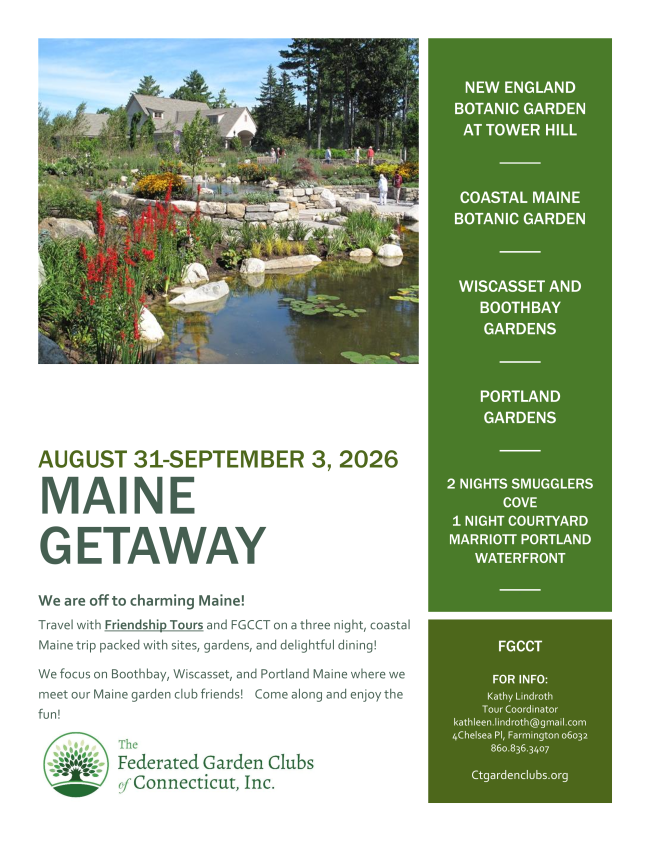
- December 2-4, 2026 – Boston Holiday Tour
Already thinking of 2027?
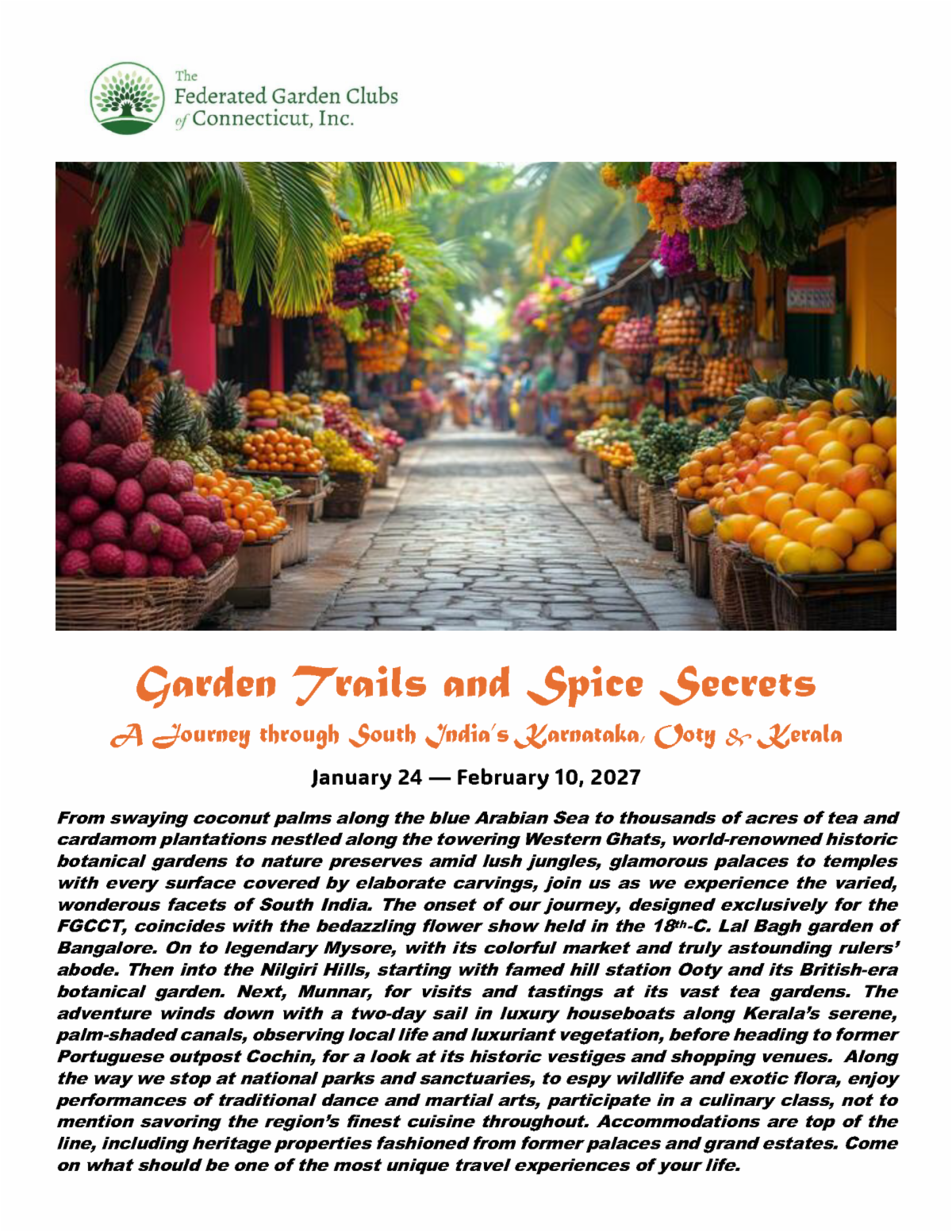
- April 30 – May 12, 2027 – Portugal
- May 13 – 21, 2027 – Chelsea Flower Show and the Cotswolds
- Summer 2027 – Scandinavia
- September 2 – 13, 2027 – Italy – the Piedmont and Lake Country
- November 2027 – Egypt and Jordan
- Rose Bowl for New Years
2028 Tours in Planning
- January – Thailand and Laos
- April – Tulip river cruise
- California National Parks including Yosemite
- South Africa
-
And much more!
Let us know what you like — express your interest by emailing me!
— Kathy Lindroth, FGCCT Tours Coordinator 860.836.3407 or tours@ctgardenclubs.org
| | |
Treasury Notes
A Little Financial "Weeding"
Spring is here and a good time to renew your garden and your garden club's finances. As a nonprofit, a quick "spring clean" keeps funds flowing toward planting, education, and community impact.
Here are concise tips to Spring Clean Your Finances:
-
Refresh Your Budget: Review every line item (seeds, events, insurance). Adjust for current needs and inflation and prioritize mission programs.
-
Declutter Records: Organize receipts, statements, and filings. Shred old docs (keep tax records 3–7 years). Clean files make reporting and grants easier.
-
Check Cash Flow & Reserves: Track dues, sales, and donations vs. expenses. Build/maintain a 3–6 month reserve for surprises.
-
Cut Unused Expenses: Review subscriptions, storage units and auto-payments (website, software, insurance). Cancel or renegotiate to redirect savings to youth programs or gardens.
-
Boost & Diversify Revenue: Evaluate past fundraisers. Explore grants, business partnerships, or monthly donations for more flexibility.
-
Reconcile & Stay Compliant: Monthly bank reconciliations. Confirm nonprofit status, file required forms (e.g., Form 990), and acknowledge donors promptly.
-
Set Goals for the Year: Tie finances to your mission e.g., fund a new pollinator bed or workshop series. Involve your board for fresh ideas.
A little financial weeding now helps your club bloom all year.
Happy gardening,
—MaryAnn Lynn, FGCCT Assistant Treasurer
| | |
FGCCT Youth Awards
Congratulations to all FGCCT State Level First Place Winners in the NGC 2025-2026 Youth Contests!
(Click on the underlined link to view the winning submission.)
YOUTH POETRY CONTEST
Theme: Plant America for the Next 100 Years
Grade 2: I Planted a Seed by Graham O.; Westport Garden Club
Grade 3: A seed, tiny as a bead by Annette B.; The North Haven Garden Club
Grade 4: Pollinators by Deanna D.; Westport Garden Club
Grade 5: A Century of Care by Riley Rose P.; Westport Garden Club
Grade 6: Our World by Stevie D.; Westport Garden Club
Grade 7: A Walk in the Park by Gideon T.; Westport Garden Club
Grade 8: Rise Up by Ashlyn P.; Danbury Garden Club
Grade 10: Return to our Roots by Adam G.; Danbury Garden Club
SMOKEY BEAR & WOODSY OWL YOUTH POSTER CONTEST
Smokey Bear Theme: Only You Can Prevent Wildfires! OR
Woodsy Owl Theme: Lend a Hand - Care for the Land!
Grade 1: Smokey Bear Poster by Zoe P., The Long Hill Garden Club
Grade 3: Smokey Bear Poster by Harper P., The Long Hill Garden Club
Grade 4: Smokey Bear Poster by Kavin A. J., The Long Hill Garden Club
Grade 5: Smokey Bear Poster by Omar A., The Long Hill Garden Club
YOUTH RECYCLABLE SCULPTURE CONTEST
Theme: Encouraging Youth to Keep Our Planet Green
Grade 5: Peaceful Rower by Ellis H.; Danbury Garden Club
— Kandra Houston, FGCCT Youth Chair
| | |
FGCCT Tribute Awards Due May 31
Established in 1994, this distinct award honors individuals who have made an exceptional impact on your Club, the Federation, and/or the community, in one of the following ten categories:
- Civic Development
- Communications
- Environmental Concerns and Conservation
- Floral Design
- Healing, Therapy & Senior Gardening
- Horticulture
- Landscape Design
- Photography
- Youth
- All Around Excellence
Do you have someone in your club who
- did something out of the ordinary – introduced a novel idea or project?
- took your club out of its comfort zone?
- helped reach a larger/broader audience than usual?
- brought about a long-lasting change/benefit to your club or community?
- coordinated multiple projects successfully?
- has become a necessary constant – you would be lost or less without them?
Then think about submitting an application for this award.
Use the online link available on the FGCCT Awards Category page. In the form you will be able to explain how and why the nominee’s contributions make them worthy of this high honor and distinction. You will also be able to upload photos that demonstrate the nominee’s real and exceptional impact as well.
Recipients receive a certificate and a pin, presented at the October Awards Luncheon.
If you have any questions about this award, please contact me.
— Norma Jean Macauto, 2nd Vice President, FGCCT
normajean.macauto@ctgardenclubs.org
| | |
“A Storybook Garden”
The Federated Garden Clubs of Connecticut’s
2026 Standard Flower Show
By Linda Kaplan, Publicity Chair, in collaboration with Vonice Carr, 2026 Flower Show Chair
| | |
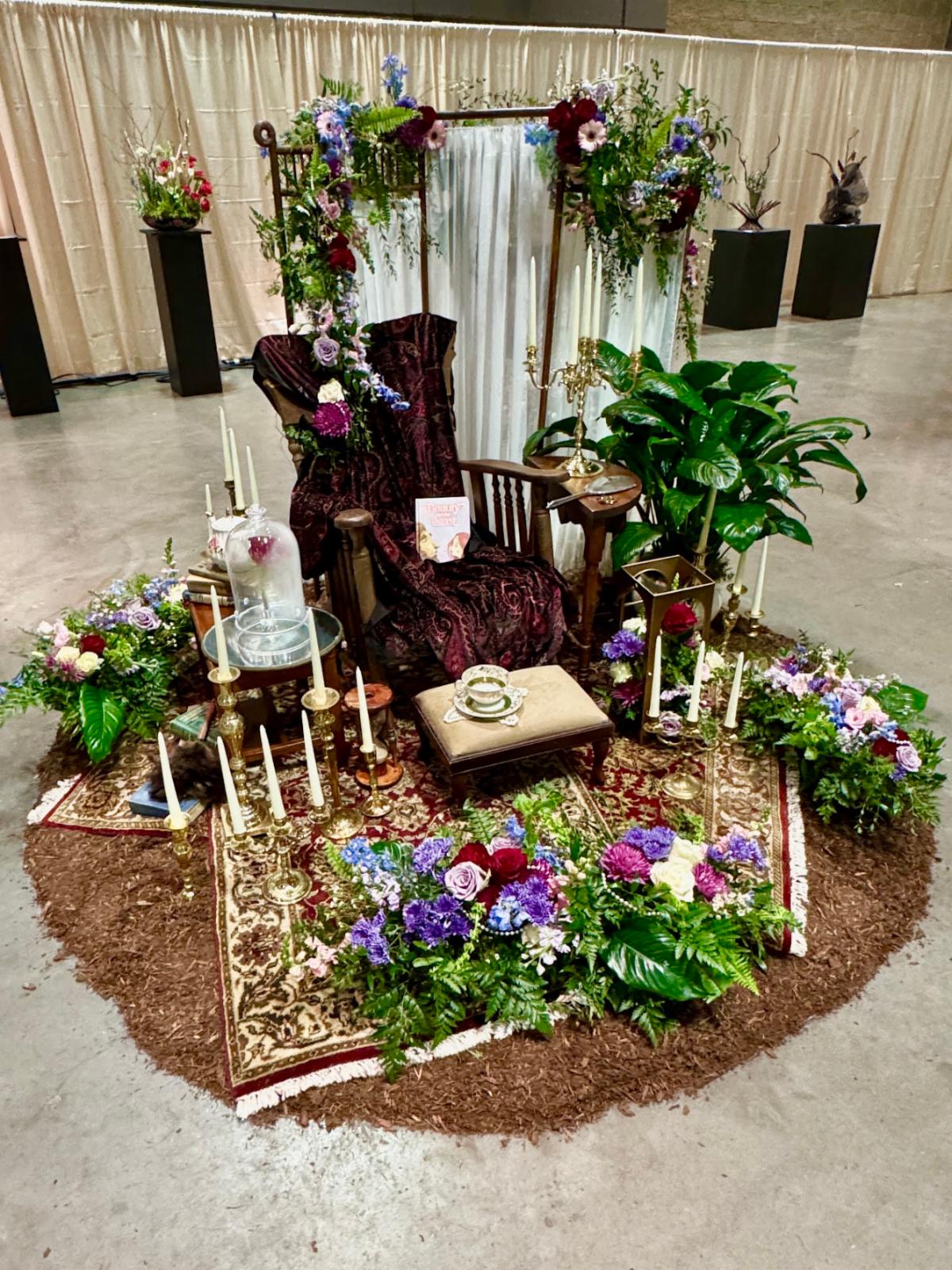
A Storybook Garden was the theme of this year’s juried Standard Flower Show at the Connecticut Convention Center in Hartford.
This prestigious, well-attended show included botanical arts ranging from magnificent floral designs and botanical crafts, photography, and horticulture. The interpretations using fairy tale themes were displayed throughout the show. Garden clubs throughout Connecticut participated, and many awards were given out for creativity, artistry, and adherence to uniform, strict, high-quality standards set forth by National Garden Clubs. All awards were chosen by accredited judges in each category. Listed in the Schedule were well-loved fairy tale-themed designs chosen from favorites such as Thumbelina, Show White, Sleeping Beauty, Cinderella, Jack and the Beanstalk, and Hansel and Gretel. Botanical arts included Greek myths; photography, Greek gods. “Good triumphed over evil” in the end and everyone had a great time!
| | |
Above: The People’s Choice Design Award in honor of Barbara Bruce
First place, The West Hartford Garden Club for The Beauty and the Beast.
[Photo: Dodie Bump]
| | | | |
| |
|
Frisky Hormones
By Renee Marsh, FGCCT Horticulture Chair
| | Ah yes, spring is in the air, hormones are on the rise, and juices are flowing … and not just in us animals! Walk through the spring garden and you can sense things are bubbling—buds swelling, roots probing, sap rising. And what is driving that is a chemical conversation of astonishing complexity. Plant hormones—also called phytohormones—operate in tiny concentrations, often measured in parts per billion. They move through plant tissues, switch genes on and off, and coordinate a plant’s response to its environment. Without them, there would be no spring flush, no ripening tomatoes, and no fall color. | | |
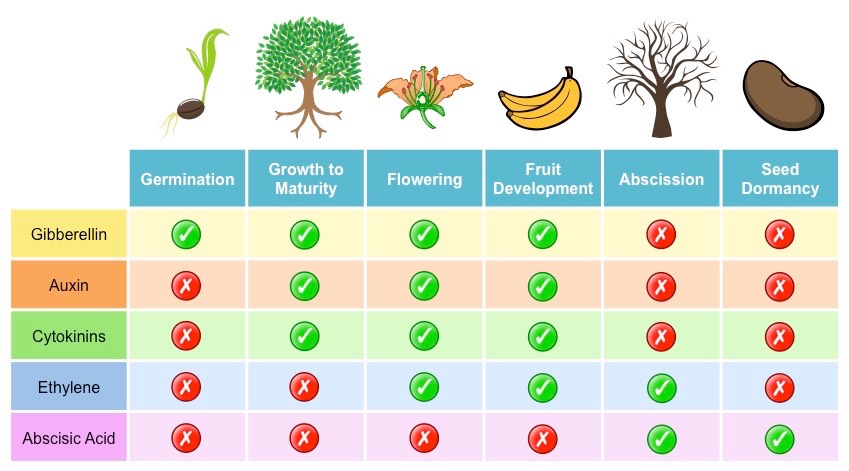
Let’s explore the major plant hormones and how they shape the life of plants. Phytohormones fall into two groups: growth promoters like gibberellins auxins, cytokinins—and growth inhibitors like ethylene and abscisic acid. Let’s start with the promoters.
Think of gibberellins as the stretch and surge hormones. Gibberellins are synthesized in the actively growing parts of plants, such as seeds, young leaves, and roots. They promote rapid spring growth, stem elongation, flowering and fruiting. In our cool Connecticut springs, gibberellins help seeds break dormancy and initiating germination once temperature and moisture signals align. Gibberellic acid is applied to agricultural crops like tomatoes, grapes and watermelon to control flowering and growth. For you flower folk, an interesting tidbit—camellia show participants often use gibberellic acid to enhance blossom size through a process known as "gibbing."
| |
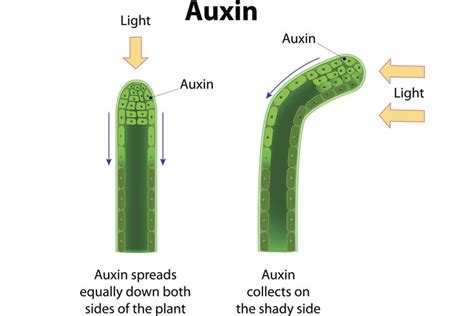
Auxins' primary functions are cell elongation, phototropism (growth toward light), apical dominance (the main stem suppressing side shoots) and root initiation. We all know phototropism as our indoor plants strain to the window at this time of year. That lean is caused when light hits one side of a stem and the auxins redistribute to the shaded side, causing those cells to elongate more. The result: the plant bends toward the sun.
| | |
Apical dominance is regulated by auxin, which is produced in the apical bud and inhibits the growth of lateral buds. This allows the main stem to grow more strongly than side stems, helping the plant to compete for light and resources. Pinched a plant anyone? Pinching removes the auxin-rich apical bud and the side buds grow. Voila! You have a bushy mum or basil. On the other side, improper heading cuts done on shrubs—think landscapers’ meatball pruning—will result in weak, crowded growth that is just a mess.
Lastly, auxins stimulate root growth, which is the basis for “rooting products.” Check out the gardening section shelves and you will find them. Rooting powders, gels and solutions stimulate root formation on cuttings and are a great aid in propagation. Their active ingredients are synthetic auxins—either indole-3-butyric acid (IBA) or 1-naphthaleneacetic acid (NAA). The former works well for softwood, semi-hardwood, and hardwood cuttings and the latter is often used for tougher, woody cuttings.
If auxins promote dominance, cytokinins promote division and branching. They stimulate dormant side buds to grow. That bushy basil plant? That’s cytokinin activity in action. They stimulate cell division, encourage lateral bud growth, and delay leaf senescence (aging). The balance between auxins and cytokinins is crucial for plant development. A higher ratio of cytokinins to auxins promotes shoot formation, while a higher auxin concentration encourages root development.
Now for the growth inhibitors—ethylene and abscisic acid.
Ethylene is unique among plant hormones because it is a gas. Environmental challenges like flooding, drought, chilling, wounding, and pathogen attack can induce ethylene formation in plants. This gas regulates fruit ripening, leaf drop, stress responses, and flower fading. Growers use ethylene's properties to enhance plant growth and grocers control ethylene to prevent unwanted ripening and prolong freshness. For example, bananas are shipped green and ripened through temperature and humidity control—and a measured shot of ethylene gas. And, as there is nothing new in the world, the ancient Egyptians gashed figs in order to stimulate ripening. Why? Because ethylene surges when plants are wounded or stressed. Then in autumn, increasing ethylene production helps trees prepare for leaf drop. Known as abscission, it is the act of shedding parts, such as leaves, flowers, or fruits.
Yes, alas, this gardening season will end—and that brings us to abscisic acid (ABA). As days shorten and temperatures cool, plants increase production of this hormone to shift from active growth to winter survival mode. It triggers cold acclimation where cellular changes make tissues more resistant to frost damage and helps woody plants harden off before true winter sets in. In deciduous plants, ABA contributes to leaf senescence and nutrient reabsorption, allowing the plant to conserve resources and reduce stress during the cold months. ABA also promotes the development of winter buds. The newly developing leaves growing above the meristem become converted into stiff bud scales that wrap the meristem closely and will protect it from damage and dehydration. Abscisic acid in the bud also acts to enforce dormancy so if an unseasonably warm spell occurs before winter is over, the buds will not sprout prematurely. Only after a prolonged period of cold or the lengthening days of spring will bud dormancy be lifted.
| | |
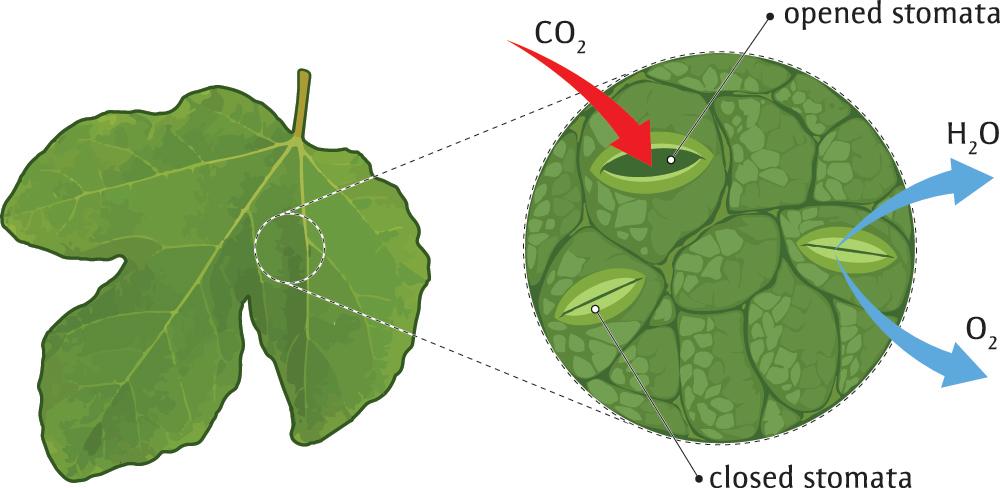
Drought is a problem in all seasons but especially in winter when the root of broadleaf and needled evergreens may be unable to absorb moisture from frozen soil. Much of the water taken up by a plant is lost as water vapor through pores called stomata on the leaves or needles. Low soil moisture triggers an increase in ABA, which causes the stomata to close, reducing water loss. The stomata also control the exchange of oxygen and carbon dioxide necessary for efficient photosynthesis. That is why drought slows plant growth.
For annual and biennial plants, seeds are continuity. ABA is essential for seed maturation and also enforces a period of seed dormancy. It is important that seeds not germinate prematurely during unseasonably mild conditions prior to the onset of winter. As the hormone gradually breaks down over winter, the seed is released from dormancy and germinates when conditions are favorable in spring. We often accelerate this process when we stratify seeds, effectively lowering ABA’s influence and letting the gibberellins (GA) take over.
Amazing, isn’t it? Growth, flowering, fruiting, and dormancy, all the result of shifting balances among multiple hormones responding to day length, soil temperature, moisture, nutrient levels, mechanical stress, insect feeding, and light quality. As I walk in the garden in spring, I think about how intricate and wondrous life is. We animals also are guided by hormones that flow from our endocrine system. In both kingdoms, these chemical messengers travel through us—sap in plants, blood in animals—helping us sense our environment, respond and adapt.
| | |
Think Outside the Bait Box Program - April 4
By Holly Kocet, FGCCT Environmental/Conservation Chair
| | |
As FGCCT Conservation chair, member of the Garden Club of Newtown and Newtown Conservation Commission chair, I am proud to announce that the Newtown is sponsoring a community event about deadly rodenticide poisons. The program, Think Outside the Bait Box will be on Saturday, April 4 from 2-4 pm at the Newtown Community Center, 8 Simpson Street, Newtown. The program is free and open to the public.
Newtown is moving forward on a Rodenticide Policy for Municipal Buildings initiated by our Conservation Commission with support from town departments and the public. We believe the policy will be adopted this spring. We hope that other towns will follow our lead in protecting wildlife, pets and children by adopting policies in their own towns with the goal of sending the message to Hartford that CT needs to ban the use of rodenticides altogether.
Many of us are just learning about the dangers of second-generation rodenticide anticoagulant rodenticides (SGAR’s) even though these black bait boxes seem to be everywhere we look. Pest control companies put these bait boxes in and outside of homes and businesses. Most people don’t realize the harm these poisons are causing. Internal bleeding caused by rodenticides are a horrific and inhumane way for any animal to die. And it doesn’t stop with the initial poisoned animal. Secondary poisoning of unintended victims results when a bird, owl, hawk, eagle or fox eats a poisoned rodent. By the time an animal is found, it is usually too late to save it and the animal must be euthanized. Many rodenticide poisonings have been documented in pets and children as well.
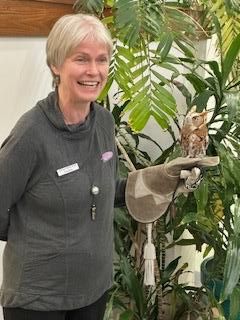
The April 4 program will feature several educators who will address the issues and provide information on practical and reliable solutions for rodent control. We are pleased to have experts, Nicole Rivard, Friends for Animals, Dr. James Lombella, President CT for Animals, and Joshua Levin, CT Votes for Animals and Christine Cummings from a Place Called Hope rehabilitation facility in Canton. Christine (pictured at upper left with Koso) is bringing ambassador Koso, an adorable Eastern screech owl and miraculous survivor of rodenticide poisoning. Our panel will talk about what garden clubs, commissions and the public can do to protect wildlife, our pets and out children. Please spread the word to family, friends and neighbors. All are welcome. Preregistration is appreciated at dawn.fried@newtown-ct.gov.
| | | | |
SPOTLIGHT on our FGCCT Affiliates! | | | | |
|
The Connecticut Horticultural Society
| | |
The Connecticut Horticultural Society (CT Hort) joined us at the CT Flower and Garden Show as an Education Exhibitor in February. It was a pleasure to welcome them back to the show!
Founded in 1887 as an educational organization dedicated to encouraging and improving the practice of gardening and the dissemination of horticultural information to its members and the public, CT Hort is a great partner to the Federation. The Society, through its many and varied programs, seeks to encourage the enjoyment, appreciation and understanding of plants, the environment, and the art and science of gardening.
We are aligned in our encouragement of sustainable practices and education. CT Hort offers a grant program twice a year through the CT Hort Cares Grant Program, to expand efforts to educate the public on the importance of plants and our precious environment. Applications are accepted from February 15-April 15, 2026, with grants awarded on May 1; and from June 1-July 31, 2026, with grants awarded on August 1. When reviewing applications, the committee gives priority to projects that support the educational mission of their organization, and the project must take place in Connecticut. The maximum amount per grant is $500. Access the application here.
| | CT Hort offers its members an array of programs, with each monthly meeting featuring a speaker, both in person and on Zoom to reach members across the state. They also offer field trips, workshops and travel opportunities. Their Annual Plant Sale and Auction is a must on many gardener’s spring list. This year’s sale, May 15 from 6:30-9pm at Bethany Covenant Church in Berlin, CT, will include an unusual collection of plants and shrubs. Proceeds from all sales go to the Society’s Scholarship Fund and are used to provide scholarships to Plant Science students at the University of Connecticut (since 1959), and Naugatuck Valley Community College (since 2011), as well as the grant program. | | | For more information about Connecticut Horticultural Society, please visit: https://cthort.org | | | | |
| |
|
Stay Secure!
There have recently been email scam attempts from bad actors pretending to be Federated Garden Clubs of CT officers. This is a critical reminder to stay vigilant against phishing scams designed to steal credentials and sensitive data.
Always verify unexpected emails, do not click suspicious links or attachments.
Attackers often mimic trusted brands or colleagues to create a false sense of urgency. Please note: The Federation will never send a link that requires you to enter sensitive personal information or passwords. Registration for our luncheons, classes and other programs are available on our website.
Key Phishing Red Flags & Tips:
-
Verify the Source: Double-check the sender's email address for slight misspellings or unusual domains. False emails sometimes will even include our organization’s logo.
-
Hover Before Clicking: Hover your mouse over links to see the actual destination URL before clicking.
-
Urgent/Threatening Language: Be skeptical of requests requiring immediate action, such as "account suspension" or "payment overdue."
-
Never Share Credentials: Legitimate organizations will never ask for your password or sensitive information via email.
-
When in Doubt, Verify: If an email seems suspicious, contact the sender through a known, trusted channel (phone call or a known email address), never via the contact info or other links in the email.
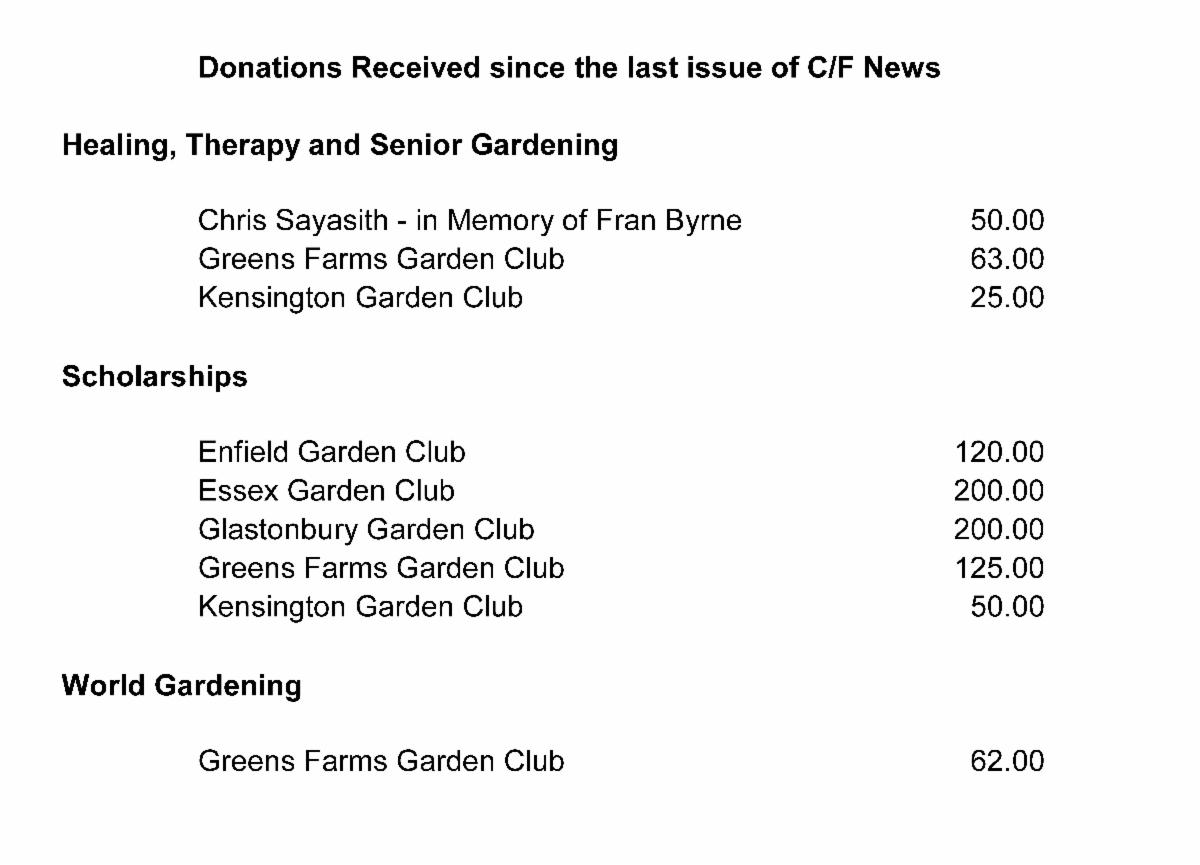
| | | | Donations to FGCCT's Scholarship Fund; Healing, Therapy and Senior Gardening Fund; and World Gardening Fund | |
We thank the following Garden Clubs for their recent donations to the FGCCT Scholarship Fund.* For almost 40 years, the Federation has awarded scholarships to college and university students who major in Agronomy, Botany, City Planning, Conservation, Environmental Studies, Floriculture, Forestry, Horticulture, Land Management, Landscape Design, Plant Pathology, or allied subjects. We welcome donations of any size. Our appeal is ongoing to give all of our clubs the opportunity to make a contribution in the amount of their choosing.
| |
Please send all Scholarship Fund donation checks to the appropriate chair (see below). Make checks out to "FGCCT" with the appropriate Fund listed on the memo line.
*Please note that due to the deadline for articles and information for the CFNews, some donations may not be received and deposited in time to be included in the bi-monthly donation acknowledgement, but will be included in the next issue of our newsletter.
PLEASE MAIL CHECKS TO:
| |
For World Gardening & Healing, Therapy and Senior Gardening:
The Federated Garden Clubs of CT, Inc.
Attention: Rosemary Bonaguide
PO Box 902
Wallingford, CT 06492
| |
For FGCCT Scholarship Fund:
The Federated Garden Clubs of CT, Inc.
Attention: Carole Fromer
PO Box 902
Wallingford, CT 06492
| | |
Follow us on Facebook and Instagram!
FGCCT is on Facebook and Instagram and we love to post your news and photos! Please send upcoming events, club activities, civic projects, milestones, and hort tips. Include photos and a brief writeup of the news your club would like to share. The best format is text in an email with jpg photos attached. Take active photos showing members at work or showcasing beautiful gardens, flowers, and plants (please name the flower if it is a hort only photo). Let’s follow each other! Send submissions to social@ctgardenclubs.org
| |
|
Just a reminder …
Please send all correspondence to the new FGCCT office:
The Federated Garden Clubs of CT, Inc.
P.O. Box 902
Wallingford, CT 06492
Did you recently elect new officers? Email their names and contact information to us at office@ctgardenclubs.org so they will receive Federation correspondence. If you need assistance, please contact FGCCT Office Administrator Joan Lenart at office@ctgardenclubs.org or by phone at 203-488-5528 on Mondays and Wednesdays, from 10 am to 2 pm.
| | | Deadline to submit articles/photos, ads and calendar events for the June / July 2026 issue of the CFNews is May 10, 2026. Please submit to: | | |
Creating a National Garden Clubs, Inc. Website Member Account
In order for garden club members to access information in the Members area of the National Garden Clubs website, they will now need to create an account. Below are the steps to follow.
-
Go to the Homepage of the NGC website at https://gardenclub.org/
- Select “Member Login” in the site header.
- Enter your information. Avoid choosing a username with spaces. Email address is recommended for username. Select “Create new account”.
- You will receive a green highlighted message to check email at the address you entered to verify and complete your account.
- Use the link provided in the confirmation email to create your password and save your changes.
- Once you have selected “save”, click on the “Member Section” link in the main menu.
~
| | |
Reminder: NGC's The National Gardener is ONLINE and free!
The official publication of the National Garden Clubs, The National Gardener, appears quarterly, and features articles of interest to environmentalists, gardeners, landscapers, floral designers, educators and photographers. Subscribe here.
| | |
| |
State, Regional &
National Events
| | | | | |