| |
| |
| |
| |
|
Greetings Summer Gardeners!
I hope you are all enjoying your summer with friends and family and that your gardens are flourishing and teeming with butterflies, hummingbirds and bees! I have enjoyed visiting so many wonderful club events, meetings, installations and celebrations – and I look forward to many more in the coming months.
BEE RESILIENT ~ Garden for Nature! My President’s theme encourages Clubs to enhance the beauty of their community and preserve nature in a changing climate by creating small native gardens in a public location with funding (up to $500 per project) from The Federation. I am excited to announce that we have approved six garden projects so far! Our Project Chairs discuss these projects and lessons learned in an article later in this newsletter. Visit the President’s Project page for more information about applying for project grants.
We had a wonderful morning on June 18 at the Federation’s REGIONAL ROUNDTABLE information exchange program. Many thanks to the Branford Garden Club, who hosted us. 34 Club Officers and Committee Chairs attended, exchanged ideas, and learned new things. These Roundtable events will continue this year and in 2026, so if your club is interested in hosting one, please contact me and we’ll schedule a convenient date.
Don’t miss Plant Science Day on August 6 at beautiful Lockwood Farm in Hamden, sponsored by the Connecticut Agricultural Experiment Station (CAES.) The Federation has an information table – come by and say hi!
I’m pleased to announce CLUB OFFICERS’ DAY – A Zoom Workshop on Thursday, September 11, 9:30 – 11:00 am. Federation Board Members will present important information on a variety of topics. This is a good opportunity for new and existing club officers to receive valuable information and to ask questions. Details and Registration HERE.
Connecticut has the honor of hosting the New England Garden Clubs, Inc. 9th Annual Meeting on October 14 and 15 at the Sheraton Hartford South Hotel in Rocky Hill. We have arranged a very interesting agenda with notable speakers and are thrilled that NGC President, Donna Donnelly, and NGC 3rd Vice President, Susan Miner, will both be attending. All garden club members from CT, MA, RI, ME, NH and VT are invited. Information and Registration HERE.
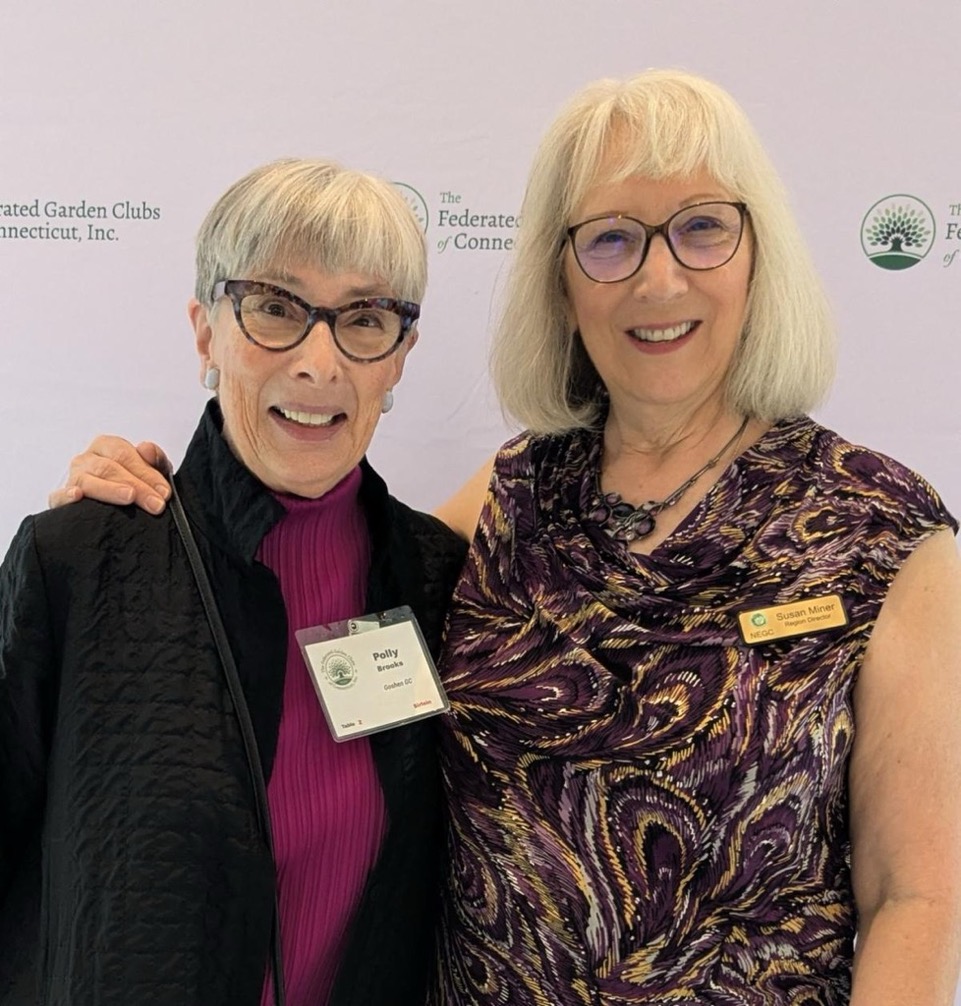
The New England Garden Clubs’ Photography Group is sponsoring an 2025 NEGC Photography Show titled “We Grow Gardens & Gardeners,” celebrating NEGC Director, Polly Brooks’ theme. The winning photos will be displayed at the NEGC Annual Meeting. There is a Photography Zoom Workshop, presented by Lisa Cuchara, scheduled for August 14. Information and Registration HERE.
Save the date for the FGCCT 96th Annual Awards Meeting and Luncheon on October 22 at the Aqua Turf Club in Plantsville, CT. Over 300 achievement awards from The Federation, New England Garden Clubs, Inc., and National Garden Clubs, Inc. will be presented to our clubs and to individual members. Watch for online registration soon.
| | |
Newly installed National Garden Clubs, Inc. President Donna Donnelly has announced her theme for the 2025 – 2027 Administration: “PLANT AMERICA – For the Next 100 Years!” More information on her theme and projects can be found HERE.
We have three NGC Schools coming up: Environmental School – September 18-19; Gardening School – September 25-26; and Flower Show School – Oct. 9, 14-16. Information and Registration HERE.
Thank you for all you do in your communities. If you have any questions or if our FGCCT Board Members can be helpful to your Club, please let me know.
| | | | Let’s go out and BEE RESILIENT and Garden for Nature, and maybe we’ll help save the planet, one garden at a time! | |
Bee Resilient: Garden for Nature
By Wayne Gura and Anne Djupedal Gura, co-chairs, FGCCT President’s Project
We’re happy to report that FGCCT’s President’s Project is off to an inspiring start: to date, seven clubs have been awarded funding for their Project BEE RESILIENT gardens, with applications continuing to come in. These seven clubs have planned a beautiful range of native-species-based gardens, each one unique and carefully thought out for its site.
-
The Pomperaug Valley Garden Club is working to create a Pollinator Pathway along Woodbury’s Main Street, with 10 town gardens of varying sizes to be transformed into pesticide-free and native-plant gardens.
-
The Quiet Corner Garden Club is focusing on pollinator habitat preservation in a 30’x40’ area adjacent to the Palmer Arboretum site of the QCGC office.
-
The North Haven Garden Club has designed the Jan Tracy Memorial Garden, an oval 8’ x 15’ garden sited on Town of North Haven property.
-
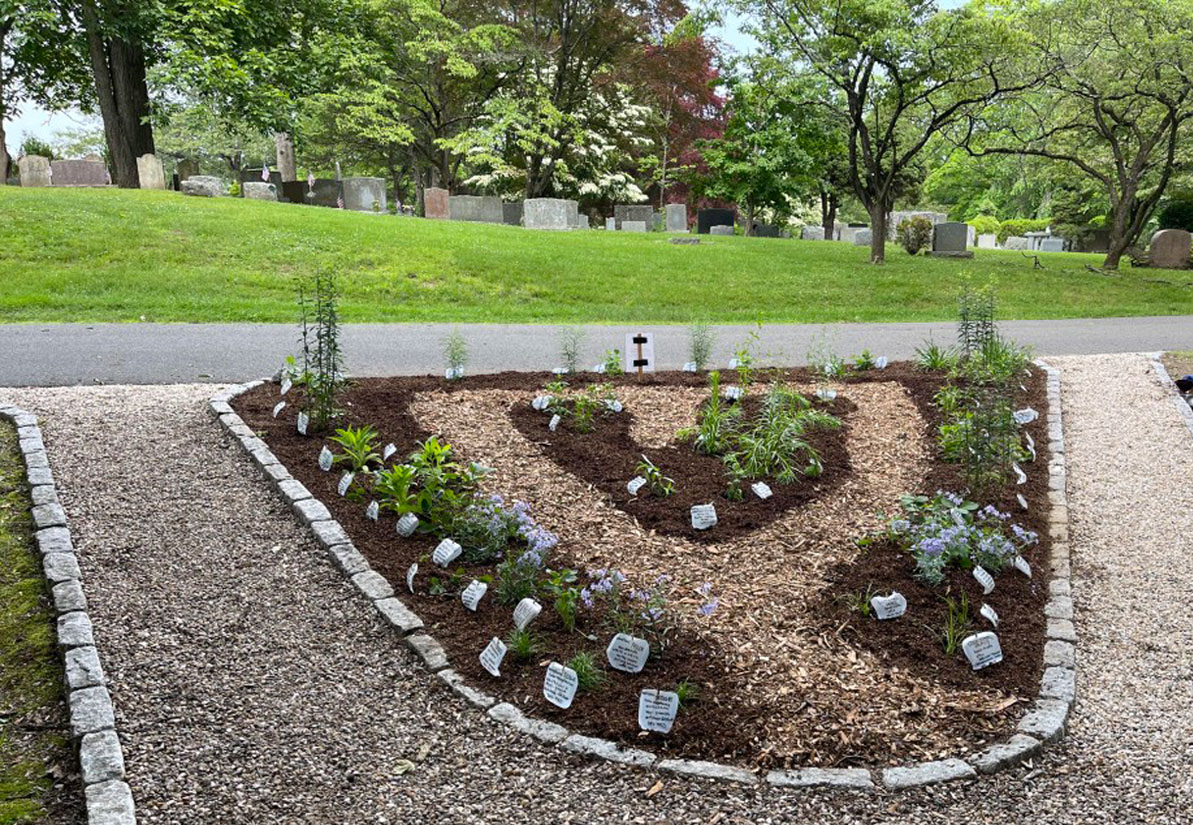
The Wilton Garden Club (our home club) planted a 95%-native-perennials garden in a triangular bed (25’x23’x20’) at Wilton’s Hillside Cemetery and Arboretum. We’ve shared some pics and info on this project further below.
-
The Durham Garden Club plans to eradicate invasives/plant native plants in a 42’x14’ area behind the Coginchaug HS library, with ECO Club students learning gardening techniques and the importance of native pollinator plants.
-
The Colchester Garden Club plans to improve the soil and add shade-tolerant native plants into a partially-shaded 9’x12’ foundation planting area to extend pollinator food sources to the front of the Cragin Memorial Library.
-
The Shippan Point Garden Club is working to control invasives and add to its existing native plantings along the entrance to the local recycling center for more pollinator food/habitat that can also screen as it beautifies.
To these great clubs we ask you to please DO take plenty of pics and let us know how it’s going as you work on your project – and we’ll share it with your fellow gardeners statewide. Please know that your work is literally breaking new ground as together we learn more about making our environment more resilient for our pollinators and in turn, the environmental food web that they support. Kudos for what you’ve planned and for what you hope to accomplish.
There is still funding for at least ten to twelve more qualifying native-species-based pollinator garden projects. For those who are thinking of applying, bear in mind that when you submit an application, we do our best to reply to you within a day to let you know that we’ve gotten it and it’s in our queue for review. So, if you email us and get no reply, please DO check your spam folders to make sure our reply to you didn’t go astray (we’ve ended up in more than one spam folder, LOL… As in hashtag #funny-haha-except-when-you’re-out-there-wondering-why-you’ve-heard-nothing-about-your-application!) And for speedier turnaround, do include with your application a list of your selected plant species together with their itemized cost (plant choice is key, we cannot proceed without it.) You are the gardeners who can help beautify your community while strengthening its ecological resilience.
| | |
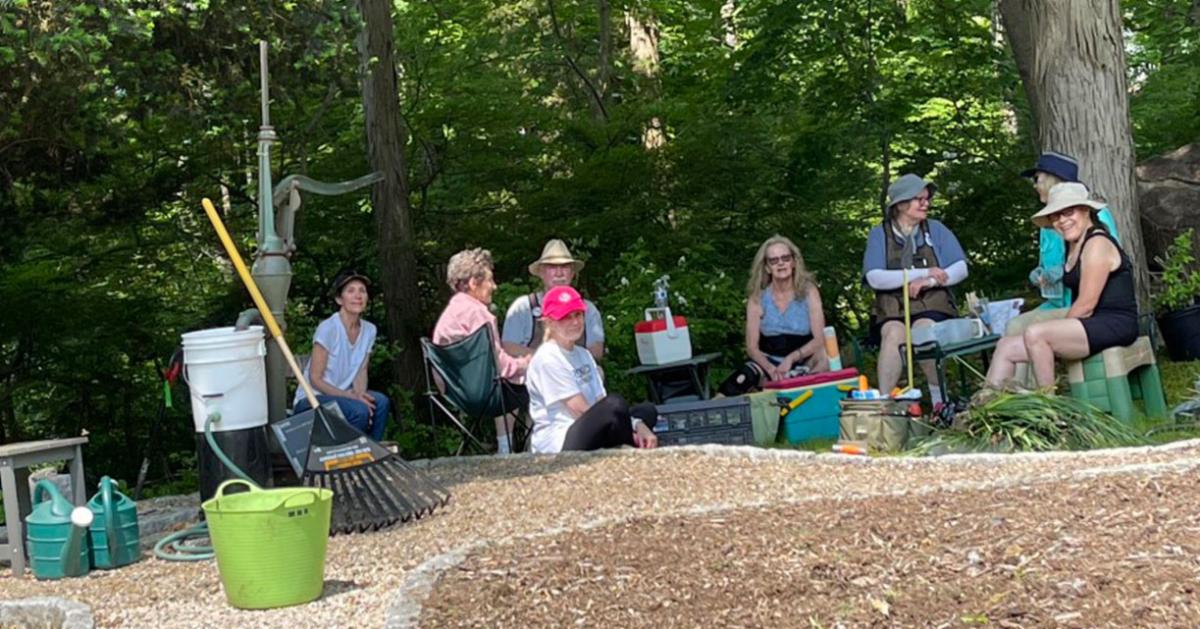
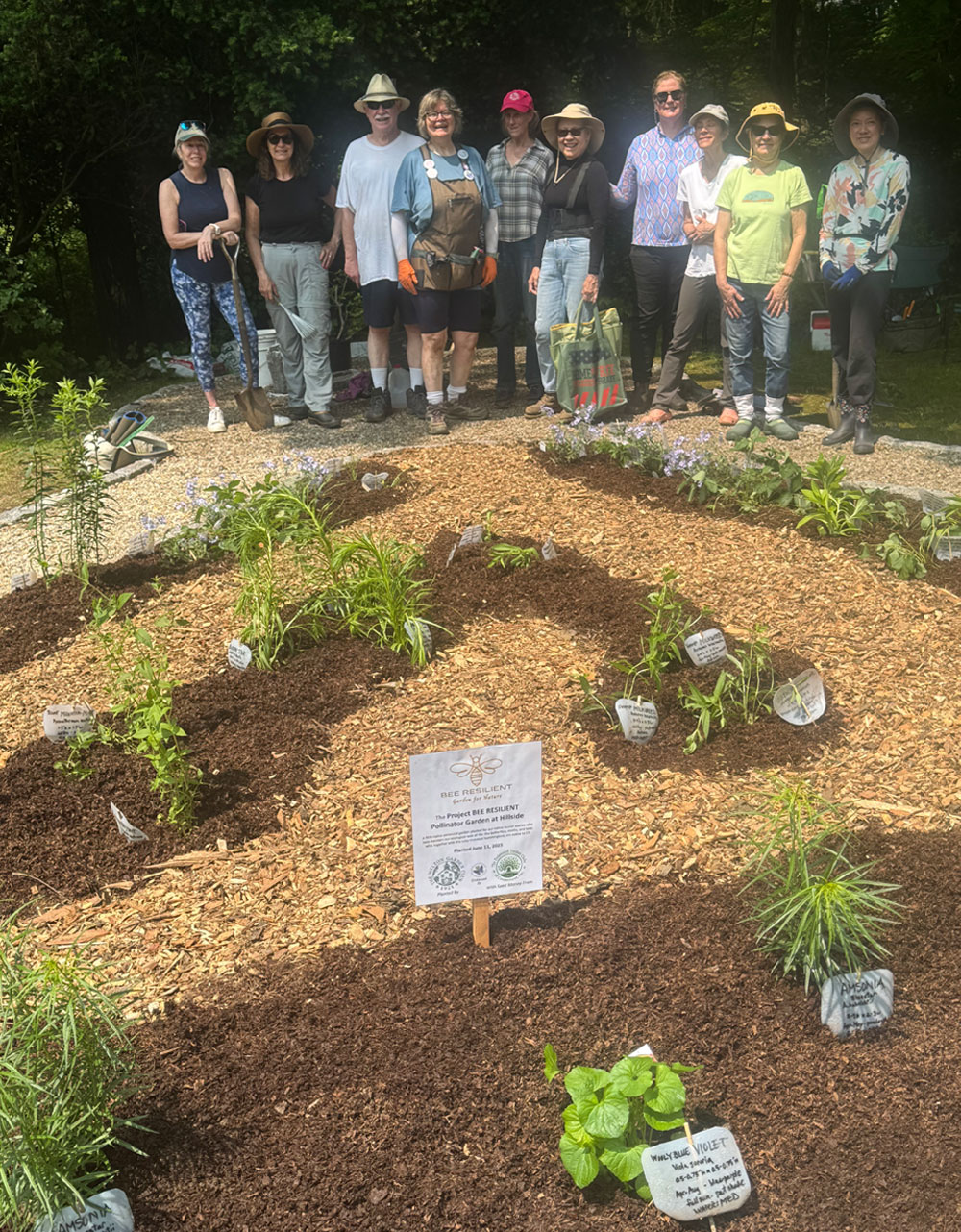
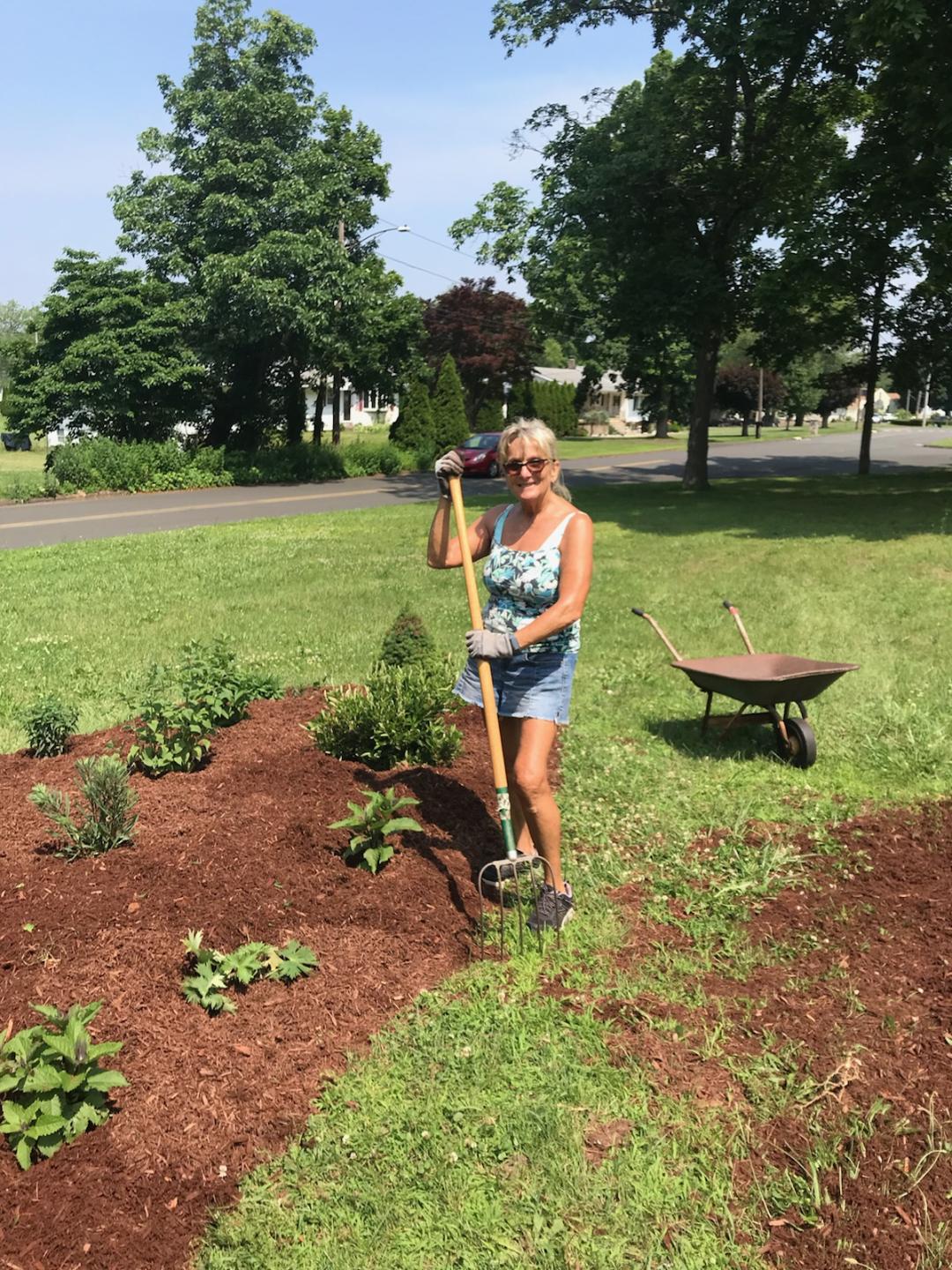
On June 11th, the Wilton Garden Club planted its Project BEE RESILIENT pollinator garden. It was kismet that this exciting shovel-ready project appeared when it did. In President’s Project development meetings with Nan we all saw that this site was the ideal proving ground to help test project concepts while allowing us to be the guinea pigs to shake the bugs out of the application process.
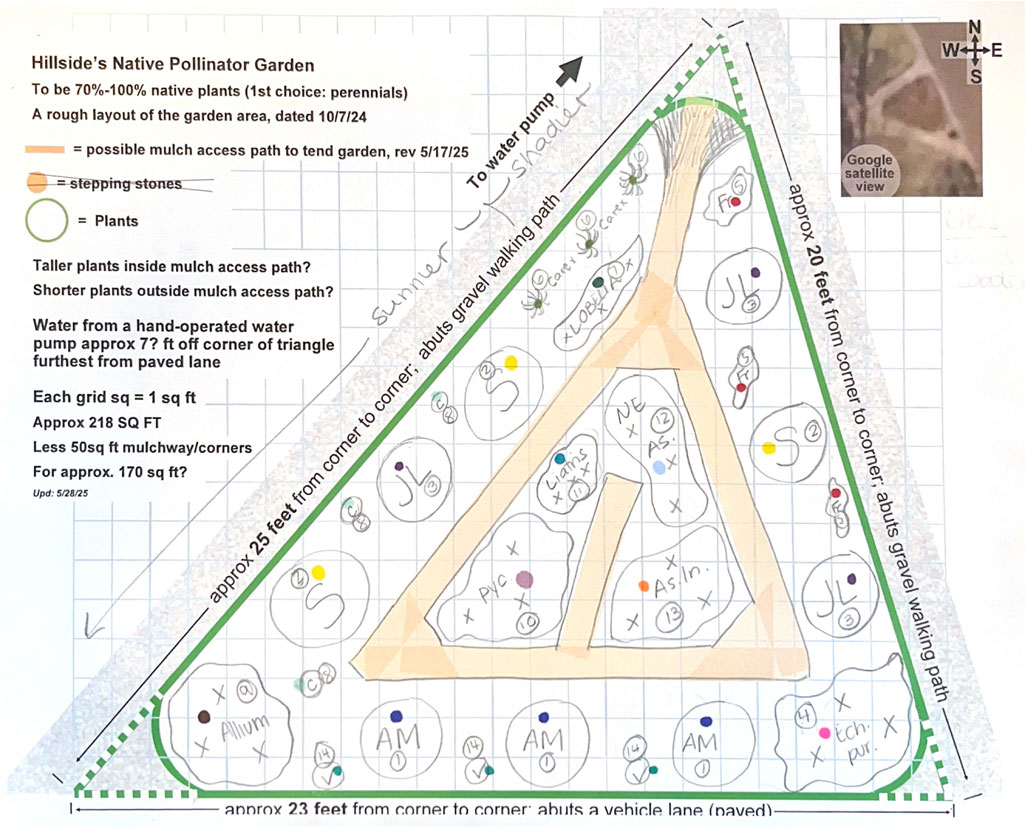
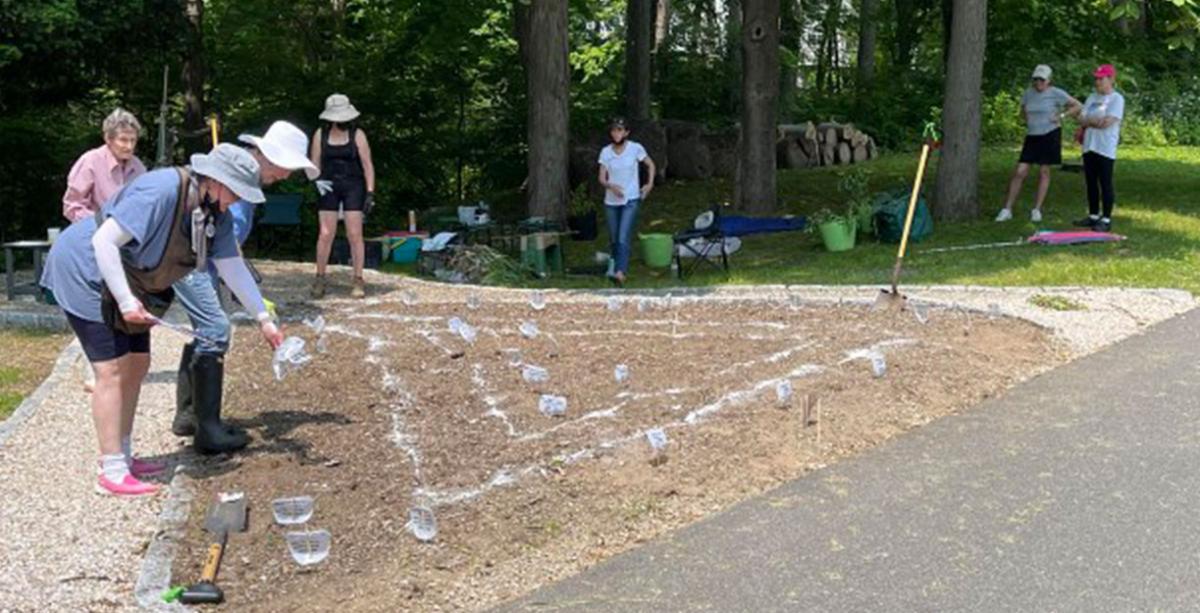
The site: last year a friend asked us for our ideas on a native-species pollinator garden to replace a poorly-growing garden at Hillside. A 220-sq-ft triangle with good soil, the garden was edged by a cobblestone-lined gravel path built as a local Eagle Scout’s project, with a nearby hand-operated water pump serving as a water source. We measured the site, evaluated the near-to-full-sun conditions in growing season, and reviewed our native plant lists for beneficial choices and good bloom succession. We laid out the site on graph paper and included a mulch walking path for gardening access to the plants at the center of the garden, which reduced the planting area to around 170 sq ft. We sent our ideas to our friend and agreed to table the idea for a future time. After revisiting the plans with Nan and tweaking them with our friend, they were presented to our club, where they were well received by the club board, the Conservation Committee, and other club members.
| | |
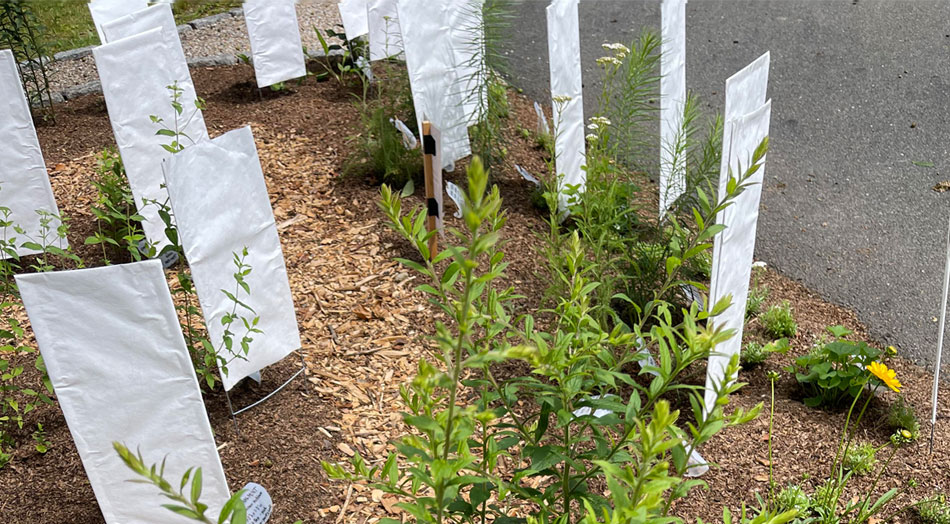
Plants: the garden is over 95% native perennials. We planted 70 plants representing 18 perennial species. Each species has at least three plants; some have as many as nine. All but three of the 70 are natives. All our bought plants are from Nature-works in Branford, where the experienced staff helped us pare down our species choices and offered plant placement sugges-tions in the design; the rest were donated from members’ gardens. We also plan to add more donated native plants in the fall.
Timing: we bought the plants on June 4; on June 6, our Conservation Committee plus other willing club members prepped the bed: we cleared it, marked the path, and placed all the plant-ID sticks to mark where each plant would go.
The group planted the garden on June 11. For the first two weeks we watered every non-rainy day. After that we did three waterings a week. As of this writing it’s been 30 days since the site was planted and all is settled in and growing.
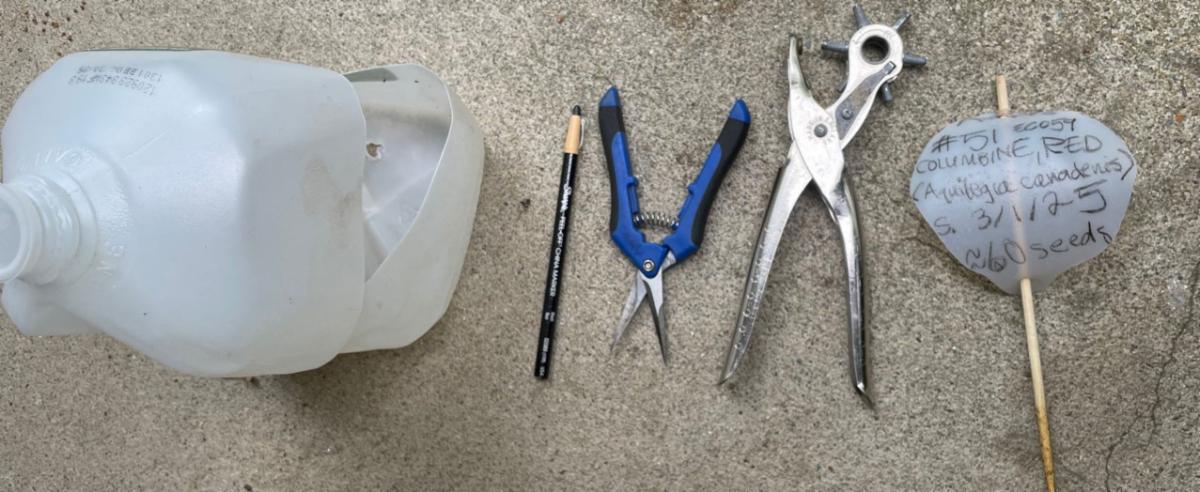
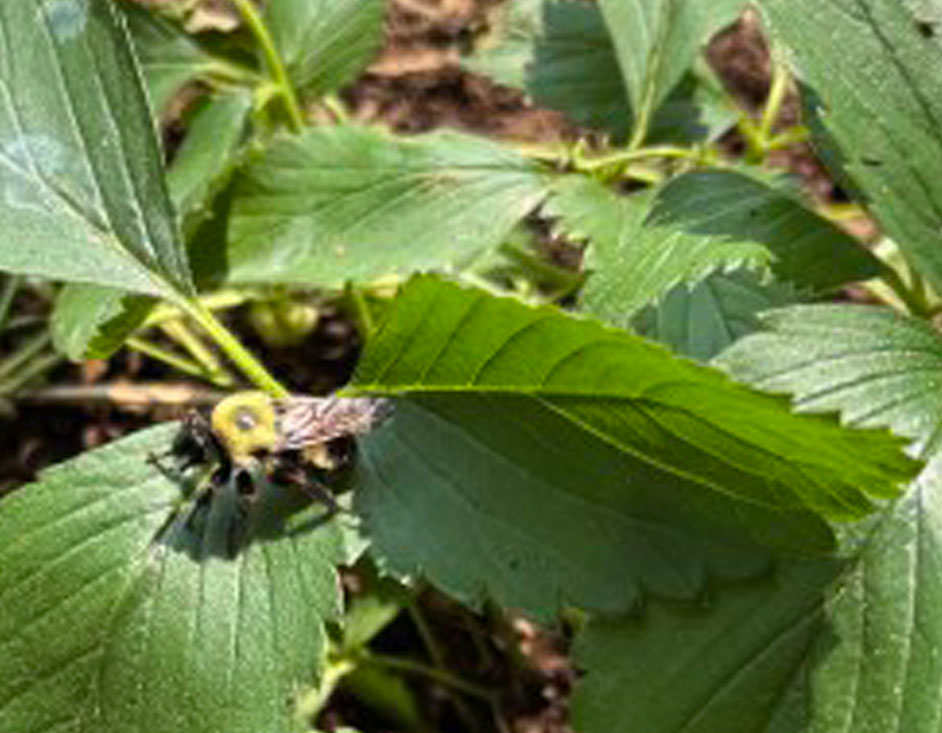
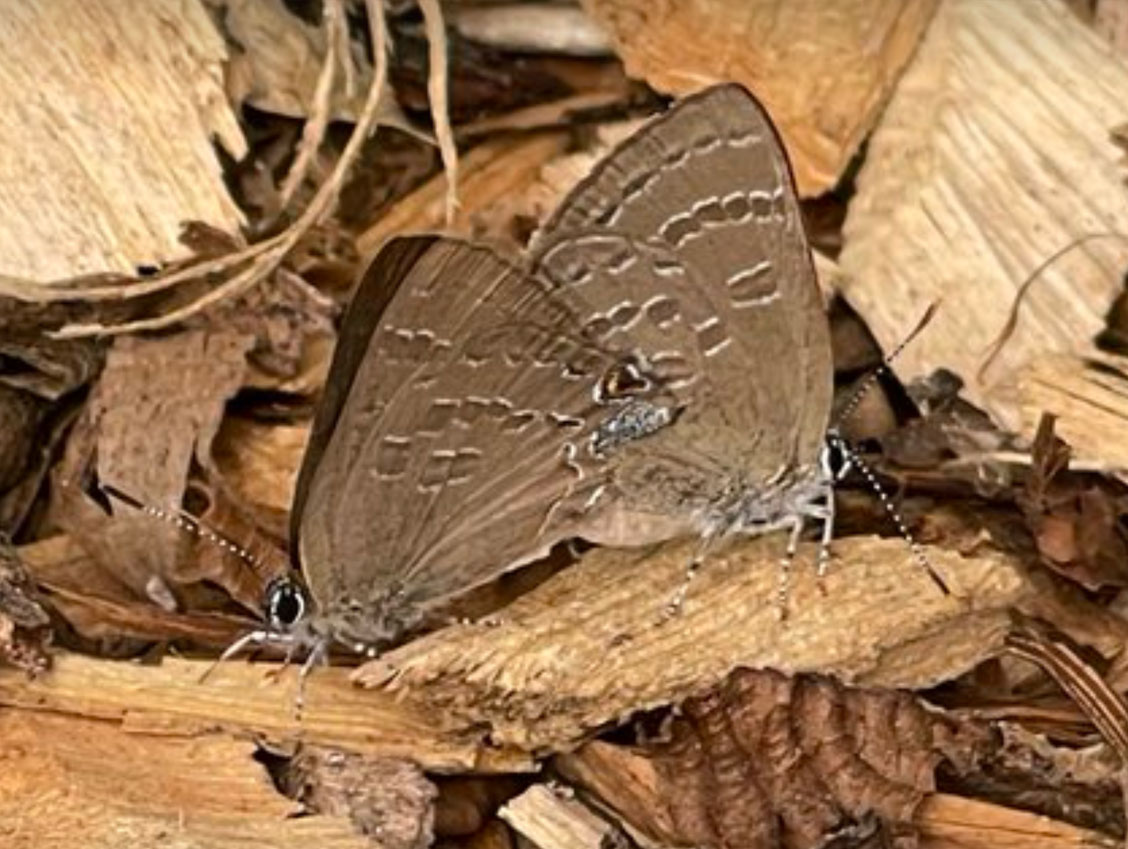
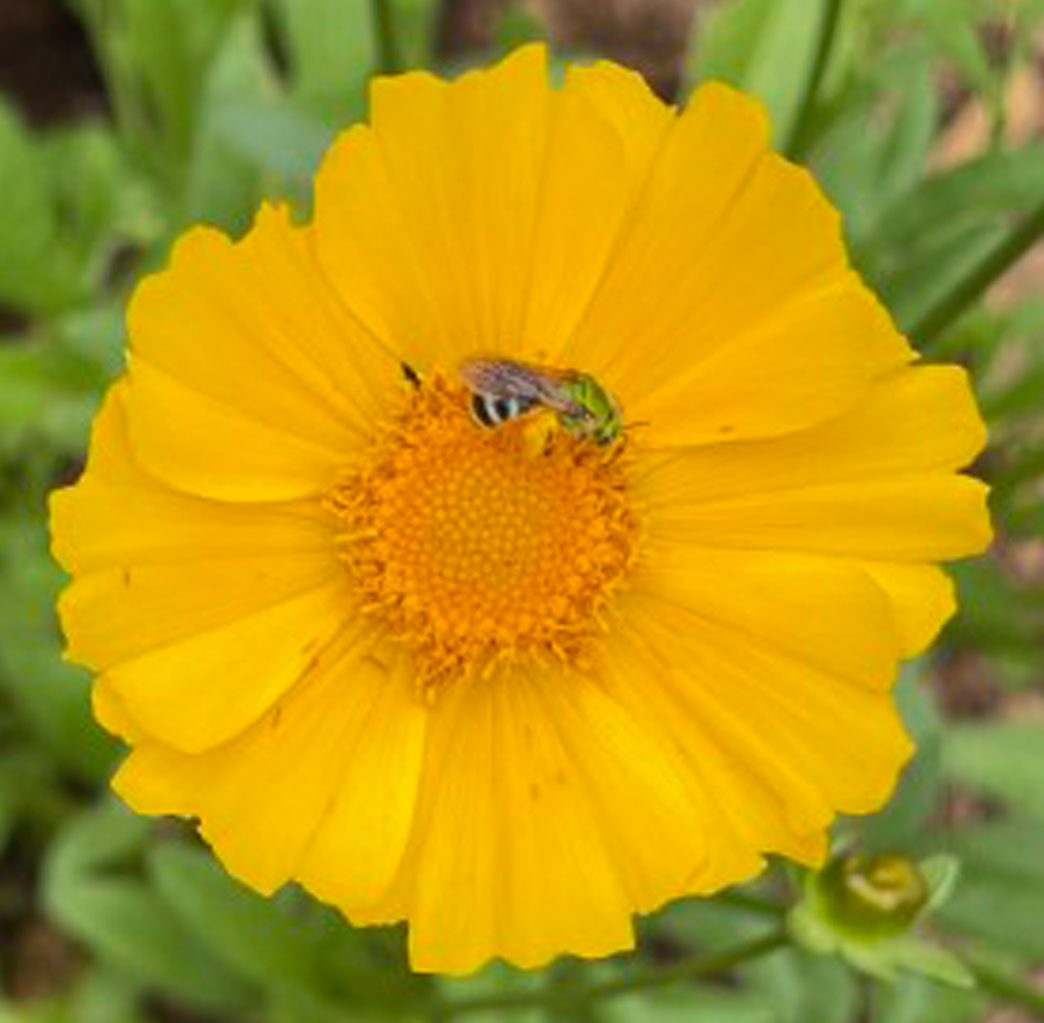
| | Challenges: using up-cycled materials, we dreamed up inexpensive plant sticks in order to ID every single one of our 70 perennial plants, and we hear they’re easy to read and even rather charming. We Macgyvered a set of sun shades for the plants, which needed extra protection during June’s intense heat wave as they got over their transplant shock (we left the shades in place for three weeks due to the abnormally hot weather.) As an alternative to the challenges for some volunteers of using a hand-operated pump to water all the plants, we collected two sets of 24 one-gallon jugs in milk crates. Water-duty volunteers can opt to pick up a set at their convenience, fill up from their home garden hose, and drop the empty set off after their watering stint is done. | | Pollinators: below (left to right), our first visitor bumbled by for a look-see at a common strawberry (Fragaria virginiana) just moments after the garden was planted; a tiny pair of eastern tailed blues (Cupido comyntas) makin’ whoopee on the mulched ground, their camouflage rendering them nearly invisible; a silky striped sweat bee (Agapostemon sericeus) visits a lance-leaved tickseed flower (Coreposis lanceolata). | | In closing, please send us your pics, let us know your progress—meanwhile, happy resilience-gardening from us both! | | | | |
Upcoming Events — Mark Your Calendars! | | | | |
|
115th PLANT SCIENCE DAY
Wednesday, August 6
10:00 am - 4:00 pm
Lockwood Farm
890 Evergreen Avenue
Hamden, CT 06518
Come and enjoy a day of fun and education sponsored by
The Connecticut Agricultural Experiment Station (CAES).
Free and open to the public!
Visit the CAES Plant Science Day for complete details.
Stop by the FGCCT information table under the tent and say Hi!
| | |
SAVE the DATE ~ Register NOW!
CLUB OFFICERS’ DAY
A Zoom Workshop for all Connecticut Garden Club Officers
Presented by FGCCT Board Members
Thursday, September 11, 2025
9:30 – 11:00 am on Zoom
TOPICS TO BE INCLUDED:
Applying for Awards
NGC Schools and Councils
Social Media and Promotion
Club Finances and Insurance
Youth & Senior Gardening Programs
Blue & Gold Star Memorials
2026 CT Flower and Garden Show
Tours in 2025 - 2027
Website and CFNews
President’s Theme and Project Grants
Resources from The Federation
NGC’s Theme, Grants & Projects: “PLANT AMERICA”
There is no charge for this Zoom Workshop, but you must register HERE.
Send your specific questions on the Registration Form.
| | | | |
|
9th Annual Meeting of New England Garden Clubs, Inc.
October 14 – 15, 2025
Sheraton Hartford South Hotel, 100 Capital Boulevard, Rocky Hill, CT
Hosted by The Federated Garden Clubs of Connecticut, Inc.
Tuesday, October 14
-
3:30 pm: Explore unique vendor shopping for gardening treasures. Immerse yourself in the NEGC Photography Show, themed “We Grow Gardens and Gardeners.”
-
5:30 pm: Join a special reception honoring Polly Brooks, NEGC Director, and her guests, Donna Donnelly, NGC President, and Susan Miner, NGC 3rd Vice President
- 6:15 pm: Enjoy a delightful dinner banquet and an engaging conservation program by Susan Quincy from the Connecticut Dept. of Energy & Environmental Protection.
Wednesday, October 15
- 8:45 am: Begin the day with thought-provoking Roundtable Focus Groups.
- 10:30 am: Experience a captivating presentation by world renowned floral artist and educator, Michael Derouin
- 12:30 pm: Enjoy social time and a delicious buffet luncheon.
- 1:30 pm: Compete and have fun with “Garden Jeopardy,” led by horticulturist Renee Marsh.
- 2:45 pm: Celebrate excellence at the NEGC Awards Ceremony.
- 3:15 pm: Try your luck with our exciting Raffle Drawings
Click here to Register NOW
- Registration Fee: $65
- Dinner Banquet on Oct. 14th: $60
- Buffet Lunch on Oct. 15th: $45
- Late Fee: $10 applies after Sept. 30, 2025
Zoom Business Meeting, Oct. 9, 2025
There will be a Zoom NEGC Annual Business Meeting on Thursday, Oct. 9 at 10 am.
Registration link will be sent with Annual Meeting registration confirmation.
Hotel Reservations
A special group rate of $149/night (plus taxes & fees) by September 19, 2025. Call 860-257-6000 and mention booking Code FGCFGCH, or book your group rate here.
Questions: Contact Meeting Registrar Norma Jean Macauto
| |
The 2025 NEGC Photo Show
As your new Regional Director, I promise to celebrate your Federations’, clubs’, and members’ accomplishments.
In this season of growth, I encourage you to stretch, and take advantage of both opportunities described below.
Photography has developed (I love groan-inducing puns) as an incredible option for us. As we enter the 2nd quarter of the 21st century, how many new roles will photography have in our organization?
Let’s find out together!
Our NER Photo Show:
"We Grow Gardens & Gardeners" is my theme.
The classes feature the themes of our NE state presidents.
The photo show schedule classes are posted here along with links to register. Please enter!
Our Photo Workshop: I plan to Zoom with Lisa Cuchara on August 14 at 4 pm.
Here is the link to sign up for Lisa's Zoom photo workshop
I look forward to greeting you at the NEGC Annual Meeting, and seeing the photo competition winners’ work displayed.
— Polly Brooks, NE Regional Director, 2025-2027
| |
|
Join Us for the 96th Annual FGCCT Awards Luncheon!
Wednesday, October 22, 2025
Aqua Turf Club, Plantsville, CT
Celebrate the end of another wonderful gardening season with friends from across the state! The FGCCT Awards Luncheon is the perfect opportunity to connect and be inspired by outstanding club and individual accomplishments from the past year as we honor this year’s award recipients.
Schedule:
- 9:00 a.m. – Doors open for coffee, early holiday shopping with our curated vendors, and an opportunity to get your tickets to enter our popular raffle
- 10:00 a.m. – Program begins
This year’s luncheon will feature centerpieces inspired by the upcoming State Flower Show theme: “A Storybook Garden” and a delicious three-course meal including soup, dessert, and your choice of entrée:
-
Autumn Chicken – Lightly breaded chicken breast topped with roasted butternut squash and dried cranberries, finished with a cranberry molasses demi-glace
- New York Strip Sirloin – (GF)
- Pan-Seared Salmon – Fillet with whole grain mustard and honey-ginger glaze (GF)
- Vegetarian Pasta Primavera – Seasonal vegetables tossed in alfredo sauce
Cost: $49 per person (subsidized by FGCCT)
The online reservation portal will be available starting September 1. Watch your email and the FGCCT website for the live link. The fall luncheon typically sells out—please reserve early!
Mark your calendars for a day of celebration, shopping, inspiration, and fun at one of our most cherished events of the year. We can’t wait to see you there!
| | | | | | |
| |
|
Get on the Interest List!
We are in the planning stages of several wonderful tours. To get the brochure as soon as it is ready, just join the interest list by emailing me. Please tell me the name of the tour you are interested in and your Garden Club. All members will receive the brochure if the tour does not fill from the interest list. Any questions, just email me. Here's what's coming up in 2026:
- April 21-26: Historic Virginia Garden Week (by air to Virginia, then motorcoach
- May 28 - June 5: Wine & Roses: Burgundy & Lyon, France with a Paris extension
- Summer 2026: Maine
- Oct 27 - Nov 7: Morocco
And coming in 2027:
- January 9-27, 2027: New Zealand
- March 14-25, 2027: Morocco
More in 2027: Portugal, Chicago, Scandinavia, Italian Lakes & Boston
Future Planning: Kerala India, Croatia, New Orleans, Ireland, and return trips to South Africa and Japan.
Let us know what you like — express your interest by emailing me!
— Kathy Lindroth, FGCCT Tours Coordinator 860.836.3407 or tours@ctgardenclubs.org
| | |
Treasury Notes:
Insurance, Catering, Raffles and Fraud Alerts
| |
Are You Covered? Insurance Solutions for Garden Clubs
The Federated Garden Clubs of Connecticut (FGCCT) recognizes the importance of insurance for member clubs but does not currently sponsor a comprehensive policy. Despite extensive efforts, including researching multiple providers and requesting quotes, the FGCCT has yet to identify a group policy that meets the diverse needs of all member clubs in terms of coverage, cost, and applicability. However, individual clubs can secure tailored insurance solutions to protect their operations, members, and leadership.
Liability Insurance for Clubs
Liability insurance is essential to protect your club from claims related to injuries or incidents during events or activities. Specialized brokers like RVNuccio.com and Assured Partners, both experienced in non-profit insurance, can offer competitive quotes. These brokers understand the unique risks faced by garden clubs, such as public events or garden tours, and can help you find cost-effective policies to ensure adequate coverage.
Directors’ and Officers’ (D&O) Insurance
D&O insurance shields club officers and board members from personal liability for decisions made on behalf of the organization. This coverage is critical for protecting leadership from potential lawsuits. While D&O policies are pricier—the FGCCT pays approximately $800 annually for its coverage—the investment provides peace of mind. Contact RVNuccio.com or Assured Partners for quotes tailored to your club’s size and activities.
Resources for Informed Decisions
To guide your insurance decisions, review Slide 18 of the 2024 Treasurer’s Workshop presentation, which outlines key factors to consider when evaluating insurance needs.watch C/FNews for dates and times.
Click here for the 2024 Treasurer's Workshop
The FGCCT will also host a virtual Treasurer’s Workshop this fall, covering insurance and other financial topics. Watch the CFNews for updates on dates and registration details. With the right insurance, your club can operate confidently. Leverage these resources and contact recommended brokers to secure coverage that fits your needs.
~
Can We Use Club Funds to Cater Events?
Per IRS guidelines for 501(c)(3) organizations, garden clubs may use funds to cater events like an offsite meeting, provided the expenses are reasonable and serve a legitimate purpose for the membership, such as fostering community engagement. A $12 box lunch would typically fall within acceptable bounds, as they are not extravagant. For reference, IRS Publication 557 and the nonprofit’s bylaws can guide appropriate expenditures, emphasizing that funds should benefit the organization’s mission and members, not provide lavish or unrelated benefits.
These resources below can help you cite IRS guidelines and best practices to address concerns from members about catering expenses, ensuring your club’s actions are compliant and transparent. For specific legal or tax advice, consult a professional accountant or attorney familiar with nonprofit regulations.
-
IRS Publication 557: Tax-Exempt Status for Your Organization Provides detailed guidance on the requirements for 501(c)(3) organizations, including permissible expenditures for mission-related activities. https://www.irs.gov/publications/p557
-
IRS Publication 526: Charitable Contributions Explains what qualifies as deductible contributions and the types of expenses nonprofits can cover, which can help clarify appropriate use of funds for member events. https://www.irs.gov/publications/p526
-
IRS StayExempt Website Offers mini-courses and resources for nonprofits on maintaining tax-exempt status, including guidance on allowable expenses. Visit: https://www.stayexempt.irs.gov/
~
Running a Raffle for Your Garden Club?
Hosting a raffle is a great way to fundraise for your garden club while engaging the community. Below is a concise guide to running a compliant raffle in Connecticut, including how to obtain a license and key steps.
1. Confirm Garden Club Eligibility
Ensure your garden club is a registered nonprofit with 501(c)(3) or tax-exempt status, has a Federal ID Number, and has operated for at least six months as a civic, service, or social club focused on horticulture or community beautification.
2. Check Municipal Rules
Raffles are regulated by municipalities under the Bazaar and Raffles Act. Confirm with your local police department or first selectman’s office (e.g., Woodstock or Simsbury) that raffles are allowed in your town.
3. Select Raffle Type
Choose from Connecticut’s seven raffle permit classes:
- Class No. 1: One raffle in 3 months, prizes up to $15,000.
- Class No. 2: One raffle in 2 months, prizes up to $7,500.
- Class No. 6: Unique raffles, prizes up to $100,000.
- Class No. 7: Up to 12 drawings over 15 months, total prizes $50,000. Consider a 50/50 raffle or merchandise raffle with garden-themed prizes (e.g., plants, tools). Cash prizes require specific permits; alcohol prizes are generally prohibited.
4. Obtain a Raffle Permit
- Apply: Submit an application (available from your municipality) with club details, raffle date, location, prizes, and a sample ticket. Include a signed statement from three Connecticut-resident club members.
- Timing: Apply at least 15 days (or 30 days in some towns) before ticket sales.
- Fees: Pay $5–$100 upon approval. Do not sell tickets until the permit is issued.
5. Design and Sell Tickets
- Tickets must list club name, draw date, time, place, price, prizes, and note winners need not be present.
- Use platforms like Zeffy for online sales (permitted since 2017), but select winners in person.
- Track sales and keep ticket stubs.
6. Conduct the Raffle
- Hold the drawing at the approved time and place with a random selection process.
- Only club members or volunteers can manage the raffle.
7. Award Prizes and Report
- Award approved prizes (e.g., merchandise, gift certificates). Cash prizes require a dedicated account.
- Prizes Under $50: Included in the application, but winners’ details are not required in the post-raffle report.
- Report: Within one month, submit a report to the municipal police chief (or Division of Special Revenue for Class No. 7) with receipts, expenses, profits, and prizes ($50+ value) with winners’ details. Keep records for one year.
8. Promote and Engage
Promote via newsletters, social media, and events, emphasizing how funds support your mission (e.g., community gardens). Involve members in prize selection for excitement.
FAQ
Q: Do we need a permit if all prizes are under $50?
A: Yes, a permit is required for all raffles in Connecticut, regardless of prize value. However, prizes under $50 simplify reporting, as winners’ details are not needed.
Tips
- Start the permit process early.
- Offer garden-themed prizes like rare plants.
- Ensure compliance with prize restrictions.
- Host a garden-themed draw party for fun.
~
Fraud Alerts and Banking Tips for Garden Club Treasurers
As garden club treasurers, you safeguard our club’s finances with the same care we give our gardens. Banks offer fraud alerts to protect our accounts, and adopting key habits can ensure our funds stay secure. Here are essential tips tailored for treasurers:
-
Enable Fraud Alerts: Most banks provide free text or email alerts for suspicious activity, such as large transactions or logins from unfamiliar devices. Set these up for club accounts and respond promptly to any alerts.
-
Never Share Passwords: Protect club account passwords like rare heirloom seeds. Never share them, even if someone claims to be from the bank or a fellow member.
-
Use Strong, Unique Passwords: Create complex passwords with letters, numbers, and symbols for club accounts. Avoid reusing passwords across sites. Consider a secure password manager to manage them safely.
-
Use Favorites in Your Search Engine: Save your bank’s website as a favorite or bookmark in your trusted browser. Access the site directly from there to avoid phishing sites, and never reenter your username or password on unfamiliar login pages.
-
Log In with Trusted Devices: Use only trusted, club-designated devices for banking, such as your personal or club laptop. Avoid public computers or Wi-Fi to keep transactions secure.
-
Monitor Accounts Regularly: Frequently review club bank statements for unauthorized charges. Report any discrepancies to the bank immediately to protect club funds.
-
Be Cautious of Phishing: Don’t click links or share information in unsolicited emails, texts, or calls claiming to be from the bank. Verify requests by contacting the bank directly using a trusted number.
By staying proactive, treasurers can keep our garden club’s finances as secure as our blooms. Contact your bank or visit their website for more details.
—MaryAnn Lynn, FGCCT Assistant Treasurer
| | |
Important! NEW RULES for Photography Exhibits at the 2026 Connecticut Flower Show!
"A Storybook Garden: Go into the woods. It is where your story happens" is the theme for the 2026 Connecticut Flower Show. It’s time to get out your cell phones and cameras and snap away to record your story. The list of photography class titles is in the outline of the DRAFT Flower Show Schedule now on The Federation website.
The theme is Mount Olympus and all classes are related to Greek Mythology such as, “The Wedding of Zeus and Hera - A landscape photo of a perennial garden in full bloom that includes mortal guests…”. There will also be options for a black and white floral photos or a collage depicting the four seasons. Other subjects include forest or woodland landscapes; water (ocean, pond or lake) seascapes that include wildlife; and two plant related entries, Vitis vinefera, and Rosacea rosa. You may enter 5 of the 8 listed classes, but with just one entry in each class. This year the flower show photography committee will have your photo professionally printed and mounted for you (for free!)! The entries will be printed in 8 x 10 format with a matte finish mounted on black foam core board. All entries must be submitted via the updated online registration process on The Federation website. Each entry must include a .jpeg or .jpg file. Please rename any .heic files to .jpeg on your cell phone before attaching the file to your submission. Also, please note that you will submit your photo when you register. There is no “pre-registration” option to reserve a spot and submit the photo at a later date. So get out there and get shooting!
The deadline to enter your photos is January 15, 2026. There is a limit of 12 entries in each class. If a class is overfilled, you will be notified that your photo is not being accepted. The final copy of the Flower Show schedule, including the Photography Rules, will be posted on The Federation website on or about September 1.
If you have any questions, please contact Photography Chair, Kathy Harris at kathy.harris@ctgardenclubs.org
— Kathy Harris, Photography Chair
— Vonice Carr, 2026 Flower Show Chair
| | |
Judges Symposium 2025
Our Symposium committee has been hard at work studying the NGC Symposium Manual and reading all the notes and suggestions in Trish Manfredi’s reports from the 2013 and 2018 Connecticut Symposia.
October will be a very busy month for FGCCT! Flower Show School 3, the New England Garden Clubs Annual Meeting and the Judges Symposium will take place the week of October 13 at the Hartford Sheraton South in Rocky Hill. Registration information is all on our website and ready for you to take advantage of several wonderful opportunities. We must not forget the FGCCT Awards Luncheon the following Wednesday at Aqua Turf!
| | | |
Although we imply that the Symposium is for Flower Show Judges, it is a great opportunity for anyone interested in learning about advanced design types and updating horticulture skills. Our horticulture instructor, David Robson, will highlight succulents and cacti. His supplemental lecture will be subdividing in a flower show. We will need to borrow as many examples as possible to augment David’s examples. This is a good opportunity for judges who may need exhibiting credits. It is also an opportunity to share the great examples you have in your collections. As October draws near, we will let those registered know exactly what we need. Cheryl Cappiali, our Horticulture Chair, would be thrilled to hear from you with questions or willingness to share!
| | |
We are fortunate to have Lynn Fronk share her expertise as our design lecturer. Assemblage and Abstract are the two designs Lynn has decided to share with us and her supplemental topic is Evaluating a Flower Show. The design on the left is an Assemblage from the Basking Ridge, NJ Symposium in April of this year. Just to let you know, we were given permission to photograph the designs during our point scoring exam. Unfortunately, we don’t have a name to attribute to the design. Help will be needed with six designs for practice point scoring and six for the point scoring exam. As with horticulture, you may earn an exhibiting credit for sharing with us. Also, as an accredited judge you may earn a judging credit! Suzy Fisher, our Design Chair, would love to hear from you!
Space is limited so register soon!
Don’t hesitate to contact us with any questions or your willingness to share horticulture or create designs!
Karin Pyskaty, Symposium Chair
Carmelina Villani, Symposium Vice Chair
| | |
Gardening Council News
The Penny Jarvis Lovely Garden Award Committee will be accepting award nominations until August 15.
In the spirit of its benefactor, the award is presented to someone who has a love of gardening. Shelley Hedberg, Chair of the Lovely Garden Award Committee, encourages you to nominate your own lovely garden or, perhaps, another FGCCT club member’s garden! The nominated garden is visited within two weeks and is critiqued by members of the Committee. The committee tallies the votes and reports its decision to the FGCCT Awards Chair.
The FGCCT Gardening Council will donate money to a charitable organization of the award recipient’s choice and the Award winner will receive a Certificate of Recognition at the October meeting, with mention made of their choice of charity.
Click here to submit your Lovely Garden Award digital photos and application!
FGCCT Gardening School Course II Series 9, will be held on Sept. 25-26, 2025, via Zoom. A noteworthy list of instructors will share their knowledge with us:
- Prof. Judith Sumner — Plant Diseases & Garden Pests
- Prof. Barbara Schaedler — Growing Vegetables
- Prof. Barbara Schaedler — Irrigation and Water
- Dr. Felicia Millett — Growing Fruits
- Prof. Judith Sumner — Ecology for Gardeners
- Diane St. John — Lawn Alternatives & Growing Grass
For the brochure, schedule and to register for the two-day Course, click here.
— Cheryl Cappiali, Gardening Council Chair
| | |
A Busy Summer for the Tri-Council Adventurers!
The summer got off to a good start with a trip to Westport to tour the grounds of the Blau House. The tour was led by the son-in-law of the marketing magnate, Barry Blau. There are many theme gardens nestled around the house and grounds.
Then it was on to Oliver’s Garden Center in Fairfield for a demonstration and lecture on container planting by Lori Chips, known for her work with hypertufa and planting containers.
The next trip was to NYC for the High Line Park. We took trains and cabs to the Gansevoort Street entrance, where we met Barbara Rohdie, our docent tour guide. We toured the art, history, and landscape of the section of the High Line to 30th St., where we had some lunch.
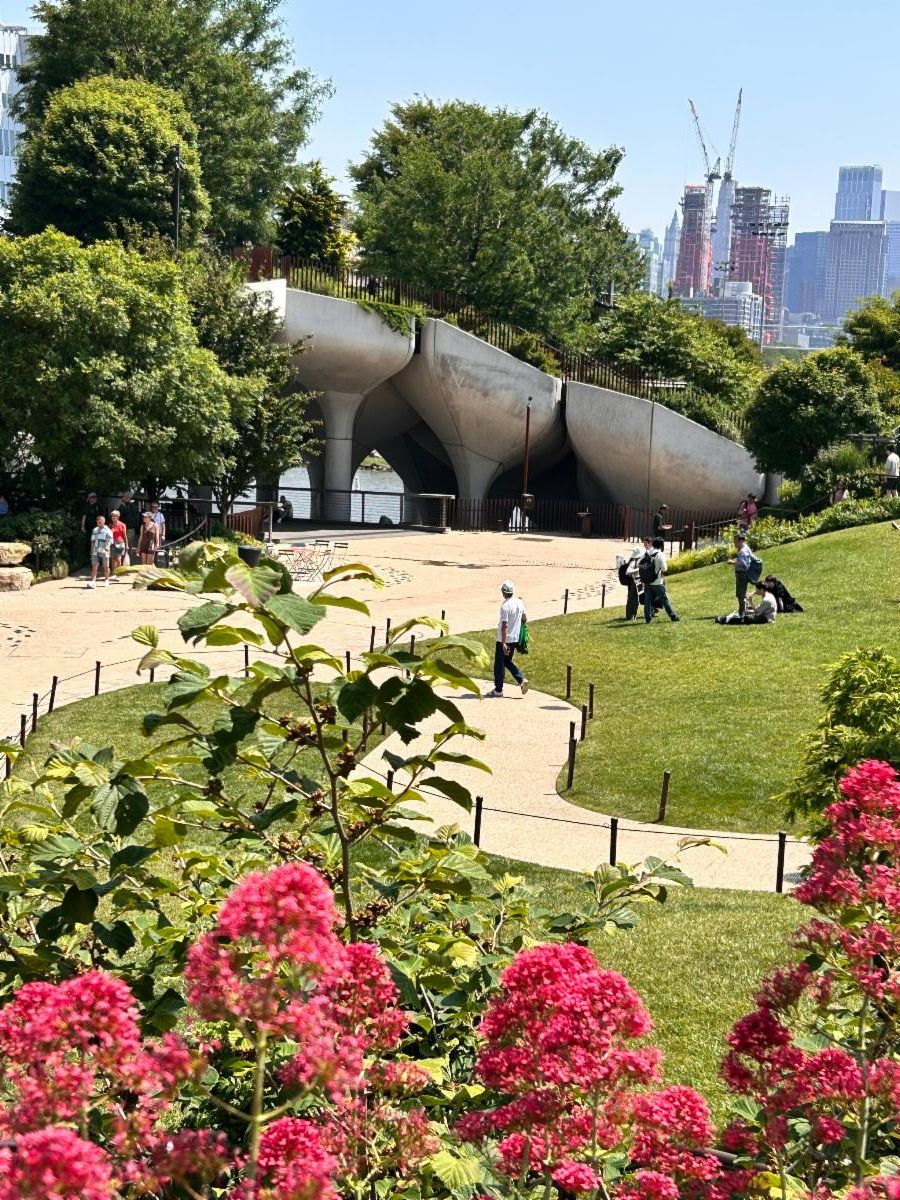
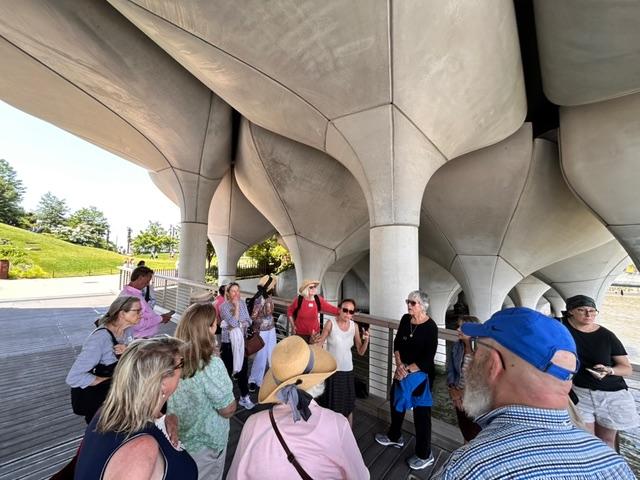
After lunch we went to Little Island at Pier 55, an artificial island and a public park within the Hudson River Park. We were met there by the Landscape Architect for the park, Signe Nielsen, and the head Horticulturist, Orrin Sheehan, for a very informative tour of the tiny island.
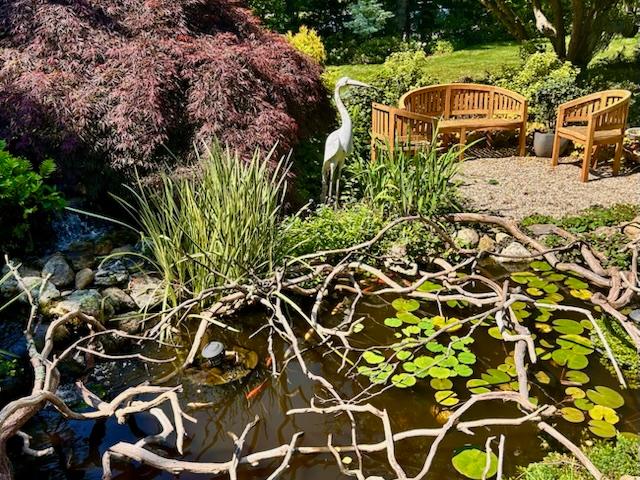
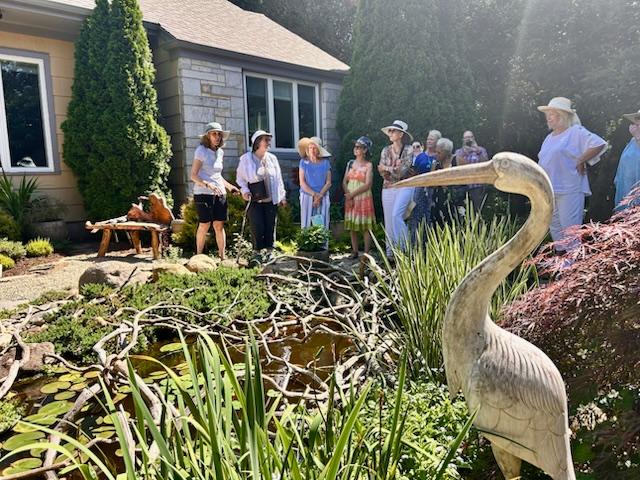
The most recent tour was to the gardens of two garden club members. The first was the gardens of Marilyn Elsworth — a very sunny garden. The second was the gardens of Pat Sabosik — a woodland shade garden. Both of these gardens had been selected for Garden Open Days by the Garden Conservancy.
How can you join these tours?
Take classes offered by the three Councils – Gardening, Environmental and Landscape Design. After completing 2 courses in any school, you will become a provisional member of that council and are eligible for all the activities of the Tri-Council. Check out the upcoming class offerings here. There are classes this Fall and Winter.
| |
We want your help!
The Federated Garden Clubs of Connecticut will celebrate an important milestone in 2029, and we are forming a committee to help mark the occasion statewide!
On April 30, 1929, The Federated Garden Clubs of Connecticut, Inc. was organized with 31 Connecticut garden clubs as charter members. The following day, May 1, 1929, it joined with twelve other states to form the National Council of State Garden Clubs, Inc., now known as National Garden Clubs, Inc.
A committee is forming to make plans statewide to celebrate and highlight the incredible work done by our member clubs over the century and we are seeking members interested in joining the team! All meetings will be held over Zoom, so no worries about long drives, just bring your cuppa and your ideas and meet from the comfort of your home.
According to a history prepared in 1930, the following clubs were Charter members: Bridgeport, Branford, Cheshire, Connecticut Valley, Danbury, Derby, Fairfield, Glenbrook, Greenwich, Madison, Middletown, Milford, New Canaan, New Milford, New Haven, Newington, New Haven Woman’s Club, New London, Norwalk, Pomperaug Valley, Riverside, Salisbury, Shippan Point, Spring Glen, Sound Beach (now Old Greenwich), Southington, Stamford, Stonington, Stratford, Westport and Wilton.
Interested? Contact 1st VP Kelle Ruden at kelle.ruden@ctgardenclubs.org.
| | | | |
FGCCT Scholarship Nominee Awarded NGC Scholarship
I am pleased to announce that Michael Vignone of Berlin, CT, the FGCCT Scholarship Committee’s 2025 nominee, will receive a $3,900 National Garden Clubs scholarship.
Michael is an outstanding young man. He has completed his junior year at Penn State University, where he has maintained a straight A average for all three years, and is studying plant science-horticulture.
Michael’s extracurricular activities include being an ag advocate, teaching assistant, research assistant, and president of the horticulture club. His research project involves analyzing the viability of biochar as a sustainable additive to potting media for daffodils and petunias.
Michael’s letters of recommendation from academia and business were outstanding. He has just returned from England after completing an internship involving study of the gardens of London.
We wish him well in his future in the horticulture industry.
— Carole Fromer, FGCCT Scholarship Chair
| | |
NEGC Regional & NGC National Youth Awards
Congratulations to Connecticut's NEGC Regional and NGC National Winners in NGC Youth Contests! Note that all of Connecticut's NEGC Regional First Place Winners went on to win an award at the NGC National level!
NGC NATIONAL YOUTH CONTESTS WINNERS - 2025
[Click on the title to view the winning submission.]
NGC YOUTH ESSAY AWARD - 2025
Is Recycling Plastics the Answer to Our Plastic Disposal Problem?
THIRD PLACE Grade 9: Innovative Solutions for Plastic Waste: From Pollution to Progress by Sarvesh Ram Sankarnarayan; The Garden Club of Brookfield
NGC YOUTH POETRY AWARDS - 2025
My Garden Has Vegetables to Spare That I Can Share - Helping Fight Hunger by Sharing Vegetables From Our Garden
SMOKEY BEAR & WOODSY OWL YOUTH POSTER AWARDS - 2025
Smokey Bear Theme: Only You Can Prevent Wildfires! OR Woodsy Owl Theme: Lend a Hand - Care for the Land
-
HONORABLE MENTION Grade 1: Smokey Bear Poster by Audrey Nasser; The Stonington Garden Club
-
HONORABLE MENTION Grade 2: Woodsy Owl Poster by Vivienne Karl; The Stonington Garden Club
NGC YOUTH SCULPTURE AWARDS - 2025
Encouraging Youth to Keep Our Planet Green
~
Interested in having the children you work with enter the NGC 2026 Youth Contests?
Below is a brief description of each Youth Contest, its 2026 theme and where to look for more information.
NGC YOUTH CONTESTS - 2026
NGC Youth Poetry Contest
2026 Theme: Plant America For The Next 100 Years
Youth in grades K-12 are eligible to enter and compete by grade level. Youth compose poems on the above theme. Poem does not have to rhyme and cannot be more than 24 lines long with a maximum of 42 letters/spaces per line. Poem title can incorporate theme but not repeat theme verbatim.
Click here for more information
NGC Smokey Bear & Woodsy Owl Poster Contest
2026 Theme: Smokey Bear – Only You Can Prevent Wildfires
2026 Theme: Woodsy Owl – Lend A Hand – Care For The Land
Youth in grades 1-5 are eligible to enter and compete by grade level. To enter this poster contest they must draw either Smokey Bear or Woodsy Owl in their correct colors plus include either Smokey Bear or Woodsy Owl’s message. Poster size is 11” x 17” using crayons, markers, poster paints, watercolors, and the like. Child can choose paper color and texture. Entry form must be taped/pasted to the back of the poster.
Click here for more information.
NGC Youth Sculpture Contest
2026 Theme: Encouraging Youth To Keep Our Planet Green
Youth in grades 4-8 are eligible to enter and compete by grade level. Sculpture must consist of recycled, reused, and/or reduced materials. Size limited to fit on 8 ½” x 11” sheet of paper. Height should be proportionate. Entry form must list materials used along with description. Entries must include two 4” x 6” photos of ‘sculpture’ pasted on the back of entry form.
Click here for more information.
The deadline to submit your garden club’s NGC Youth Contest first place winners to FGCCT for judging is January 15, 2026
Submit all entries to Kandra.Houston@ctgardenclubs.org
Submitted entries must include a completed, signed Minor Release Form for Publication.
| | |
Public Relations Award Deadine
January 1, 2026 is the DEADLINE for submissions for your garden club’s public relations awards. This includes publications designed to increase membership, newsletters, bulletins, digital media presentations, and the promotion of National Garden Week.
Please refer to the Awards Manual on The Federation’s website for more information. Please note that nominations must be submitted electronically. (Each nomination requires a FGCCT Award Application included with your submission.
You can send your submission to publicity@ctgardenclubs.org with a duplicate copy to awards@ctgardenclubs.org.
— Linda Kaplan, FGCCT Publicity Chair
| | | | |
|
Creating a National Garden Clubs, Inc. Website Member Account
In order for garden club members to access information in the Members area of the National Garden Clubs website, they will now need to create an account. Below are the steps to follow.
-
Go to the Homepage of the NGC website at https://gardenclub.org/
- Select “Member Login” in the site header.
- Enter your information. Avoid choosing a username with spaces. Email address is recommended for username. Select “Create new account”.
- You will receive a green highlighted message to check email at the address you entered to verify and complete your account.
- Use the link provided in the confirmation email to create your password and save your changes.
- Once you have selected “save”, click on the “Member Section” link in the main menu.
| | | | |
| |
|
Sassafras ~ aka 'Mitten Tree'
By Renee Marsh, FGCCT Horticulture Chair
| | |
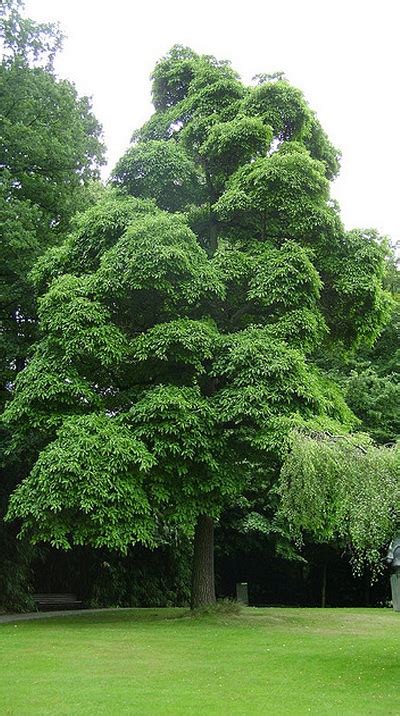
Often, when I am at a loss for a subject for my articles, I will take a walk and survey the abundance of our native woods. This month I came upon a clump of trees with a leaf I knew, and suspect many of you do as well: the characteristic mitten of sassafras. Aha! I realized I have never written about our native Sassafras albidum and in doing so, I learned much about its ornamental beauty, ecological significance, and cultural heritage.
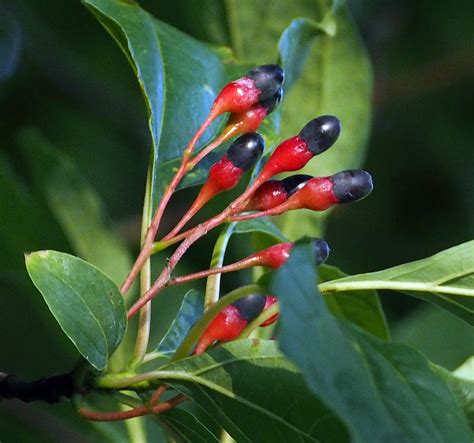
Sassafras is a genus in the laurel family (Lauraceae) and there are only three existing species: S. albidum in North America, S. tzumu and S. randaiense in East Asia. You may be familiar with its cousins, avocado (Persea americana) and bay laurel (Laurus nobilis). Our native sassafras is often overlooked because it is so endemic — growing in woodlands as well as fields and disturbed areas. It is truly a handsome tree, reaching 30 to 60 feet in height with a dense, pyramidal crown. In early to mid-spring, clusters of small, greenish-yellow flowers emerge. Sassafras is dioecious, meaning male and female flowers grow on separate trees. Pollinated female trees produce clusters of dark blue drupes in scarlet-red cups on matching stalks, which ripen in fall.
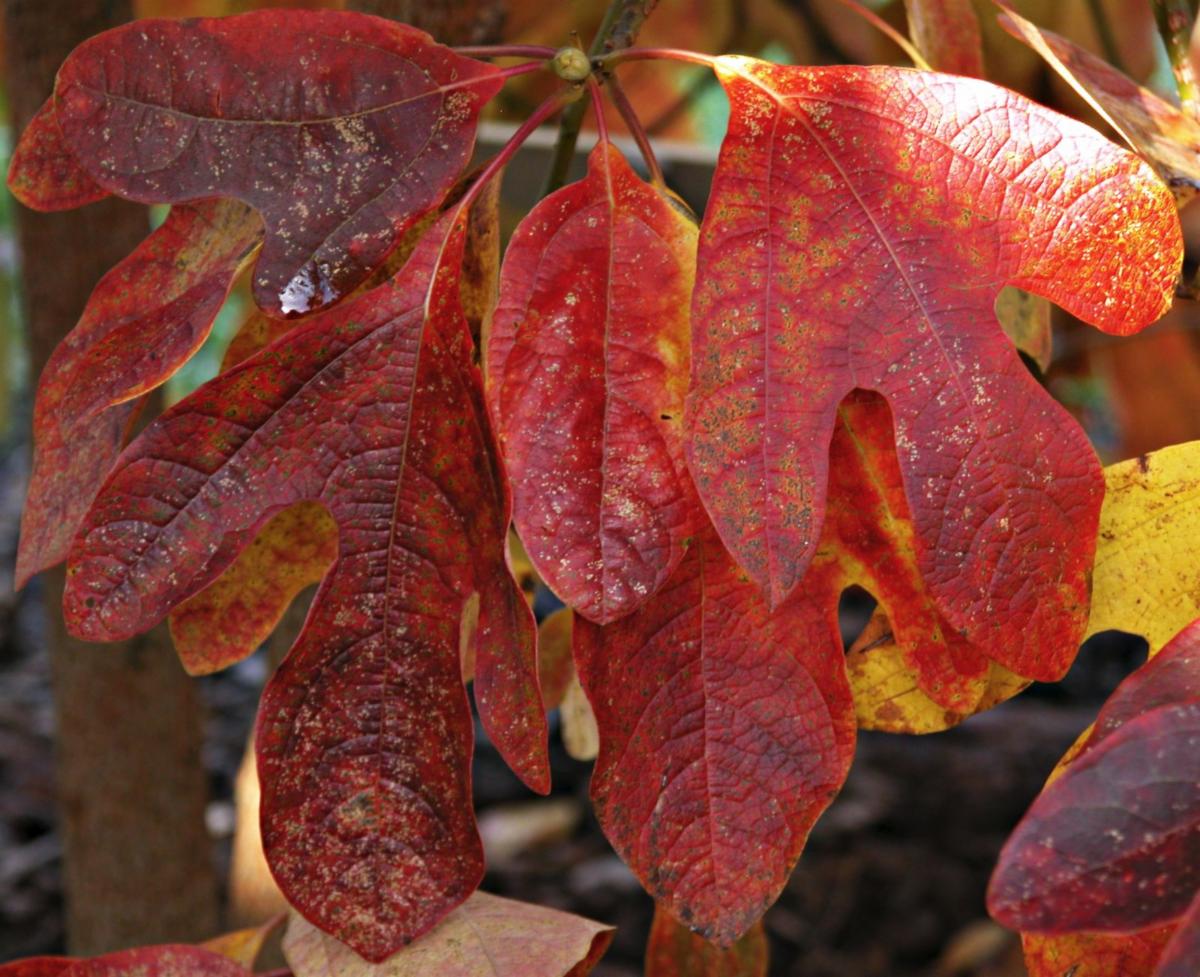
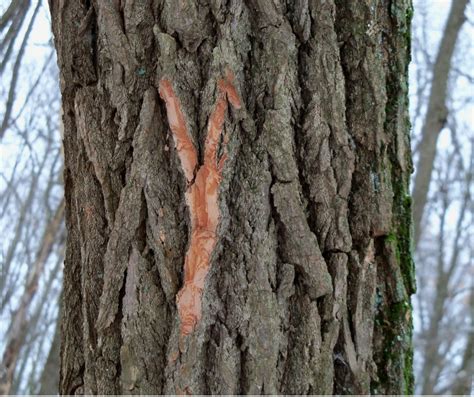
One of the most distinguishing features of sassafras is its leaves, which come in three distinct shapes: unlobed, mitten-shaped (bilobed), and trilobed. Often all will be present on a single tree and this gives rise to the common name of ‘Mitten Tree’. The upper surface of the leaves is a vibrant green, while the undersides are pale — hence the epithet albidum, meaning "whitish." In fall the leaves shine in brilliant yellow, orange, and red. Another signature trait is the deeply furrowed reddish-brown bark, which emits a spicy, aromatic scent when scraped, thus another common name, ‘Cinnamon Wood’.
| | |
Ecologically, sassafras is a vital component of our eastern forest ecosystems. It is a larval host plant for several butterfly and moth species, including the spicebush and tiger swallowtails as well as the promethea moth. The fall fruits are an important food source for birds and small mammals while the dense thickets provide cover and nesting habitat for various wildlife. As a pioneer species, it helps stabilize disturbed soils and assists in forest regeneration.
Historically, sassafras was valued by both Native Americans and early European settlers. The fragrant roots and bark were used medicinally, and sassafras oil, distilled from the root bark, was once a common ingredient in perfumes, soaps, and root beer. Unfortunately, the main compound in sassafras oil, safrole, was found to be a carcinogen and is now banned as a food additive. However, the safrole-free dried and ground leaves — known as filé powder — are still used in Creole cooking.
Now before you decide to add a sassafras to your landscape, there are a few things to consider. Sassafras is very adaptable but prefers well-drained, sandy, acidic soils. It does not like wet feet. It grows in full sun to partial shade and becomes drought tolerant once established. It has a deep taproot, making mature trees difficult to transplant so young trees or nursery-grown saplings are the best. If you are really ambitious, you can also take a root cutting. The other thing to know is that sassafras readily suckers from the root system and can form dense colonies or groves. If you prefer a thicket or shrub-like sassafras, allow the suckers to emerge and cut them back to the ground every three years. I like the look of thickets as informal hedges, but if you have a more formal landscape you will want to regularly prune the suckers to maintain a single-trunk form. The best time to remove suckers is in early spring or late winter before new growth begins.
Now before you decide to add a sassafras to your landscape, there are a few things to consider.
| | Sassafras is very adaptable but prefers well-drained, sandy, acidic soils. It does not like wet feet. It grows in full sun to partial shade and becomes drought tolerant once established. It has a deep taproot, making mature trees difficult to transplant so young trees or nursery-grown saplings are the best. If you are really ambitious, you can also take a root cutting. The other thing to know is that sassafras readily suckers from the root system and can form dense colonies or groves. If you prefer a thicket or shrub-like sassafras, allow the suckers to emerge and cut them back to the ground every three years. I like the look of thickets as informal hedges, but if you have a more formal landscape you will want to regularly prune the suckers to maintain a single-trunk form. The best time to remove suckers is in early spring or late winter before new growth begins. | | A sassafras grove in Spring. | | Still, given the right site and some management, sassafras can thrive for decades and support a rich community of native insects and animals. Add in seasonal beauty and unique foliage and you have an excellent tree or shrub for native plantings, woodland borders, and your backyard — as well as filé for your gumbo. | | |
Welcome News from the CT Invasive Plant Working Group
By Holly Kocet, FGCCT Environmental/Conservation Chair
| | |
On June 26th, Alyssa Siegel-Miles of the CT Invasive Plant Working Group (CIPWG) notified its members that legislation had passed to ban from sale several of the most readily available and environmentally destructive invasive plants. Signed into law by Governor Lamont, this important legislation corroborates what many of us invasive warriors already know to be true: invasive plants are out of control. But how did this important legislation come about?
Over the past year, the CIPWG subcommittee re-evaluated plants that have been listed on the CT Invasive Plant List for many years but were not yet prohibited from sale. CIPWG members could no longer ignore the devastating impacts these plants were having on our properties, parks and open spaces. At their recommendation, the Invasive Plants Council (IPC), the state-mandated body for updating invasive species legislation, submitted their annual report to the Environmental Committee (EC). This report prompted the EC to submit a bill, HB 5013, to the legislature. Passing through the house and senate and signed by the governor, Public Act 25-126, which prohibits the sale of listed species, is now law. The majority of these plants, however, are only banned after a designated phase-out period.
Star-of-Bethlehem (Ornithogalum umbellatum) is immediately prohibited from sale. This plant is an aggressive spreader that not only displaces garden plants but has escaped cultivation. Without any economic value, the EC did not believe a phase-out period was warranted.
A three-year phase out period will apply for several invasives which will not be prohibited from sale until October 1, 2028. They include: Japanese Barberry (Berberis thunbergii), Winged Euonymous A.K.A. Burning Bush (Euonymus alatus), Glossy Buckhorn (Frangula alnus), European Buckhorn, Common Buckhorn (Rhamnus cathartica), Reed Canary Grass (Phalaris arundinacea), European Privet (Ligustrum vulgare), Black Locust (Robinia pseudoacacia), and Miscanthus Silvergrass (Miscanthus sinensis).
A five-year phase out period will apply to Norway Maple (Acer planatoides). Unfortunately, this tree will not be prohibited from sale until October 1, 2030, despite the fact that it already dominates our landscapes, is susceptible to diseases and pests, and seriously disrupts ecosystems.
While I applaud the actions by all stakeholders for banning these plants, it is unfortunate that during the phase-out periods, more of these invasive plants will be added to our landscapes despite the IPC’s assertion that these plants are a detriment to the environment. Moreover, there is an abundance of plants that nurseries and garden centers could sell as alternatives to these invasives. I wish the bill could have included funds that would compensate growers for not marketing invasive plants instead of allowing a phase-out period.
I do hope homeowners and landscapers will make a judicious effort to avoid purchasing any of these plants during these phase out periods. Our landscapes deserve so much better. For now, invasive warriors, let’s take the victory.
| | | | |
SPOTLIGHT on our FGCCT Affiliates! | | | | |
|
The Bonsai Society of Greater Hartford
| | |
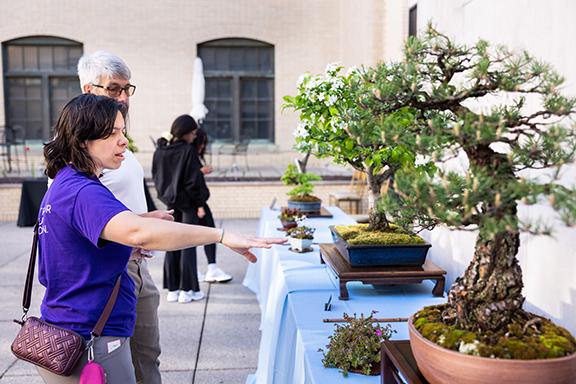
Perhaps you have noticed the incredible display of Bonsai at the Connecticut Flower and Garden Show? Maybe you have stopped and spoken to one of the knowledgeable members of the exhibitor? If so, you have encountered our newest Affiliate Member — The Bonsai Society of Greater Hartford!
For over 60 years, the Bonsai Society of Greater Hartford has been bringing people together to learn and appreciate the art of bonsai. What started with a few local hobbyists has become an integral part of the bonsai community here in New England. The mission of the Bonsai Society of Greater Hartford is to cultivate interest in the art of bonsai by offering educational programs, hands-on experiences, and public exhibits that inspire, connect, and serve our community. They are happy to visit clubs and offer programs.
Their own monthly meetings are open to the public and take place on the third Monday of the month at 7 PM at Westmoor Park, 119 Flagg Rd, West Hartford, CT 06117
| | | | |
| |
|
"Club Corner" is a place for clubs to showcase exceptional or notable club achievements and activities. Has your club done something unique (or uniquely successful?) that you'd like to share? Visit "Club Corner" on the FGCCT website for more news from clubs! (This area is NOT for upcoming events—you can post those on the FGCCT Club Calendar.)
To submit: send high-resolution photos, along with a writeup (200 words or less, please) and photo captions, to martha.sherman@ctgardenclubs.org to be considered for inclusion. Please ensure that you have appropriate permissions for all photos. We reserve the right to edit copy and select photos for inclusion.
| | Featured Clubs: The Garden Gate Club of Mansfield and The Deep River Garden Club | | |
Say hello to two new members of the Federation!
First is The Garden Gate Club of Mansfield, which joined us on March 18, 2024.
The Garden Gate Club was organized in 1950 to promote interest in horticulture and related fields in the town of Mansfield. The club’s sixty-eight members meet on the fourth Thursday of the month in winter, spring and fall at the Mansfield Public Library. In the summer, the club arranges field trips to various garden-related venues. Club membership is open to everyone with or without gardening experience. New gardeners are encouraged to join and attend the informative programs the club presents. One benefit of membership in this club is the discounts provided by many of their local garden shops.
Like most clubs, Garden Gate has two special civic projects in their portfolio. The club created a Playground Garden adjacent to the Mansfield Community Center and maintains it with the support of the Town of Mansfield Public Works Department, as well as the families who use the playground. Its most recent project is refurbishing the gardens at Atwood House, a Joshua’s Trust property. Members also care for the gardens at the Mansfield Senior Center.
The club funds scholarships for seniors at E.O. Smith HS to support careers in Plant Science, Natural Resources and/or Environmental Science and they hold a plant sale each spring offering a bounty of plants including heirloom and hybrid tomatoes, perennials, shrubs, trees, annuals, herbs, and vegetables.
| | |
Our second new club is the Deep River Garden Club, joining us on January 15, 2025.
Founded in 1930, the Deep River Garden Club established its mission to promote a greater interest in civic beautification for the Town of Deep River by way of charitable projects which emphasize conservation, planting, upkeep, and overall betterment for our community. The club meets on the third Tuesday of each month.
In its civic portfolio, the club’s thirty-three members care for the municipal planters around town which are decorated with seasonal flowers and/or greens. The club maintains bulb and perennial plantings at a variety of town-owned properties in a combined effort with the Parks and Recreation Commission and the Merchants Association. These include the median at the Deep River Fire Department, the Deep River Public Library, Deep River Veterans Memorial Park, Devitt Field, and the Winthrop Planter. The club’s most recent project is a Free Seed Library that aims to foster community resilience and food insecurity.
In 2014 the Deep River Garden Club established The Helen G. Hannon Memorial Scholarship. This scholarship is awarded annually to a Valley Regional High School senior or college student who plans to pursue a degree in an environmentally related field.
Two clubs. Great gardening. Welcome to our ranks!
| | |
Wethersfield Garden Club Dedicates Blue Star By-Way Marker
On June 17th, after being postponed from Flag Day on June 14th, the Wethersfield Garden Club dedicated a Blue Star By-Way Marker in Rocky Hill. The Wethersfield Garden Club stepped in to sponsor this marker since Rocky Hill doesn’t have a garden club that is a member of FGCCT. The Blue Star Mothers were instrumental in initiating installation of this marker, which is situated at the Clock Tower Green on Silas Deane Highway in a green space on the corner of a busy intersection.
Even though the weather didn’t cooperate, the dedication was well attended. The mayor of Rocky Hill, Lisa Marotta, officiated; FGCCT President Nan Merolla presented the Wethersfield Garden Club with a Presidential Citation, FGCCT Blue Star Chairman Krista Fiorini gave a history of the Blue Star Marker program, and Joann Sullivan, president of the Wethersfield Garden Club, recited the dedication.
[Pictured above, from left to right: Club President Joann Sullivan, FGCCT Blue Star Chair Krista Fiorini and Wethersfield Mayor Lisa Marotta]
| | |
In North Haven, a "Bee Resilient" Project Award Helps Fund a Memorial Garden
Recently, North Haven Garden Club member Cindy Golia designed and planted, with help from her husband Anthony, The Jan Tracy Memorial Native Pollinator Garden on the bottom of the island at Rock Road and Fitch Street, across from Montowese School. All the plants were purchased from Natureworks and are all native pollinator plants. The funds for this project came from a "Bee Resilient" grant from The Federated Garden Clubs of Connecticut, Inc., as part of FGCCT President Nan Merolla's 2025-2027 President's Project, as well as a donation from the North Haven Volunteer Firefighters shortly after Jan's passing. We will be placing an 8 x 10 Memorial Plaque in the garden at a later Dedication Ceremony.
The garden will have color and a seasonal balance, with blooms from spring to fall in a mix of purples, blues, pinks, oranges, and deep greens. It is pollinator friendly and many of the plants will attract bees, butterflies, and hummingbirds. It has structural variation with the back row providing vertical elements while the middle and front rows create depth and contrast. Enough room was left for each plant to spread based on its mature size.
For a complete description of this "Bee Resilient" President's Project, including dimensions and plant lists, please visit the President's Project page.
| | |
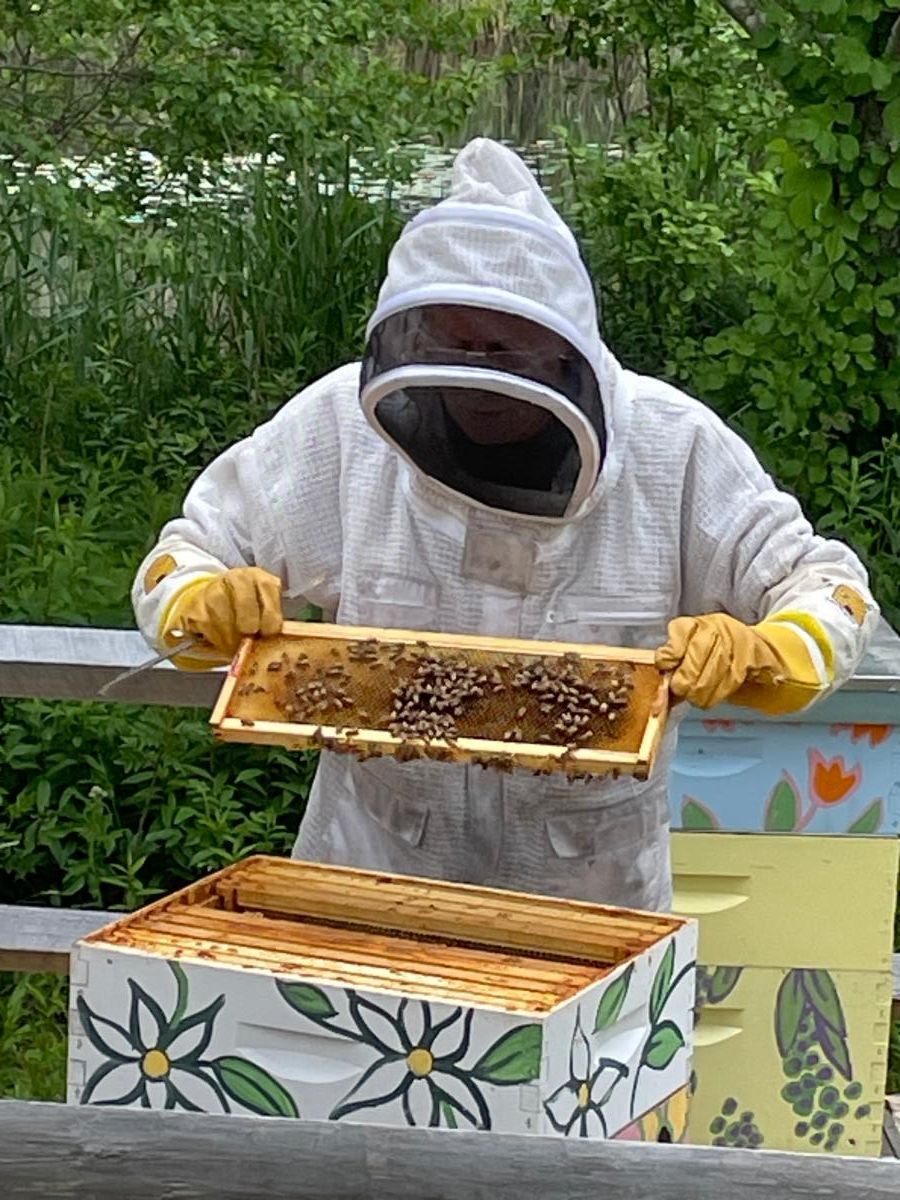
Bee(ing) Resilient in Madison
The Garden Club of Madison (GCM) wants to be among the solution-finders helping to save bees and raise awareness of their importance in our lives. In a word, we want other clubs to get a “bee in their bonnet."
Here’s the buzz on how we brought bees to Bauer Park:
- A chance meeting with two beekeepers at Bauer Park’s Harvest Festival in October 2021 led to a presentation to the Bauer Advisory Committee by enthusiastic beekeeper Lewis Strauss;
- Bauer had previously entertained the idea of beehives and GCM members Elinor Griffith and Pippa Mannino liaised during multiple meetings with Bauer and the town to be sure all safety and other requirements were met;
- The criteria for finding a location for the hives was very important: near water, near nature, away from high traffic areas. As it happened, the hives are next to two other areas the Club maintains: the apple orchard and the native educational garden. It was meant to “bee”!
- The GCM’s donation of $1,000 went directly to Madison’s Beach and Recreation Department, which oversees Bauer Park and has liability insurance. Thus, legal protection — all happily approved by GCM’s board. In turn, the beekeepers then billed the town for expenses.
-
Next, beekeepers
, Lewis and fellow beekeeper/GCM member Deidre Prisco took delivery of two queens and 25,000 honeybees. Deidre’s brightly painted hives “Sunflower” and “Hyacinth” became their home.
- Ongoing expenses are estimated at $400 - 500 annually for sugar supplements, over-wintering supplies, mite treatments, and potential new or replacement bee packages (e.g., if a hive doesn’t survive the winter), and billing is done directly between the beekeepers and GCM. Also, from the sale of jars of honey at the Bauer Harvest Festival, a small amount of money is raised to help defray costs… thanks to those busy, honey-producing bees themselves!
Since the beehives were established in March 2022, GCM has organized many bee-themed events to spotlight bees, their benefits and the perils faced, thus educating youngsters and the community at large. GCM members attended the open-hive demos on World Bee Day and the Bauer Harvest Festival and visited the Bees at Bauer booth — activities promoted through PR at GCM meetings and on our social media pages, and in Madison’s beach and parks bulletin.
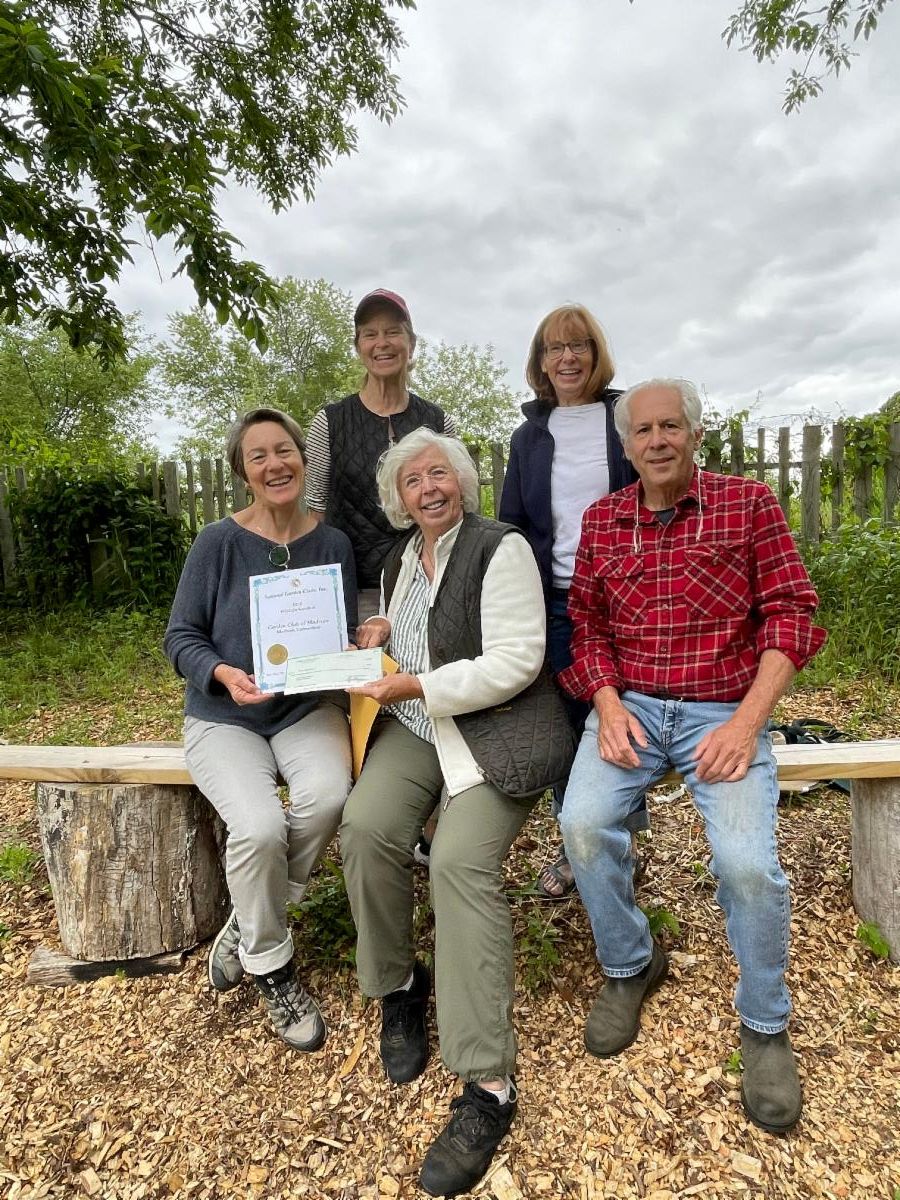
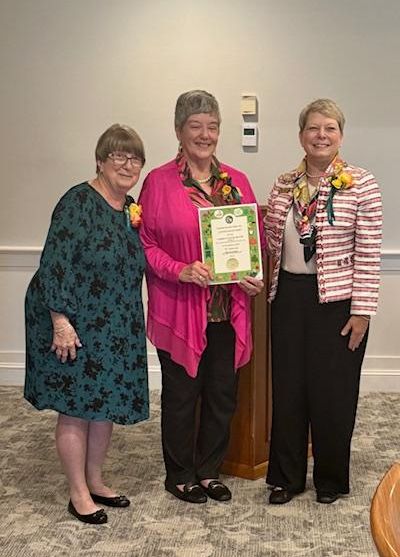
| | Above: Receiving an NGC Award for the project
(Back row, L-R) Elinor Griffith, Deidre Prisco. (Front row, L-R) Pippa Mannino, Vonice Carr, Lewis Strauss | |
Above: Lewis Strauss showing children a honeycomb
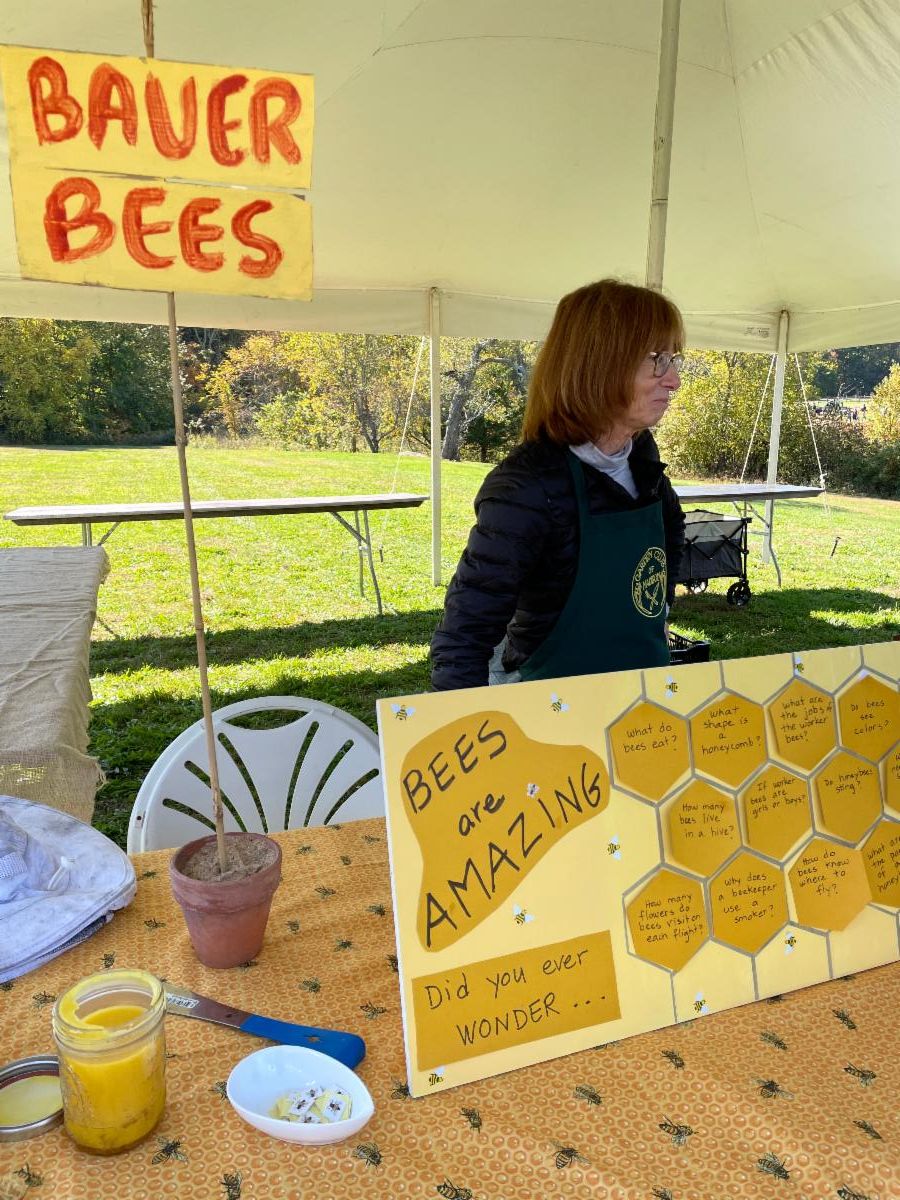
Below: Deidre Prisco at the Bee information booth at Bauer Park Harvest Festival
| | |
The beehives have now become a main attraction at Bauer Park with our beekeepers meeting regularly with children from Madison schools and Bauer Park’s after-school program. Children are fascinated by the bees, the beekeepers’ garb, seeing the honeycombs and have fantastic questions such as “What do bees eat?” (A: Nectar, pollen, and honey), “How many flowers do bees visit on each flight?” (A: 50 to 100 on each flight!) “How many bees live in a hive?” (A: An average hive contains about 50,000 bees!) “Do bees see colors?” (A: Yes, all colors except red!) This Q+A became part of the interactive bee educational display at the Bauer Harvest Festival
Yes, your club can Bee Resilient too! We’re happy to share information with how we “bee-came” resilient.
| | The Garden Club of Orange Wraps Up a Year of Celebration! | | |
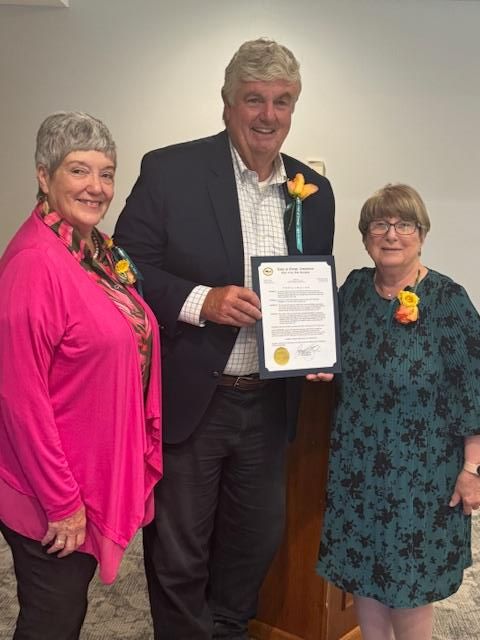
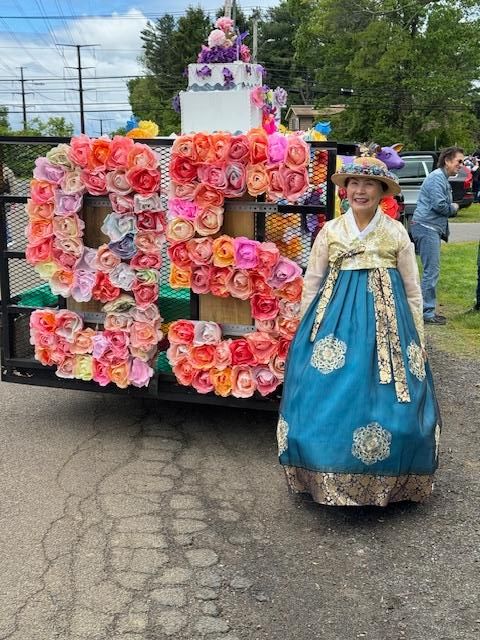
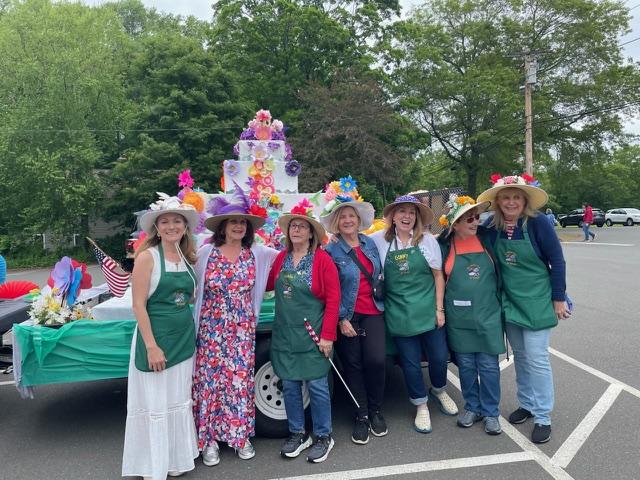
On June 10th, the Garden Club of Orange came together at the Racebrook Country Club for a delightful annual luncheon, wrapping up a wonderful series of celebrations and community service. Members, distinguished guests, and local dignitaries gathered to celebrate the club’s rich history and its ongoing dedication to the town of Orange. First Selectman James Zeoli joyfully proclaimed June 10th, 2025, as Garden Club of Orange Day! Kelle Ruden, First Vice President of the Federated Garden Club, and Patrick O’Sullivan, former town clerk and grandson of the club's founder, were there to honor this special milestone.
Among the exciting highlights from the club’s year-long celebration was the creation of a beautiful memorial garden at the historic Stone Otis House, dedicated to the cherished memories of past members whose contributions have shaped the club’s legacy. The club also proudly awarded a $1,000 scholarship for a graduating senior from Amity Senior High in Orange, continuing its tradition of supporting local youth and education.
The luncheon was also a heartfelt moment of transition, as outgoing president Sandra Horling received warm thanks for her dedicated leadership. Members enthusiastically welcomed incoming president Betty Hallock, who is excited to continue the club’s mission of fostering community and nurturing a love for gardening.
| | | |
Stepping Out in Style in Orange …
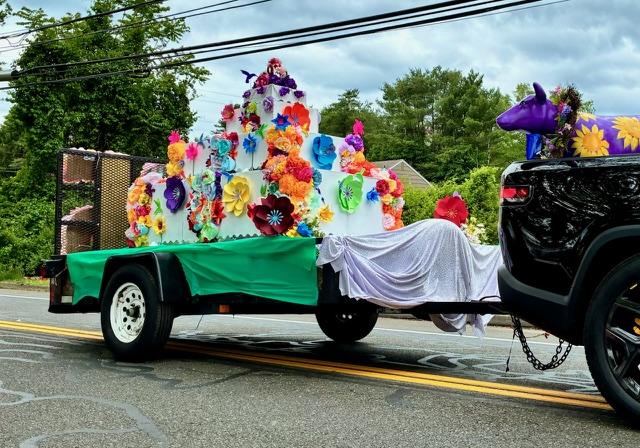
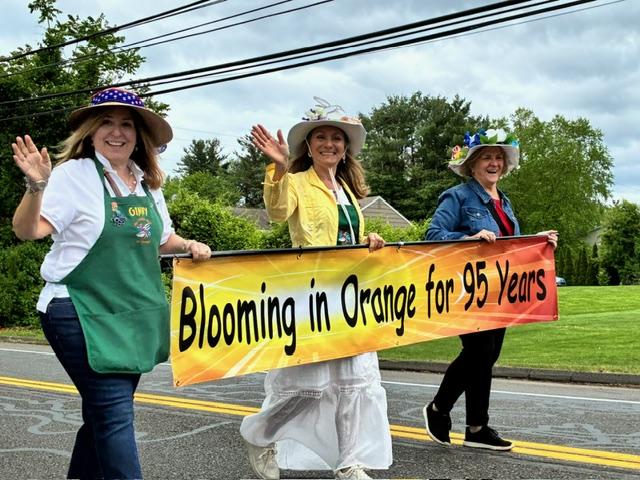
The Garden Club of Orange had a fantastic time marching in the town’s Memorial Day Parade! Can you believe they’ve been around since 1930? They handmade different type of flowers out of paper to decorate their float in fabulous colors.
The members get together every month to share their love for design and gardening. They also take care of the lovely garden at the Stone Otis House, plant cheerful flowers on the town green, and even provide beautiful wreaths for the town buildings during the holidays. Plus, they enjoy working with youth and senior groups, spreading joy and knowledge all around our community.
| | Learn more about the Garden Club of Orange here. | | | | |
| |
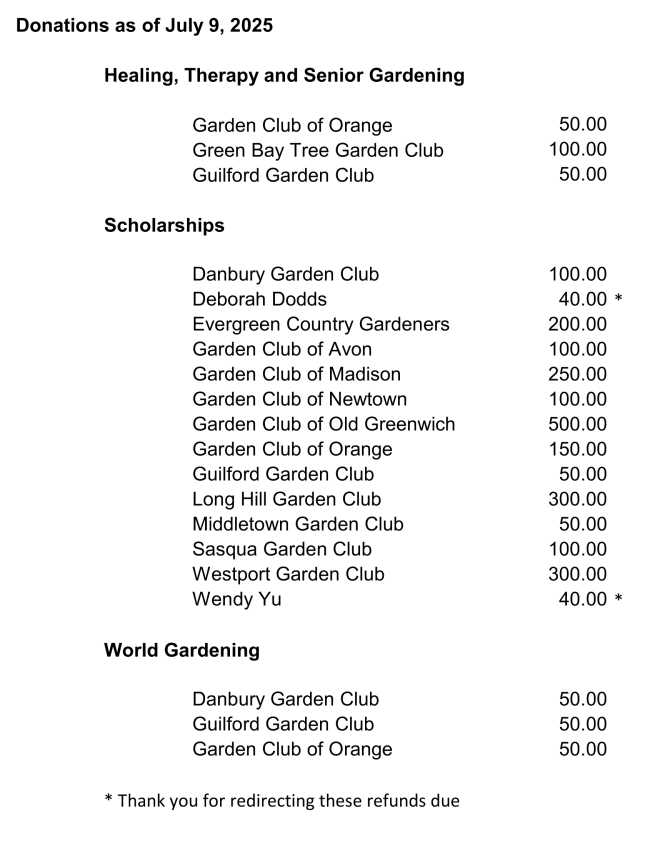
Donations to FGCCT's Scholarship Fund; Healing, Therapy and Senior Gardening Fund; and World Gardening Fund | |
We thank the following Garden Clubs for their recent donations to the FGCCT Scholarship Fund.* For almost 40 years, the Federation has awarded scholarships to college and university students who major in Agronomy, Botany, City Planning, Conservation, Environmental Studies, Floriculture, Forestry, Horticulture, Land Management, Landscape Design, Plant Pathology, or allied subjects. We welcome donations of any size. Our appeal is ongoing to give all of our clubs the opportunity to make a contribution in the amount of their choosing.
| |
Please send all Scholarship Fund donation checks to the appropriate chair (see below). Make checks out to "FGCCT" with the appropriate Fund listed on the memo line.
*Please note that due to the deadline for articles and information for the CFNews, some donations may not be received and deposited in time to be included in the bi-monthly donation acknowledgement, but will be included in the next issue of our newsletter.
PLEASE MAIL CHECKS TO:
| |
For World Gardening & Healing, Therapy and Senior Gardening:
The Federated Garden Clubs of CT, Inc.
Attention: Rosemary Bonaguide
PO Box 902
Wallingford, CT 06492
| |
For FGCCT Scholarship Fund:
The Federated Garden Clubs of CT, Inc.
Attention: Carole Fromer
PO Box 902
Wallingford, CT 06492
| | |
Follow us on Facebook and Instagram!
FGCCT is on Facebook and Instagram and we love to post your news and photos! Please send upcoming events, club activities, civic projects, milestones, and hort tips. Include photos and a brief writeup of the news your club would like to share. The best format is text in an email with jpg photos attached. Take active photos showing members at work or showcasing beautiful gardens, flowers, and plants (please name the flower if it is a hort only photo). Let’s follow each other! Send submissions to social@ctgardenclubs.org
| |
Just a reminder …
Please send all correspondence to the new FGCCT office:
The Federated Garden Clubs of CT, Inc.
P.O. Box 902
Wallingford, CT 06492
Did you recently elect new officers? Email their names and contact information to us at office@ctgardenclubs.org so they will receive Federation correspondence. If you need assistance, please contact FGCCT Office Administrator Joan Lenart at office@ctgardenclubs.org or by phone at 203-488-5528 on Mondays and Wednesdays, from 10 am to 2 pm.
| | | Deadline to submit articles/photos, ads and calendar events for the October / November 2025 issue of the CFNews is September 10, 2025. Please submit to: | | |
Reminder: NGC's The National Gardener is ONLINE and free!
The official publication of the National Garden Clubs, The National Gardener, appears quarterly, and features articles of interest to environmentalists, gardeners, landscapers, floral designers, educators and photographers. Subscribe here.
| | |
| |
State, Regional &
National Events
| | | | | |