| |
| |
| |
| |
|
Greetings, Summer Gardeners!
I hope you are all enjoying a wonderful summer with family and friends, and that your gardens are flourishing—filled with vibrant blooms and alive with butterflies, hummingbirds, and bees. I have thoroughly enjoyed visiting so many of our clubs' outstanding events, meetings, installations, and celebrations. It has been a pleasure to see the creativity, dedication, and camaraderie that make our gardening community so special. I look forward to attending many more gatherings and sharing in your accomplishments.
My President’s Theme, BEE RESILIENT ~ Garden for Nature!, encourages clubs to enhance the beauty of their communities while preserving nature in a changing climate by creating small native gardens in public spaces. To support these efforts, The Federation provides funding of up to $500 per project. Many clubs across the state are busy planning and installing their BEE RESILIENT gardens—and having a great time doing it! These projects not only beautify our communities but also provide valuable habitats for pollinators and other wildlife. Learn more about how your club can get started on a project here.
We enjoyed an informative and engaging Federation Fridays Zoom workshop on June 19. Many thanks to Jean Stetz-Puchalski, our Federation Parliamentarian, for presenting an introduction to Robert’s Rules of Order and Parliamentary Procedure. Her presentation provided valuable guidance to help clubs conduct meetings more effectively and efficiently. For those who were unable to attend—or for anyone who would like to review the material—a PDF of the PowerPoint presentation is available here.
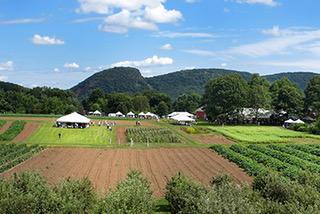
Join us at Plant Science Day on Wednesday, August 5, from 10 am to 4 pm at beautiful Lockwood Farm in Hamden. Hosted by the Connecticut Agricultural Experiment Station (CAES), the event features exhibits, demonstrations, plant and insect identification, walking tours, and family-friendly activities. Be sure to stop by the FGCCT exhibit table and say hello! More information is available here.
I am pleased to announce Club Officers’ Day, a Zoom workshop to be held on Wednesday, September 9, from 9:30 to 11 am. Federation Board Members will present valuable information on a variety of topics important to the successful operation of our clubs. This workshop is an excellent opportunity for both new and experienced club officers to gain helpful insights, learn more here.
Vermont will be hosting the New England Garden Clubs, Inc. 10th Annual Meeting on October 13 and 14 at the Killington Grand Hotel Resort, Killington, VT. They have arranged a very interesting agenda with notable speakers, including NGC President, Donna Donnelly. All garden club members from CT, MA, RI, ME, NH and VT are invited. Information and registration is available here.
Save the date for the FGCCT 97th Annual Awards Meeting and Luncheon on October 21 at the Aqua Turf Club in Plantsville, CT. Over 300 achievement awards from The Federation, New England Garden Clubs, Inc., and National Garden Clubs, Inc. will be presented to our clubs and to individual members. Watch for online registration soon.
We have two NGC Schools coming up: Environmental School, Course 1 – September 17-18, and Gardening School, Course 3 – September 21-22. Find more information and register here.
Finally, thank you for everything you do to make a difference in your communities. If you have any questions or if our FGCCT Board Members can be helpful to your Club, please let me know.
| | | | Let’s go out and BEE RESILIENT and Garden for Nature, and maybe we’ll help save the planet, one garden at a time! | |
Bee Resilient: Garden for Nature
By Wayne Gura and Anne Djupedal Gura, co-chairs, FGCCT President’s Project
Happy 250th to everyone! We hope you’re enjoying a wonderful summer.
We’ve already heard from several clubs that your gardens are planted and growing, and that’s fantastic! We can’t wait to see your photos and hear the stories behind your projects.
If you’ve completed your garden but haven’t yet sent us photos and a brief story, we’d love to receive them so we can celebrate your accomplishments and share them with other clubs. And please don’t forget to send along your receipts as well so we can keep our grant records up to date.
If you haven’t applied yet, there’s still time to request a BEE RESILIENT grant. Remember, fall is one of the best times to plant native species, making it an ideal season to create a new pollinator garden or expand an existing one! Applicants please note…
- Once you’ve applied online, you’ll get an email back within a day or so that we’ve gotten your application – either an automated one, or from either Wayne or Anne. If you don’t see it, check your spam folders.
- PLEASE include with your application a list of your selected plant species – note that we need to see the Latin binomial names (your supplier should be able to provide those names for you), together with their itemized cost estimate. Plant choice is key, we cannot proceed without it.
- The plant list should be comprised of no less than 70% locally/regionally-native species.
- Horticulturally-bred inter-species hybrids – which are typically designated by an “X” following the genus name in the Latin binomial – are by definition not considered to be native plants.
Enjoy the rest of your summer – we look forward to hearing from you!
Mardi Morrow of Black Rock Garden Club recently shared an inspiring progress report on the club’s work to replant the foundation gardens at three senior centers in the city of Bridgeport with all native plants while providing info on creating pollinator habitats.
As every gardener can attest, follow-up tasks are to be expected after a garden install, and as per Mardi, the club will still be touching up their three gardens for a while. That said, everything that is in place is welcomed by people and pollinators alike!
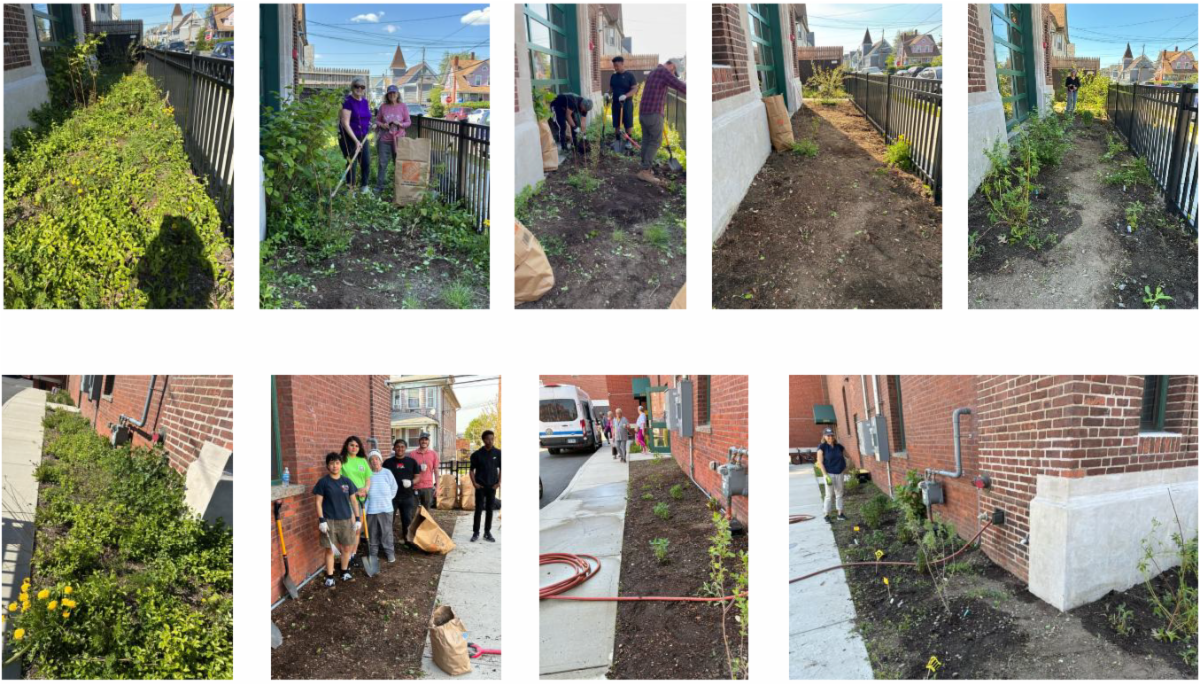
Seen below are photos of the work at the East Side Senior Center, the largest of the three garden projects.
It consists of two large beds – one 35 ft by 8 ft and the other 31 ft by 7 ft – that run along two sides of the renovated fire station that houses the center. The top row shows the bed that fronts the street and the bottom row shows the driveway entrance bed. Shown left to right in each row are: the beds before the project; the work of weeding – including knotweed – and prepping the beds; the planted beds getting a good watering in. Among the natives used were Butterfly Weed (Asclepias tuberosa); Fragrant Sumac (Rhus aromatica); Prairie Goldenrod (Solidago nemoralis); Purple Coneflower (Echinacea purpurea); Swamp Milkweed (Asclepias incarnata); and Wild Bergamot (Monarda fistulosa.) Congratulations to Mardi and Black Rock Garden Club!
| | | | |
Upcoming Events — Mark Your Calendars! | | | | |
|
CAES 116th
PLANT SCIENCE DAY
Wednesday, August 5, 2026
10:00 am - 4:00 pm
Lockwood Farm
890 Evergreen Avenue
Hamden, CT 06518
Come and enjoy a day of fun and education
sponsored by
The Connecticut Agricultural Experiment Station (CAES).
The event is free and open to the public.
Visit the CAES Current Events Webpage for complete details.
Stop by the FGCCT information table under the tent and say Hi!
| | |
Save the Date and Register for
CLUB OFFICERS’ DAY
A Zoom Workshop for all Connecticut Garden Club Officers
Presented by FGCCT Board Members
Thursday, September 9, 2026
9:30 – 11:00 am
on Zoom
TOPICS TO BE INCLUDED:
Club Finances and Insurance
Social Media and Promotion
Applying for Awards
NGC Schools and Councils
Youth & Senior Gardening Programs
Blue & Gold Star Memorials
2027 CT Flower and Garden Show
Tours in 2026 - 2028
Website and CFNews
“BEE RESILIENT” President’s Projects
Resources from The Federation
NGC’s Theme, Grants & Projects: “PLANT AMERICA”
There is no charge for this Zoom Workshop, but you must register HERE.
Submit your specific questions on the Registration Form.
| | | |
Save the Date!
97th Annual Awards Luncheon
Wednesday, October 21
Aqua Turf Club, Plantsville, CT
Mark your calendars for a day of celebration, shopping, inspiration, and fun!
Our annual FGCCT Awards Luncheon is the perfect opportunity to connect with fellow gardeners and be inspired as we honor outstanding club and individual accomplishments.
Doors open at 9 am for coffee, early holiday shopping with our vendors and a chance to enter our popular raffle. The program begins at 10 am followed by a delicious three-course luncheon.
$49 per person (subsidized by FGCCT)
The online reservation portal will be available beginning September 1.
Watch your email and the FGCCT website for the live link.
This event typically sells out, so please reserve early!
| | |
Mark your calendar now for the
2027 Connecticut Flower & Garden Show
February 18-21, 2027
Connecticut Convention Center, Hartford CT
"ART BLOOMS IN CONNECTICUT — Where Creativity, Nature and Artistry Flourish"
More details coming soon! Vonice Carr, 2027 CT Flower Show Chair.
| |
Gardening School & Gardening Council News
Applications for the 2026 Lovely Garden Award are coming in. The Evaluation Team is looking forward to viewing more gardens, so let your Club members know that their garden or those of a fellow member can be nominated only until August 15th, to allow time to visit them, select a winner, and send the Awards Chair the information by the deadline.
Lovely Garden Award Application
The FGCCT NGC Gardening School Course 3, Series 9 has been posted on both the NGC and the FGCCT website and is open for registration. Our GS instructors for this course are: Adam Wheeler, Renee Marsh, Prof. Barb Schaedler, Meg Barnes, Dr. Yonghao Li, and Felicia Millett. The knowledge pool is formidable and we will all learn valuable information that we can use.
Register here
| | | | |
| |
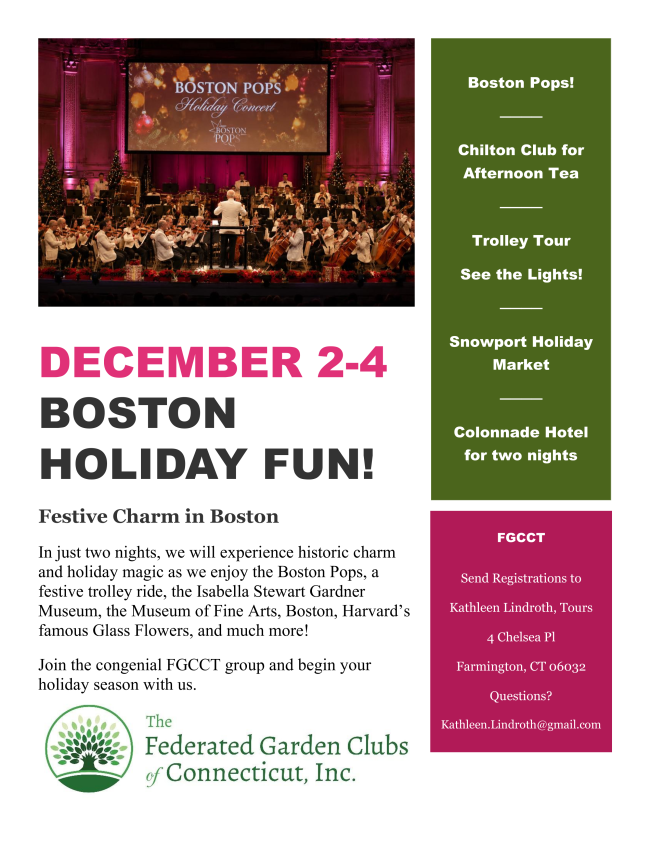
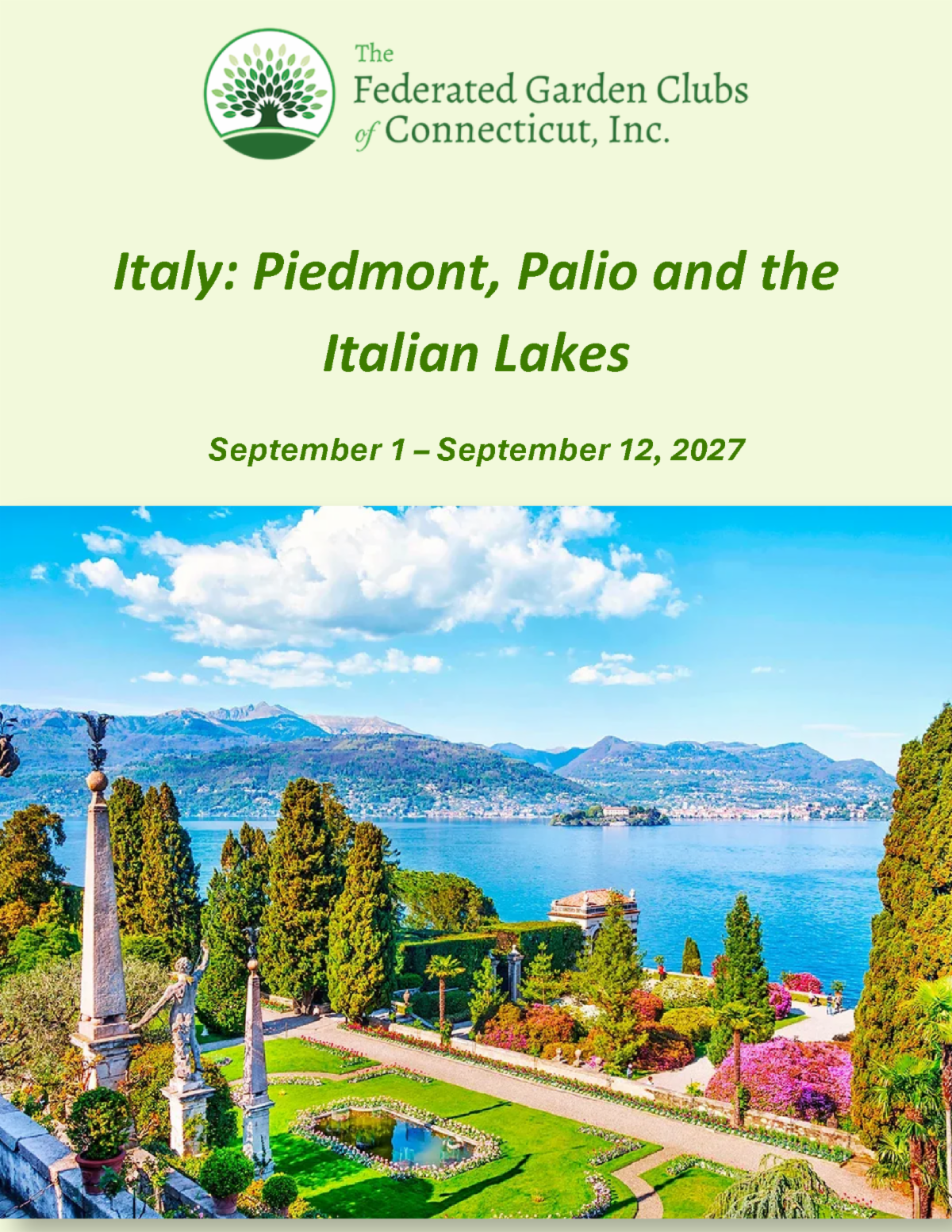
Below are two featured tours that we are offering to our members and their guests—Boston Holiday Getaway from December 2-4, 2026 and Italy: Turin, Piedmont and the Italian Lakes from September 2-13, 2027. Be sure to check out the Tours page (under Events on the FGCCT website) for full information on other tours including Portugal and Italy and see our list of tours that are in the works. | | |
Get on the Interest List!
Already thinking of 2027?
- April 30 – May 12, 2027 – Portugal
- May 11 – 21, 2027 – Chelsea Flower Show and the Cotswolds
- Summer 2027 – Scandinavia
- September 2 – 13, 2027 – Italy – the Piedmont and Lake Country
- November 2027 – Egypt and Jordan
- Rose Bowl for New Years
2028 Tours in Planning
- January – Thailand and Laos
- April – Tulip river cruise
- California National Parks including Yosemite
- South Africa
-
And much more!
Let us know what you like — express your interest by emailing me!
— Kathy Lindroth, FGCCT Tours Coordinator 860.836.3407 or kathleen.lindroth@gmail.com
| | 2026 NGC & FGCCT Scholarship Winners | |
Connecticut’s winner of a 2026 The National Garden Clubs Scholarship is Avraham Penso of New Haven. He is a first-year Master of Forestry student at the Yale University School of the Environment.
Avraham earned an undergraduate degree in Neuroscience from Brandeis University and attained a 4.0 grade point average. He then worked as a data analyst for two years before turning his focus on nature. He volunteered with the West River Watershed Coalition and took a seasonal field-based position with the Connecticut Agricultural Experiment Station, where he deepened his connection with Connecticut’s natural areas and confirmed that forestry was the right path for him. For his graduate capstone project he hopes to examine how geospatial analysis can improve our understanding of forest pathogens and help forest managers respond effectively.
Avraham’s goal is to become a forest manager, with a focus on conserving and rebuilding wildlife habitat, enhancing ecosystem resilience, and helping people enjoy and connect with forests.
The following three scholars have been awarded a 2026 FGCCT Scholarship:
| | |
Abigail Bernstein of Milford is a first-year graduate student in the Master of Environmental Management program at Yale University.
A strong student, Abby earned an undergraduate degree in Environmental Science from The University of Connecticut. After joining the Eightmile River Wild & Scenic Watershed and recognizing the important role that local land use boards play in conservation, she sought appointment to her local conservation commission. Both roles have given her broader insight into local natural resource management and highlighted recuring challenges, including inadequate long-term environmental planning, political pressures, funding limitations, and community misunderstandings that hinder meaningful progress.
In the future Abby plans to work at the intersection of municipal planning, watershed protection, and environmental justice, helping communities develop land use and transportation policies that improve climate resilience while expanding access to environmental resources.
| | |
Jamie Paige of Woodbury is a rising senior at the University of New Hampshire where she is an outstanding student pursuing a degree in sustainable agriculture and food systems.
For a very long time Jamie has had a strong interest in floral design, greenhouse management and crop sowing methods. Through her academic coursework she has learned of the negative impacts that traditional agricultural practices have on our environment and has focused on building a mindset that uses ecological based decision making. Rather than thinking about how a change would impact an agricultural field alone, Jamie is trained to account for how the change may impact external factors such as a stream nearby, workers in the field, or a beneficial species.
Jamie wants to be an advocate for the needs of farmers and those of the environment as well. This summer she has been a UNH Extension Integrated Pest Management Intern. She plans to be an Extension horticulture specialist and then to open and operate her own cut flower business.
| | |
Ella May of New Haven is a rising senior in Plant Science and Landscape Architecture in the UConn College of Agriculture, Health and Natural Resources. An outstanding student, she has focused her studies on Plant Science with a concentration in Sustainable Agriculture and a minor in Sustainable Community Food Systems.
Ella wants to contribute to creating a more environmentally friendly and community-based approach to how plants are produced and people receive them. She has interned at some small-scale farms and a small farm store and wants to travel the USA through WWOOFing to explore plant production in all different climates and conditions. She will develop a business plan that would allow her to provide another example of a successful business that prioritizes its commitment to using environmentally friendly practices and puts focus on the people it serves.
She would like to create her own sustainable plant production business and possibly teach plant science at a vocational agricultural school.
— Carole Fromer, FGCCT Scholarship Chair
| | |
NEGC Regional & NGC National Youth Awards
Congratulations to Connecticut Winners in the 2025-2026 NGC and NEGC (New England Region) Youth Contests!
NGC NATIONAL YOUTH CONTESTS WINNERS
[Click on the title to view the winning submission.]
Youth Poetry Contest Winners
Theme: Plant America for the Next 100 Years
-
Grade 3: Honorable Mention - A seed, tiny as a bead by Annette Babu; The North Haven Garden Club
-
Grade 6: Honorable Mention - Our World by Stevie DeVito; Westport Garden Club
-
Grade 8: Honorable Mention - Rise Up by Ashlyn Poulos; Danbury Garden Club
-
Grade 10: Second Place - RETURN TO OUR ROOTS by Adam Guertin; Danbury Garden Club
Smokey Bear & Woodsy Owl Youth Poster Contest Winners
Smokey Bear Theme: Only You Can Prevent Wildfires!
-
Grade 1: Certificate of Participation - Smokey Bear Poster by Zoe Psarofagis; The Long Hill Garden Club
-
Grade 4: Certification of Participation - Smokey Bear Poster by Kavin A. Jeyahar; The Long Hill Garden Club
Youth Recyclable Sculpture Youth Contest Winners
Theme: Encouraging Youth to Keep Our Planet Green
-
Grade 5: Certificate of Participation - Peaceful Rower by Ellis Hutchins; Danbury Garden Club
NEW ENGLAND GARDEN CLUBS (New England Region)
Youth Poetry Contest Winners
Theme: Plant America for the Next 100 Years
-
Grade 3: First Place - A seed, tiny as a bead by Annette Babu; The North Haven Garden Club
-
Grade 6: First Place - Our World by Stevie DeVito; Westport Garden Club
-
Grade 8: First Place - Rise Up by Ashlyn Poulos; Danbury Garden Club
-
Grade 10: First Place - RETURN TO OUR ROOTS by Adam Guertin; Danbury Garden Club
Smokey Bear & Woodsy Owl Youth Poster Contest Winners
Smokey Bear Theme: Only You Can Prevent Wildfires!
Youth Recylable Sculpture Youth Contest Winners
Theme: Encouraging Youth to Keep Our Planet Green
-
Grade 5: First Place - Peaceful Rower by Ellis Hutchins; Danbury Garden Club
| | |
To learn more about these and other NGC Youth contests, awards, grants and projects, click here.
— Kandra Houston, FGCCT Youth Chair
| | |
NEGC Photography Group News
"Our New England!"
ENTRIES CLOSE AUGUST 31, 2026
This juried photo competition is open to all our NE Garden Club members.
The finalists' images will be displayed
at the NEGC Annual Meeting, October 13-14, 2026
Click here to enter.
Click here for the New England Garden Clubs Photography Group newsletter.
| | |
Help Gardeners Find You!!
The FIND A CLUB feature on the new National Garden Club website may not have your Club listed. So, when someone is interested in joining a garden club and inputs their hometown, the website might unfortunately indicate that there is no garden club in that town.
Here’s what you need to do: Each Club must individually “Request to Add a Club” (through the app: https://gardenclub.org/node/add/club) to be listed – it’s a short form. It is not possible to send a master list of all the Connecticut Clubs.
Clubs will be notified when they have been added to the National Garden Clubs map with their correct location and contact information.
| | | | |
| |
|
The Wisdom of Giving Up a Little
By Renee Marsh, FGCCT Horticulture Chair
| | |
I have reached a point in my gardening journey where new plants and cultivars don’t do it for me. Of course, when I meet a plant I don’t know, I run over to ask where it’s from and whose family it is, but that is just botanical obsession, not true love. What makes me smile now, what I aspire to, what fills me with joy, is a small garden — preferably mostly shade — that is layered with old friends and stalwarts. Give me a tapestry of foliage textures and colors and I will bask in their photosynthetic grandeur.
And so it was that on my recent visit to the gardens of Stonington (shout out to the Stonington Garden Club for that joyful experience), I reveled in the small, personal, and layered gardens that reflected years of mixing and tending. Gardens with personal touches, happy but not necessarily precious plants, and a sense of both place and peace.
In a world of mow-and-blow landscapers, instant gardens with plants (usually the wrong ones) plopped in yesterday, shrubs pruned into meatballs, and acres of mulch — this glimpse of “old-fashioned” gardening was a balm for the soul. Having been in the horticulture industry for years, I understand the relentless marketing that consumes us all. The newest cultivar, the incredibly high-maintenance “specimen,” the tool that will transform your toil, the tchotchke … and social media that makes everyone’s landscape look better than yours. It is all boiled down to outdoor decorating, not gardening.
I have started the process of downsizing my life, my house, my responsibilities and obligations. Why have a garden that takes more than I care to give? Throw in unpredictable temperature swings, drought, dying trees, jumping worms and, well, you know, it is a chore. I now grow what has sown itself on my dry ledge and say, fine. Give them space and they will come — to fill in all the layers — as they evolved to do. I conceded defeat to the insects and pathogens. Gone are the Oriental and Asiatic lilies (red lily leaf beetle), the hardy hibiscus and shrub dogwood (sawfly), and the roses (pick your pest and pathogen). When a “weed” now looks like an ally (hello Canada goldenrod), you know you have passed into a new gardening mindset. I pick my battles with the most loathsome invasives but tolerate much more than I once did.
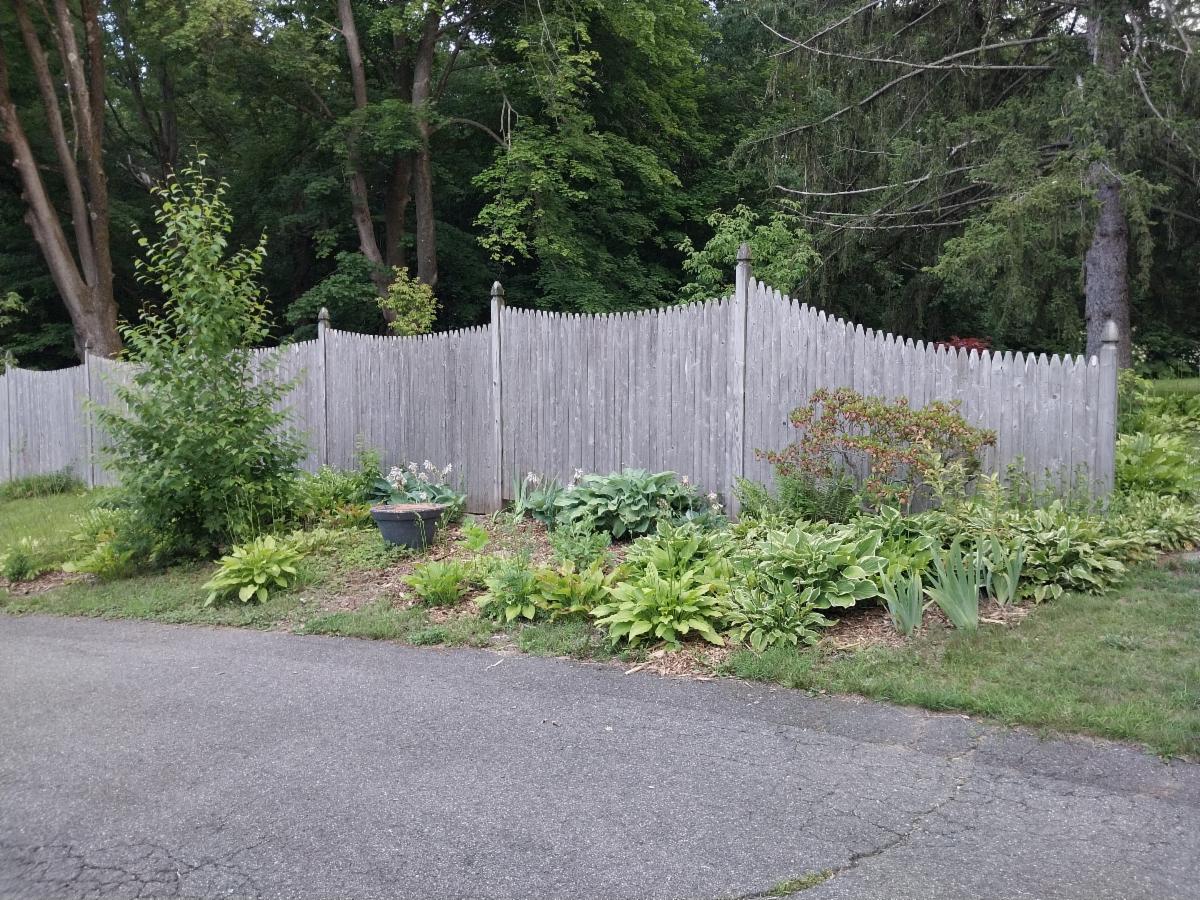
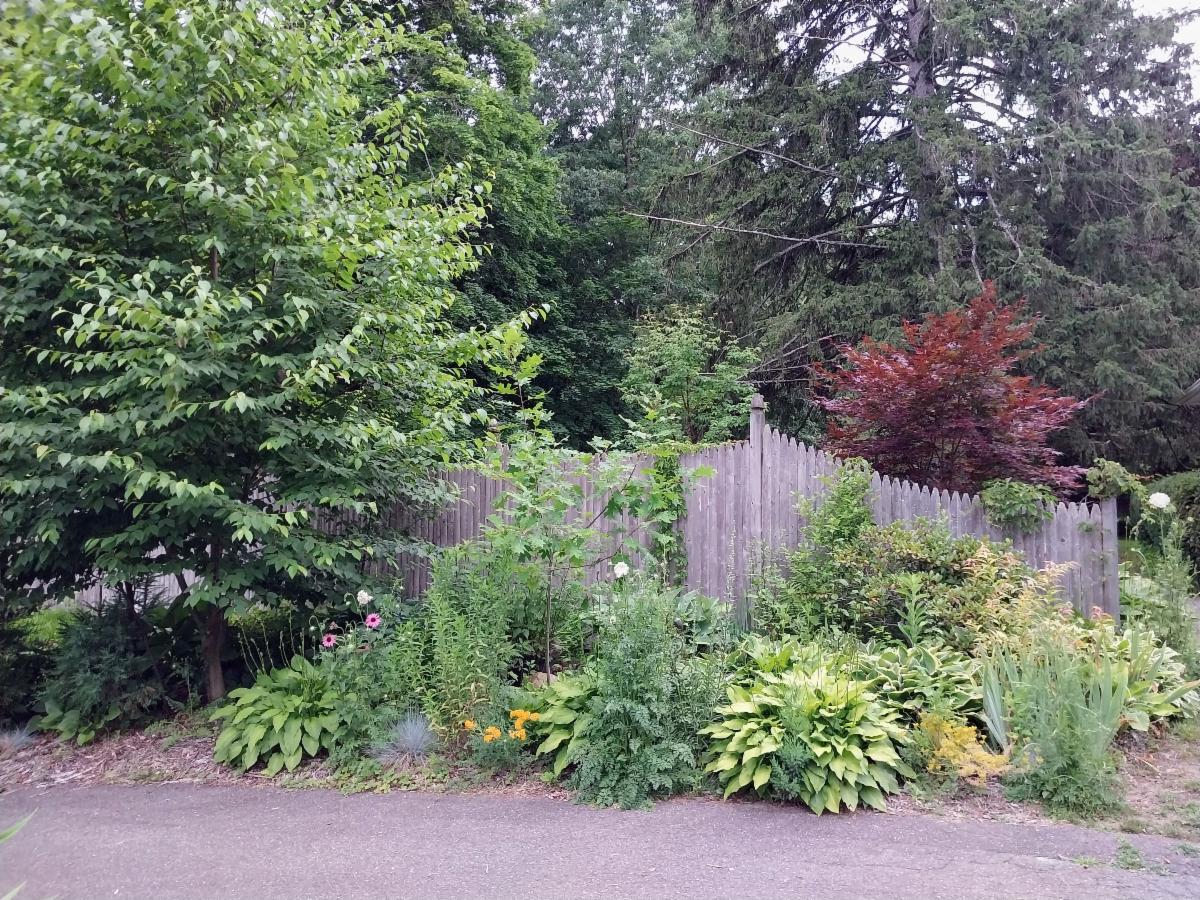
In case you think the heat has melted my mind — and my will — I do have evidence that this laissez-faire laziness does work. I looked back at an article I wrote in Aug/Sept 2023 called “The Journey” about letting a piece of the garden just get colonized by the natives. I learned that I am perfectly content with the result. (I also learned that I suffer from mid-summer garden depression as the tone of that article is quite the same as this one.) Anyhow, here is the update. That is a sweet birch, Betula lenta, on the left growing at an incredible speed. And an oak tree that I don’t have the heart to chop down has joined in. Do nothing and they will come.
| | July 2023
[Photo/Renee Marsh] | | |
July 2026
[Photo/Renee Marsh]
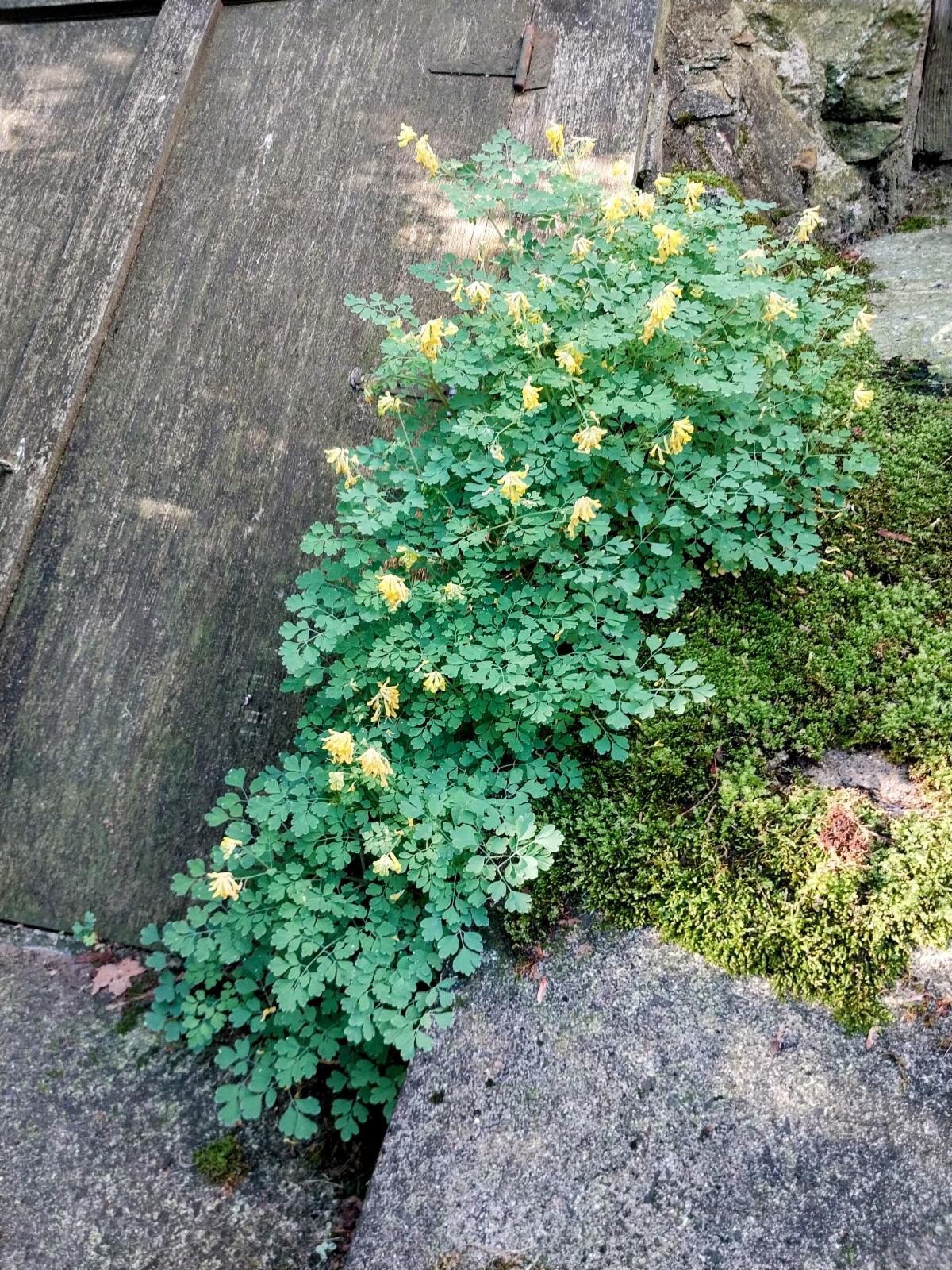
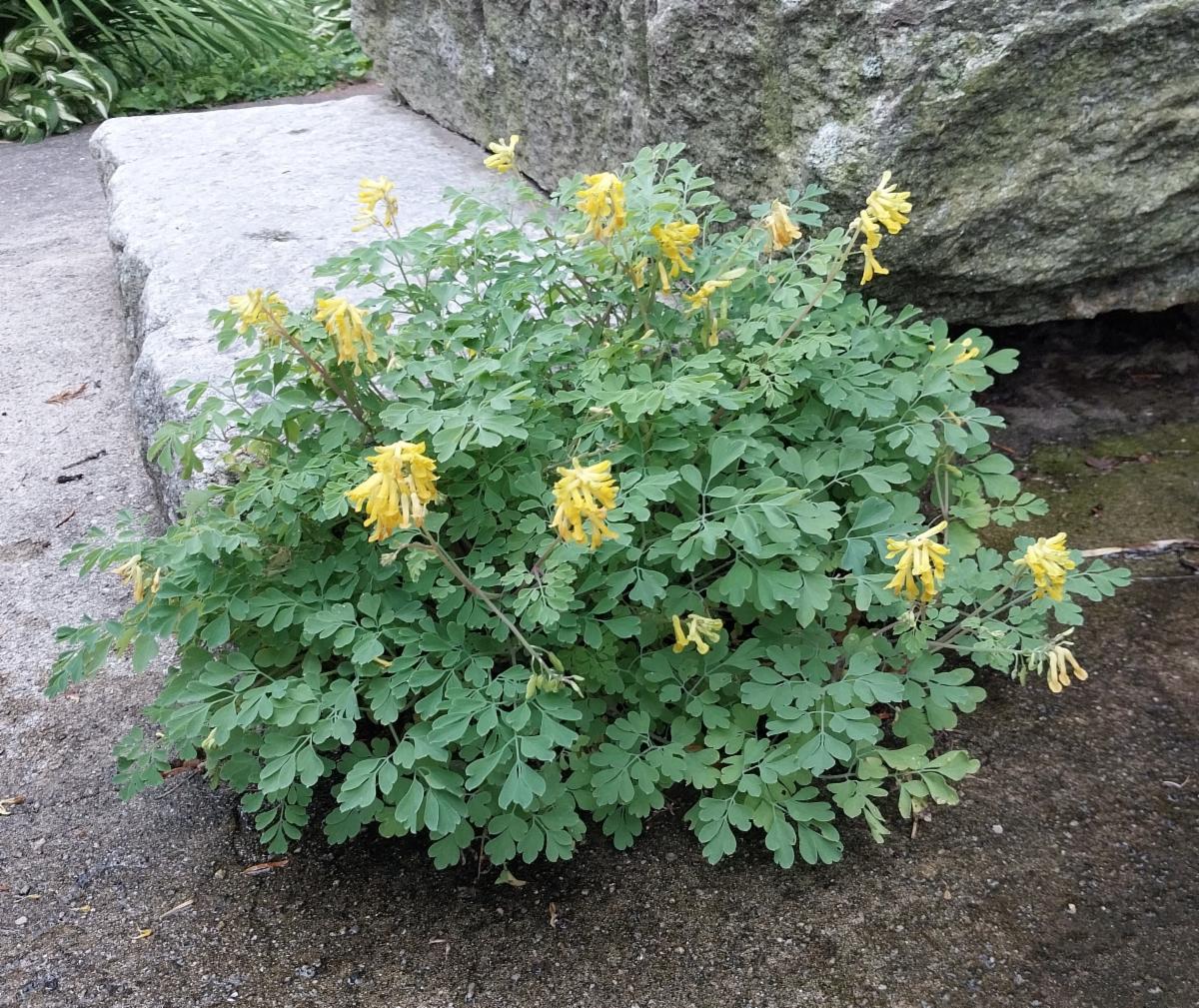
| | Speaking of plants that just move in, I don’t believe I have mentioned another of my favorite colonizers, Corydalis lutea aka yellow corydalis — “lutea” being Latin for “yellow.” It is native to the southern foothills of the Alps where it grows in stony habitats, so my stone walls and cracked concrete suit it just fine. It goes wherever it wants. The seeds spread by wind and rain and are happy to germinate in any smidgen of bare, gritty soil with good drainage. It seems to prefer a bit of shade but will handle morning sun. There are other Corydalis species with flowers of blue, pink or white and, yes, I went for them. But alas, they were not as vigorous and disappeared into the nether world of failed plant dreams. | | Cordyalis lutea [Photos /Renee Marsh] | | |
So, my message to you, in the heat of August, is enjoy your garden in all its weedy squalor and random grandeur. I will sit on the porch and admire the Virginia creeper climbing the trees and fences, let the milkweed duke it out with the goldenrod, and watch the hay-scented fern colonize the perennial bed. There are books to be read*, iced tea to be sipped, and joy to be had in whatever nature brings to my doorstep.
On my reading list: How Flowers Made Our World by David George Haskell, Entangled Life: How Fungi Make Our Worlds, Change Our Minds & Shape Our Futures by Merlin Sheldrake (thank you, Will Rowlands), The Light Eaters by Zoë Schlanger (again), and Braiding Sweetgrass by Robin Wall Kimmerer (again, and always).
Let me know what’s on yours. Stay cool.
| | |
Pollen Distribution – How Plants are Pollinated
By Holly Kocet, FGCCT Environmental/Conservation Chair
| | |
We know that plants must be pollinated in order to reproduce. However, the method of pollen distribution varies depending on the plant. Each spring, we get a good idea of one method of pollen transfer when everything outdoors is covered in a greenish powder: sidewalks, lawn furniture, window sills, and our cars. And those of us with pollen allergies are well aware of when pollen is in the air.
Wind-pollinated trees are the culprits, releasing copious amounts of small, lightweight pollen into the wind. Wind-pollinated plants do not waste energy producing flowers with strong fragrances or nectar to attract pollinators. Instead, the focus is on efficient pollen production and dispersal that ensures pollen finding female flowers for successful fertilization. Releasing large amounts of pollen compensates for the randomness and inefficiency of wind dispersal. Trees that are wind-pollinated include oak, birch, walnut, hickory, elm, cottonwood, poplar, and cone-bearing trees: white pine, spruce, fir and cedar.
Grasses and weeds are also wind-pollinated. People often blame goldenrod for hay fever because it blooms at the exact same time as the real culprit, ragweed — an easy mistake since goldenrod's bright yellow flowers are highly visible while allergy-causing ragweed flowers are quite inconspicuous. It is a fact that goldenrod is NOT the cause of hay fever. Its flower’s pollen grains are far too heavy and sticky to be carried by the wind. The pollen does however, cling to animals (bees, flies, butterflies, etc.) who are reliable and efficient pollinators. Ragweed, on the other hand, relies on wind to carry its pollen, and releases millions of lightweight pollen grains that can drift in the breeze for miles, triggering allergies for millions of people every year.
Self-pollination. Plants that self-pollinate have both male and female flowers. These plants include many vegetables such as beans, cabbage, and carrot, many stone fruit trees such peach, plum and cherry, and some native trees and shrubs. While these plants do not strictly require bees to reproduce, native bees that visit these flowers transfer pollen efficiently, which significantly improves yield and quality.
Animal pollination. About 75% of flowering plants rely on animals to transfer pollen. While foraging for nectar, bees, flies, butterflies, moths (night-shift pollinators), beetles, birds, and Western bats, pick up pollen grains on their bodies. The pollen dusts and fertilizes the next plant they visit. Because plants need animal pollinators to carry their pollen, they evolved specific characteristics — unique shapes, sizes and colors — to attract the pollinators who can most effectively pollinate them. Bees are our most successful pollinators because, unlike other animal pollinators, bees intentionally visit flowers to collect pollen for their offspring. Pollen is an essential source of protein and amino acids for developing bee larvae.
| | |
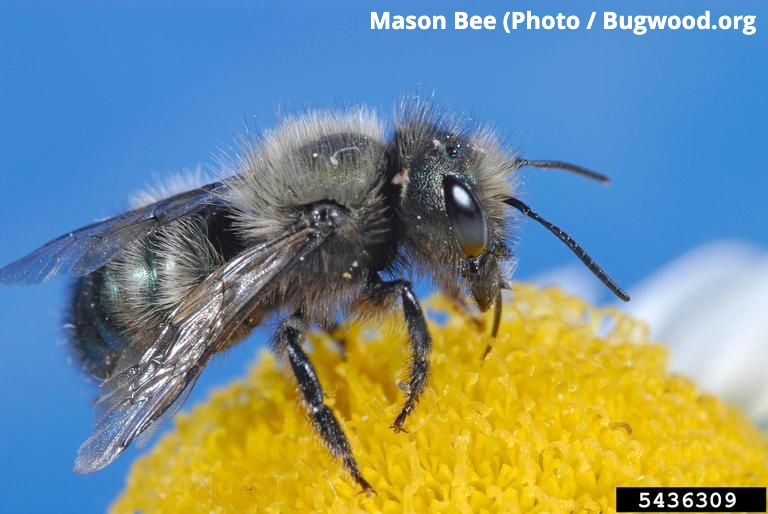
Native bees, of which there are 340 species in Connecticut, are rock stars! They include bumble bees, squash bees and mason bees, to name just a few. Native bees are very important to agriculture. As major pollinators of tree fruits, berries and vegetables, they add an estimated $3 billion worth of crops annually to the U.S. economy.
When native bees visit flowers, their bodies get covered with pollen. Moving from one flower to another, worker bees brush flowers with pollen for effective cross pollination. Bumble bees and carpenter bees also have the ability to “buzz pollinate,” an adaptation that allows them to shake pollen loose from flowers that other bees cannot access. Blue orchard mason bees are masters of “belly pollination,” preferring to carry pollen on their abdomens. This belly-flopping from flower to flower is very effective. European honeybees carry little pollen on their bodies, preferring to groom pollen and nectar into a paste to bring back to the hive. This “neatness” makes honeybees less effective at transferring pollen. Belly-flopping mason bees pollinate 100 times more flowers than honeybees do in a single day. And according to the Xerces Society of Invertebrate Conservation, “Flowers pollinated by native bees will have larger and higher quality of fruit.”
Water pollination is an extremely rare method of pollination. Only about 2% of aquatic plants rely on currents to carry their pollen grains to another flower. But just as with terrestrial plants, the majority of aquatic or bog plants are pollinated by bees and flies. So, while some plants employ other methods of pollination to reproduce, insects and other animal pollinators are most valuable for the pollination services they provide. They are creatures we simply cannot live without.
| | | | |
SPOTLIGHT on our FGCCT Affiliates! | | | | |
|
The Connecticut Agricultural Experiment Station
| | |
The Connecticut Agricultural Experiment Station (CAES), established in 1875, is the first agricultural experiment station in the United States. Their mission is to develop, advance, and disseminate scientific knowledge, improve agricultural productivity and environmental quality, protect plants, and enhance human health and well-being through research for the benefit of Connecticut residents and the nation. Seeking solutions across a variety of disciplines for the benefit of urban, suburban, and rural communities, Station scientists remain committed to "Putting Science to Work for Society," a motto as relevant today as it was at the Station's founding in 1875. Today, CAES employs approximately 92 full time Scientists, Technicians, and Support Staff. The Station hires approximately 50 Summer Research Assistants to assist Station Scientists in their laboratories between May 1 and October 31 each year.
Each year, CAES hosts Plant Science Day at Lockwood Farm in Hamden, CT. It is attended by farmers, landscape professionals, students and the public. There is a keynote speaker each year and new science is presented, Experiment Associates are honored and there are pop-up talks and demonstrations around the property.
The Federation has an information booth at the event along with many other environmental and plant-focused non-profit organizations, including several of the Federation’s Affiliates.
| | |
The 116th Annual Plant Science Day is scheduled for August 5, 2026. The Samuel Johnson Memorial Lecture will be Charlie Nardozzi, speaking about “Growing a Continuous Vegetable Garden.” Research presented will include “Management of Hydrilla,” “Vaccinating Crops Against Viruses,” and fungal pathogens in farms, forests and the natural world. Technical demonstrations on “Summer Problems of Lilac” and “Understanding Honey Bee Swarms” are also being offered.
If you have never attended a Plant Science Day, please consider a club field trip! There are picnic tables available and food trucks along with many knowledgeable folks ready to answer your garden questions. Can’t join in person on August 5? Visit the CAES website for helpful information about many garden and crop challenges. And if you go, please stop by the Federation’s table under the tent and say hello to our board members on hand to share the good work our member clubs are doing!
CAES 116th Plant Science Day
Wednesday, August 5, 2026, 10:00 a.m. - 4:00 p.m.
Lockwood Farm. 890 Evergreen Avenue, Hamden, CT 06518
Free and open to the public. Rain or shine!
No pets, please. Service animals only.
For more information, click here.
| | | | |
|
Club Corner" is a place for clubs to showcase exceptional or notable club achievements and activities. Has your club done something unique (or uniquely successful?) that you'd like to share? Visit "Club Corner" on the FGCCT website for more news from clubs! (This area is NOT for upcoming events—you can post those on the FGCCT Club Calendar.)
To submit: send high-resolution photos, along with a writeup (200 words or less, please) and photo captions, to martha.sherman@ctgardenclubs.org to be considered for inclusion. Please ensure that you have appropriate permissions for all photos. We reserve the right to edit copy and select photos for inclusion.
| | |
In Milford, A Great Start to a Centennial Year!
It has been an exciting and busy club year for the Milford Garden Club! Members have been involved in planning activities to commemorate the 100th anniversary of the founding of the club. The focus has been on increasing awareness and interest in the Club through publicity and providing interesting programs to members and the public.
There has been a renewed campaign to inform the residents of Milford and surrounding areas of the Club’s activities and its centennial anniversary. The Milford Garden Club “the club you haven’t heard about” became Milford Garden Club Alive! In addition to press in local news publications, we were highlighted in a 3-page spread in the local Milford Living Magazine and cited on the WTNH- Channel 8 News’ – “8 things to do” feature regarding our annual May Market event on May 16th.
During the 2025-2026 club year, many of the monthly programs were presented by Club members and showcased their talents and expertise. These programs included workshops on Preparing Summer Herb Infusions by member and chef, Ann Rossi, a Whimsical Halloween Floral Design workshop by member and former Club President, Bunny Elmore, and a Paper Pounding workshop presented by member and former President and current Treasurer, Janet Kuryla with Bunny Elmore. Additional programs presented by members were Grooming and Staging Horticulture for Entry in a National Garden Club Flower Show, presented by former member, Advanced Master Gardener and former President Cheryl Cappiali, Forcing Spring Bulbs was presented by member and Advanced Master Gardener, Patty Primavera and The Secret Language of Flowers, presented by current President, Sandra Morgan. All of these programs were open to the public.
Upcoming events leading to the actual November 2026 anniversary date include display cases at the Milford Historical Society and the Milford Public Library highlighting the Club’s history. An evening program is planned for November 4, 2026. The club updated its logo to a fresh look of our coneflower. In 2014 the club had petitioned the City of Milford to accept the cone flower as the official flower of the City of Milford. All in all, it has been a great start to our 100th year as an active and viable Garden Club!
| | In Westbrook, a Mountain Laurel for the 250th | |
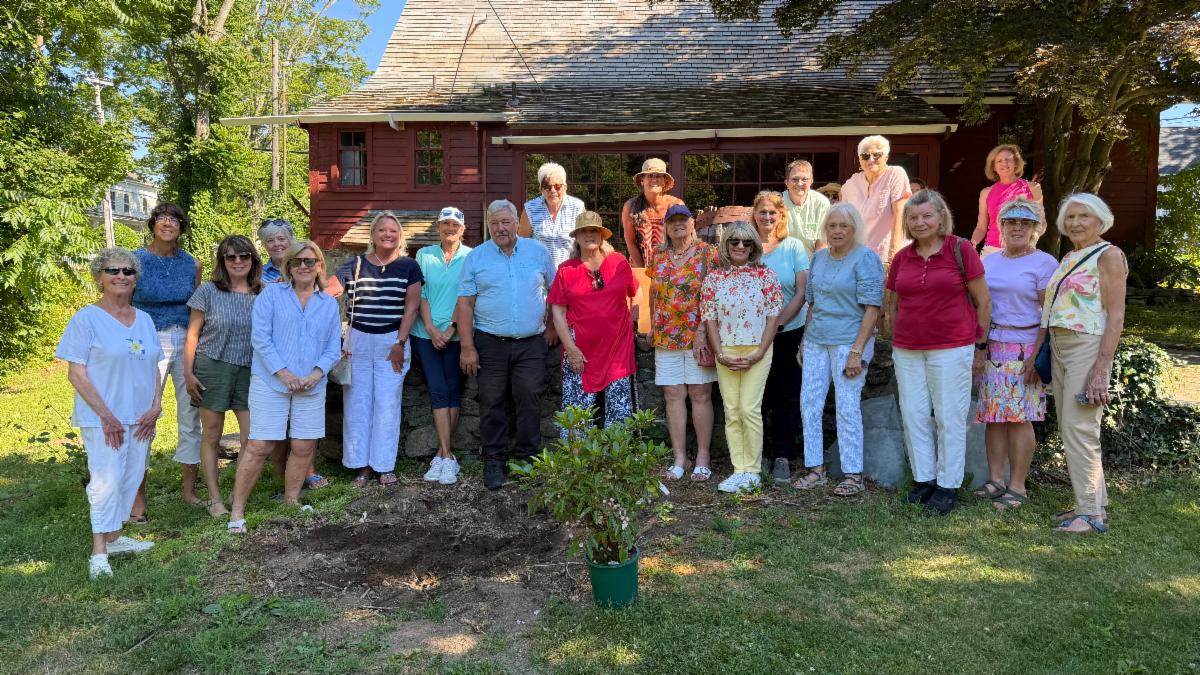
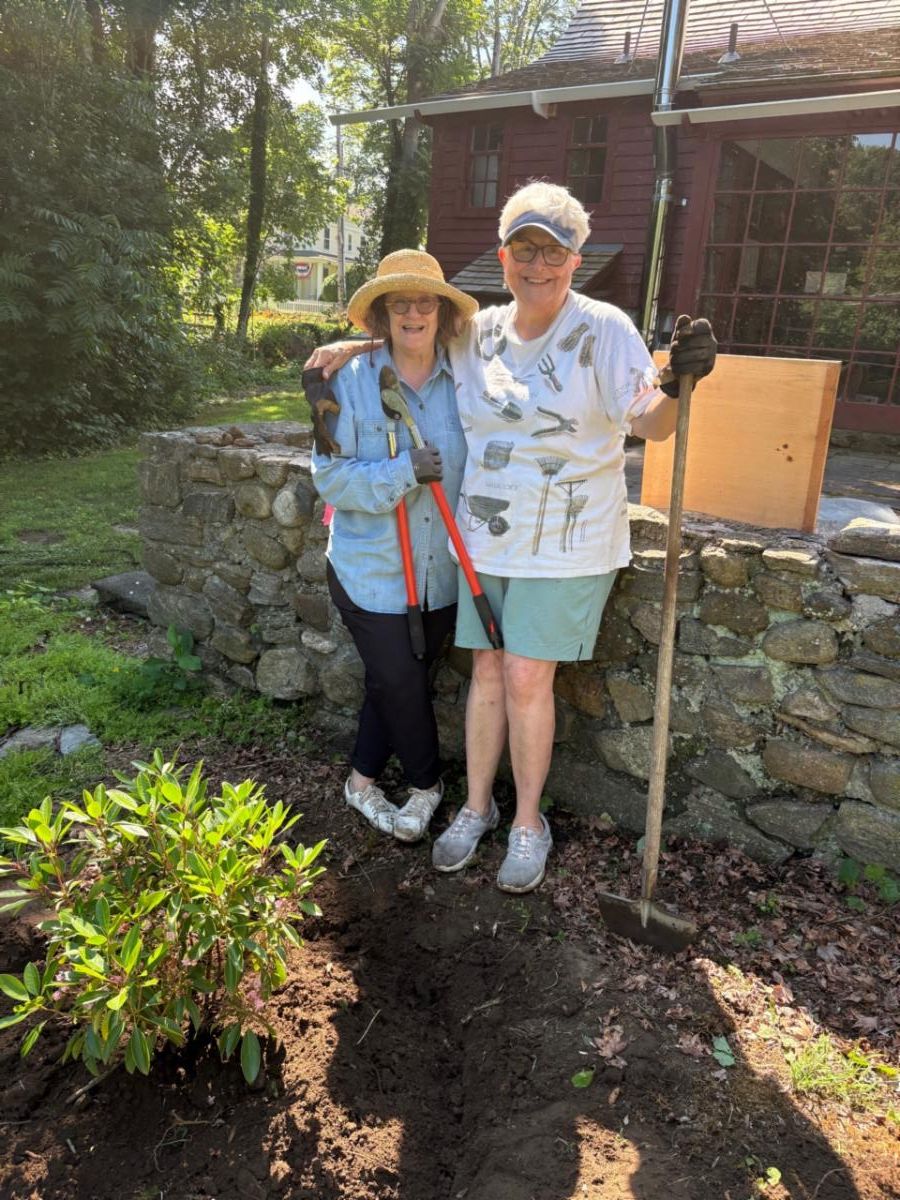
Above, Westbrook Garden Club members Rachel, Martha and Betsy planted a native Mountain Laurel, donated by the club, to replace an overgrown lilac bush behind the patio at The Bushnell House for the 250th anniversary. First Selectman John Hall attended the dedication.
At left (L to R): Martha Neale and Rachel McNellis, co-chairs, Bushnell House Historical Garden Project
| | |
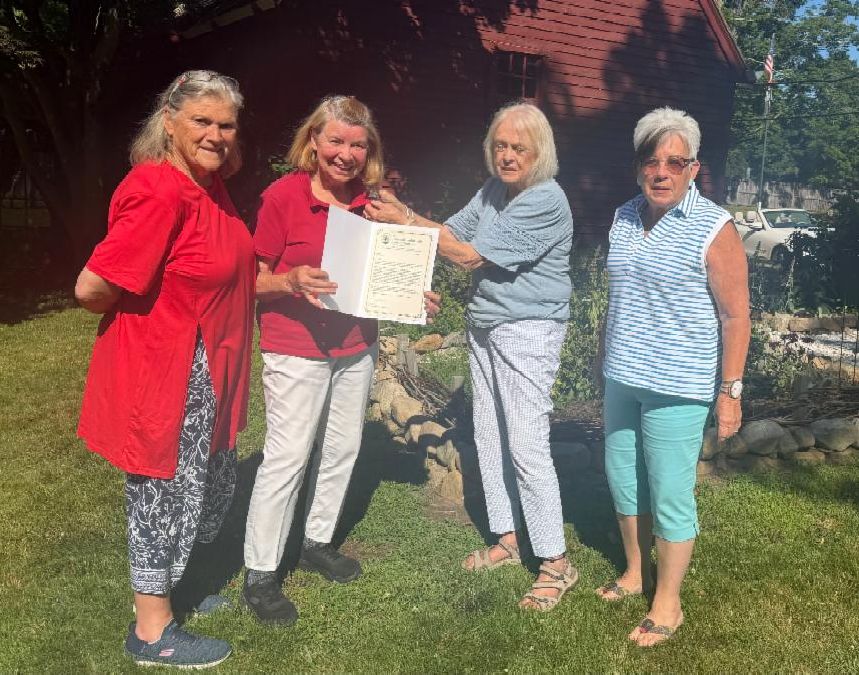
It was a privilege to present this special honor to one of our own at the Westbrook Garden Club. Congratulations to Penny on being named a Connecticut Life Member by The Federated Garden Clubs of Connecticut, Inc. This well-deserved recognition celebrates her many years of dedicated service, leadership, and countless contributions to our club, our community, and The Federation. We are grateful for all she has done and are proud to celebrate this milestone with her.
Pictured L to R: Betsy Chester (co-President), Priscilla “Penny” Sisk, Dee Mozzochi (Awards Chair/Federated Liaison) and Heidi Teubert (co-President).
| | | | |
|
Another Risk to Manage - Copyright Infringement!
Read this if you use clip art, pictures or drawings from the internet in your social media or club website postings!
A web search for an image of a garden or for pictures of garden equipment is likely to yield a list of websites with lots of images to choose from and easily copy to your social media page or website. Do you check to make sure that they’re really free and not subject to copyright? You should! There are law firms who now make a business of using automated searches of the web looking for copyrighted images where the user doesn’t have a license and then sending the organization who posted the picture a demand letter, asking for money and threatening legal action.
To avoid getting one of those letters, follow simple steps:
- Use images and drawings you or a club member prepared from scratch, or pictures a club member took.
- Read the fine print! Sometimes, the website says it grants a license to you, the user, if you provide attribution, perhaps a link to the website for the picture(s) you use. So, do that either on each page where there is an image, or in an acknowledgement page.
Here are some resources if you’d like to learn more; the second one, a law firm, is more technical:
https://www.copyright.gov/help/faq/faq-fairuse.html
https://allendyer.com/tips-for-avoiding-copyright-infringement/
— John Davis, FGCCT Treasurer
| | Donations to FGCCT's Scholarship Fund; Healing, Therapy and Senior Gardening Fund; and World Gardening Fund | |
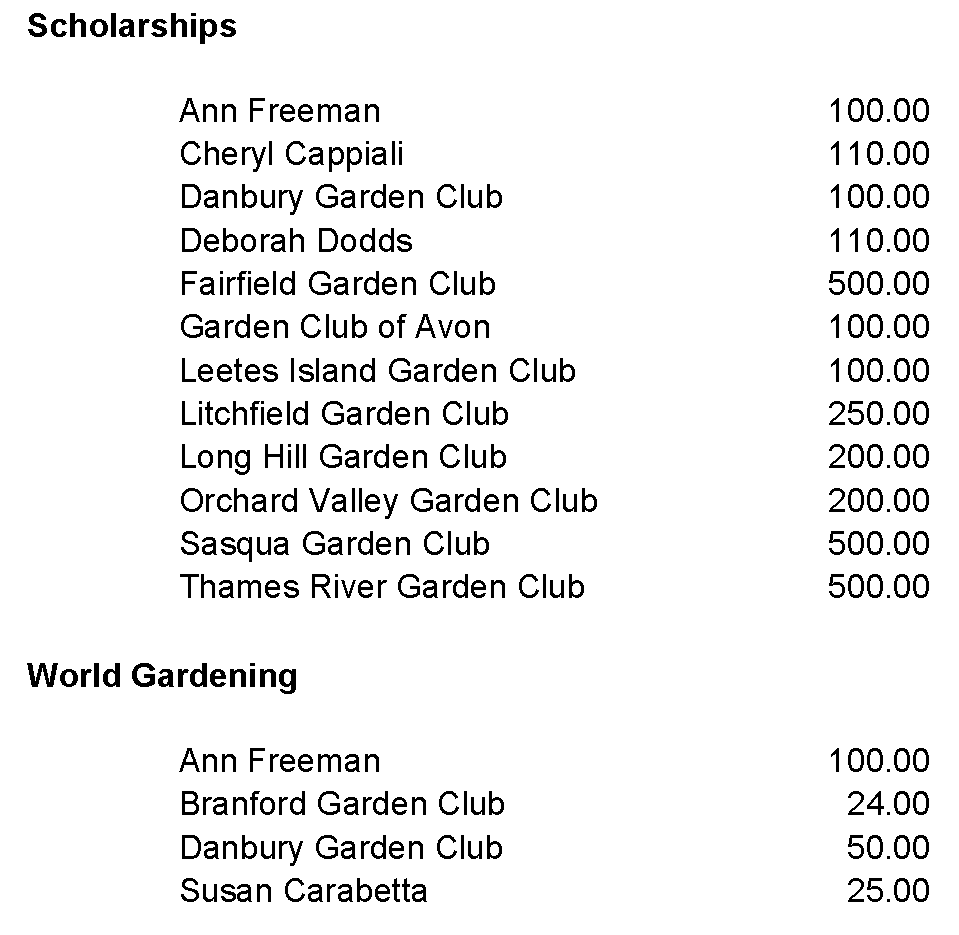
We thank the following Garden Clubs for their recent donations to the FGCCT Scholarship Fund.* For almost 40 years, the Federation has awarded scholarships to college and university students who major in Agronomy, Botany, City Planning, Conservation, Environmental Studies, Floriculture, Forestry, Horticulture, Land Management, Landscape Design, Plant Pathology, or allied subjects. We welcome donations of any size. Our appeal is ongoing to give all of our clubs the opportunity to make a contribution in the amount of their choosing.
| | Donations Received since the last issue of CF News | |
Please send all Scholarship Fund donation checks to the appropriate chair (see below). Make checks out to "FGCCT" with the appropriate Fund listed on the memo line.
*Please note that due to the deadline for articles and information for the CFNews, some donations may not be received and deposited in time to be included in the bi-monthly donation acknowledgement, but will be included in the next issue of our newsletter.
PLEASE MAIL CHECKS TO:
| |
For World Gardening & Healing, Therapy and Senior Gardening:
The Federated Garden Clubs of CT, Inc.
Attention: Rosemary Bonaguide
PO Box 902
Wallingford, CT 06492
| |
For FGCCT Scholarship Fund:
The Federated Garden Clubs of CT, Inc.
Attention: Carole Fromer
PO Box 902
Wallingford, CT 06492
| | |
Follow us on Facebook and Instagram!
FGCCT is on Facebook and Instagram and we love to post your news and photos! Please send upcoming events, club activities, civic projects, milestones, and hort tips. Include photos and a brief writeup of the news your club would like to share. The best format is text in an email with jpg photos attached. Take active photos showing members at work or showcasing beautiful gardens, flowers, and plants (please name the flower if it is a hort only photo). Let’s follow each other! Send submissions to social@ctgardenclubs.org
| |
|
Just a reminder …
Please send all correspondence to the new FGCCT office:
The Federated Garden Clubs of CT, Inc.
P.O. Box 902
Wallingford, CT 06492
Did you recently elect new officers? Email their names and contact information to us at office@ctgardenclubs.org so they will receive Federation correspondence. If you need assistance, please contact FGCCT Office Administrator Joan Lenart at office@ctgardenclubs.org or by phone at 203-488-5528 on Mondays and Wednesdays, from 10 am to 2 pm.
| | | Deadline to submit articles/photos, ads and calendar events for the October/November 2026 issue of the CFNews is September 10, 2026. Please submit to: | | |
Creating a National Garden Clubs, Inc. Website Member Account
In order for garden club members to access information in the Members area of the National Garden Clubs website, they will now need to create an account. Below are the steps to follow.
-
Go to the Homepage of the NGC website at https://gardenclub.org/
- Select “Member Login” in the site header.
- Enter your information. Avoid choosing a username with spaces. Email address is recommended for username. Select “Create new account”.
- You will receive a green highlighted message to check email at the address you entered to verify and complete your account.
- Use the link provided in the confirmation email to create your password and save your changes.
- Once you have selected “save”, click on the “Member Section” link in the main menu.
~
| | |
Reminder: NGC's The National Gardener is ONLINE and free!
The official publication of the National Garden Clubs, The National Gardener, appears quarterly, and features articles of interest to environmentalists, gardeners, landscapers, floral designers, educators and photographers. Subscribe here.
| | |
| |
State, Regional &
National Events
| | | | | |