| |
December 2024 / January 2025 | | | | |
| |
| |
|
In past years, there were always a few garden chores that were left by the wayside. Not so this year. Although weather was extremely dry, we were able to be out in the garden planting extra bulbs we just couldn’t live without! I even had time to divide and pot up a few perennials for our plant sale in the spring. All my tubers, rhizomes and corms have been cleaned, dried, wrapped, and stored away in the basement for next spring. It is such a good feeling!
I would like to thank Thames River, Westport, Wethersfield, Goshen and Simsbury Garden Clubs for their willingness to step up and host a Roundtable in their neighborhood. All five Roundtables were huge successes. There were several clubs that attended two and three sessions. If you were unable to join us for one of the 2024 Roundtable sessions, there will be an encore!
One of my responsibilities for the Roundtables was to create folders with timely information such as award and grant information. Take the time to visit the NGC website and discover opportunities to apply for financial and in-kind awards. Click on this link for National Garden Club to view all the Awards & Grants available.
Our next big event is the Flower and Garden Show in Hartford. Our NGC Standard Flower Show is always the centerpiece. Please take the time to review the schedule for “The Signs of Spring” on the FGCCT website home page. There are a few important changes, so read carefully. All entries will be online this year thanks to the hard work of so many people.
| | |
|
|
Thank you for all the invitations to visit your club meetings and special events. I’ve enjoyed every visit! Please remember to share your activities in the Club Corner on our website as well as on social media
In Friendship,
| |
|
Hello Gardeners!
Penny Pines / Plant -A-Tree
Our President’s Project continues to inspire many clubs to plant trees and shrubs in their communities during milestone anniversary celebrations.
The Norwalk Garden Club has planted an Eastern redbud and 400 bulbs as part of their 100th anniversary. Congratulations!
Penny Pines is now officially Plant-A-Tree. The NGC continues to partner with the USDA Forest Service on this project.
Plant-A-Tree Changes of note:
Donations can now be sent in $50.00 increments. When donating, your club may choose a National Forest; the US Forest Service does reserve the right to utilize funds based on need.
You can donate online at the NGC website. The new form is available to download and must be sent with your check payable to:
NGC Plant-A-Tree
4401 Magnolia Ave.
St. Louis, MO 63110-3492
As of 5/31/2025, paper certificates will no longer be available; digital certificates will be used.
Please continue to email me with your club's plans, ideas, and contributions.
— Carmelina Villani, FGCCT President's Project Chair
| | | | | |
Upcoming Events — Mark Your Calendars! | | | | |
"Signs of Spring" are just around the corner! | |
|
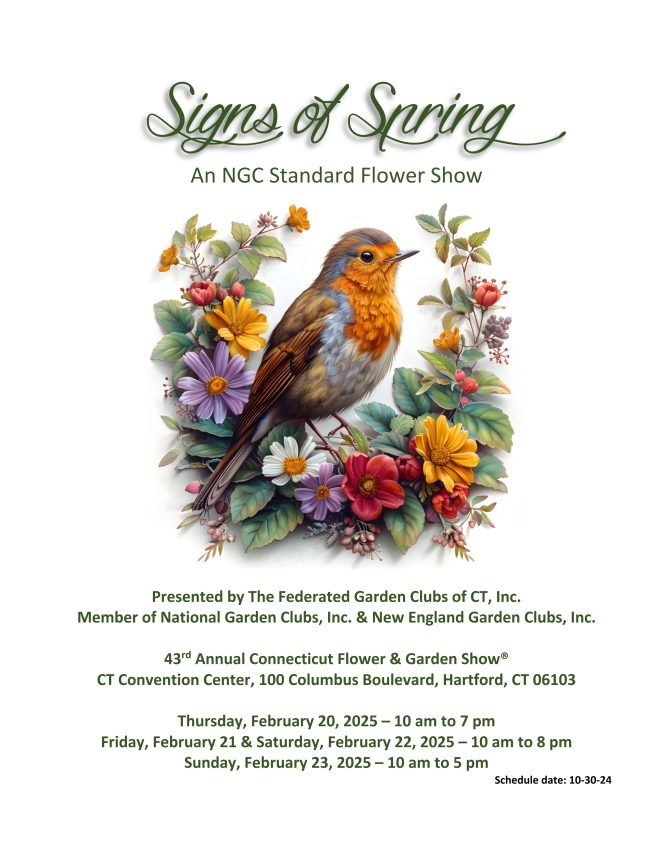
It’s that time of year again! As the weather turns colder and the frenetic activities surrounding late fall and early winter holidays wind down, thoughts of spring begin to occupy us. February, 2025 is just around the corner!
How will you participate in and represent your garden club in the coming Flower Show? Will you organize your contributions with other members of your garden club? It’s time to get started and plan now.
[Click the image at the right to view the complete Flower Show Schedule.]
We are always looking for horticulture specimens. But don’t forget that your specimens must be in your possession for a minimum of 90 days prior to February 20, 2025. Think about what you can contribute from your gardens and houseplants. Refer to Chapter 14 of the Handbook for Flower Shows on the NGC website, Flower Show Resources page and this year’s Horticulture Sections and Classes in this year’s Signs of Spring Schedule. The Horticulture Division is open to members of NGC and amateur gardeners. Pre-registered Horticulture specimens will be accepted on Tuesday, February 18 from noon to 7 pm. Walk-in Horticulture specimens must be submitted on Tuesday, February 18 between noon and 6 pm. No Horticulture will be accepted on Wednesday, February 19.
Online registration for photography is required by January 15, 2025. A digital high-resolution copy of each entry is required. There are intriguing choices to choose from in the "Signs of Spring" Schedule. All photography entries must be submitted between noon and 7 pm on Tuesday, February 18.
The Design Division offers exciting challenges based on the “Astrological Calendar.” The Botanical Arts Artistic Crafts Schedule features “The Woodland Fairy Spring Gala,” represented by a crown or tiara, a cake, and a necklace. Design and Artistic Craft entries will be accepted on Tuesday, February 18 from noon to 7 pm and Wednesday, February 19 from 8 am to 10 am.
Consultants are available in every category to help you through the process of preparing your entries. Please encourage your members to take advantage of the discounted tickets as well (see below). Ticket orders must be received by February 7 to receive the special garden club member pricing.
— Linda Kaplan, Public Relations Chair and Vonice Carr, Flower Show Chair
| |
Come Enjoy the "Signs of Spring" by Volunteering! | |
|
Our Hospitality Chair, Kathy Lindroth, is beginning to recruit volunteers to host at our upcoming Standard Flower Show, “Signs of Spring,” which will be held in conjunction with the 43rd Annual Connecticut Flower & Garden Show at the CT Convention Center, 100 Columbus Boulevard, Hartford. Show hours are Thursday, February 20, 2025 – 10 am to 7 pm Friday, February 21 & Saturday, February 22, 2025 – 10 am to 8 pm and Sunday, February 23, 2025 – 10 am to 5 pm
The basic duties of Hosts are to circulate on the floor of the Flower Show answering questions, guarding our displays from eager touchers and being the face of the Federated Garden Clubs. Hosts will be provided with a green Federation apron to wear while on the floor; these will also be available in the hospitality suite to purchase for $25. Shifts are generally 2.5 hours so comfortable shoes are a must! If your garden club would like to donate some refreshments (fruit, yogurt, or sweets) for the hospitality room, please contact Kathy Lindroth to schedule an appropriate day and refreshment.
Five club members per shift can sign up, so start planning your carpool and sign up using the link below:
| |
Name tags are generated by this signup form and the badge is your entree into the show, so please note this is the only way to sign up. Each person must sign up individually and PLEASE double check your email address and the full and correct name of your garden club. If you have to cancel, please go back to the form and handle your cancellation.
You will receive full information about where to pick up your badge closer to the show. Parking vouchers are for 4 hours, only. Please allow enough time to park and get into the Convention Center and to the Show Floor. The Hospitality Room is available to you during the day you volunteer to hang your coat, have a coffee and refreshments. Only volunteers are invited to use the Hospitality Suite. Those who have afternoon shifts should allow extra time as your parking spot may be further away from the entrance. We need you to be on time!
We couldn't do this important job without all of our generous club members! Many thanks for your participation. Questions? Contact Kathy Lindroth.
Patricia Dray, Co-Chair Kathy Lindroth, Hospitality Chair
FGCCT Judges Council FGCCT
| | | | |
| |
Looking to evaluate your club's core mission efficiency?
While the IRS does not mandate a specific program expense ratio, nonprofits that misclassify expenses or fail to maintain reasonable ratios could face penalties or jeopardize their tax-exempt status.
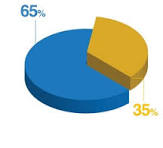
Program expense ratio = Program expense/Total expenses.
The ratio evaluates a nonprofit's mission efficiency by considering the extent of spending that goes to programs, as opposed to administrative or other expenses.
A typical guideline for a non-profit is to aim for at least 65% of their total expenses to be allocated towards direct program services, with the remaining 35% or less going towards administrative and spending costs combined; essentially meaning that ideally, a non-profit should spend more on their core mission than on overhead operations.
| |
|
NEW! FGCCT Extends Insurance Savings to Its Club Members
Great news for our club members! Our general liability policy has been updated to extend cost savings to our club members. Commercial General Liability is now a benefit to all our club members. This type of insurance is typically standard fare for most businesses and organizations because it offers you general protection to cover accidents, injuries and property damage that may arise from club activities, tours, and meetings.
An email will be sent to all presidents and treasurers detailing this benefit and will include an invitation to our upcoming "Why do Nonprofits Need Insurance" Zoom Workshop.
—MaryAnn Lynn, FGCCT Assistant Treasurer
| |
|
FGCCT Fall Awards Meeting and Luncheon a Day of Celebration
The Awards Meeting was held on October 16, 2024 at the Aqua Turf Club.
Twelve National Garden Club awards were given out for categories including conservation activities, beautification projects, wildlife survival, and public relations. The Bronze Medal, The Federation’s highest honor, was presented to Sarah Bailey, currently the Hartford County Coordinator for the UConn Extension Master Gardener Program. Sarah transformed gardening practices throughout Connecticut over her 19 years teaching over 3600 master gardener interns.
Polly Brooks, former Federation President and Advisory Council Chair, conferred the four Awards of Honor. Ten Tribute Awards were presented by Kelle Ruden, Second Vice-President. The Lillian M. Rathbun Award was awarded to Ann Marie Stone of the The Garden Club of New Milford, and the Lucille Schavoir Award went to The West Hartford Garden Club for their outstanding community work.
Vonice Carr, Awards Chair and 2025 Flower Show Chair, spoke about “Signs of Spring,” being held February 20 – 23, 2025, at the Hartford Convention Center, urging everyone to participate and make this coming Standard NGC Show a great success.
Over 160 awards were presented in total. Eighteen talented vendors donated raffle prizes and guests were able to purchase garden-inspired crafts, jewelry and clothes, honey and herbal soaps. Special thanks went to four garden clubs — The Greenfield Hill Garden Club, the Branford Garden Club, the Westport Garden Club, and the Garden Club of West Hartford — for the table centerpieces. Several 100-Year Club anniversary displays were also showcased at the event. Happy 100th Anniversary to the Garden Club of Madison, the Garden Club of Mystic, The Garden Club of New Haven, The Garden Club of Old Greenwich, and the Westport Garden Club.
— Linda Kaplan, Public Relations Chair
| |
|
NEGC Honors FGCCT, CT Clubs & Individuals with Awards
The Federated Garden Clubs of CT, Inc., The Leete’s island Garden Club, Riverside Garden Club, and Paula Inglese of the Branford Garden Club received awards at the Annual NEGC meeting held at the Crowne Plaza in Warwick, RI on October 24, 2025.
-
The Virginia Kenney/Maureen Colton Award and a check for $25 was presented to FGCCT for the best Horticulture Division in the 2024 "Bursting into Spring," an NGC Standard Flower show. The Horticulture Division had 35 clubs, 66 club members and 201 exhibits entered. There were a total of 103 Blue Ribbons and 90+ awards in this superior horticulture division.
-
The Excellence in Teamwork Award for an outstanding project completed by a garden club in collaboration with another organization was awarded to The Leete’s Island Garden Club for their project of planting 2,000 native tidal wetland grasses in the intertidal zone at Chittenden Park in Guilford. The project was designed to combat beach erosion and reduce nitrogen pollution run-off.
-
The Maria J Nahom Table Design Award for best table design exhibited at an NGC Standard Flower Show presented to Paula Inglese, Branford Garden Club for her entry "Stripes and Plaids" in the 2024 "Bursting into Spring" flower show.
-
An Award of Recognition for Historic Preservation was presented to Riverside Garden Club for their restoration of the colonial-era kitchen/herb garden at the circa 1690 Putnam Cottage after researching culinary and medicinal gardens of the late 1700’s.
Congratulations to all the FGCCT winners!
— Linda Kaplan, Public Relations Chair
| |
FGCCT Award Deadlines for Public Relations, Yearbook Entries | |
|
Public Relations Award Applications due Jan 1!
REMINDER! Public Relations Awards Applications are due no later than January 1, 2025.
Each nomination requires a FGCCT Awards Application along with a copy of the attachment for each submission.
Please send each submission to Public Relations Chair Linda Kaplan and copy the FGCCT Awards Chair.
| |
|
Yearbook Entries Due February 1!
For those Clubs that have completed their yearbooks for 2024-2025, now is a good time to send in your qualifying entry. If your Club's yearbook doesn't come out until the new year, there will still be time to enter before the February 1 deadline.
Qualifying entries must include full, complete, and correct contact information about FGCCT, our President, and the 2023-2025 theme Care for Our Air, Plant a Tree. The winning yearbook will also demonstrate the Club's support of the theme. This may be accomplished in varying ways such as through planned projects, programs, graphics, outreach, etc.
Once the online application is completed, mail 3 printed copies of the application along with 3 printed yearbooks to:
MJ Lanzillotta
85 Killingworth Turnpike
Clinton, CT 06413
If your Club does not produce a printed yearbook, or if you have questions about the application process, contact Sue Mayne, yearbook manager at: susan.mayne@ctgardenclubs.org
| | |
|  |
|
Upcoming Tours —
Get on the Interest List!
Tour status and details about our Travel Program are found on the FGCCT website. You will find a wealth of information there, including tour brochures and registration information.
Coming in 2025:
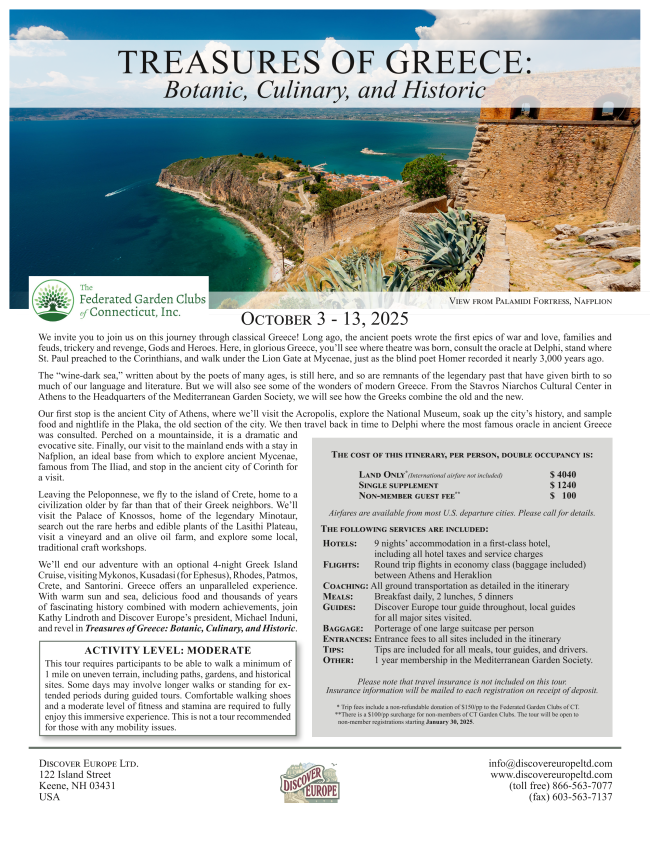
Pacific Northwest (Magical Gardens, San Juan Islands & More!) — July 19-28, 2025
New Hampshire Foraging and Fall Fun —
Sept 16-19, 2025
Preplanning for 2026 includes:
Galapagos and Ecuador — January 2026
Join the Interest List for a specific tour that is in the planning stages and be among the first to get the brochure by emailing us. There is no obligation, but please name the tour you are interested in. If a tour is sold out, please do not hesitate to join the wait list!
— Kathy Lindroth, FGCCT Tours Coordinator 860.836.3407 or tours@ctgardenclubs.org
| | | | |
| |
|
The Year of the Sawfly
By Renee Marsh, FGCCT Horticulture Chair
| |
|
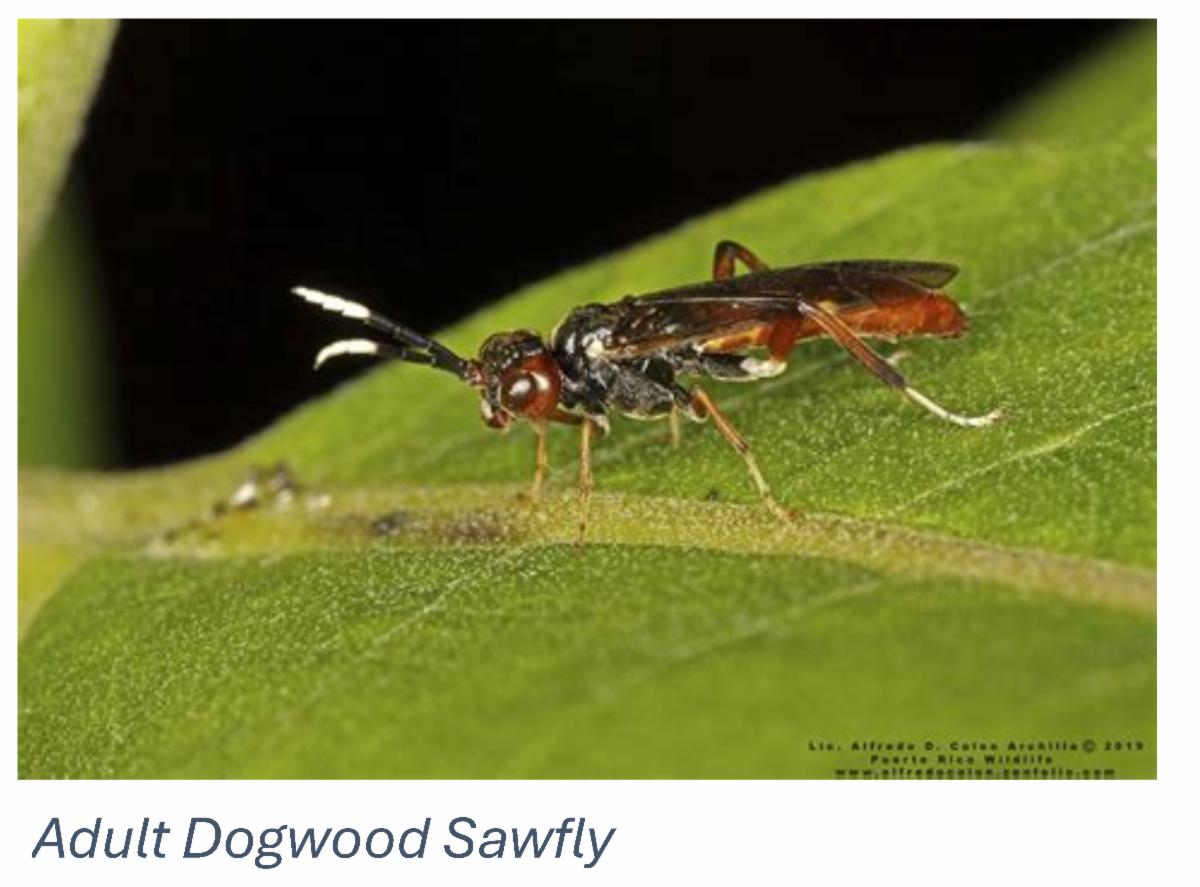
It is interesting how things come in waves in the garden. Waves of weeds, waves of insects, waves of disease — pick your pestilence. For me this year it was sawflies, which are not flies at all but itty-bitty wasp-like insects. Adult sawflies look similar to wasps but they lack the narrow "waist" characteristic of wasps. The “saw” part of their name comes from the saw-like ovipositor (egg-laying organ) that the females use to cut into plant tissues to deposit their eggs. Adults are small, on average 0.2 to 0.8 inches long, and not brightly colored. All in all, pretty innocuous and you probably wouldn’t know one if you saw one. Most feed on nectar, pollen, or honeydew from aphids and don’t damage plants. So, what’s the problem you may ask? It’s their diabolical, caterpillar-like larvae that feed in groups — LARGE groups — and can skeletonize or defoliate a plant in the wink of an eye.
There are several sawfly species native to Connecticut as well as some introduced species. The interesting thing about sawflies is they are often specific to particular host plants. Got a plant? There’s a sawfly for it. I will start in order of their appearance in my garden this year.
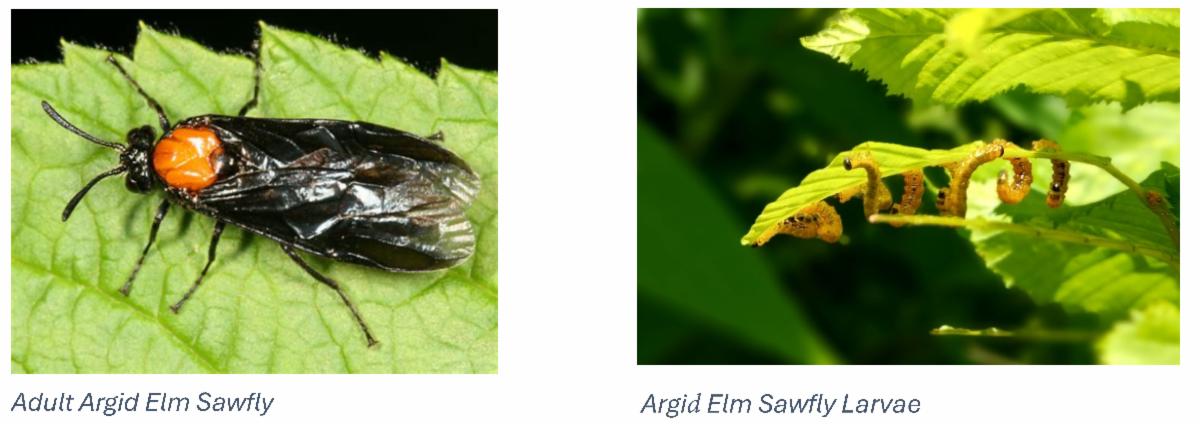
First came the elm argid sawfly, Arge scapularis, which loves elm tree leaves. Luckily the elms they went for were right outside my back door in containers. They did quite a number on them before I noticed. The larvae have a greenish body and black markings or spots and feed in late spring to early summer.
| |
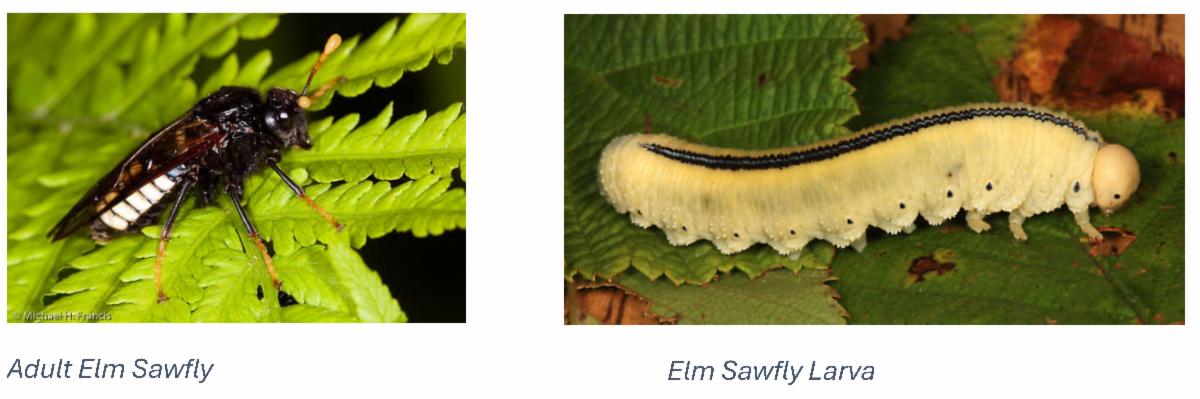
There is another elm sawfly, Cimbex American, which is also native and feeds primarily on elm trees but will also go for hardwood trees like willow, maple, and birch. It is one of the largest sawfly species in North America and adults can grow up to an inch long, with a black body and yellow markings. The larvae really look like large caterpillars with distinctive yellow and white markings and feed in mid to late summer. | |
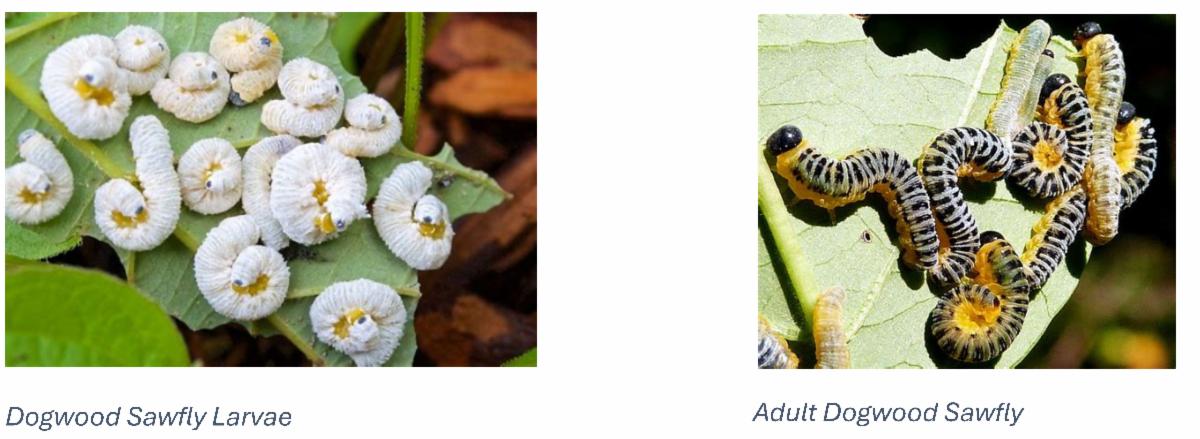
The next to appear was the dogwood sawfly, Macremphytus tarsatus, which likes dogwood trees and shrubs, particularly species like the gray dogwood (Cornus racemosa) and red osier dogwood (Cornus sericea). Initially, the larvae are small and covered in a white, waxy coating and they hang out on the underside of the leaf. As they mature, they shed that coating and reveal a yellow and black-spotted body. The larvae start feeding in late summer to early fall. They strip my red dogwoods bare and luckily it is generally late in the season but still, piles of black poop everywhere are annoying. Interestingly I have found that they do not like the variegated or yellow stem cultivars as much. | |
|
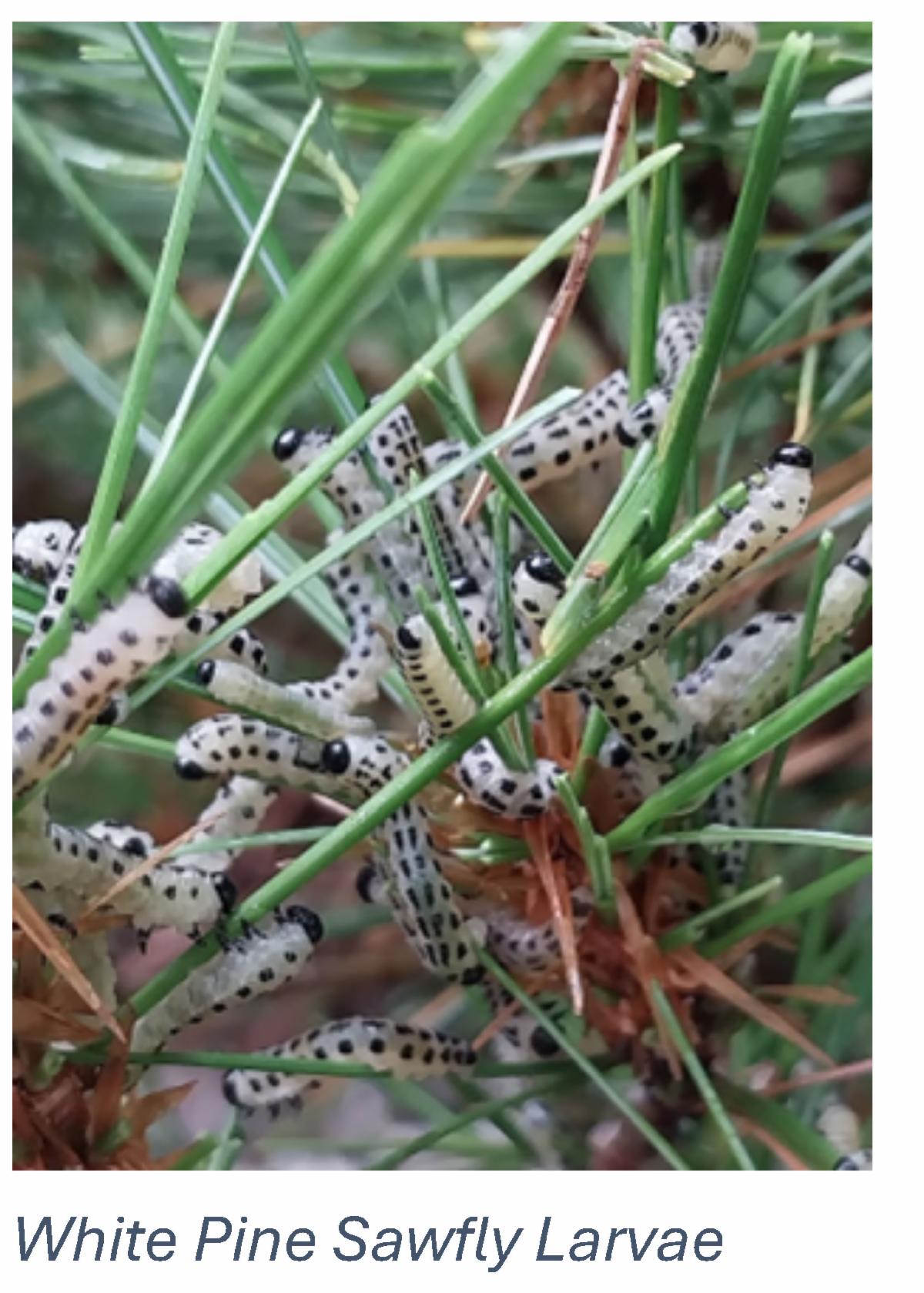
And just when I thought I was through the worst, white pine sawfly, Neodiprion pinetum, appeared in late August. They went for my dwarf white pines which were also in containers. They love eastern white pine (Pinus strobus) but will go for other pine species in a pinch. They have a whitish body with rows of black spots along their sides and their head is black. All in all, they take a great photo. There were hordes of them feeding voraciously on the needles and they consumed entire clusters leaving only the central stem. Unfortunately, their cousin, European pine sawfly, Neodiprion sertifer, is also here and likes pines too, especially Scots pine, mugo pine, and red pine.
| |
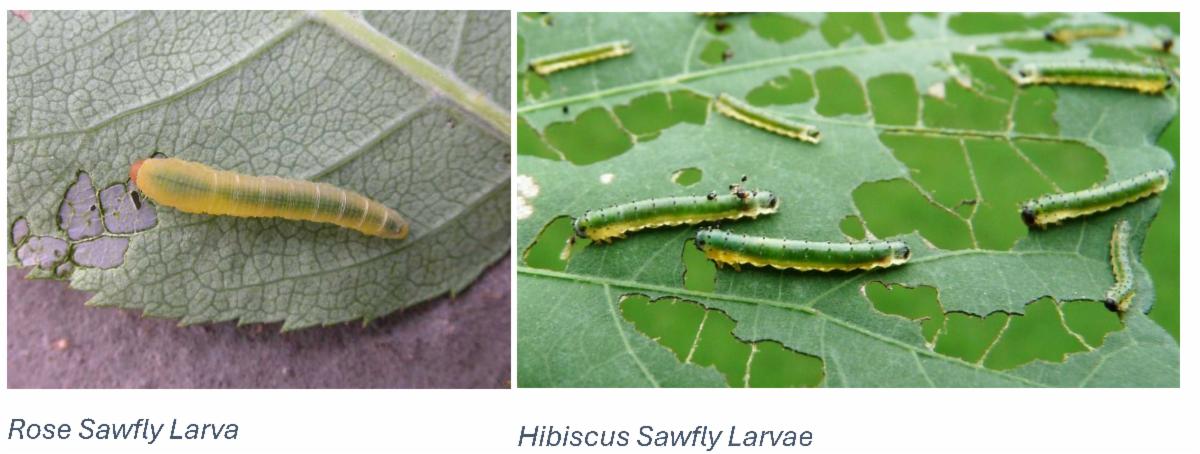
One reason I don’t grow roses is because too many things like to eat them. Those of you who do grow them have undoubtedly met a number of different species of rose sawfly, aka roseslugs. The larvae are small and green and most active in the spring and early summer. All the other sawflies I mentioned have only one generation per year but some rose sawfly can have multiple generations especially in warmer zones. The hibiscus sawfly, Atomacera decepta, goes for rose mallows, Hibiscus moscheutos, but not Rose of Sharon, H. syriacus, which is just a shame. The larvae are similar to rose slugs except there can be three or more generations that can infest hibiscus plants repeatedly from late spring through fall. I didn’t see it this season because they killed my perennial hibiscus a few years back. | |
|
So, what to do? My mantra is live and let live when it comes to most insects but there is no question that the defoliation will impact a plant’s growth and health. An occasional occurrence may not spell the end but repeated sawfly infestations can severely weaken or kill a plant. For some deciduous plants that they feed on late in the season, it may be fine to be a bit lax but for needled conifers, that is not an option. It will take a long, long time for my dwarf pines to recover.
Control it is. My favorite is hand picking and it works well if all of the plant leaves are accessible. I tried spraying them off with a blast from the hose but they hung on for dear life. It required too much water and some just climbed right back up. Also, the larvae overwinter in the soil as pupae and I don’t want any to crawl off and burrow in for next year. I drop them in soapy water to guarantee their demise. Oh, let me warn you that sawfly larvae will raise their front or rear ends into the air as a defensive behavior and it is very creepy when you see it en masse.
You can use organic insecticidal soap or horticulture oil but be aware that they usually require direct contact with the larvae and that can take some doing. Before you reach for your Bacillus thuringiensis (Bt), remember that even though the larvae look like caterpillars, they are not so Bt is not effective. Of course, the ultimate biological control are natural predators like birds, especially chickadees and sparrows. I saw wrens picking at the larvae on my birch. A friend took my dogwood larvae to feed to her chickens. They would not eat them — apparently some sawfly larvae exude defensive chemicals so no help there. Parasitic wasps and flies also target sawfly larvae, laying their eggs on or inside them and predatory beetles and spiders will chomp on the larvae as well. Apparently, these defenses were overwhelmed so that leaves me and a bucket of soapy water as the first line of defense for next season. Gardening is so relaxing.
To learn more, check out https://homegarden.cahnr.uconn.edu/factsheets/sawflies/
| |
|
CT Invasive Plants Council Bans Invasives
By Holly Kocet, FGCCT Conservation Chair and member of the Garden Club of Newtown
| |
|
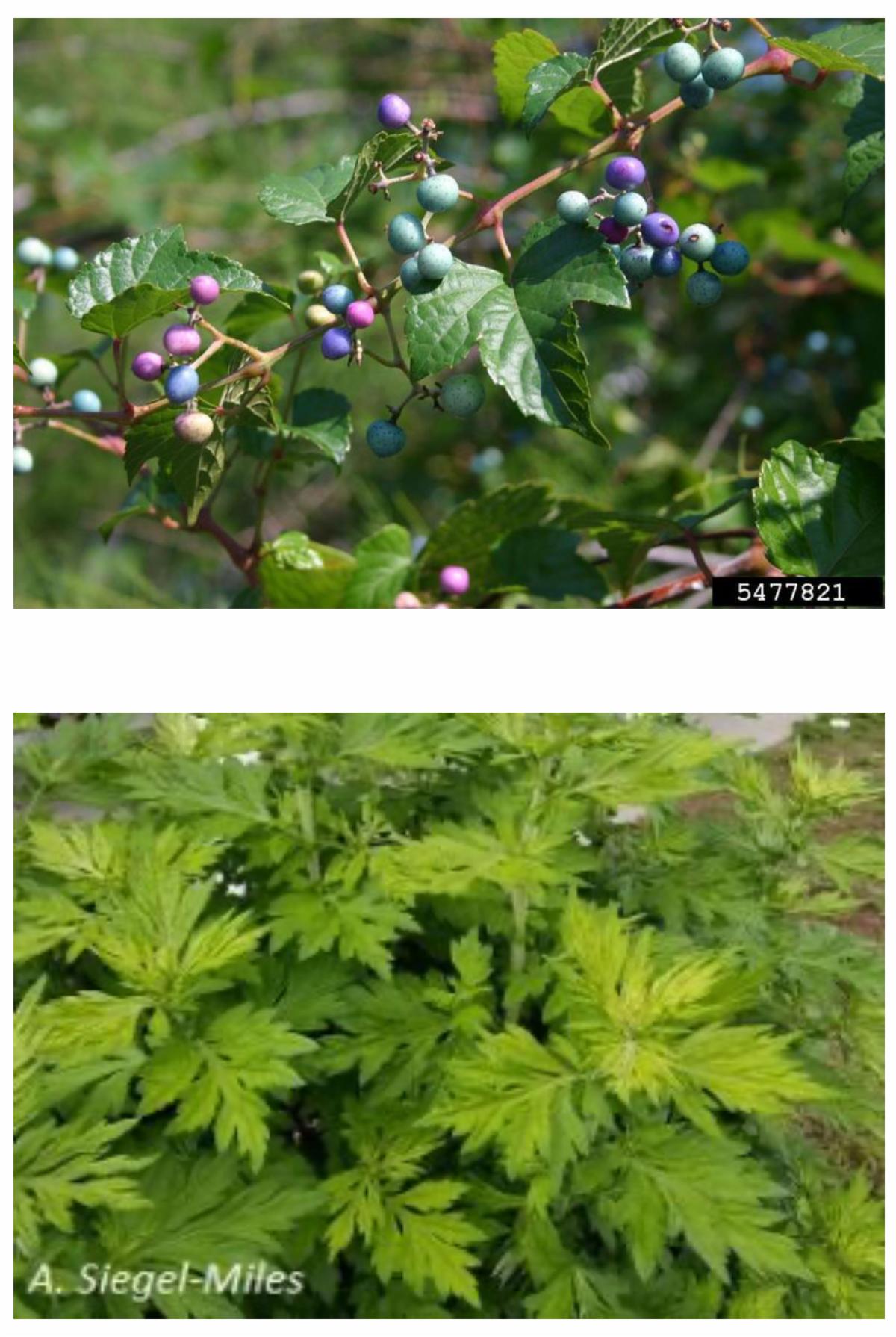
Not since 2005 has the CT Invasive Plants Council (IPC) moved to ban a single plant previously determined by scientific evaluation to be invasive. Beginning October 1, 2024, two plants, Porcelainberry and Mugwort, already on the CT Invasive Plant List but without restriction, were finally prohibited by state statute from importation, movement, sale, purchase, transplanting, cultivation and distribution.
Porcelainberry (Ampelopsis brevipedunculata) is a vigorous climbing vine that blankets shrubs and small trees, blocking sunlight to weaken and kill them. Prolific seeds are spread by birds and mammals.
Mugwort (Artemisia vulgaris) is a herbaceous perennial that spreads primarily by aggressive rhizomes to form mono-specific stands anywhere soil is disturbed.
Five (5) new additions to the CT Invasive Plant List all meet specific criteria for banning these plants. They include Japanese Angelica tree (Aralia elata), a suckering and self-seeder that creates dense thickets; Chinese and Japanese Wisteria (Wisteria sinensis and floribunda), with twining vines that cover and girdle shrubs and trees and stems that root wherever nodes touch the ground; and Quackgrass (Elymus repens), which is spread by rhizomes and also releases chemicals that inhibit other plant growth.
| Above, left to right: Japanese Angelica tree, Chinese & Japanese Wisteria, and Quackgrass | |
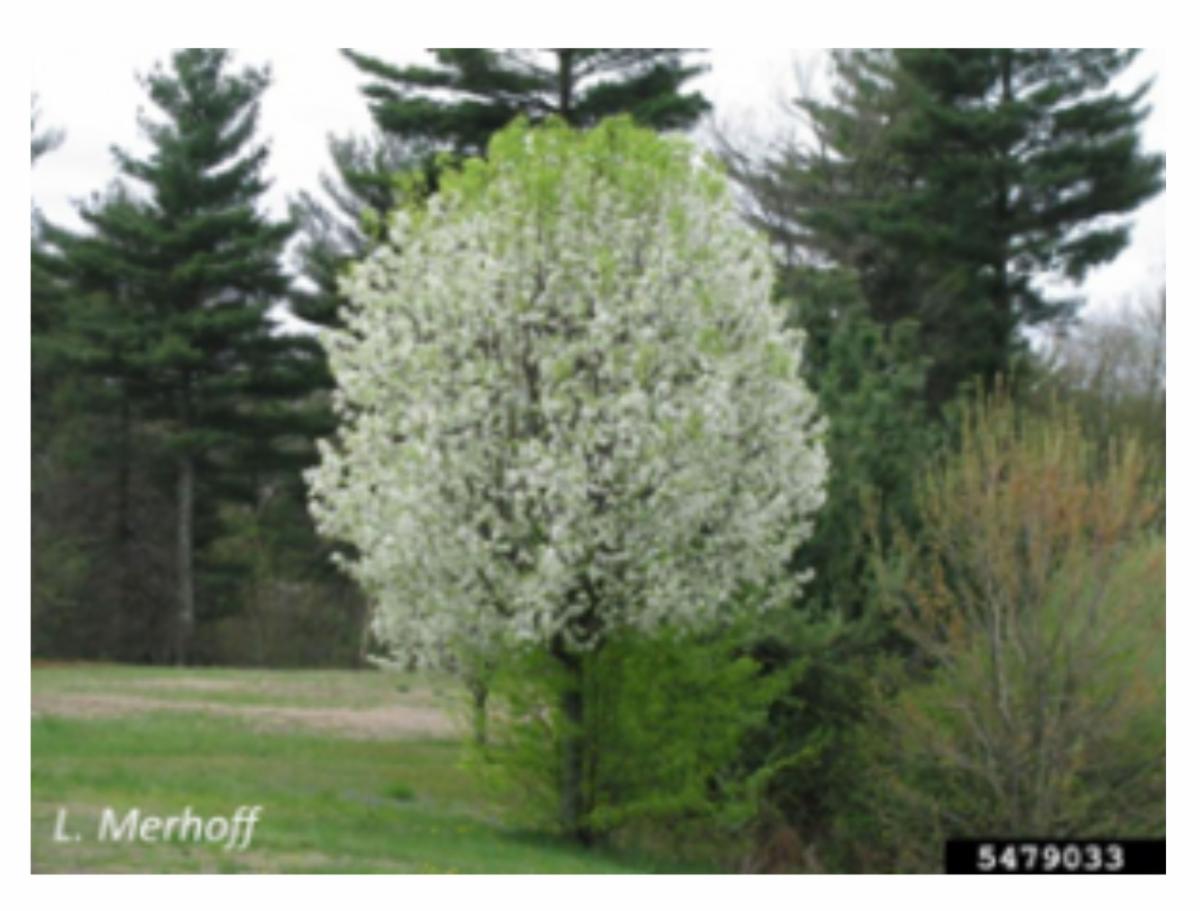
Finally, Callery Pear (Pyrus calleryana) has also been added to the List. With a 3-year phase out period, it will not be banned from sale until 2027. One could guess that the reason is to allow nursery stock to be depleted. Meanwhile, this tree will continue to escape cultivation and spread into natural areas.
(All photos courtesy of CT Invasive Plant Working Group, CIPWG)
While banning these seven species is a very positive development, it has taken far too long. The years have seen these plants and others take a foothold along our streets, woodland borders, meadows, fields and forests. Glance into any woodland in fall and see a monoculture of muted-pink Winged Euonymus, aka Burning Bush. And in spring, Burning Bush, Japanese Barberry and Multiflora Rose are noticeably green along roadsides and woodland edges. Invasive plants typically leaf out earlier and hold leaves longer than native plants, giving them a huge competitive advantage over our native species.
Clearly, these new additions to the List don’t go far enough in banning plants known to be detrimental to the environment and human health. Three (3) years of Annual Reports are evidence of the IPC’s knowledge and concern, reacting at a snail’s pace while invasives continued to spread unchecked.
2021 Annual Report – two invasives of serious concern
-
Porcelainberry is now of significant concern and since no longer of economic importance to the commercial plant industry, the Council recommends that porcelainberry be placed on the prohibited list.
-
Council notes concern for the invasive Barberry-deer tick-Lyme disease relationship and its impact on public health. (No recommendation given).
2022 Annual Report - two more invasives wreaking havoc
-
Council notes increasing spread of Callery Pear and Akebia vine (Akebia quinata) into terrestrial habitats. (No recommendation given).
2023 Annual Report (December) - Council finally takes action
IPC strongly urges the Environmental Committee to take immediate action to approve and adopt these recommendations:
- Designate Porcelainberry and Mugwort as “prohibited from sale”.
- Add Callery Pear to the invasive plant list with a 3-year phase out period.
- Add Quackgrass and Japanese Angelica tree to the invasive plant list with no phase out period.
- Add Japanese and Chinese Wisteria to the invasive plant list with no phase out period.
As previously mentioned, the Environmental Committee did take notice and approved the IPC’s recommendation to ban these plants. However, the effective date for the ban would take another ten (10) months to implement. All but Callery Pear were banned effective October 1, 2024.
Reason for Optimism
The IPC’s draft minutes of October 16, 2024, give reason to hope that plants on the List and known to be invasive, yet still sold to unsuspecting consumers, will someday be off the market. Council members voted in favor of a 3-year phase out period for several plants including Glossy and European Buckhorn, Reed Canary Grass, Winged Euonymus, European Privet, Black Locust, Miscanthus, and Japanese Barberry with possible allowance for sterile cultivars. Norway Maple, a popular but extremely invasive tree that continues to invade our woodlands, also got the Council’s vote for a 5-year phase out with possible allowance for sterile cultivars.
As long as invasives are sold and planted, they will continue to infiltrate our woodlands and wild places and create monocultures that outcompete our native plants and trees, which are vital to local ecosystems on which all life depends. So it is encouraging to see that the Invasive Plants Council is now actively taking steps to remove plants from sale that are known to escape cultivation. Each one of us can help by letting our state representatives know how invasives are impacting our properties, our parks and our towns. Ask your representatives to notify the CT Environmental Committee of these concerns. To find and contact your representatives, go to: www.cga.ct.gov and click on representation menu.
| | | | |
SPOTLIGHT on our FGCCT Affiliates! | | | | |
|
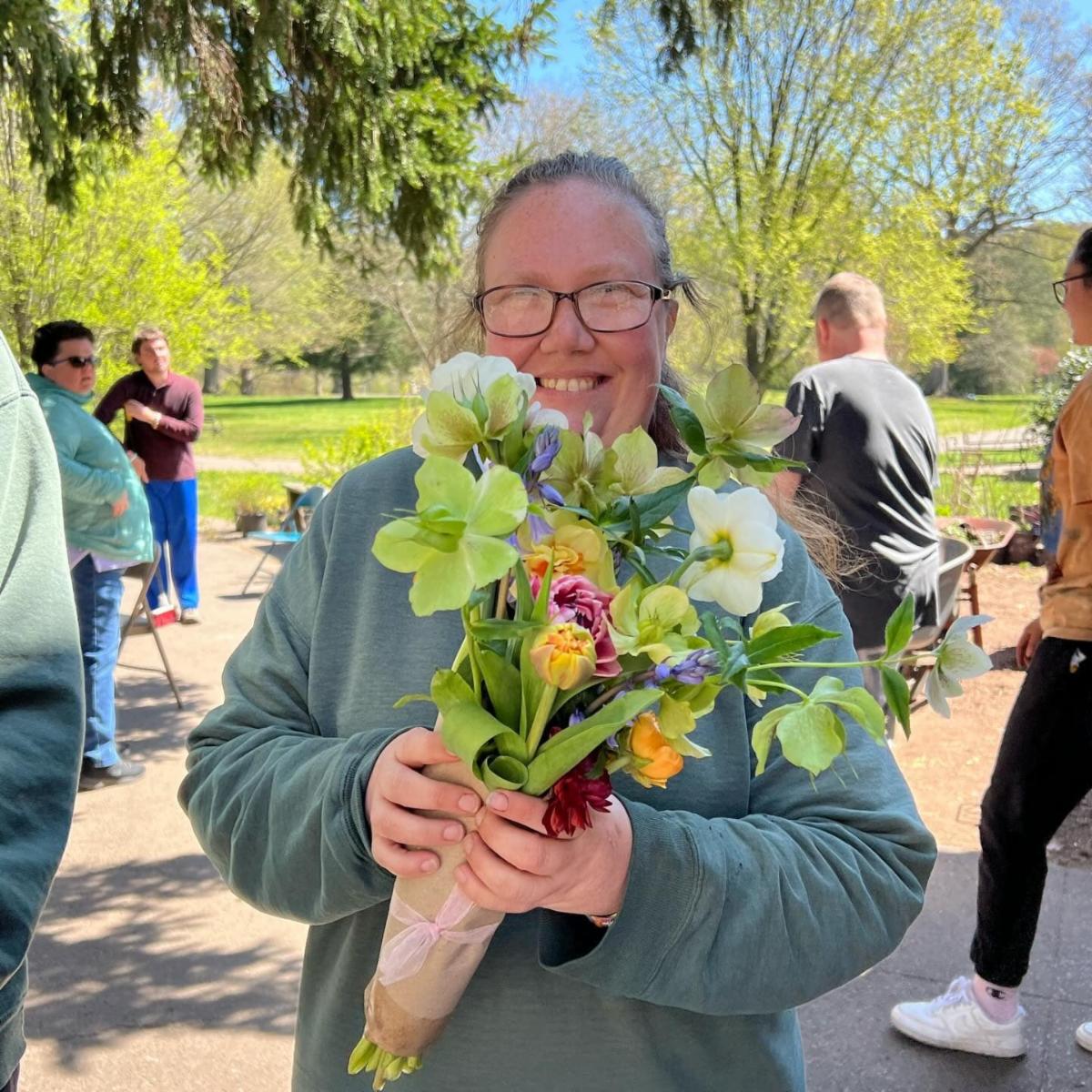
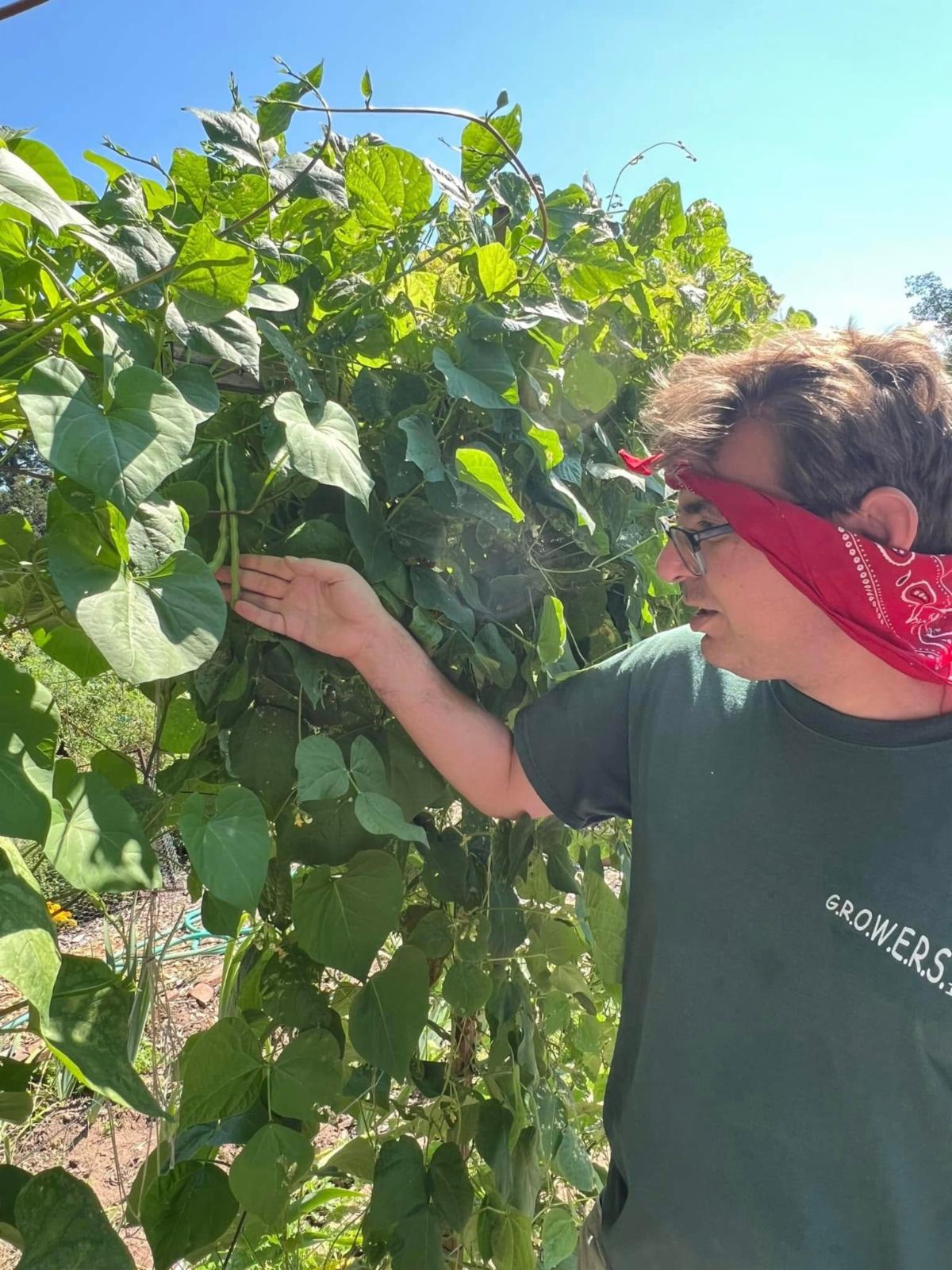
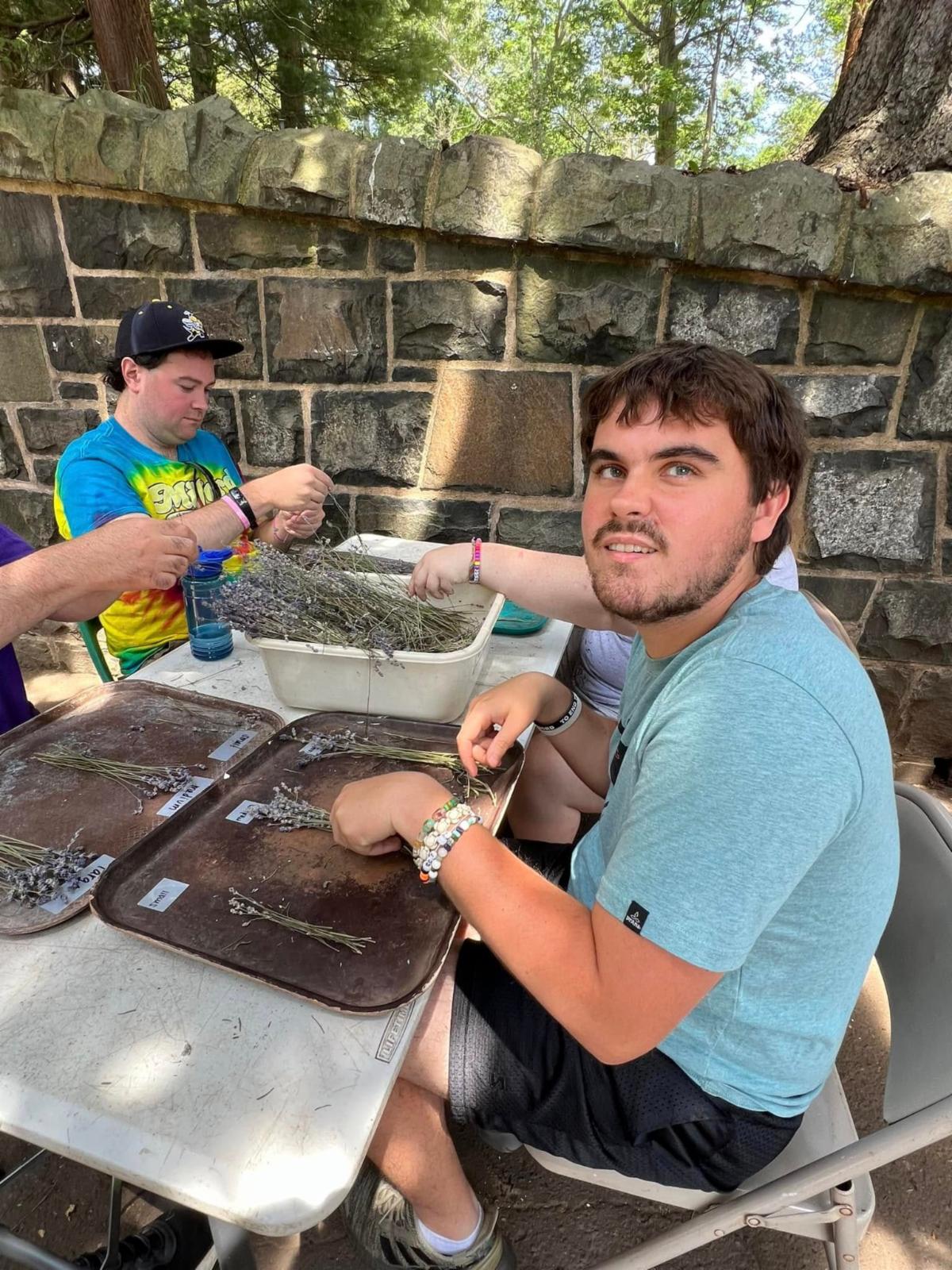
G.R.O.W.E.R.S. Inc. is a non-profit 501(c)3 corporation that is a vocational horticulture program for adults with differing abilities. We use horticulture, and a niche type “garden center” program, to teach work skills and life skills to adults with developmental and physical disabilities. We are based in a historic greenhouse complex in Edgerton Park in New Haven. These beautiful greenhouses were built in 1909 as part of the Brewster Estate, which was left to the City of New Haven as a park in the 1960s. The greenhouses have been fully restored over the last 30 years, and are home to the Sarah Crosby Conservatory, overseen by the Edgerton Park Conservancy, as well as the space that the G.R.O.W.E.R.S horticulture program uses for its daily activities.
The participants in the G.R.O.W.E.R.S. program oversee and care for all kinds of plants, including tropicals (including many unusual varieties), vegetable plants, annuals, perennials, shrubs, etc. We grow many native plants that are utilized by local non-profit organizations, give tours and programs for local schools to teach children about greenhouses and ecology, and participate in the extensive community gardens that are adjacent to our greenhouse complex.
The G.R.O.W.E.R.S. program has been in this complex since 2011, and its precursor, Greenbrier Greenhouses (in which many of the members started) has been at the site since 1983. Program participants are involved in several programs, including a “micro-greens” growing program with the greens sold at a local farmers market, a landscaping crew that works hard for people in the East Rock and beyond community of New Haven, and the crew that takes care of the greenhouses! Our crew loves going to the Hartford Flower Show every year, manning a booth that offers a “kids' planting” of seedlings of some of the plants that we grow at the greenhouse!
The greenhouses are open to the public 7 days a week throughout the year. We have 33 participants from all over the Greater New Haven area and beyond who love to show the public what they do every day. We welcome all to visit and will gladly offer a guided tour to anyone that would like to get a closer view of what we do!
Come meet G.R.O.W.E.R.S. Inc in the Education Division at the CT Flower and Garden Show in Hartford February 20-23!
To learn more, visit their Facebook page.
| | | | |
| |
|
"Club Corner" is a place for clubs to showcase exceptional or notable club achievements and activities. Has your club done something unique (or uniquely successful?) that you'd like to share? Visit "Club Corner" on the FGCCT website for more news from clubs! (Note that this area is NOT for upcoming events—you can post those on the FGCCT Club Calendar.)
Send high-resolution photos, along with a writeup (200 words or less, please) and photo captions, to martha.sherman@ctgardenclubs.org to be considered for inclusion. Please ensure that you have appropriate permissions for all photos. We reserve the right to edit copy and select photos for inclusion.
| |
Featured Club: The Clinton Arbor Garden Club | |
|
Clinton Arbor Garden Club Presents Festival of Trees and Wreaths
For the Clinton Arbor Garden Club, holiday preparations begin in early November. Members gather to trim the town’s three gazebos with garlands and lights, fill the memorial planters with ribboned greens, and take part in workshops to create designs to be auctioned off at their annual Festival of Trees and Wreaths. While many of the creations are classically trimmed to capture the magic of the season, the club has added more thematic designs that reflect a variety of interests, hobbies, lifestyle, and other passions. Residents and businesses can easily choose to display these festive pieces all year long. Member-designed centerpieces and swags made of live greens are also available for sale with something for everyone.
The Festival of Trees and Wreaths is one of the Clinton Arbor Garden Club’s major fundraisers and each uniquely created item is sponsored by a local business, helping to fund the club’s annual efforts, including student scholarships, town beautification, civic projects, and educational talks offered at no charge to the shoreline community. This year’s festival takes place on Sunday, December 8, 2024, from 1:00 to 5:00 pm at Town Hall, located at 50 East Main Street in downtown Clinton, CT. The festival includes a variety of food offerings, holiday lights, festive music, and an array of artisan vendors. The day is sweetly capped off by hot cocoa and cookies, a visit from Santa Claus, and the lighting of the town tree.
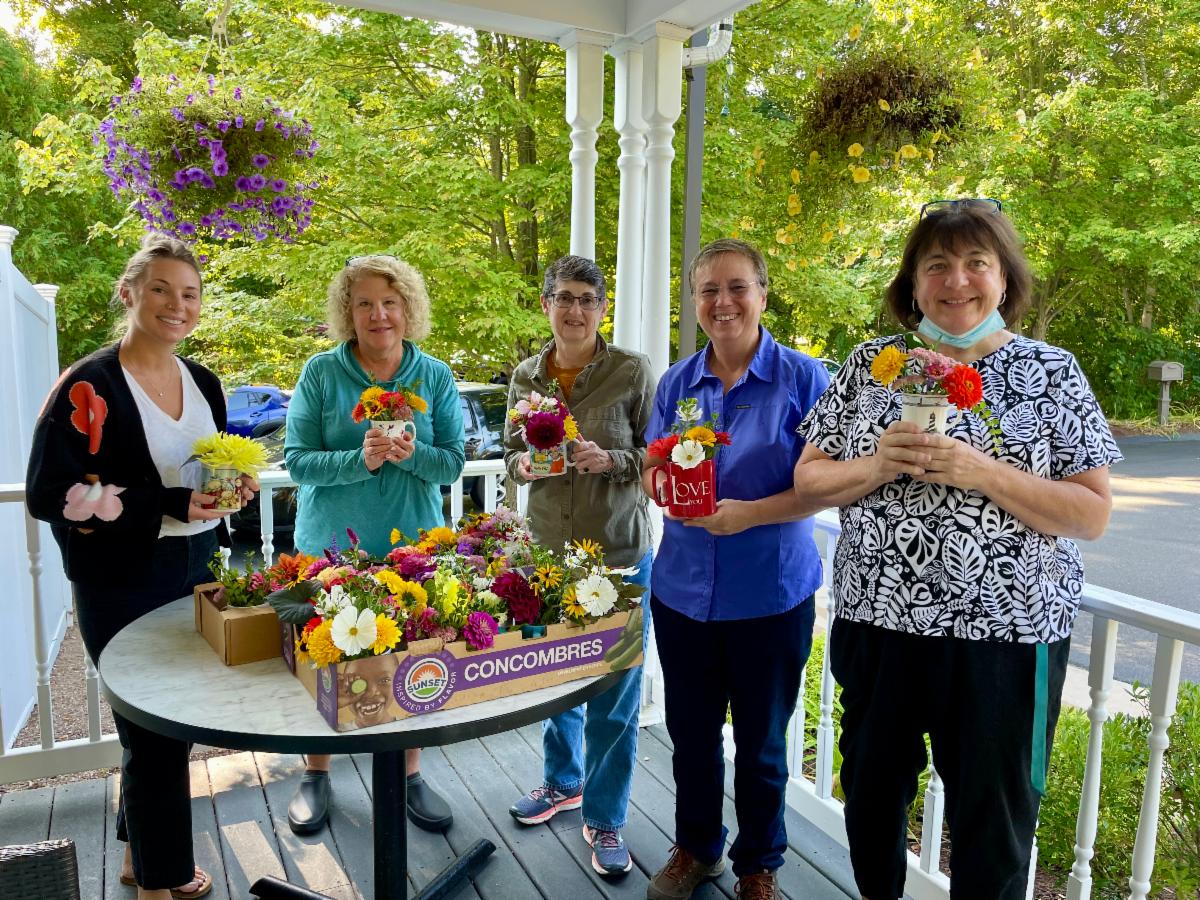
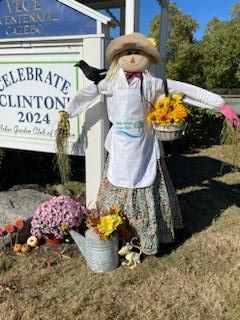
The Club is active throughout the year, from its "Cups of Cheer" program for residents of Ocean Meadow Senior Living and Memory Care to its Third Annual Scarecrow Contest, which raises funds for the Club's activities and programs through entry fees.
| |
Club members (left to right) Dana Horrigan, Sue Schaedler, MJ Lanzillotta, and Sandy Pardes present Cups of Cheer to residents of Ocean Meadow Senior Living and Memory Care. Each cup is lovingly prepared by our members using mostly garden cuttings. Also pictured is Ocean Meadow’s director, Mary Ellen Ierardi. | | |
The club’s own scarecrow, designed to “scare up” town participants for the Third Annual Scarecrow Contest, was created by member Pam Reiss, with staging help from Liz Isaacson, MJ Lanzillottta, and Sandy Pardes of the Ways and Means Committee. | | |
Celebrating the 100 Year History of The Garden Club of Old Greenwich | |
|
Founded in October of 1924, The Garden Club of Old Greenwich spent all of 2024 celebrating the rich history of our garden club and honoring the women, past and present, who promote our purpose: to stimulate an interest in the cultivation of plants, flowers and the making and improving of gardens to promote community and civic betterment.
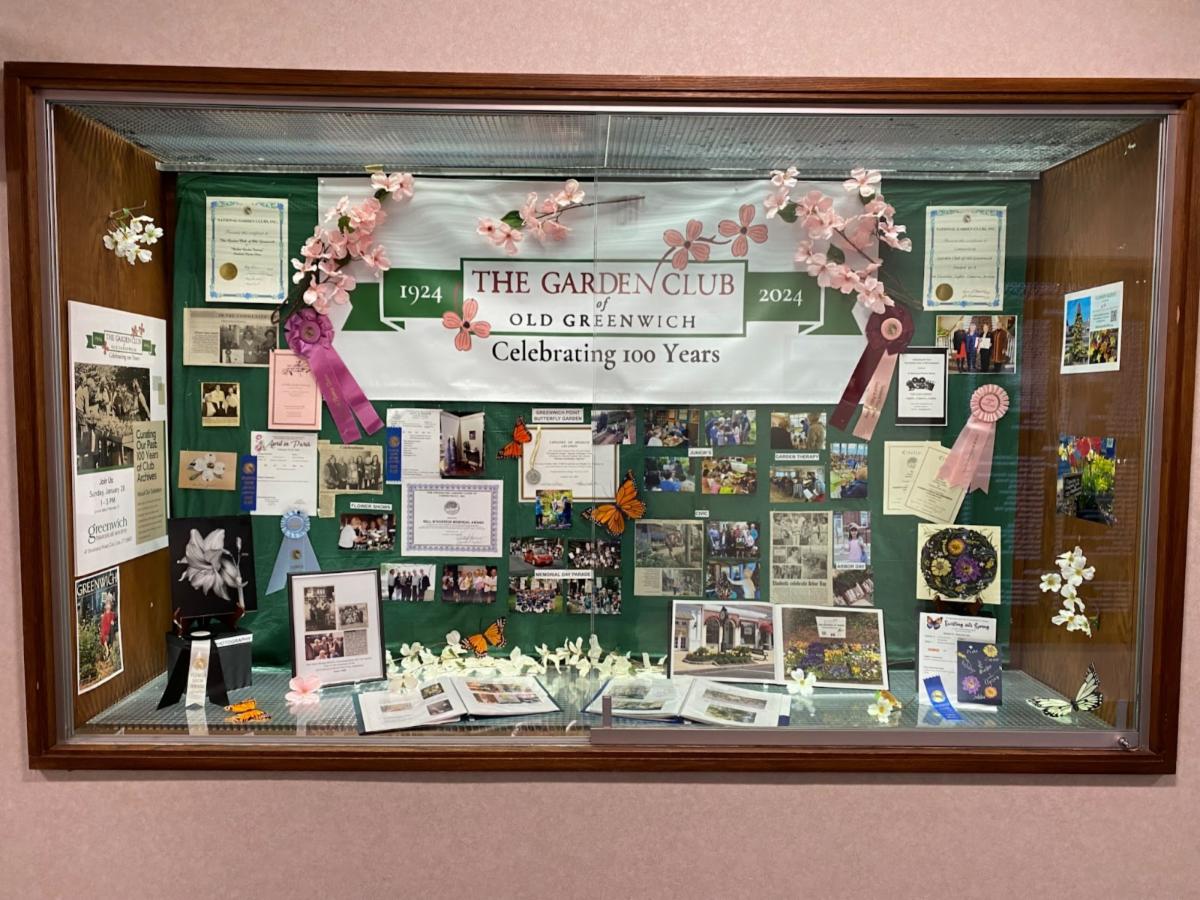
The year kicked off with a curated display of club archives, dating from 1927 through the present, housed at the Greenwich Historical Society. These materials went on to create a showcase at Greenwich Town Hall and the publication of a 52-page commemorative booklet detailing the club’s rich history each decade.
| | |
|
|
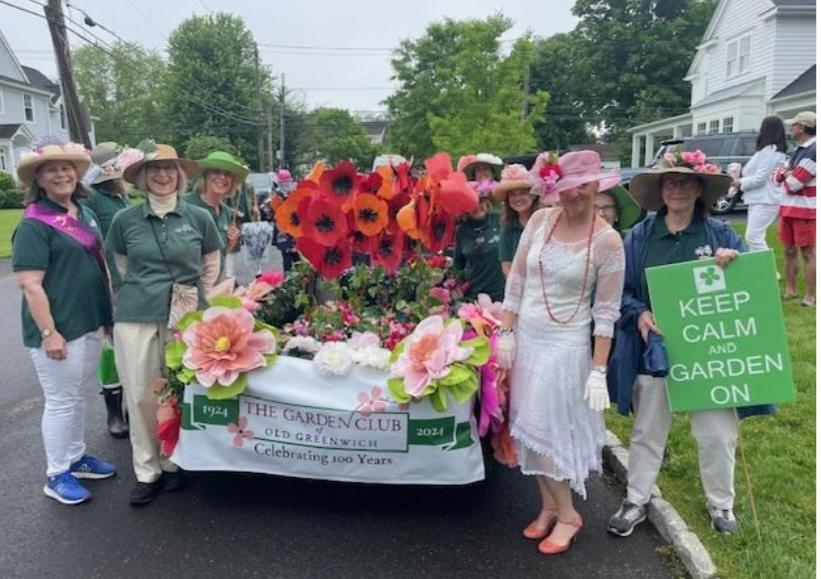
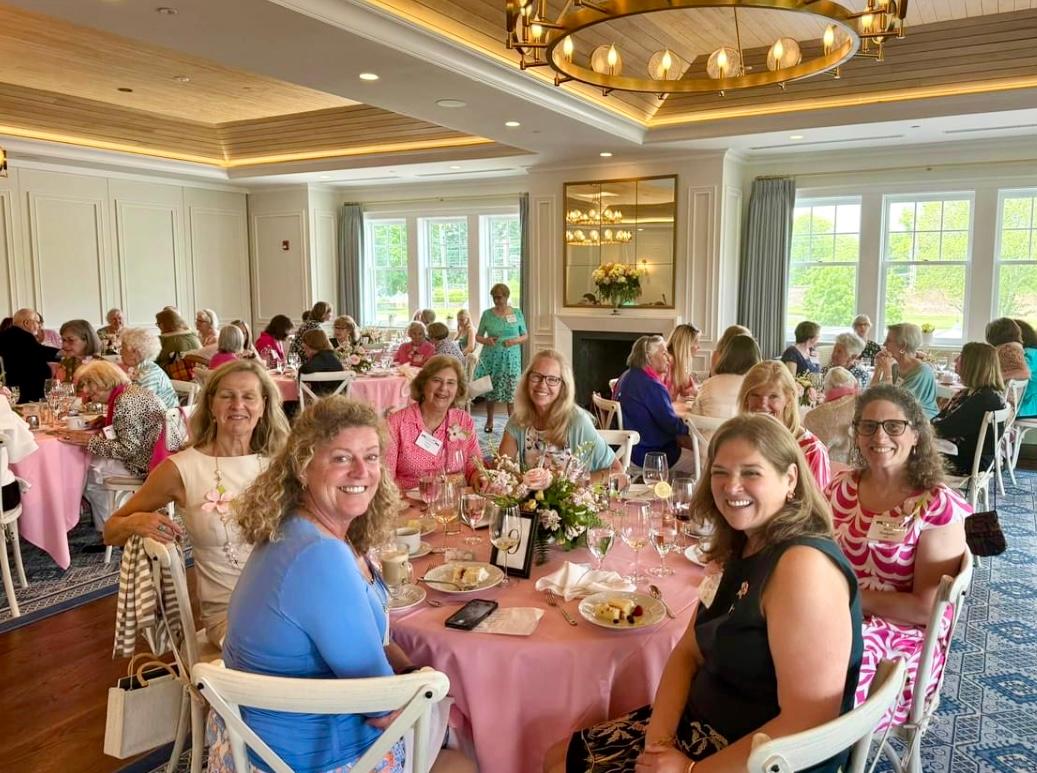
We created a special floral float for the Sound Beach Memorial Day Parade that 40 members — including two members dressed in 1920’s vintage dresses — marched alongside. We planted five memorial dogwood trees and hosted a celebratory luncheon that included the attendance of 11 past presidents.
In September, we hosted our approximate sixtieth flower show, "The Way We Were", by staging the first Horticulture Specialty Flower Show in the state of Connecticut, at the historic Innis Arden Cottage.
The celebration year was also marked by member trips to Untermyer & Wave Hill Gardens in addition to special guest speakers offered to the public and donations totaling over $8,000 to support nonprofit environmental education, scholarship and preservation programs.
To learn more about the Club, click here.
[At left, top to bottom: the Memorial Day Parade; a celebratory luncheon in June at Innis Arden Golf Club; and "The Way We Were" — a Horticulture Specialty Flower Show staged at Innis Arden Cottage.]
| |
|
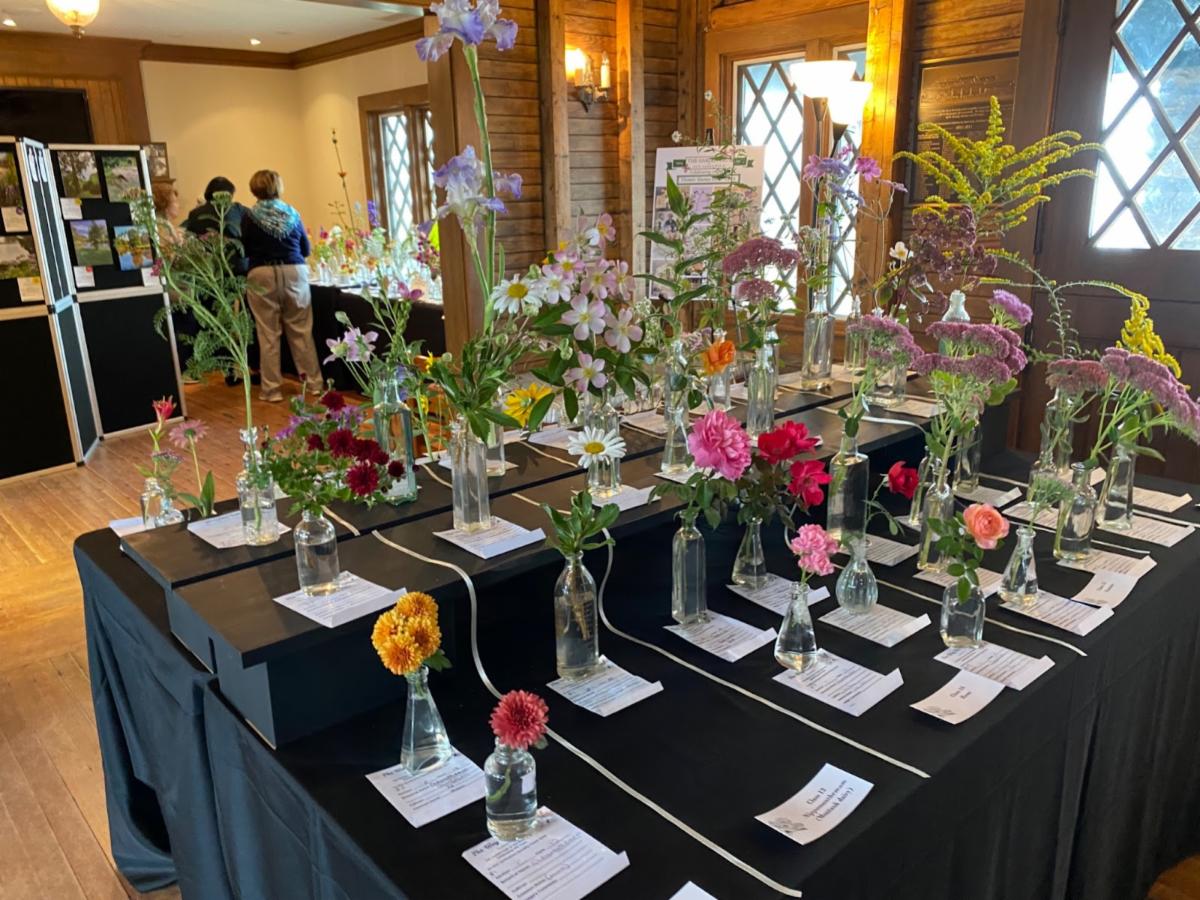
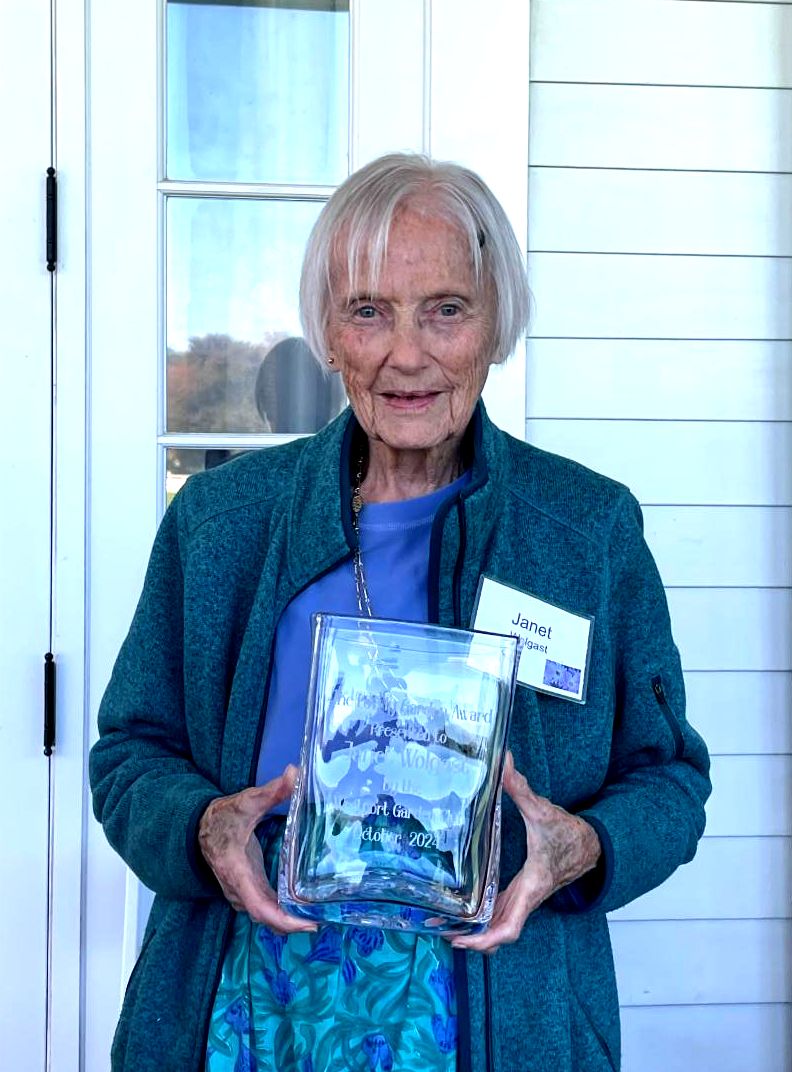
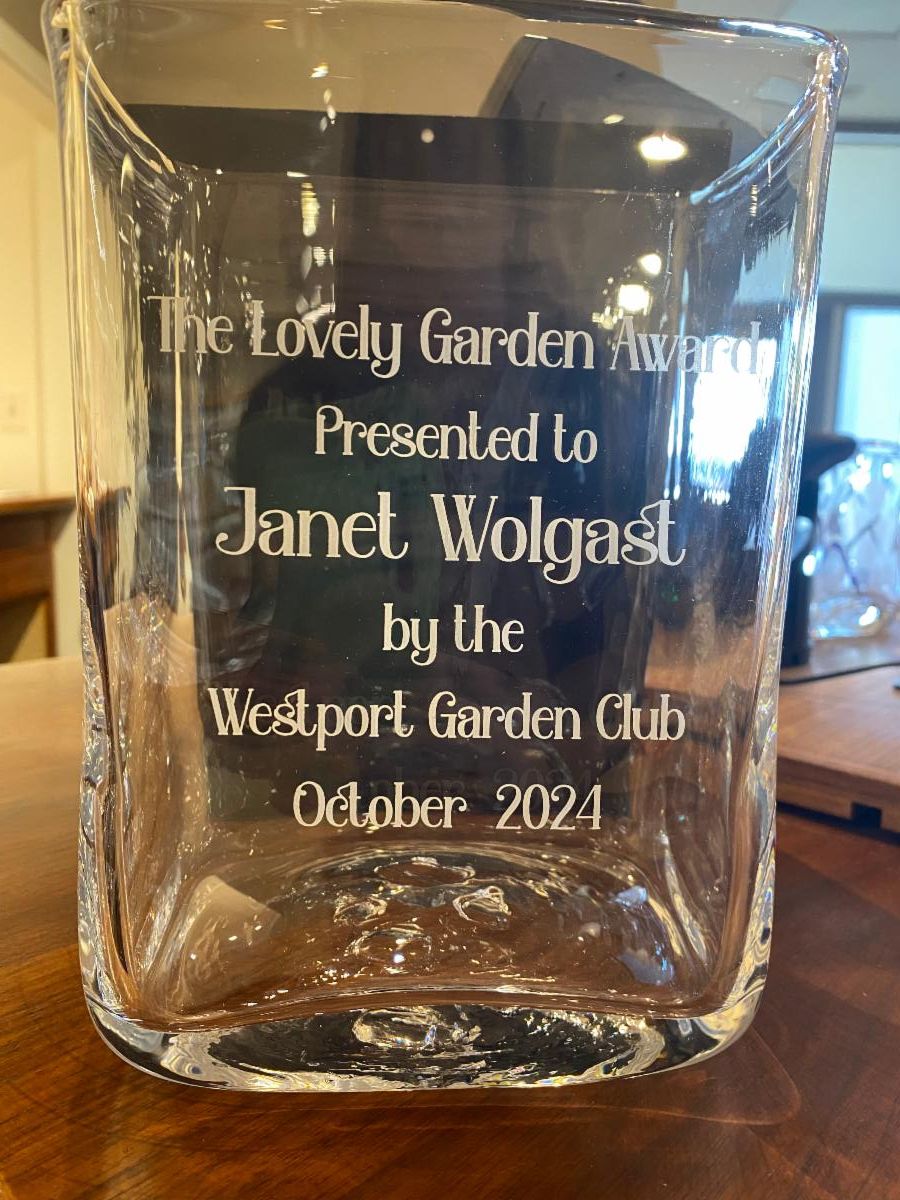
The Westport Garden Club bestows Club’s Lovely Garden Award on member Janet Wolgast at annual luncheon
At the Westport Garden Club’s 100th Luncheon, Janet Wolgast received a special Lovely Garden award from the club. Janet joined the Westport Garden Club in 1991. Every year she donates the most spectacular lilacs from her garden for the plant sale and her floral arrangements sell out in a flash. Her garden is a wonder, and she has donated countless “perkies” for the annual plant sales and a forest’s worth of clippings for the wreath workshop each year. The plantings and her vegetable garden, where she grows almost everything from seed, is a very special oasis. Her peonies are something rather special too; she can tell you all the cultivars and who developed them. Although she is a private person, she will share that she and her husband obtained their pilot licenses together on Valentine’s Day in 1977 (Pete only agreed to take ballroom dance classes if Janet agreed to take flying lessons).
Janet has been a most valued member of the Westport Garden Club, and her smile is contagious!
Learn more about the Westport Garden Club here.
| |
| | | |
| |
Donations to FGCCT's Scholarship Fund; Healing, Therapy and Senior Gardening Fund; and World Gardening Fund | |
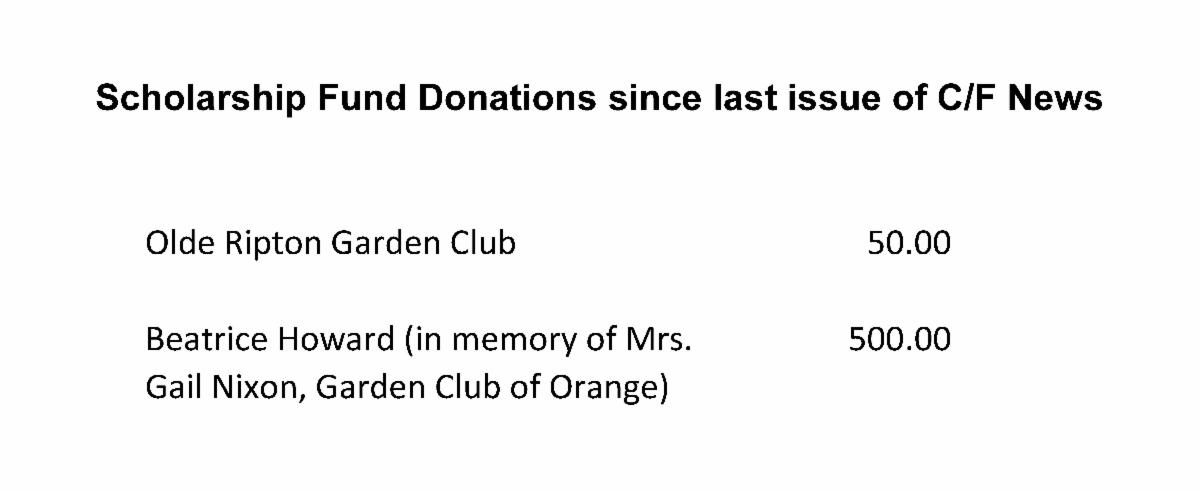
We thank the following Garden Clubs for their recent donations to the FGCCT Scholarship Fund.* For almost 40 years, the Federation has awarded scholarships to college and university students who major in Agronomy, Botany, City Planning, Conservation, Environmental Studies, Floriculture, Forestry, Horticulture, Land Management, Landscape Design, Plant Pathology, or allied subjects. We welcome donations of any size. Our appeal is ongoing to give all of our clubs the opportunity to make a contribution in the amount of their choosing.
| |
Please send all Scholarship Fund donation checks to the appropriate chair (see below). Make checks out to "FGCCT" with the appropriate Fund listed on the memo line.
*Please note that due to the deadline for articles and information for the CFNews, some donations may not be received and deposited in time to be included in the bi-monthly donation acknowledgement, but will be included in the next issue of our newsletter.
PLEASE MAIL CHECKS TO:
| |
For World Gardening & Healing, Therapy and Senior Gardening:
The Federated Garden Clubs of CT, Inc.
Attention: Rosemary Bonaguide
PO Box 902
Wallingford, CT 06492
| |
For FGCCT Scholarship Fund:
The Federated Garden Clubs of CT, Inc.
Attention: Carole Fromer
PO Box 902
Wallingford, CT 06492
| |
Follow us on Facebook and Instagram!
FGCCT is on Facebook and Instagram and we love to post your news and photos! Please send upcoming events, club activities, civic projects, milestones, and hort tips. Include photos and a brief writeup of the news your club would like to share. The best format is text in an email with jpg photos attached. Take active photos showing members at work or showcasing beautiful gardens, flowers, and plants (please name the flower if it is a hort only photo). Let’s follow each other! Send submissions to social@ctgardenclubs.org
| |
Just a reminder …
Please send all correspondence to the new FGCCT office:
The Federated Garden Clubs of CT, Inc.
P.O. Box 902
Wallingford, CT 06492
Did you recently elect new officers? Email their names and contact information to us at office@ctgardenclubs.org so they will receive Federation correspondence. If you need assistance, please contact FGCCT Office Administrator Joan Lenart at office@ctgardenclubs.org or by phone at 203-488-5528 on Mondays and Wednesdays, from 10 am to 2 pm.
| | |
Deadline to submit articles/photos, ads and calendar events for the February / March 2025 issue of the CFNews is January 10, 2025. Please submit to: | |
|
Reminder from NGC: The National Gardener is ONLINE (and free!)
The official publication of the National Garden Clubs, The National Gardener, appears quarterly, and features articles of interest to environmentalists, gardeners, landscapers, floral designers, educators and photographers. Subscribe here.
| | |
|
|
State, Regional &
National Events
| |
| | | |