| |
| |
| |
| |
|
As I write, Winter Storm Albatross is on the horizon. I’m so excited! As long as we can all stay safe and warm, snowstorms are my favorite kind of weather. The Farmers’ Almanac refers to snow as the poor man’s fertilizer since it seeps into the soil slowly without causing any erosion. Enjoy the beauty and keep your bird feeders and heated bird baths full.
In past years we were inundated with seed catalogues in January, not so much this year. Our mail has only included Gurney, Brecks, Burpee, and Johnny’s this year. I miss the beautiful Botanical Interests catalogue. Others have come via email and text. I rather like the hard copies, but virtual copies do save trees and postage! For those reasons, I understand. There will be seed vendors at the Flower and Garden Show at the end of the month, so plan your gardens and make your lists!
| |
|
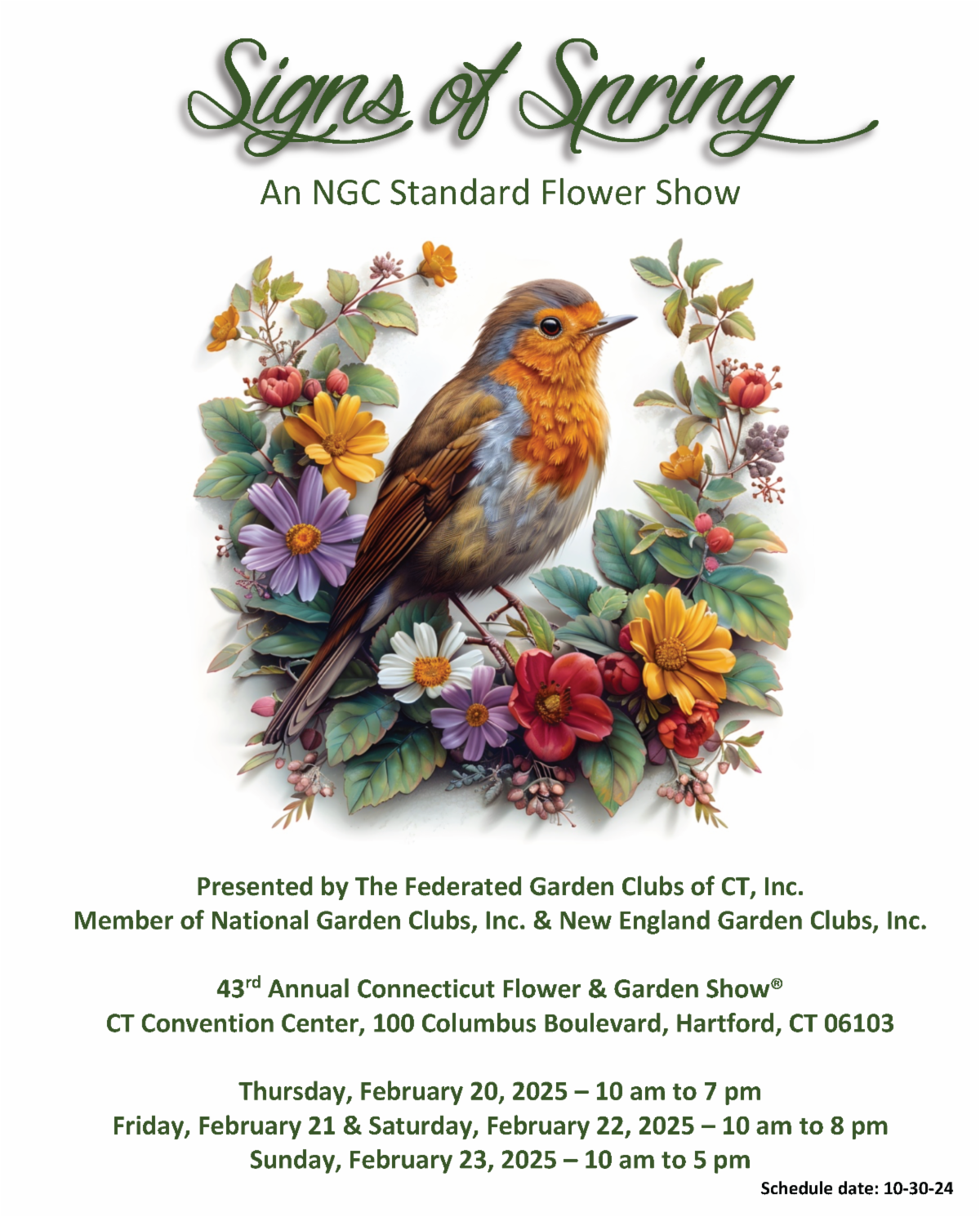
Signs of Spring is upon us! Please keep in mind the flower show is sponsored by The Federated Garden Clubs of Connecticut, Inc., and we are all members of FGCCT. Please consider entering horticulture, design, botanical arts or photography, as well as volunteering for hospitality. It is easy to become involved. Click on Signs of Spring to view the Schedule. Click on Registration to sign up to exhibit. Click on Hospitality to help. Those who help in Hospitality have access to the hospitality suite, free entry and a 4-hour parking pass. We still have holes! Time is running out to order club discount tickets. Your request must be received by February 7 to receive the $14 price. (that’s $7 off the regular price)
Our traditional President’s report is in the process of an update and will be available by February 10. Please make sure your president, vice president and treasurer information is up to date with our office at office@ctgardenclubs.org so the request will go the correct individual. The President’s report has been the impetus for new opportunities. The five Roundtables were well attended and served to connect local clubs. The Treasurers and Awards Zooms took place in October and January, respectively, and a social media Zoom workshop will occur in March. Watch for an announcement.
Mark your calendar for the FGCCT Annual Meeting on April 16, 2025. Larry Weaner, renowned for an innovative blend of ecological restoration and native garden and landscape design, will be our speaker. We hope Larry’s presentation will encourage you to enroll in the FGCCT Landscape Design School. Registration is open on our home page….March 25 & 26, 2025.
| | |
|
|
I look forward to visiting with many of you at the Flower and Garden Show, Signs of Spring, in a few weeks. The committees have been hard at work creating what will be a fabulous show!
In Friendship,
| | | | |
Upcoming Events — Mark Your Calendars! | | | | |
Ah! The "Signs of Spring" | |
|
February is Flower Show month, and we hope you are all prepared with your entries and plans to visit the show. Signs of Spring, The Connecticut Flower Show, is open to the public from Thursday, February 20 through Sunday, February 23. I will be at the Show all four days, so please stop by and visit with me.
First — be quick! You can order special garden club $14 tickets by calling 860-844-8461 before February 7. If you pay by credit card, a transaction fee will be added. Once the show opens, a ticket is $20 at the door.
| |
|
|
The deadline for Horticulture entries is February 14. All horticulture must be delivered to the show on Tuesday, February 18 between noon and 7 pm, if your horticulture is pre-registered.
Walk in horticulture is only accepted until 6 pm.
Photography pre-registered entries, matted on black foam core board, cut exactly to 8 x 10 size, are also accepted ONLY on Tuesday from noon to 7 pm.
Design entries and Artistic Crafts are accepted on Tuesday from noon until 7 pm and Wednesday morning from 8 am to 10 am. We will begin Judging all entries on Wednesday at 10:30 am, so it is necessary to have all entries complete for judging to begin, please don’t be late delivering your entry.
Help! I need some bodies, Help! with apologies to the Beatles, we need volunteers at the Flower Show. Volunteer and receive a free ticket to the show!!! We need a few more volunteer hosts, who interface with the public at the Show. They circulate on the floor, answer questions, guard our exhibits from itchy fingers and act as the face of The Federation. We especially need people in the afternoon hours and early evening. If you’re looking for an "evening out," join us at the Flower Show from 5 pm to 7 pm on Friday or Saturday night.
| |
|
I’m Vonice Carr, 2025 Signs of Spring CT Flower Show Chair. You can reach me at vonice.carr@ctgardenclubs.org with any questions. I’m incredibly excited about the show and want to share the experience with you. And as many of you already know, I always have time for a chat!
— Linda Kaplan, Public Relations Chair and Vonice Carr, Flower Show Chair
| |
|
Save the Date!
96th FGCCT Annual Meeting and Luncheon
Wednesday, April 16, 2025
Aqua Turf Club
556 Mulberry Street, Plantsville, CT
| |
“If You Do Nothing, Something Will Grow: Spontaneous Plant Recruitment and the Designed Garden”
LARRY WEANER
Larry Weaner is the founder of Larry Weaner Landscape Associates, based in Philadelphia.
Larry’s work has been profiled in many regional and national publications, and he is the author of Garden Revolution: How Our Landscapes Can Be a Source of Environmental Change, which is a literary reflection on his life’s work and foundational ecological principles.
[Photo: Kim Solokoff
| |
Polar vortex. Siberian cold. Even the warmest winter. Don’t think about them!
The Federated Garden Clubs has just the thing to turn your thoughts to budding trees, flowering gardens and emerging vegetables — the 96th Annual Meeting and Luncheon on Wednesday, April 16.
The luncheon will be at the Aqua Turf in Plantsville and will again feature a terrific lineup of vendors. Come at 9 am to give yourself time to register, greet friends, check out the raffle, and shop before the program begins at 10 am.
You can renew your wardrobe, buy some new jewelry, garden art, pottery or other items, or you can stock up for summer birthdays or anniversaries. Our vendors have many unusual and hand-made items. Don't forget that 10% of the sales benefit the Federation’s scholarship program.
Aqua Turf meals are always outstanding. Choose from New York strip steak, vegetarian lasagna, pan-seared salmon, or chicken Florentine. All are served with salad, rolls and butter, vegetables, and dessert.
The price of the luncheon remains $45.
Registration is online only and will open on March 1.
It will close on Wednesday, April 9, at 5 pm.
For more information, call or text Karen Grava at 203-795-8895.
| | | | | | |
SOS !! Environmental School Chair
or Co-Chairs Wanted
Our new Environmental School Chair is moving out of state and will be unable to continue in the position. We are requesting a volunteer to work on delivering truly important information and knowledge to our Federated Garden Clubs of Connecticut gardeners and conservationists, and the public too.
For years, Environmental School has exposed our students to top notch, college quality courses from experts in the field—professors, scientists, engineers, environmentalists, naturalists and authors. Never has the preservation of the environment been more relevant. We can learn how we can be a part of the solution to protect our air, soil and water.
This position can be a team effort. Over the years, we have compiled a roster of instructors from which you can choose. The school consists of four courses, each is offered virtually, via Zoom. We will be happy to assist the new Chair or Chairs as needed. The Chair contacts instructors for the course, and they, in turn, follow the curriculum developed by National Garden Clubs, Inc.
The next course is scheduled for September 2025. Please contact us for additional information or with your questions. Thank you.
Virginia Casanova, 203-710-0133, and Millie Legenhausen
| |
|
Hello Gardeners!
Care For Our Air - Plant A Tree
Care For Your Air - Grace Your Home With Houseplants
Our President’s Project continues to inspire many clubs to plant trees and shrubs in their communities on a regular basis and during milestone anniversary celebrations.
The Black Rock Garden Club planted Eastern redbud, dogwood, red maple, linden and birch trees for interested community members for a donation and a promise to keep them watered until they get established in the garden.
The Greens Farms Garden Club planted 95 daffodils in honor of their 95th anniversary this year. The bulbs were accented with 95 grape hyacinths. These were placed around a plaque that honored their 90th anniversary and a tree planting.
| |
|
At the October Awards Meeting, a member of the Branford Garden Club asked how their club could help with rebuilding after all the catastrophic weather events, especially now with the Los Angeles fires. It’s hard to wrap our minds around the amount of damage, not only to structures but to the landscape itself. The National Garden Club has two programs that will help with this. The NGC is a supporter of the US Forest Service Plant-a-Tree Reforestation program, which replants trees in National Forests following disasters. A donation of $50 buys a tree to be planted, and the donor can designate who benefits from the donation. The second program is NGC’s own Natural Disasters program. Clubs may apply to this program for funds to rebuild community gardens in their area following any type of natural disaster. Consider donating to either fund so there are resources available in time of need!
Click on the following links to donate Plant a Tree or Disaster Fund.
| | | |
|
Penny Pines is now officially Plant-A-Tree. The NGC continues to partner with the USDA Forest Service on this project.
Plant-A-Tree Changes of note:
Donations can now be sent in $50.00 increments. When donating, your club may choose a National Forest; the US Forest Service does reserve the right to utilize funds based on need.
You can donate online at the NGC website. The new form is available to download and must be sent with your check payable to:
NGC Plant-A-Tree
4401 Magnolia Ave.
St. Louis, MO 63110-3492
As of 5/31/2025, paper certificates will no longer be available; digital certificates will be utilized.
Please continue to email me with your club's plans, ideas, and contributions.
— Carmelina Villani, FGCCT President's Project Chair
| | | | |
|
What is the Purpose of a Budget?
The budget is also called a "business plan" because it helps you make informed decisions about expenses, fundraising, hiring, projects, and how to prioritize your time throughout the year. It is an annual statement of all operational expenses and income.
A budget lays out all expenses and income for the fiscal year. This budget is an estimation before the year begins, but you should carefully research all expenses and expected income, so that the estimations are as close as possible to the actual numbers.
The budget is crucial for nonprofits because it is:
- A useful forecasting tool.
-
A guide for your club.
- Approved by Leadership
-
Necessary when applying for grants and funding.
— MaryAnn Lynn, FGCCT Assistant Treasurer
| | | | |
| |
|
In the Light of Winter
By Renee Marsh, FGCCT Horticulture Chair
| |
"The plants are the first to know the time. They are the original timekeepers, the ones who know when to bud, when to bloom, when to let go of their seeds, and when to retreat for the winter. They understand the rhythms of the earth in ways that we have forgotten … " — Robin Wall Kimmerer | |
|
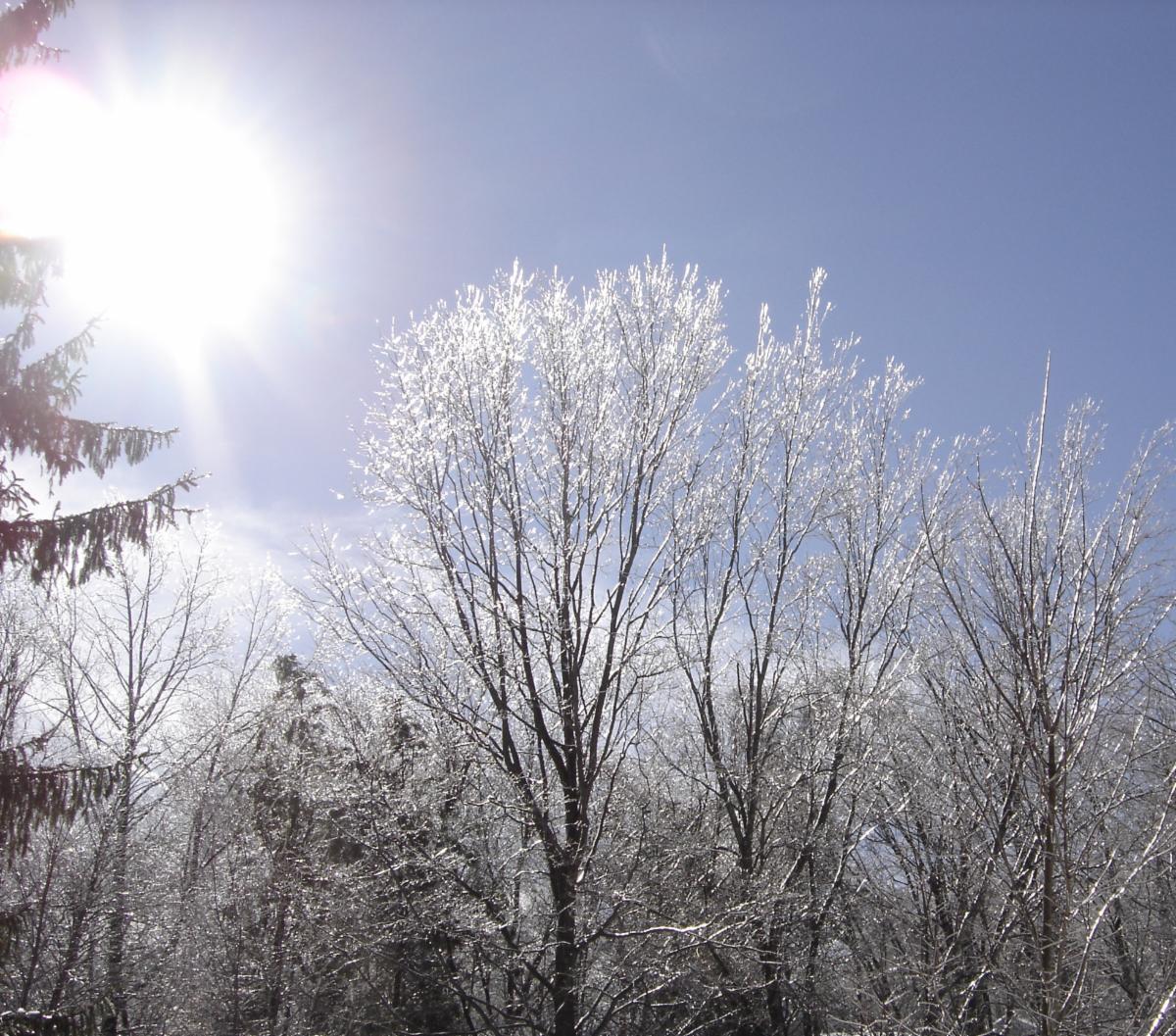
Emerging from the short days of winter is like emerging from a cocoon. Many of my friends, even gardening buddies, bemoan the winter months, but not me. I enjoy the peace of winter walks with sweeping views of the land—mostly rock where I am—and marvel at the glowing green of the mosses, the fungi decomposing the trees, the tough little Christmas ferns, the poking tips of skunk cabbage. But most of all, I like the pale light that slants in from the south, each day lengthening as we move past the winter solstice and our northern hemisphere turns toward the sun. It reminds me that light is life, for every being on this earth.
Actually, gardening is quite simple when you think like a plant and remember that it is all about photosynthesis (and sex, but that is another article). Using carbon dioxide from the air, water from the soil, and energy from the sun, plants produce glucose (sugars) and oxygen. In honor of Lesson’s in Chemistry (a great book by Bonnie Garmus), here is the equation for photosynthesis: 6CO₂ + 6H₂O + light energy → C₆H₁₂O₆ + 6O₂. For those of you not of the chemistry world, the numbers simply balance the number of molecules because all life is about balance.
| |
|
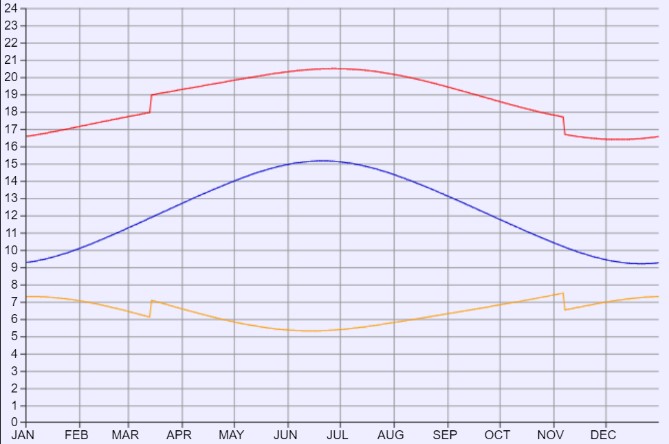
The length of daylight governs the world of plants: when to germinate, when to grow, when to flower and set seed, and when to prepare for dormancy. In a world of artificial light, we humans tend to lose touch with the cycle of light and think in terms of human defined months and seasons, not length of day. This is the chart that keeps me focused. It shows the time of sunrise (yellow) and sunset (red), and the hours of daylight (blue).
My gardening season starts with the winter solstice, 9 hours and 14 minutes of daylight, but who’s counting. It is the turning point and a reminder of the cyclical nature of life. Most plants are in dormancy, their metabolic activity reduced to allow them to survive the harsh winter conditions. Robin Wall Kimmerer writes about the "humility of plants" in dormancy—how they embrace the necessity of retreat, embodying patience. I find myself in dormancy as well, embracing this much-needed period to rest and recharge, gathering the resources for renewal. It’s my season to reflect, plan, and prepare. Meanwhile, my overwintering container plants are less optimistic—the ferns are shedding heavily, the bay laurel is battling scale, and the succulents have grown pale and leggy. I remind them, gently, that spring will come.
| |
 | | By mid-February, as the day lengthens to ten hours, the plants are stirring. In a pitch-black room of my basement, the amaryllis stretch upward, pale and indignant. The moon, too, brings its influences. The February full moon is known as the Snow Moon (at right) or the Hunger Moon, names very rooted in the experiences of those who lived off the land. Early in my gardening life I never thought about the moon, but my neighbor, Guy Beardsley, a much-revered organic farmer who had many years under his hoe, believed in its power. Just as the moon influences the tides, it also draws moisture within the soil, while gravity guides the roots downward. Now I align my planting activities with the cycles of the moon as well. My seeds are lined up on the potting bench but February is still too early. The Worm Moon of March tells me when it is time to plant—well, that and The Old Farmer’s Almanac, which has planting dates based on the frost and the moon dates. Watching seeds sprout and those tender, green cotyledon leaves stretch toward the light never fails to fill me with joy.
When I write again, we will be past the vernal equinox and throwing ourselves full into spring as twelve hours of light bathe the land. Until then, enjoy your dormancy. It is a good time to read.
-
Robin Wall Kimmerer’s Braiding Sweetgrass: Indigenous Wisdom, Scientific Knowledge, and the Teachings of Plants explores the reciprocal relationships between humans and the natural world through a lens of gratitude, interconnectedness, and care.
-
Zoë Schlanger's The Light Eaters: How the Unseen World of Plant Intelligence Offers a New Understanding of Life on Earth delves into the intelligence of plants.
| |
|
Best Ways to Help Birds in Winter
By Holly Kocet, FGCCT Conservation Chair and member of the Garden Club of Newtown
| |
The winter months are hard living for birds. Weather can be frigid and food scarce. Birds do have special adaptations for surviving in cold climates. Like us, they shiver to stay warm but birds have much higher metabolisms and burn more energy to stay warm. Feathers play an important role in providing insulation from the cold. Birds preen top feathers to make them water-resistant and fluff up inner feathers to keep them toasty and warm. | |
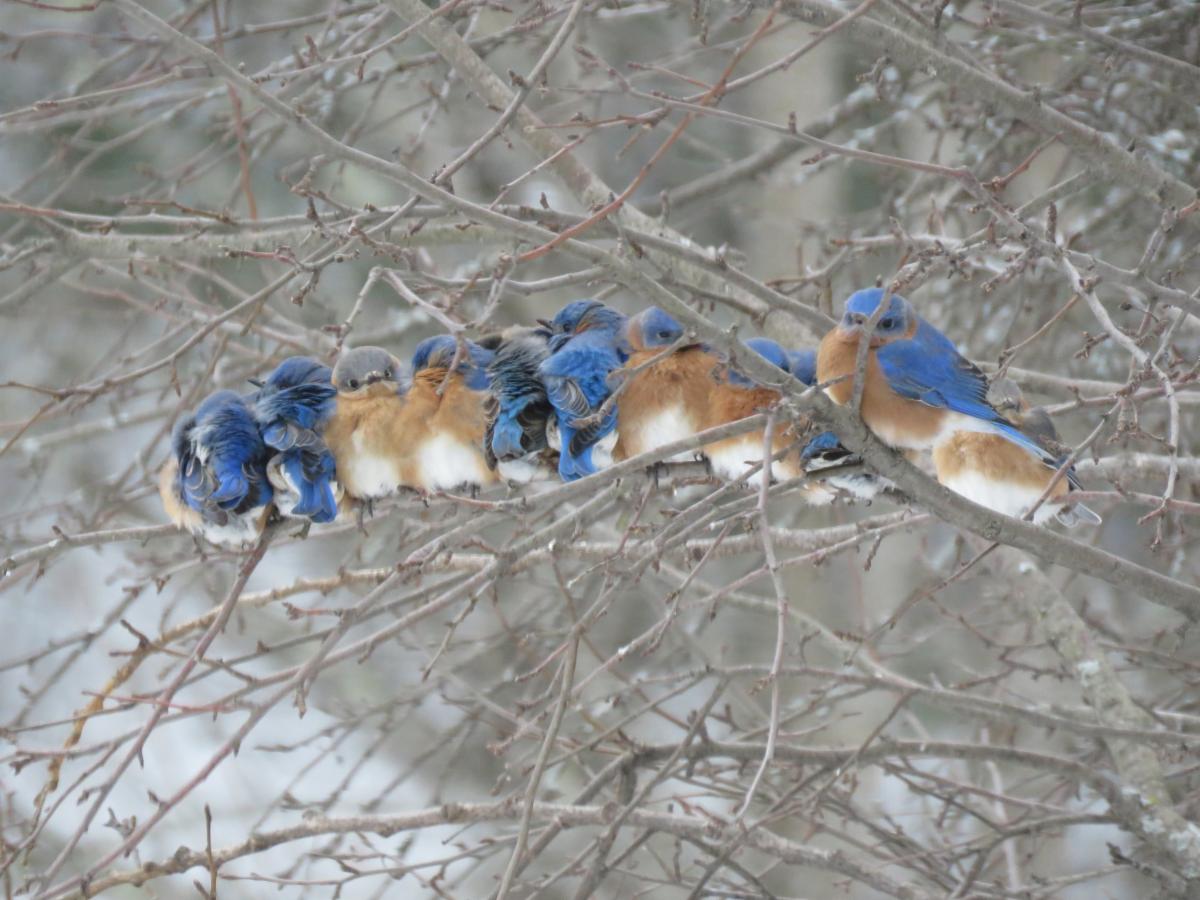
Small birds like bluebirds cuddle for warmth. They crowd together in evergreens, shrubs and vines to share body heat. They can also slow down their metabolism to conserve energy. Larger birds are also known to flock together in this way. Cavity nesters like nuthatches, titmice and downy woodpeckers’ shelter in tree cavities for warmth, protecting them from both weather and predators.
Still, studies show that birds like chickadees who have access to bird feeders do better than ones without, especially in extreme cold. Insects and plant sources are in short supply and finding food is a challenge for resident birds as well as those that traveled down from the arctic.
| |
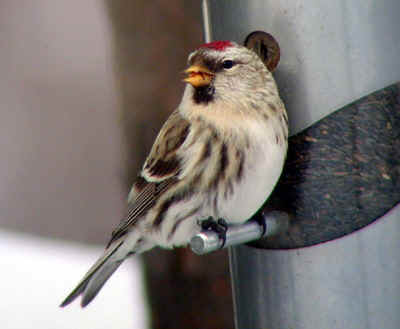
During the frosty season, especially like one we experienced this January, it is important to provide birds with good quality high-energy foods. A great choice is suet, a source of fat that helps birds stay warm during the day and ensures their survival during long, cold nights. Birds that enjoy suet include chickadees, juncos, jays and redpolls. Downy, hairy, and red-bellied woodpeckers find suet feeders with wooden tail props easier to navigate. Other high-energy foods include unsalted peanuts, black oil sunflower and mealworms, a favorite of bluebirds. Finches, including goldfinches (hardly recognizable without their summer plumage), pine siskins and redpolls, absolutely love feeders filled with Nyjer seed.
Juncos and doves will visit feeders but mostly prefer to feed on the ground. When necessary, clearing a patch of snow to scatter some seed is helpful. This can be messy so frequent cleanup is recommended to prevent unwanted visitors. Using a tray or platform feeder is a less messy option.
It is really important to store seed in a dry place so it does not get damp. The best feeders are those that protect the food from the elements. Tube feeders and those with a roof or dome are best because when exposed to moisture, seeds have the potential for growing mold that can make birds sick. Bird feeders must also be cleaned regularly to prevent disease. This cannot be emphasized enough.
It is helpful to know what times of day to make food available for birds. On really cold winter nights, birds use up a lot of their energy reserves trying to stay warm so, at first light they quickly start searching for something to eat. Making sure feeders are full in the morning is extremely helpful. In late afternoon, about an hour or two before sunset, topping off the feeders gives birds that extra energy boost needed to survive frigid nights.
Of course, we still want to plant native seed, fruit and nut bearing trees and shrubs for our birds. Crabapple, dogwood, chokeberry, winterberry, oak and hazel are excellent choices and make beautiful additions to a yard. Having the right trees can also offer protection and shelter. Evergreens such as native spruce and pine are good choices since they provide cover all year long and especially in winter.
There are other ways of providing shelter for birds. If space allows, we can create a brush pile shelter. The National Audubon Society’s How to Build a Brush Pile for Birds are simple steps: How to Build a Brush Pile for Birds | Audubon
It is also helpful to put up a roosting box for winter birds. The box has an entry hole at the bottom to keep the cold weather out and trap more heat inside. Bluebirds, chickadees, nuthatches, wrens and others will use these boxes for shelter. Nesting boxes from the previous summer can also be used and are more beneficial if the box door can be flipped so the entry hole is at the bottom (like a roosting box) and any ventilation holes are covered to keep cold out.
As mentioned earlier, birds do have adaptations to survive the cold but if we can do some things to make their lives easier, it helps ensure their survival. Once the weather moderates and natural food sources become available, it will no longer be necessary to hang out our feeders and we can finally concentrate on our gardens.
Photo credits: Bluebirds "Cuddling" - creativecommons.org
Common Redpoll on Nyjer Feeder - projectfeederwatch.org
| | | | |
SPOTLIGHT on our FGCCT Affiliates! | | | | |
|
Our Affiliates on Display at the CT Flower Show!
| |
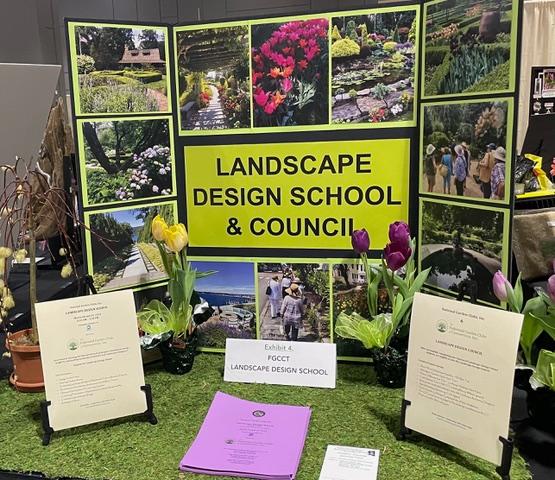
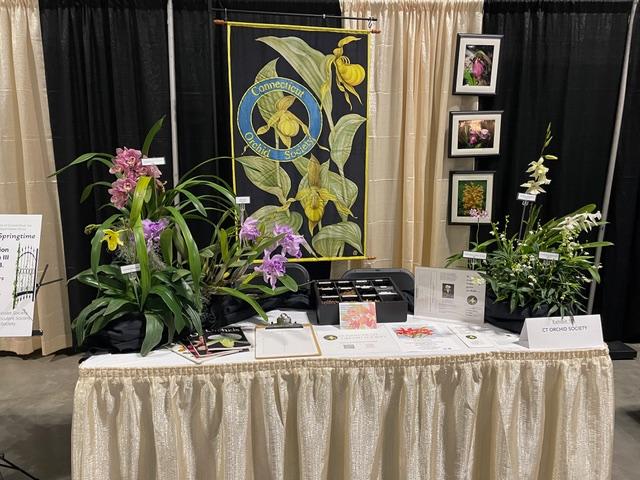
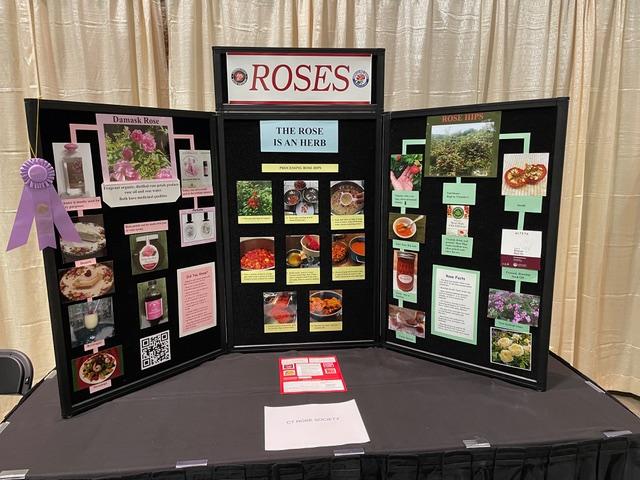
| | | The CT Flower and Garden Show is just around the corner as we go to press, and it seems like a good time to give a shout out to the wonderful affiliates who join us in the Education Division at the show. These affiliate members create an exhibit and man their tables for the duration of the show offering educational information, beauty and friendly smiles at their tables. Repeat exhibitors include the CT Chapter of the American Chestnut Society, the CT Rose Society, the CT Orchid Society, The CT Agricultural Experiment Station, The CT Invasive Plant Study Group, Grow, Inc., the Nutmeg Orchid Society and new exhibitors Sherwood Island State Park. FGCCT’s Environmental School, Flower Show School, Gardening School and Landscape Design School will all be there onsite as well, and ready to answer your questions. We also have many affiliates that have their own booths on the floor of the show: Connecticut’s Historic Gardens, CT Master Gardener Association, Hartford Blooms, Knox, Inc, and more. I look forward to being at the Federation’s membership table Thursday through Sunday, joined by many board members. Please stop by and say hello, and please share your ideas about how the Federation can help your club.
— Kelle Ruden, 2nd Vice President, FGCCT
| | | | |
| |
|
"Club Corner" is a place for clubs to showcase exceptional or notable club achievements and activities. Has your club done something unique (or uniquely successful?) that you'd like to share? Visit "Club Corner" on the FGCCT website for more news from clubs! (This area is NOT for upcoming events—you can post those on the FGCCT Club Calendar.)
Send high-resolution photos, along with a writeup (200 words or less, please) and photo captions, to martha.sherman@ctgardenclubs.org to be considered for inclusion. Please ensure that you have appropriate permissions for all photos. We reserve the right to edit copy and select photos for inclusion.
| |
Featured Club: The Garden Club of New Haven | |
The Garden Club of New Haven Celebrates 100 Years | |
Since its founding in 1924, the Garden Club of New Haven (GCNH) has promoted knowledge of gardening and an appreciation for the ways in which gardens and the natural world enhance the quality of our lives. The club’s educational work in horticulture, its environmental activism, and its civic engagement aim to secure a future for the Greater New Haven community in which the beauty of nature is both celebrated and preserved.
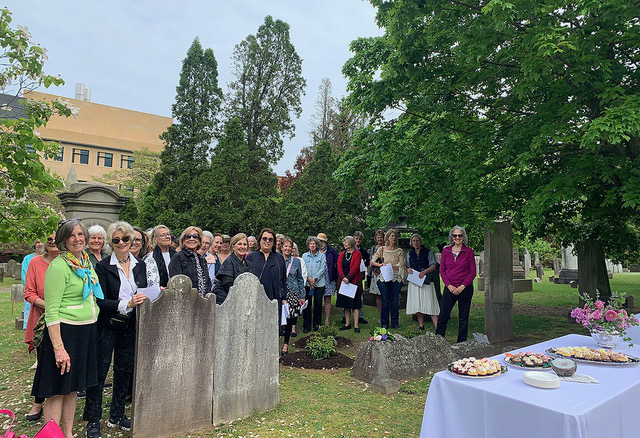
[Above, members visit the resting place of the club's first president,
Florence Bradley, at Grove St. Cemetery in New Haven]
| |
The Club has a robust schedule of events planned for their 100th that began in 2024 and extends into 2025. The goal of the Centennial Committee is to create a year-long celebration with programs and events that reflect GCNH’s core mission for the past 100 years. This is a joyous period for the club, a time for proud reflection on our achievement-filled past and happy anticipation of all we can do in the future. This is also an opportunity to recognize and salute our many civic partners in the New Haven community. The tagline for their celebration is
"Rooted in History. Planted in the Present. Branching into the Future"
In November, 2024, The Cherry Shaw Swords and Virginia Thorne Shaw Annual Lecture, Public Green Space featured the lecture: “An Urban Imperative,” a panel on the importance of public green spaces with a focus on looking towards the future. Speakers included Sophie van Haselberg of the New York Restoration Project, Lynn Kelly, executive director of the New York Restoration Project, Sarah Charlop Powers, Executive Director of the Natural Areas Conservancy and Eric Sanderson, landscape ecologist and Vice President for Urban Conservation Strategy at the NYBG. Moderated by Colleen Murphy-Dunning, Program Director of the Hixon Center for Urban Sustainability, Urban Resources Initiative and Will Ginsberg, Community Foundation.
On Monday, September 29, 2024, Garden Club ambassadors met with staff and students of Common Ground High School, Urban Farm & Environmental Education Center, including members of their Green Job Corps, to plant shrubs along the hill in an area known as their ‘sacred space.’ As Joel Tolman, Common Ground’s Director of Community Impact & Engagement, said, “we’ve been talking about ways to continue to restore this habitat on our campus and I’m excited for this opportunity to garden together and be part of your 100th anniversary celebration.”
GCNH and Common Ground School (which was started in the late 1980s) are bound together by shared past projects and their shared mission to support a knowledge of gardening and the preservation of natural resources through collaboration and connection with the community.
| |
|
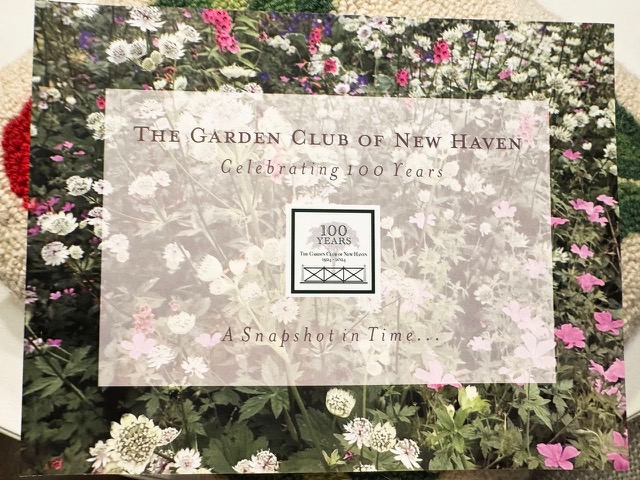
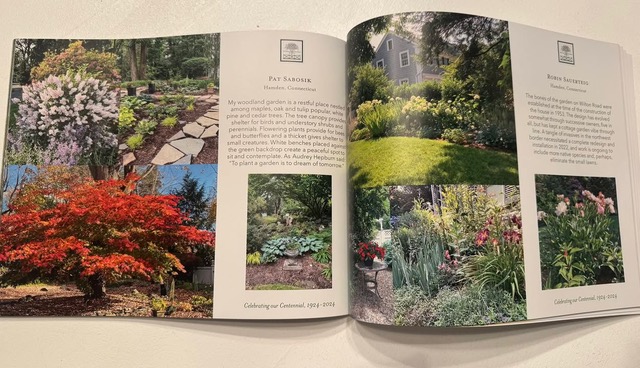
The club also put together and published a book of members' beautiful gardens, pictured at right.
Coming in May 2025, GCNH will celebrate their close ties with the New Haven Green and the City of New Haven, working in conjunction with the Proprietors of the Green. Special events include a Flower Show at the New Haven Library, children’s workshops, a seed give-away, plein air painters, a showing of their film about the New Haven Green at the New Haven Museum, a tour of the Grove St. Cemetery, the dedication of a bench & time capsule at Phelps Triangle, planting at Audubon Mini Park and more!
To learn more about the club and their anniversary, visit their website.
| |
|
Lots to Celebrate for the The Garden Club of Orange! | |
|
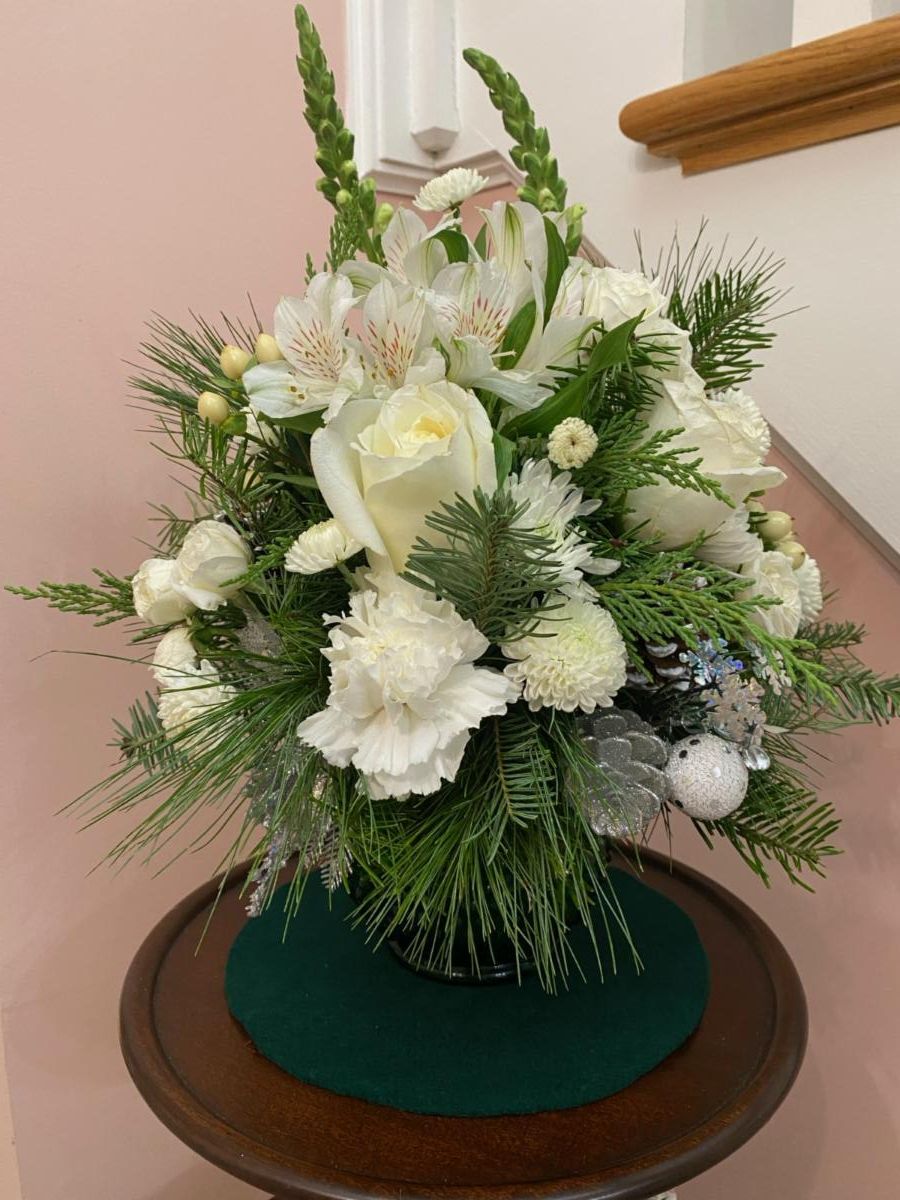
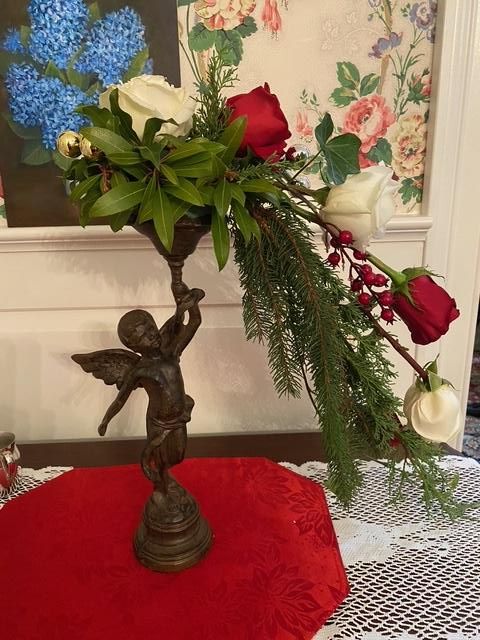
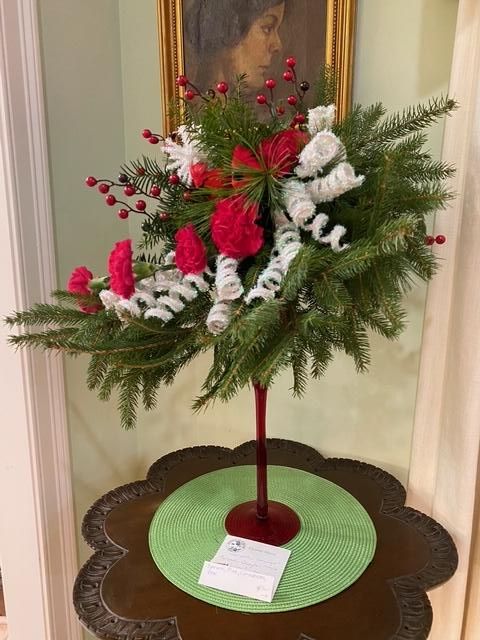
The Garden Club of Orange celebrated the holidays and the end of the year in style with a beautiful Silver Luncheon at the lovely home of Violet Nastri! Our talented designers created stunning flower arrangements that added a festive touch to the occasion. A huge thank you to our wonderful hostesses, Laurian Kehoe and Ginny Proestakes, for arranging a sumptuous menu for everyone to enjoy.
Club President Sandy Horling is proud to announce that in 2025, the club will celebrate an important milestone. The Garden Club of Orange has been serving the town of Orange for 95 years!
| |
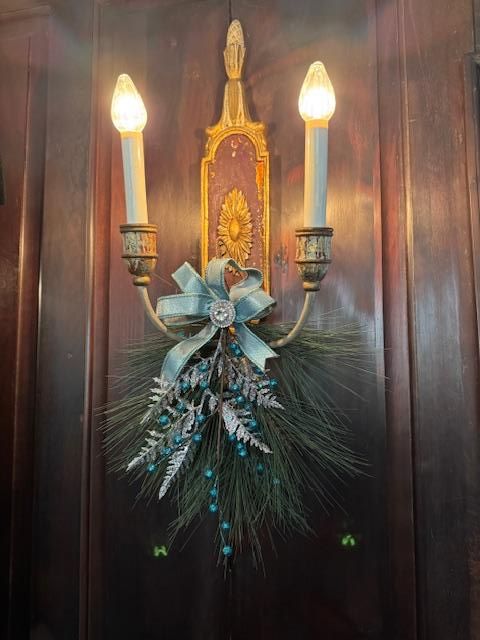
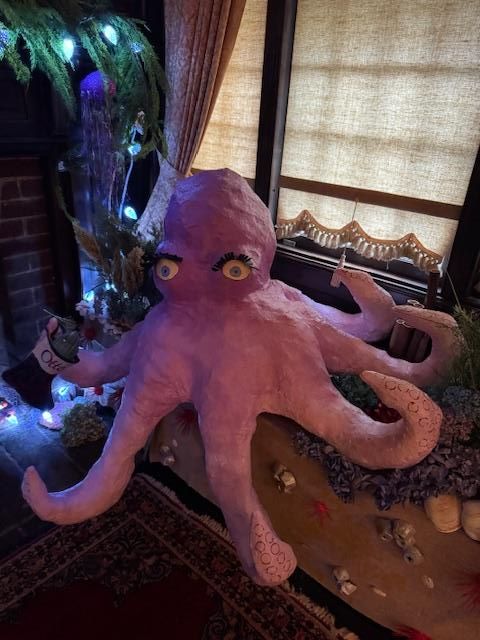
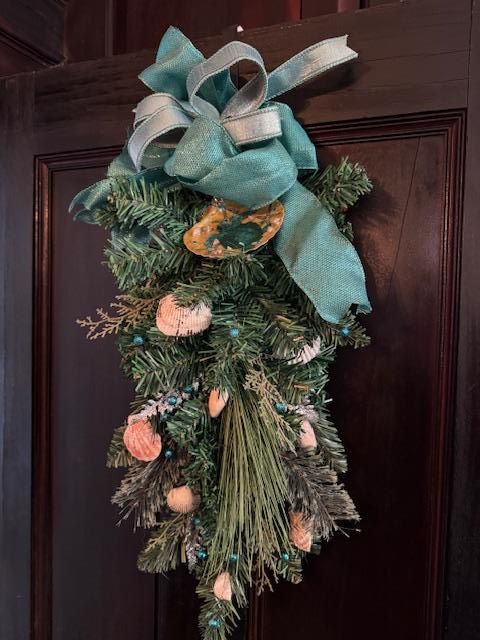
Above, several of the Silver Luncheon floral arrangements. Below, the club's contributions to the holiday display at the historic Osborne Homestead Museum. | |
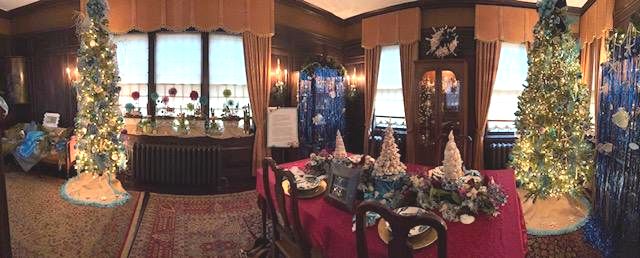
Above and below, members of the club also brought the magic of the holiday season to life by in Derby, decorating the Osborne Homestead Museum. The theme of the event was an eco-friendly “Eco Holiday.” Volunteers decorated the rooms of the home representing global biomes, such as the oceans, rainforests, and deserts. All of the decor utilized by the Garden Club of Orange was handmade during the year. Kathy Chiaro, Kris Chiaro, Sally Denny, Diane Geary, Laurian Kehoe, Margharite Lisi, Pat Nizen, Patty Riordan and Ginny Proestakes led the effort for the club. | |
Learn more about this busy club here. | | | | |
| |
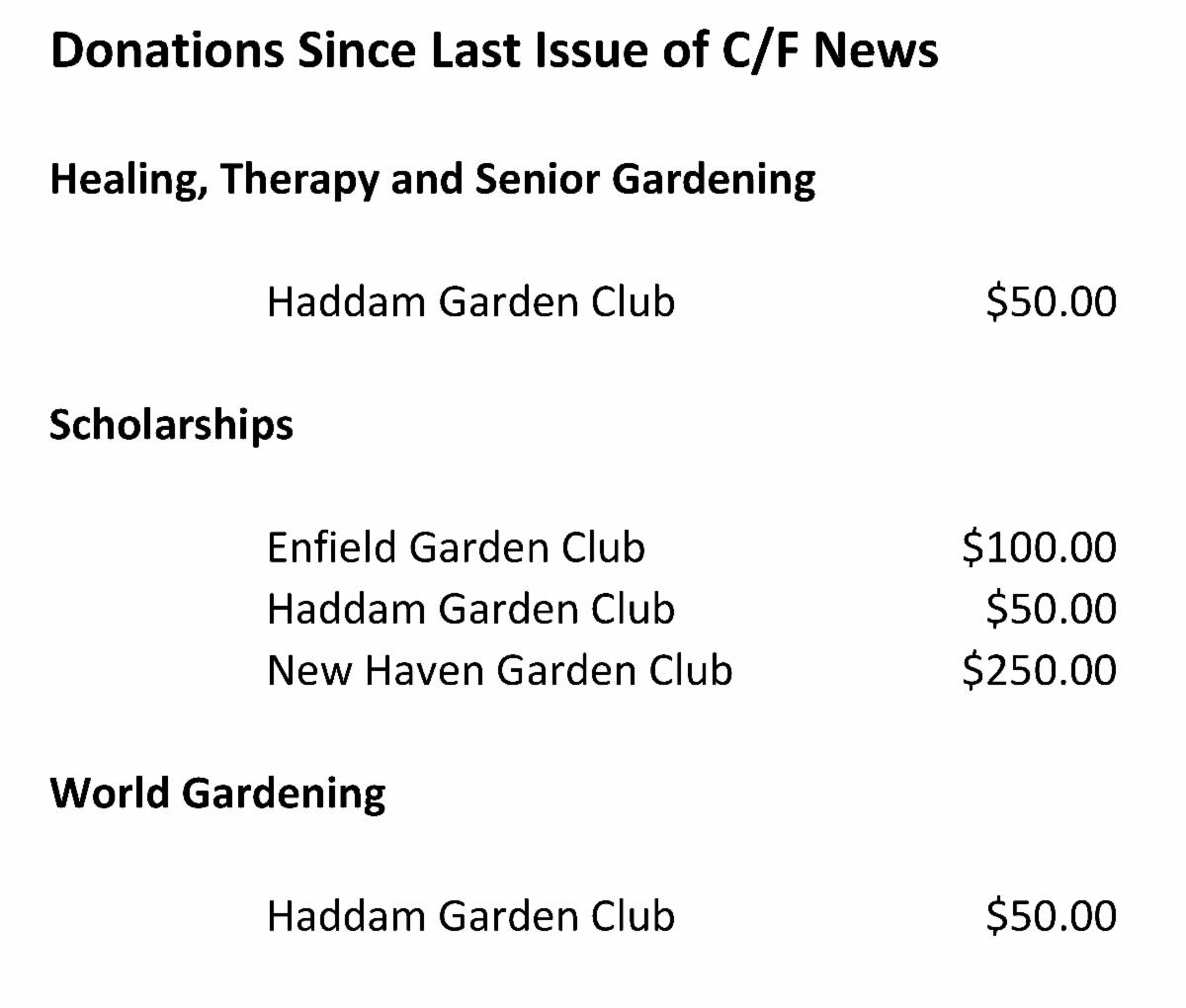
Donations to FGCCT's Scholarship Fund; Healing, Therapy and Senior Gardening Fund; and World Gardening Fund | |
We thank the following Garden Clubs for their recent donations to the FGCCT Scholarship Fund.* For almost 40 years, the Federation has awarded scholarships to college and university students who major in Agronomy, Botany, City Planning, Conservation, Environmental Studies, Floriculture, Forestry, Horticulture, Land Management, Landscape Design, Plant Pathology, or allied subjects. We welcome donations of any size. Our appeal is ongoing to give all of our clubs the opportunity to make a contribution in the amount of their choosing.
| |
Please send all Scholarship Fund donation checks to the appropriate chair (see below). Make checks out to "FGCCT" with the appropriate Fund listed on the memo line.
*Please note that due to the deadline for articles and information for the CFNews, some donations may not be received and deposited in time to be included in the bi-monthly donation acknowledgement, but will be included in the next issue of our newsletter.
PLEASE MAIL CHECKS TO:
| |
For World Gardening & Healing, Therapy and Senior Gardening:
The Federated Garden Clubs of CT, Inc.
Attention: Rosemary Bonaguide
PO Box 902
Wallingford, CT 06492
| |
For FGCCT Scholarship Fund:
The Federated Garden Clubs of CT, Inc.
Attention: Carole Fromer
PO Box 902
Wallingford, CT 06492
| |
|
Follow us on Facebook and Instagram!
FGCCT is on Facebook and Instagram and we love to post your news and photos! Please send upcoming events, club activities, civic projects, milestones, and hort tips. Include photos and a brief writeup of the news your club would like to share. The best format is text in an email with jpg photos attached. Take active photos showing members at work or showcasing beautiful gardens, flowers, and plants (please name the flower if it is a hort only photo). Let’s follow each other! Send submissions to social@ctgardenclubs.org
| |
Just a reminder …
Please send all correspondence to the new FGCCT office:
The Federated Garden Clubs of CT, Inc.
P.O. Box 902
Wallingford, CT 06492
Did you recently elect new officers? Email their names and contact information to us at office@ctgardenclubs.org so they will receive Federation correspondence. If you need assistance, please contact FGCCT Office Administrator Joan Lenart at office@ctgardenclubs.org or by phone at 203-488-5528 on Mondays and Wednesdays, from 10 am to 2 pm.
| | |
Deadline to submit articles/photos, ads and calendar events for the April / May 2025 issue of the CFNews is March 10, 2025. Please submit to: | |
|
Reminder from NGC: The National Gardener is ONLINE (and free!)
The official publication of the National Garden Clubs, The National Gardener, appears quarterly, and features articles of interest to environmentalists, gardeners, landscapers, floral designers, educators and photographers. Subscribe here.
| | |
|
|
State, Regional &
National Events
| |
| | | |