| |
| |
| |
| |
|
Greetings and Happy New Year!
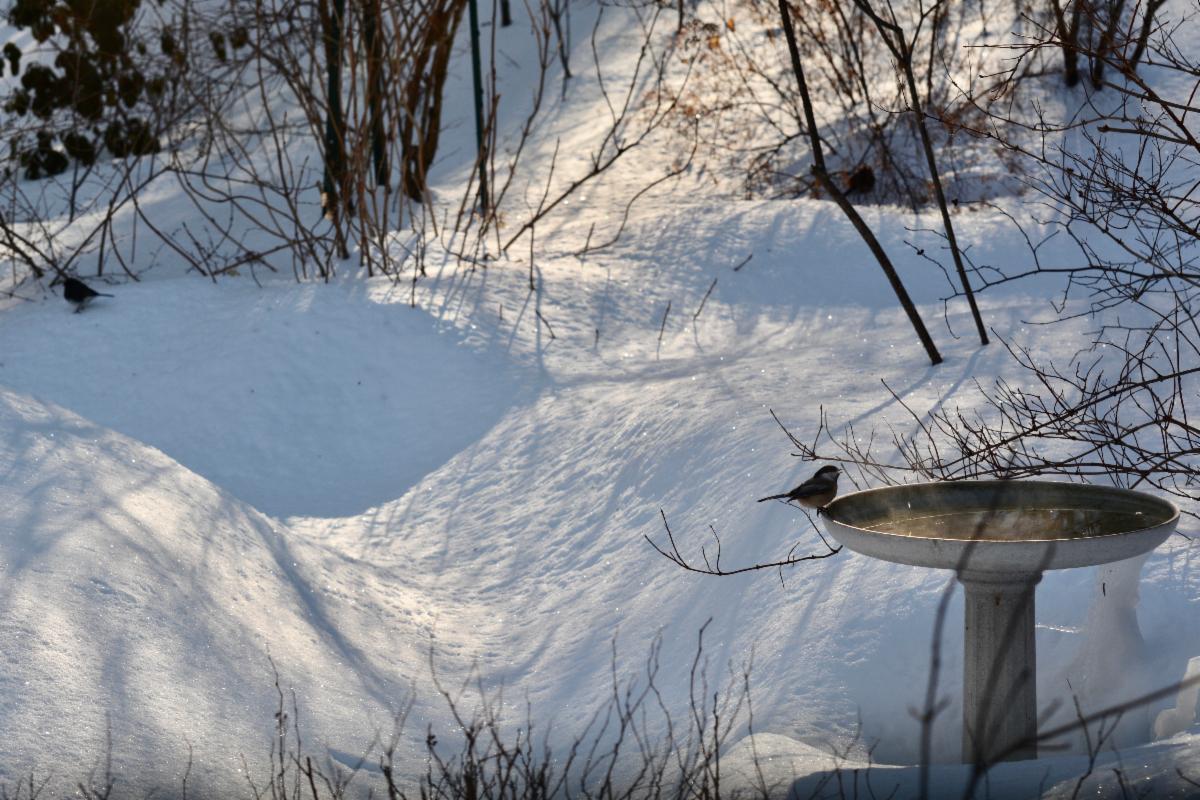
As we look out our windows and wonder where our gardens have gone, winter reminds us that gardening is an act of faith and patience. We can only hope that beneath all that snow and frozen ground, life is resting, gathering strength, and preparing to rise again when the time is right. In the meantime, there is much happening in February and March.
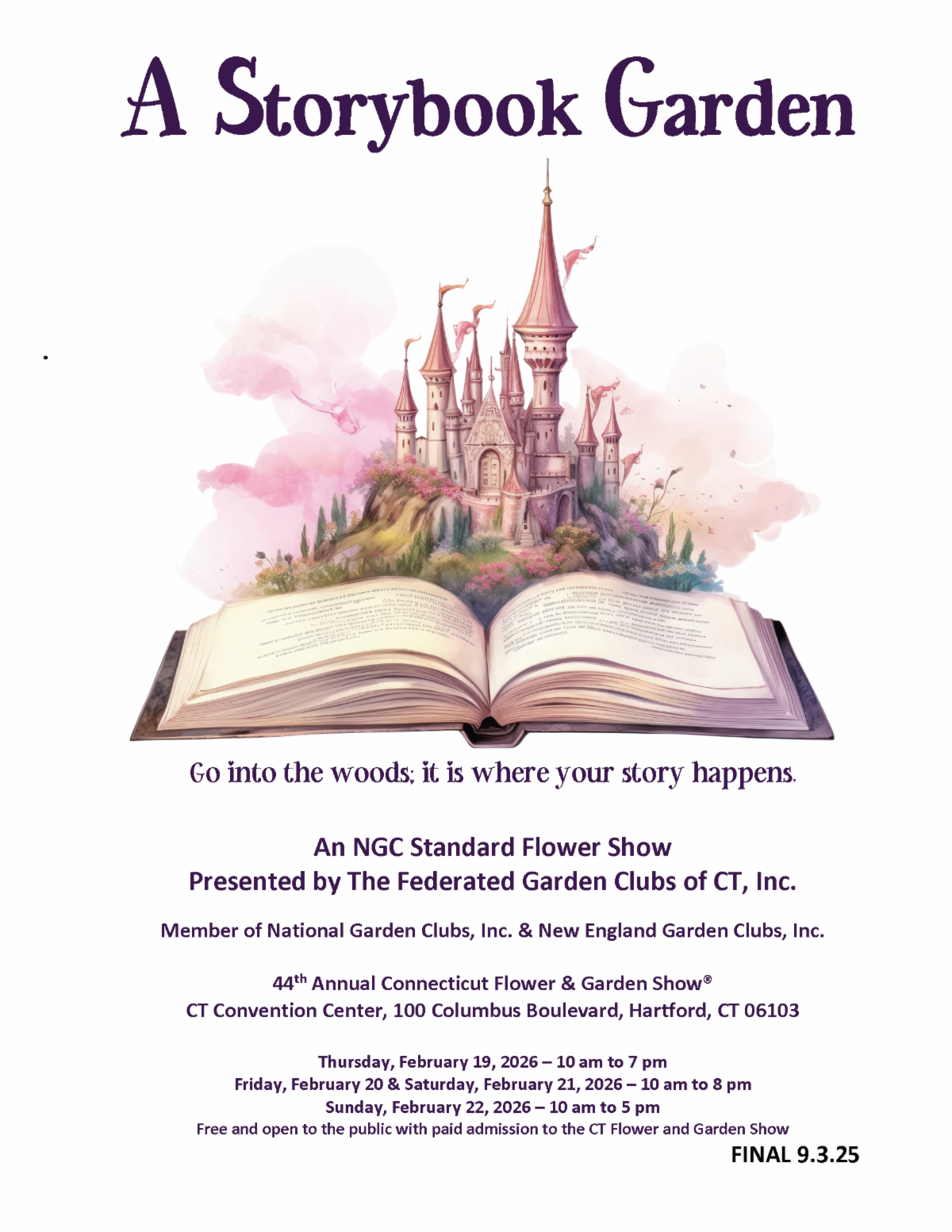
I hope you have your calendar marked for the Connecticut Flower and Garden Show – “A Storybook Garden – It’s Where Our Story Happens” February 19-22 at the CT Convention Center in Hartford. It’s going to be amazing!! You can still register your Horticulture until Feb. 8 – and remember there’s no penalty if you choose not to bring it. The Schedule and Online Registration is on our website. Discounted tickets for our members are available until Feb. 7 HERE .
Federation Fridays – our monthly Zoom workshops, which offer a “deep dive” into meaningful topics, continue in 2026. We just had a fascinating workshop on January 16th: “Fundraising…Rethinking Your Annual Plant Sale”, attended by 98 club members! I want to sincerely thank our panel of Garden Club Presidents from Old Greenwich, Branford, Old Saybrook, Caudatowa of Ridgefield, Wilton and Westport, who presented notable ideas on how to put on prosperous and joyful sales and offered interesting suggestions on overcoming various plant sale challenges. PDF files of the PowerPoint slides used on all workshops can be found HERE.
Upcoming Federation Fridays:
-
“Your Awards Await! - The FGCCT Awards Application Process” – February 27 at 10:00 am
-
“NGC Youth Contests and Starting a Youth Gardening Program” - March 20 at 2:30 pm
Register for Federation Fridays HERE
The Federation’s popular Regional Roundtables also continue in the new year: March 4 – hosted by Danbury Garden Club and March 26 – hosted by Old Saybrook Garden Club & Duck River Garden Club of Old Lyme. These are excellent opportunities for Club Officers and Committee Chairpersons to exchange information and ideas in person with their counterparts in nearby Clubs. Space is limited, so Register soon HERE
I’m pleased to announce that 16 marvelous BEE RESILIENT~ Garden for Nature President’s Theme garden projects were approved in 2025. Funding continues in 2026 and we’ve just received 9 new applications! Our website has all the details and how to apply for grants (up to $500 per project). Please note that after your project application has been reviewed and approved, the funds are sent to your Treasurer – in advance of the purchase of the plants!
National Garden Clubs, Inc. and Keep America Beautiful have joined forces to restore and enhance Blue and Gold Star Markers and Gardens across the nation. Grant application and participation guidelines for your Club are on the NGC website HERE
We have two NGC Schools coming up: Landscape Design School, Course III, March 24 - 25 (on Zoom) and Flower Show School, Course IV, June 10 – 12, Kellogg Environmental Center, Derby. Information and Registration HERE.
Thank you for all you do in your communities. If you have any questions or if our FGCCT Board Members can be helpful to your Club, please let me know.
| | | | Let’s go out and BEE RESILIENT and Garden for Nature, and maybe we’ll help save the planet, one garden at a time! | |
Bee Resilient: Garden for Nature
By Wayne Gura and Anne Djupedal Gura, co-chairs, FGCCT President’s Project
We’re so pleased to report that, as of year-end 2025, sixteen clubs have been awarded funding for their Project BEE RESILIENT gardens! Since the last issue of CF News, the following three clubs have joined the list of awardee clubs that are implementing marvelous BEE RESILIENT visions for their communities:
-
The Suburban Garden Club of Cheshire, for a 2,000-sqare-foot native woodland garden with three trees and several bushes at the Town of Cheshire’s Mixville Park.
-
The Stonington Garden Club, to plant a 15’ x 20’ shade garden with three species of native ferns, sited inside the Children’s Garden that is located at the Stonington Community Center (COMO.)
-
The Redding Garden Club, to transform an 18’ x 32’ garden at Joel Barlow HS into a pollinator garden of native species, for field trips planned by/with faculty, lepidopterists and master gardeners.
These three join the thirteen clubs listed in previous issues of CF News that have been creating a beautiful range of native-species-based gardens, each one unique and carefully thought out for its site:
-
The Pomperaug Valley Garden Club, for a Pollinator Pathway along Woodbury’s Main Street, with ten town gardens of varying sizes to be transformed into pesticide-free and native-plant gardens.
-
The Quiet Corner Garden Club, for pollinator habitat preservation in a 30’x 40’ area adjacent to
- the Palmer Arboretum site of the QCGC office.
-
The North Haven Garden Club, for the Jan Tracy Memorial Garden, an oval 8’ x 15’ garden sited on
- Town of North Haven property.
-
The Wilton Garden Club (our home club), for the 95%-natives pollinator garden installed June 6 at
- Wilton’s Hillside Cemetery and Arboretum.
-
The Durham Garden Club, for eradicating invasives and planting native plants in a 42’x14’ area behind the Coginchaug HS library, with the involvement of ECO Club students.
-
The Colchester Garden Club, for improving soil and adding shade-tolerant native plants into a 9’x12’ foundation planting area to extend pollinator food sources to the front of the Cragin Memorial Library.
-
The Shippan Point Garden Club, for controlling invasives and adding to its existing native plantings along the entrance to the local recycling center for pollinator food/habitat and to screen as it beautifies.
-
The Middle Haddam Garden Club, for transforming the existing garden at the town’s historic public library into a native, pollinator, low-maintenance garden.
-
The Garden Gate Club of Mansfield, for developing plantings around the restored building at
- the Mansfield Historical Society Museum that reflect history, natives and sustainability.
-
The Bethel Garden Club, for restoring and replanting a native shrub garden on the northeast corner of a pond at Meckauer Park. In addition to its value to pollinators, we note that the garden plan offers a variety of environmentally-beneficial berries that help sustain native birds and wildlife.
-
The Orchard Valley Garden Club of Southington, for planting an all-natives pollinator garden in a 40-x-6-ft border at Southington YMCA, with educational outreach in cooperation with Y staff.
-
The Garden Club of Woodbridge, for a natives-based pollinator garden at the Darling House Museum, with educational coordination with the school district, historical society and master-gardeners’ office.
-
The Greens Farms Garden Club, to renovate a Stage-II-drought-stricken PollinatorPathway garden at Fairfield History & Museum Center’s Victorian Cottage; learning opportunities and plant ID/labelling.
Congratulations to these sixteen clubs for their inspiring BEE RESILIENT projects! They bring immediate and much-needed help to Connecticut’s hard-pressed native pollinators. And, over time they will grow as beautiful living examples to educate and inspire others to plant natives-based gardens into their own landscapes – both for their beauty and for the resilience they add to our web of life.
To these sixteen clubs as you reach project milestones, we’d love to hear and share your news/pics. You will inspire others to emulate you. Plus if you haven’t already, please submit copies of your expense receipts.
Further, we are happy to share a wave of interest since the beginning of this new year: an additional nine grant applications have already come in from all across our nutmeg state! A few notes those of you who have applied since the new year started, and to those of you may be preparing to apply, please note …
-
At the moment, our plate is a bit overfull (with numerous February deliverables in addition to the impressive volume of applicants!) but rest assured we will get to your application. Once you submit an application, you should within a day or two hear back from us via email that we’ve received your application — and remember to CHECK YOUR SPAM FOLDERS for that confirmation because it ends up in “spam purgatory” quite often, LOL!
-
PLEASE include with your application a list of your selected plant species together with their itemized cost (plant choice is key, we cannot proceed without it.)
o The plant list should be comprised of no less than 70% locally/regionally-native species, which is the currently accepted metric we use as the baseline to help our native pollinator species, birds, wildlife. The goal of the project is to beautify your site while strengthening its ecological resilience. Online resources, such as the Native Plant Trust’s Go Botany tool and the BONAP.org website are very helpful in finding out if a plant you are considering is native, and can increase your confidence in your plant selections.
o Horticulturally-bred inter-species hybrids — which are typically designated with an “X” following the genus name in the Latin binomial — are by definition not considered to be native plants.
-
Grant recipients, in addition to the funding, will receive a Pollinator Pathway plaque for the garden. Further, the Pathway has invited each club to add its BEE RESILIENT planting to the Pollinator Pathway’s nationwide map of gardens. To do so, or for more information, visit their website.
There is funding for at least 21 qualifying, native-species-based BEE RESILIENT garden projects for 2026. So if you haven’t thought about it yet, why not curl up with a cuppa something cozy and start planning the natives-based planting you’d love to grow in your town in 2026?
During this snowy dormant season, happy spring planning from us both!
| | | | |
Upcoming Events — Mark Your Calendars! | | | | |
|
A 'A Storybook Garden' is
Coming to Hartford's Civic Center!
Count on being there during the cold, cold days of
Thursday, February 19 through Sunday, February 22, 2026
| | |
We hate playing an old record, but the 2026 Connecticut Flower Show, A Storybook Garden, is quickly approaching. The deadline for pre-registering your Horticulture is February 8. We are happy to report that Design, Artistic Crafts, Photography and Education entries are full.
Click here to view the Show Schedule
Click here to register.
And don't forget the free seminars and presentations every day of the show!
Click here to see the full list of seminars during the show, including this year's Featured Speaker, Doug Tallamy!
Isn’t there some Horticulture you might be interested in entering? We always need horticulture specimens. You can submit a ‘forced arboreal specimen’, think Forsythia (class 82) or Witch Hazel (class 83 Hamamelis) or a no more than 30” specimen of a ‘cut broadleaf evergreen’ (Section I) or ‘needled evergreen’ (Section J). If you are thinking smaller, how about one perfect leaf (Section N Foliage Cut Specimens) or a single blooming flower (Section O). Those specimens sit in small water vases and are thrown out at the end of the Flower Show, so you don’t need to return to the show to pick them up. The participant just needs to bring a stamped, self-addressed envelope along with their horticulture entry, and we will send you back your entry card and your ribbon. Entries are accepted on Tuesday, February 17 from 11 am to 5 pm. If you are unfamiliar with the Latin names of plants, take a picture using Google camera and ask Google to identify the Latin name for you, then look up the name on the Flower Show Schedule (from the link above) to find the entry class. The deadline for Horticulture entries is February 8. The Horticulture committee will review your entry to verify the proper name.
Did you know that non-garden club members are allowed to enter horticulture? If you have non-club member friends with interesting houseplants or wonderful specimens in their yards or on their windowsills, they are welcome to enter the Horticulture Division. In fact, we encourage it! Help them to pre-register.
Until February 7, you can take advantage of the $15 discounted tickets as a Federated Garden Club Member. Or to volunteer to assist as a Hostess, which includes a 4-hour parking pass, go to Sign up Genius. But time is running out!
Call your friends and organize a trip to the Flower Show! It's a wonderful experience and reminds us all how much we enjoy our garden clubs, Spring is right around the corner!
— Linda Kaplan, FGCCT Public Relations Chair
| |
DISCOUNTED FLOWER SHOW TICKETS
for FGCCT Club Members!
FGCCT garden club members may purchase discounted tickets to the Flower Show for $15 until February 7, 2026.
ORDERS MUST BE RECEIVED BY FEBRUARY 7!
Click here to download the order form.
This discount is available ONLY to members of FGCCT garden clubs.
| | | | |
"Federation Fridays"
Hosted by FGCCT Board Members, these monthly 1.5 hr. Zoom Workshops provide a “Deep Dive” on important topics, such as: Membership, Club Finances, Fundraising, Events, Flower Shows, Awards, Social Media, Youth, and more. Mark your calendars and register for these informative sessions!
“Your Awards Await! The FGCCT Awards Application Process”
February 27, 2026 at 10:00 am
This workshop will provide an overview of FGCCT Awards, how to apply online, and deadlines for specific award categories. In addition, a panel of Club Awards Chairs will share their experiences and suggestions.
REGISTER
“NGC Youth Contests and Starting a Youth Gardening Program”
March 20 at 2:30 pm
Rules and guidelines for entering National Garden Clubs Youth Contests will be presented:
-
Youth Poetry Contest for grades K-12, with the theme of Plant America For The Next 100 Years
-
Smokey Bear & Woodsy Owl Poster Contest for grades 1-5, using Smokey Bear's theme of Only You Can Prevent Wildfires or using Woodsy Owl's theme of Lend a Hand - Care For The Land
-
Youth Recyclable Sculpture Contest for grades 4-8 with the theme of Encouraging Youth to Keep Our Planet Green
In addition, a panel of Youth Gardening Program Chairs will present advise on starting and running a Youth program in your Club.
REGISTER
PDF Files of PowerPoint slides of previous workshops are now available.
-
“Fundraising…Rethinking Your Annual Plant Sale” - Jan. 16, 2026 at 10:00 am
Some clubs are rethinking the way they do Plant Sales and are looking at other fundraising approaches. A panel of Club Presidents present ideas on how to achieve a successful and joyful sale and overcoming plant sale challenges.
-
“Flower Shows 101 and the Role of Judges’ Clerks” – Nov. 21, 2025 at 10:00 am
This workshop is an introduction to NGC Flower Shows: What is a Flower Show? How and why is it Judged? and What does a Judges’ Clerk do at the Flower Show?
- “Treasurers’ Workshop” – Oct. 24, 2025 at 2:30 pm and Oct. 29, 2025 at 6:00 pm
This workshop provides clear guidance on the roles and responsibilities of nonprofit club treasurers, practical tips for effective financial management.
| | Regional Roundtables are back! | | |
Have you ever wanted to speak to your counterparts in nearby Clubs? The Federation is pleased to announce that it will be continuing its popular Regional Roundtables in 2026. Club Board of Directors and Committee Chairs are invited to exchange information and ideas on topics including: Membership Challenges, Fundraising Ideas, Finances & Insurance, Programs & Events, Social Media & Promotion, FGCCT Resources & Awards.
Comments from Previous Roundtables Attendees:
“This was great! Really liked connecting with other local Clubs.”
“Thank you! So many good ideas! I learned a lot!”
“I didn’t know there were so many resources from The Federation.”
“Sharing membership challenges was helpful.”
Roundtables Scheduled:
March 4th, 9:30 am – 12:30 pm
Danbury Hatters Park Banquet Hall, 7 E. Hayestown Road, Danbury, CT
Hosted by Danbury Garden Club
March 26th, 9:30 am – 12:30 pm
Grace Episcopal Church, 336 Main Street, Old Saybrook, CT
Hosted by Old Saybrook Garden Club & Duck River Garden Club of Old Lyme
There is no charge, but space will be limited, so REGISTER SOON.
| |
|
Spring is Calling … Save the Date!
As winter fades and the first hints of green begin to appear, we’re thrilled to invite you to the
FGCCT 97th Annual Meeting and Luncheon
Wednesday, April 15
Aqua Turf Club, Plantsville, CT
Mark your calendars and get ready for a day designed to inspire, connect, and celebrate all things gardening.
🌷 What’s Blooming at the Meeting?
- A delicious spring-inspired luncheon to delight your senses
- A dynamic guest speaker to spark fresh ideas for the new gardening season
- Exciting news and highlights from garden clubs across the state
- Vendor shopping featuring unique garden treasures and must-have finds
- A fun raffle with chances to win garden-themed prizes
This annual gathering is the perfect opportunity to reconnect with fellow garden enthusiasts, discover what’s happening across the state, and leave feeling refreshed and motivated for the season ahead.
🌼 Let’s celebrate growth, community, and the joy of gardening—together.
More details will be coming soon and the online reservation portal will be available beginning March 1. Watch your email and the FGCCT website for the registration link.
Spring is almost here… and we can’t wait to grow with you!
| | | | | | |
| |
| |  | |
Get on the Interest List!
More Tours in 2026!
- Summer 2026: Maine
-
December 2026: Boston Pops, Glass Flowers and much more!
- Oct 27 - Nov 7: Morocco
Already thinking of 2027?
- Italian Lakes and Piedmont Italy
- March 14-25 Morocco, Second Tour
- March 31-April 10 Portugal
- Chicago with the Ikebana Festival
- Scandinavia
Let us know what you like — express your interest by emailing me!
— Kathy Lindroth, FGCCT Tours Coordinator 860.836.3407 or tours@ctgardenclubs.org
| |
Practical Steps to Secure Your Club's Financial Accounts
Here are straightforward, low-cost essentials for volunteer-run non-profit clubs:
-
Create Strong, Unique Passwords. Aim for at least 14–16 characters with uppercase/lowercase letters, numbers, and symbols (e.g., "Red&WhiteTulip2026!). Avoid personal info or simple patterns. Never reuse passwords across banking, email, or other sites.
-
Enable Two-Factor Authentication (2FA). Activate 2FA (multi-factor authentication) on all financial accounts, payment processors, accounting tools, and email. It adds a critical second layer (like a phone code).
-
Use a Password Manager. Adopt free/low-cost options like Bitwarden, LastPass, or 1Password to generate, store, and autofill complex passwords securely. Share access safely with the treasurer and backups — no more sticky notes or emailed credentials.
-
Limit Access and Avoid Shared Logins. Grant financial access only to necessary people. Use individual accounts instead of shared "treasurer" logins. Revoke access immediately when roles change.
-
Perform Regular Checks and Updates. Update passwords every 6–12 months (or sooner if suspicious). Review bank statements monthly.
These quick habits offer strong protection with minimal effort - safeguarding your club's funds, mission, and trust. Stay vigilant!
~
Test Emergency Preparedness – Can the Assistant Step In?
In case of sudden unavailability (emergency, family issue, or turnover), can the assistant treasurer perform essential duties?
- Do they know login details (via secure password manager)?
- Have they practiced viewing statements or making routine payments?
- Is there cross-training or a handover checklist?
-
Are passwords/Two-Factor Authentication (2FA) set up for secure, shared access without risky sharing?
Best practice: Schedule a "dry run" once a year - have the assistant log in (with permission) and review recent statements. This builds confidence and catches gaps early.
Why This Matters
Poor access or lack of backup can freeze funds during critical times (e.g., paying venue deposits or refunds). Strong succession planning is a top governance best practice for non-profits — it protects assets, reduces risk, and ensures smooth operations.
—MaryAnn Lynn, FGCCT Assistant Treasurer
| | |
Award Applications — May 31 Deadline!
It’s not too early to start thinking about making an FGCCT Award application(s). Please register to join us on February 27 for the Federation Friday presentation “Your Awards Await! The FGCCT Awards Application Process." Register Here!
Check out the Award Manual; it's full of information on the type of awards by category that can be applied for and how to apply for an award. The Awards Manual can be found on the FGCCT website.
Feb 1 was the deadline for submitting your yearbook electronically for a Yearbook of Excellence Award.
May 31 is the deadline for submitting award applications that recognize individual and club projects for the June 1, 2025 to May 31, 2026 year. If your club has a noteworthy project or an outstanding member worthy of an award, please complete an FGCCT Club or Individual Award Application. You're encouraged to make a compelling, detailed, single application for each project or club member. The digital applications and information are available on The Federation website under the Awards tab, Awards by Category. Applications must be completed online and cannot be reused from a previous nomination.
May 31 is also the deadline for nominations for two other awards.
-
The Lillian B Rathbun Award is presented annually to an individual involved in all phases of garden club work. It is the highest award presented to an individual garden club member.
-
The Lucille Schavoir Award is awarded annually to a club for outstanding garden club work during the awards year, June 1 to May 31. It is the highest award presented to a club.
For either of these two awards go to The Federation website, Awards tab, then Awards by Category: Special Awards. complete and submit a FGCCT Individual Award Application online.
This year the Awards Luncheon will be held on Wednesday, October 21 at Aqua Turf Club in Plantsville. Reservations will be taken from approximately September 1 to October 1. Mark your calendar!
| | |
FGCCT Life Memberships
A wonderful way to recognize an individual's accomplishments and dedication to your club is to honor them with a Life Membership in The Federated Garden Clubs of Connecticut, Inc. There are no specific qualifications — Life Memberships may be given by a garden club or an individual.
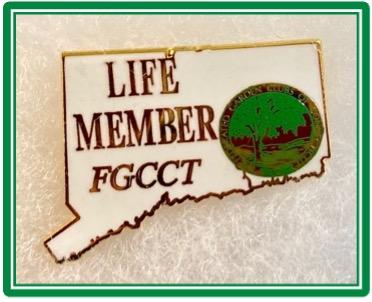
This prestigious honor is often presented at a special celebration, such as your club’s annual luncheon. The honoree will receive a lovely Life Member pin, a letter of congratulations describing their achievements, and a Life Membership Card, signed by The Federation President.
The recognition not only honors that dedicated club member — the $100 application fee goes directly to the FGCCT Scholarship fund and thereby helps educate future gardeners who become, hopefully, future garden club members.
More information about a CT Life Membership can be found here.
To Apply and Pay Online, click here.
Congratulations to our 2025 Life Members
Barbara Maynard – Old Saybrook Garden Club
Judy Breekland – Caudatowa Garden Club
Barbara Delmhost – Garden Club of Madison
Lee Haines - Garden Club of Madison
Audrey Henderson - Garden Club of Madison
Karin Petersen - Garden Club of Madison
Susan Rianhard - Garden Club of Madison
Ann Watkins – Greens Farms Garden Club
Mary Sprano – Waterbury Garden Club
Mary McMahon – Waterbury Garden Club
Sue Schaedler – Clinton Arbor Garden Club
Claire Norris – Olde Ripton Garden Club
Nan Merolla – Wilton Garden Club
Jane Ketterer – Garden Club of Madison
Judy Gretchell – Garden Club of Madison
Lois Nichols - Garden Club of Madison
Sue Greaves – Garden Club of Madison
Martina Doshan – Garden Club of Old Greenwich
Regina Kowenhoven – Thames River Garden Club
Joanne McKendry – Garden Club of Brookfield
Grace Duffy – Spring Glen Garden Club
— Norma Jean Macauto, 2nd Vice President, FGCCT
normajean.macauto@ctgardenclubs.org
| | | | |
| |
|
More Than a Decoration: The Secret Life of Cones
By Renee Marsh, FGCCT Horticulture Chair
| | |
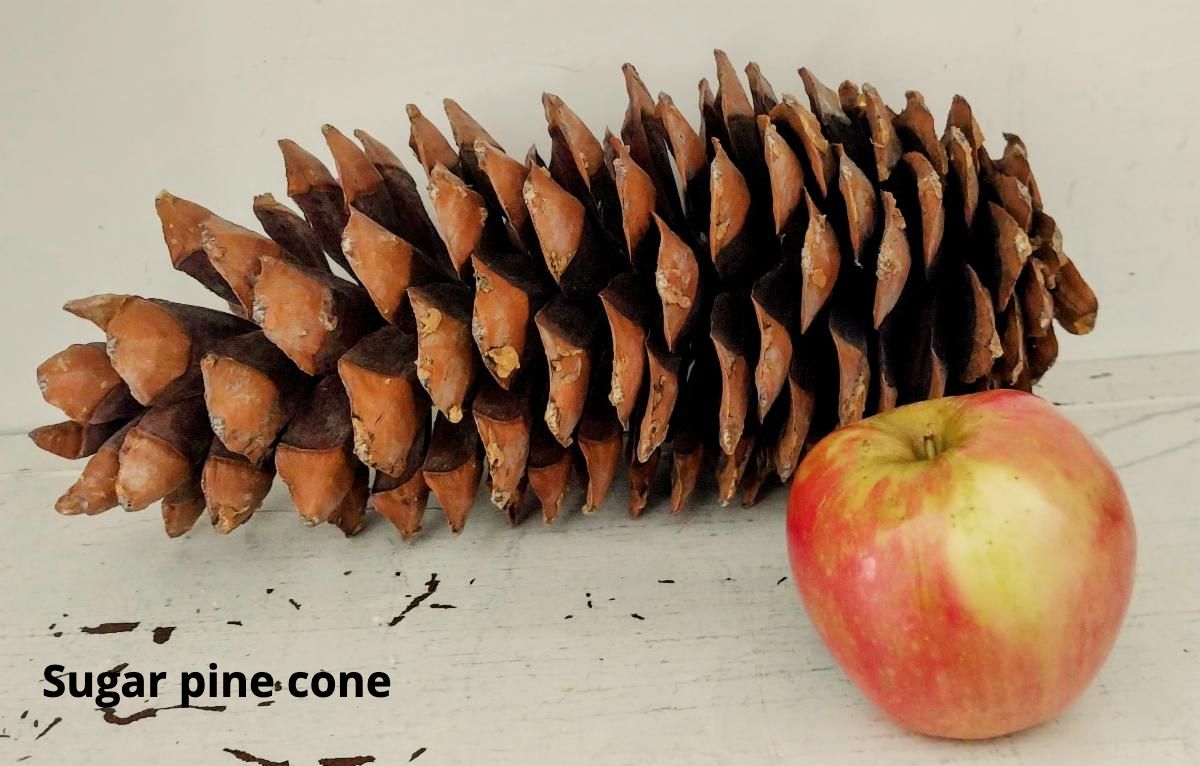
Over the holidays, a friend brought me the most unusual hostess gift: a pine cone. Not just any pine cone mind you, but one from a Sugar Pine, Pinus lambertiana. Native to the Pacific coast, the sugar pine is the tallest of all conifers, reaching record heights of 273 feet, and it bears the largest cones of any conifer—some growing up to 24 inches long. Sitting on my kitchen table, it looked like something left behind from the Jurassic period (that is a large apple). I was astonished and, being as botanically obsessive as I am, down the rabbit hole I went.
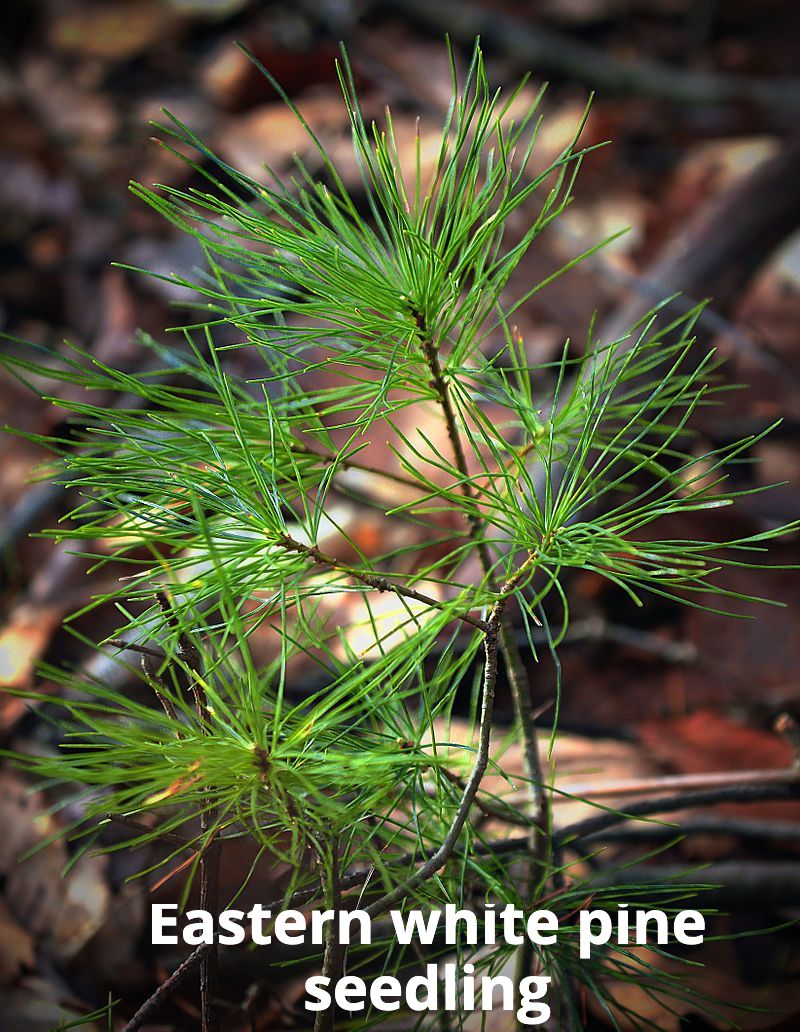
Conifers are among the most ancient and resilient groups of plants on Earth. A major group of the gymnosperms, they are characterized by, and named for, their reproductive structure, the cone. Cones are remarkable adaptations designed to protect and disperse seeds across a wide range of environments. Each species, be it pines, spruces, firs or hemlocks, has cones with distinct characteristics that are finely tuned to its ecological niche. In this discussion, I am going to use eastern white pine, Pinus strobus, as my example because it is native and my favorite conifer.
| | |
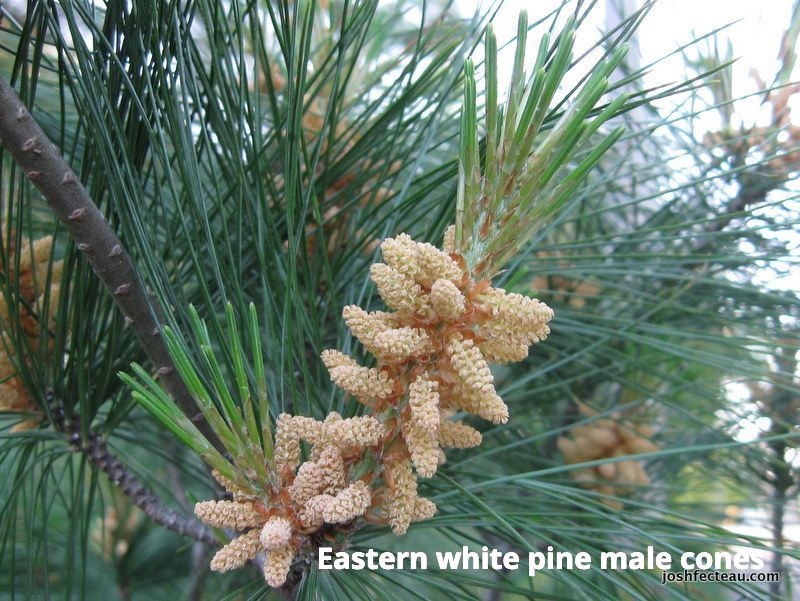
Conifer cones, also known as strobili, are sophisticated reproductive structures. There are male and female cones, each with a specific role to play. Male cones are small and somewhat inconspicuous. In eastern white pines, they appear as small, yellowish clusters near the base of new shoots. Within these cones, pollen grains develop which, at the right time, will be released in astonishing quantities as they rely on the wind to carry the pollen to the female cones. I love to watch the green clouds of pollen billow in the spring—though I do shut the windows. Interestingly, male cones are usually positioned on the lower branches, a clever strategy that reduces the likelihood of pollen fertilizing cones on the same tree.
Female cones, known as seed cones, are woody, long-lived structures and contain the ovules. When pollen lands on the female cone and fertilization occurs, the cone hardens and the ovules mature into seeds. While the male cones wither away after releasing pollen, the female cones persist, maturing over time.
|
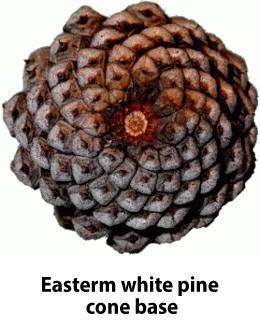
 | | Cones are structural marvels and while they all share a basic design, their size, shape, and scale arrangement can differ dramatically among species. Each cone consists of scales arranged around a central axis. The scales are attached to the central stem and can open and close in response to environmental conditions, allowing seeds to be released when the timing is right. One of the most remarkable features of cones is the spiral, radial symmetry of these scales. As the cone grows, each new scale forms at a consistent angle from the previous scale. This regular placement allows the scales to pack efficiently, minimizing overlap while maximizing protection and space for developing ovules and seeds. This arrangement often follows Fibonacci numbers, reflecting nature’s mathematical elegance—a pattern seen also in sunflower heads, pineapples, and leaf arrangements. (For those of you who were not math majors, the Fibonacci numbers are a sequence where each number is the sum of the two before it. It begins with 0 and 1, and continues 0, 1, 1, 2, 3, 5, 8, 13, and so on.)
| | |
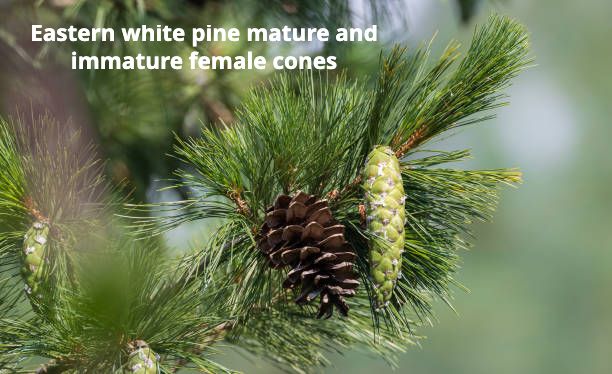
Some cones take several years to mature, like our eastern white pine’s cone which takes about two growing seasons—roughly 18 to 24 months. Pollination occurs in spring of the first year, when the female cones are small, soft, and green. Growth is slow through the first summer/ fall, and fertilization does not occur until months after pollination. During the second spring/summer, the cones enlarge rapidly as the seeds develop, and by late summer/early fall of the second year, the cones mature, dry, and open to release their winged seeds. You will often see mature and immature cones hanging side by side on the limbs.
Now, anyone who has handled pine cones knows they are often coated in sticky sap, or resin. This resin serves many purposes. It helps seal the scales, reducing water loss and protecting immature seeds from environmental stress such as cold, heat, and drying winds. It also deters insects and seals wounds, preventing fungi and bacteria from infecting developing seeds. In serotinous pines, such as lodgepole pine, resin holds the cone scales tightly shut until the heat of a fire melts it, releasing seeds onto competition-free soil. In non-serotinous species, like eastern white pine, cones open without such a dramatic trigger. The hardened resin also strengthens the cone and makes it less appealing to animals before the seeds are ready—squirrels notwithstanding.
| | |
In its drive to establish a new generation, the pine cone supports a complex web of life. When the cone dries and opens, the seeds are dispersed by wind and animals. Squirrels and birds play a key role here, collecting and caching both cones and seeds, often forgetting a few along the way, thus unintentionally planting seeds. The seeds feed a wide range of wildlife, from chipmunks and squirrels to deer and even bears. When the cones fall to the forest floor, they become part of the organic litter that enriches the soil and supports fungi, insects, and plants.
And finally, somewhere, under the right conditions of light, moisture, and soil, new pine saplings emerge—the future of our forests and the continuation of an ancient lineage.
All of that, contained in an extraordinary cone, one of which rests on my kitchen table.
| | |
What's Growing Around Your Yard?
By Holly Kocet, FGCCT Environmental/Conservation Chair
| | |
Do you know what plants are growing on your property? Chances are there are non-native invasive plants along borders and in wooded areas. Invasive plants are aggressive exotic plants that were introduced either intentionally for ornamental purposes or accidentally as hitchhikers on other plants or products. Invasives thrive in a variety of growing conditions with no natural enemies to control their rapid spread as would occur in their own place of origin.
The environmental costs of invasive plants are high. Many invasive plants change soil chemistry, making it unsuitable for other plants to survive. Invasive vines smother and strangle important trees and shrubs. Still others are aggressive spreaders that create monocultures in our woodlands to outcompete and displace native vegetation. These are the ways invasives are disruptive to the environment, reducing biological diversity and altering the way plants, animals, soil, and water interact within native ecosystems, and are a serious threat to endangered plant and animal species.
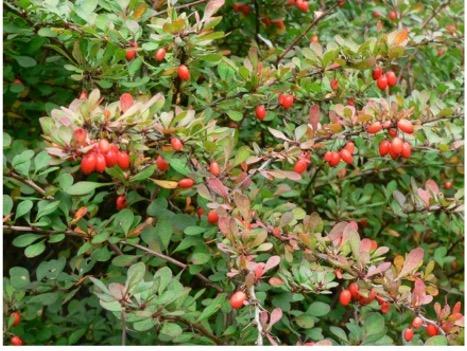
Invasive plants can also be a threat to human health. Japanese barberry is a spiny shrub that blooms in spring with bright red berries that develop in late summer and persist into winter. Common in home and commercial landscapes, barberry has escaped cultivation and now grows wildly throughout CT’s woodlands, creating dense thickets that prevent native trees and wild flowers from regenerating. Barberry also poses a risk to human health. A study conducted by the CT Agricultural Experiment Station - Williams, et al 2017 - revealed a frightening discovery. Barberry-infested forests had a significantly higher abundance of ticks, the causal agent responsible for Lyme disease, than in forests free of barberry. The study concluded that managing barberry can significantly reduce the abundance of ticks and the risk of tick-related illness.
The most important thing one can do to control invasives is not to plant them. While Japanese barberry, burning bush, and other invasives are still sold, there are many excellent native alternatives. Second, it is important to take action as soon as an invasive is identified in your yard. Once established, many invasives can be difficult to remove.
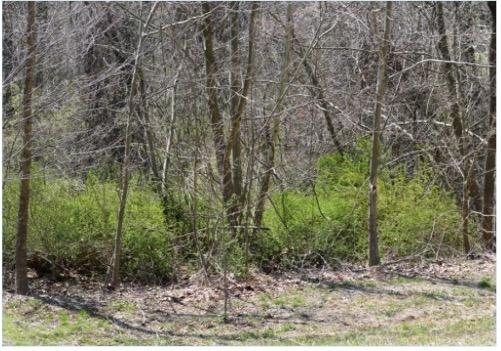
The approach used for controlling invasive plants depends on the species and how large the infestation. Early detection is important. Invasive plants including barberry and burning bush leaf out earlier than our native species and are easy to spot in early spring in wooded areas and along edges. Small plants can be easily managed by pulling or digging when the ground is moist, making sure to remove the entire root. Larger stems can be cut and chemically treated. Refer to the Invasive Plant Management Calendar published by the CT Invasive Plant Working Group (CIPWG) for information on chemical control of invasives.
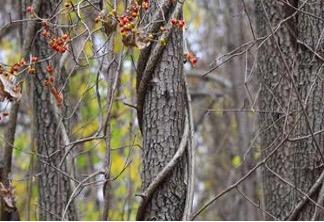
You needn’t wait until spring. According to the Penn State Extension, winter is a perfect time to tackle invasives. Vines like oriental bittersweet are easy to see on naked trees. Jackets and gloves protect you from the thorns of barberry and multiflora rose. And while ticks are present in leaf litter year-round, they are less active in colder months. Vines should be cut about 12 inches off the ground and as far up as you can safely reach. The remaining stump can be painted with an herbicide immediately after cutting or repeatedly cut. But resist the urge to pull remaining vines so not to damage tree branches. Shrubs like barberry, multiflora rose, autumn olive and burning bush can be cut back so that there is less to do in the spring/summer. Shrub stumps should be cut 6 inches above the ground and quickly painted with herbicide.
Disposal of invasive plants is an important consideration and depends on the invasive and timing of removal. Barberry, without mature berries/seeds, can be placed in a brush pile. If mature berries are present, plants should be placed in a designated area where they can be monitored for reseeding or can be bagged for incineration. Invasives with berries or seeds should never be placed in a compost or brush pile.
| | Oriental bittersweet [Photo: David L. Clement, Univ. of MD] | | Japanese barberry [Photo:
Dr. Jeffrey Ward, CAES] | | |
Japanese barberry [Photo:
Dr. Jeffrey Ward, CAES]
| | | | |
SPOTLIGHT on our FGCCT Affiliates! | | | | |
|
The Connecticut Daylily Society
| | |
The Connecticut Daylily Society (CDS) is a non-profit group of perennial enthusiasts who meet several times a year to discuss their favorite flower — the daylily! The group is affiliated with the American Hemerocallis Society and the New England Daylily Society. Most of the group’s meetings are held at the Avon Senior Center and are free of charge and open to the public. Meetings feature guest speakers from all over the country who speak on daylily-related topics. Meetings generally begin at noon with a potluck buffet, and a guest speaker takes the stage at 1 pm. Some meetings feature a daylily auction following the program with daylily door prizes at each meeting. In warmer months, there are tours of member gardens. The club has an active Social Media presence, posting incredible images of daylilies.
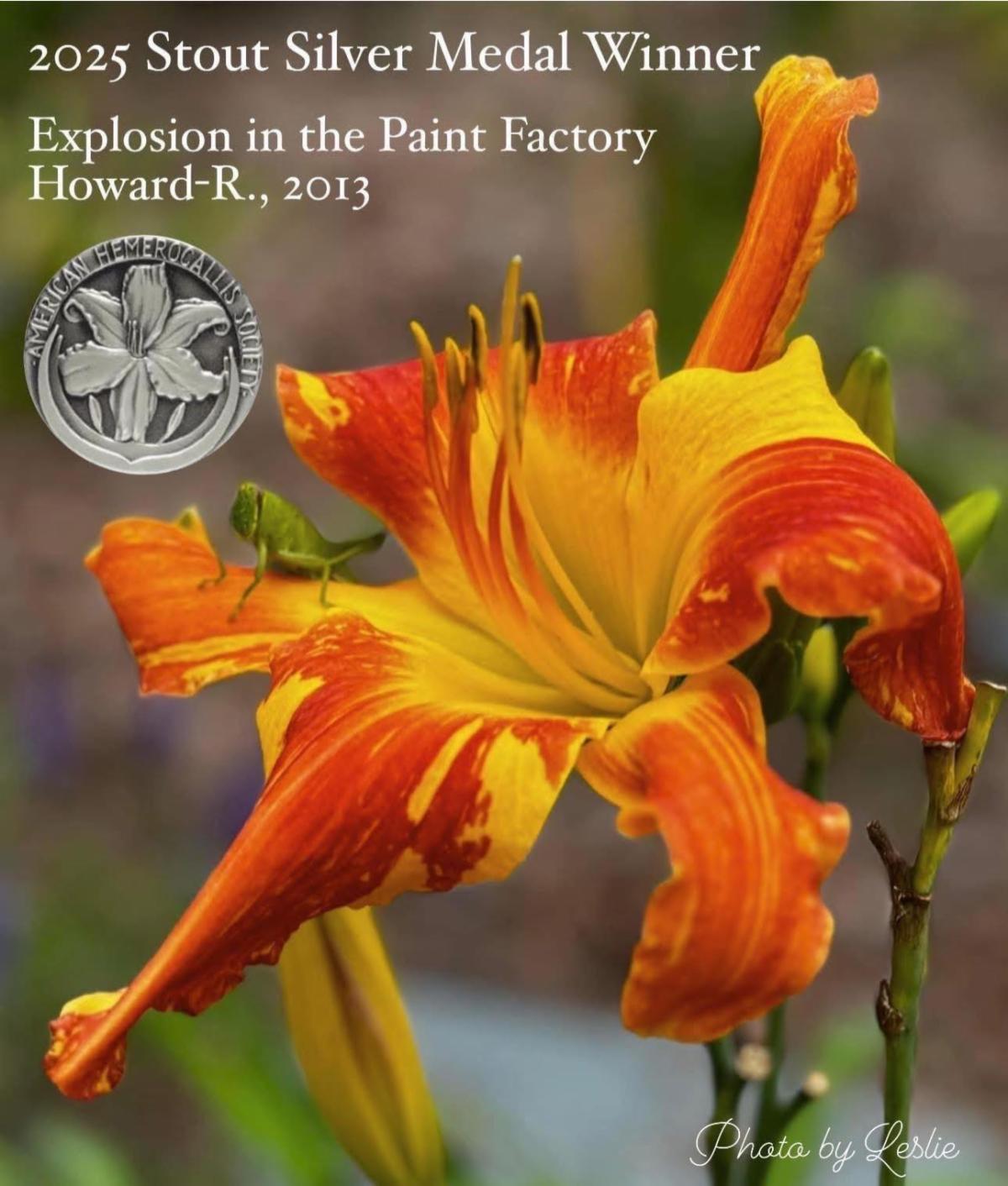
In December, the club proudly shared the news that Connecticut Daylily Society Member Rich Howard was awarded the 2025 Stout Silver Medal for his hybrid, “Explosion at the Paint Factory.” This is the highest award a daylily cultivar can receive, given in memory of Dr. Arlow Burdette Stout, considered to be the father of modern daylily breeding in North America.
This annual award, from American Horticultural Society Garden judges, can be given only to a cultivar that has first received the Award of Merit not less than two years previously. The award is given annually to only one daylily of over 100,000 registered Daylily cultivars. Some criteria for the award include plant vigor, foliage, scape height, bud placement, overall beauty, distinction of the bloom and plant, resistance to disease, form and bloom substance and overall garden performance.
The Connecticut Daylily Society will be an Education Exhibitor at the 44th Annual Connecticut Flower Show and will have information about Rich’s amazing prize-winning cultivar and much more.
To learn more about the Connecticut Daylily Society, visit their website!
| | | | |
| |
|
"Club Corner" is a place for clubs to showcase exceptional or notable club achievements and activities. Has your club done something unique (or uniquely successful?) that you'd like to share? Visit "Club Corner" on the FGCCT website for more news from clubs! (This area is NOT for upcoming events—you can post those on the FGCCT Club Calendar.)
To submit: send high-resolution photos, along with a writeup (200 words or less, please) and photo captions, to martha.sherman@ctgardenclubs.org to be considered for inclusion. Please ensure that you have appropriate permissions for all photos. We reserve the right to edit copy and select photos for inclusion.
| | |
Decking the Halls in Stonington!
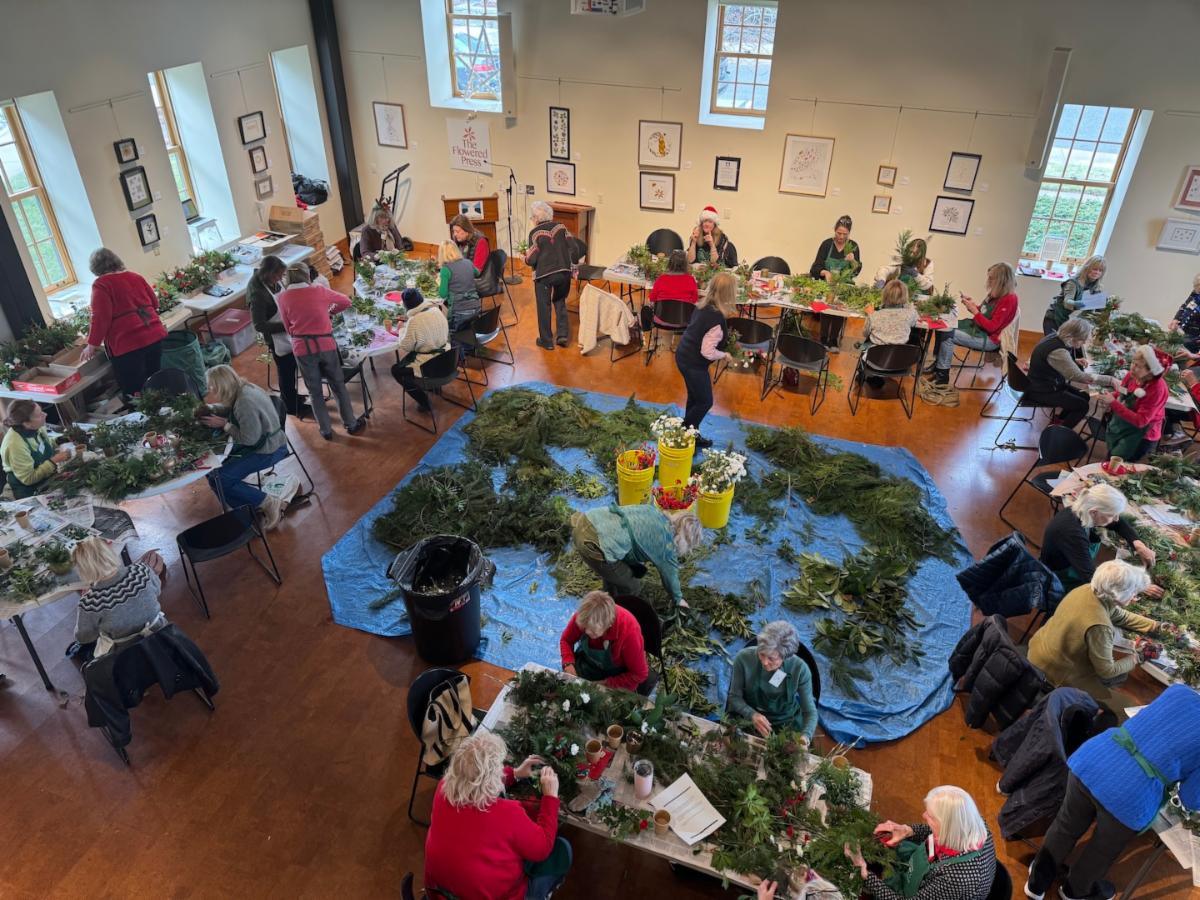
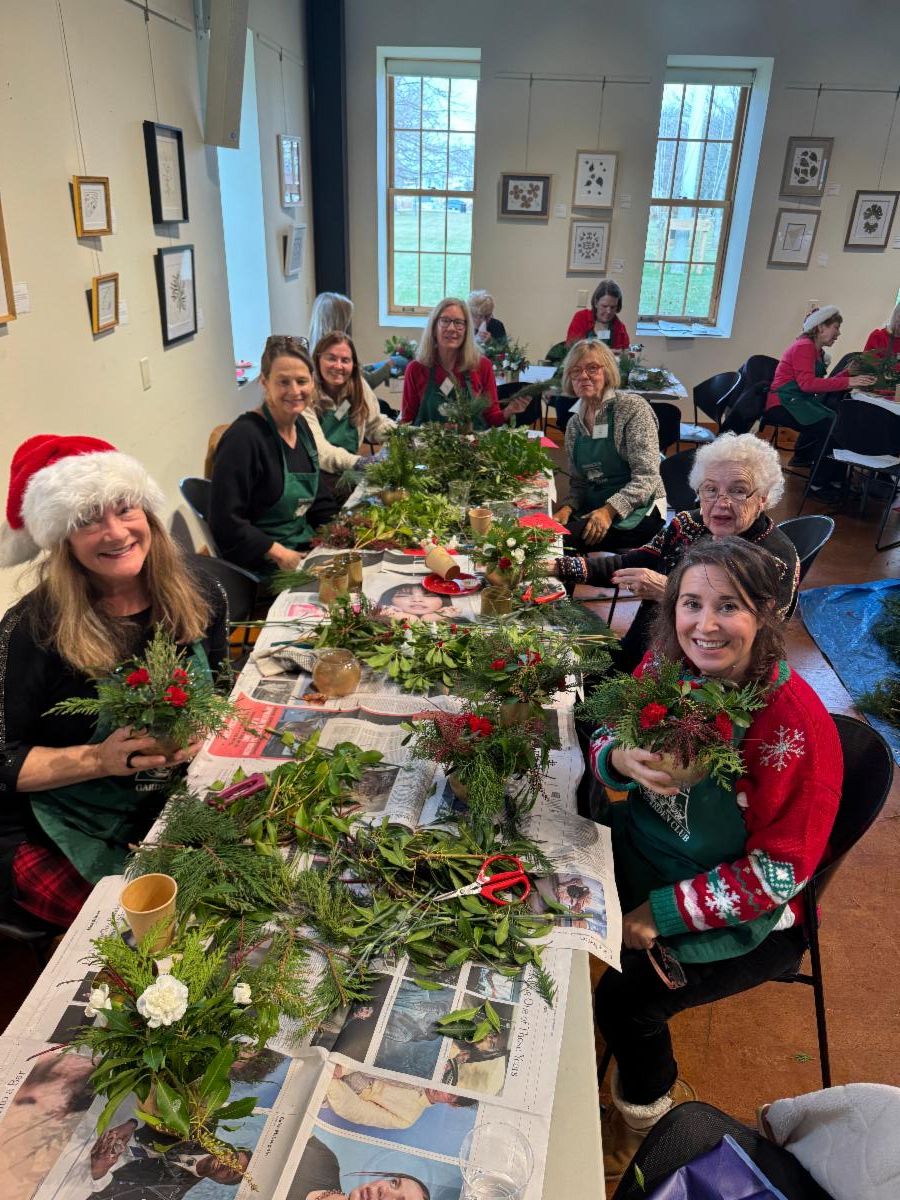
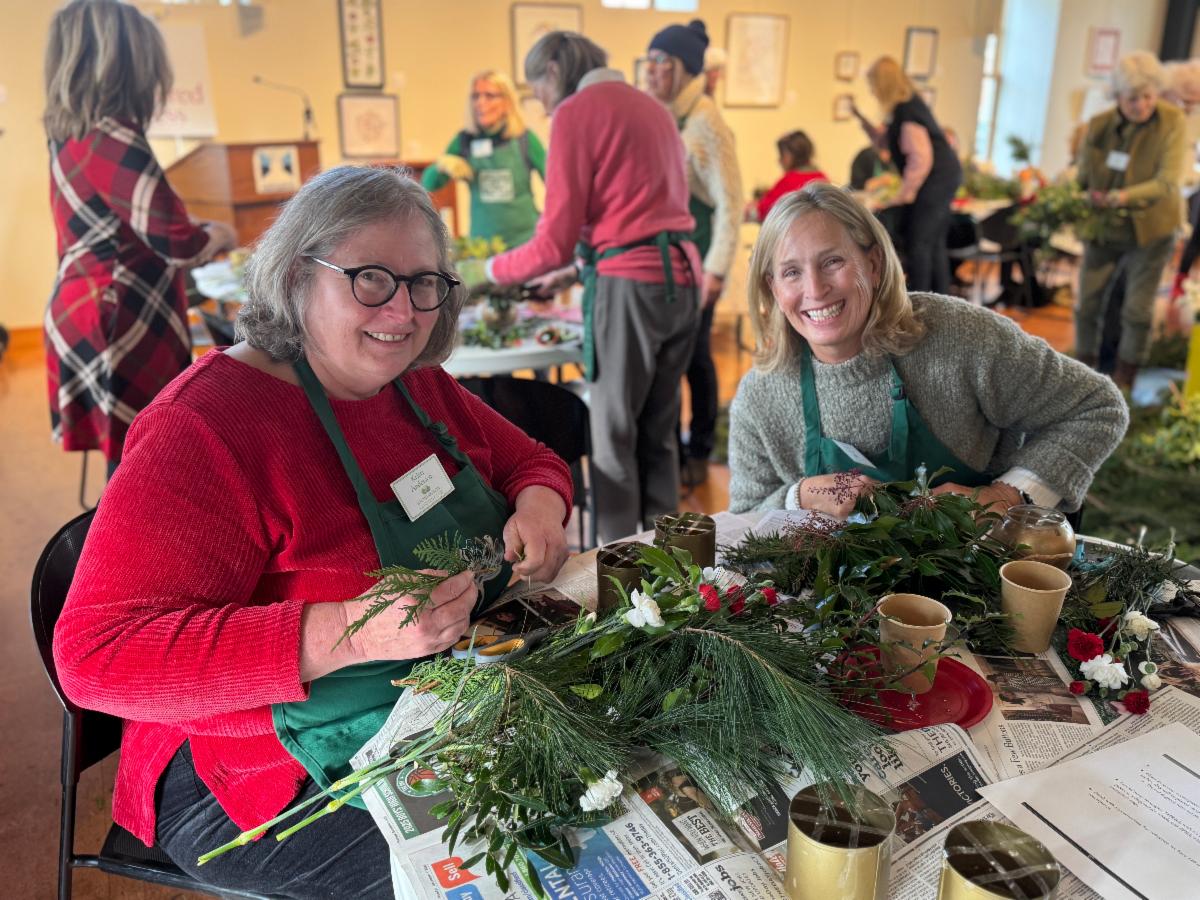
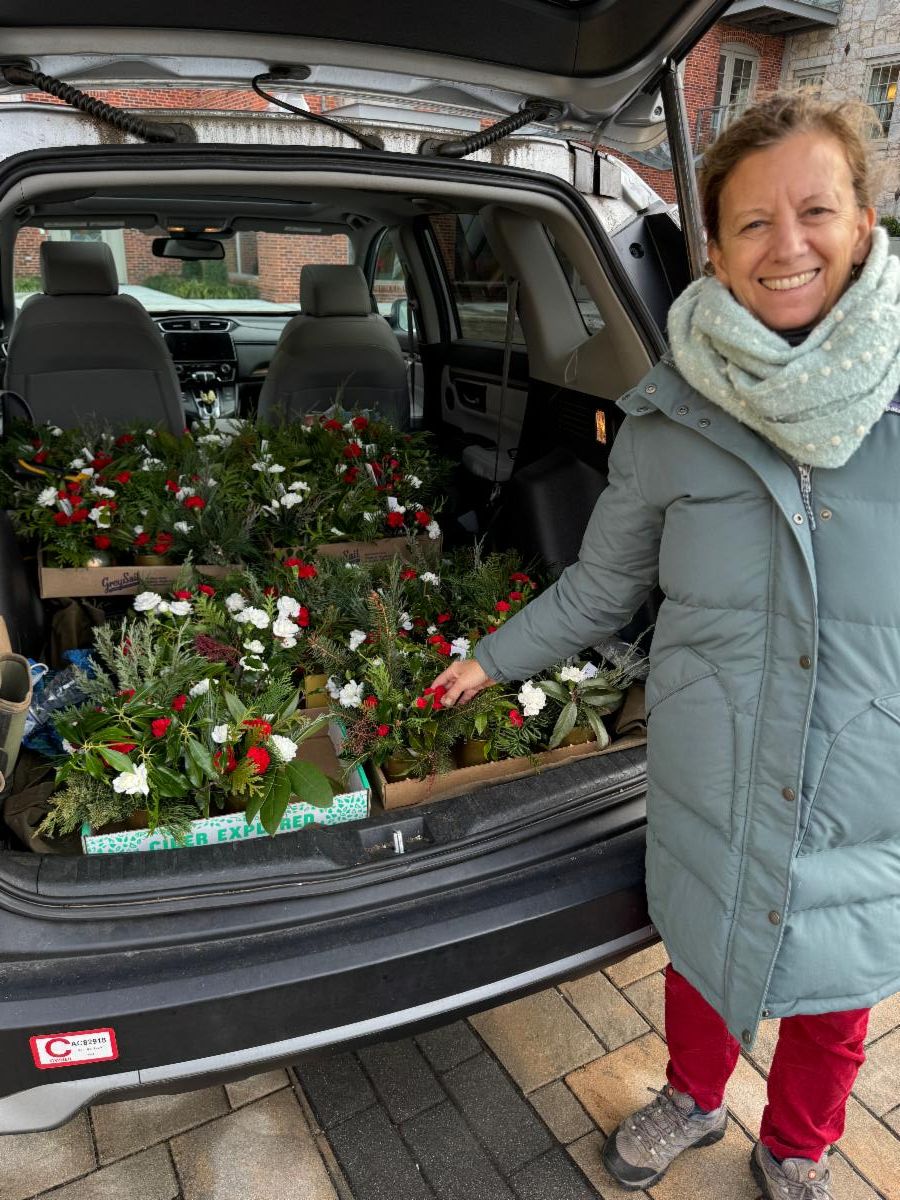
The Stonington Garden Club recently held its annual holiday greens workshop where members created over 120 small arrangements for delivery to area nursing facilities. Members enjoyed delicious snacks and holiday music while creating their arrangements. This tradition is a wonderful way to usher in the holidays as the club celebrates its 100th anniversary year!
| | |
Holiday Decorations from the Garden Club of Woodbridge
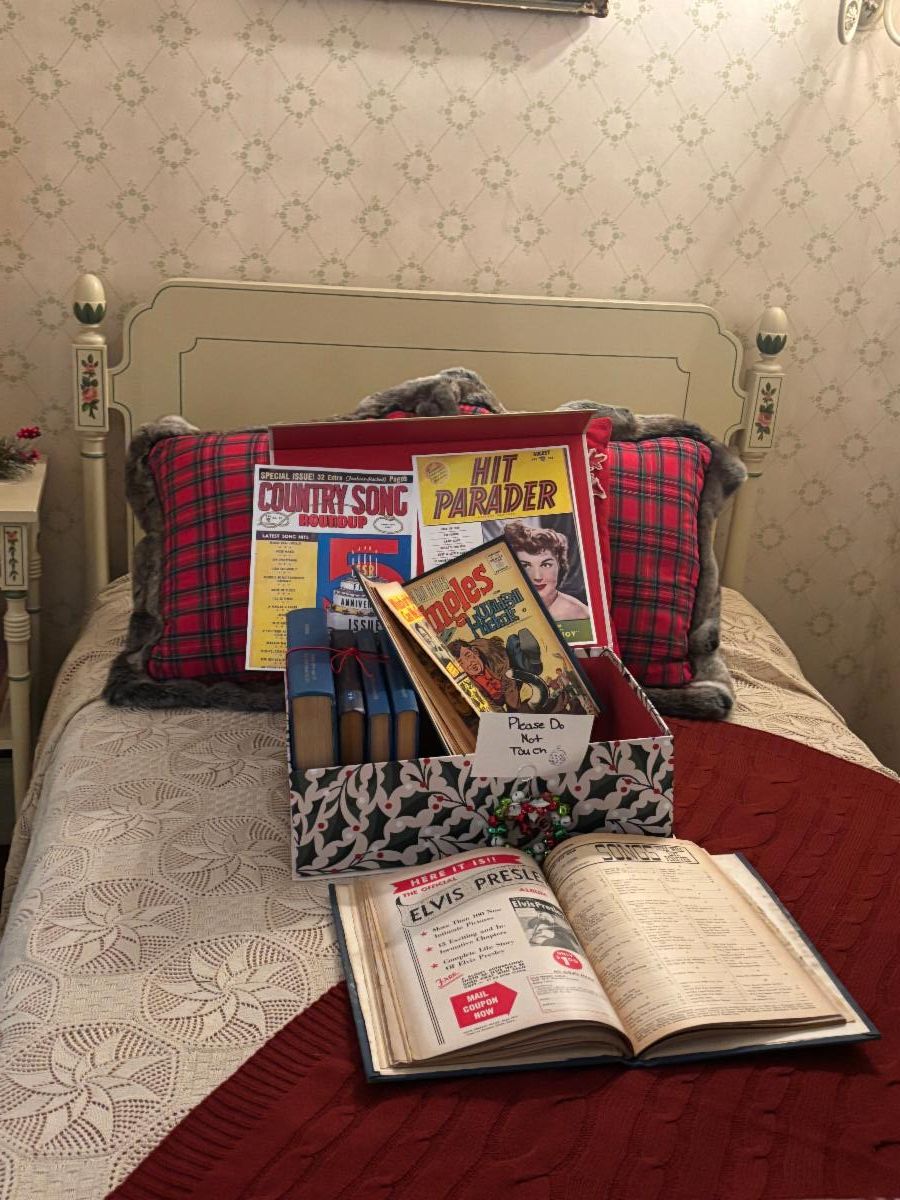
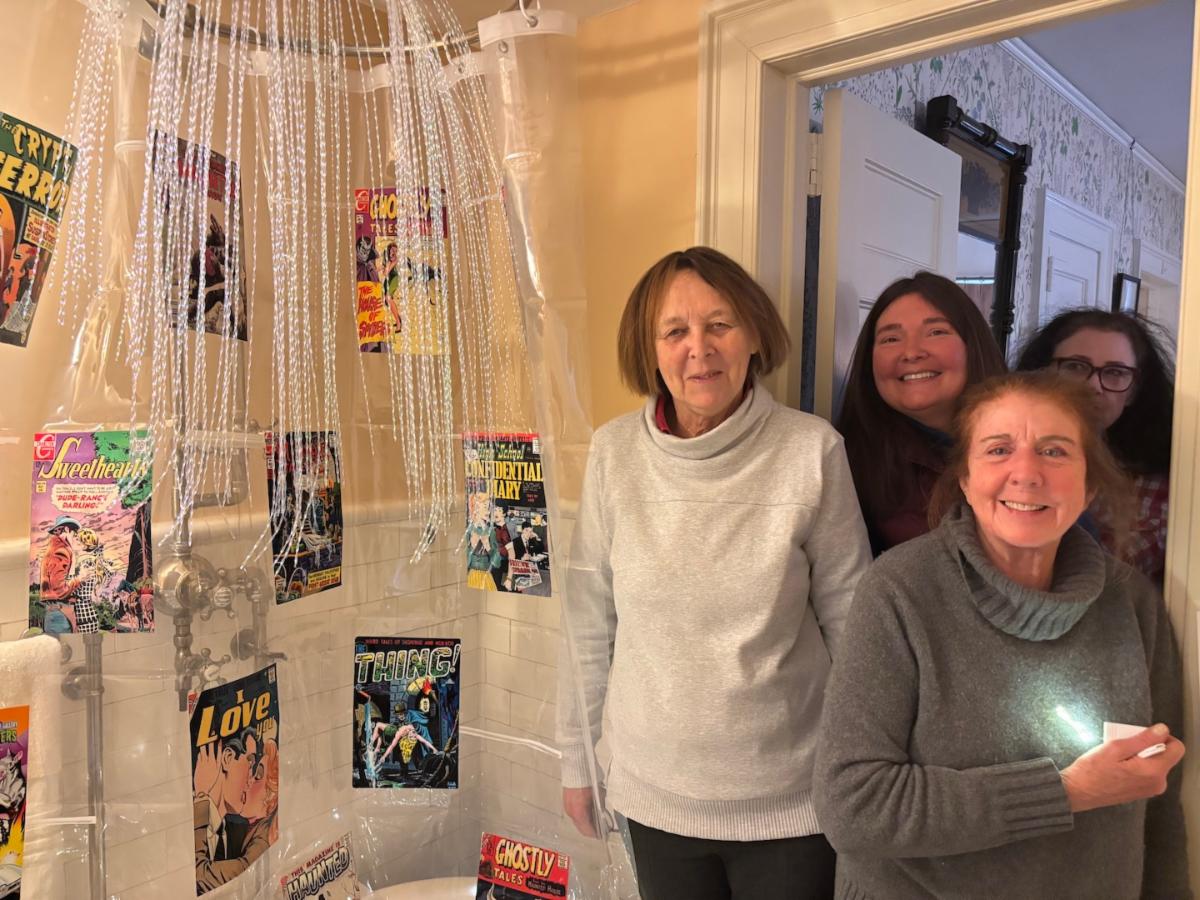
The Osborne Homestead Museum in Derby hosted holiday tours of Frances Osborne Kellogg's home from November 28 through December 20. Garden Clubs in the area volunteered to decorate different rooms in the Museum before the tours began. This year's subject was "Businesses that began in Derby." Mary Ann Tyma, Mary Leigh Sabshin, Debbie Schlegel, Cindy Marien, Mary Jane Purcell, Teresa Gagliardi and Angela Bradley, members of the Garden Club of Woodbridge, decorated Frances's childhood bedroom and bathroom. The business the club members were assigned was Charlton Comics, an American comic book publishing company established in Derby from 1945-1986. Its first publications were song lyrics, puzzles and books. Charlton Comics had crime, science fiction, Western, horror, war, and romance comics, as well as talking animal and superhero titles. Numerous items from the comic book era, books with song lyrics, and old photos enriched Frances's bedroom and bathroom.
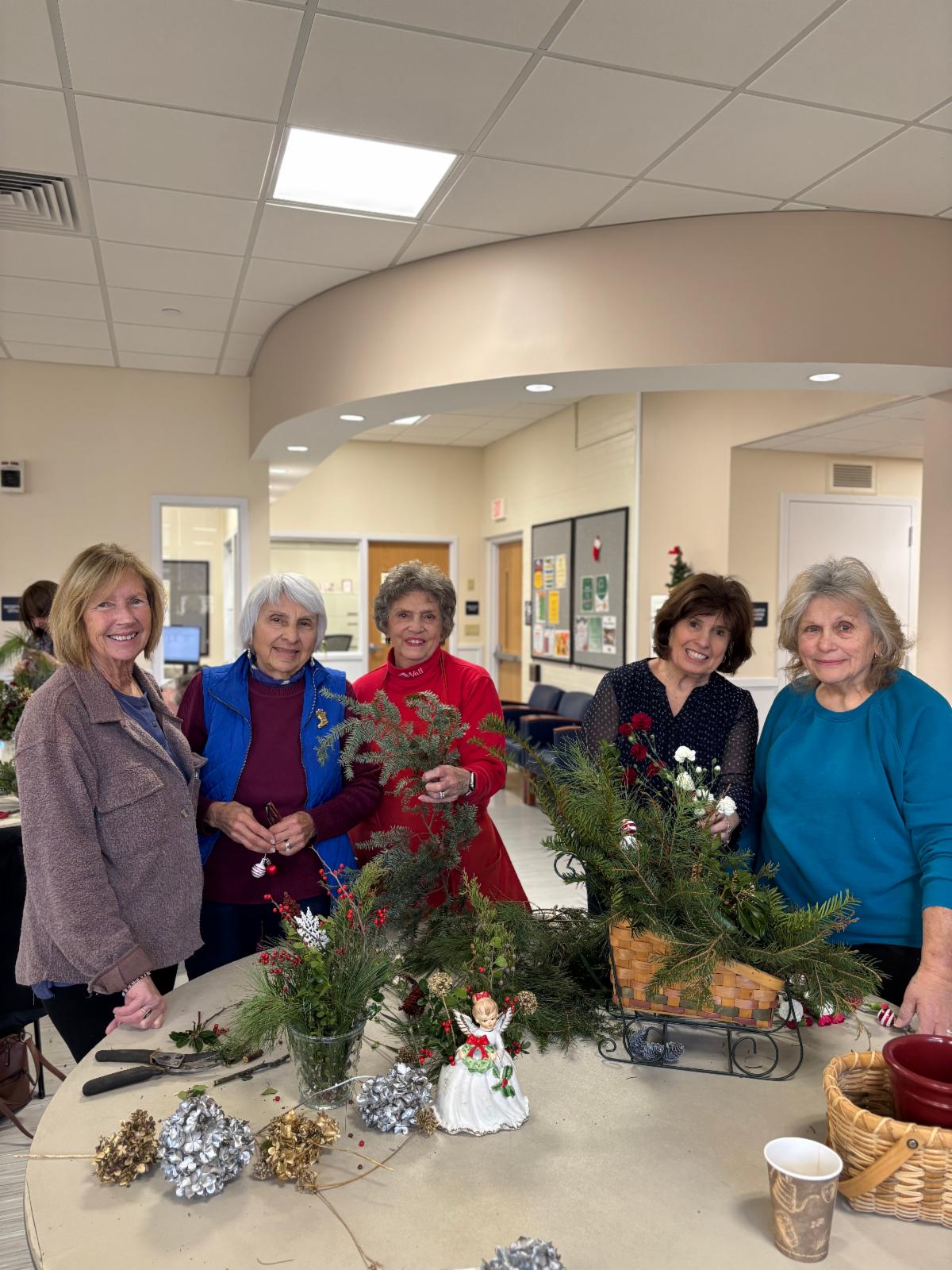
What a fun afternoon members of the Garden Club of Woodbridge had on December 12 at the Woodbridge Senior Center. Garden club members aided seniors in selecting pine branches, pinecones, berries, and flowers to build holiday flower arrangements. Club members guided seniors along the way. There was plenty of "bling" (stars, mini-ornaments, etc.) to enrich the designs. Baskets, glass vases, ceramic dishes, and silver bowls held the festive, completed arrangements.
| | Top & Middle: Charlton Comics at Osborne Homestead Museum; decorating with seniors | | |
A Norman Rockwell Christmas in Cheshire
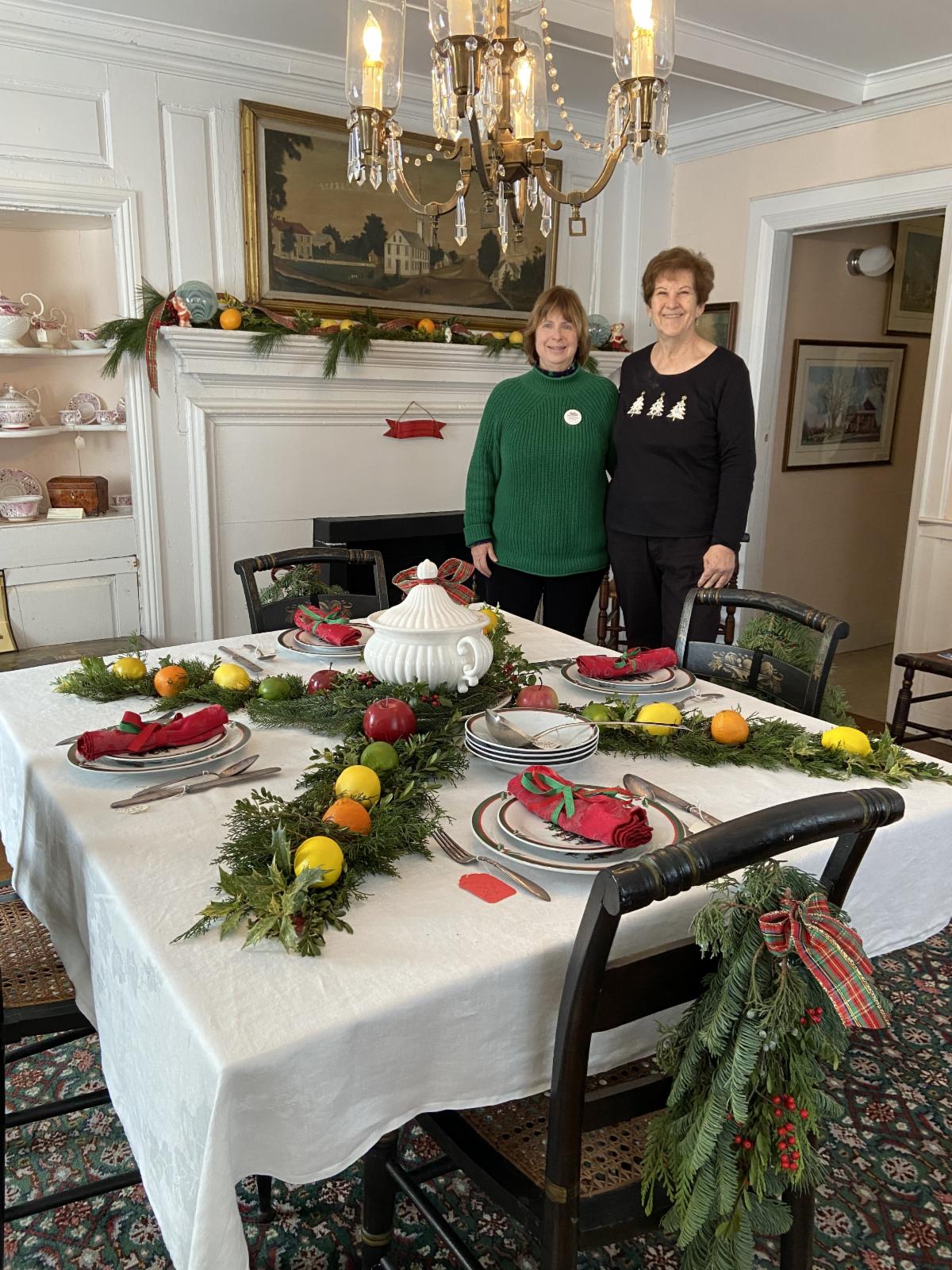
The Suburban Garden Club of Cheshire decorated the historic house headquarters of the Cheshire Historical Society for Christmas. The theme was Norman Rockwell Christmas. The club made centerpieces for all the tables and sideboards, as well as decorating all the mantelpieces.
Pictured are Mitzi Romano, President of the Cheshire Historical Society and Jan Edwards, member of the Society and on the Suburban Garden Club decorating team in the dining room.
| | |
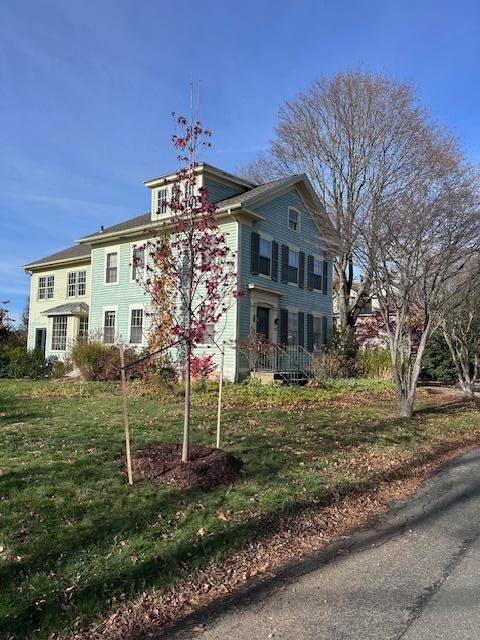
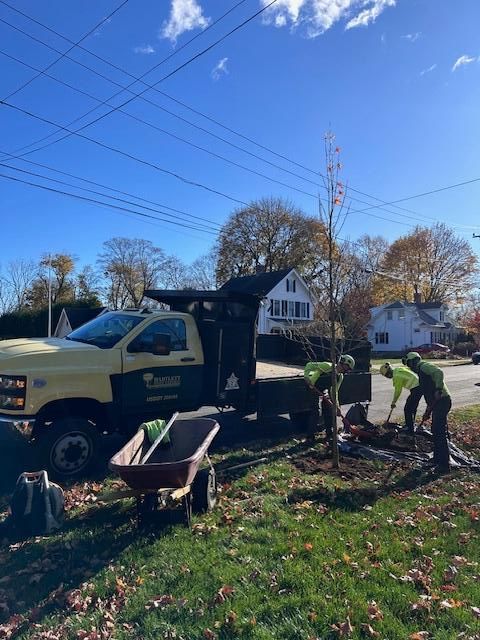
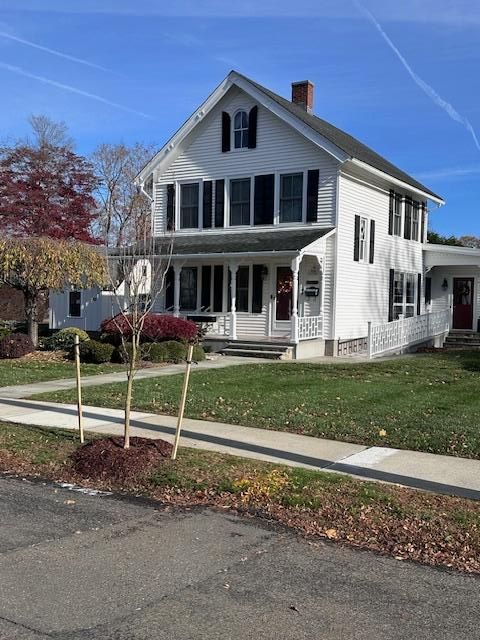
Guilford Garden Club plants 7 trees in Guilford
Each year hundreds of trees in Guilford are removed for a variety of reasons. Therefore, the replanting of trees in Guilford has been a major mission of the Guilford Garden Club for decades. This November, the club funded the planting of 7 trees, 5 Celestial Dogwoods and 2 Autumn Brilliance Shadblow on South Fair Street and 1 Celestial Dogwood on High Street.
To note, since the 2006 inception of the Greening of Guilford Tree Program, part of the Guilford Garden Club, this program has funded the planting of a total of 140 trees. This is made possible from monies from the Guilford Garden Club donations fund as well as a sizeable donation from the Guilford Foundation to the program over the last few years and donations from the public. The Greening of Guilford Tree Program works with the Town of Guilford Tree Warden, Kevin Magee, and the Guilford Tree Advisory Committee to provide the best trees in the needed locations in Guilford. Trees make Guilford beautiful!
To learn more about this club and the Guilford Tree Program, click here.
| | | | |
| |
Donations to FGCCT's Scholarship Fund; Healing, Therapy and Senior Gardening Fund; and World Gardening Fund | |
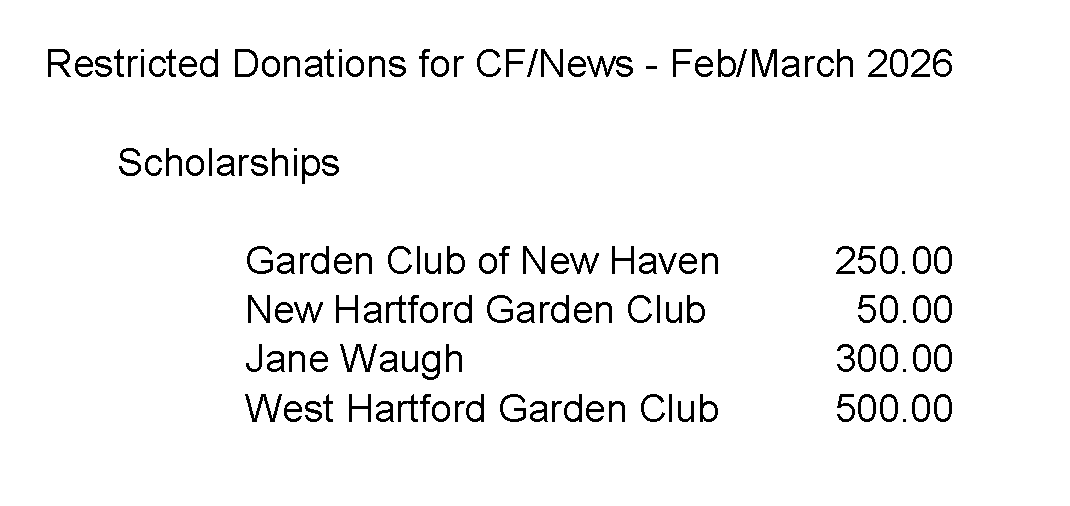
We thank the following Garden Clubs for their recent donations to the FGCCT Scholarship Fund.* For almost 40 years, the Federation has awarded scholarships to college and university students who major in Agronomy, Botany, City Planning, Conservation, Environmental Studies, Floriculture, Forestry, Horticulture, Land Management, Landscape Design, Plant Pathology, or allied subjects. We welcome donations of any size. Our appeal is ongoing to give all of our clubs the opportunity to make a contribution in the amount of their choosing.
| |
Please send all Scholarship Fund donation checks to the appropriate chair (see below). Make checks out to "FGCCT" with the appropriate Fund listed on the memo line.
*Please note that due to the deadline for articles and information for the CFNews, some donations may not be received and deposited in time to be included in the bi-monthly donation acknowledgement, but will be included in the next issue of our newsletter.
PLEASE MAIL CHECKS TO:
| |
For World Gardening & Healing, Therapy and Senior Gardening:
The Federated Garden Clubs of CT, Inc.
Attention: Rosemary Bonaguide
PO Box 902
Wallingford, CT 06492
| |
For FGCCT Scholarship Fund:
The Federated Garden Clubs of CT, Inc.
Attention: Carole Fromer
PO Box 902
Wallingford, CT 06492
| | |
Follow us on Facebook and Instagram!
FGCCT is on Facebook and Instagram and we love to post your news and photos! Please send upcoming events, club activities, civic projects, milestones, and hort tips. Include photos and a brief writeup of the news your club would like to share. The best format is text in an email with jpg photos attached. Take active photos showing members at work or showcasing beautiful gardens, flowers, and plants (please name the flower if it is a hort only photo). Let’s follow each other! Send submissions to social@ctgardenclubs.org
| |
|
Just a reminder …
Please send all correspondence to the new FGCCT office:
The Federated Garden Clubs of CT, Inc.
P.O. Box 902
Wallingford, CT 06492
Did you recently elect new officers? Email their names and contact information to us at office@ctgardenclubs.org so they will receive Federation correspondence. If you need assistance, please contact FGCCT Office Administrator Joan Lenart at office@ctgardenclubs.org or by phone at 203-488-5528 on Mondays and Wednesdays, from 10 am to 2 pm.
| | | Deadline to submit articles/photos, ads and calendar events for the April / May 2026 issue of the CFNews is March 10, 2026. Please submit to: | | |
Creating a National Garden Clubs, Inc. Website Member Account
In order for garden club members to access information in the Members area of the National Garden Clubs website, they will now need to create an account. Below are the steps to follow.
-
Go to the Homepage of the NGC website at https://gardenclub.org/
- Select “Member Login” in the site header.
- Enter your information. Avoid choosing a username with spaces. Email address is recommended for username. Select “Create new account”.
- You will receive a green highlighted message to check email at the address you entered to verify and complete your account.
- Use the link provided in the confirmation email to create your password and save your changes.
- Once you have selected “save”, click on the “Member Section” link in the main menu.
~
| | |
Reminder: NGC's The National Gardener is ONLINE and free!
The official publication of the National Garden Clubs, The National Gardener, appears quarterly, and features articles of interest to environmentalists, gardeners, landscapers, floral designers, educators and photographers. Subscribe here.
| | |
| |
State, Regional &
National Events
| | | | | |