| |
| |
| |
| |
|
Greetings Summer Gardeners!
The sights, scents, and colors of summer bring renewed energy and joy to all who love gardening. Congratulations to the many clubs who have recently completed their successful May Markets and Plant Sales—your hard work, creativity, and community spirit are truly appreciated. Across the state, there are also numerous spectacular Garden Tours planned for the coming weeks, offering inspiring opportunities to explore beautiful private and public gardens in full bloom. These events are listed on our website calendar.
I’m pleased to announce that 29 marvelous BEE RESILIENT~ Garden for Nature President’s Theme garden projects have been approved. Funding continues and our website has all the details on how to apply for grants (up to $500 per project). Please note that after your application has been reviewed and approved, the funds are sent to your Treasurer – in advance of the purchase of the plants, making it easier to begin your project promptly. I encourage all clubs to consider participating in this exciting and meaningful initiative that helps create resilient habitats for pollinators and beautifies our communities.
The next Federation Fridays Zoom workshop will be: “Parliamentary Procedure 101 ~ How It Works & Why It Matters” - June 19 at 10 am. This interactive session, moderated by FGCCT Parliamentarian, Jean Stetz-Puchalski, will serve as an introduction to Robert's Rules of Order and Parliamentary Procedure to help your Club meetings run more efficiently. There will also be time for your individual questions. Register HERE.
Flower Show School, Course IV is scheduled for June 3, and 10 – 12. at Kellogg Environmental Center in Derby. Information and Registration HERE
Looking for Meeting Speakers? ~ Check out our Online Speaker Directory. We have recently added many new speakers.
Last month, I had the pleasure of attending the National Garden Clubs Annual Convention in St. Louis, Missouri. During the convention, we had the wonderful opportunity to visit the NGC Headquarters, located adjacent to the beautiful Missouri Botanical Garden. It was interesting to see the rich history and ongoing work of our national organization. I am also delighted to report that Connecticut received numerous NGC Awards in recognition of the outstanding work being done throughout our state. These awards will be presented at our FGCCT Awards Meeting in October.
Important: Please read the article in this newsletter about the risk of possible copyright infringement with the casual use of online images in your social media or club website postings.
Thank you for all you do in your communities. I wish everyone a beautiful summer filled with blooms, birdsong, and the joy that only a garden can provide.
| | | | Let’s go out and BEE RESILIENT and Garden for Nature, and maybe we’ll help save the planet, one garden at a time! | |
Bee Resilient: Garden for Nature
By Wayne Gura and Anne Djupedal Gura, co-chairs, FGCCT President’s Project
It’s a pleasure to report that since the last issue of CFNews, another three clubs have been awarded funding for their natives-based garden projects! Congratulations to the following clubs on their inspiring BEE RESILIENT projects:
-
Town & Country Garden Club of Newtown, to create a pollinator-friendly garden at the entrance of the Senior Center within the Newtown Community Center.
-
Madison Garden Club, to re-plant a border with native plants in the fenced-in 50’x100’ educational garden maintained by the Club at Bauer Park.
-
Brookfield Garden Club, to plant a west-facing, sunny, 25’-x-7’ native perennial garden alongside the building of the Brookfield Library.
BEE RESILIENT was the topic for April 24th’s Federation Friday on Zoom, which featured outstanding presentations by three of the 29 member clubs that so far have been awarded grants for their pollinator-friendly projects. Kudos to Pomperaug Valley Garden Club, Colchester Garden Club, and Shippan Point Garden Club for their vision, work, and excellent results on their garden projects that they completed last year!
As summer approaches, there’s still time for a pollinator-friendly refresh-planting session in your natives-based garden. Trim back standing stalks to 8”-24” high to become habitat for this year’s new crop of stem-nesting bees – which, like the majority of our 4,000 U.S.-native bee species, are solitary, gentle and unlikely to sting, or stingless. Plant more of your same perennial species to help enlarge drifts, balance the design, fill in gaps in planting or in bloom time; and weed, water, mulch as needed. Then enjoy observing how the garden blooms throughout the growing season, offering a lovely resilient feast for our pollinators, our eyes, our spirits.
As always, for those of you who may be preparing to apply, please note…
- Once you apply online, you’ll get an email back within a day or so that we’ve gotten your application – either an automated one, or from either of us (Wayne or Anne.) If you don’t see it, check your spam folders.
-
PLEASE include with your application a list of your selected plant species – note that we need to see the Latin binomial names (your supplier should be able to provide those names for you), together with their itemized cost estimate. Plant choice is key, we cannot proceed without it.
-
The plant list should be comprised of no less than 70% locally/regionally-native species.
-
Horticulturally-bred inter-species hybrids – which are typically designated with an “X” following the genus name in the Latin binomial – are by definition not considered to be native plants.
And to ALL grant recipients past and future: once you’ve purchased and planted your plants, we’d love to see photos! Also, as stated in the grant proposal, please email a clearly legible copy of your expense receipts. No worries if your receipt and estimate don’t match. That’s why the estimate is just that: an estimate. However, we do need to see those final numbers for our reporting requirements.
We’re happy to report that there’s still money for more BEE RESILIENT projects to add beauty and resilience to more communities’ public landscapes. We welcome your application for your club!
| | | | |
Upcoming Events — Mark Your Calendars! | | | | |
National Garden Week
June 7-13
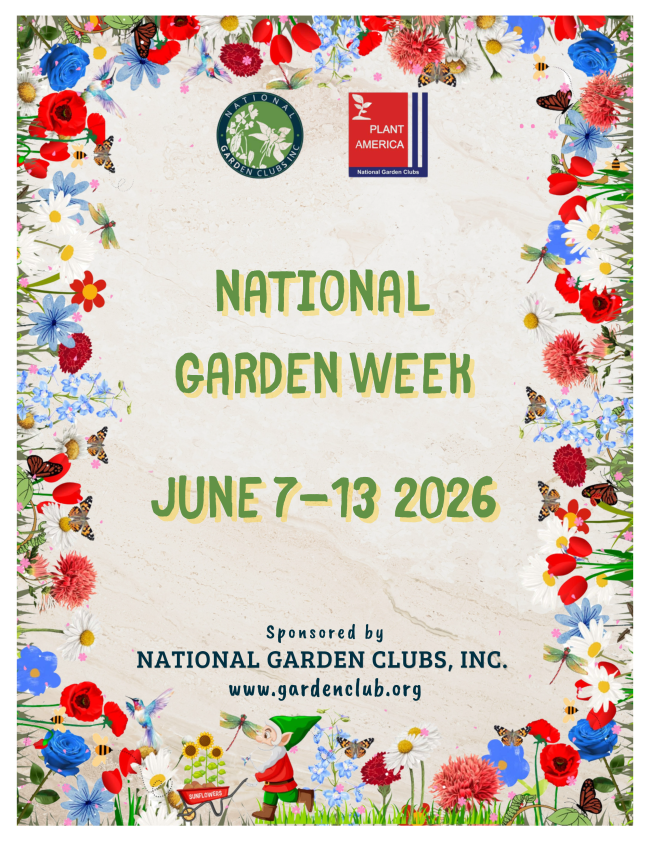
National Garden Week, sponsored by National Garden Clubs, Inc., is being observed this year from Sunday, June 7 through Saturday, June13, 2026. This annual event is always held the first full week of June, promoting the enjoyment of gardening, environmental education and stewardship, and the beautification within local communities. Many garden clubs throughout the country organize events, such as creating floral arrangements for first responders, planting trees, hosting educational workshops in local libraries, public gardens or area garden nurseries, beautifying an existing garden, or planning activities with youth groups.
Consider hanging up posters in your communities and let us know how your garden club celebrates National Garden Week. Posters, including customizable ones (to add a club's name, etc.) and a proclamation clubs can use for public officials, are available to download at the NGC website.
— Linda Kaplan, FGCCT Publicity Chair
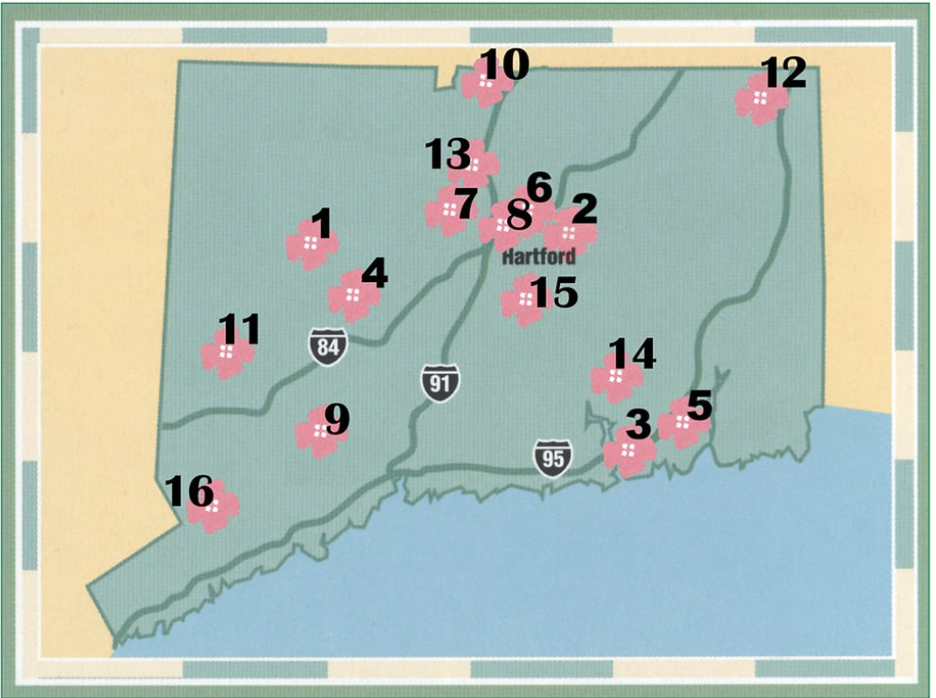
| | Sunday June 28, 2026 is your chance to visit any one or more of Connecticut’s sixteen Historic Sites and Gardens for FREE. Hours and activities vary by site. When you visit your first garden remember to ask about the Passport Program. A prize will be awarded upon the collection of three initials in your passport. There is bound to be a garden near you to start your adventure. Visit their website for more information about each. | |
Garden Sites
- Bellamy-Ferriday House & Garden – North Bethlehem
- Butler-McCook House & Garden - Hartford
- Florence Griswold Museum – Old Lyme
- Glebe House Museum & The Gertrude Jekyll Garden - Woodbury
- Harkness Memorial State Park - Waterford
- Harriet Beecher Stowe Center - Farmington
- Hill-Stead Museum - Hartford
- Mark Twain House & Museum - Hartford
- Osborne Homestead Museum & Kellogg Environmental Center - Derby
- Phelps-Hatheway House & Garden - Suffield
- Promisek at Three Rivers Farm - Bridgewater
- Roseland Cottage – Woodstock
- Stanley-Whitman House - Farmington
- Thankul Arnold House - Haddam
- Webb Deane Stevens Museum - Wethersfield
- Weir Farm National Historical Park – Wilton
When you visit any one of the gardens, I would appreciate a picture or two to share in the next issue of CFNews!
Enjoy!
Karin Pyskaty
Historic, Memorial, and Public Gardens, Chair
Karin.pyskaty@ctgardenclubs.org
| | |
Federation Fridays!
Hosted by FGCCT Board Members, these monthly 1.5 hr. Zoom Workshops provide a “Deep Dive” on important topics, such as: Membership, Club Finances, Fundraising, Events, Flower Shows, Awards, Social Media, Youth, and more.
The next Federation Friday will be
“Parliamentary Procedure 101 ~ How It Works & Why It Matters”
Friday, June 19, at 10:00 am
This interactive session, moderated by FGCCT Parliamentarian, Jean Stetz-Puchalski (see below), serves as an introduction to Robert's Rules of Order and parliamentary procedure to help your Club meetings run more efficiently. Learn the basics of meeting structures, how to properly make a motion, and get practical tips on what to say when discussions get off track. There will also be time for your individual questions.
Jean Stetz-Puchalski: Jean is managing principal at Individual Differences at Work, specializing in leadership coaching, behavioral assessment, and team and organizational development. She holds a master’s degree in industrial organizational (I-O) Psychology, the credentials of Professional Certified Coach (PCC), and Advanced Certification in Team Coaching (ACTC) through the International Coaching Federation (ICF). Her work often includes the integration of Roberts’ Rules of Order and parliamentary procedure as a support to strengthen team communication and collaboration.
| | |
Mark your calendar now for the
2027 Connecticut Flower & Garden Show
February 18-21, 2027
Connecticut Convention Center, Hartford CT
"ART BLOOMS IN CONNECTICUT — Where Creativity, Nature and Artistry Flourish"
More details coming soon! Vonice Carr, 2027 CT Flower Show Chair.
| | | | |
| |
|
Get on the Interest List!
Later in 2026!
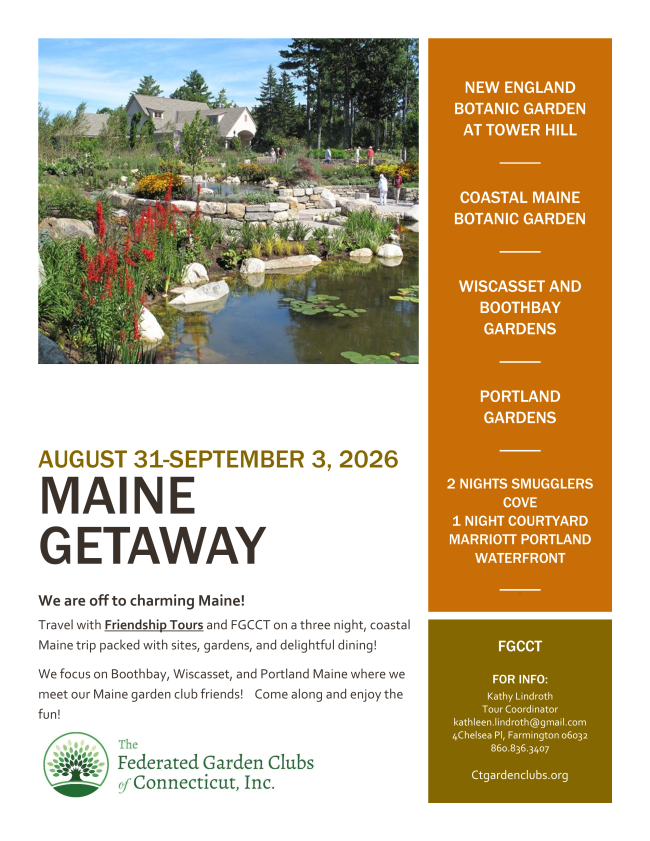
- December 2-4, 2026 – Boston Holiday Tour
Already thinking of 2027?
- April 30 – May 12, 2027 – Portugal
- May 11 – 21, 2027 – Chelsea Flower Show and the Cotswolds
- Summer 2027 – Scandinavia
- September 2 – 13, 2027 – Italy – the Piedmont and Lake Country
- November 2027 – Egypt and Jordan
- Rose Bowl for New Years
2028 Tours in Planning
- January – Thailand and Laos
- April – Tulip river cruise
- California National Parks including Yosemite
- South Africa
-
And much more!
Let us know what you like — express your interest by emailing me!
— Kathy Lindroth, FGCCT Tours Coordinator 860.836.3407 or kathleen.lindroth@gmail.com
| |
Still Room on Swallow Migration Dinner Cruise September 24!
There are just 4-6 spots left on the River Crest Swallow Migration Cruise September 24, 2026! Departs from the Essex Connecticut River Museum.
Click here for details and to reserve your spot.
| | | | |
The Federated Garden Clubs of CT
hosted the 97th Annual Meeting and Luncheon
| | |
The 97th Annual Meeting and Luncheon of The Federated Garden Clubs of CT was held April 15, 2026, at AquaTurf Club in Plantsville on a beautiful spring day feeling more like summer. A huge crowd turned out from garden clubs all over the state to enjoy a lovely luncheon, shop at the wonderful vendors selling a variety of goods, and be entertained by Ace Berry, a dynamic speaker and unusually creative florist whose designs are large, using tropical greenery with bold-colored flowers and fruit. He created several large creations while talking about his background in the floral industry and answering questions from the audience. All of his creations were raffled off, along with the floral centerpieces at each table and raffle prizes from all the vendors who participated in the event.
The annual meeting was conducted by Nan Merolla, president of The Federated Garden Clubs of CT. A special thanks was given to Vonice Carr, who chaired this year’s CT Flower Show. Nan also mentioned that she was very pleased that many garden clubs throughout the state had applied for and received Bee Resilient grants. The program also highlighted various awards given out during 2025, as well as all the amazing activities put on by clubs throughout the state.
Congratulations to all those who dedicate their time and effort to carrying out our mission.
—Linda Kaplan, Publicity Chair
| | |
Help Gardeners Find You!!
The FIND A CLUB feature on the new National Garden Club website may not have your Club listed. So, when someone is interested in joining a garden club and inputs their hometown, the website might unfortunately indicate that there is no garden club in that town.
Here’s what you need to do: Each Club must individually “Request to Add a Club” (through the app: https://gardenclub.org/node/add/club) to be listed – it’s a short form. It is not possible to send a master list of all the Connecticut Clubs.
Clubs will be notified when they have been added to the National Garden Clubs map with their correct location and contact information.
| | | | |
| |
|
One Tough Cookie, Yucca filimentosa
By Renee Marsh, FGCCT Horticulture Chair
| | |
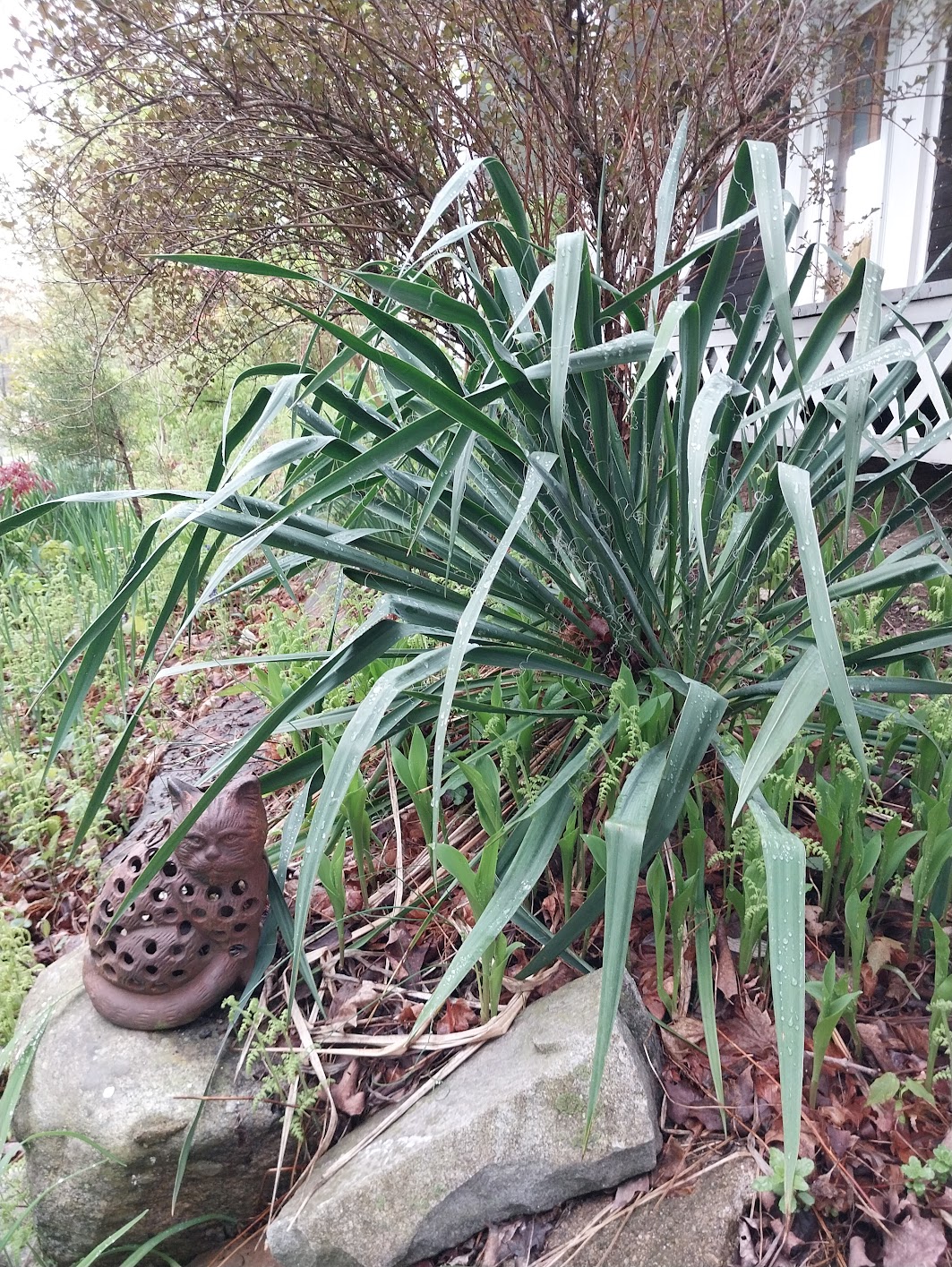
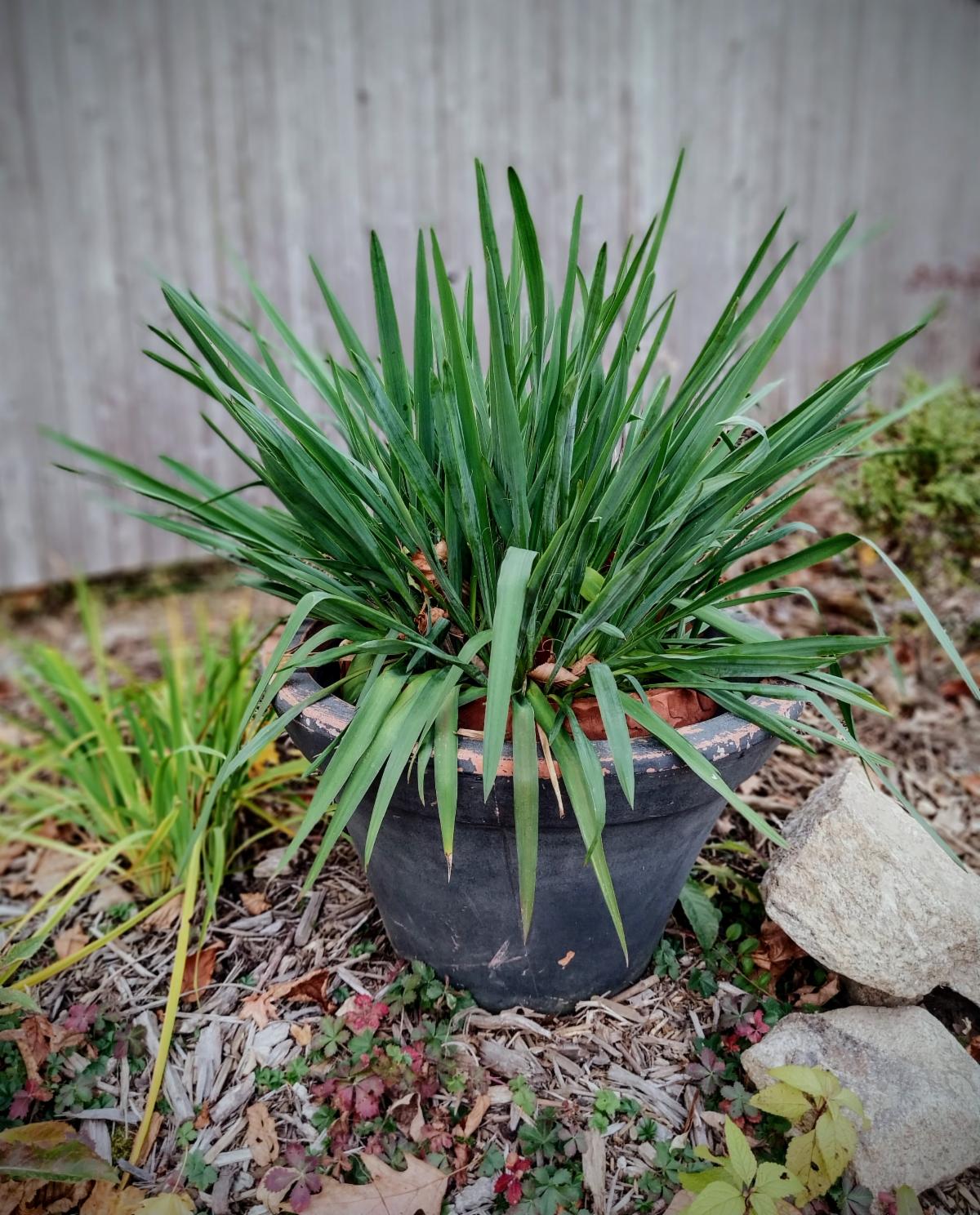
Yucca filamentosa is a plant that doesn’t look like it belongs in a Connecticut garden—too spikey, too dramatic, too Texas. I came to own one when I was asked to remove a large specimen from a client’s garden. Two rather muscled minions and I had to eventually use a pickaxe to get out the thick fibrous roots. Of course, some of that root came home with me and the rest is, well, history—and this story.
Yucca filamentosa, commonly called Adam’s needle around here, Spanish bayonet down south, is native to sandy and open areas in the Southeastern U.S. but has extended its range quite happily into New England. It has accomplished this by being very adaptable, tolerating poor acid to alkaline soils, and being cold hardy down to Zone 4/5. The only thing it hates is heavy, waterlogged soil. It wants full sun but will tolerate part sun. Given what it wants, this puppy will live for decades. What more can you ask?
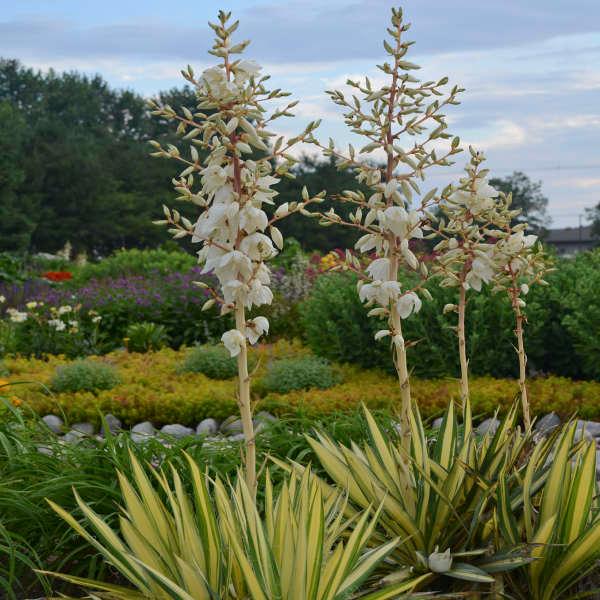
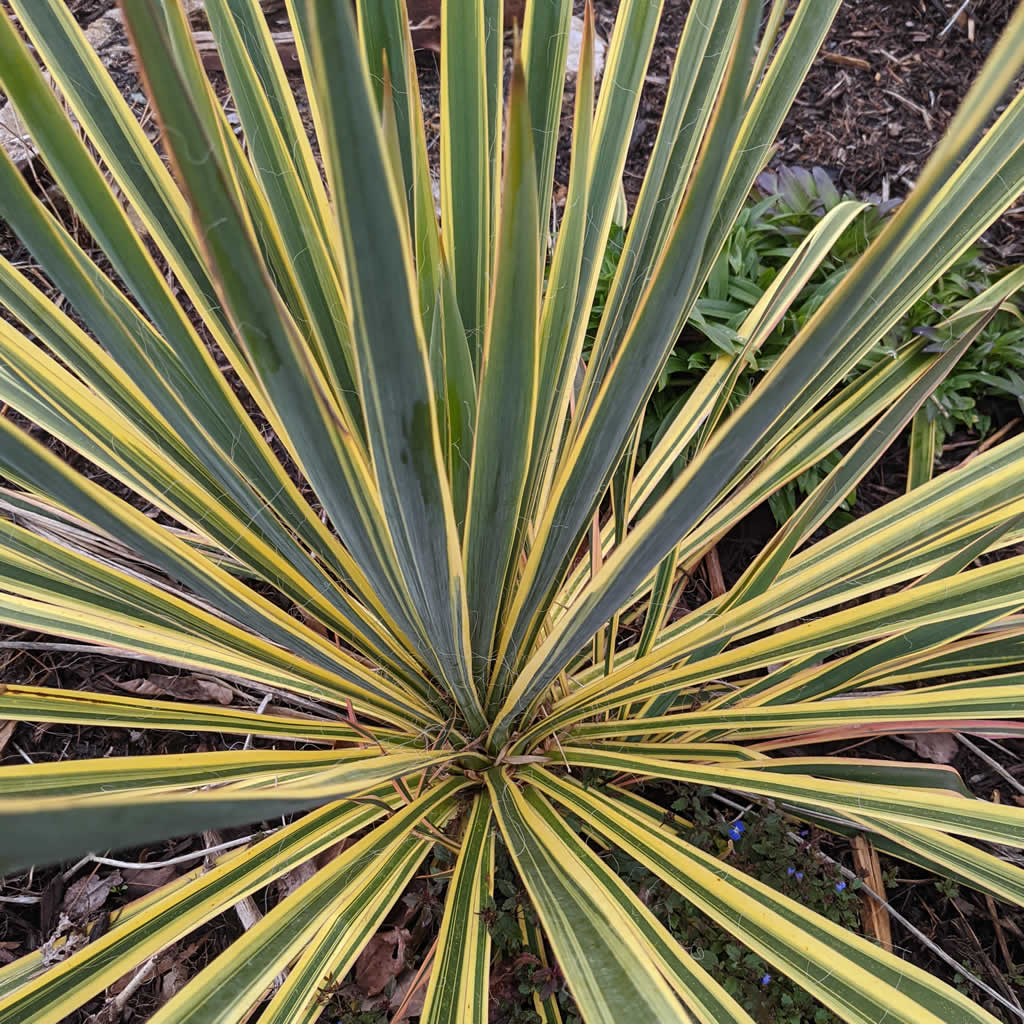
| | Interestingly, the Yucca genus is currently in the Asparagaceae (Asparagus) family but at one point was placed in the Liliaceae (lily), then later in the Agavaceae (agave) family. Ah, the wonders of molecular phylogenetics. Species vary widely in form—from stemless rosettes to tree-like giants like Joshua tree (Yucca brevifolia). Yucca filamentosa is the clumping, stemless rosette type with rigid, sword-shaped, spine-tipped green leaves. A key identifier is the long curly threads along the margins—yep, filaments.The plant has me there—I am a foliage gal and what more do you need? Well maybe color… there are cultivars that spice up the look. Widely available is ‘Color Guard’ which has broad yellow stripes down the center of the leaf and ‘Bright Edge’ with yellow margins on the outside margins of the leaves. | | Yucca filamentosa
[Photo/R.Marsh] | | 'Color Guard'
[Photo/Walters Gardens Inc.] | | |
'Bright Edge'
[Photo/Growing Wild Nursery]
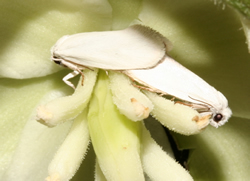
| | For you flower folk, a 5-8’ tall flowering stalk rises from the center of each rosette in late spring-summer. It has multiple panicles of nodding, bell-shaped creamy white flowers. Yucca filamentosa typically flowers every year once mature, which can be 3 to 5 years after planting. My plants do not always flower which could be due to insufficient sunlight, overcrowding, or stress. When it has finished flowering, you can remove the spent flower stalks at the base. Or, you can let the seed head, which is quite attractive, stand for a bit. | | If you have flowers, keep an eye out for the very interesting yucca moth, Tegeticula yuccasella. Yucca moths and yucca plants depend on each other for reproduction. The female moth collects pollen from a yucca flower, forms it into a ball, flies to another yucca flower, and deliberately deposits the pollen onto the stigma. This type of specialized pollination is not common but here is the catch—after pollinating, the female lays eggs in the flower’s ovary. The moth larvae hatch and feed on a portion of the developing yucca seeds. The yucca tolerates the seed loss because without the moth, many yucca species produce few or no viable seeds. | | |
Yucca moths
[Photo/ M.J. Hatfield, BugGuide.net]
| | |
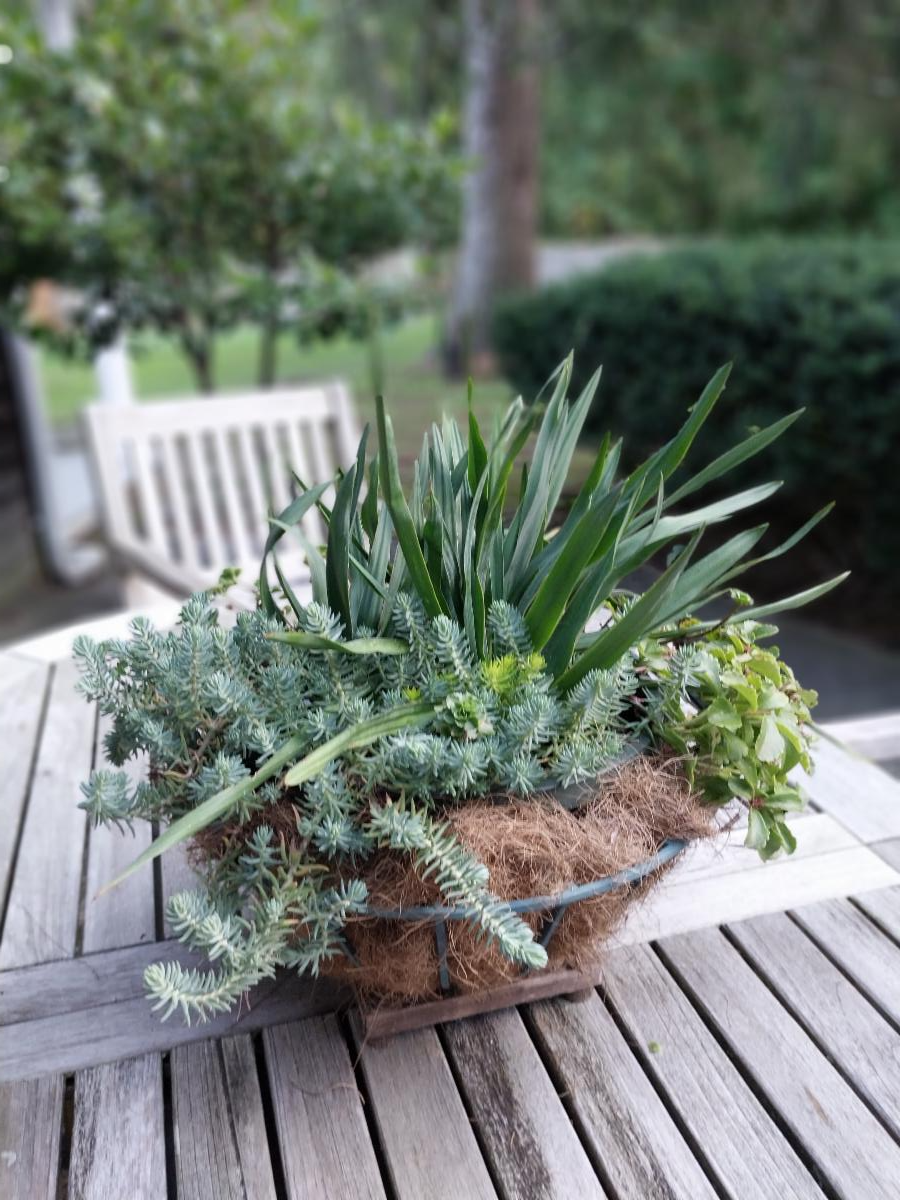
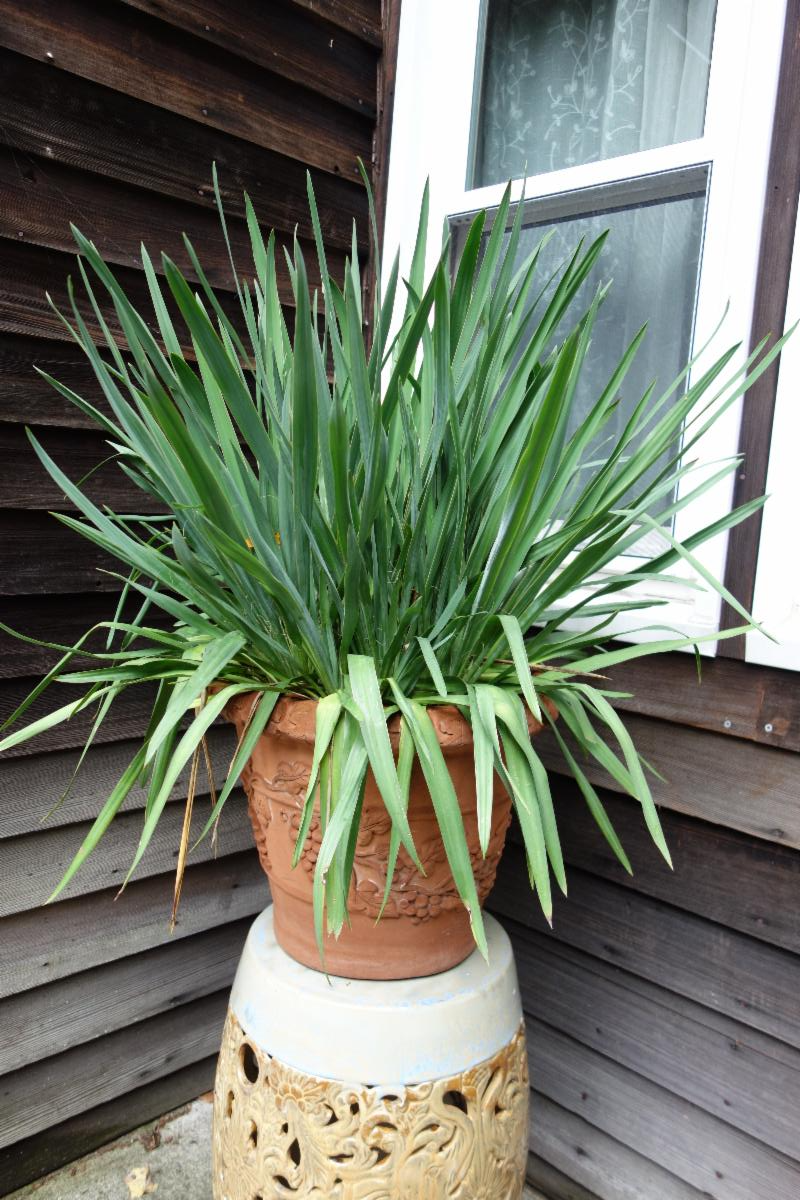
Yuccas form a small colony over time as basal offsets, called pups, form around the crown. Remove unwanted pups with a sharp spade. If you plan to keep the pups, keep several leaves on offsets to they can recover once replanted. Feel free to put them in containers! I often use the small pups in containers mixed with sedum. As they get larger, one is a statement all by itself—on a pedestal or in the garden. I overwinter these containers outside with no problem. Do provide a very well-draining potting mix—I add sand to my mix and give them a light feeding in the spring. After a few years, they begin to decline due to crowding, at which point they get divided and moved into the garden. A word of advice: wear gloves and long sleeves when digging into the clump or removing dead leaves.
In the ground, care is minimal. As one might expect, mature plants are drought-tolerant once established, which means water regularly until the roots are well developed—my rule is always three seasons. It is not a big feeder but if growth is poor or it is not flowering, a light balanced organic fertilizer or top-dress of compost in early spring may be needed. Avoid high nitrogen as it promotes soft, floppy leaves. Insect issues are minimal. And who would nibble on those sharp, fibrous edged leaves? Well, apparently the deer of Monroe where a friend’s yucca has the leaf tips and the flower stalks browsed. Shelton deer are much more discriminating apparently as my plants are unmolested. It’s always a gamble.
| | |
One thing I ask if you plant one: do give it some friends—small native grasses, low growing sedums, or flowering plants. I hate to see them all alone surrounded by stones or mulch. This ‘Color Guard’ is so charming softened by flowers. One of my yuccas hangs out on the corner of a stone wall with a ninebark, ferns, lily of the valley and other assorted characters. It is a worthy garden member, and in drought conditions, a downright star.
[Photo: Walters Gardens, Inc.]
| | |
Protect Your Home Without Deadly Rodenticide Poisons
By Holly Kocet, FGCCT Environmental/Conservation Chair
| | |
No one likes the idea of rodents inside their home, but it is important to realize that these rodenticides (rat poisons) are doing more harm than good.
Rodenticides are killing the very creatures meant to control rodents. And they are putting our pets and children at risk.
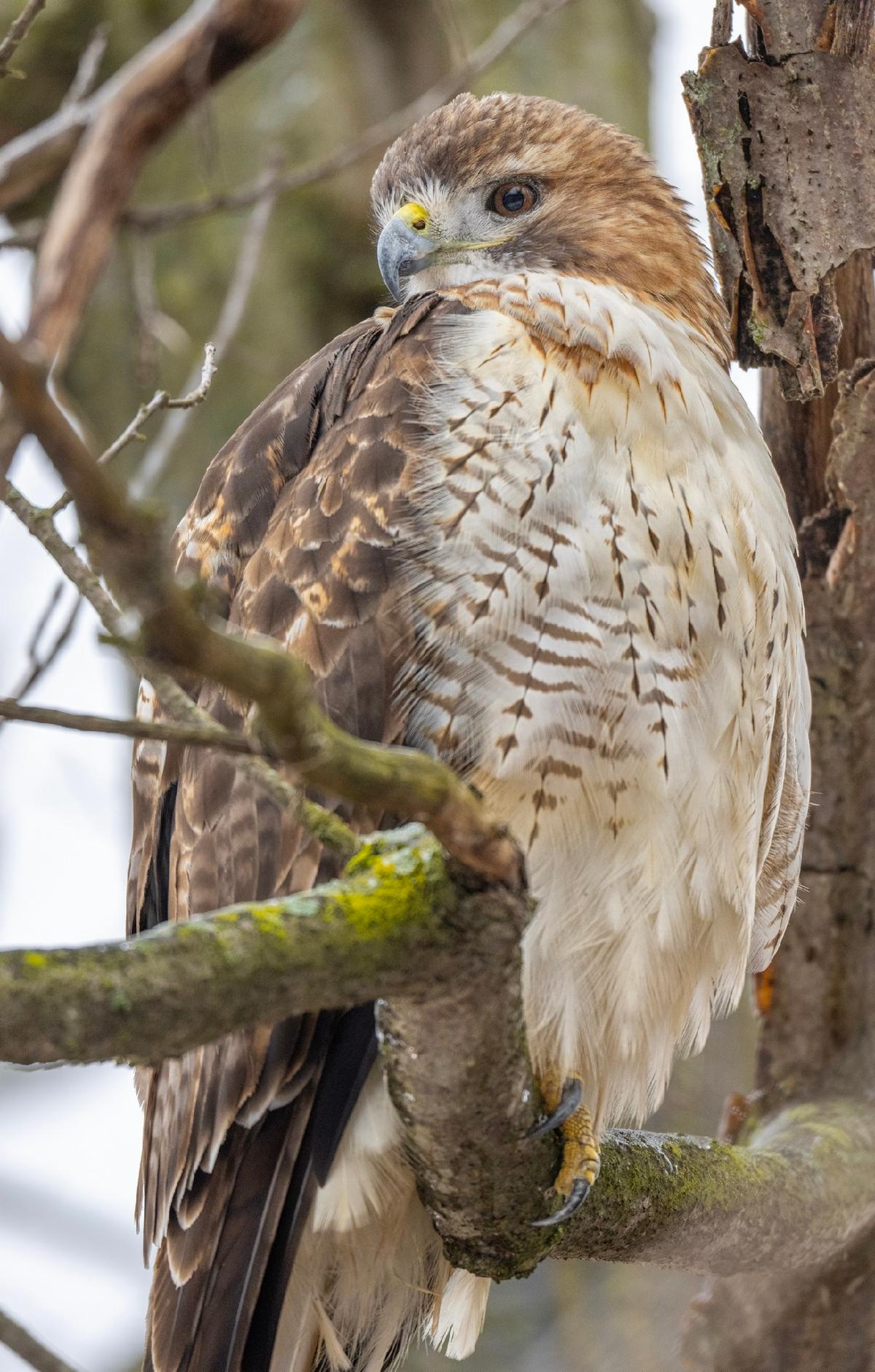
| | Red-tailed hawk
[Photo: Jocelyn Anderson] | | |
I’m speaking about those black rodenticide bait boxes that seem to be everywhere. Sometimes they are disguised as rocks which is even more nefarious. With these boxes, the poisoned bait is eaten and the rodent goes on his way. The rodent might not succumb to the poison for up to 10 days. Meanwhile the rodent is a poison time-bomb. A predator such as a hawk, owl, or fox who eats the rodent will also become a victim. For them, there is no antidote. By the time a wild animal (or even a pet) is found, it is often too late to save them from an excruciating death from internal bleeding. These secondary poisonings of unintended victims are increasing at an alarming rate. Evidence is clear that rodenticides pose an unreasonable risk to wildlife, our pets and our children.
There are many options to consider before choosing poisons, from the simple snap-trap to ultrasonic deterrents. Top of the list is exclusion.
| | | |
Exclusion. Most critical is keeping rodents from getting inside your home. Seal holes where rodents might enter such as openings around pipes and cable wires. A mouse can squeeze into spaces the size of a dime so closing entry points is most important. Sealing small openings can be an easy fix but a carpenter may be needed for larger repairs. There are also sanitation and exclusion providers that will evaluate and seal openings where rodents can enter your home.
Sanitation is important. Clutter around house foundations and outbuildings is rodent heaven. Removing items such as lumber, tarps, old tires, etc. makes you yard less hospitable for rodents. Firewood should be kept away from the house. If you have bird feeders, bring the feeders in at night and clean up any seed litter. Only use rodent resistant dumpsters and trash receptacles and make sure they are securely closed, every time. Ground covers such as pachysandra, ivy, and vinca also harbor mice and should be trimmed away from buildings.
Make your yard unattractive to mice. The Japanese barberry-Lyme disease connection is well known. White-footed mice are highly susceptible to the bacterium that causes Lyme disease. They are the primary source of infection of black-legged ticks who, in turn, infect us with a bite. The barberry shrub provides safe shelter and moist conditions favorable to both mice and ticks. Managing barberry on your property can significantly reduce the abundance of mice and ticks and the risk of tick-related illness.
But what has this to do with mice inside our homes? Especially in the fall, white-footed mice are seeking shelter to escape freezing temperatures and to find food. Given the opportunity, they will nest in attics, basements, or crawl spaces. So, in addition to sealing openings and removing clutter, it makes sense to avoid planting barberry, a plant that mice favor.
Natural predators are key to rodent control. The use of rodenticides is counterproductive to controlling rodents. The poison kills the very animals that naturally regulate rodent populations. For example, A red tail hawk can eat 1,500 mice per year. Rodenticide poisons were never intended for preventative use where no proven infestation exists. And yet for many pest control companies, it is the first option they promote because plopping down a poison bait box(s) requires less effort and ensures a steady profit. In reality, killing rodents’ natural predators with poison results in rodent populations rebounding, ultimately increasing their numbers.
Before hiring a pest control company, find out if they employ an Integrated Pest Management (IPM) program. IPM is an environmentally sensitive, science-based approach to managing pests, including rodents, using a combination of biological, chemical, cultural, and physical tools to minimize risks to human health and the environment. Poisons should always be the last resort. A competent pest control company will first do an assessment to determine how mice are getting in and will seal openings to exclude them. Then mechanical controls such as snap-traps are used to eliminate unwelcomed guests that might still be inside.
On April 20, Newtown passed a Rodenticide Policy for Municipal Properties. The first town in the state! We hope more towns will join us in passing rodenticide policies for the sake of our birds of prey and other wildlife. It is totally doable. Just two of us on our conservation commission took our policy to our Board of Selectman, where it passed by unanimous vote. I encourage garden clubs to contact their conservation commissions, selectmen/mayors, and health departments about this serious issue. It is only by more towns taking action to pass policy, can we send a message to the state legislature that a meaningful and effective rodenticide bill needs to pass in the 2027 legislative session. For more information about how we got it done in Newtown, please contact me, hollyk325@yahoo.com.
| | | | |
SPOTLIGHT on our FGCCT Affiliates! | | | | |
|
FGCCT Affiliates Can Help you 'Bee Resilient'
| | |
Is your club working on a Bee Resilient project? Along with the excellent resources that are available on the Federated Garden Clubs of Connecticut website, several of our Affiliate organizations provide excellent information about native plants.
Wild Ones Mountain Laurel Chapter has native Plant Resources and lists; they even have a guide to planting container gardens with natives! Connecticut College Arboretum also has a resource guide.
https://mountainlaurel.wildones.org
https://www.conncoll.edu/the-arboretum/ecological-landscaping/
The Bartlett Arboretum and the Connecticut Master Gardeners Association offer classes and gardens that are excellent models.
https://www.bartlettarboretum.org/events
https://ctmga.org
There is the Connecticut Invasive Plant Working Group (CIPWG) and their annual symposium and Connecticut Horticultural Society featuring wonderful learning opportunities and field trips.
https://cipwg.uconn.edu
https://cthort.org
Visit our affiliates page. You will discover a wealth of resources and true community partners aligned with our President’s Project mission:
- Promote Sustainable Gardening in a Changing Environment
- Redesign Gardens for Resilience and Beauty
- Plant Natives, Remove Invasives, Rethink our Lawns, Conserve Water, and Avoid Pesticides
- Create Habitats for Insects, Birds and other Wildlife
- Encourage Community Collaboration and Education
May we all make this the summer to Bee Resilient!
| | | | |
|
Club Corner" is a place for clubs to showcase exceptional or notable club achievements and activities. Has your club done something unique (or uniquely successful?) that you'd like to share? Visit "Club Corner" on the FGCCT website for more news from clubs! (This area is NOT for upcoming events—you can post those on the FGCCT Club Calendar.)
To submit: send high-resolution photos, along with a writeup (200 words or less, please) and photo captions, to martha.sherman@ctgardenclubs.org to be considered for inclusion. Please ensure that you have appropriate permissions for all photos. We reserve the right to edit copy and select photos for inclusion.
| | |
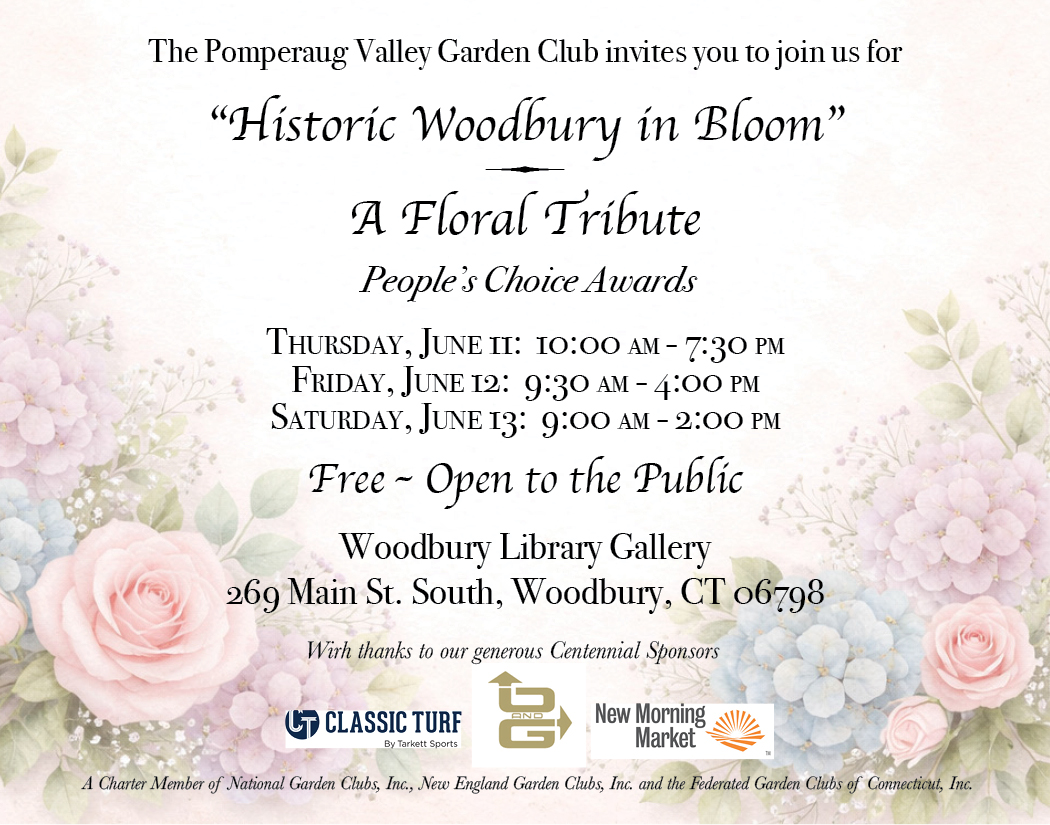
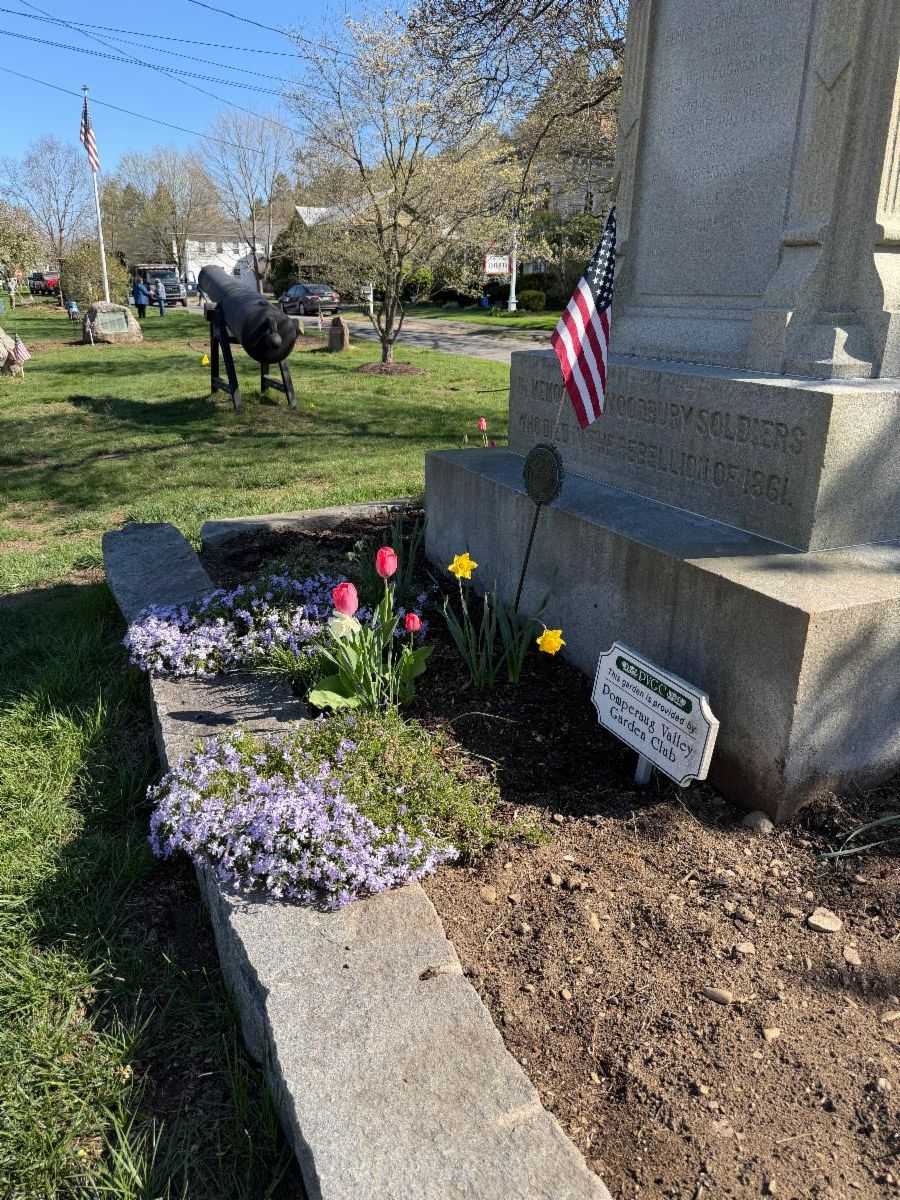
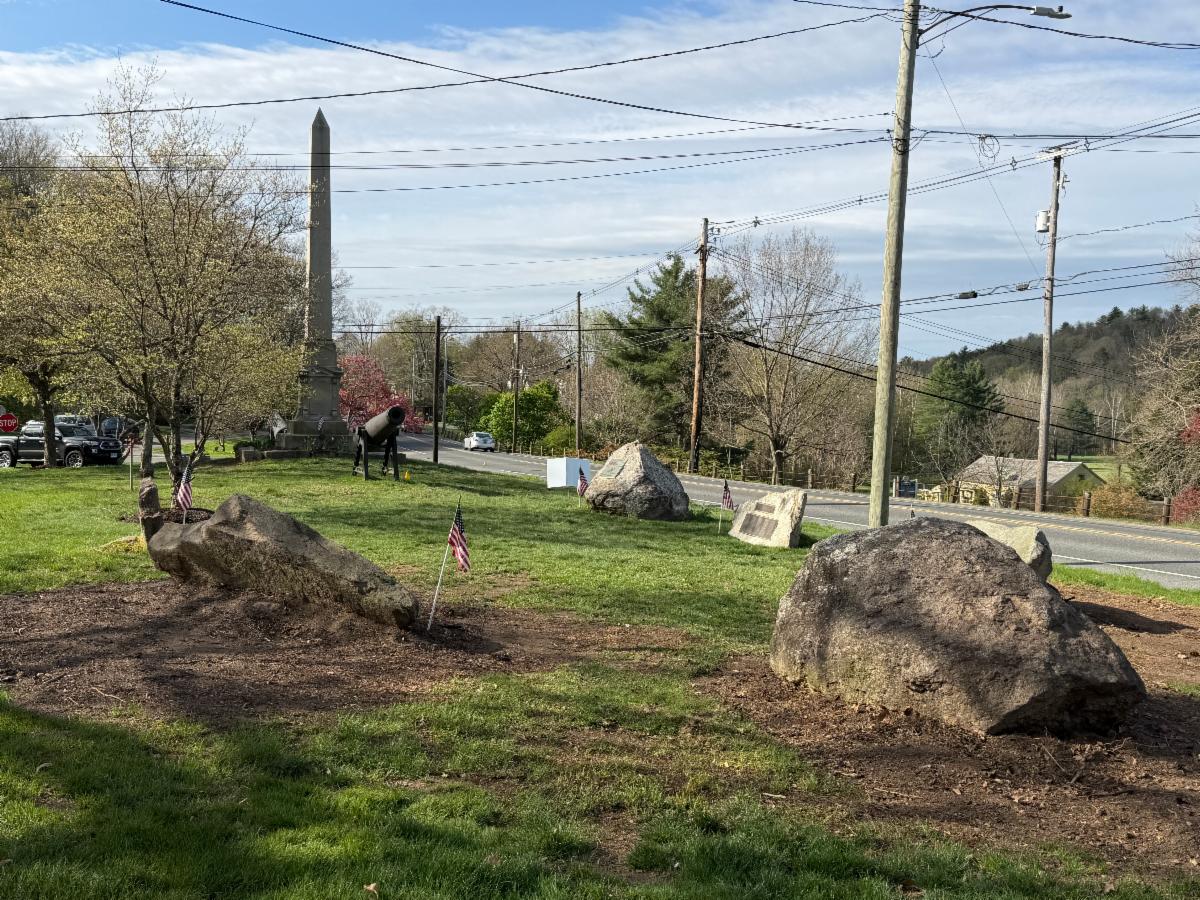
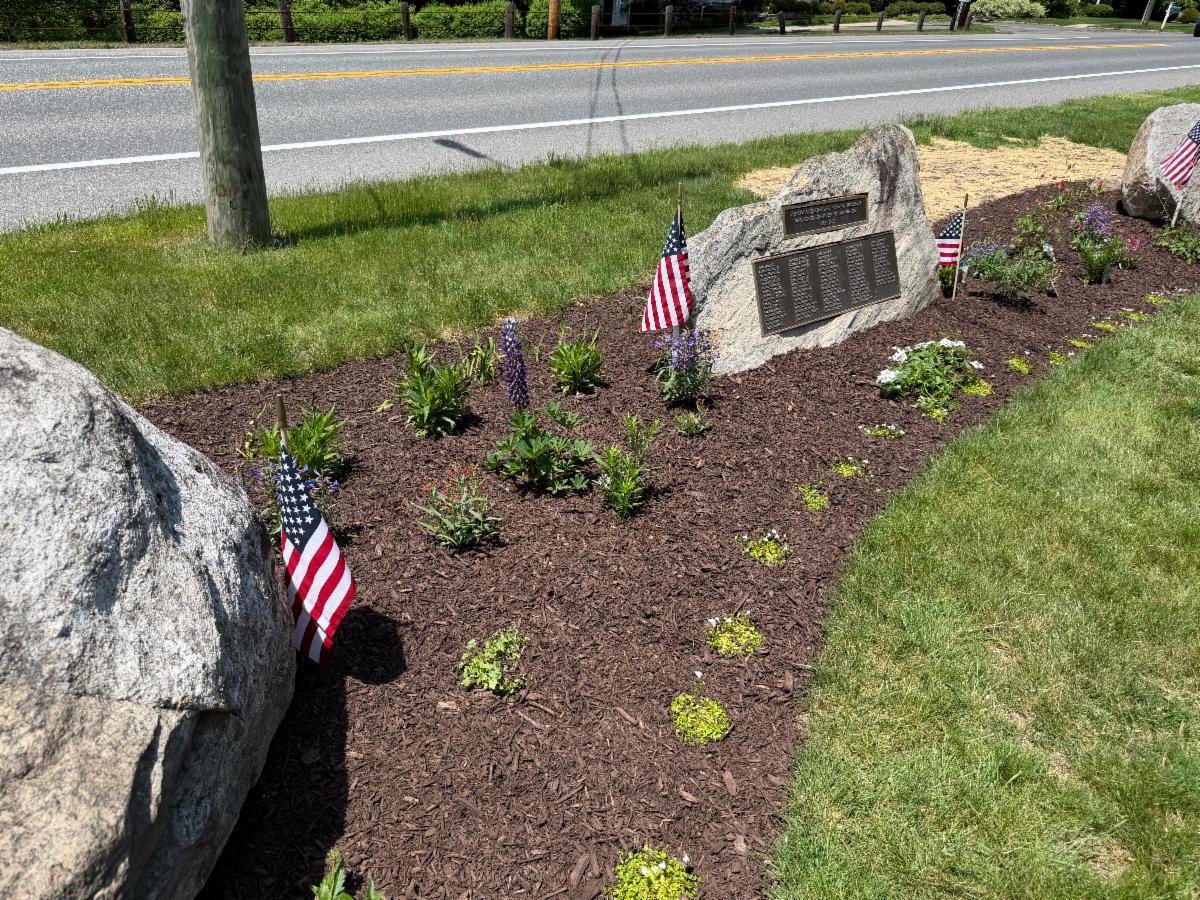
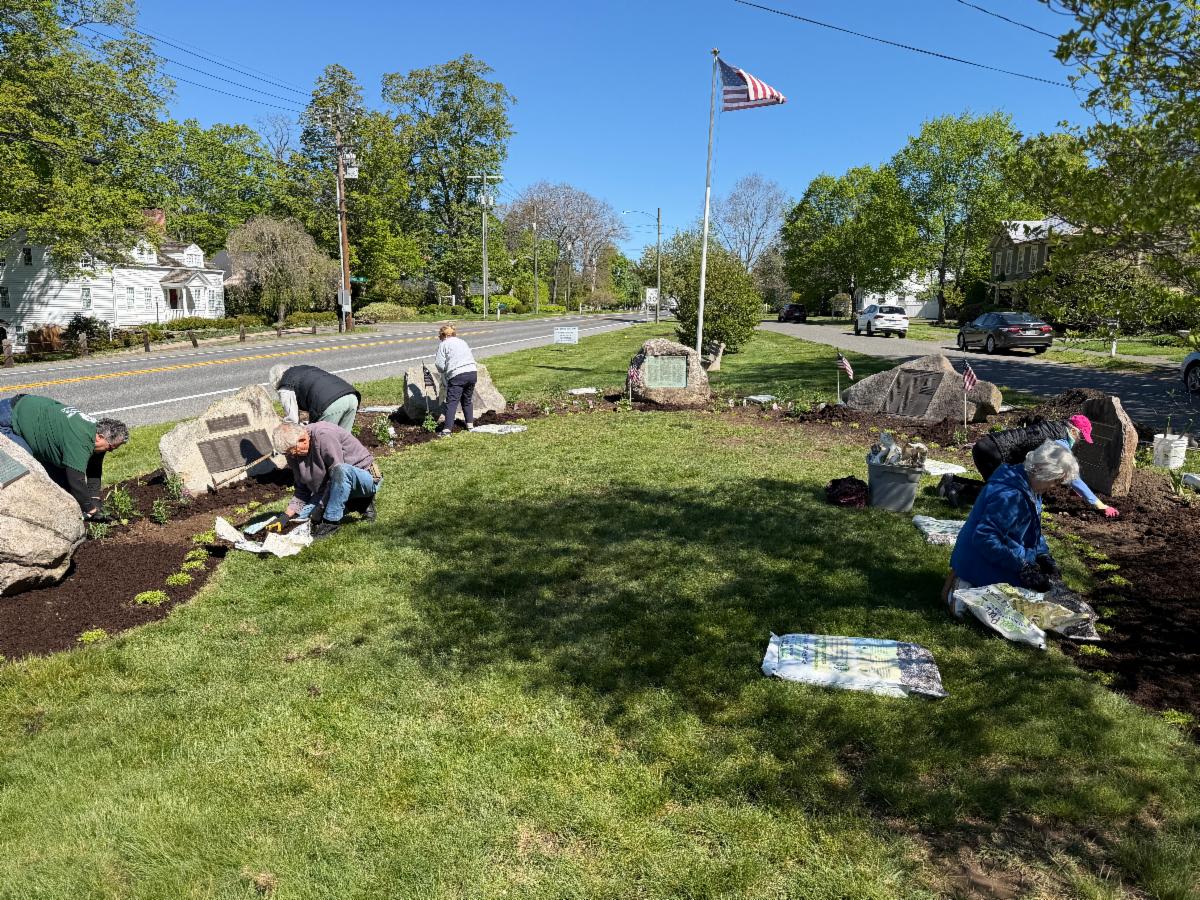
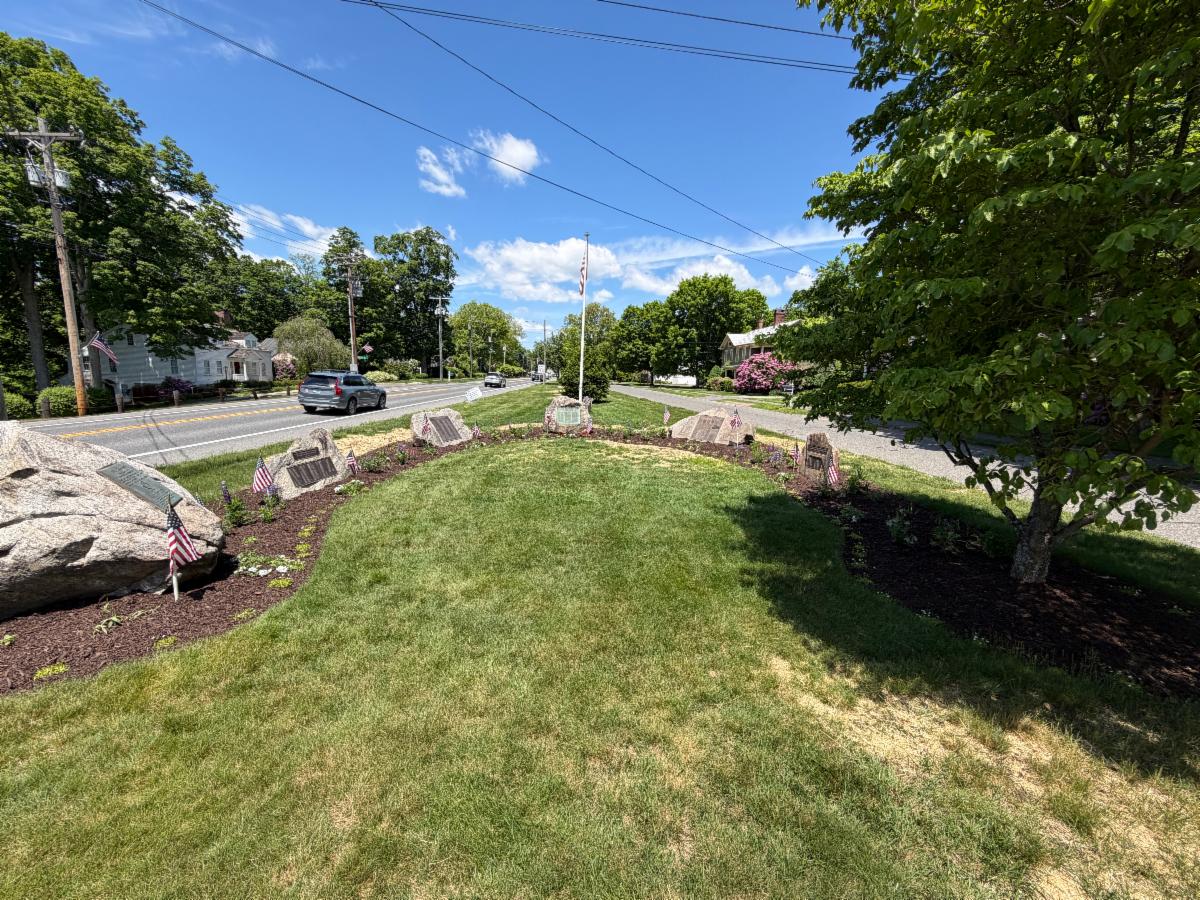
Pomperaug Valley Garden Club Joins Town Shade Tree Committee and 250th Committee to renovate historic South/Soldiers Monument Green
In a collaborative effort led by the Pomperaug Valley Garden Club, the town's Shade Tree and Sidewalk Committee, and 250th Committee, assisted by town departments, Woodbury's historic South/Soldiers Monument Green on Route 6 underwent the first phase of a multi-phase renovation in April. Shrubs surrounding the stone monuments honoring veterans from the Civil War through the Vietnam War had grown so large over the years that they obscured the monuments from the street. The first step was to clear the site by removing the shrubs. Even the overgrown and ailing boxwoods at the base of the Civil War-era granite obelisk memorial were carefully removed. Next, a horseshoe-shaped bed was created to visually link the monuments. Low-growing, pollinator-friendly plants in reds, whites and blues were installed in this bed between the monuments; eventually a bench will provide a spot for quiet reflection. "This project is about caring for a place of honor. By restoring the Green we are ensuring that future generations can continue to reflect, learn, and gather in a space that properly honors those who served" said First Selectman Paul Zulpa.
| | At top left, the massively overgrown shrubs (hollies, boxwoods, etc.) were removed by Public Works crews, revealing the memorial stones and their plaques that had become virtually invisible from the street. Top right: garden club members and community volunteers work to plant the new beds with pollinator-friendly plants including lupine, penstemon (blue and red), baptisia, Lobelia cardinalis and native columbine. The bed is edged on the outside with blue Siberian iris and on the inner border, with white creeping mazus). Lower left: newly planted beds. Lower right: the memorial stones and plaques with the names of Woodbury residents who died in every war through the Vietnam War are now visible to all who pass the site. An additional memorial for the Afghanistan and Iraq Wars will be added in the near future. A subsequent phase of the project will include a bench and a wheelchair-accessible path. | | | | |
|
Another Risk to Manage - Copyright Infringement!
Read this if you use clip art, pictures or drawings from the internet in your social media or club website postings!
A web search for an image of a garden or for pictures of garden equipment is likely to yield a list of websites with lots of images to choose from and easily copy to your social media page or website. Do you check to make sure that they’re really free and not subject to copyright? You should! There are law firms who now make a business of using automated searches of the web looking for copyrighted images where the user doesn’t have a license and then sending the organization who posted the picture a demand letter, asking for money and threatening legal action.
To avoid getting one of those letters, follow simple steps:
- Use images and drawings you or a club member prepared from scratch, or pictures a club member took.
- Read the fine print! Sometimes, the website says it grants a license to you, the user, if you provide attribution, perhaps a link to the website for the picture(s) you use. So, do that either on each page where there is an image, or in an acknowledgement page.
Here are some resources if you’d like to learn more; the second one, a law firm, is more technical:
https://www.copyright.gov/help/faq/faq-fairuse.html
https://allendyer.com/tips-for-avoiding-copyright-infringement/
John Davis, FGCCT Treasurer
| |
|
Stay Secure!
There have recently been email scam attempts from bad actors pretending to be Federated Garden Clubs of CT officers. This is a critical reminder to stay vigilant against phishing scams designed to steal credentials and sensitive data.
Always verify unexpected emails, do not click suspicious links or attachments.
Attackers often mimic trusted brands or colleagues to create a false sense of urgency. Please note: The Federation will never send a link that requires you to enter sensitive personal information or passwords. Registration for our luncheons, classes and other programs are available on our website.
Key Phishing Red Flags & Tips:
-
Verify the Source: Double-check the sender's email address for slight misspellings or unusual domains. False emails sometimes will even include our organization’s logo.
-
Hover Before Clicking: Hover your mouse over links to see the actual destination URL before clicking.
-
Urgent/Threatening Language: Be skeptical of requests requiring immediate action, such as "account suspension" or "payment overdue."
-
Never Share Credentials: Legitimate organizations will never ask for your password or sensitive information via email.
-
When in Doubt, Verify: If an email seems suspicious, contact the sender through a known, trusted channel (phone call or a known email address), never via the contact info or other links in the email.
| | | | Donations to FGCCT's Scholarship Fund; Healing, Therapy and Senior Gardening Fund; and World Gardening Fund | |
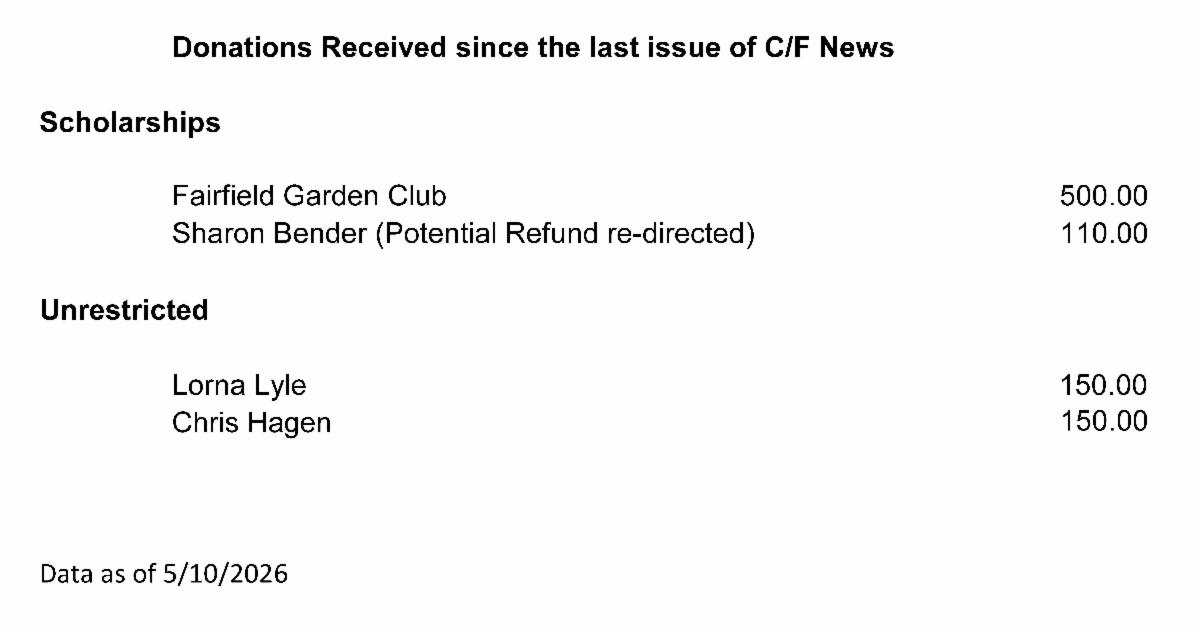
We thank the following Garden Clubs for their recent donations to the FGCCT Scholarship Fund.* For almost 40 years, the Federation has awarded scholarships to college and university students who major in Agronomy, Botany, City Planning, Conservation, Environmental Studies, Floriculture, Forestry, Horticulture, Land Management, Landscape Design, Plant Pathology, or allied subjects. We welcome donations of any size. Our appeal is ongoing to give all of our clubs the opportunity to make a contribution in the amount of their choosing.
| |
Please send all Scholarship Fund donation checks to the appropriate chair (see below). Make checks out to "FGCCT" with the appropriate Fund listed on the memo line.
*Please note that due to the deadline for articles and information for the CFNews, some donations may not be received and deposited in time to be included in the bi-monthly donation acknowledgement, but will be included in the next issue of our newsletter.
PLEASE MAIL CHECKS TO:
| |
For World Gardening & Healing, Therapy and Senior Gardening:
The Federated Garden Clubs of CT, Inc.
Attention: Rosemary Bonaguide
PO Box 902
Wallingford, CT 06492
| |
For FGCCT Scholarship Fund:
The Federated Garden Clubs of CT, Inc.
Attention: Carole Fromer
PO Box 902
Wallingford, CT 06492
| | |
Follow us on Facebook and Instagram!
FGCCT is on Facebook and Instagram and we love to post your news and photos! Please send upcoming events, club activities, civic projects, milestones, and hort tips. Include photos and a brief writeup of the news your club would like to share. The best format is text in an email with jpg photos attached. Take active photos showing members at work or showcasing beautiful gardens, flowers, and plants (please name the flower if it is a hort only photo). Let’s follow each other! Send submissions to social@ctgardenclubs.org
| |
|
Just a reminder …
Please send all correspondence to the new FGCCT office:
The Federated Garden Clubs of CT, Inc.
P.O. Box 902
Wallingford, CT 06492
Did you recently elect new officers? Email their names and contact information to us at office@ctgardenclubs.org so they will receive Federation correspondence. If you need assistance, please contact FGCCT Office Administrator Joan Lenart at office@ctgardenclubs.org or by phone at 203-488-5528 on Mondays and Wednesdays, from 10 am to 2 pm.
| | | Deadline to submit articles/photos, ads and calendar events for the August / September 2026 issue of the CFNews is July 10, 2026. Please submit to: | | |
Creating a National Garden Clubs, Inc. Website Member Account
In order for garden club members to access information in the Members area of the National Garden Clubs website, they will now need to create an account. Below are the steps to follow.
-
Go to the Homepage of the NGC website at https://gardenclub.org/
- Select “Member Login” in the site header.
- Enter your information. Avoid choosing a username with spaces. Email address is recommended for username. Select “Create new account”.
- You will receive a green highlighted message to check email at the address you entered to verify and complete your account.
- Use the link provided in the confirmation email to create your password and save your changes.
- Once you have selected “save”, click on the “Member Section” link in the main menu.
~
| | |
Reminder: NGC's The National Gardener is ONLINE and free!
The official publication of the National Garden Clubs, The National Gardener, appears quarterly, and features articles of interest to environmentalists, gardeners, landscapers, floral designers, educators and photographers. Subscribe here.
| | |
| |
State, Regional &
National Events
| | | | | |