| |
| |
| |
| |
|
Greetings Fall Gardeners!
Fall is a terrific time to plant natives! Why? Doug Tallamy says: Stronger roots - Warm soil and cooler days let roots grow while reducing plant stress; Less watering – With less heat stress, your new plants need less extra care; Earlier blooms – Natives planted now are ready to flower for pollinators next spring; and Fewer weeds & pests – Fall conditions give your plants a head start over competition. Learn more at Homegrown National Park
So, it’s just the right time for my President’s project, BEE RESILIENT ~ Garden for Nature! It encourages Clubs to enhance the beauty of their community and preserve nature in a changing climate by creating small native gardens in a public location with funding (up to $500 per project) from The Federation. All the information on how to get started and to apply for grants is on the President’s Project page HERE.
I’m pleased to announce FEDERATION FRIDAYS – Monthly Zoom Workshops that offer a “deep dive” into topics, such as Finances, Membership, Fundraising, Flower Shows, and more. The first workshop will be “A Treasurers’ Workshop” on Friday, Oct. 24 at 2:30 pm and again on Oct. 29 at 6pm. The next workshop will be on Nov. 21 at 10:00 am: "Flower Shows 101 and the Role of Judges' Clerks." Registration information can be found later in this newsletter.
Connecticut is hosting the New England Garden Clubs, Inc. 9th Annual Meeting on October 14 and 15 at the Sheraton Hartford South Hotel in Rocky Hill. We have a very exciting agenda, notable speakers, and NGC President, Donna Donnelly and NGC 3rd Vice President, Susan Miner, will both be attending. I would really like many of our Connecticut Garden Club members to attend – check out the meeting flyer later in this newsletter. It's NOT TOO LATE to register HERE.
Our FGCCT 96th Annual Awards Meeting and Luncheon will take place on Wednesday, October 22 at the Aqua Turf Club in Plantsville, CT. Over 300 achievement awards from The Federation, New England Garden Clubs, Inc., and National Garden Clubs, Inc. will be presented to our clubs and to individual members. Register HERE.
| | |
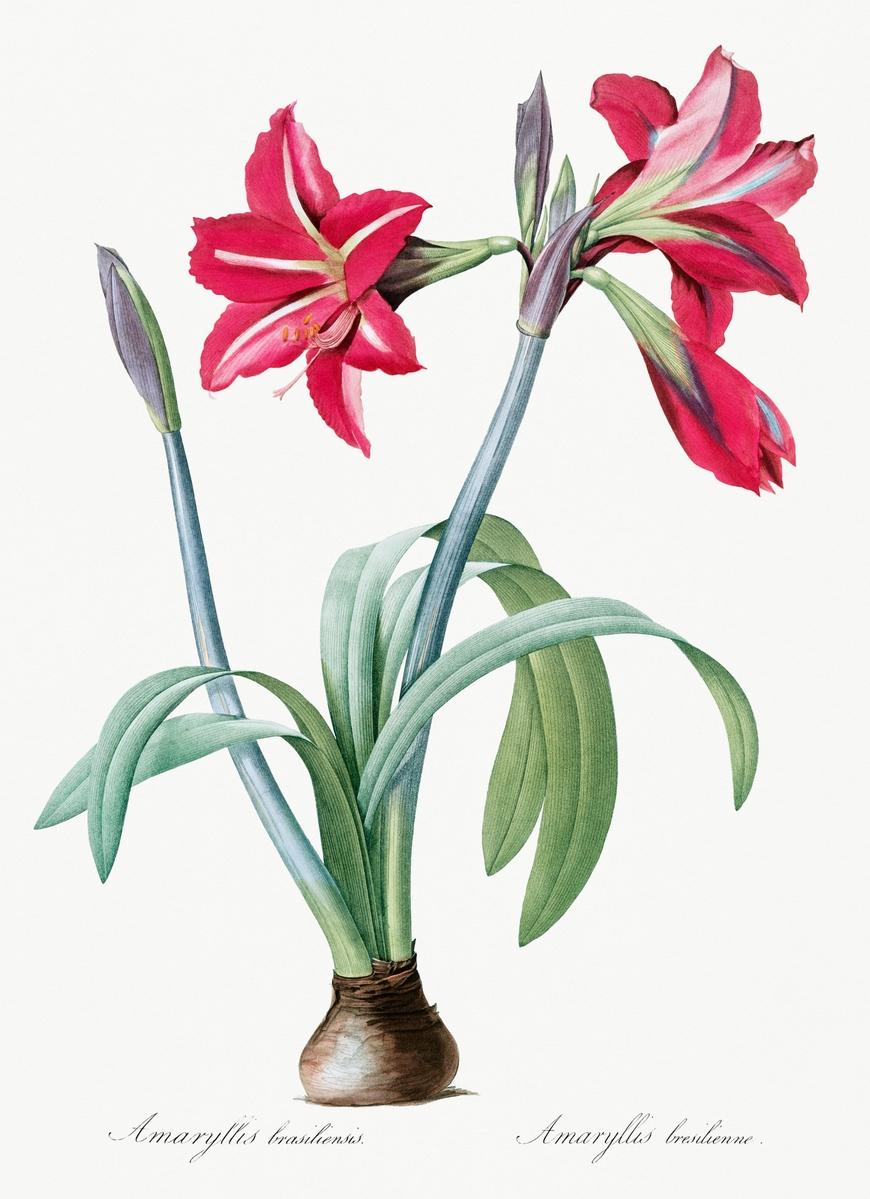
New: As a service to our members, when you register for the Annual Awards Meeting, your registration confirmation will include information on how you can order high-quality bulbs at excellent prices – and hopefully enter your amaryllis bulbs in the 2026 CT Flower Show. All bulbs purchased online can be picked up at the meeting on Oct. 22.
Thank you for all you do in your communities and thank you for inviting me to so many of your club events and celebrations. I really enjoy meeting club members and seeing your amazing projects.
| | | | Let’s go out and BEE RESILIENT and Garden for Nature, and maybe we’ll help save the planet, one garden at a time! | |
Bee Resilient: Garden for Nature
By Wayne Gura and Anne Djupedal Gura, co-chairs, FGCCT President’s Project
We’re happy to report that with the fall planting season underway, member clubs have continued to apply to plant native-species-based gardens with grants from the BEE RESILIENT President’s Project.
Plus, since our last writing, the BEE RESILIENT project has received full endorsement from the national Pollinator Pathway. Which means that member clubs who install their native-based gardens using a project grant will receive a Pollinator Pathway plaque for the garden. Further, the Pathway has invited each club to add its BEE RESILIENT planting to the Pollinator Pathway’s nationwide map of gardens. To do so, or for more information, visit their website at pollinator-pathway.org.
At this time, nine clubs have been awarded funding for their Project BEE RESILIENT gardens, with an additional few still in the works. These clubs have planned and have been implementing a beautiful range of native-species-based gardens, each one unique and carefully thought out for its site.
-
The Pomperaug Valley Garden Club, for a Pollinator Pathway along Woodbury’s Main Street, with ten town gardens of varying sizes to be transformed into pesticide-free and native-plant gardens.
-
The Quiet Corner Garden Club, for pollinator habitat preservation in a 30’x40’ area adjacent to the Palmer Arboretum site of the QCGC office.
-
·The North Haven Garden Club, for the Jan Tracy Memorial Garden, an oval 8’ x 15’ garden sited on
- Town of North Haven property.
-
The Wilton Garden Club (our home club), for the 95%-natives pollinator garden installed June 6 at
- Wilton’s Hillside Cemetery and Arboretum.
-
The Durham Garden Club, for eradicating invasives and planting native plants in a 42’x14’ area behind the Coginchaug HS library, with the involvement of ECO Club students.
-
The Colchester Garden Club, for improving soil and adding shade-tolerant native plants into a 9’x12’ foundation planting area to extend pollinator food sources to the front of the Cragin Memorial Library.
-
The Shippan Point Garden Club, for controlling invasives and adding to its existing native plantings along the entrance to the local recycling center for pollinator food/habitat and to screen as it beautifies.
And, since the last issue of CF News:
-
The Middle Haddam Garden Club, for transforming the existing garden at the town’s historic public library into a native, pollinator, low-maintenance garden.
-
The Garden Gate Club of Mansfield, for developing plantings around the restored building at the Mansfield Historical Society Museum that reflect history, natives and sustainability.
There is still funding for at least ten more qualifying native-species-based pollinator garden projects. For those who are thinking of applying, bear in mind that when you submit an application, we do our best to reply to you within a day to let you know that we’ve gotten it and it’s in our queue for review. So, if you email us and get no reply, please DO check your spam folders to make sure our reply to you didn’t go astray (we’ve ended up in more than one spam folder, LOL… As in hashtag #funny-haha-except-when-you’re-out-there-wondering-why-you’ve-heard-nothing-about-your-application!) And for speedier turnaround, do include with your application a list of your selected plant species together with their itemized cost (plant choice is key, we cannot proceed without it.) You are the gardeners who can help beautify your community while strengthening its ecological resilience.
Please send us your pics, let us know your progress—meanwhile, happy resilience-gardening from us both!
| | | | |
Upcoming Events — Mark Your Calendars! | | | | |
|
The 96th Annual FGCCT Awards Luncheon
Who, What, When and Where?
- Date: Wednesday, October 22
- Location: Aqua Turf Club, Plantsville, CT
- Doors Open / Coffee & Vendors: 9:00 a.m.
- Raffle Sales Begin: 9:00 a.m.
- Program & Awards Start: 10:00 a.m.
- Luncheon to Follow
- Cost: $49 per person (subsidized by FGCCT)
The fall luncheon typically sells out—reserve now !
Why You’ll Love It!
- A festive fall gathering at the end of the gardening season.
- Meet and mingle with members from clubs statewide.
- Celebrate and learn from award‑winning projects and people.
- Early holiday shopping with curated vendors on site.
- Enter our always‑popular raffle—arrive early to get your tickets in!
Setting the Table
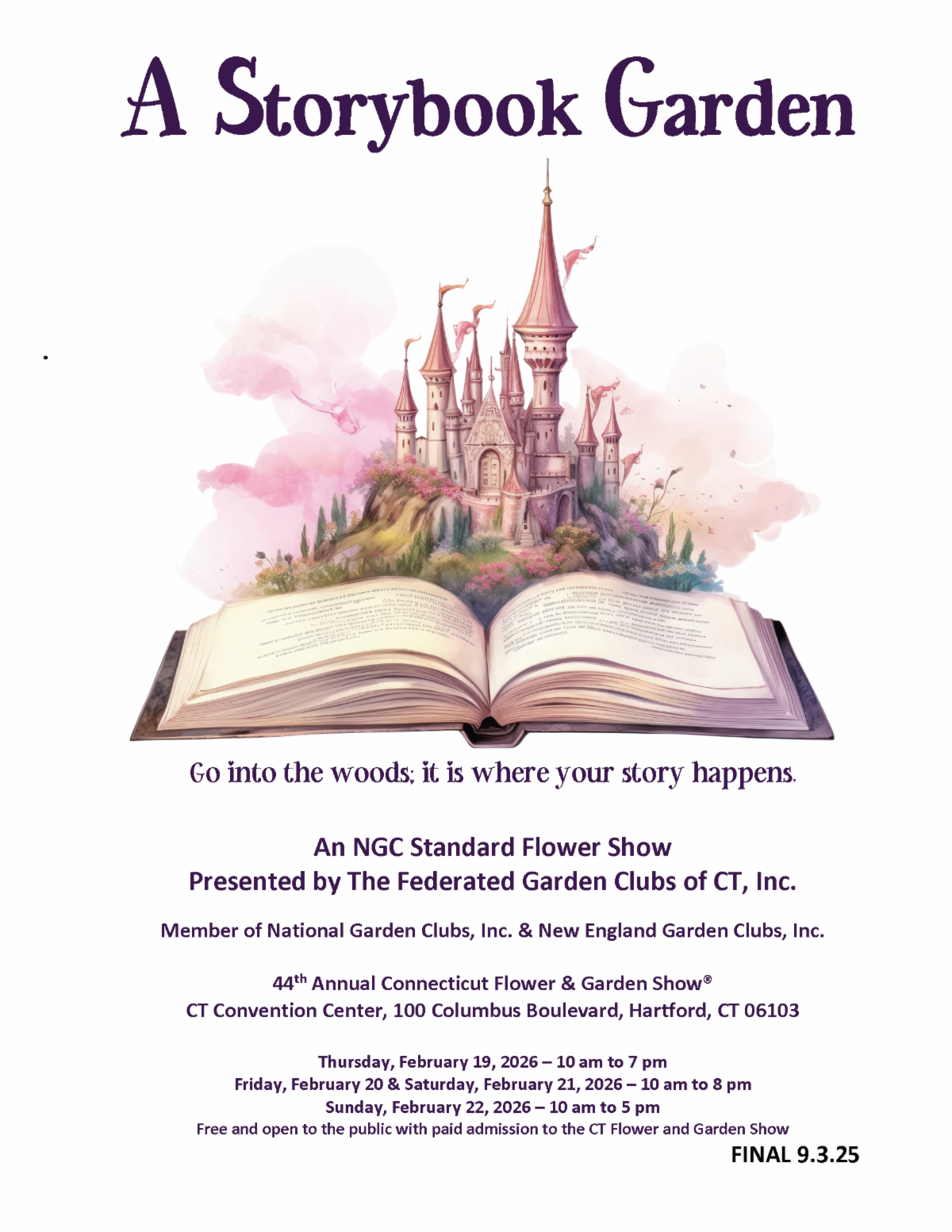
Our tables will bloom with centerpieces inspired by the upcoming State Flower Show theme “A Storybook Garden.” You’ll enjoy a 3‑course meal: soup, your choice of entrée (see below), and dessert.
Entrée Choices:
-
Autumn Chicken – Lightly breaded chicken breast topped with roasted butternut squash & dried cranberries; cranberry molasses demi‑glace.
- New York Strip Sirloin – GF
- Pan‑Seared Salmon – Whole‑grain mustard, honey‑ginger glaze. GF
- Vegetarian Pasta Primavera – Seasonal vegetables tossed in an alfredo sauce.
GF = gluten‑free (per the venue). Please indicate dietary needs when you register.
Reservations (Online Only)
Reservations close at 5:00 pm on October 14 (or when sold out).
We look forward to celebrating with you at Aqua Turf. Bring your club friends, your holiday shopping list, and your best raffle luck!
| |
NEW! We have a special offer for members attending the FGCCT Awards Meeting!
The Tri-Council is offering unique daffodil, camassia, grape hyacinth and amaryllis bulbs for purchase. The bulbs are only available for pick up at the luncheon and are preordered & paid for online. An order link will be sent to you after you register for the luncheon.
The amaryllis bulbs will be perfect for entries in the 2026 CT Flower and Garden Show, Feb. 19 - 22, at the CT Convention Center in Hartford! Take advantage of this special offer and unique collection. We hope to see your amaryllis in the State Flower Show Horticulture Division.
Note that any of the bulbs may be entered in the CT Flower and Garden Show (not just the amaryllis) under the Section H - Phoenixes
Forced Bulbs,Tubers< and Rhizomes - Container-Grown.
Open to Everyone
Class 65 Hippeastrum (Amaryllis)
Class 66 Narcissus
Class 67. Any other Worthy
| | | | | | |
|
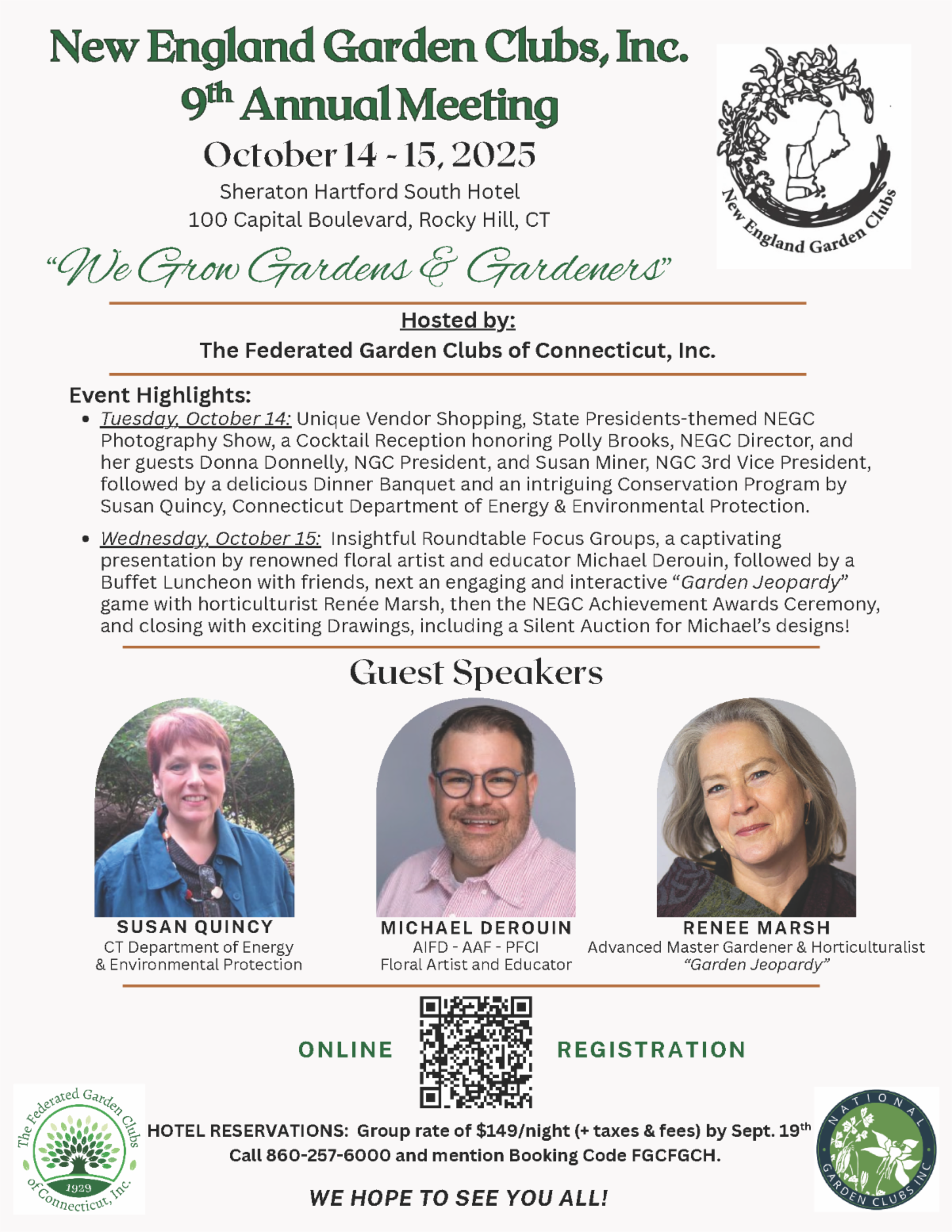
9th Annual Meeting of New England Garden Clubs, Inc.
October 14 – 15, 2025
Sheraton Hartford South Hotel, 100 Capital Boulevard, Rocky Hill, CT
Hosted by The Federated Garden Clubs of Connecticut, Inc.
Tuesday, October 14
-
3:30 pm: Explore unique vendor shopping for gardening treasures. Immerse yourself in the NEGC Photography Show, themed “We Grow Gardens and Gardeners.”
-
5:30 pm: Join a special reception honoring Polly Brooks, NEGC Director, and her guests, Donna Donnelly, NGC President, and Susan Miner, NGC 3rd Vice President
- 6:15 pm: Enjoy a delightful dinner banquet and an engaging conservation program by Susan Quincy from the Connecticut Dept. of Energy & Environmental Protection.
Wednesday, October 15
- 8:45 am: Begin the day with thought-provoking Roundtable Focus Groups.
- 10:30 am: Experience a captivating presentation by world renowned floral artist and educator, Michael Derouin
- 12:30 pm: Enjoy social time and a delicious buffet luncheon.
- 1:30 pm: Compete and have fun with “Garden Jeopardy,” led by horticulturist Renee Marsh.
- 2:45 pm: Celebrate excellence at the NEGC Awards Ceremony.
- 3:15 pm: Try your luck with our exciting Raffle Drawings
>>> It's NOT TOO LATE!! Click here to Register NOW
- Registration Fee: $65
- Dinner Banquet on Oct. 14th: $60
- Buffet Lunch on Oct. 15th: $45
- Late Fee: $10 applies after Sept. 30, 2025
Zoom Business Meeting, Oct. 9, 2025
There will be a Zoom NEGC Annual Business Meeting on Thursday, Oct. 9 at 10 am.
When you register for the Annual Meeting you will be able to indicate your interest in attending the Business Meeting Zoom. If you want to attend only the Zoom meeting, contact the Registrar to put your name on the list.
Questions: Contact Meeting Registrar Norma Jean Macauto
| | |
NEW! "Federation Fridays" Will Offer In-Depth Workshops
Hosted by FGCCT Board Members, these NEW monthly 1.5 hr. Zoom Workshops will provide a “Deep Dive” on important topics such as: Membership, Club Finances, Fundraising, Events, Flower Shows, Parliamentary Procedures, Awards, Social Media, Youth, FGCCT Resources, and more.
Currently scheduled:
“Treasurers’ Workshop” – Oct. 24 at 2:30 pm and Oct. 29 at 6:00 pm
This workshop will provide clear guidance on the roles and responsibilities of nonprofit club treasurers, practical tips for effective financial management, and an interactive Q & A session to address your specific questions.
Register here.
“Flower Shows 101 and the Role of Judges’ Clerks” – Nov. 21 at 10:00 am
This workshop will give you an introduction to NGC Flower Shows: What is a Flower Show? How and why is it Judged? and What does a Judges’ Clerk do at the Flower Show? You’ll learn all about flower shows an what goes on before the show opens.
Registration will be available on the FGCCT website soon.
| | | | |
| |
|
Get on the Interest List!
More Tours Coming in 2026!
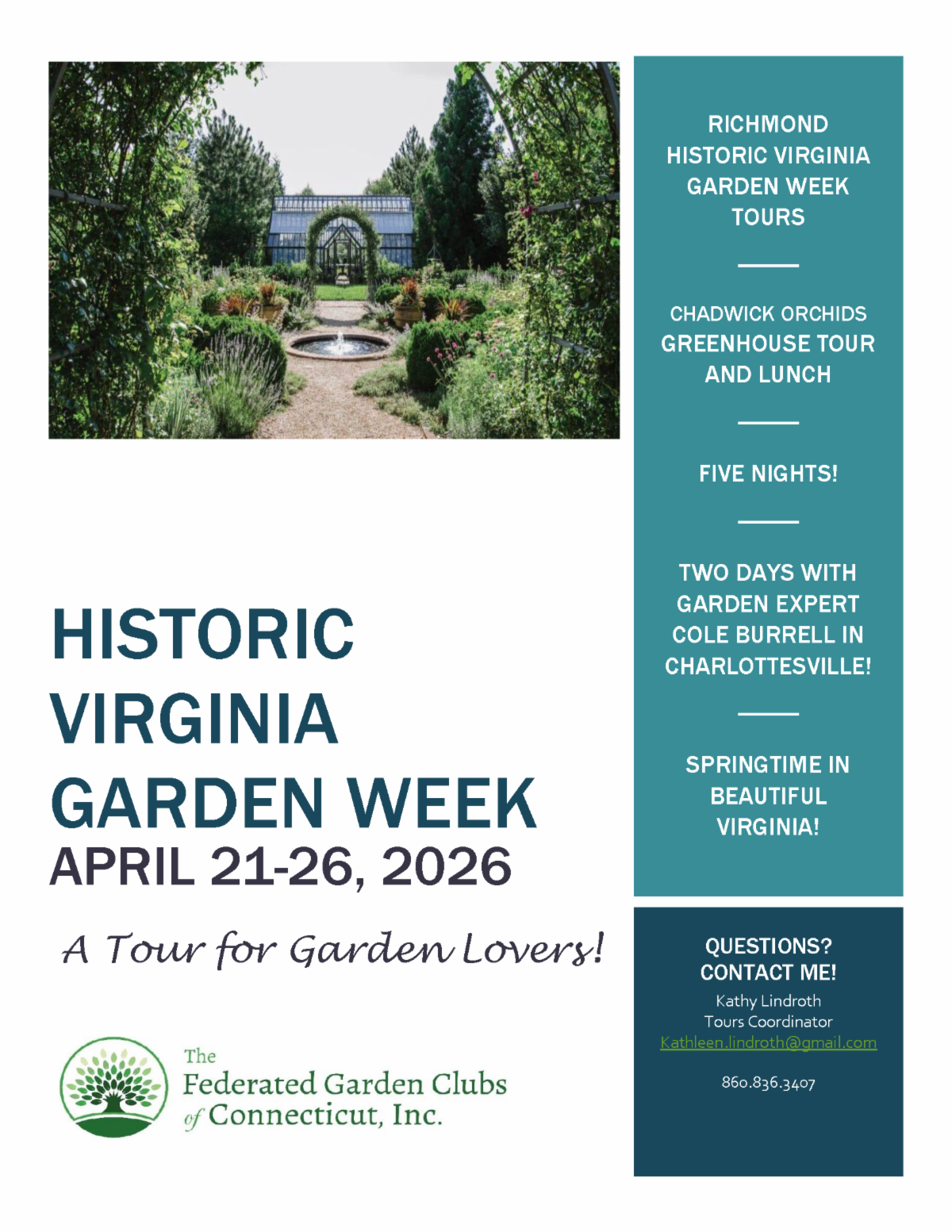
- April 21-26: Historic Virginia Garden Week (by air to Virginia, then motorcoach
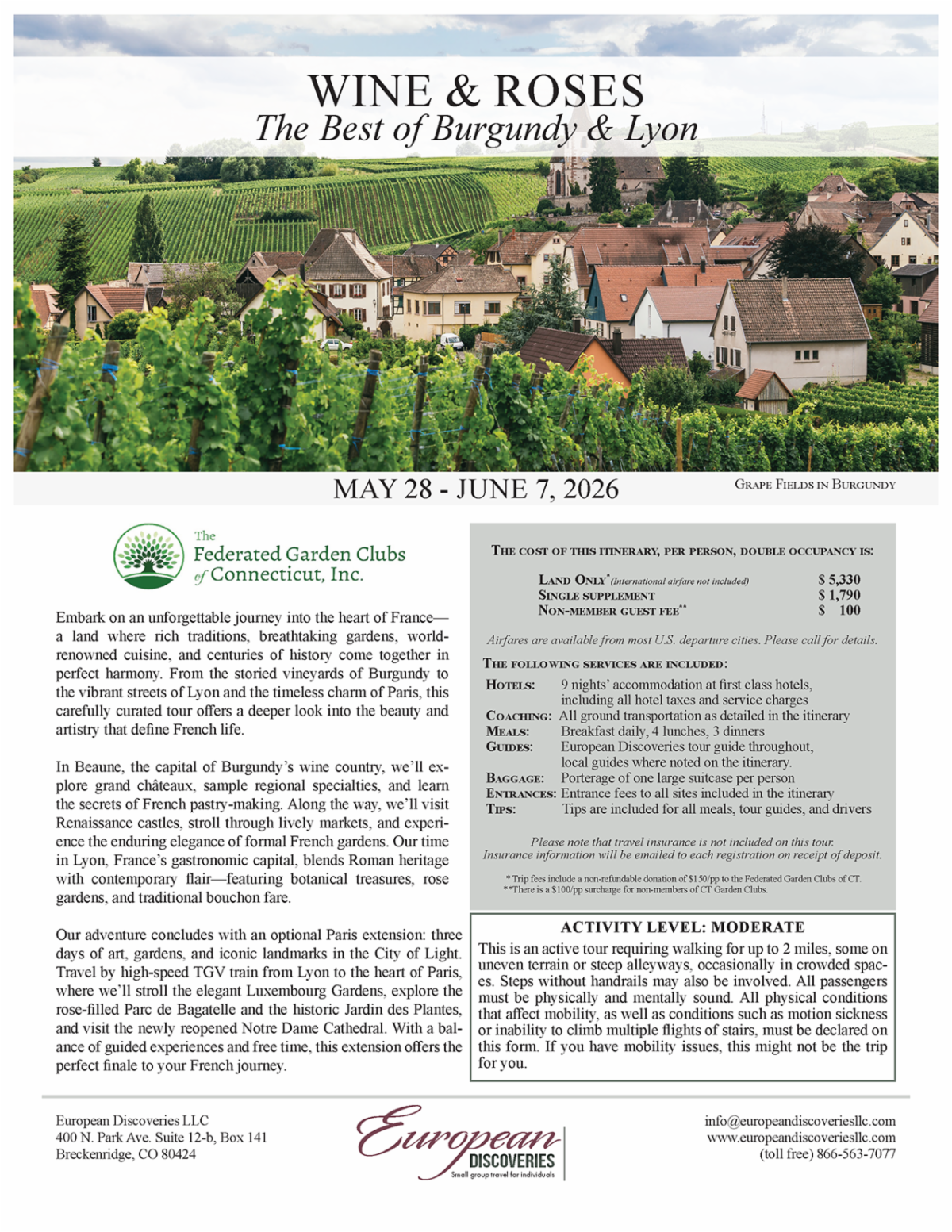
- May 28 - June 5: Wine & Roses: Burgundy & Lyon, France with a Paris extension
- Summer 2026: Maine
-
December 2026: Boston Pops, Glass Flowers and much more!
- Oct 27 - Nov 7: Morocco
Already thinking of 2027?
- January 9-27 – New Zealand -- Register Your Interest!
- Italian Lakes and Piedmont Italy
- March 14-25 Morocco, Second Tour-- Register Your Interest and Portugal (take out)
- March 31-April 10 Portugal
- Chicago with the Ikebana Festival
- Scandinavia
Let us know what you like — express your interest by emailing me!
— Kathy Lindroth, FGCCT Tours Coordinator 860.836.3407 or tours@ctgardenclubs.org
| | |
Garden Club Treasurer Workshop – Reminder to REGISTER!
Are you eager to enhance your skills in the financial management of your garden club? Join our upcoming ZOOM Treasurer Workshops led by John Davis, Treasurer, and MaryAnn Lynn, Assistant Treasurer. These informative sessions will provide clear guidance on the roles and responsibilities of nonprofit club treasurers, removing the intimidation factor and boosting your confidence.
What to Expect:
- A detailed overview of treasurer duties
- Practical tips for effective financial management
- Interactive Q&A session to address your specific questions
Workshop Details:
Option 1: Federation Friday, October 24, 2025, 2:30 PM - 4:00 PM
Option 2: Wednesday, October 29, 2025, 6:00 PM - 7:30 PM
Registration Details:
Spots are limited to ensure an engaging experience. Choose the session that fits your schedule and take the first step toward financial clarity for your garden club!
Click here to register.
—MaryAnn Lynn, FGCCT Assistant Treasurer
| | |
Step into 'A Storybook Garden' at the CT Flower Show Feb 19-21
A Storybook Garden is the inspiration for our 2026 CT Flower Show at the CT Convention Center. The horticulture theme is Cryptids. Cryptids are creatures from folklore or eyewitness accounts whose existence is unproven by science but allow our imaginations to seek evidence for their existence in the wild. If your windowsills are like mine during the winter, it’s easy to imagine the cryptids taking over the house. Is your Ivy, a ‘leprechaun’? Or your cactus an ‘ogre’? Cut foliage is entered in the ‘Cyclops’ section and a flower from a blooming plant in the ‘Flying Monkeys’. There are 109 classes to choose from. Choose among your windowsill cryptids and bring one to the flower show.
You must own the plant for a minimum of 90 days, but horticulture can be entered by the general public. So get your Mom or your sister or your neighbor to join you in this friendly competition. We ask that you pre-register your horticulture entries on The Federation website by February 8, more details are available in the schedule, which is also on the website.
Stop by and say hello at the Show, Vonice Carr, Flower Show Chair, the BBW (Big Bad Wolf!)
— Vonice Carr, 2026 CT Flower Show Chair
| | |
Off to the Flower Show!
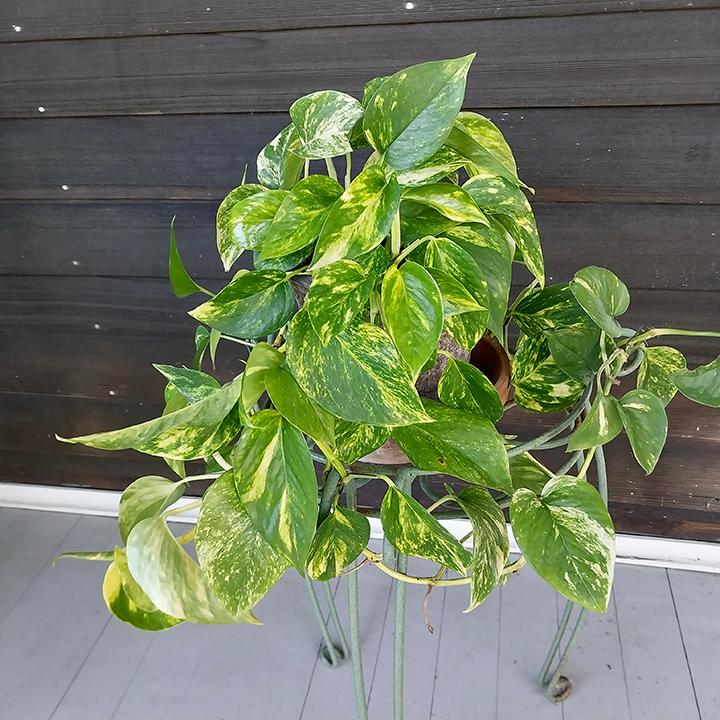
My goal in this little piece is to encourage you — yes, you! — to enter plants in the horticulture division of the Flower Show in February. You may think your plant unworthy – which can really hurt its feelings – but actually, any plant can be a star. A few years back a friend gave me a cutting of pothos — alright, don’t laugh, but I’d never had one — and I find it a handsome plant despite its ubiquity. I plan to enter it this year and so, to demystify the botanical naming fields on the submission form, I will explain how to enter it.
Common name: Golden Pothos
It is not unusual for plants to have several common names and in this case, there is Golden Pothos, Devil’s Ivy and Devil’s Vine. There is no right or wrong here, I will use Golden Pothos as the whole “Devil” thing is just weird.
The botanical name is Epipremnum aureum which breaks down as follows:
Genus: Epipremnum It is italicized and capitalized.
Specific Epithet: aureum It is italicized and not capitalized.
These two parts combined, Epipremnum aureum, make up the species name.
Cultivar or Variety? A cultivar is a human created variation of the species. This is designated by a name at the end of the species name, capitalized in single quotes. My plant is what we call the “straight” species, it is not a cultivar. There are cultivars of pothos like Marble Queen Pothos which was in last year’s show. Its botanical name is Epipremnum aureum ‘Marble Queen’ and ‘Marble Queen’ goes in the cultivar field. A variety is a naturally occurring variation of the species and is usually designated with var. in the name. Mine is not a variety either.
Easy, right? Well, unfortunately, a common name can sometimes lead folks astray. There are other plants called ‘pothos’ that are NOT Epipremnum aureum. Take for example, Dragon Tail Pothos which is a handsome plant too but a different species, Epipremnum pinnatum. Then there is Silver or Satin Pothos which is really Scindapsus pictus. You guessed it, whole different species. All show worthy plants, you just need to name them correctly.
My advice: always do your research to confirm a plant's identity. I don’t care what your mother called it or what label Home Depot had on it. A Google search using an image of a plant can help you narrow it down – and cross check reputable sources, which do not include TikTok, Reddit, Instagram or any other amateur sites. Don’t get me started on how many times I have seen a Philodendron labeled as pothos. If you are really stuck, send a photo to me, the Horticulture Classification Chair (renee.marsh@ctgardenclubs.org).
So, check out the schedule! If you have an Epipremnum you would like to show off, that is Class 37. If you have a Scindapsus, that would go under Class 49. And if that pothos is really a Philodendron, that is Class 44. Go for it and I’ll see you there.
P.S. The Horticulture Division may be entered by any amateur gardeners – so friends and relatives are welcome too!
P.P.S. Can I get a cutting of that ‘Marble Queen’?
— Renee Marsh, 2026 Flower Show Horticulture Classification Chair
| | | |
Judges Symposium 2025 ~ October 16 - 17, 2025
Our Symposium committee has been hard at work studying the NGC Symposium Manual and reading all the notes and suggestions in Trish Manfredi’s reports from the 2013 and 2018 Connecticut Symposia.
| | | |
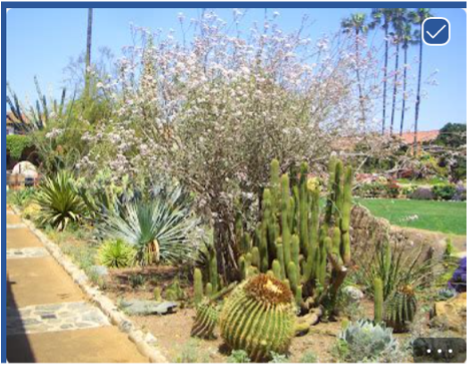
Although we imply that the Symposium is for Flower Show Judges, it is a great opportunity for anyone interested in learning about advanced design types and updating horticulture skills. Our horticulture instructor, David Robson, will highlight succulents and cacti. His supplemental lecture will be subdividing in a flower show. We will need to borrow as many examples as possible to augment David’s examples. This is a good opportunity for judges who may need exhibiting credits. It is also an opportunity to share the great examples you have in your collections. As October draws near, we will let those registered know exactly what we need. Cheryl Cappiali, our Horticulture Chair, would be thrilled to hear from you with questions or willingness to share!
| | |
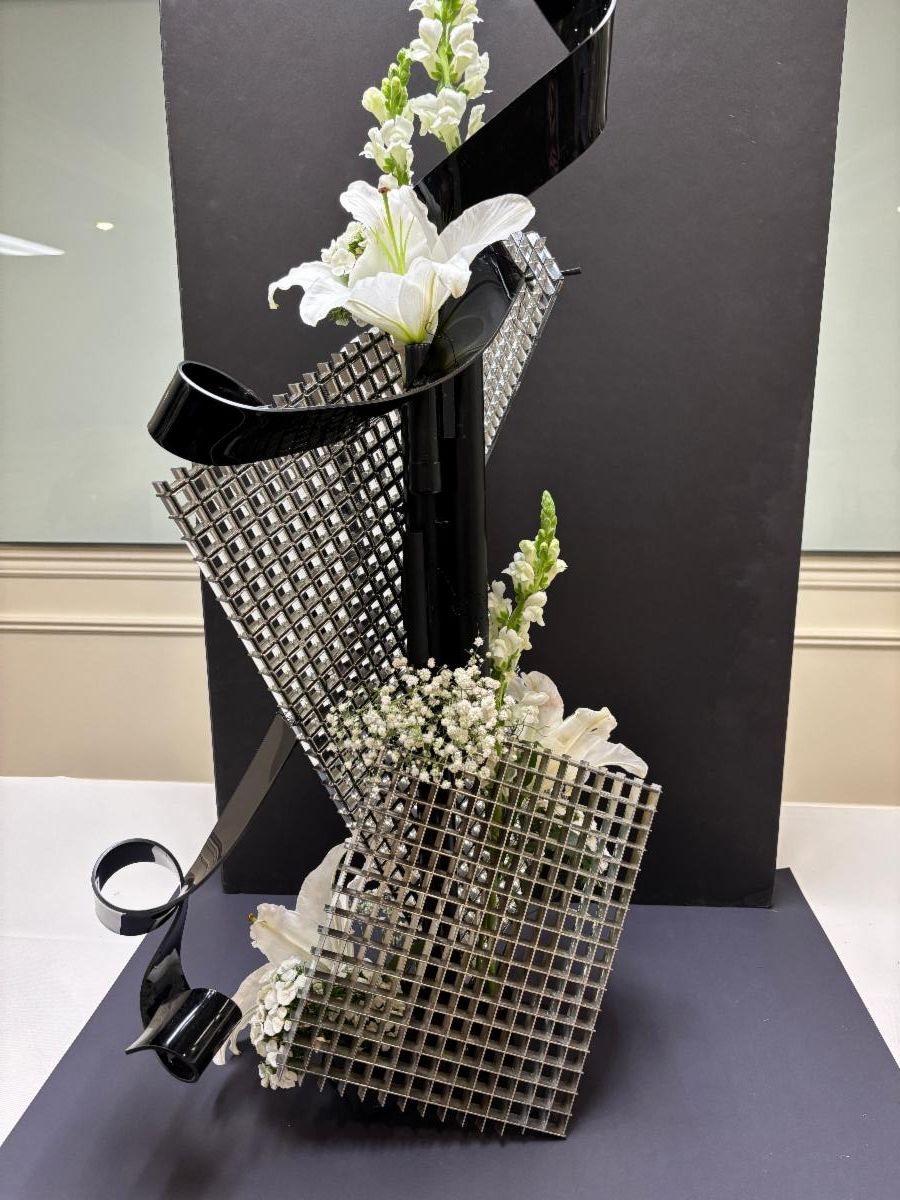
We are fortunate to have Lynn Fronk share her expertise as our design lecturer. Assemblage and Abstract are the two designs Lynn has decided to share with us and her supplemental topic is Evaluating a Flower Show. The design on the left is an Assemblage from the Basking Ridge, NJ Symposium in April of this year. Just to let you know, we were given permission to photograph the designs during our point scoring exam. Unfortunately, we don’t have a name to attribute to the design. Help will be needed with six designs for practice point scoring and six for the point scoring exam. As with horticulture, you may earn an exhibiting credit for sharing with us. Also, as an accredited judge you may earn a judging credit! Suzy Fisher, our Design Chair, would love to hear from you!
Space is limited so register soon!
Don’t hesitate to contact us with any questions or your willingness to share horticulture or create designs!
Karin Pyskaty, Symposium Chair
Carmelina Villani, Symposium Vice Chair
| |
We want your help!
The Federated Garden Clubs of Connecticut will celebrate an important milestone in 2029, and we are forming a committee to help mark the occasion statewide!
On April 30, 1929, The Federated Garden Clubs of Connecticut, Inc. was organized with 31 Connecticut garden clubs as charter members. The following day, May 1, 1929, it joined with twelve other states to form the National Council of State Garden Clubs, Inc., now known as National Garden Clubs, Inc.
A committee is forming to make plans statewide to celebrate and highlight the incredible work done by our member clubs over the century and we are seeking members interested in joining the team! All meetings will be held over Zoom, so no worries about long drives, just bring your cuppa and your ideas and meet from the comfort of your home.
According to a history prepared in 1930, the following clubs were Charter members: Bridgeport, Branford, Cheshire, Connecticut Valley, Danbury, Derby, Fairfield, Glenbrook, Greenwich, Madison, Middletown, Milford, New Canaan, New Milford, New Haven, Newington, New Haven Woman’s Club, New London, Norwalk, Pomperaug Valley, Riverside, Salisbury, Shippan Point, Spring Glen, Sound Beach (now Old Greenwich), Southington, Stamford, Stonington, Stratford, Westport and Wilton.
Interested? Contact 1st VP Kelle Ruden at kelle.ruden@ctgardenclubs.org.
| | | | Meet All the 2025 FGCCT Scholarship Recipients | |
Tori Jones, Old Saybrook CT
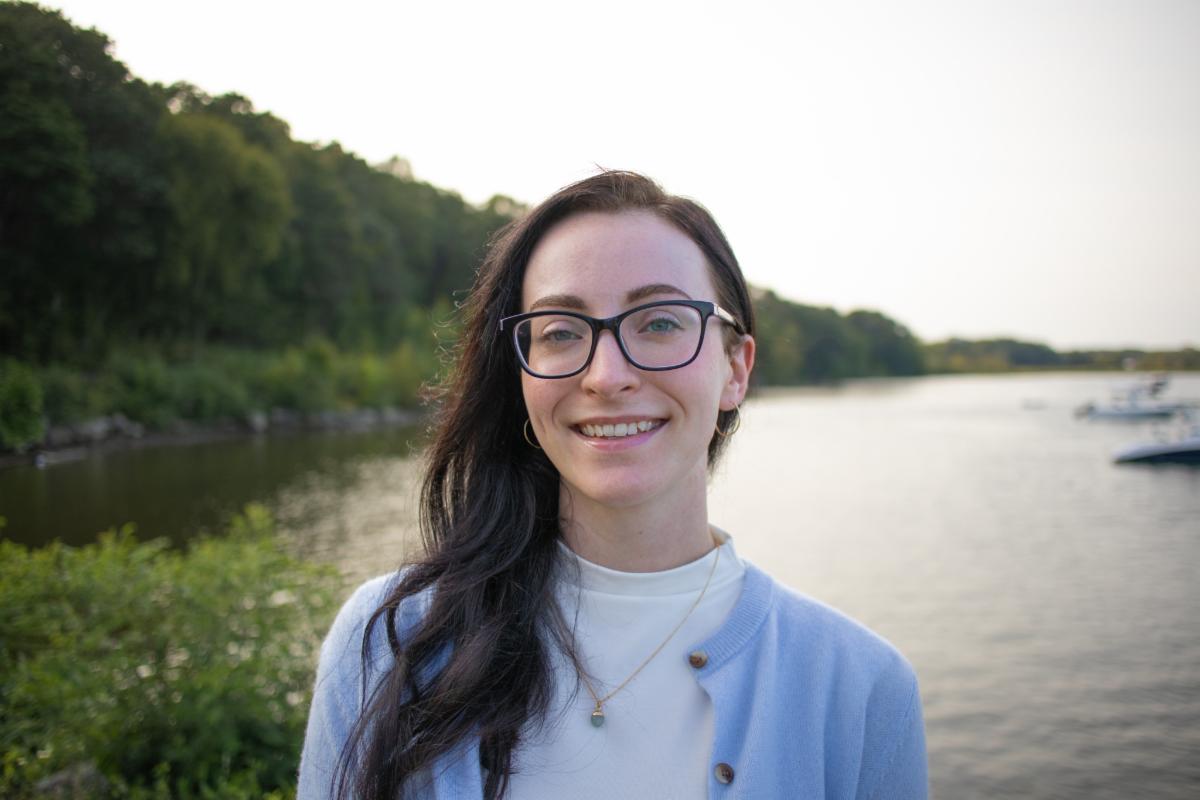
Victoria Jones of Old Saybrook, CT, is a rising Senior at Southern Connecticut State University majoring in Environmental Systems and Sustainability Studies with a minor in Marine Studies. Growing up on the Connecticut shoreline, Tori developed a deep appreciation for coastal ecosystems and the wildlife they support. However, over the years she’s learned that these ecosystems are under threat due to climate change. The more she learns about global warming, pollution, and habitat loss, the more Tori wants to be a part of the solution.
Through her studies, this outstanding student has developed a strong interest in marine biology, habitat restoration, environmental justice, and sustainability. This year Tori was awarded an undergraduate research grant to conduct a thesis project on coastal development issues in Iceland. The project focuses on the potential environmental and cultural impacts of a proposed harbor expansion in the country’s most popular surf spot.
Ultimately, Tori hopes to build a career that combines coastal research with community-based environmental initiatives. She wants to work in a role that allows her to protect coastal ecosystems and support communities that depend on them. Some roles she’s particularly interested in include coastal resilience work with CT DEEP, leading habitat restoration projects for nonprofits, or conducting coastal ecology research..
| | | |
Kate Landis, Brooklyn CT
Kate Landis of Brooklyn, CT, is a rising Junior at Colorado State University majoring in Forest and Rangeland Stewardship with a concentration in Forest Biology. She is an outstanding student and in addition to taking various classes related to ecology and plant identification, Kate was happy to be employed at the Colorado Forest Institute, a forest monitoring company based out of CSU. She spent long days in the field, at a variety of sites across Colorado, taking various forestry field measurements on a crew with three others.
Kate also took classes at the Colorado State Mountain Campus, a secondary campus located 9,000 feet in the mountains north of Rocky Mountain State Park. These classes focused on Natural Resource Ecology and Measurements related to forestry, watersheds, rangeland ecology, and wildlife as well as Forestry Field Measurements where she collected data with a variety of equipment and ran numerous calculations. Kate feels these classes have set her up for the field work and research she hopes to continue after she graduates.
Her next educational experience is a study abroad opportunity this Fall at Lincoln University in Christchurch, New Zealand. Kate believes this is a tremendous opportunity to explore how natural resources are handled outside of the United States as she studies Agroforestry Systems and Forest Measurements. She hopes to build connections with people abroad to expand her worldview and have a more open perspective on forestry.nd to constantly gather knowledge so that she is equipped to help others.
| | | |
Ella May, New Haven CT
Ella May of New Haven, CT, is a rising Junior at The University of Connecticut where she is majoring in Plant Science and Landscape Architecture with a minor in Sustainable Community Food Systems. She believes that we all have a right to healthy, local, sustainably grown food and deserve to know where and how it is grown.
Ella, an outstanding student, wants to contribute to creating a more environmentally friendly, community-based approach to how plants are produced. She feels so many decisions are made by growers throughout a plant’s life that affect other vital aspects of that plant and other plants’ future. She hopes to follow in the teachings of the UConn professors she’s learning from and all the innovations around the world. Through past and future work experience, she plans to develop a well-rounded knowledge base of approaches to create a sustainable impact in this ever-changing field.
For the Fall semester, Ella is studying abroad at the Umbria Institute in Perugia, Italy, where her courses will include Experiencing Sustainable Italian Foodways, Sustainable Food Production in Italy, and Food and Environmental Policy in Italy and Europe.
Following college, Ella wants to travel around the USA to explore farms in all different climates and conditions, to broaden her understanding of the challenges faced and successes accomplished by all different kinds of plant growers on a national level.
Ella’s career goal is to create her own sustainable plant production business.
| | | |
Jamie Paige, Woodbury CT
Jamie Paige of Woodbury, CT is a rising Junior at the University of New Hampshire majoring in Sustainable Agriculture and Food Systems. Her passion for plants and agriculture began in kindergarten when she participated in her first science fair where she designed an experiment that tested a flower’s ability to gain color through dyed water.
In high school she joined and was an officer in the local chapter of Future Farmers of America. Using the skills learned there she created an after-school gardening club and curriculum for 3rd to 5th graders. This provided them with hands-on experiences in gardening to supplement their classroom knowledge, and to instill the importance of gardening and agriculture.
An outstanding student, in college through her courses, Jamie is evaluating the negative impacts of our current agricultural practices and investigating proposed alternative methods.
Her career goal is to be a consultant with the USDA or a private corporation. She hopes, in this position, to communicate with farmers, to understand the situations they are facing and to provide resources and solutions that will increase the quality of their livelihoods and enable them to steward their land in an environmentally conscious manner.
Jamie’s life goals are to apply herself to the highest degree and to constantly gather knowledge so that she is equipped to help others.
For the Fall semester, Jamie is studying abroad in Italy.
| | | |
Michael Vignone, Berlin CT
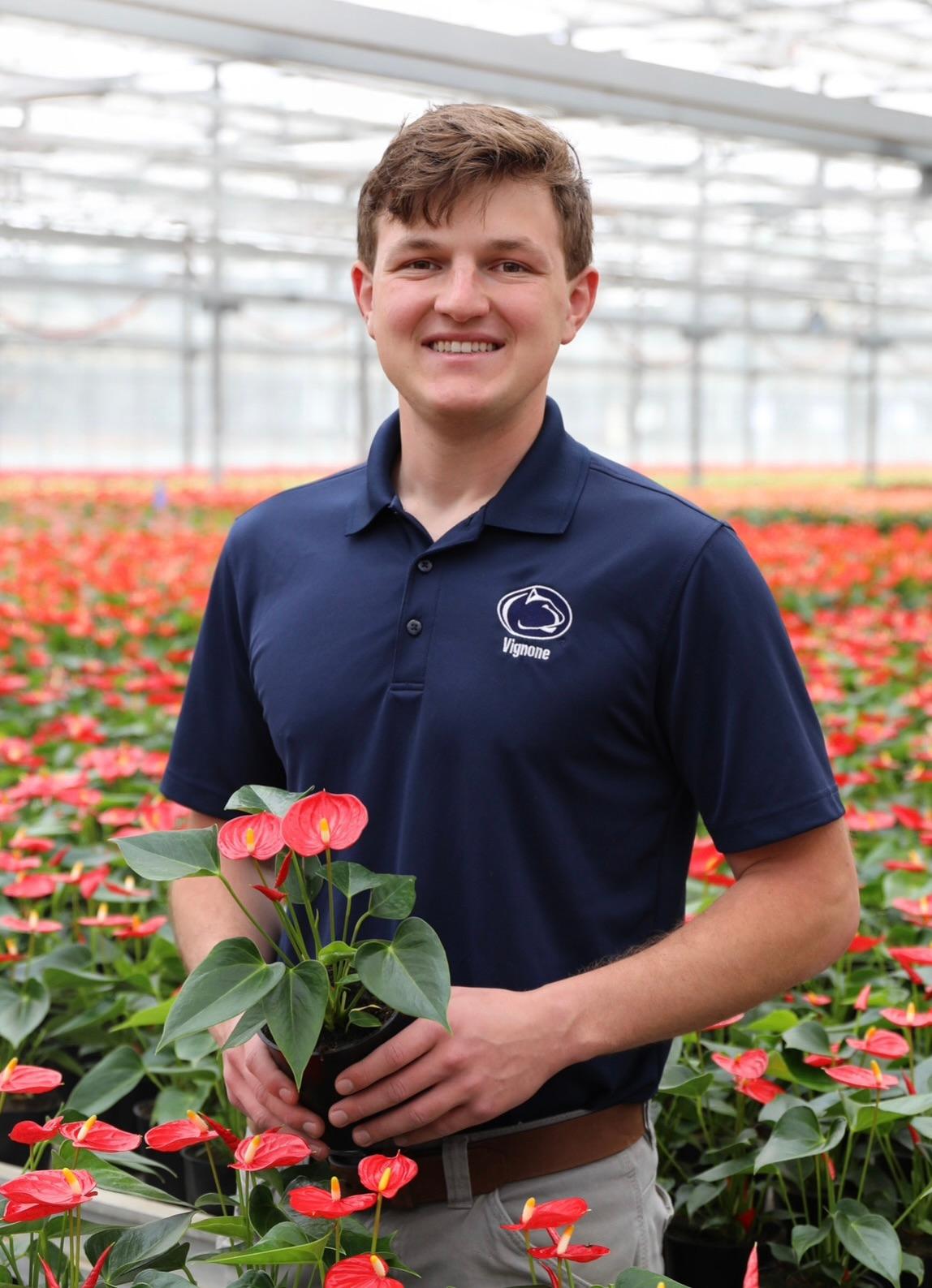
Michael Vignone of Berlin, CT, the FGCCT Scholarship Committee’s 2025 nominee, will receive a $3,900 National Garden Clubs scholarship.
Michael is an outstanding young man. He has completed his junior year at Penn State University, where he has maintained a straight A average for all three years, and is studying plant science-horticulture.
Michael’s extracurricular activities include being an ag advocate, teaching assistant, research assistant, and president of the horticulture club. His research project involves analyzing the viability of biochar as a sustainable additive to potting media for daffodils and petunias.
Michael’s letters of recommendation from academia and business were outstanding. He has just returned from England after completing an internship involving study of the gardens of London.
| | | | — Carole Fromer, FGCCT Scholarship Chair | | | | |
|
Creating a National Garden Clubs, Inc. Website Member Account
In order for garden club members to access information in the Members area of the National Garden Clubs website, they will now need to create an account. Below are the steps to follow.
-
Go to the Homepage of the NGC website at https://gardenclub.org/
- Select “Member Login” in the site header.
- Enter your information. Avoid choosing a username with spaces. Email address is recommended for username. Select “Create new account”.
- You will receive a green highlighted message to check email at the address you entered to verify and complete your account.
- Use the link provided in the confirmation email to create your password and save your changes.
- Once you have selected “save”, click on the “Member Section” link in the main menu.
| | | | |
| |
|
Charming, albeit Challenging, Pokeweed
By Renee Marsh, FGCCT Horticulture Chair
| | |
My gardening “style” is to just let plants do their thing. It’s part curiosity and part laziness. Plants have an amazing way of just showing up, thanks to birds and wind and bad mulch, and if it is not an invasive, I let it stay. For the most part this hospitality works out, although there are times I should have shown a settler, like common milkweed, the compost pile early. And so it is that American pokeweed, Phytolacca americana, came to share my garden.
It is interesting how many native plants are painted as poisonous villains - out to get children, pets and livestock. An internet search is dominated by articles on “how to get rid of toxic pokeweed.” There were a few valiant gardeners coming to its defense though. For the record, pokeweed is native to the Eastern and Central U.S. and has been spreading elsewhere - like California to the west and Europe to the east – where it is invasive and understandably unwelcome. And yes, all parts—especially roots, seeds, and mature stems/berries—contain toxic compounds.
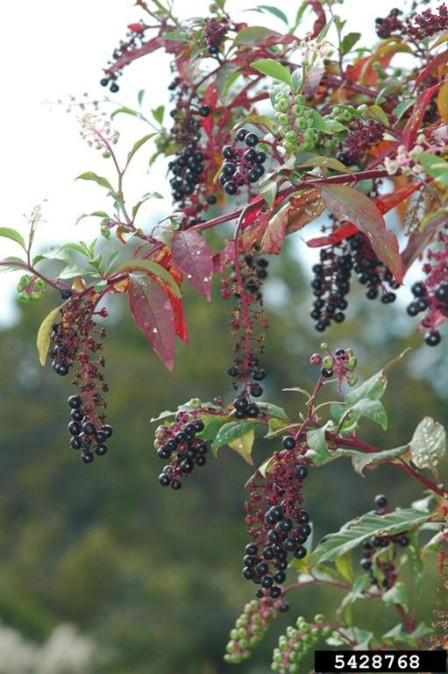
If you don’t want it in your garden, I understand, but you have to admit … pokeweed is one large, dramatic — almost exotic — plant. If happy, it can reach 10 feet tall but generally grows to about half that. The leaves are alternate, lance-oval shaped, roughly 12 inches long and give off an unpleasant aroma when crushed. The foliage is a bit ho-hum but it is offset by striking magenta stems. In mid-summer there are long clusters of greenish-white to pinkish flowers that attract bees and other pollinators.
The real show comes in the fall when the green berries ripen into cascades of glossy maroon fruit on magenta stalks, hence the name. “Poke” comes from an Algonquian word meaning a plant used for dye or stain. The genus name Phytolacca means “plant with lacquer/dye”. The berries are a welcome late-summer food source for over thirty bird species like robins, mourning doves, and catbirds. They devour them with no ill effect – and of course – then distribute the seeds just about everywhere, spreading the joy. Caught early, the seeding can be pulled easily but once the very thick, white taproot gets down into the soil, good digging and good luck. It will resprout if not fully extracted. If you decide to do battle, wear gloves out of caution; some folks are sensitive to it.
So why harbor this beast? Because it tolerates poor soil, heat, some drought (it prefers moisture) and neglect —my kind of plant as I increasingly hide indoors to avoid our new loathsome summer weather. I am not going to have a garden full of it but I don’t begrudge it a place on the wilder edges. Granted I don’t have grazing children and cats are notoriously picky eaters. Oh, did I mention that after fall dieback – it does have nice fall color — it leaves a large skeleton of stems? If you can’t tolerate the mess, cut the dead stems down to 12 to 24 inches as our native bees like to nest in the hollow stems.
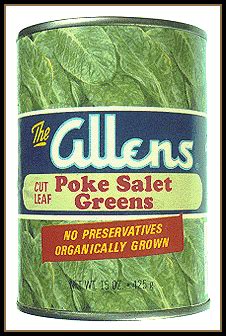
Here is a little piece of Americana for you: in the South, pokeweed is known as poke sallet (salad) and was a poverty food eaten in the poorer areas of the South. In lean times, a free, abundant, and nutritious green is always welcome but how can this be? Well, the young spring leaves are boiled and rinsed multiple times to remove the toxins, then slathered with bacon grease. In fact, it was sold commercially in cans, Allens "Poke Salet Greens", until 2000.
| | |
There was a 1968 song "Polk Salad Annie" which enshrined pokeweed in pop culture (kind-of). Before my time but the lyrics go like this:
Polk salad Annie
The gators got your granny, chomp, chomp-chomp
Everybody said it was a shame
'Cause her mama was a-workin' on a chain gang
Hmm … If you are really curious, it was sung by Tony Joe White but the version I like the best is this classic Elvis Vegas rendition - https://youtu.be/2exirC6tp_g
Trust me, you will never look at pokeweed the same way again.
| | |
Let's Celebrate Our Native Bees!
By Holly Kocet, FGCCT Environmental/Conservation Chair
| | |
Did you know that there are about 340 species of native (indigenous) bees in Connecticut? It’s true, and they pollinate 80% of our native plants, trees and shrubs. The bumble bee is most recognizable and is our only truly social bee who creates a small hive. Other native bees are solitary in nature and have no hive to defend. Most dig hatcheries in the ground while others utilize hollow stems and pre-existing tunnels in trees. Bumble bees and solitary bees are not aggressive. Unlike yellow-jackets and other wasps, native bees simply go about their business of collecting pollen.
Native bees are our most important and successful pollinators. While other pollinators (butterflies, beetles, flies) visit flowers solely for nectar, native bees intentionally visit flowers to collect pollen for their offspring. Tucked under hairy bellies or in pollen “baskets” on their legs, these adaptations make native bees better pollinators. When they are foraging, pollen-covered hairs brush against flowers and pollination ensues. Unlike our native bees, honey bees groom themselves to make a pollen-nectar paste for carrying back to their hive. It is this neatness that makes them less efficient at pollination than native bees.
Beekeeping is not bee conservation. Not indigenous to North America, honey bees were introduced by European colonists in the 17th century. Today, honey bees are important for large-scale agriculture. Considered domesticated livestock, they are sheltered and cared for by beekeepers. While there have been hive losses, honey bees are not at risk of extinction. It is estimated that there are more honey bees now than at any time in history. In contrast, many bee species native to North America are endangered and at risk of extinction. This is primarily due to loss of habitat with floral resources for food and natural areas for shelter and nesting. The better approach to pollinator conservation is to focus on providing natural and pesticide-free habitat.
Native bees are very important to agriculture. As major pollinators of tree fruits, berries and vegetables, native bees add an estimated $3 billion worth of crops annually to the U.S. economy. Native bees are more resilient and tolerant of cold and wet weather than honey bees. And according to The Xerces Society for Invertebrate Conservation, flowers pollinated by native bees will have larger and higher quality fruit.
Bumble bees have the ability to “buzz pollinate” to shake pollen loose. They are highly effective pollinators of plants in the Solanaceae family that includes tomato, pepper, eggplant and potato. They are also important pollinators of blueberry cranberry, and raspberry plants. Squash bees are pollen “specialist” pollinators of plants in the Cucurbit family, pollinating squash, cucumber, melon and pumpkin. Fast-flying mason bees are efficient pollinators of fruit and nut trees: apple, cherry, plum, peach, pear and almond. It takes 40,000 honey bees to pollinate one acre of apples as efficiently as 250 orchard mason bees. The Eastern carpenter bee, also a buzz pollinator, is an efficient pollinator of many flowers and vegetables. Other solitary bee species, small and tiny in size, are important pollinators of many plants, trees and shrubs. They include cellophane, mining, sweat, and leafcutter bees.
| | |
Native bees emerge at different times throughout the growing season. While most are “generalist” pollinators, every bee species includes some “specialist” pollinators who require specific flower pollen to feed their young. Providing native plants that attract specialists benefits all native bees and other pollinators. For a list of plants that benefit specialist bees and plants for seasonal bloom, go to Xerces.org and search: Pollinator-Friendly Native Plant Lists.
The resilience of our environment and our very existence depends on our native bees and the pollination services they provide. The best way to help all pollinators is by planting a diversity of native plants for continuous bloom throughout the entire growing season and by preserving natural areas for nesting and shelter. This is the focus of the FGCCT President Nan Merolla’s Theme and Project, Bee Resilient - Garden for Nature. Plant Happy Habitats, I couldn’t agree more.
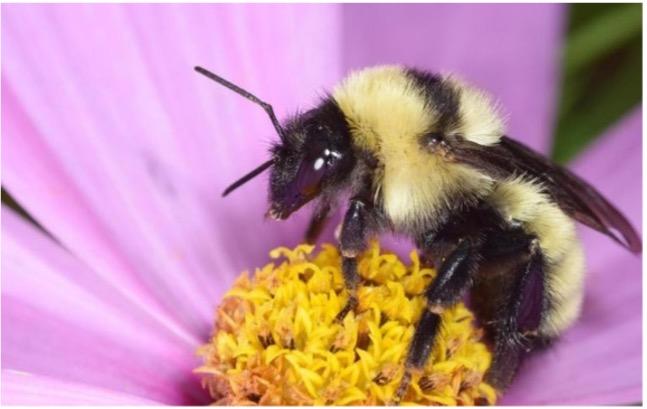
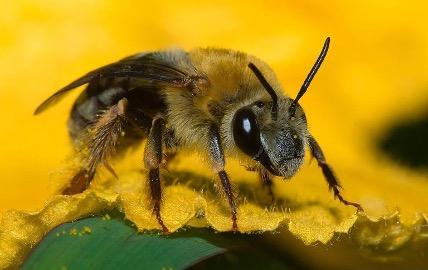
| | Bumble bee photo by Joseph Berger, Bugwood.org | Squash bee photo by Susan Ellis, Bugwood.org | | | | |
SPOTLIGHT on our FGCCT Affiliates! | | | | |
|
The Eleanor Buck Wolf Nature Center
| | Welcome our newest Affiliate, The Eleanor Buck Wolf Nature Center! | |
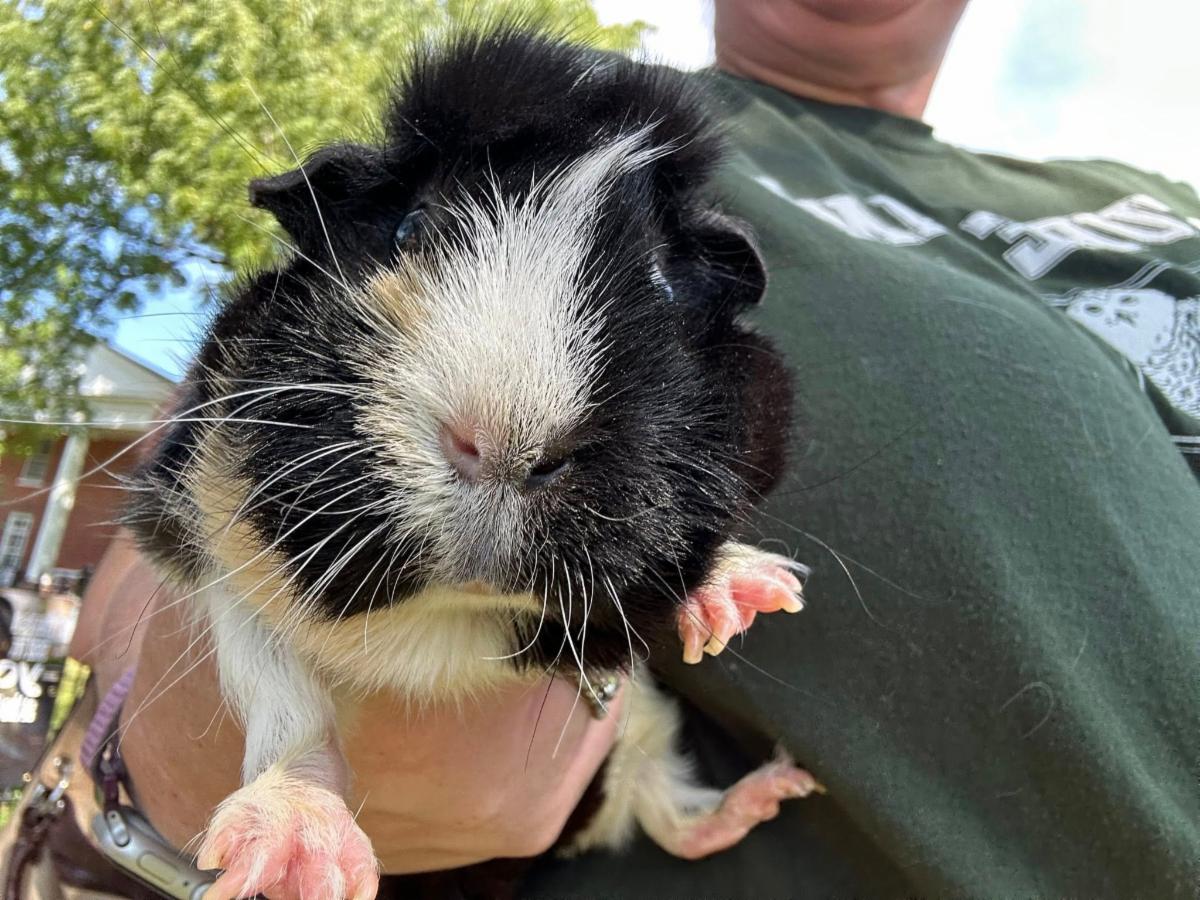
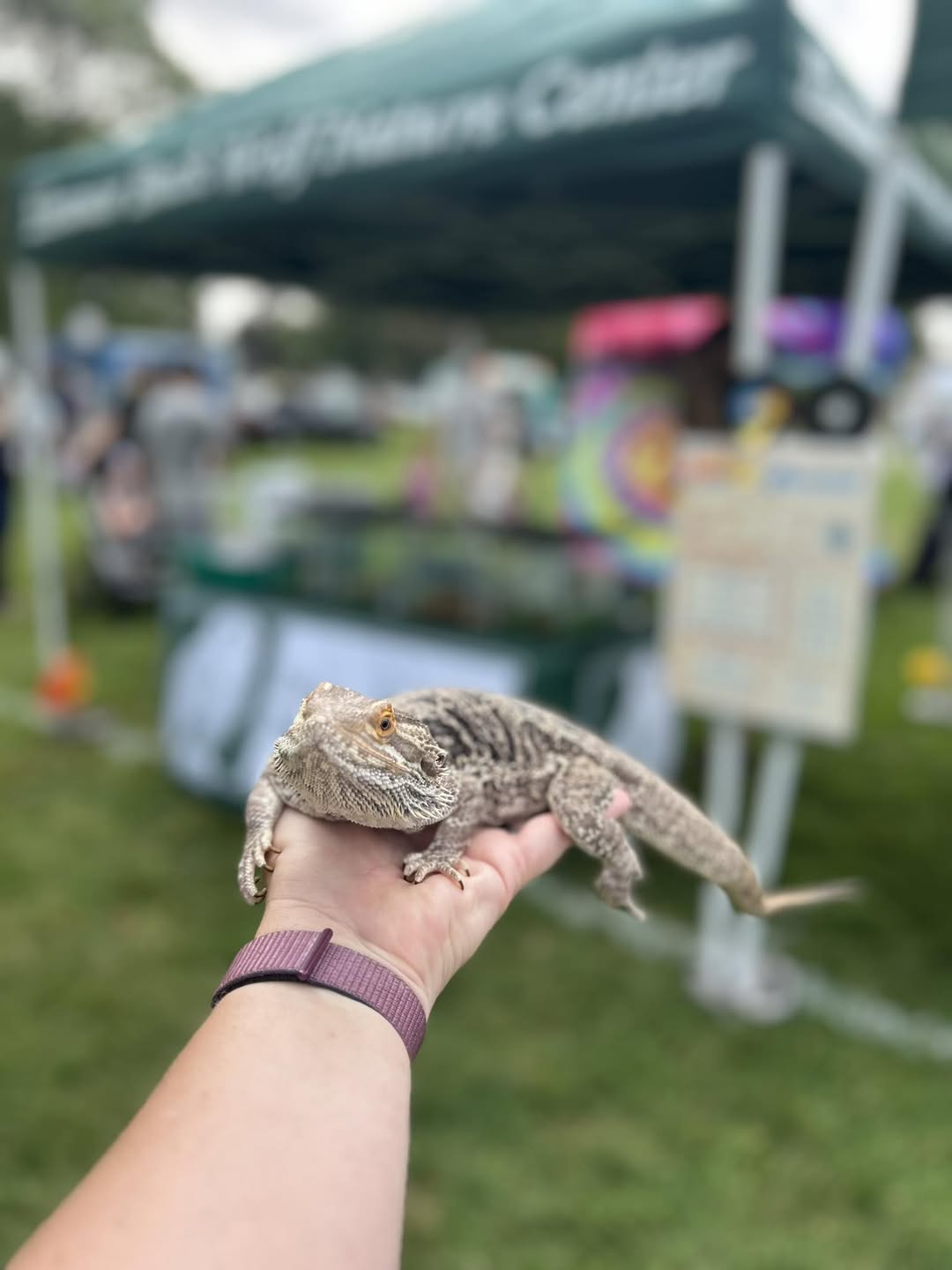
Located adjacent to Mill Woods Park in Wethersfield, The Eleanor Buck Wolf Nature Center is an environmental education facility dedicated to inspiring a deeper understanding and appreciation of the natural world. Operated by the Town of Wethersfield, and with the support of its members, the center offers a variety of engaging programs and services, including summer and vacation camps, education exhibits, live animal displays, field trips, and facility rentals. Through hands-on learning and interactive experiences, the Nature Center fulfills its mission of sharing and exploring the wonders of our environment with visitors of all ages. Group visits are welcome and may explore topics ranging from forestry to insects, flowers and more.
| |
Eleanor Buck Wolf Nature Center
156 Prospect Street
Wethersfield, CT 06109
Open Tuesday - Saturday: 10am to 5pm
| | The Nature Center will stay open late one Thursday a month during the Fall season. Take advantage of the extended hours to visit the animals and view displays on the following dates: October 23rd, November 13th, December 11th, and January 15th from 5:00 to 8:30pm | |  | | | | |
| |
|
"Club Corner" is a place for clubs to showcase exceptional or notable club achievements and activities. Has your club done something unique (or uniquely successful?) that you'd like to share? Visit "Club Corner" on the FGCCT website for more news from clubs! (This area is NOT for upcoming events—you can post those on the FGCCT Club Calendar.)
To submit: send high-resolution photos, along with a writeup (200 words or less, please) and photo captions, to martha.sherman@ctgardenclubs.org to be considered for inclusion. Please ensure that you have appropriate permissions for all photos. We reserve the right to edit copy and select photos for inclusion.
| | Featured Club: Spring Glen Garden Club Marks 100 Years! | | |
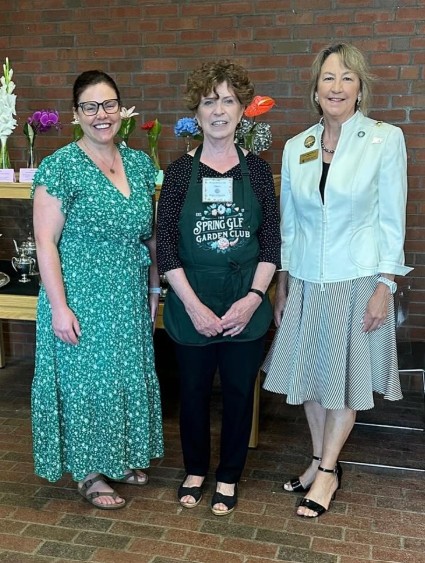
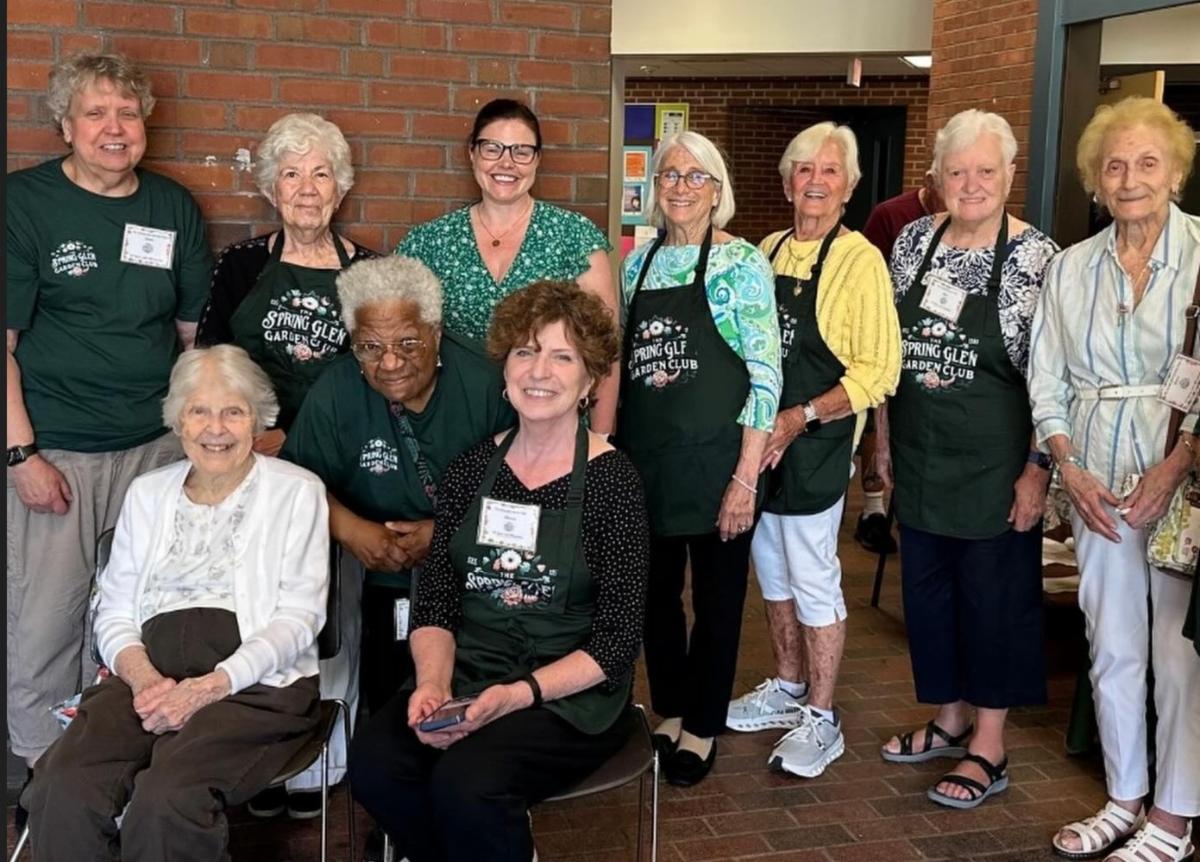
The Spring Glen Garden Club is the fourth Federation member to celebrate its 100th anniversary in 2025. The club was founded on July 1, 1925, and joined the Federated Garden Clubs of Connecticut as a founding member in 1929. A celebratory kick-off event, “Founders Day,” was held on July 1 at the Hamden Public Library, where President Nan Merolla delivered a Certificate of Merit to the Club. The Mayor of Hamden, Lauren Garrett, presented the Club with a Proclamation recognizing their contributions to the Town.
You can find members of the club at various venues throughout the year. They distribute important informational material as well as seed packets and small plants at Hamden’s annual Earth Day Celebration, Hamden Fest, and the Brooksvale Fall Festival. They also participate in events at the Hamden Senior Center by providing floral table décor for the Center’s many events throughout the year.
| | |
Club meetings are usually held on the second Monday of the month from September to May and are open to the public. The club engages horticulturalists, agricultural scientists, landscape designers and floral designers to speak at each meeting.
This busy club takes its mission to heart and does it so well:
- Increase knowledge of gardening and horticulture.
- Enhance knowledge of floral design.
- Promote and aid in the preservation of natural and native resources.
- Participate in civic beautification and community action projects.
The club is very proud of its collaboration with The Connecticut Agricultural Experiment Station and the Federated Garden Clubs of Connecticut Landscape Design Council in establishing the Bird and Butterfly Garden at Lockwood Farm. For many years the Club helped maintain the Garden, but that function was transferred to the Ag Station a few years ago. On Plant Science Day, members of the Club were located at the entrance to the Bird and Butterfly Garden where they presented information about the project.
| |
On Founder’s Day, Club President Theresa McCabe shared these inspiring words: “Over the past hundred years, this club has done more than plant flowers. We’ve planted trees, cultivated friendships, revived public spaces, and passed along our love of gardening to new generations. We’ve also learned that the best way to get to know someone is to weed a garden bed together on a hot morning. The tools may have changed—we have better gloves now, and more botanical choices —but the mission has not. We still believe in beauty, in stewardship, and in the power of neighbors coming together.”
Congratulations Spring Glen Garden Club on 100 years of great gardening!
Visit The Spring Glen Garden Club on Facebook to find out more about this club.
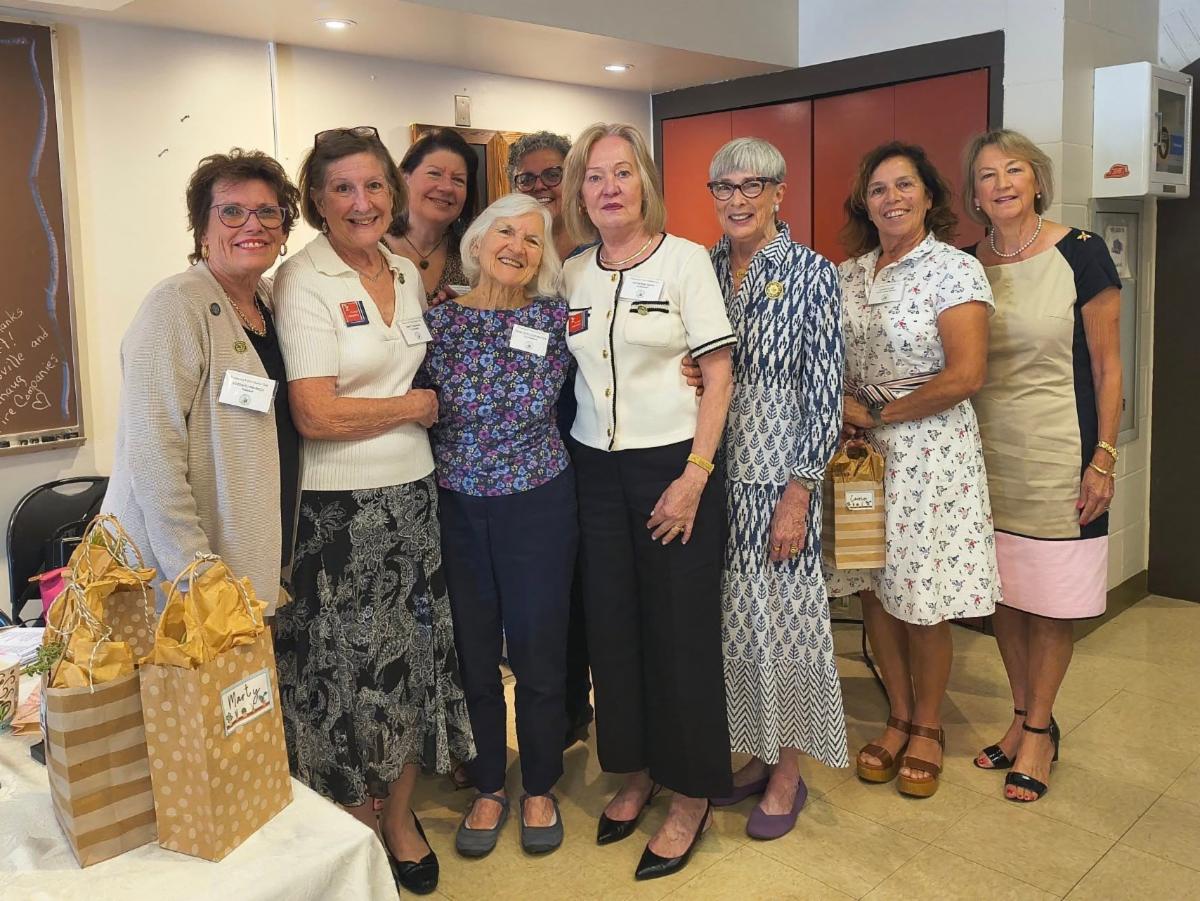
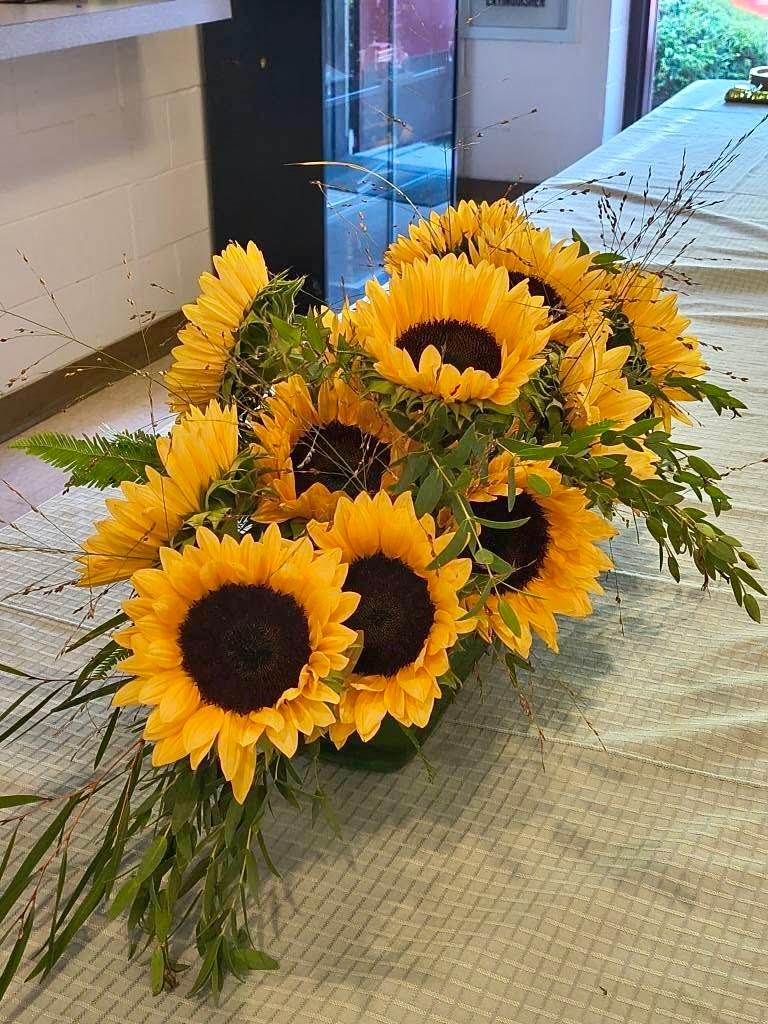
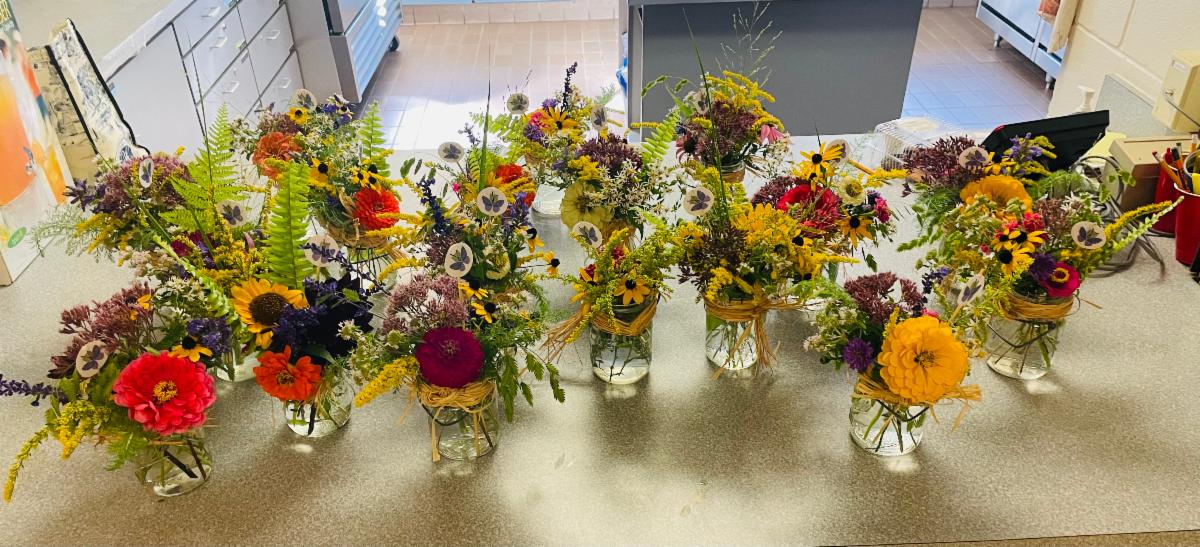
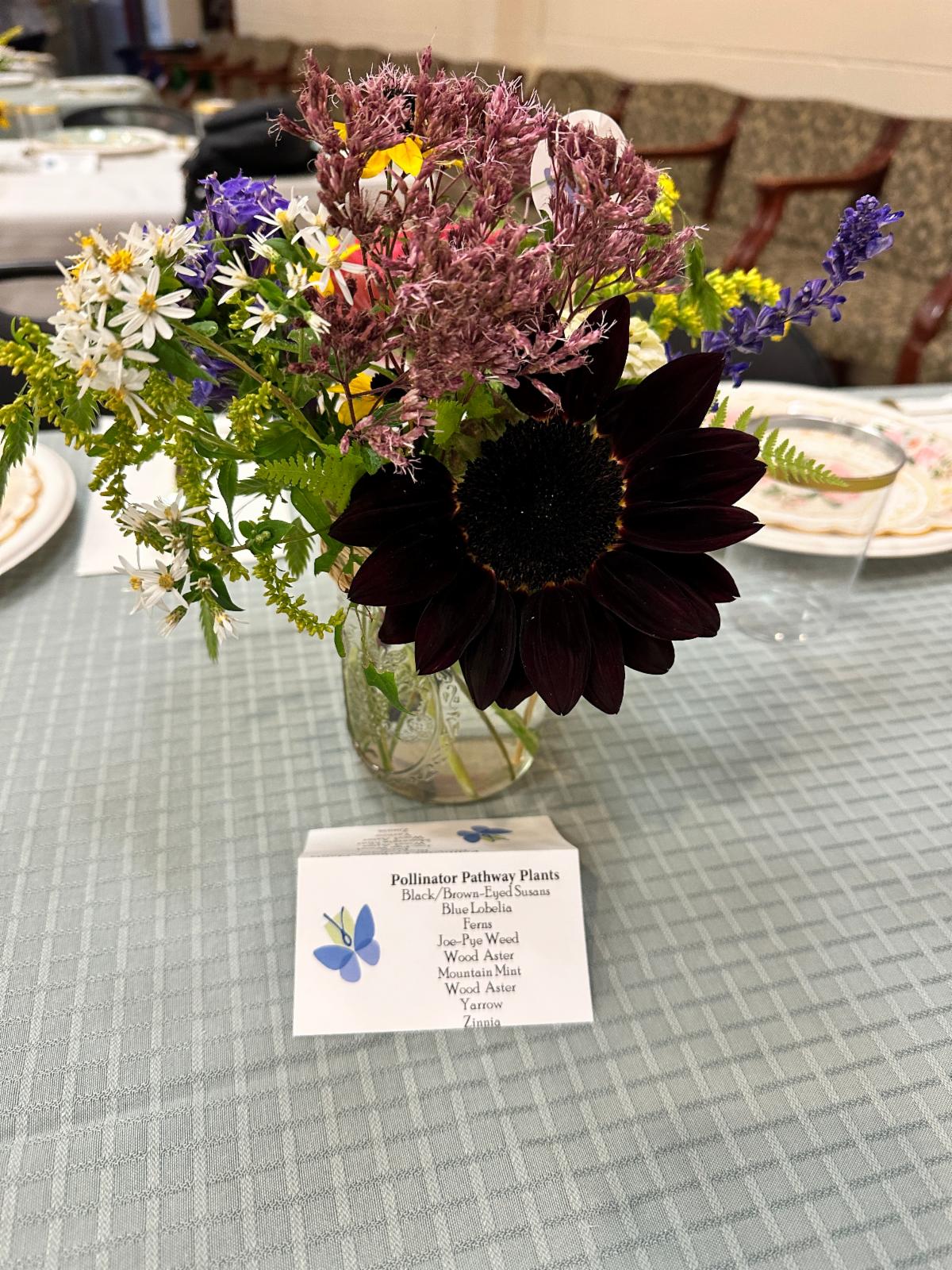
| | At Pomperaug Valley Garden Club, New Officers, Special Guests, and a Nod to Native Pollinators! | | Pomperaug Valley Garden Club was honored to have FGCCT President Nan Merolla and NEGC Director Polly Brooks join the club for the Installation of Officers on September 9. The day dawned clear and with a touch of fall in the air as club members gathered to thank the outgoing officers and welcome the new leadership team. The day was also a celebration of the Club's new Pollinator Pathway Initiative, a recent recipient of an FGCCT Bee Resilient Project grant. A stunning centerpiece of sunflowers and cheerful mini arrangements on each table sporting Pollinator Pathway logos made for a festive setting! The club would like to thank Nan Merolla and Polly Brooks for making this a very special event! | | Pictured above, from left to right: PVGC Past President Eileen Flynn-Ricci, Co-President Marty Sherman, Recording Secretary Daria Verelley, Vice President Terri Cutillo-Schmitter, Treasurer Maria Angelopoulos, Co-President Katherine Smith, NEGC Director Polly Brooks, Corresponding Secretary Carrie Clark, and FGCCT President Nan Merolla. | | | |
Suburban Garden Club Announces 2025 Scholarship Recipients
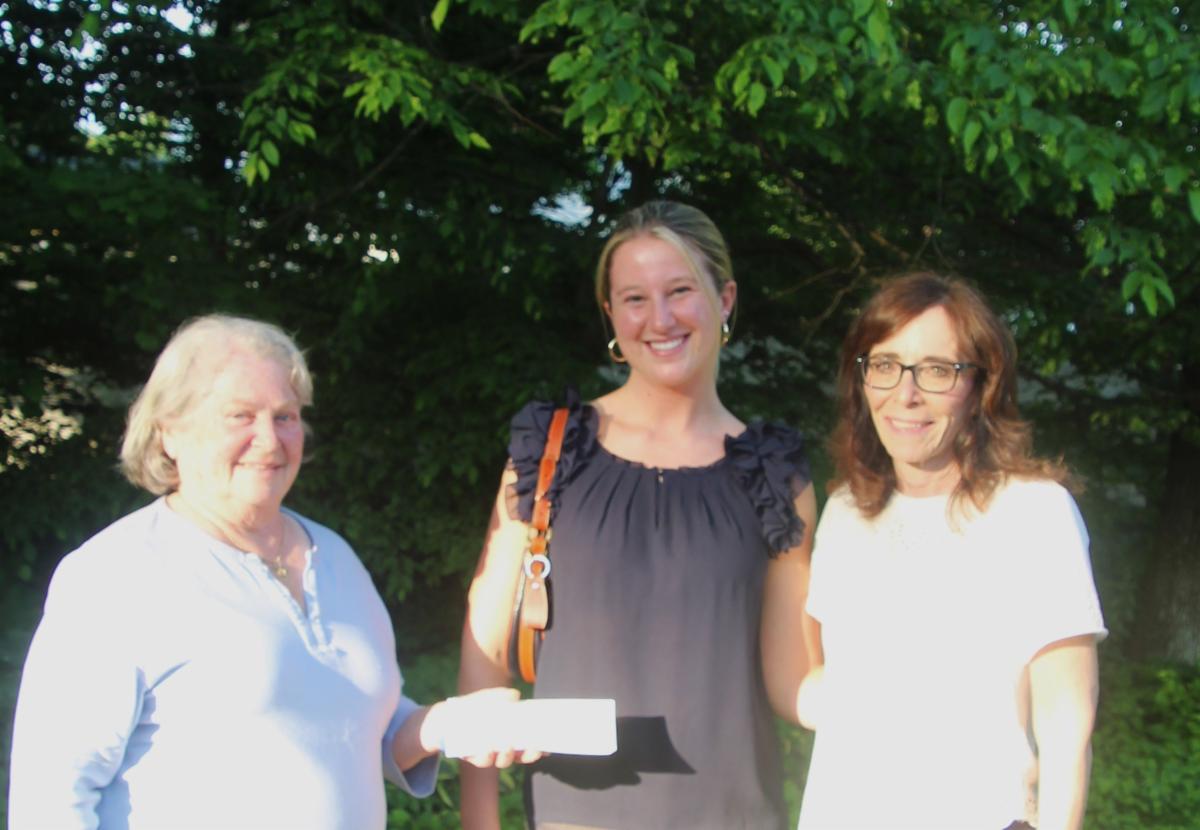
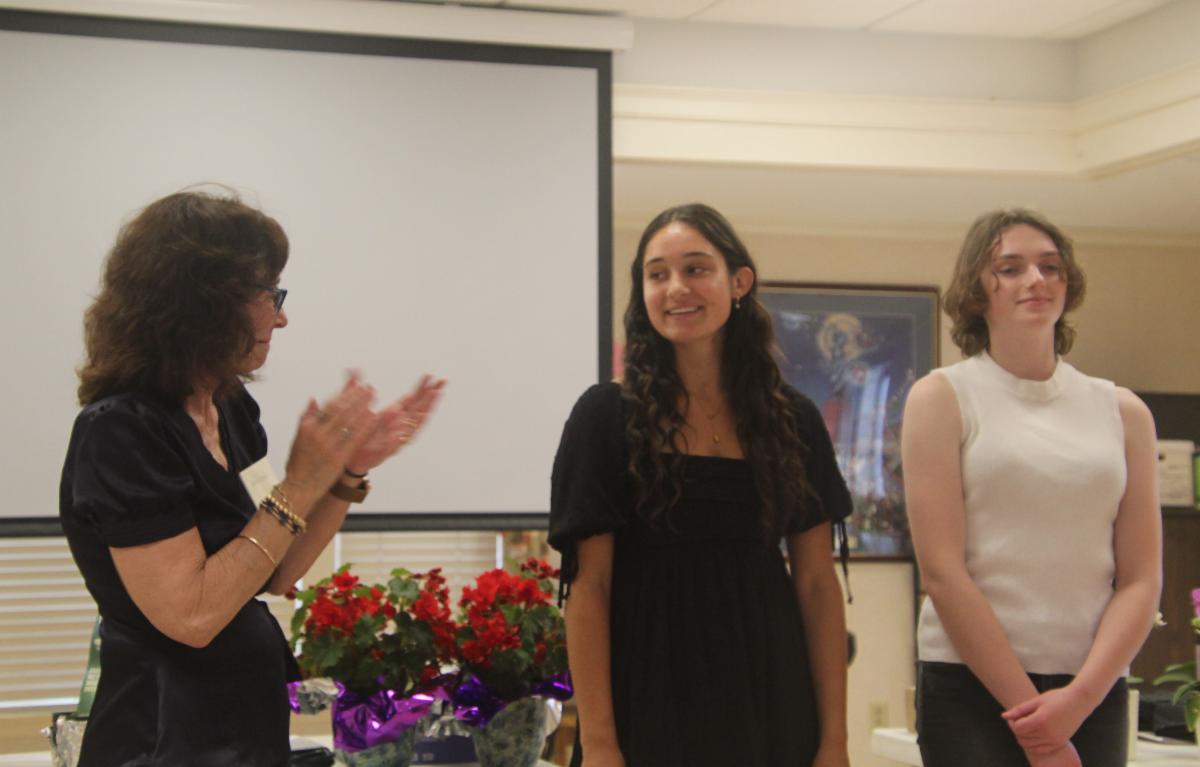
The Suburban Garden Club of Cheshire (SGC) is proud to announce its 2025 scholarships have been awarded to three individuals. Alexandra Gilson and Leah Pisani, are recent graduates of Cheshire High School and Emma Lepist, who will be a senior at Clemson. Alexandra is interested in pursuing Environmental Engineering at the University of Connecticut where she “plans to make an impact on the growing climate crisis”. Leah will also be attending the University of Connecticut majoring in Environmental Science where she wants to address “environmental challenges and contribute to the preservation of the Earth”. Emma’s major is landscape architecture. The annual SGC scholarship is designated for a student majoring in a plant science. Funds for these scholarships, as well as the SHC’s Community Grants, are raised through its May Market each year.
| | Emma Lepist receives her scholarship check from Elizabeth Morin, SGC President and Bernie Uluski, Scholarship Committee Chair | | Bernie Uluski, Scholarship Chair introduces Alexandra Gilson (right) and Leah Pisani (center) | | |
Suburban Garden Club of Cheshire Awards 2025 Community Grant
The Suburban Garden Club of Cheshire announces the recipients of its 2025 Community Grant in Cheshire.
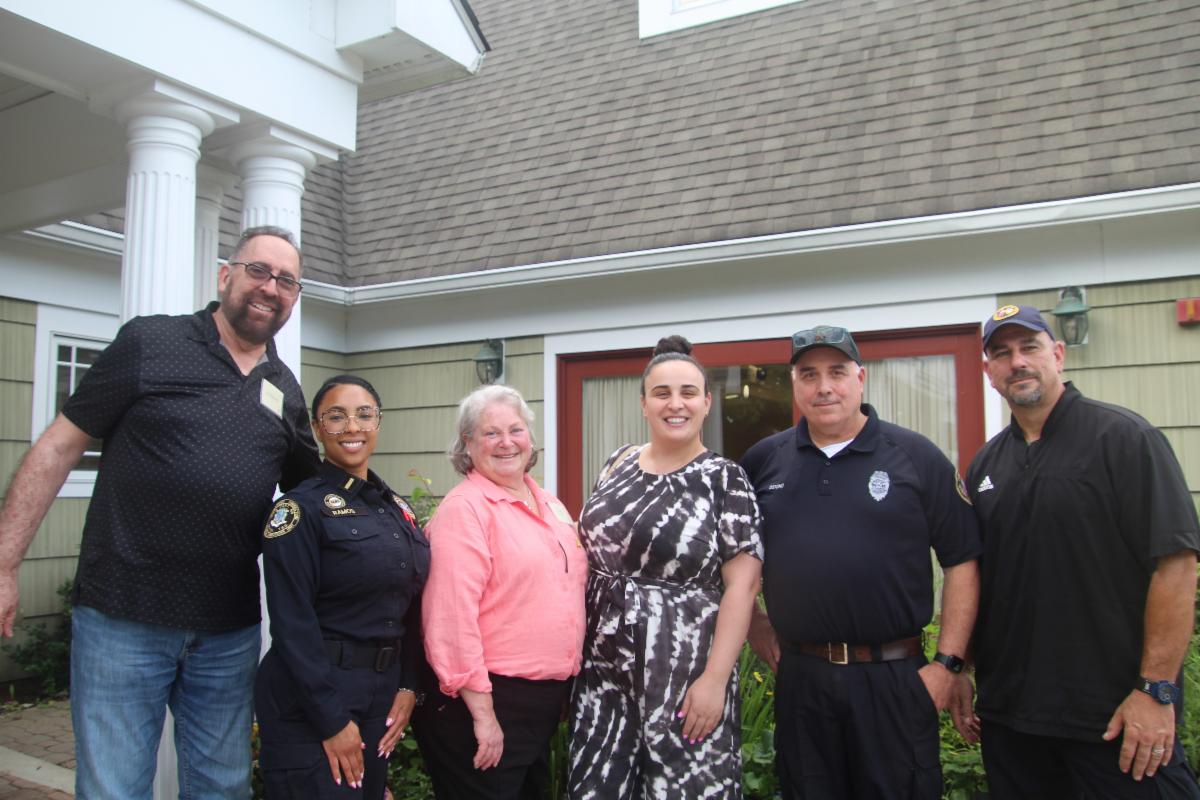
The Department of Correction in Cheshire was awarded a grant for their Gardening Program at the Manson Youth Institution to purchase soil, plants, tools, fertilizer and supplements. The grant will support the program, which encourages young men to develop skills and interest in all phases of gardening including environmental practices and conservation of natural resources.
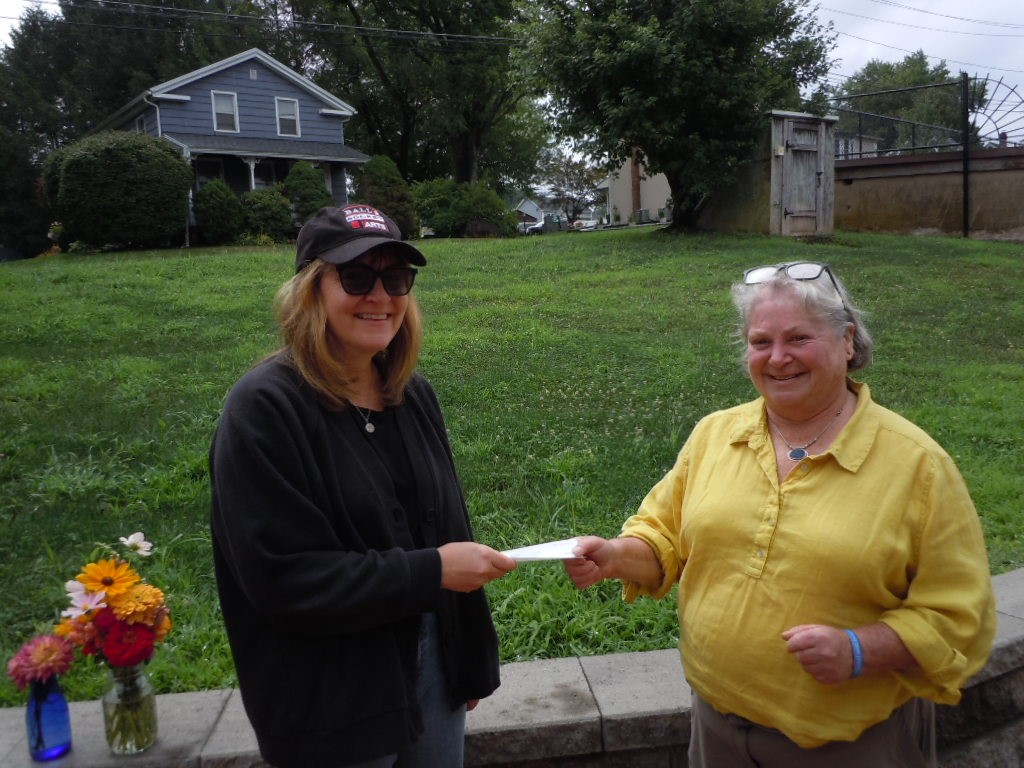
The Ball & Socket Arts received a grant to purchases plants for a new perennial garden on the site of the 19th and early 20th century factory that is being transformed into an arts center. The new public garden will create a space for people to gather on a site that showcases an artistic landscape rather than a lawn.
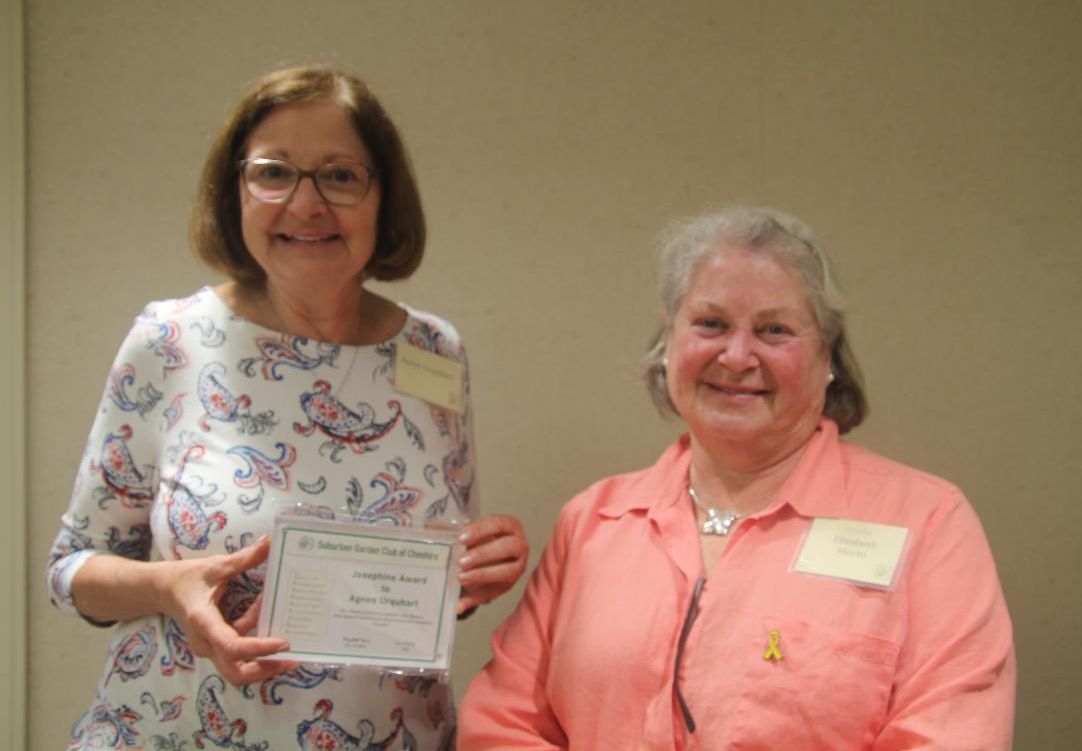
| | Left to right Ed Pasciutti (SGC), Lt. Ramos, Elizabeth Morin (SGC), Capt. Adela Rusi, Officer Ostuno, and Counselor Miano | Left to right Ed Pasciutti (SGC), Lt. Ramos, Elizabeth Morin (SGC), Capt. Adela Rusi, Officer Ostuno, and Counselor Miano | | Both projects fulfill the Suburban Garden Club’s goals to encourage interest in all phases of gardening, promote better environmental practices and conservation of natural resources, increase knowledge in the artistic use of plant material in design and landscaping, and assist in Cheshire community beautification and civic involvement through participation, contributions and charitable activities. | | Agnes Urquhart Receives Suburban Garden Club’s Josephine Award | | |
The Suburban Garden Club of Cheshire awarded its 2025 Josephine Award to Agnes Urquhart. This award was established in 2019 to recognize a member who displays positive qualities reminiscent of SGC co-founder Josephine Kowalski. The award recognizes a member who is an outstanding volunteer, contributor and who inspires others.
[At left, Agnes Urquhart (left) receiving award from SGC President Elizabeth Morin]
| | |
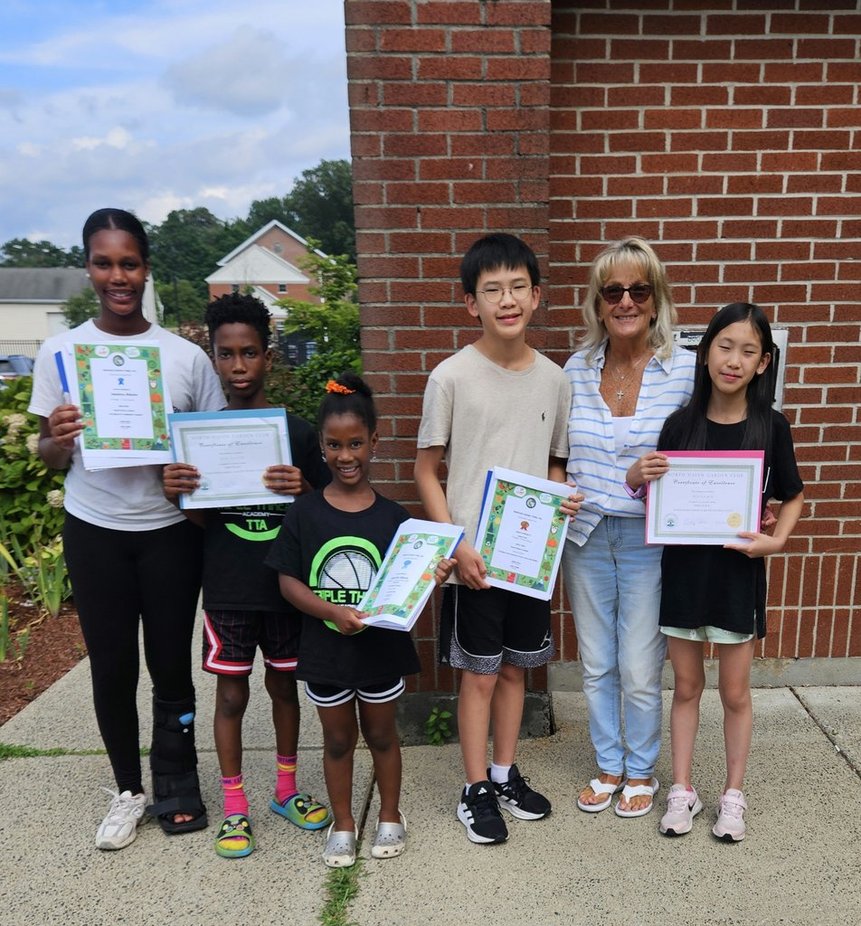
North Haven Garden Club Announces 2025 NGC Poetry Contest Winners
The North Haven Garden Club is pleased to announce the winning poems from the North Haven Garden Club Annual Poetry Contest, held in conjunction with the National Garden Club Poetry Contest for 2025 and with the theme "My Garden Has Vegetables to Spare that I Can Share - Helping Fight Hunger by Sharing Vegetables from Our Garden."
[L-R: Savanna Alleyne, Sean Alleyne, Samantha Alleyne, James Kim, Cindy Golia and Regina Kim]
Don't forget to check out The North Haven Garden Club on Facebook for lots of useful and entertaining information and pictures of all the club does. For membership information please email Italia at italia_a@comcast.net.
| | | | |
| |
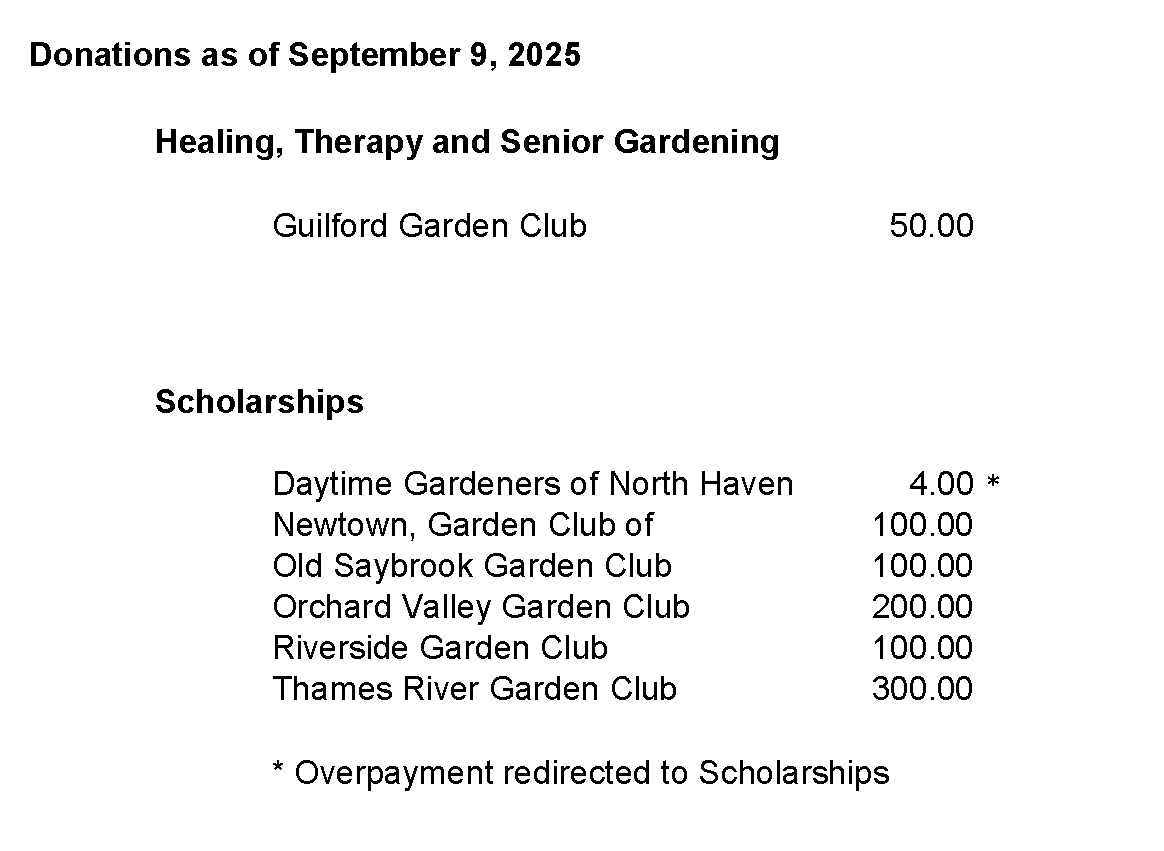
Donations to FGCCT's Scholarship Fund; Healing, Therapy and Senior Gardening Fund; and World Gardening Fund | |
We thank the following Garden Clubs for their recent donations to the FGCCT Scholarship Fund.* For almost 40 years, the Federation has awarded scholarships to college and university students who major in Agronomy, Botany, City Planning, Conservation, Environmental Studies, Floriculture, Forestry, Horticulture, Land Management, Landscape Design, Plant Pathology, or allied subjects. We welcome donations of any size. Our appeal is ongoing to give all of our clubs the opportunity to make a contribution in the amount of their choosing.
| |
Please send all Scholarship Fund donation checks to the appropriate chair (see below). Make checks out to "FGCCT" with the appropriate Fund listed on the memo line.
*Please note that due to the deadline for articles and information for the CFNews, some donations may not be received and deposited in time to be included in the bi-monthly donation acknowledgement, but will be included in the next issue of our newsletter.
PLEASE MAIL CHECKS TO:
| |
For World Gardening & Healing, Therapy and Senior Gardening:
The Federated Garden Clubs of CT, Inc.
Attention: Rosemary Bonaguide
PO Box 902
Wallingford, CT 06492
| |
For FGCCT Scholarship Fund:
The Federated Garden Clubs of CT, Inc.
Attention: Carole Fromer
PO Box 902
Wallingford, CT 06492
| | |
Follow us on Facebook and Instagram!
FGCCT is on Facebook and Instagram and we love to post your news and photos! Please send upcoming events, club activities, civic projects, milestones, and hort tips. Include photos and a brief writeup of the news your club would like to share. The best format is text in an email with jpg photos attached. Take active photos showing members at work or showcasing beautiful gardens, flowers, and plants (please name the flower if it is a hort only photo). Let’s follow each other! Send submissions to social@ctgardenclubs.org
| |
|
Just a reminder …
Please send all correspondence to the new FGCCT office:
The Federated Garden Clubs of CT, Inc.
P.O. Box 902
Wallingford, CT 06492
Did you recently elect new officers? Email their names and contact information to us at office@ctgardenclubs.org so they will receive Federation correspondence. If you need assistance, please contact FGCCT Office Administrator Joan Lenart at office@ctgardenclubs.org or by phone at 203-488-5528 on Mondays and Wednesdays, from 10 am to 2 pm.
| | | Deadline to submit articles/photos, ads and calendar events for the December / January 2026 issue of the CFNews is Noember 10, 2025. Please submit to: | | |
Reminder: NGC's The National Gardener is ONLINE and free!
The official publication of the National Garden Clubs, The National Gardener, appears quarterly, and features articles of interest to environmentalists, gardeners, landscapers, floral designers, educators and photographers. Subscribe here.
| | |
| |
State, Regional &
National Events
| | | | | |