| |
| |
| |
| |
|
Greetings, Fall Gardeners!
This is my favorite season — and one of the very best times to plant! Cooler temperatures and the welcome rainfall we’ve received create ideal conditions for trees, shrubs, perennials, and native plants to establish strong root systems. Fall is also a busy and exciting time for our Garden Clubs, with members gathering for meetings, garden tours, fundraisers, and special celebrations. These activities offer wonderful opportunities to learn, share ideas, enjoy friendships, and honor the many ways we work together to create healthier, more beautiful, and resilient gardens for the future.
So, I hope your Club is planning a BEE RESILIENT ~ Garden for Nature! President’s Project Garden. Advance funding for your plants and soil (up to $500 per project) is currently available from The Federation. Check out all the project grant details HERE.
We had a wonderful Club Officers’ Day Zoom workshop on September 9th – over 100 attended representing 59 of our clubs. Many thanks to the Federation Board Members who presented valuable information on a variety of topics. A PDF of the workshop PowerPoint is available HERE.
The New England Garden Clubs 10th Annual Meeting will be held October 13–14 at the Killington Grand Hotel Resort, Killington, VT. The NEGC Business Meeting will be held via Zoom on Friday, October 9 at 10 am. All Garden Club members are invited to attend this meeting and learn more about the wonderful activities taking place throughout our neighboring New England states. Hotel and registration for both meetings HERE.
I’m looking forward to the 97th Annual Awards Meeting and Luncheon on October 21 at the Aqua Turf Club in Plantsville, CT. Over 180 awards will be presented to our clubs and to individual members. We are also looking for volunteer designers to create festive “Pumpkin Centerpieces” for the tables. Sign-up online when you register HERE.
A Regional Roundtable, hosted by the Wallingford Garden Club, is scheduled for Wednesday, October 7, from 9:30 am – 12:30 pm. Moderated by FGCCT Board Members, these popular in-person gatherings bring together Club Officers and Committee Chairs from neighboring towns to exchange ideas, share experiences and explore topics of mutual interest. Register HERE.
Mark your calendars for the next Federation Fridays: “Club Bylaws” Zoom workshop on November 13 at 10 am. Hosted by our Board Parliamentarian, Jean Stetz-Puchalski, this workshop will provide insight on the value of well-written Bylaws. Registration will open on October 15.
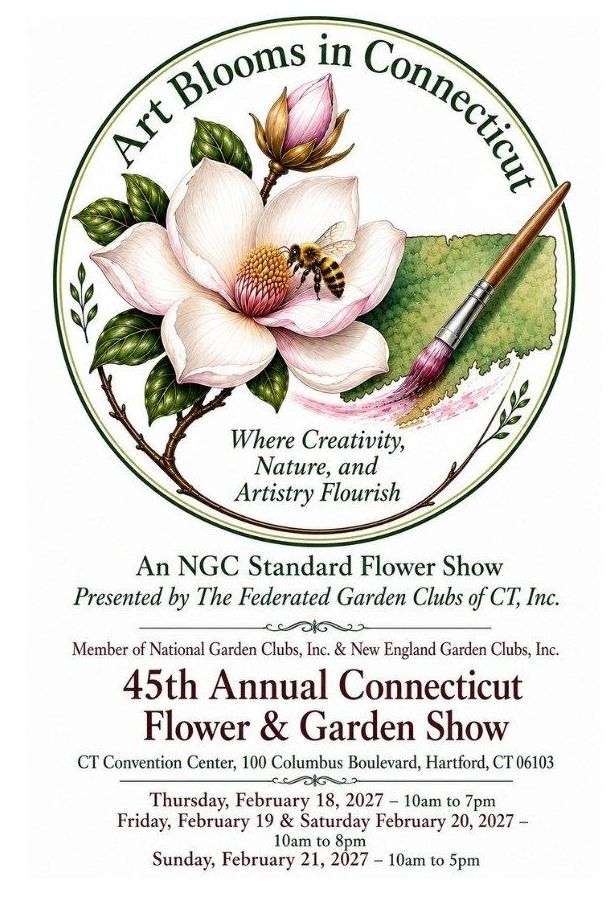
Excitement is growing for the 2027 CT Flower Show, “Art Blooms in Connecticut ~ Where Creativity, Nature, and Artistry Flourish”on Feb. 18–21, 2027, at the CT Convention Center in Hartford. The Flower Show Schedule is amazing and is now posted on our website HERE.
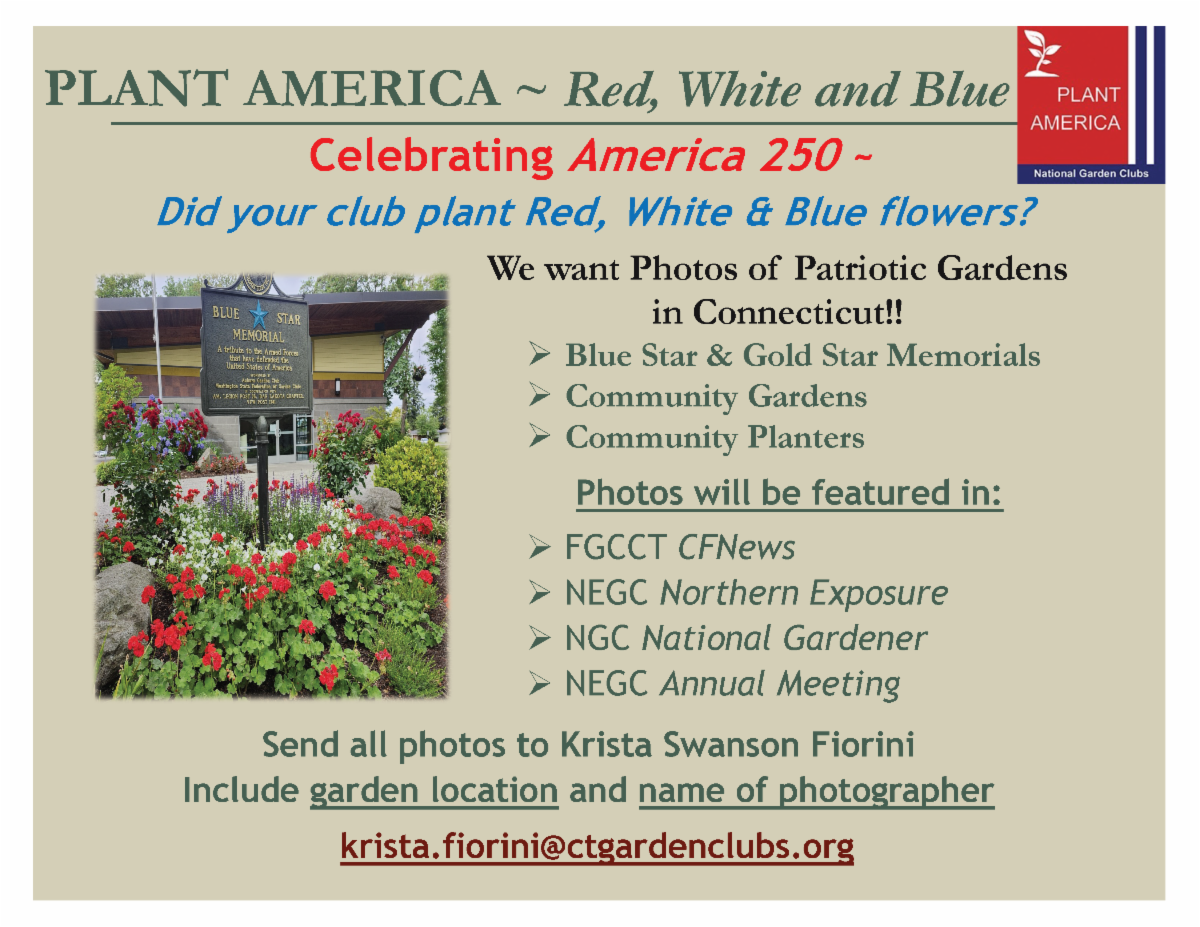
There is a new National Garden Club PLANT AMERICA Community Project Grants program for projects completed in 2027. Grant Applications are due by October 15, 2026, HERE.
Thank you for all you do in your communities and for inviting me to your club events. I truly enjoy meeting your members, learning more about your clubs, and seeing the amazing projects you accomplish together.
| | | | Let’s go out and BEE RESILIENT and Garden for Nature, and maybe we’ll help save the planet, one garden at a time! | |
Bee Resilient: Garden for Nature
By Wayne Gura and Anne Djupedal Gura, co-chairs, FGCCT President’s Project
We’re happy to report that another six clubs have been awarded funding for their natives-based garden projects since the last issue of CFNews! Congratulations to the following clubs on their inspiring BEE RESILIENT projects:
-
Lyme Garden Club, to install approx 400 sq ft of new native habitat of herbaceous perennials and grasses in place of turf at the Lyme Firehouse as a model for sustainable, ecological landscaping practices.
-
Long Hill Garden Club, for a 14’x21’ oval, mostly-sun native pollinator garden to be located at a community street corner of Trumbull’s Emergency Medical Services Headquarters.
-
Thames River Garden Club, for a foundation pollinator garden to be installed on either side of the porch entrance to the Jordan Park House.
-
East Hartford Garden Club, to plant a native-species pollinator garden in the Emma and Nicholas DePietro Park that will continue expansion to numerous pathways there.
-
Ledyard Garden Club, to create a memorial 12’ x 12’ pollinator garden at the historic Nathan Lester House and Tool Museum in Gales Ferry.
-
Belltown Garden Club of East Hampton, for a 15’ x 6’ native plant pollinator garden with a layered mix of plantings at the Airline Trailhead on Depot Hill in East Hampton.
We continue to welcome applicants! Once you’ve applied online, you’ll get an email back within a day or so that we’ve gotten your application – an automated one, plus one from either of us (Wayne or Anne.) If you don’t see any, check your spam folders. AND for speedier evaluation, please include with your application:
- A drawing of your garden layout, and a photo of the area where it will be.
- An itemized list of the plants and soil amendments you plan to buy. This list should be comprised of no less than 70% locally/regionally-native plants. For each species, please include: how many plants; common name; taxonomic Latin binomial; cost per plant and sub-total cost for that species. The example below illustrates how to list the purchase of three (3) asters at $20 per plant plus mulch:
| |
Enjoy the fall planting season – we look forward to hearing from you!
Attention, all BEE RESILIENT grantees – the President’s Project will be at the February FGCCT Flower Show!
The BEE RESILIENT Education exhibit will showcase the inspiring natives-based plantings of all types that our state’s wonderful garden clubs will have undertaken between April 16, 2025 and Nov 30, 2026. To be featured, we ask that you email us with a brief description of your club’s project plus your favorite two (or three) photos of it. Depending on where you are in the project, it might be the planted garden in bloom; a closeup of a pollinator in the garden; a pic of members working on it; or if you are scheduling your planting for next spring, a shot of your chosen site or planned garden layout. Deadline for your pics/desc is December 1, 2026, in order to ensure your club’s work is showcased in the Exhibit as an inspiration to attendees from all over New England. We’re proud of your great works and hope to meet you there.
On a more personal note, the Wilton Garden Club held a small public celebration on September 22 to dedicate our BEE RESILIENT native-species garden to the “native pollinators, the birds, and the other wildlife that surround us.”
We were especially happy to share with the community that we have added several more native plants to the garden. With these additions, the garden is now approximately 97% native—well above the 70% native-plant goal established for the BEE RESILIENT project.
It was wonderful to see the garden officially dedicated and to celebrate what we hope will be a small but meaningful contribution to the native habitat and wildlife of our community.
| | | | |
Upcoming Events — Mark Your Calendars! | | | | |
|
Save the Date!
97th Annual Awards Meeting and Luncheon
Wednesday, October 21, 2026
Aqua Turf Club - 556 Mulberry St. Plantsville, CT 06479
Celebrate the end of another wonderful gardening season with friends from across the state! The FGCCT Awards Luncheon is the perfect opportunity to connect and be inspired by outstanding club and individual accomplishments.
Schedule:
- 9:00 a.m. – Doors open for coffee, early holiday shopping with vendors, and purchasing your tickets to enter our popular raffle
- 10:00 a.m. – Program begins
This year’s luncheon will feature a delicious seasonal three-course meal including Butternut Squash Bisque, your choice of entrée and Cookie/Brownie selection:
Cost: $49 per person (subsidized by FGCCT)
Click here to register!
The online reservation portal will close October 14th.
Returning this year..... Pumpkins on Parade! Make and donate a pumpkin floral design to adorn the tables at the luncheon. All designs will be raffled with proceeds going to FGCCT Scholarships. Check the box off during your registration process & information will be emailed to you about creating your design.
Mark your calendars for a day of celebration, shopping, inspiration, and fun! The fall luncheon typically sells out—please reserve early!
| | | | |
A REGIONAL ROUNDTABLE IS COMING TO WALLINGFORD
October 7
9:30 am – 12:30 pm
First Congregational Church, 23 South Main Street, Wallingford, CT
Click here to REGISTER
Club Officers and Committee Chairs: Have you ever wanted to speak to your counterparts in nearby Clubs? You’re in luck! FGCCT Board Members will moderate your exchange of information and ideas on topics, including:
Membership • Fundraising • Finances & Insurance
Programs & Events• Social Media & Promotion • FGCCT Resources & Awards
Comments from attendees of previous Regional Roundtables:
“This was great! Really liked connecting with other local Clubs.”
“Thank you! So many good ideas! I learned a lot!”
“Sharing membership challenges was helpful.”
| | |
2026 NEW ENGLAND GARDEN CLUBS
10th ANNUAL FALL MEETING
"Vermont's Green Mountains: Fostering The Birth of Our Republic"
OCTOBER 13-14, 2026
KILLINGTON VERMONT GRAND HOTEL RESORT
228 E. Mountain Road, Killington, Vermont 05751
Business Meeting: Friday, October 9th, 10 am, via Zoom
All club members are invited
FIND OUT MORE & REGISTER HERE
| |
| |
Mark your calendars for the next Federation Fridays!
“Club Bylaws Workshop”
November 13
10:00 am (Zoom)
Hosted by FGCCT Parliamentarian, Jean Stetz-Puchalski, and several members of the Federation board, this workshop will provide insight on the value of well-written Bylaws, the anatomy of Bylaws, and how to approach amending them (both small changes and full revisions).
These 1.5 hr. Zoom Workshops, hosted by FGCCT Board members, provide a “Deep Dive” on important topics such as: Membership, Club Finances, Fundraising, Events, Flower Shows, Parliamentary Procedures, Awards, Social Media, Youth, FGCCT Resources, and more.
Registration will open on October 15.
| | News from FGCCT, NEGC & NGC | | |
Words of Horticultural Encouragement
Connecticut Flower Show, February 2027
I know that Hartford in February is, well, shall we say, less than delightful. And yes, it is a bit of work to bundle yourself and your plant up and schlep to the Convention Center. But we are asking you to give it a try.
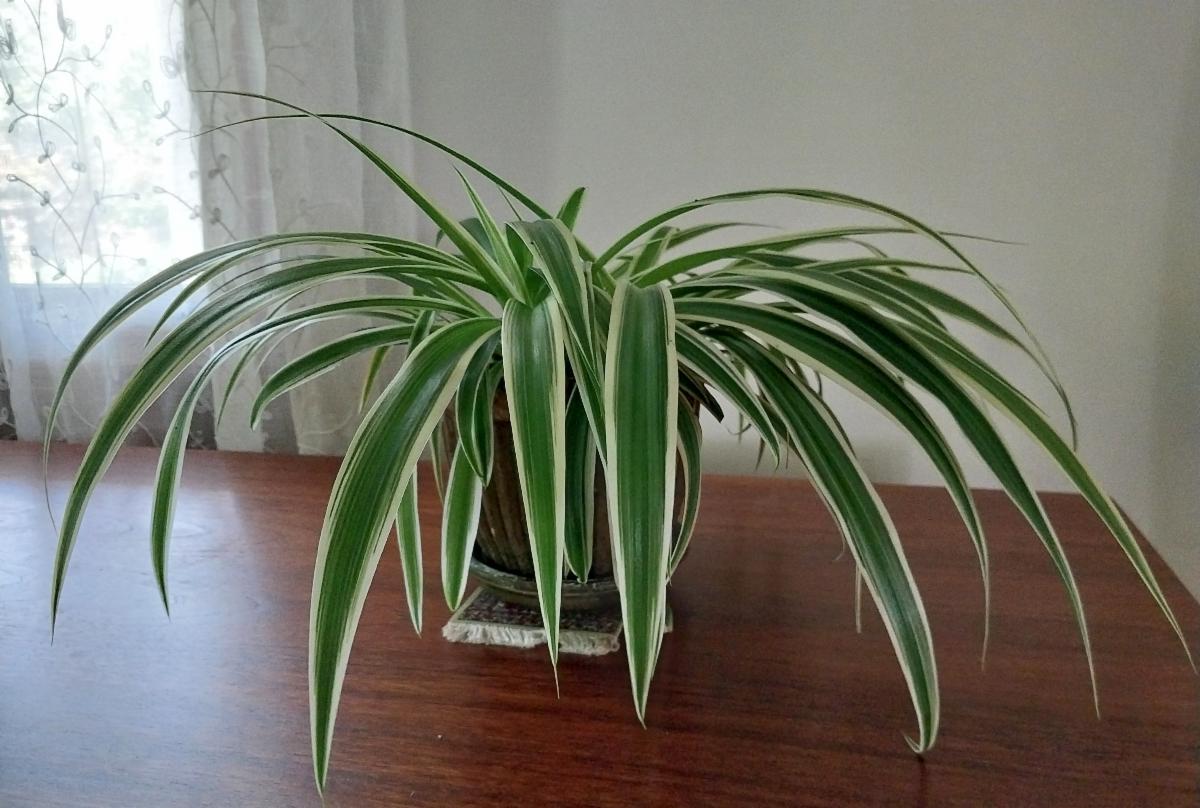
Many members think an entry must be a botanical star, but nope—bring whatever healthy, happy plant you have, whatever it may be. Here are some plants that many of us share our quarters with: pothos (see my article from last year here), ferns, snake plant, monstera, spider plant, ZZ plant, rubber plant, fiddle-leaf fig, peace lily, aloe vera, and heartleaf philodendron. Or how about jade plant, haworthia, echeveria, hens-and-chicks, burro’s tail, string of pearls, hoya, or Christmas cactus? Secretly, your plants long to be admired and perhaps win a ribbon—why deny them?
We have made the process as painless as possible. Yes, botanical naming can be daunting, but to help you, we have created a cross-reference guide and listed possible plants for each class. Click here for the guide. How easy is that? And if you are still uncertain, you can always send a photo and ask for help.
Now, for those of you who have no houseplants but a wealth of evergreens and perennials, grab your clippers and head outdoors. A cut sample is all you need. The reference guide also lists past entries in those classes.
Why not get a group of your fellow club members to enter and have one person—the one who draws the short straw—bring the plants in? My spider plant, Chlorophytum comosum, has spent the summer outside, bulking up and getting ready for the competition in Class 29. If you think you have something better, well, bring it on! See you at the show!
— Renee Marsh, Horticulture Classification Chair
| |
Restricted vs. Unrestricted Funds
Restricted funds are donations designated for a specific purpose and should be used only for that purpose.
Unrestricted funds may be used where they are most needed to support the organization's mission.
For example: If a donor gives $1,000 specifically for a scholarship, those funds are restricted and should be tracked separately from general funds. If a member donates $1,000 for the organization to use where needed, those funds are unrestricted.
In QuickBooks Online (QBO): A simple way to track restricted funds is to create a separate income account for each restricted purpose. Clear records help ensure donor restrictions are honored.
Good stewardship means knowing not just how much money we have, but how that money is intended to be used.
| |  |
Understanding Nonprofit Insurance and Financial Protection
Insurance is an important part of protecting your garden club and its volunteers. General Liability Insurance can help protect your club if someone is injured or property is damaged during a club activity, such as a garden tour, meeting, or fundraiser.
Directors & Officers (D&O) Insurance can help protect board members and the organization from certain claims related to decisions made while serving the club. Cyber Liability Insurance is another type of coverage available to nonprofits and may be worth discussing with your insurance professional, depending on your club’s activities and how it handles member and financial information.
How do you know what your club needs? Review your activities, assets, and potential risks with an insurance professional. Ask about coverage limits, exclusions, and any gaps in your current policies. Every club is different, so there is no one-size-fits-all solution.
Have an insurance referral to share or need a referral? Contact us
| | | | |
Gardening Consultants Council & Gardening School
Arthur Bogen of the Essex Garden Club has transformed his property into an enchanting retreat and well deserves to be named the 2026 winner of the Lovely Garden Award. Congratulations, Arthur!
Arthur has directed his award of $200 to the Common Good Garden in Old Saybrook. He and his wife Cathy will receive a Certificate of Recognition at the FGCCT Awards Luncheon on Oct. 21.
The Gardening Consultant Council’s Lovely Garden Award Committee visited some beautiful gardens this summer, and we thank all who entered their own or another member’s garden.
Thanks to all who attended Gardening School as a student, consultant, or auditor on Sept, 21-22. I hope that you were enlightened and inspired by our knowledgeable instructors. And you can put some of the information you learned in the “Houseplants” or “Succulents” classes to good use. Get out to purchase your houseplants for entry in the February 2027 CT Flower Show!*
*Houseplants must be in the possession of the exhibitor for 90 days, since Nov. 18, 2026. Arboreal branches must be grown by the exhibitor for 6 months, since Aug. 18, 2026.
— Cheryl Cappiali, Chair
| | | | |
|
Get on the Interest List!
Already thinking of 2027?
- April 30-May 8, 2027 – Portugal
- May 11-21, 2027 – Chelsea Flower Show and the Cotswolds
- June 16-30 – Denmark, Sweden, Norway
- September 1-12, 2027 – Italy – the Piedmont and Lake Country
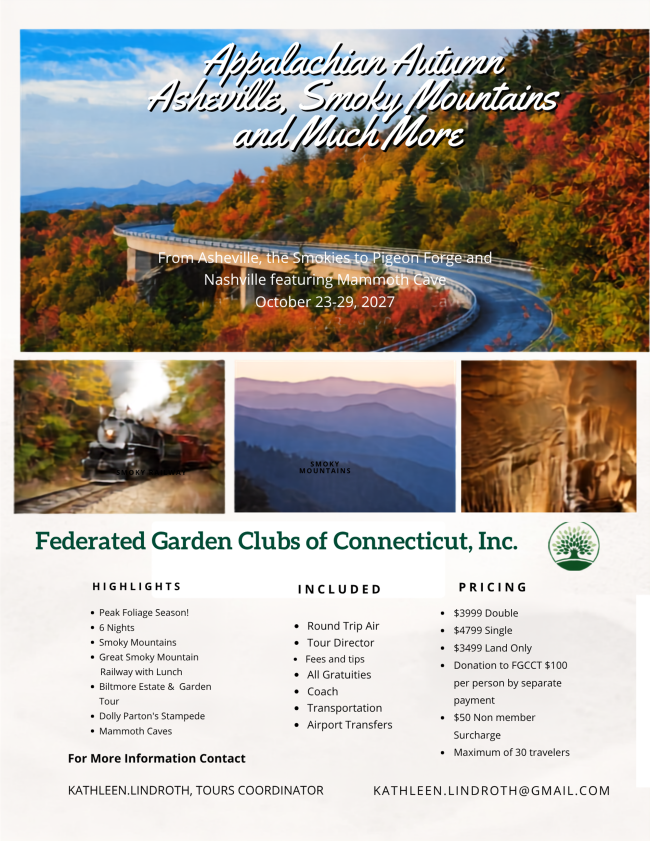
- October 23-29, 2027 – Appalachian Autumn
- November 2027 – Egypt and Jordan
- Dec 28-Jan 3 — California in Bloom: The Rose Bowl Parade & Garden Tour
2028 Tours in Planning
- January – Thailand and Laos
- April – Tulip river cruise
- California National Parks including Yosemite
- South Africa
-
And much more!
Let us know what you like — express your interest by emailing me!
— Kathy Lindroth, FGCCT Tours Coordinator 860.836.3407 or kathleen.lindroth@gmail.com
| | |
Help Gardeners Find You!!
The FIND A CLUB feature on the new National Garden Club website may not have your Club listed. So, when someone is interested in joining a garden club and inputs their hometown, the website might unfortunately indicate that there is no garden club in that town.
Here’s what you need to do: Each Club should individually “Request to Add a Club” (through the app: https://gardenclub.org/node/add/club) to be listed – it’s a short form. It is not possible to send a master list of all the Connecticut Clubs. Clubs will be notified when they have been added to the National Garden Clubs map with their correct location and contact information.
| | | | |
| |
|
Fuzzy, Wuzzy
By Renee Marsh, FGCCT Horticulture Chair
| | |
I am a sucker for fuzzy, silver plants, even when they behave badly. I never really thought about it until I took a stroll around the garden to see what had survived the crazy weather. Fuzzy. Silver.
They are something of a standard in the garden, but some appear on the internet’s “bad plant” lists. Those lists annoy me to no end. I think of them as “bad gardener” lists. Granted, some things are inherited—like my hay-scented fern—but fess up: How many of those plants were your own mistakes? I’m not judging or anything, but let’s not blame the plant. It’s just doing its little plant thing.
Anyway, on to my silver-plant fetish. Silver foliage and small, velvety leaves are adaptations to harsh conditions, so these plants do well in my rocky, shallow soil. Given the hot, droughty weather we now enjoy, I appreciate that skill. I also tolerate the imperialistic expansion of some plants when it serves my needs, as well as the reseeding, if a plant decides it wants to go somewhere else.
| | |
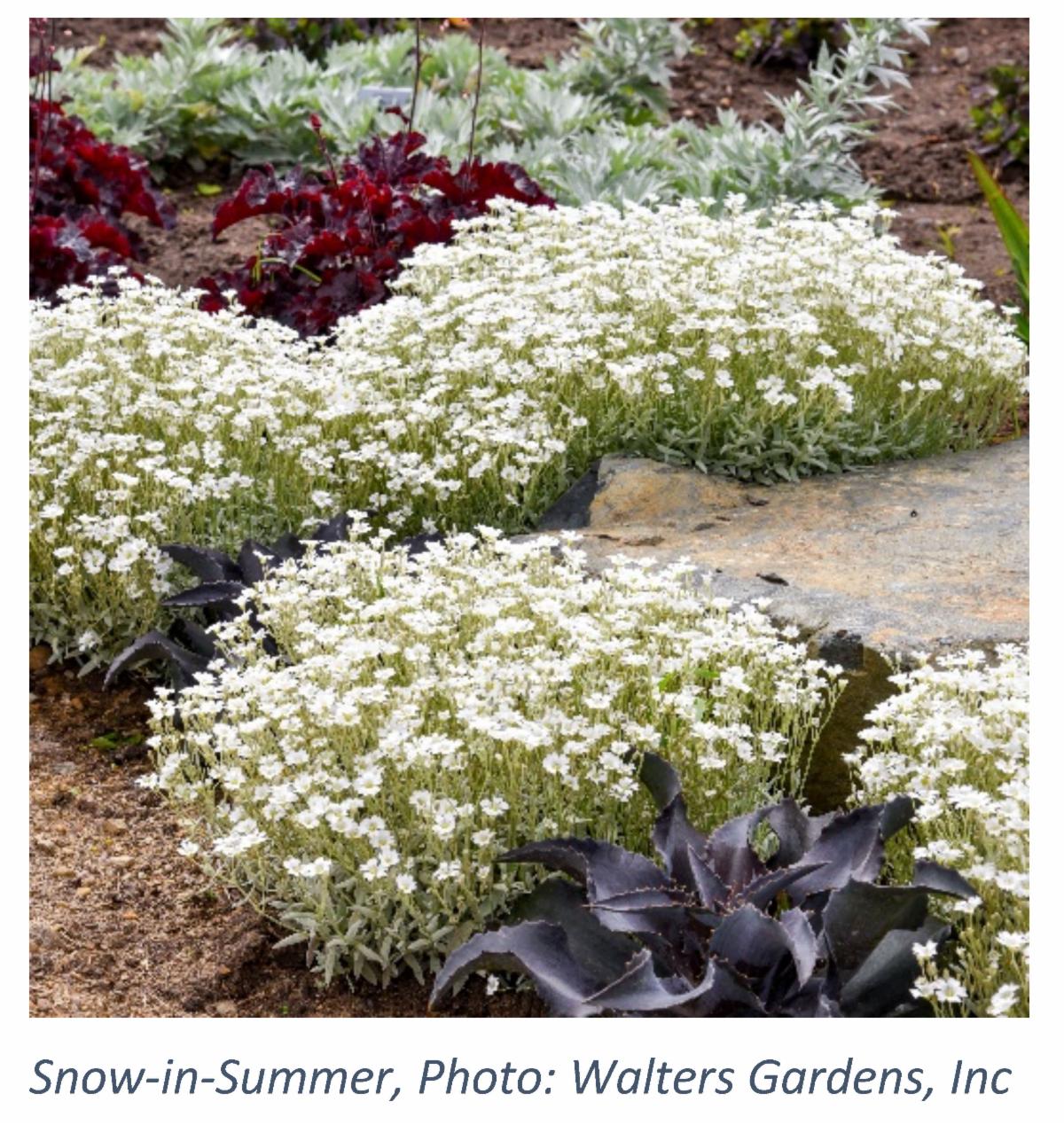
In spring, there is nothing I love more than the small white blooms of snow-in-summer, Cerastium tomentosum. It is a little spreader, to be sure. Once it finishes blooming, its silvery foliage winds its way around everything but not in a grabby, clingy way. It makes a great ground cover for hot, dry spots, especially where other plants might wither.
Going in the other direction—up—I always give space to common or woolly mullein, Verbascum thapsus. Yes, some folks say it’s a weed, but whatever. I tolerate mullein because it is a biennial. In its first year, it produces a large basal rosette of soft, gray-green leaves. The following year, it shoots upward like a rocket, sending up a flower stalk that can reach four to eight feet, with yellow flowers arranged along the top. It can get a little ratty-looking afterwards, but just chop it down, especially if you want to reduce reseeding.
| | |
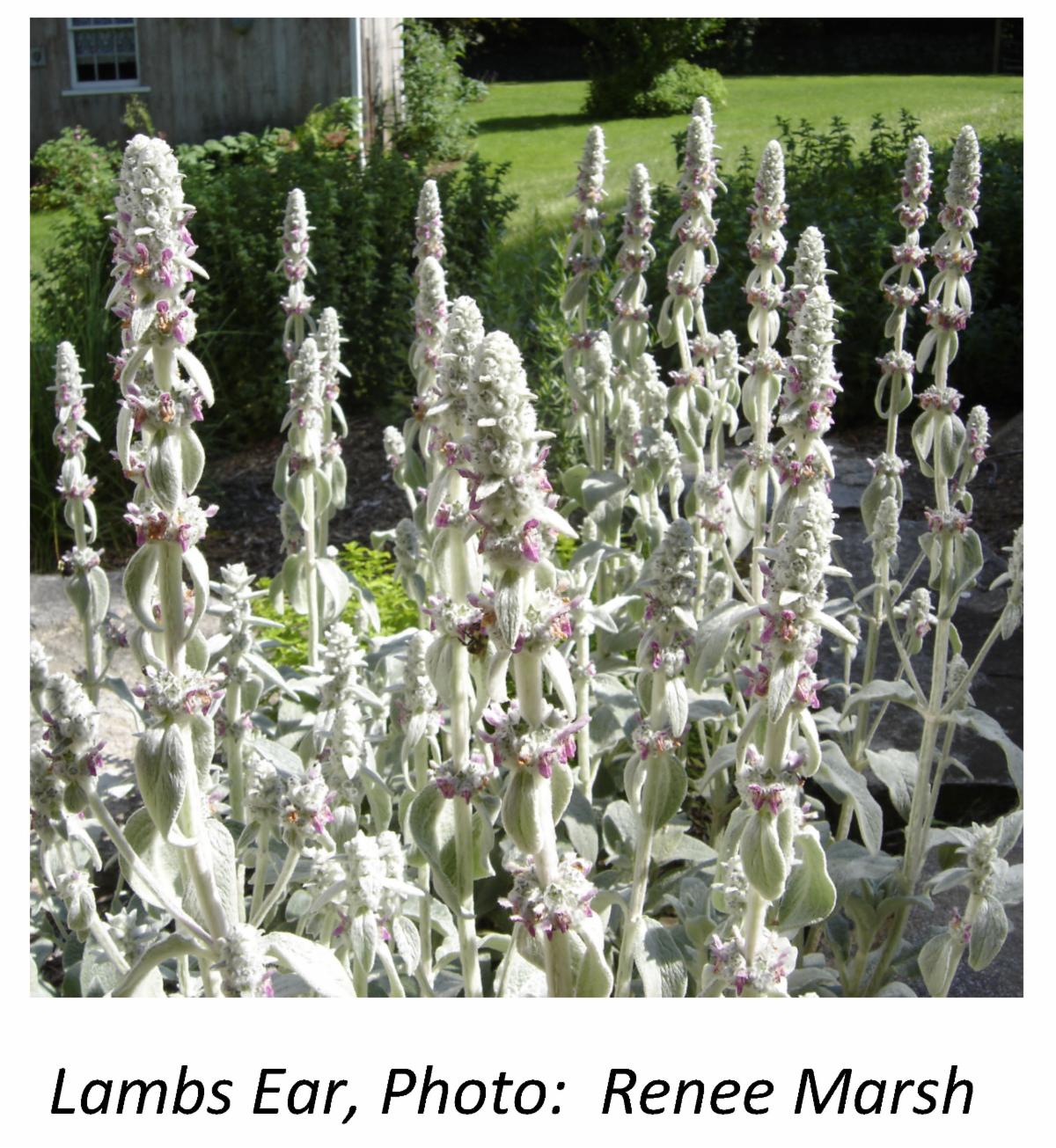
Of course, there is Lamb’s Ear, Stachys byzantina, a classic fuzzy silver garden plant. Its thick, soft leaves, covered in dense white hairs, just invite touching. The foliage is the main attraction, but I really like the straight species, which sends up tall stalks of purple blossoms that the bees love, too. There are other noteworthy cultivars: ‘Silver Carpet’, which is more low-growing, with smaller leaves, and ‘Helen von Stein’, which has the largest leaves but, alas, no flower stalks.
| | |
Then there is the Artemisia genus, known as the wormwoods. Artemisia absinthium arrived in the Americas with European settlers, who valued it as a medicinal herb. The English name “wormwood” comes from Old English, and the “worm” may refer to intestinal worms, since the plant was historically used in preparations intended to expel parasites. Later, it became the defining botanical ingredient in absinthe, the highly alcoholic drink developed in Europe during the eighteenth and nineteenth centuries, which was highly intoxicating as well as potentially toxic because of the phytochemical thujone.
| | |
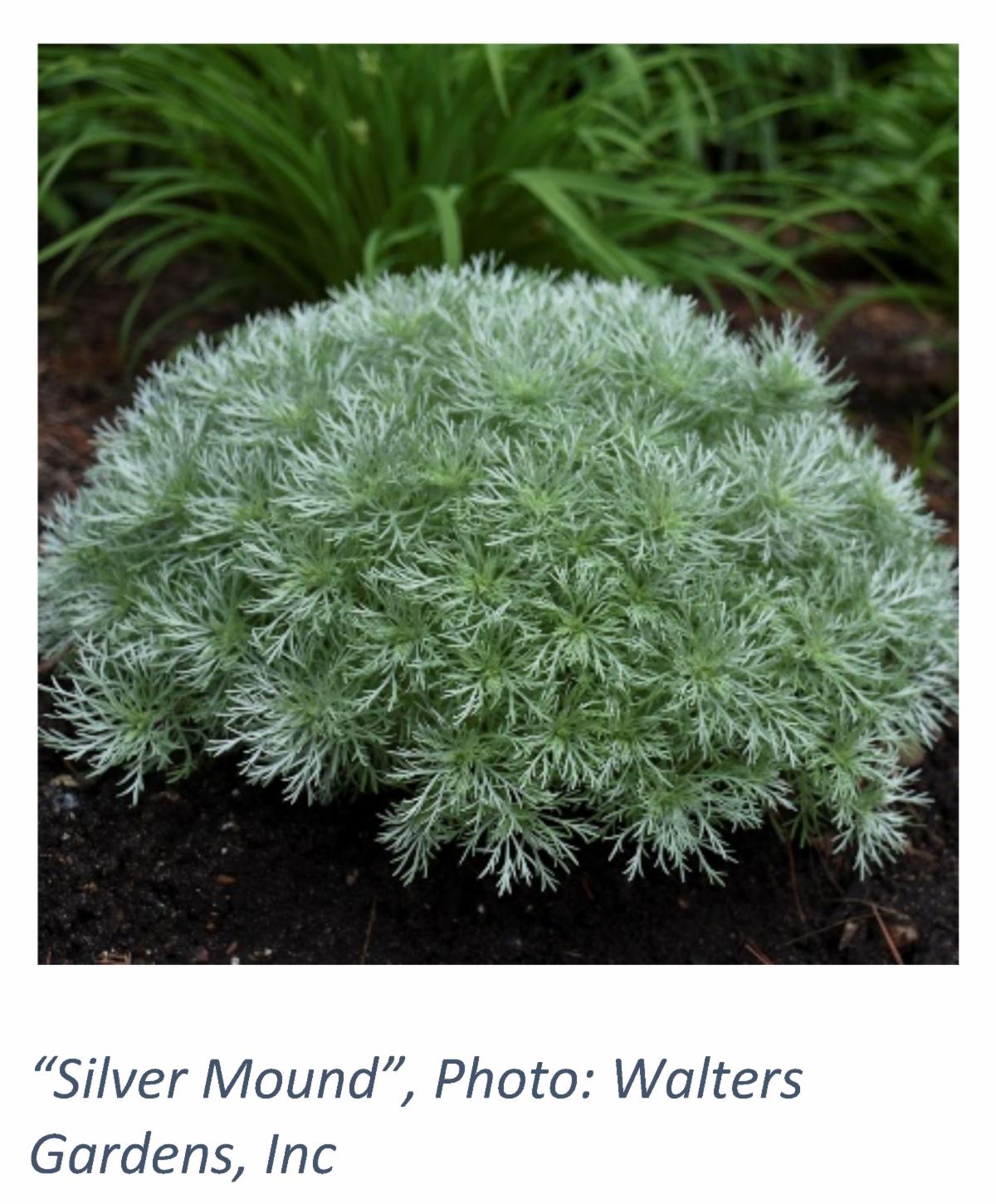
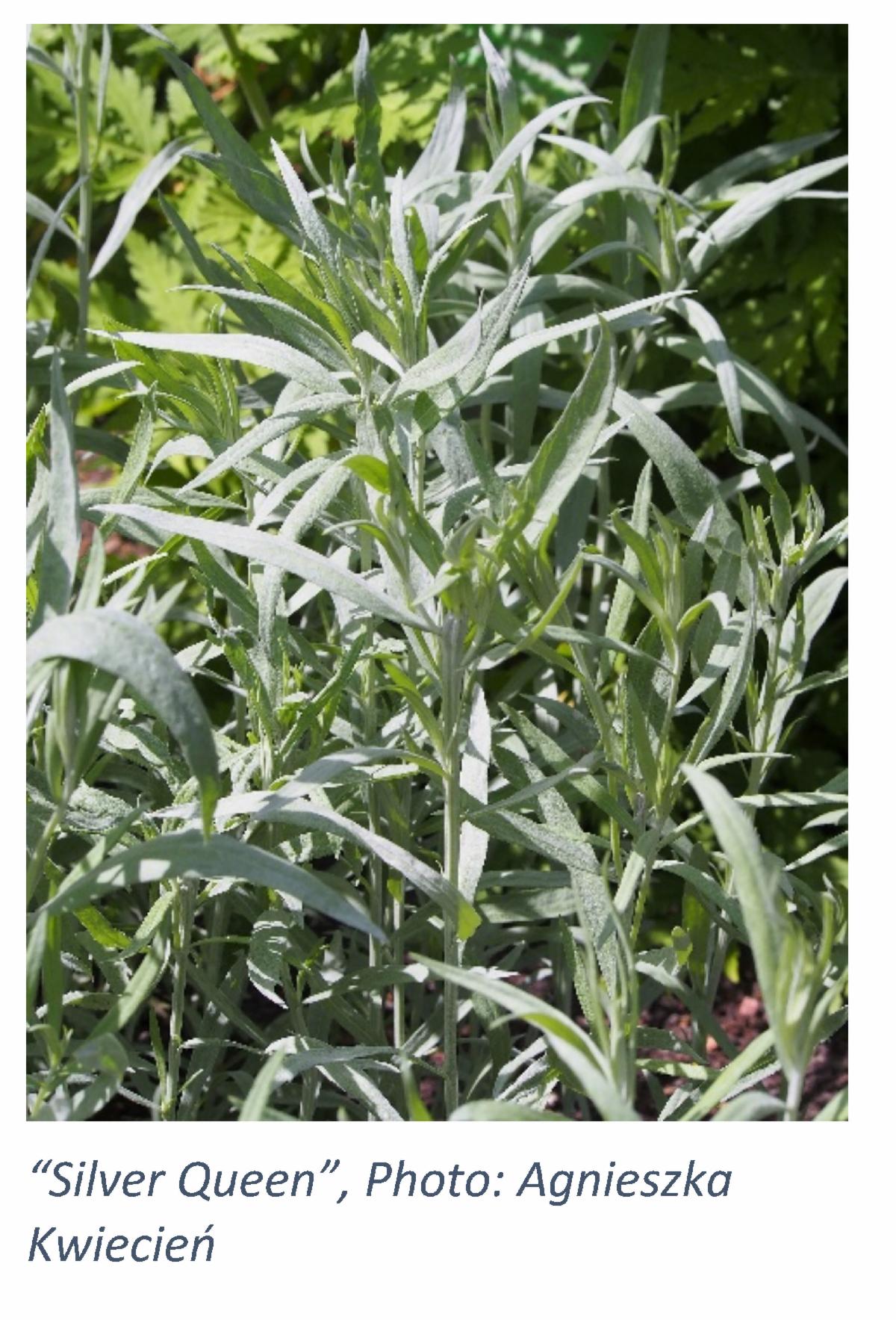
Other species and cultivars of silver artemisia have had their moment in the sun—pun intended. There is silver mound, Artemisia schmidtiana ‘Silver Mound’, a compact, rounded mound of finely divided silver foliage, with a short stature of a foot that’s excellent for edging and rock gardens. Artemisia ‘Powis Castle’, has soft, deeply cut, silvery foliage growing about two to three feet tall and wide; it’s one of the best artemisias for creating a strong silver effect. Artemisia stelleriana ‘Silver Brocade’ looks much like the annual dusty miller, with broad, rounded, fuzzy silver leaves, and grows about eight to twelve inches tall. Finally, there is ‘Artemisia absinthium ‘Silver Queen’, a more upright, silvery selection of common wormwood that generally grows two to three feet tall. I have been pulling that puppy out of my beds for fifteen years. Oh, and let’s not forget the ugly, green relative, mugwort, Artemisia vulgaris … enough said there.
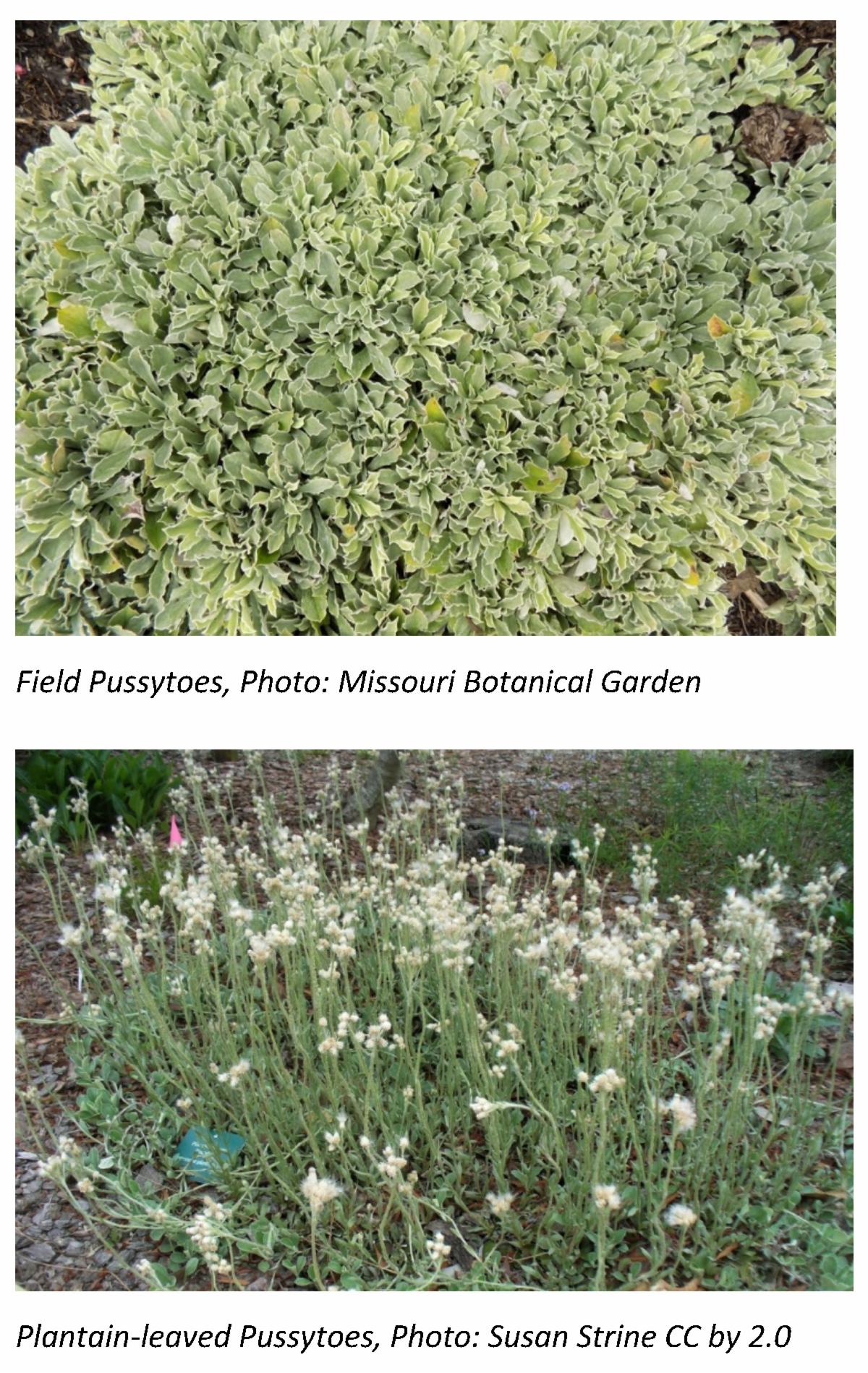
| | But enough about the aliens, on the native front there are pussytoes and mountain mint. The common name pussytoes comes from the fuzzy, white flower heads that resemble the paws or toes of a kitten - some imagination is required. There are two species of note - both are low-growing, herbaceous perennial ground covers that form a nice mat of silver-gray, woolly foliage. Plantain-leaved Pussytoes, Antennaria plantaginifolia, has basal rosettes of spatula-shaped leaves that resemble plantain leaves and are densely white and woolly on the undersides. Field Pussytoes, Antennaria neglecta, is generally shorter and its basal leaves tend to become green and smooth with age. The flowers are borne at the tops of short, woolly stems that reach six to fifteen inches above the velvety leaves in mid-spring. The whole effect is irresistible. | | | |
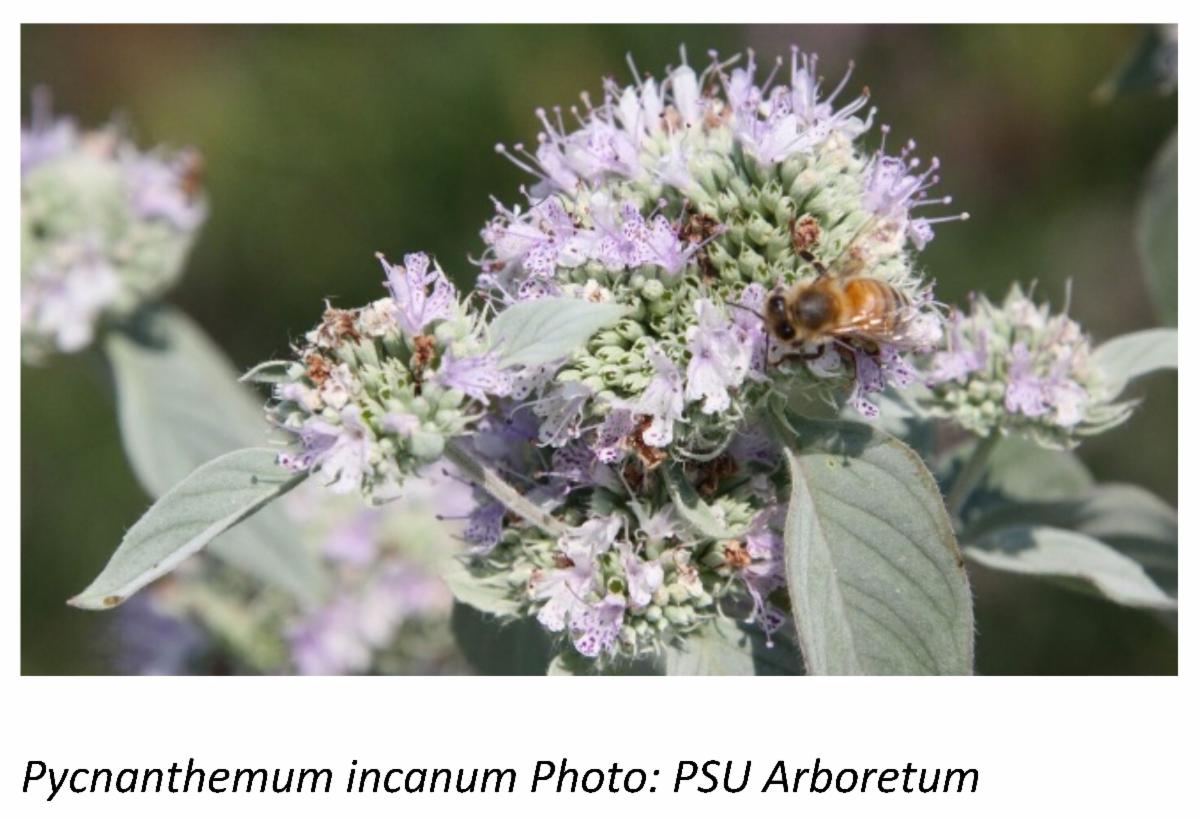
Hoary mountain-mint, Pycnanthemum incanum, is a unique-looking perennial prized for its aromatic foliage and its ability to attract an impressive number of pollinators Its distinctive silver color comes from a dense covering of tiny, fine hairs, which give the leaves and stems a grayish-white, frosted look. Add in the silvery-white bracts that surround the small clusters of flowers and you have a plant that really shines. It blooms in summer with tiny white flowers marked by purple spots. It spreads primarily through an aggressive system of underground rhizomes, forming dense colonies over time. In terms of size, the plant typically grows to a height of two to four feet.
| | All of these plants are not only handsome but built, evolutionarily, for exactly the conditions I keep handing them — thin soil, blasting sun, weeks without rain — and they take it in stride. So, I’ll keep planting my fuzzy, silver, occasionally ill-behaved favorites, and I’ll leave the "bad plant" lists for gardeners who haven’t yet made peace with plants that are just being plants. | | | | |
SPOTLIGHT on our FGCCT Affiliates! | | | | |
|
The Connecticut Chapter of the American Rhododendron Society
| | |
Please extend a warm welcome to our newest Affiliate:
The Connecticut Chapter of the American Rhododendron Society
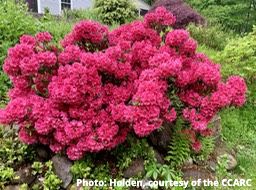
As part of The American Rhododendron Society (ARS), the CT Chapter is a non-profit organization whose purpose is to encourage interest in and to disseminate information about the genus Rhododendron. Members' experience ranges from novice to expert. Society activities include public education, flower shows, seed exchanges, scientific studies, and communication through publications and local and national meetings. ARS chapters are located throughout the United States and Canada and in Denmark, Holland, Scotland, Sweden and the Indian state of Sikkim. The CT Society’s mission is to encourage interest in and to disseminate knowledge about rhododendrons, azaleas and companion plants in our climate zones (zones 4 through 7).
The group meets once per month from September through May or June, at 7:30 PM except where noted on their schedule. Their usual meeting location is at the Connecticut Agricultural Experiment Station, located at 153 Cook Hill Road in Windsor, CT.
Please visit their website for more information and follow them on Facebook!
| | | | |
|
"Club Corner" is a place for clubs to showcase exceptional or notable club achievements and activities. Has your club done something unique (or uniquely successful) that you'd like to share? (Note: this area is NOT for upcoming events—post those on the Calendar.)
To submit: send high-resolution photos, along with a writeup (200 words or less, please) and photo captions, to martha.sherman@ctgardenclubs.org to be considered for inclusion. Please ensure that you have appropriate permissions for all photos. We reserve the right to edit copy and select photos for inclusion.
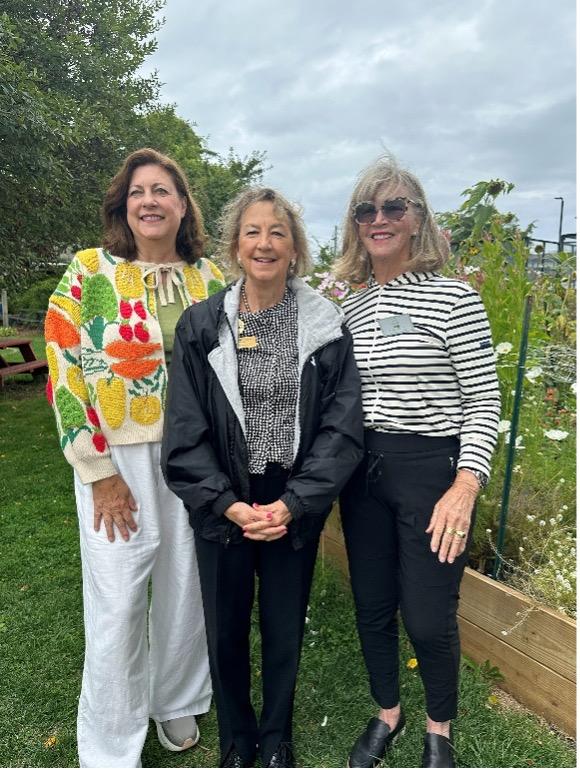
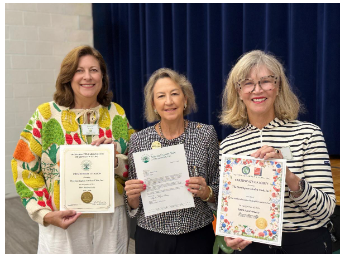
| | Congratulations to our 2026 100th Anniversary Clubs! | | 2026 was another busy year for clubs celebrating 100 years. President Nan Merolla visited three of the clubs this year to present NGC and FGCCT citation certificates. Here are some highlights: | |
Manchester Garden Club
Formed October 1926
Federated November 1941
Mission: To stimulate interest in horticulture; to encourage the art of displaying things grown; to promote civic improvement and to aid in the protection and beautification of nature.
Video: (2) Facebook
Highlights of first 90 years: https://manchestergardenclubs.org/pdfs/history_90_years.pdf
| | Centennial Celebration: Centennial Tea Party April 18, 2026, at the History Center | | |
Stonington Garden Club
Formed July 1926
Federated 1929
Mission: To educate and encourage interest in the environment, conservation, civic beautification and to stimulate the knowledge and love of gardening.
Highlights: Publication of Nature’s Bounty Cookbook, a collection of recipes from members that promote sustainable cooking and food preparation.
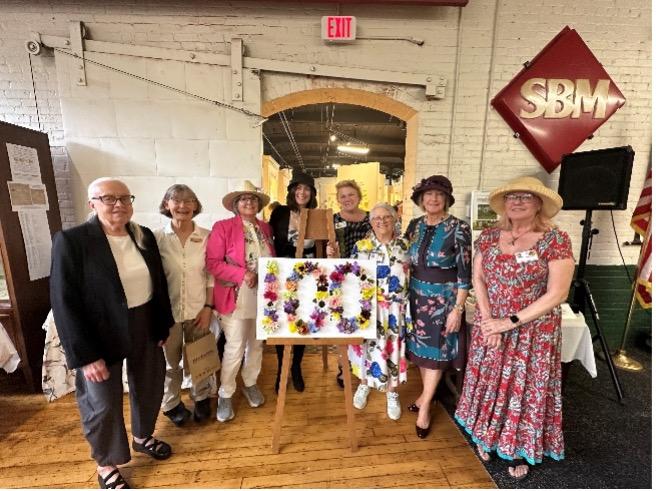
| | | | Centennial Celebration: Town Hall Ceremony at Stonington Town Hall and the planting of a white oak as a living symbol of the club’s legacy. | | |
Wethersfield Garden Club
Formed 1926
Federated 1929
Mission: The Seeds of Today – The Garden of Tomorrow
Highlight: Planting of a white oak tree at the Solomon Welles House to commemorate the anniversary as well as plans for a Blue Star Memorial.
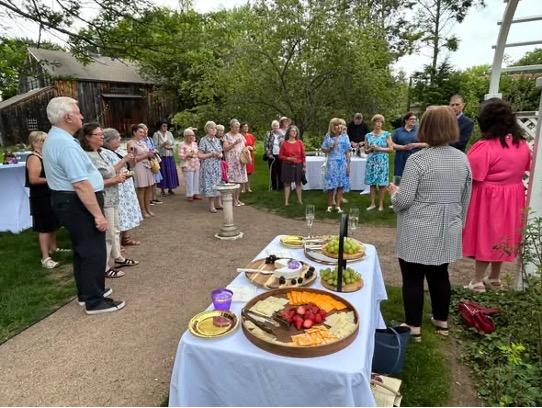
Centennial Celebration: Garden ceremony at the Webb Deane Stevens Museum on June 4, 2026. It was followed by a dinner and special program, where members enjoyed a slide presentation highlighting the club’s rich history, accomplishments, and lasting legacy over the past century.
| | |
Milford Garden Club
Formed November 1926
Federated 1929
Mission: To advocate for the preservation & restoration of our natural environment and to beautify & educate our community through programs and civic events.
| | |
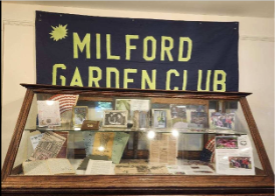
Highlights: Display cases at the Milford Historical Society and Milford Public Library highlight the club’s history and an updated logo.
Centennial Celebration: An evening program planned for November 4, 2026.
| | More news from the Clubs … | | In Simsbury, a very special walk in the park! | | |
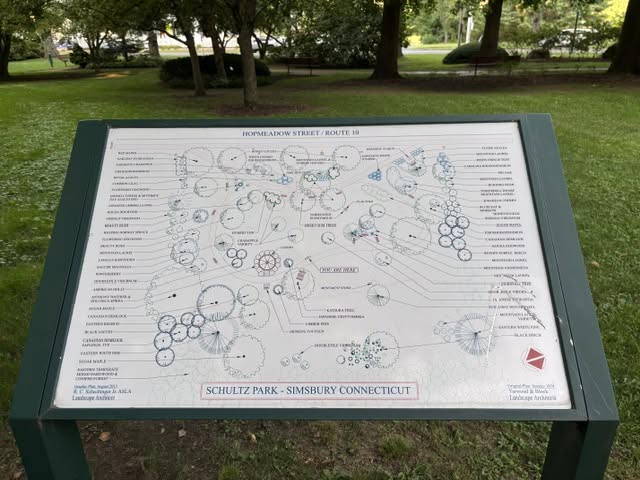
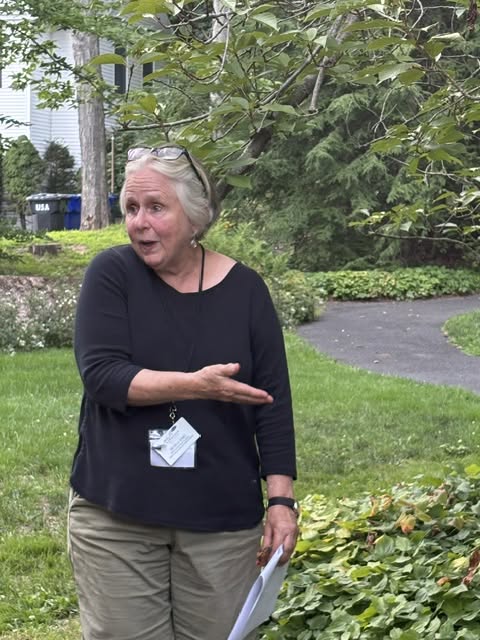
The Gardeners of Simsbury sponsored a tour of Schultz Park on Hopmeadow Street, Simsbury, CT. This lovely public park is cared for by Master Gardener Michelle Jenks, a member of our club.
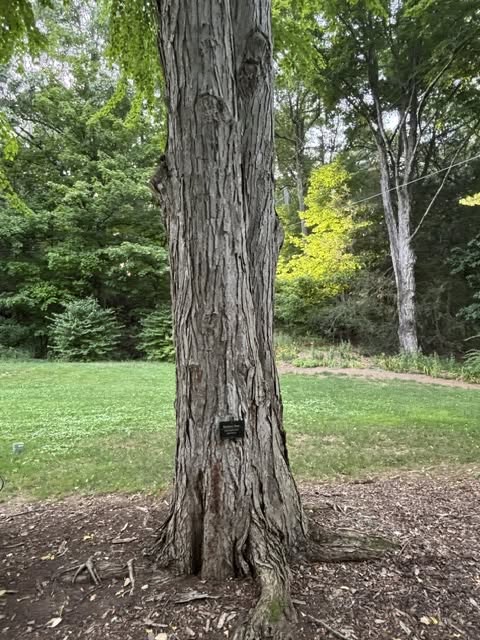
Michelle shared information about the park’s plantings, design, and unique features, including the Katsura tree, which is known for its beautiful autumn leaves that release a distinct scent reminiscent of toasted marshmallows.
The group was also joined by a special guest, the daughter of James Block, who designed the park in 1974 with his landscape design firm, Yarwood and Block.
This was the first time the club expanded its programming to include a local park tour, and it was a wonderful way for club members and the public to spend a late summer evening together while learning more about one of Simsbury’s beautiful public spaces.
| | Above at left: the Katsura tree. At right, club member and Master Gardener Michelle Jenks | | | | |
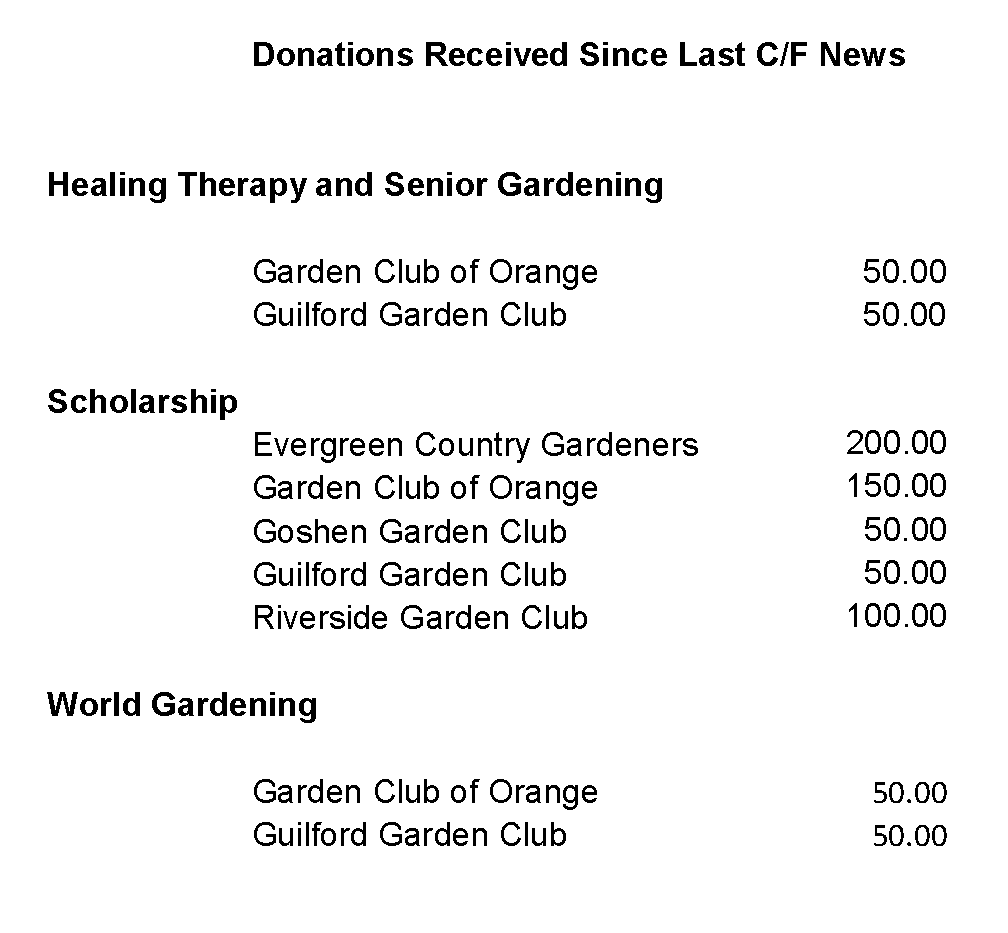
Donations to FGCCT's Scholarship Fund; Healing, Therapy and Senior Gardening Fund; and World Gardening Fund | |
We thank the following Garden Clubs for their recent donations to the FGCCT Scholarship Fund.* For almost 40 years, the Federation has awarded scholarships to college and university students who major in Agronomy, Botany, City Planning, Conservation, Environmental Studies, Floriculture, Forestry, Horticulture, Land Management, Landscape Design, Plant Pathology, or allied subjects. We welcome donations of any size. Our appeal is ongoing to give all of our clubs the opportunity to make a contribution in the amount of their choosing.
| | |
Please send all donation checks to the appropriate chair (see below). Make checks out to "FGCCT" with the appropriate Fund listed on the memo line.
*Please note that due to the deadline for articles and information for the CFNews, some donations may not be received and deposited in time to be included in the bi-monthly donation acknowledgement, but will be included in the next issue of our newsletter.
PLEASE MAIL CHECKS TO:
| |
For World Gardening & Healing, Therapy and Senior Gardening:
The Federated Garden Clubs of CT, Inc.
Attention: Rosemary Bonaguide
PO Box 902
Wallingford, CT 06492
| |
For FGCCT Scholarship Fund:
The Federated Garden Clubs of CT, Inc.
Attention: Carole Fromer
PO Box 902
Wallingford, CT 06492
| | |
Follow us on Facebook and Instagram!
FGCCT is on Facebook and Instagram and we love to post your news and photos! Please send upcoming events, club activities, civic projects, milestones, and hort tips. Include photos and a brief writeup of the news your club would like to share. The best format is text in an email with jpg photos attached. Take active photos showing members at work or showcasing beautiful gardens, flowers, and plants (please name the flower if it is a hort only photo). Let’s follow each other! Send submissions to social@ctgardenclubs.org
| | |
Please send all correspondence to the new FGCCT office:
The Federated Garden Clubs of CT, Inc.
P.O. Box 902
Wallingford, CT 06492
Did you recently elect new officers? Email their names and contact information to us at office@ctgardenclubs.org so they will receive Federation correspondence. If you need assistance, please contact FGCCT Office Administrator Joan Lenart at office@ctgardenclubs.org or by phone at 203-488-5528 on Mondays and Wednesdays, from 10 am to 2 pm.
| | Deadline to submit articles/photos, ads and calendar events for the December 2026 / January 2027 issue of the CFNews is November 10, 2026. Please submit to: | | |
Creating a National Garden Clubs, Inc. Website Member Account
In order for garden club members to access information in the Members area of the National Garden Clubs website, they will now need to create an account. Below are the steps to follow.
-
Go to the Homepage of the NGC website at https://gardenclub.org/
- Select “Member Login” in the site header.
- Enter your information. Avoid choosing a username with spaces. Email address is recommended for username. Select “Create new account”.
- You will receive a green highlighted message to check email at the address you entered to verify and complete your account.
- Use the link provided in the confirmation email to create your password and save your changes.
- Once you have selected “save”, click on the “Member Section” link in the main menu.
| | |
Reminder: NGC's The National Gardener is ONLINE and free!
The official publication of the National Garden Clubs, The National Gardener, appears quarterly, and features articles of interest to environmentalists, gardeners, landscapers, floral designers, educators and photographers. Subscribe here.
| | |
| |
State, Regional &
National Events
| | | | | |