|
Understanding the Final Settlement Agreement and How it Changes Beach Access
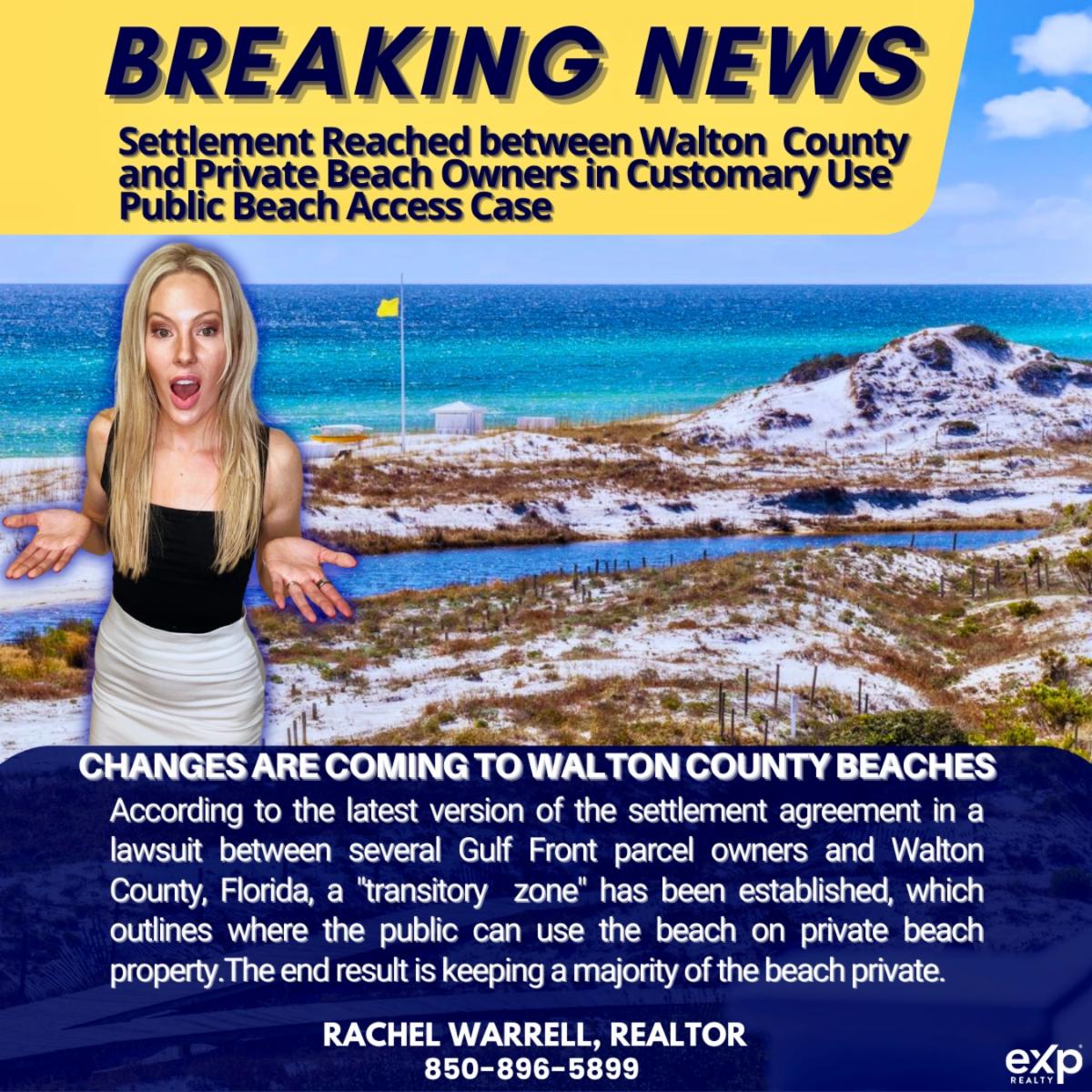
As many of you are aware, I have been closely monitoring the ongoing 5-year litigation between Walton County and several gulf front beach parcel owners in the region. I'm keeping a close watch on this because the outcome could impact property rights and property values for anyone owning property close to the beach in Florida.
Changes are coming to Walton County beaches.
A settlement has been reached between Walton county, Florida and private beach owners regarding customary use. (However, it's still uncertain at this time whether or not all parties have signed).
The end result of the Final Settlement Agreement is keeping a majority of the beach private. Walton County boasts 26 miles of beachfront, with only 8 miles owned by the county or state for public use. The settlement agreement introduces a significant feature known as the "transitory zones." This designated area, located 20 feet from the water's edge, grants public access to the beach on private property. However, it is essential to be aware of certain caveats that come with this provision.
You can Read full final Settlement Agreement Here. Or, for those who prefer not to read the entire 36-page settlement agreement, I've prepared a summary for you. Here are the key points presented in simple terms:
How this agreement impacts beach access:
Limited Public Use: as previously stated, the agreement establishes a "transitory zone,” which outlines where the public can access the beach on private property. People will be able to use a designated 20-feet from the waters edge, on certain beach parcels. This area permits activities like walking, running, swimming, surfing, sunbathing, fishing, and skimboarding. Clear signage and information will be provided to guide people to this area.
Limited Beach Access: Some beach owners who joined the agreement have the option to restrict public access to their portion of the beach using signs and representatives. Property owners who signed the agreement will allow the public to enjoy the beach within 20 feet of the water's edge. However, these private property owners can ask people to leave the transitory zone if there are more than one person every 5 feet of beach or if they are disturbing other beachgoers, at their discretion.
No Littering: It's important to note that littering on the beach will be considered trespassing.
The County's Responsibilities as Part of the Agreement:
Informing the Public: The County will ensure that people are informed about the beach rules through signs and social media.
Employee Awareness: The County will educate its employees about the agreement and uphold the rights of those who signed it.
Enforcement: The County will actively enforce the agreement, and failure to comply with the rules may lead to legal action.
Sheriff's Assistance: The County will collaborate with the Sheriff's Office to enforce the agreement and issue warnings if necessary.
Indemnification: The County will provide compensation to beach owners for any damages incurred due to failure to enforce the agreement.
Beach Study: Within a year, the County will conduct a study of the beach to assess the need for additional public access or restoration projects.
Beach Projects: County projects aimed at improving the beach will not alter the terms of the agreement.
All parties signing the final settlement agreement agree to the following:
Lawsuit Dismissal: For those who agree to the settlement, the ongoing legal battle will be completely halted. However, the County reserves the right to initiate a new lawsuit before May 31, 2024, exclusively targeting those who did not agree to the settlement. This new lawsuit will be limited to the terms outlined in the settlement agreement.
Attorney's Fees: Each party involved in the lawsuit will be responsible for their own lawyer fees and costs.
Binding Agreement: Once approved by a judge, all signatories must adhere to the terms of the agreement.
Changing the Rules: The settlement terms will become a part of the County's beach rules, and any changes to these terms will require a significant majority vote.
Withdrawing from Agreement: Certain beach owners have the option to leave the agreement if they seek approval from the court. However, the County will continue to enforce the rules for those who remain.
Non-Participating Owners: Individuals who chose not to join the agreement will not receive the benefits outlined in the settlement.
No New Customary Use: The County will not utilize this agreement to establish new rules for non-participating beach owners.
Please Note: As of today, August 2, 2023, it's still uncertain if all parties have signed the settlement agreement or if it has been approved by the Court. As always, I'll make sure to keep you informed as things progress.
I hope this provides you with a concise and informative overview of the situation. If you have any further questions, feel free to ask.
What are your thoughts on this? Do you think the transitory zones are a fair compromise to both public beach goers and private property owners, or do you think all Florida beaches should be accessible to the public? Reply back and let me know your thoughts.
If you want to go down the rabbit hole and read up on the history of this case:
In case you missed it...Here are the June Condo Sales Stats for Panama City Beach and South Walton County View Here
As always, reach out anytime if there’s ever anything I can do to help you. Call Rachel Warrell 850-896-5899
|