|
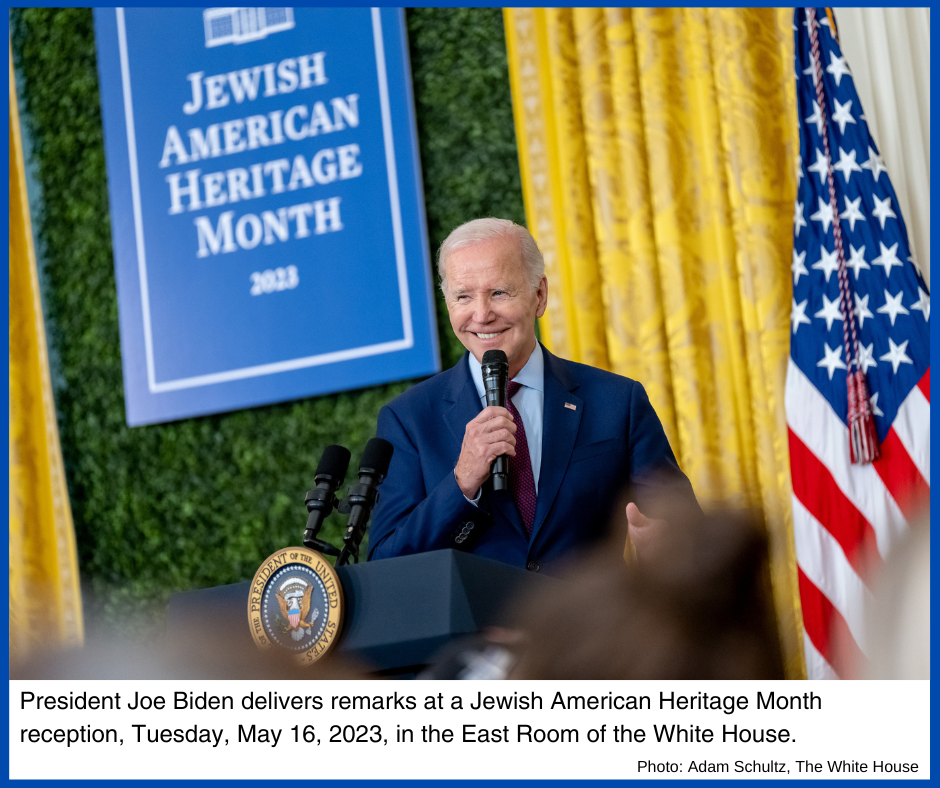
Title VI of the Act prohibits discrimination on the basis of race, color or national origin – but not religion – in programs or activities receiving federal financial assistance. The White House decision adopts the so-called “Marcus Doctrine,” which provides protection to groups like Jewish Americans who share ethnicity or ancestry.
This announcement follows a push to expand Title VI protections by Kenneth L. Marcus, founder of The Louis D. Brandeis Center for Human Rights Under Law, to include faith-based groups, like Jews and Sikhs, among others, that have shared ethnic, ancestral or “peoplehood” characteristics. In 2004, on behalf of the US Dept. of Education, Marcus clarified that Title VI protections must extend equally to Jews to the same extent as other ethnic or racial groups.
This policy was affirmed in 2010 by the Obama Justice and Education Depts. after a concerted effort by several Jewish organizations. In 2019, this same policy became a key component of the Trump Executive Order on Combating Antisemitism. President Trump’s order extended the Marcus Doctrine beyond the Education Dept. to other federal agencies. Until this announcement, those agencies had not formally affirmed adherence to this policy.
The new Title VI protections will be applied to eight federal agencies: the Depts. of Agriculture, Health and Human Services, Homeland Security, Housing and Urban Development, Interior, Labor, Treasury and Transportation. The protections already were under review at the Depts. of Education and Justice. Islamophobia and other forms of ethno-religious discrimination also will be covered, provided that they include ethnic or ancestral bias.
The Health and Human Services Office for Civil Rights responded by asserting: “Americans deserve to receive the care they need regardless of what they look like or believe in.” HHS provided this example: “An ER patient requests that a hospital change his attending physician because the patient associates the physician’s surname with Judaism and/or Israel, and the hospital honors the request.” The reference to the doctor’s last name is an example how the civil rights of a Jewish physician can be violated based on religion, shared ancestry, ethnicity or national origins.
Jewish organizations celebrated the expansion of rights protections. The Conference of Presidents of Major American Jewish Organizations welcomed “these measures to finally ensure that antisemitism is not treated as a second-class form of bigotry in the eyes of federal agencies, particularly with regard to antisemitism on college campuses.”
Anti-Jewish and anti-Israel discrimination continues to be a significant issue at universities across the nation. However, the Dept. of Education’s Office of Civil Rights currently is burdened with a backlog of cases and a staffing shortage. This has led to a push in Congress to increase appropriations funding.
In many instances, cases drag on for years and students graduate without resolution to their incident. “It is vital for OCR to figure out how to resolve its extensive backlog of investigations into campus antisemitism,” explained StandWithUs founder and CEO Roz Rothstein.
Some commentators, including Marcus, have argued that this policy is insufficient without also including clear guidance on how antisemitism will be defined. In 2010, the U.S. State Dept. developed an antisemitism definition which is almost identical to the one eventually adopted by the International Holocaust Remembrance Alliance (IHRA) as its working definition of antisemitism.
President Biden’s new directive does not mention IHRA. “Applying the IHRA Working Definition helps people recognize what forms antisemitism can take,” stated Special Envoy to Monitor and Combat Antisemitism Ambassador Deborah Lipstadt, who recently released a Report on Policies, Programs, and Actions Across the Globe to Combat Antisemitism.
The Brandeis Center’s Marcus welcomed the civil rights expansion but noted that none of the eight agencies committed to using the IHRA definition: “There’s still unfinished business in terms of the administration’s approach to IHRA and making it applicable across the board.” Marcus also added that the U.S. government must fully recognize Zionism as an inalienable element of the Jewish people.
|