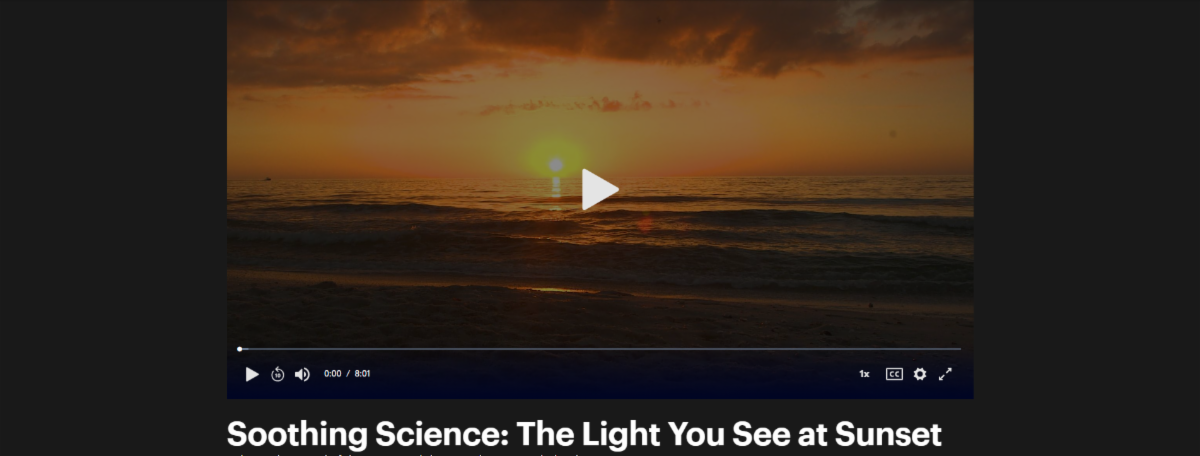
Some days as the sun starts to set, the sky lights up with a beautiful display of colors: deep reds, vibrant oranges, intense coral pinks, cotton candy skies—as if it were on fire.


Click on the video above to relax to the sound of the ocean and discover the science behind sunsets!

ACTIVITIES

How Many Colors in a Rainbow?


KEY CONCEPTS

Wavelength, refraction, reflection, rainbow, visible light

CREDITS

Megan Arnett, PhD, Science Buddies


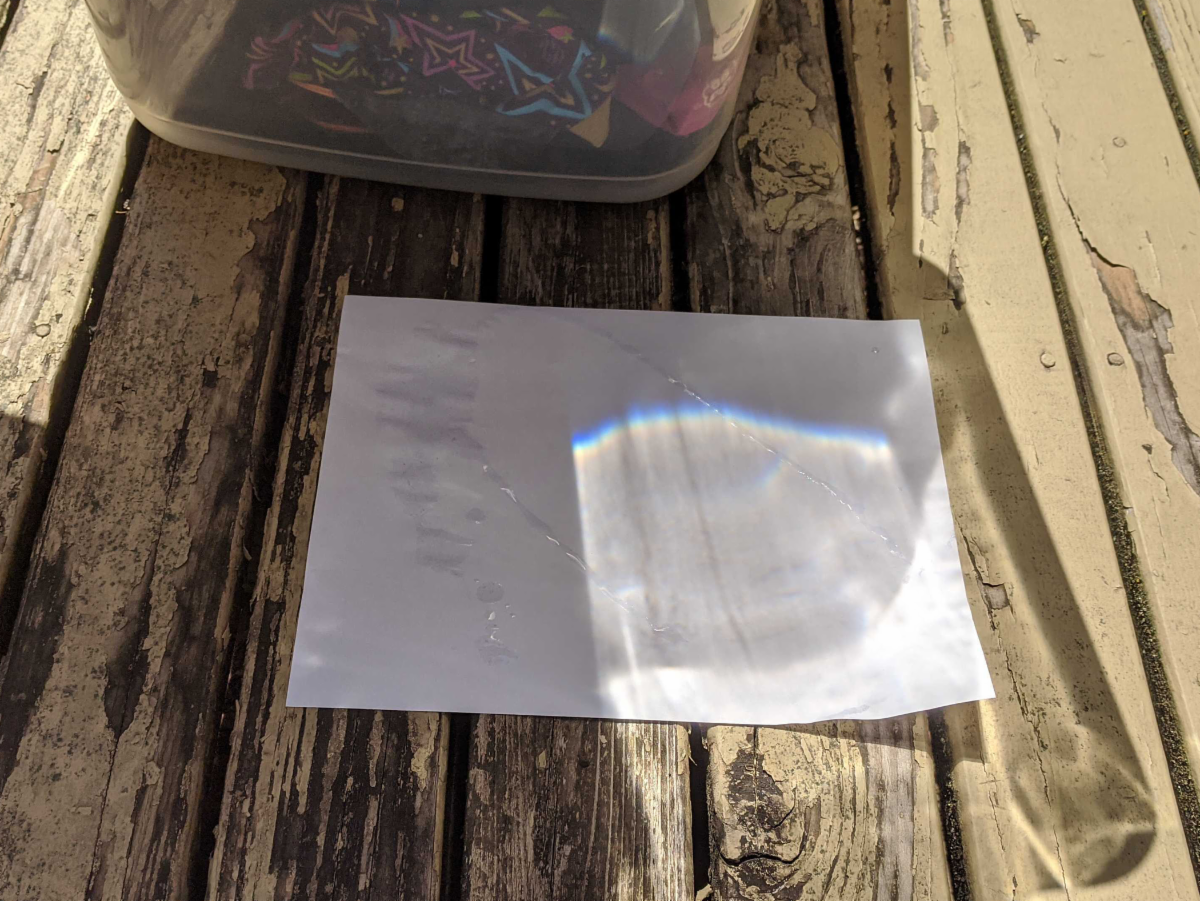
Have you seen a rainbow in the sky after a rain shower? How many colors were there? A rainbow is often described as having seven colors: red, orange, yellow, green, blue, indigo and violet, but you might spot a rainbow and see fewer colors. Or you might see more than seven! It can be tricky to count the colors in a rainbow, because they all blend together so seamlessly.

Want to see for yourself? In this activity you will explore the physics of light and create your own mini-rainbows. How many colors will your rainbows have?


Materials needed:


  • A shallow glass baking pan
  • Water
  • A white piece of paper
  • A red piece of paper
  • A blue piece of paper
  • Sunlight
  • An outdoor table, chair, or helper to hold the pan for you
View full activity here

Make a Miniature Water Cycle


KEY CONCEPTS

Water Cycle, evaporation, condensation, precipitation, runoff, infiltration

CREDITS

Svenja Lohner, PhD, Science Buddies


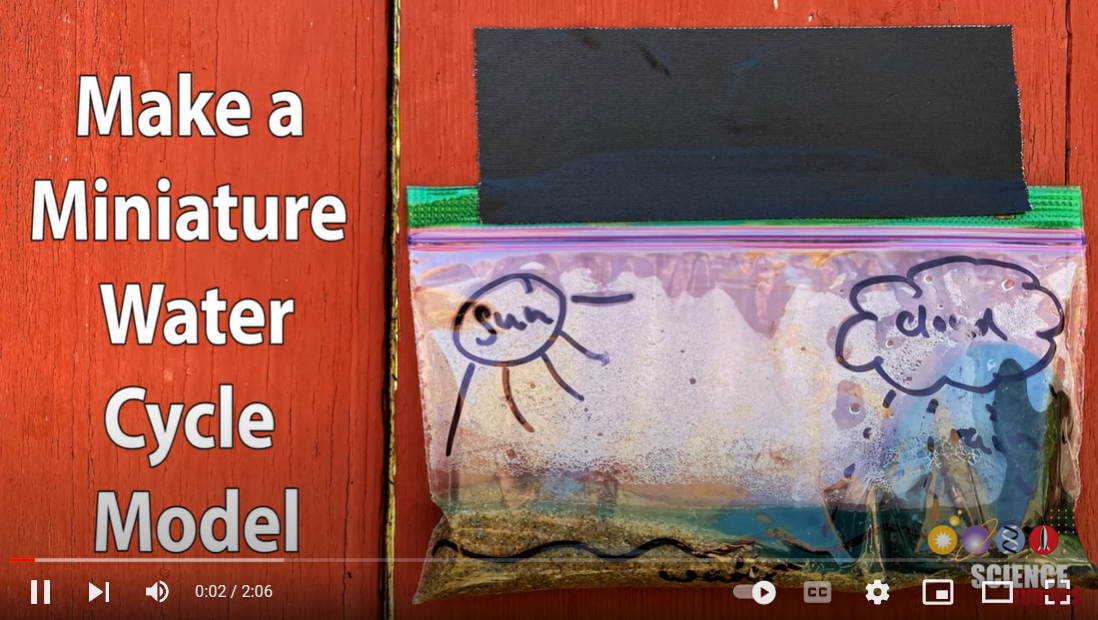
Have you ever wondered where the rain that falls from the sky comes from? You might say the rain falls from the clouds, but what are clouds and where do they come from? All these questions and many more can be answered by looking into how water moves on land and in the atmosphere, which is described in the water cycle. In this activity, you will investigate some of the processes that make water move in and out of the atmosphere by making a miniature water cycle model inside a plastic bag.


Materials needed:

  • Re-sealable snack-size plastic bags (2)
  • Permanent marker
  • Water
  • Liquid measuring cup
  • Tablespoon
  • Strong tape, like duct tape
  • Blue food coloring
  • Area that gets lots of sun and another that gets very little sun during the day
  • Optional: Sand or dirt
  • Optional: Larger pieces of rock that will fit in the bag, at least 2
View full activity here

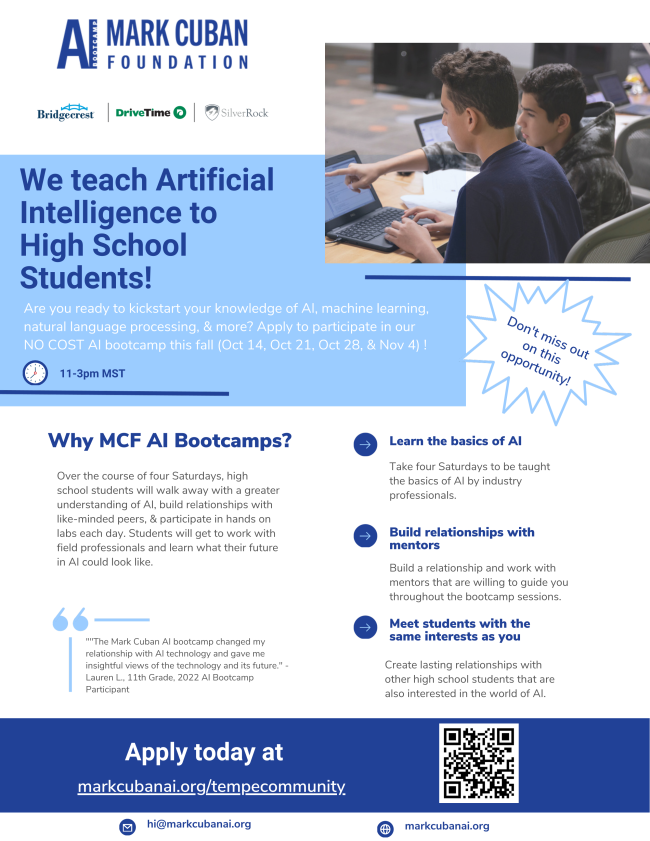
MCF No-Cost AI Bootcamps for High School students (9th-12th grade) are diverse and inclusive of all identities, with a transparent focus on recruiting low-to-moderate income students, girls, and students of color. There is no prior computer science or coding background required. Students will learn the basic concepts of artificial intelligence and machine learning- transportation and meals included!

Or click HERE to watch an informational video


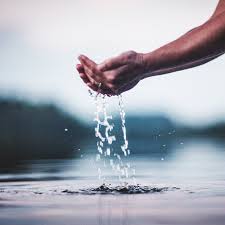
SUMMER STEM IDEA: In the Water


Summer is the perfect time to discover STEM in the water. Splashing in the water is fun, but there’s a lot of STEM to learn, too! What can you do?

  • Explore local waterways. Go to a creek, pond, river, or lake. What kinds of plants and animals live in these ecosystems?
  • Do you visit the ocean in the summer? Observe how the tides change each day. Find out when it is low tide. That is a great time to explore the beach and find shells and other things left behind in the tides.
  • Gather some household items and a tub of water to find out what sinks or floats.


STEM Water Challenge: Design a boat that will float on the water. You might use craft sticks to make a raft or aluminum foil to mold a boat. How much weight will your boat hold? How long will it float? 


Summer STEM field trip: Head to the zoo or aquarium and check out the underwater creatures such as fish, sharks, penguins, sea otters, and polar bears.

STEM Saturday will resume in August!

Facebook  Twitter  Linkedin  Instagram  
website | email | 602.734.5434