CompoundingConnex5a.png

The voice for pharmacy compounding │7 October 2022

 
2022a-Sponsor-Block-Large image

From APC's President

Thyroid absurdity


I’m fired up. I don’t lose sleep very often, but I've found myself losing A LOT of it over desiccated thyroid extract (DTE).


Last week, we reported that FDA had deemed DTE to be a biologic because it contains a byproduct known as thyroglobulin. Thyroglobulin contains 2,770 amino acids, which exceeds the statutory threshold for a biologic of 40 amino acids.


In a September 22 letter FDA sent to the National Association of Boards of Pharmacy, the agency asserted that DTE is a “biologic” and not a “drug.” NABP promptly forwarded the memo to every board of pharmacy in the country.


In the letter, FDA states:

Section 351 of the Public Health Service (PHS) Act defines a biological product as a virus, therapeutic serum, toxin, antitoxin, vaccine, blood, blood component or derivative, allergenic product, or analogous product…applicable to the prevention, treatment, or cure of a disease or condition of human beings.”


Thyroglobulin does none of these things: It is not an active ingredient. It does not appear in the package insert for any porcine thyroid product. The non-biological products liothyronine and levothyroxine are the therapeutic components of DTE, not thyroglobulin.


The absurdity of calling DTE a biological product because it contains thyroglobulin could create a slippery slope. Consider gelatin. According to the FDA’s interpretation of the definition, gelatin might be considered a biological product.


Imagine if the FDA were to classify gelatin capsules as biological agents. Every FDA-approved product that has gelatin as part of a capsule would need a BLA in order to be approved. Absurd, right? Well, so is the classification of thyroglobulin as a biologic. It just doesn’t fit the definition as defined in section 351 of the PHS act.


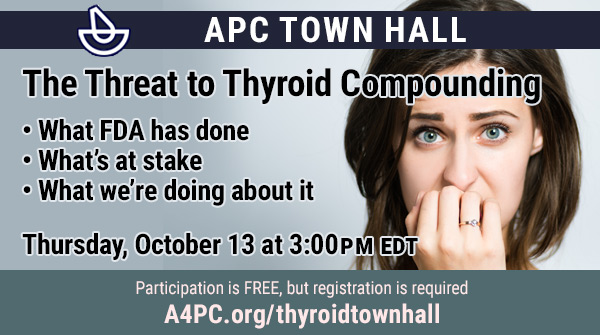
Please join APC on October 13 at 3pm EDT for an important town hall meeting on this issue. If you compound DTE, you need to be there to learn more about what we’re doing to confront this absurdity.

2022-10-Thyroid-Town-Hall3 image

• • •


David Miller is APC’s president and the managing co-owner of Keystone Compounding Pharmacy in Grand Rapids, Michigan. You can reach him at drdave@keystonepharm.com.

give-to-save-cbht-1 image

ICYMI

Catch up on these recent stories that you might've missed:


This week

MOCs to FDA: “We are troubled”

Eight members of Congress wrote to FDA Center for Veterinary Medicine director Dr. Steven Solomon this week to express concern that CVM’s GFI 256 on animal compounding may result in delayed care for veterinary patients.


“This joint letter is the culmination of the work we did at Compounders on Capitol Hill last month,” said APC Board Chair Michael Blaire. “While we would like to have seen more signatures on the letter, it's a clear statement from members of Congress that they're concerned about how this animal compounding GFI may interrupt animal healthcare, and they’re looking to CVM for assurances.”


The letter requests that CVM briefs members of Congress “within 60 days about how stakeholder concerns are being addressed and how the agency will implement and enforce GFI 256 in a manner that will not disrupt veterinarians’ practices and be detrimental to their patients’ health.”


APC is grateful to the following members of Congress for signing the letter: Rep. John Carter (TX), Rep. Mark Pocan (WI), Rep. Buddy Carter (GA), Rep. Bill Posey (FL), Rep. Donald Norcross (NJ), Rep. Debbie Lesko (AZ), Rep. Troy Nehls (TX), and Rep. Diana Harshbarger (TN). We’re also grateful to APC members who responded to our call to action to urge their U.S. House member to sign the letter.

Get your pharmacy business in tip-top shape at Medisca's Virtual Business Event on October 14.


Sign up for this exciting daylong program with the code APC2022 to get $50 off the price AND Medisca will donate $50 to APC’s OneFund!


Click here to learn more and to register.

New Model Act incorporates APC-recommended compounding questionnaire


Among the changes to NABP’s new Model Act are several recommended by APC, including a requirement that licensed compounding pharmacies provide to the state board of pharmacy basic information about their compounding operations.


“In 2021, the APC Board of Directors adopted a policy statement that, among other things, recognized that it was not unreasonable for state boards of pharmacy to need to know some basic info about who was compounding in their state,” said APC CEO Scott Brunner. “That coincided with an announcement that NABP was reviewing its Model Act, so we asked NABP if we could recommend amendments and enhancements to the compounding provisions in the Act.”


An APC work group submitted its recommendations to NAPB in August 2021, and the new Model Act was released last month.


“Though they did not accept all of our suggestions, they did incorporate several, including a series of five general questions about a licensee’s compounding operations," said Brunner.


The exact language, in the form of two footnotes in Article 4, is:


  • Applicants who engage or intend to engage in Compounding shall submit concurrently with their application for licensure responses to a questionnaire regarding the applicant’s Compounding operations.
  • The questionnaire contemplated in 502(c) shall request, at a minimum, the following information: 1) The name and address of the location at which Compounding occurs or will occur; 2) Whether nonsterile Compounding occurs or will occur; 3) Whether sterile Compounding occurs or will occur; 4) Whether the applicant Compounds or will Compound with hazardous drugs; and 5) Whether the applicant ships or will ship compounded preparations across state lines.


“States are not compelled to adopt any or all of the Model Act,” said Brunner, “but we believe providing this basic information to state boards of pharmacy only enhances the credibility of the compounding profession.” 

Webinar_Authentication-Part-2_Oct-2022 image

100 MOCs sign letter to TRICARE

One hundred members of Congress signed a letter of concern sent last week to the Department of Defense in response to recent TRICARE changes that threaten beneficiaries’ access to community pharmacies, especially in rural areas.


Led by Sen. Tom Cotton (AR) and Rep. Buddy Carter (GA) the bipartisan letter asked the DOD for answers about Express Scripts' stripping local pharmacy access away from TRICARE families.


Outreach to the DOD shouldn't end yet. For your patients and their caregivers who are experiencing a disruption, please direct them to this NCPA-created resource to take action. You can also print this letter and ask your affected patients to sign and mail it directly to the Defense Health Agency.  

APC highlights compounding threats at NCPA Expo

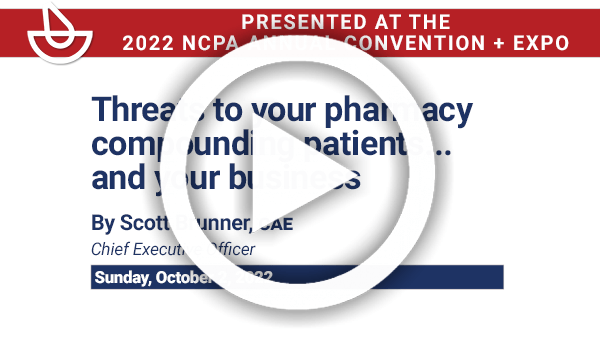
When APC CEO Scott Brunner took the stage during NCPA's annual convention in Kansas City on Sunday, he didn't waste time getting to his point: 


"Compounding is under fire by regulators and others like never before."


Click here to watch his 30-minute presentation highlighting a half dozen threats to your patients and practice. Note: Requires your APC member login.


Save these dates

October 13: An APC Webinar: Keeping it Legit: Best Authentication Practices for Compounders, PART II - WHOLESALE DISTRIBUTORS


October 13: APC Town Hall: The Threat to Thyroid Compounding


October 14: Medisca Virtual Business Event, 10am – 5pm EDT.


October 19: APC 2023 Board of Directors election voting closes.


October 26–29: PCCA's International Seminar, Houston, TX (in-person + virtual)


November 10: An APC Webinar: Can You Compound That? A Quiz Show Webinar (details coming soon)


December 8: An APC Webinar: How to Use Medical Literature to Identify and Support Compounded Therapies (details coming soon)


2023

February 9–10: APC's EduCon 2023, virtual (more details coming soon)


March 25–27: APC's Owner Summit 2023; The Grand Hotel Golf Resort + Spa;

Point Clear, AL (more details coming soon)

Invest-in-Onefund image
 

Short takes

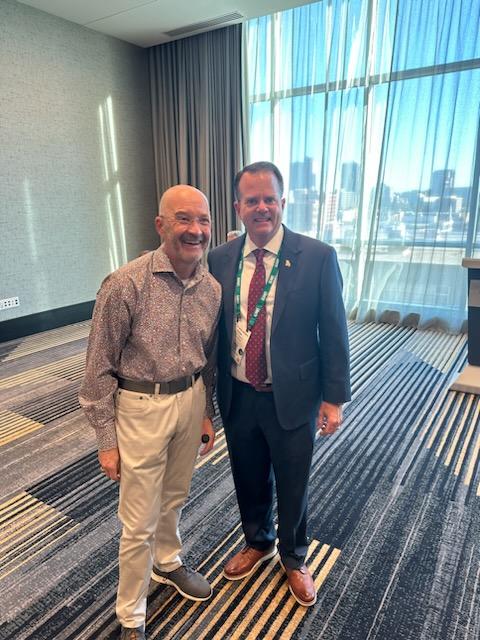
Congratulations, Mr. President. Last week, APC member Hugh Chancy (pictured on right with APC CEO Scott Brunner) was installed as 2022-23 NCPA president during NCPA's annual conference and expo in Kansas City, Missouri. Hugh is co-owner of Chancy Drugs, Hahira, Georgia, which includes five retail pharmacies and one closed-door pharmacy.

Your vote counts. Don't forget that balloting for APC’s 2023 Board of Directors ends October 19. Here is the slate of officers and board candidates for review, and here are the proposed bylaw changes. Click here for details and further instructions.


CVM shares GFI 256 visual aid. FDA’s Center for Veterinary Medicine has produced this infographic to help folks understand its GFI 256 on animal compounding. If only it were this simple, right?

Career-Center-Horiz-Ad-for-Owners_July-2022 image
 

Quick links


APC Career Center

• Job seekers

• Employers


APC's Code of Ethics


Compounding Connections archive


Compounders on Capitol Hill 2022


Continuing education

• Live webinars

• On-demand webinars


Current issues:

• GFI #256 on animal compounding

• Urgent-use compounding

• Prohibition on peptide compounding

• La Vita Case amicus filing

• Insanitary Conditions amicus filing


Prescriber Briefing Resources  


Invest in APC efforts

• CompPAC

• Campaign to save cBHT

• OneFund


Membership

• Renew

• Pharmacy/Facility Membership (PFM)

• APC Logo agreement for PFMs

• APC Logo agreement for individual members


Affinity service providers

• Accounting & Tax Services: Rx Advisors

• Audible Sunshine

• Office Equipment: TUI Solutions

• Online Payments Platform: HealNow

• Patient-Reported Outcomes: OutcomeMD

• Shipment Trackers, a shipping costs auditor  

Facebook  Twitter  Instagram  LinkedIn

APC is committed to addressing any concerns or complaints within one business day. Please send them — and, of course, any compliments — to info@a4pc.org.