|
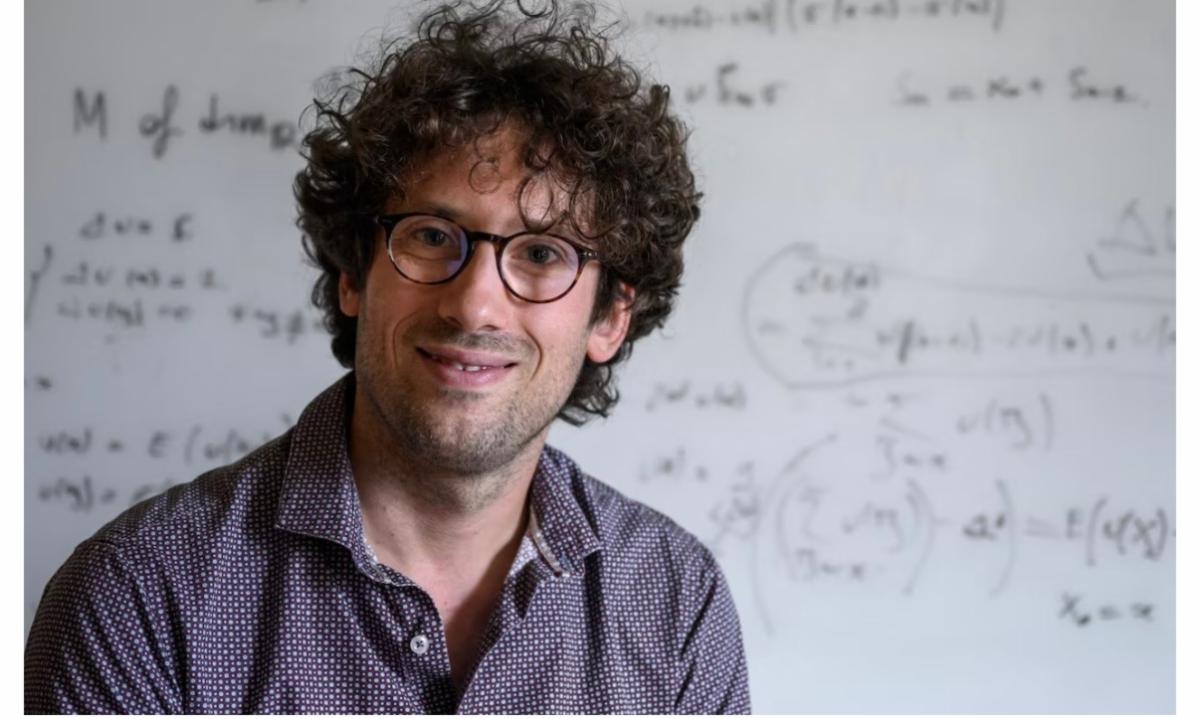
As Duminil-Copin tells the story, a week or so after a crisis in the rarefied world of pure mathematics became front-page news around the world, he was in his home office in Switzerland, trying to settle back into the quiet life he used to enjoy. It’s half term, and his five-year-old daughter is downstairs watching Unicorn Academy, a Netflix show about tween equestrians who must fight a dark magical force.
“We probably have, like, 30 minutes. We end up talking for a lot longer than half an hour; like everyone in a field of research viewed as an art by its practitioners, I have a lot to say about another, non-fictional, new magical force: artificial intelligence. It has been a turbulent few months. A short four years after mathematicians joked about the inability of ChatGPT to multiply five-digit numbers, its successors have solved some of the thorniest problems in the field".
You have read about it across AI media: in some cases, swarms of agents unleashed by the big players in AI - OpenAI, Anthropic and Google among them - have used brute computing force to crack open in days the kinds of theories to which mathematicians can devote decades. The reactions have been rich with destructive metaphors; AI has been cast as everything from a nuclear weapon to a bulldozer, laying waste to a profession and prompting an extreme bout of existential heebie-jeebies.
Duminil-Copin has been based at the University of Geneva for almost 20 years. In 2022, he won the Fields Medal - one of the biggest prizes in mathematics - for his groundbreaking work in percolation theory, the analysis of the way a fluid flows through a porous medium, sometimes reaching a critical point known as a phase transition.
Much to his own discomfort now the dust is perhaps starting to settle, the professor has become one of the faces of the collective AI freak-out. In mid-October, Le Monde reported that the mathematician had cried so loudly while reviewing the hundreds of papers that OpenAI had just published, he had woken his sleeping daughter. He said:
"I have never been anti-AI. I think it’s very useful, but it needs to be used in a measured fashion.
The AI dump included more than a dozen questions related to my own research, including phase transitions. In September, a smaller release by Anthropic had included one of the conjectures in the field that I had been trying to prove for years (in maths, conjectures are ideas waiting for someone – or, as of 2026, some bot – to write a logical proof demonstrating in detail how and why they work).
They have annihilated my field of research".
At one point he shared a slide, ironically generated by AI, that showed a rabbit staring at the headlights of an oncoming truck:
“They wanted to prove they could massacre us".
He has since become more reflective, keen now to talk about his hope that maths can adapt and stay on top of the machines, while embracing the benefits they offer. It’s an ambition that ought to have an audience far beyond his field as breakneck advances in AI upend so many professions:
“I was emotional because it felt like being a violinist when your violin has just been broken, or talking right after I’ve lost my house to a flood. But now I see this as such a strong case study for what is happening to other disciplines and fields. We need to find a place for humans in all of this".
Ah, those Millennium Prize problems
In 2000, the Clay Mathematics Institute (CMI), a foundation established two years earlier by Landon Clay, an American businessman and philanthropist, announced the seven Millennium Prize Problems. They were partly inspired by a list of 23 problems that had been created as a challenge in 1900. Each of the problems on the new list had eluded human minds - in some cases for more than a century.
Andrew Wiles, the Oxford professor best known for proving Fermat’s Last Theorem in the 1990s, advised the institute. He wanted the prizes, each worth $1m, to promote the “excitement of mathematical endeavour”. While generative AI was then a distant prospect, computers were already seen by some as a threat:
“Sometimes people have the wrong idea of maths and think that it will be overtaken by computers. The Millennium Prize Problems are totally inaccessible to machines".
In early September, OpenAI announced it had solved the Navier-Stokes existence and smoothness problem, one of the Millennium Prize Problems. The equations describe the motion of viscous fluids. The broadcaster and former Celebrity Traitors contestant Hannah Fry, who did her PhD on Navier-Stokes, described them in a New Scientist column as
“. . . staggeringly beautiful, able to articulate everything from the drip of a water droplet on a leaf and the churn of an entire atmosphere to the gases swirling around in a galaxy in the sky”.
Yet they always contained a subtle anomaly that mathematicians had long tried to resolve. OpenAI directed more than 10,000 AI agents over 88 hours to mine the knowledge and working patterns that AI has trained itself on, using mountains of published work. By repeatedly trying to solve and instantly check problems in this way, AI can reach solutions at super-human speed. While flesh-and-blood mathematicians might search for solutions methodically like gold panners, Duminil-Copin has compared the AI approach to strip mining.
In an interview with Martin Bridson, a professor at the University of Oxford, and president of the CMI, the esteemed guardian of the Millennium Prize Problems, he noted:
"I'm more excited than worried about the recent achievements of AI, and in particular the biggest dump of solutions in October. It was absolutely breathtaking. It would have been unimaginable even a few months ago to see the frontiers of mathematics move so far in one day. Some of the proofs uploaded in October concerned my own field of geometric group theory. There are certainly a couple of problems on the list which I’ve tried hard to solve on and off for over 20 years, and I would have gone on thinking about them if this hadn’t been announced".
Yet his views echo those of a statement the institute published in early September. It said:
"The CMI shares in the excitement of the global mathematical community over the apparent settling of the Navier-Stokes problem. We hope to see waves of new human understanding unleashed as the innovations behind this work are analysed and interrogated"
The question of prize money, and to whom it might go, is, for now, unresolved; in any case, the CMI takes months to check claimed solutions. Bridson noted:
“It will be a deliberately unhurried process".
It can be hard to relate to mega-brained professors who, I’m told, often genuinely do stand scribbling at blackboards like Russell Crowe in A Beautiful Mind. One academic tells me that he still swears by imported Hagoromo chalk, an exotic, almost dustless Japanese brand first made in the 1930s. Bridson, who prefers pencil or chalk over any kind of computer (he was disappointed by the introduction of whiteboards when the Andrew Wiles building opened in 2013), takes enormous pleasure in the thrilling pursuit of big mathematical problems, or “the possibility of the long chase”.
But while he regrets a likely shift in that process, he sees light between the lofty pursuit of mathematics and its real-world benefits, including those that are not yet understood and which might now be accelerated:
“Pure mathematics leads to enhanced understanding and great, powerful theories that may not have immediate applications, but over the longer term, over 100 years, say, can really have profound economic and societal implications".
Examples abound. The study of prime numbers, including by Fermat, underpins the modern cryptography that keeps the internet secure. The circuit boards that power every digital device, including those now spewing AI-generated content, run on algebra. AI itself sits on mathematical foundations. In medicine, MRI scanners couldn’t turn signals into pictures without maths. And if maths can save lives, the optimistic argument goes, then haste is surely vital.
Bridson said:
“The speed with which fundamental theories are translated into real-world applications will become quicker, because the chain of experts that you need to connect the real-world problem through layers of theory to the fundamental mathematics can be shortened and speeded up by AI".
Moreover, some big players in maths say anyone who feels like a rabbit in headlights right now hasn’t been watching the road carefully enough. Kevin Buzzard, a professor of pure mathematics at Imperial College London and a long-time proponent of tech in the field:
"Everybody is depressed, and the world is apparently collapsing, but there are many stages of grief, and people like me who’ve been watching for a very long time are well into the acceptance phase".
Buzzard, who’s 58, says that, throughout the slower march of the machines leading up to this year’s revolution, too many of his peers have made the mistake of almost dismissively grasping at the diminishing range of things that AI can’t do rather than acknowledging and embracing what it can do. As a result, he says, they’re now running around “like headless chickens”.
In 2022, just weeks before the launch of ChatGPT, Buzzard arranged a conference on this theme alongside Terry Tao, an Australian based in LA who is widely considered to be the world’s greatest mathematician:
“It was already clear that computers were contributing to mathematics in new ways beyond just being very good calculators. They were becoming extremely good at spotting patterns in data and even checking proofs using Lean, a computer-programming language, for example. Everything has come together to produce this sort of superhuman thing, but the technologies themselves have been slowly appearing for a long time".
To create a kind of proof of concept, Buzzard received a big grant in 2024 to run a collaborative project to use Lean to formalise Fermat’s Last Theorem – to convert Wiles’s landmark work, which ran to more than 100 pages and required months of checking by humans, into a form that computers could encode and check automatically. He imagined it might take a decade:
“After a year, we’d made progress, and after two years, I could kind of see that if we kept going at this rate, we should probably do it".
Then, in early September, Anthropic announced that a high-end version of Claude had finished the job, largely autonomously, in 11 days. Buzzard said:
"That was amazing! Hours later, I wrote a post on the project’s website, celebrating the way that AI could now make the review process for mathematics papers far less painful.
It will also keep us honest. There are papers out there which assume results which are ‘known to the experts’ and it will be interesting to see exactly what is being assumed in the proofs of various important results in my field".
The project itself, meanwhile, isn’t over. Buzzard and his team are now doing the human work to interpret and finesse the messy results of the AI blitz:
“We’re still working on making the proof as beautiful as it can be because this is mathematics as art. Maths is a human-centred thing, and the fact that I no longer have to write what would have been 500,000 lines of Lean code, or get my PhD students to do that, frees us up to do the stuff we do best".
Buzzard says one of his former students, who is now a professor at Oxford, shared the news of the AI breakthrough with Wiles, who is largely retired and rarely speaks publicly these days:
“He basically told him that Anthropic had checked his theorem, and it turned out he was right. And Wiles smiled and said he was very happy about that".
But Buzzard views the recent mathematical onslaught as just the latest example of the AI industry’s need to flex its muscle before investors. Anthropic and others will soon direct their billions to the next showcase, he predicts, leaving each community either reeling or seizing new opportunities. It will be up to mathematicians to decide what the big problems of the next century are going to be:
“AI has been very good at giving us answers, but very bad at asking big questions. There’s an art to this, and that’s going to be human-computer collaboration".
A wider debate
But in all the interviews you come to the realization that not everyone is convinced that the brute-force crunching down of the process of mathematical discovery risks only depriving academics of blackboard time. Duminil-Copin himself said:
“I mean, what do you want when you are doing mathematics? I see real-world value in the methods themselves. It isn’t always something precise that is going to revolutionise the understanding of our world. But through progressing in many different directions, you build up a kind of conceptual language, a way of approaching different problems, and this body of tools becomes very useful in many contexts".
AI, Duminil-Copin argues, might get to a solution faster, but what if in doing so it robs us of these vital tools? He said:
“I have never been anti-AI. I think it’s very useful, but it needs to be used in a measured fashion, because if it’s too systematic, it’s like bombing a place where nothing is going to grow anymore”.
Steven Strogatz, an American mathematician and professor of the public understanding of science and mathematics at Cornell University, remembers the “comic derision” with which the maths world greeted the arrival of ChatGPT in 2022, only for AI to get exponentially better at a whole range of skills beyond language, from coding to autonomous robotics. He said in an interview:
“We laughed, and then, little by little, they got to be at the level of a good high school maths student, then a good college student, then a good graduate student, then a pretty good professor, then like the best professors in the world, and now better than everybody”.
Strogatz, whose latest book, Big Math: The Hidden Codes that Run Our World, also struggles to see the upsides of AI. He, too, has been moved to tears by the events of the past few weeks and what it might foreshadow beyond maths:
“There’s something deep here, and I do think partly what we’re talking about is the meaning of life. What do we do with our time? And maybe that’s what people are resonating with, because if AI can do everything we can do better, then what do we do with ourselves? Inside maths, I worry that a vital profession will be reduced to a kind of historical pursuit. Are we the next Latin?"
More importantly, he envisages a future where AI is proving theorems not even the greatest mathematicians can understand. In this new world, which could have been dismissed as a sci-fi fantasy until recently, humans become ignorant observers compelled to apply mathematical advances without understanding how or why any of it works.
“That will be the total darkening of human insight into mathematics, and I think it could happen in my lifetime".
Bridson also sees this as the central question in the wider debate about AI – the prospect of a world in which human intelligence is no longer paramount. He compares it with the arrival of a super-intelligent alien species. Would we trust them?
“I’m not convinced that’s our future with AI by any means, but it is a possibility, and I think that’s why this has captured the public imagination. But I share Buzzard’s view that humans will – and must – fill new and exciting positions in the AI maths world. We cannot become the servants of AI".
But Buzzard is sceptical about the idea of human understanding itself. He sees a difference between the comprehension of broad concepts and every single detail.
“If by ‘understanding’ we mean ‘checked every detail’, then I would argue that there are already plenty of proofs that humans do not understand, and that this started happening 50 years ago, well before modern AI. As my work on computer-assisted proofs showed, trust has always played a part in maths".
What does Duminil-Copin think? He can also imagine a divided future, with AI maths on one side and human maths on the other. Many have heard the latter discipline being referred to as “vegan maths”. He said:
“You could imagine that human maths is a tiny thing in a huge ocean of artificial maths that are much more evolved. It will be up to us to decide whether we are prepared to trust and apply the superhuman maths being produced by a 'black box' that offers no window on its workings. It seems to me that this will be something very novel in the history of humanity".
Yet he is ultimately confident about the role of humans in mathematics, and in the value and joy of the work they will be doing. He reaches to his own field for a metaphor.
“You could say we are right in the middle of the phase transition. What we really need to understand first is how we are going to make a community again that is going to be balanced and have standards".
For those of you who really want to get into the weeds, the Academy for the Mathematical Sciences has published a new primer "Mathematics in the age of artificial intelligence: A primer on key topics in the mathematical sciences that underpin AI".
|