April 18, 2025

SAVE THE DATE

FOCUS ON CHANGE
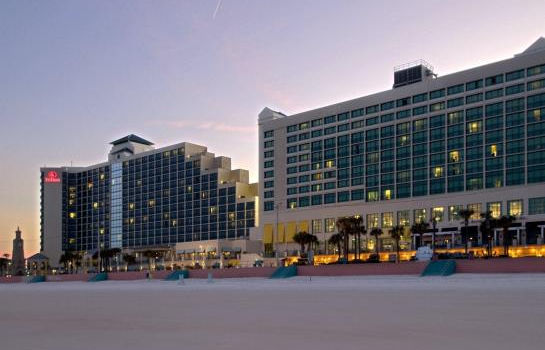
ANNUAL CONFERENCE
FLORIDA FORESTS & WATER FORUM

EASTER GREETINGS FROM FRWA

As we enter this beautiful season,

remember the message of hope that Easter brings.


Happy Easter

from the

FRWA Board and Staff

ANNUAL CONFERENCE UPDATE

Registration goes live on May 1st

FOCUS ON CHANGE

Final Week of 2025 Sessions

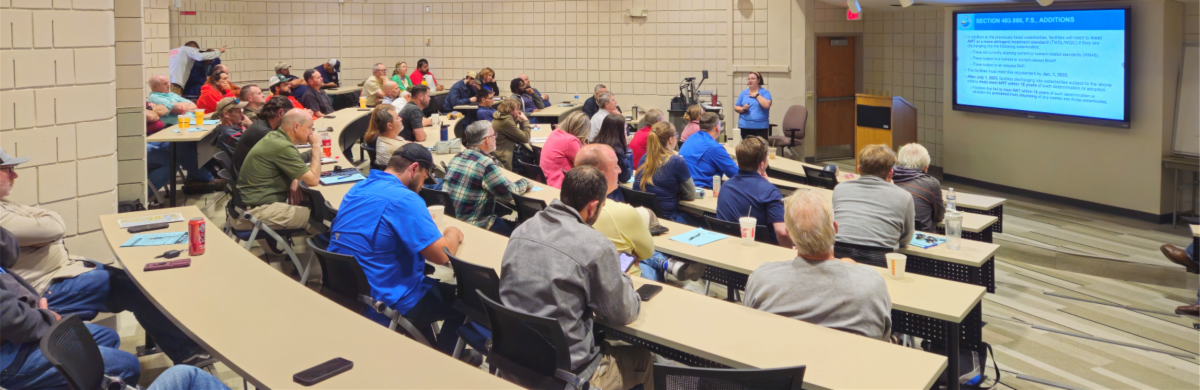
Next week FRWA will travel to Punta Gorda, April 21st and Pompano Beach, April 22nd to finish up this year's Focus on Change sessions. Don't forget to register even if you don't need CEUs to be sure that you will have a seat


The CEUs earned at this year's sessions will be posted by the deadline for CEUs of April 30, 2025. CEUs for the 2025 cycle must be earned and posted between May 1st, 2023 and April 30th, 2025. CEUs earned in this cycle cannot be rolled over into the 2027 cycle.

Florida Forests and Water Forum

The Florida Forests and Water Forum brings together partners from across the state to discuss the connection between healthy, managed forests and clean, reliable drinking water. You can join forest landowners, utilities, conservation groups, state agencies, and others as they plan for a safe, secure future for all Floridians.


At the forum you will learn about some of the history of the forest, its purpose, and some of the ongoing projects taking place on site. Topics will include forest genetics, prescribed fire regimes, forest carbon and water dynamics, forest hydrology, forest products, and more.


For information on this year's Forum and to register to attend, click here.

WHAT'S HAPPENING IN THE WATER WORLD

NATIONAL NEWS


Is The State Revolving Fund In Jeopardy? For decades, the State Revolving Fund (SRF) has served as a crucial financial backbone for water infrastructure projects across the United States. Established in 1987, the SRF provides low-interest loans to states and municipalities to maintain and improve drinking water and wastewater systems. more


Water Infrastructure Finance and Innovation Act (WIFIA) | US EPA Learn about the WIFIA program, project eligibility, and the loan process. View answers to frequent questions. more


LCRI Compliance: What's Included and How To Start Preparing | May 15, 2025 | 2:00 pm CT With the November 2027 Lead and Copper Rule Improvements (LCRI) compliance deadline on the horizon, water systems are evaluating their next steps. more


ICYMI: EPA Administrator Zeldin Releases Video Message About the EPA Mission | US EPA  U.S. Environmental Protection Agency (EPA) Administrator Lee Zeldin shared a message to America earlier this week, highlighting EPA’s mission, its statutory obligations, and the work the agency does to protect human health and the environment for Americans across the nation. more


Source Water Protection Plans To most, source water protection is not a new concept. In fact, there are source water protection plans (SWPPs) throughout the United States, all of which vary in scope and detail. more


STATE NEWS


EPA Meets With Water Systems During Water Week Earlier this week, as part of annual Water Week, when water professionals gather to discuss priority issues impacting the industry, U.S. Environmental Protection Agency (EPA) Senior Advisor for Water Jessica Kramer joined a roundtable to discuss the Water Infrastructure Financing and Innovation Act (WIFIA). more


Supplemental Appropriation for Hurricanes Helene and Milton and Hawai'i Wildfires (SAHMW)  On December 21, 2024, the American Relief Act, 2025, (“the Act”) was signed into law. The funding in Title VII of the Act for the Environmental Protection Agency (EPA) includes $3 billion in disaster relief of a Supplemental Appropriation for Hurricanes Helene and/or Milton and Hawai’i Wildfires (SA-HMW) for the State Revolving Fund (SRF) programs: $1.23 billion for the Clean Water State Revolving Fund (CWSRF) programs and $1.77 billion for the Drinking Water State Revolving Fund (DWSRF) programs, available only to states or territories in EPA Regions 3, 4, and 9 for wastewater treatment works and drinking water facilities impacted by Hurricanes Helene and Milton and the Hawai’i Wildfires.  more


Water Sector Cyber Resilience Briefing | April 23, 2025 | 1:00 pm CT As cyber attacks become increasingly sophisticated and frequent, water utilities face significant risks that can disrupt services potentially compromising public safety. more


Florida is the top state in a surprising category, according to industry group Underground utility lines are damaged by digging nearly 26,000 times each year across the Sunshine State — an average of 71 times each day, more than any other U.S. state. more


Vertical oyster gardens being placed along Trout River to enhance water quality ahead of inaugural Oyster Fest | News4Jax  Dozens of oyster beds are being placed along the Trout River, starting at Riverview Park on Jacksonville’s Northside, as part of a new $20,000 grant to improve the water quality in Northeast Florida. more


Florida manatees find warmth at power plants. They may need a new solution. | Christian Science Monitor Across a canal from the rusted scaffolding and towering concrete chimneys of Tampa Electric’s Apollo Beach power plant, hundreds of people crowd a boardwalk hoping to spot a manatee. more

This Week in Water History

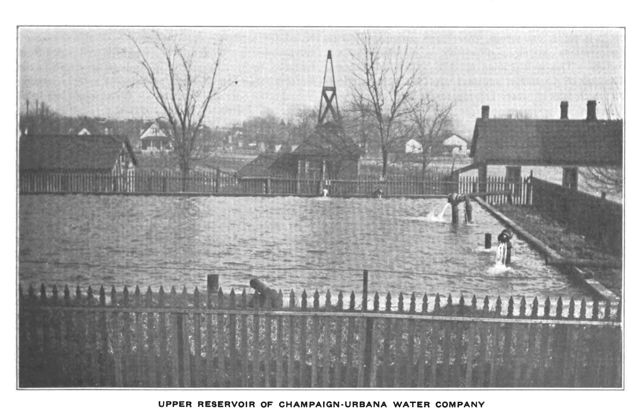
April 14, 1909: Municipal Journal and Engineer article. Champaign Urbana Water Works. “Underground Supply-Wells Pumped by Steam, Electric and Belt-Driven Pumps-Iron Removal by Aeration-Most Services Metered. The Champaign and Urbana Water Company, of which Mr. F. C. Amsbury is superintendent, supplies two Illinois cities from which it gets its name. These have a total combined population of 23,000 or 24,000, and form practically one community. An underground source of supply is tapped by twelve eight-inch wells about 16o feet deep. Each of these wells has its own separate direct-acting pumping head. Both Downey and Luitwieler pumps are used, with long rods extending to valves at the bottom of the wells. A few of the pumps are single-acting, but most are double-acting.

Four of the wells are located along one side of the main pumping station. The pumps in these are connected by belts, running in tunnels underneath the ground, to a main shaft, also in a tunnel, and this in turn is driven from the main engine. Three of the pumps are run by steam heads, the steam pipes being carried in tunnels and thoroughly jacketed. The other five pumps are operated by electric motors which receive their current from a generator in the main station.


Water from all the wells is delivered to a 250,000-gallon reservoir. As all underground water in this section contains more or less iron, which it is quite desirable to remove, aeration is resorted to. From the reservoir mentioned above the water flows over a weir and down a sloping concrete slab which exposes it to the air in a thin sheet. From this it passes to a second reservoir of 750,000 gallons. This method of aeration is fairly effective, but does not accomplish all that could be desired, and it is proposed to provide other arrangements before long.”


Reference: “Champaign Urbana Water Works.” 1909. Municipal Journal and Engineer. 26:15(April 14, 1909): 625.


Commentary:  I am not surprised that the method of aeration was only “fairly effective.” The author was probably being kind. It would take a few more decades before efficient aeration devices were created to oxidize ferrous iron in groundwaters. Note the "security" fence around the reservoir

FLORIDA RURAL WATER ASSOCIATION http://www.frwa.net

2970 Wellington Circle | Tallahassee FL 32309

850.668.2746 | Contact Us

Facebook  Twitter