We help leaders build and operate compliant organizations.
Since 2008
“Learn to manage your time.
The secret is not to do the five million things that do not need to be done and will never be missed.”
– Peter Drucker , 2002
MEDICAID PROGRAM INTEGRITY:
THE CONVERSATION HAS CHANGED
Last summer, much of the Medicaid discussion centered on what might happen — federal funding changes, work requirements and possible effects on states.
A year later, the conversation is becoming much more operational.
KFF's June 2026 status report describes federal Medicaid program integrity efforts increasingly focused on provider verification, claims analysis, state oversight and enforcement.
What Home Care Providers Should Know
Provider revalidation is increasing.
CMS has asked every state to revalidate Medicaid providers considered at higher risk for fraud, waste or abuse and to develop broader two-year revalidation strategies. More frequent or off-cycle reviews may become part of the process.
Home care is receiving particular attention.
In California, CMS deferred $1.3 billion in federal Medicaid payments while reviewing expenditures — approximately $1.1 billion involving home care.
That does not mean $1.1 billion in fraud occurred. California maintains that much of the spending growth resulted from legitimate expansion of home care services. But the action demonstrates the level of federal scrutiny now being applied to rapidly growing Medicaid expenditures.
Data is increasingly driving oversight.
CMS and states are expanding the use of claims analysis and data analytics to identify unusual billing and utilization patterns. Minnesota, for example, is revalidating thousands of providers and increasing its use of prepayment claims analysis.
Nonmedical providers are part of the discussion.
KFF also highlights federal concerns about some nonmedical Medicaid providers that do not have National Provider Identifiers (NPIs), raising questions about how these providers may be identified and screened in the future.
What Does This Mean for Colorado?
KFF does not identify Colorado among the states currently facing the specific federal inquiries described in the report. Colorado is, however, included in the nationwide provider revalidation initiative.
For Colorado Medicaid and HCBS providers, the fundamental expectation hasn't changed:
The service authorized, the care plan, the worker who provided the service, the documentation, EVV when required, and the claim submitted should all tell the same story.
That was true when I entered home care in 1988. It is true today.
What has changed is the government's ability to compare those pieces electronically, identify inconsistencies, and decide where to look more closely.
The standard isn't new. The visibility is.
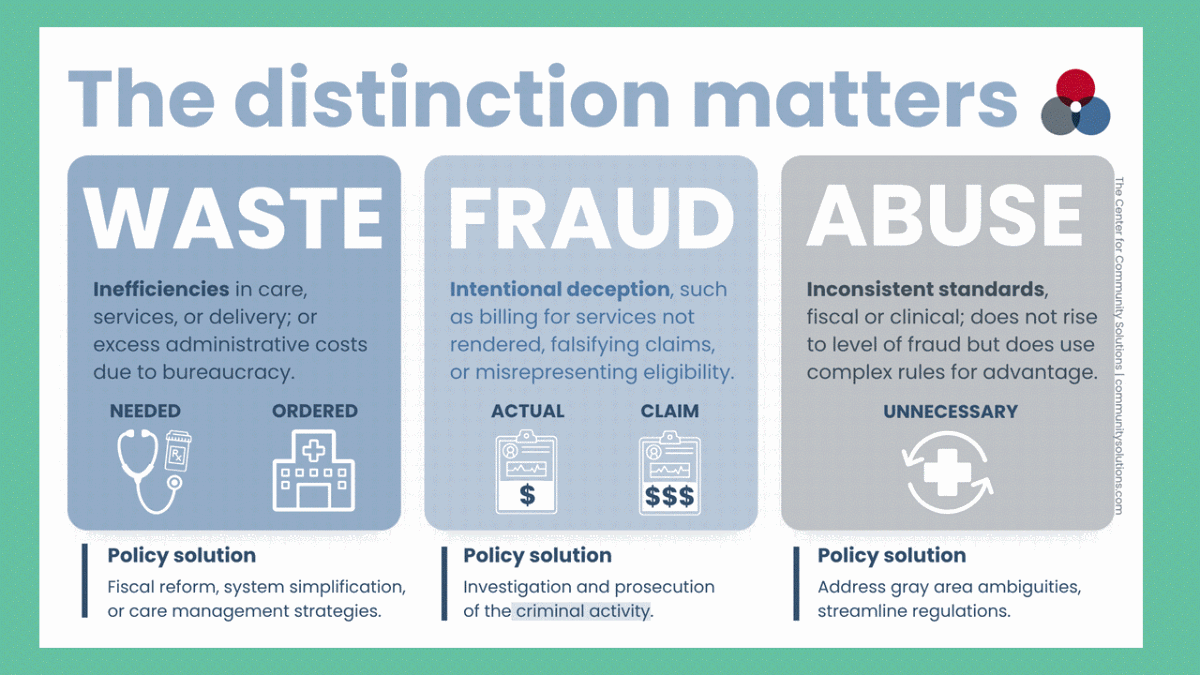
Program integrity, therefore, isn't simply a fraud-and-abuse topic. It is an everyday management responsibility.
What is changing is the government's ability to use provider enrollment information, claims data, analytics, revalidation and enforcement together.
The best defense isn't another policy sitting in a binder. It is a management system in which service delivery, documentation and billing tell the same story.
For home care agencies, program integrity increasingly looks less like a separate "fraud and abuse" compliance topic and more like an everyday management responsibility.
This training is a 2-CEU, fast-paced overview of the laws and penalties involved in oversight of health care programs by Federal and State authorities. Administrators need to understand the laws behind FWA—and how billing, documentation, oversight and reporting become management responsibilities. In this overview guide, we delve into FWA compliance in healthcare and explore significant, key regulations.
Learn key components of a basic compliance program - click below
Section 6032 of the Deficit Reduction Act of 2005 UPDATED
Implementing a compliance program is important to identify and prevent fraud and abuse for any entity in the health care at home industry.
Pursuant to Section 6032 of the Deficit Reduction Act of 2005 (DRA), providers that receive or make annual Medicaid payments of $5 million or moreannually must have certain written policies and procedures that are readily available to all employees, contractors, or agents.
Updated in 2026, this professional DRA policy and staff-training package reflects the HCPF 2025 notice and official HCPF DRA guidance, federal False Claims Act, and Colorado False Claims Act.
It includes:
Reformatted agency policy and procedure
Current $5 million applicability standard
Federal and Colorado false-claims law overview
Fraud, waste, abuse, billing, reporting, investigation, and non-retaliation procedures
Staff training summary
10-question post-quiz and answer key
Staff acknowledgement and signature form
Owner/administrator implementation checklist
Editable agency and compliance-contact fields
Designed for owners, administrators and managers of home care agencies subject to the DRA Section 6032 requirements.