|
My path to anthropology began with reproductive rights and justice advocacy. I first encountered feminism through a nun who taught me in high school. In college, gender studies deepened that interest, and after graduation I worked in community organizing around reproductive politics. That work eventually led me to graduate study in cultural anthropology.
I entered graduate school wanting to study abortion but I became interested in a place that seemed, at first, far removed from abortion care: the fertility clinic. I was reading about divorcing couples who disagreed over what should happen to embryos they had created through IVF. U.S. courts treated frozen embryos in radically different ways—as property, as persons, or as something in between. I began to wonder what would happen if embryos were to become legally defined as persons, not only for fertility patients but also for pregnant people and abortion rights.
That question led me to embryo adoption, a practice developed by white evangelical antiabortion advocates as part of the longstanding movement for embryo personhood. Embryo adoption facilitates the transfer unused IVF embryos through a process modeled on adoption. It casts embryos as children, donors and recipients as parents, and the practice as a form of child welfare rather than medical treatment. I spent years conducting ethnographic research with such programs, professionals, advocates, and families. My book, Conceiving Christian America, traces how this small corner of U.S. fertility medicine became part of a much larger effort to make embryos recognizable as children and, ultimately, as legal persons.
That research taught me to look for abortion politics beyond the places where abortion care occurs. One aim of my work has been to connect the seemingly distant dots linking fertility medicine, adoption, churches, courtrooms, prenatal care, contraception, miscarriage, and far beyond.
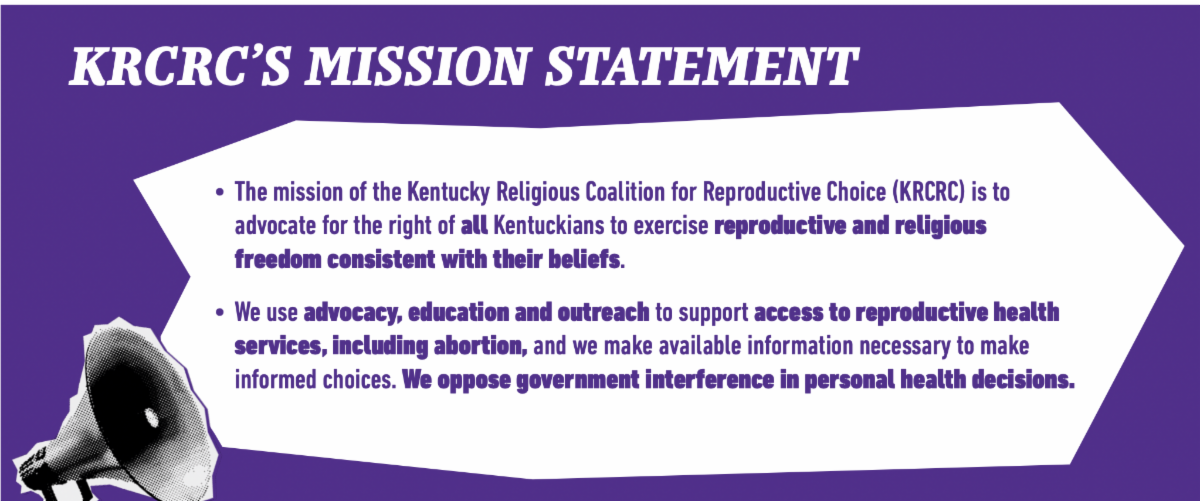
My current research follows a similar instinct but turns toward another intersection of religion and reproduction. I am now studying faith leaders and communities that support reproductive rights and justice, with curiosity about who counts as a faith leader and the many forms that support can take. This work is bringing me into conversation with clergy, chaplains, talkline volunteers, abortion funds, and advocacy organizations in different religious traditions and regions. It has been illuminating to learn how support for reproductive freedom can emerge directly from spiritual traditions, be informed by embodied experiences, and intersect with many other commitments to social justice. I am especially interested in how faith leaders who support abortion rights are responding to intensified reproductive restrictions following Dobbs. As an ethnographer, I look forward to learning more through immersive opportunities—including at the Kentucky State Fair!
This project feels like a return to where I began. Advocacy led me to research how reproductive politics gain power through religious institutions. That research has now brought me back to advocates and faith leaders creating religious possibilities grounded in dignity, autonomy, care, flourishing, and trust in people to make moral decisions about their own lives.
If you are a faith leader who supports reproductive rights and/or justice and are interested in sharing your story, please be in touch!
|