CURRENTS is CivicWell's free quarterly newsletter providing California's climate practitioners with information on energy issues affecting local governments. |
|
Contributed to CURRENTS by Kelsey Wolf-Cloud of CivicWell
|
|
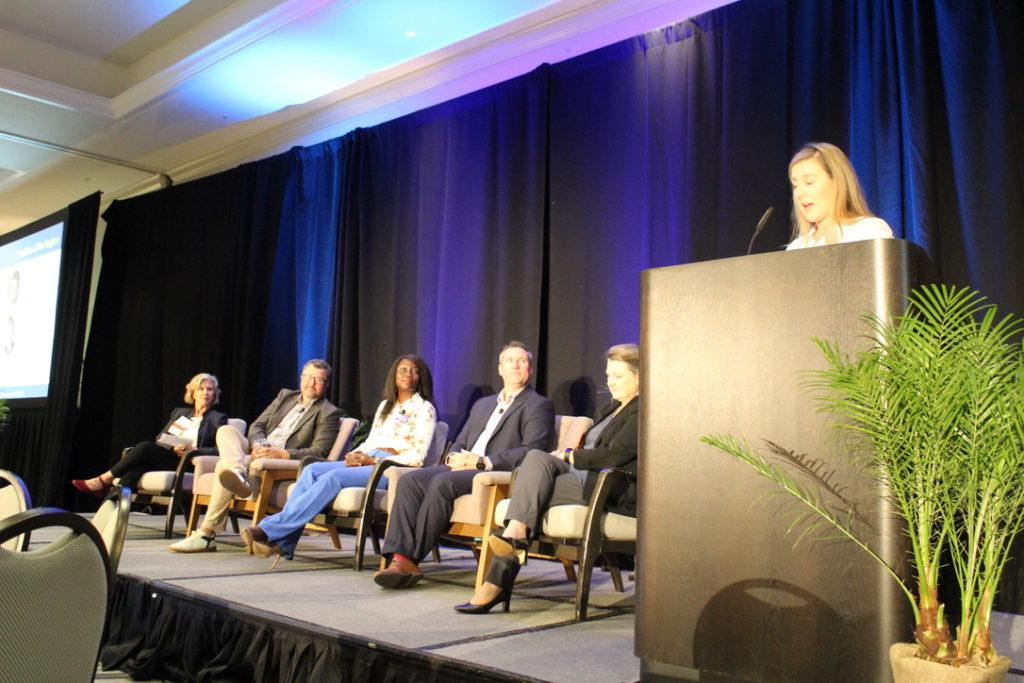
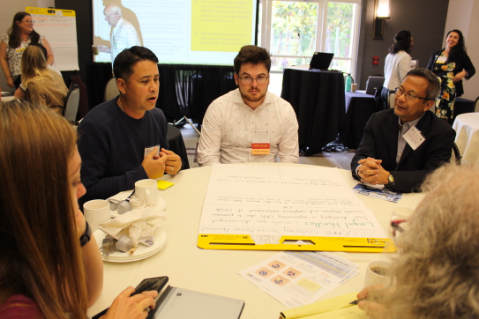
The 14th Annual California Climate and Energy Forum was held June 13-14, 2023 in Santa Rosa, California. The theme of the forum was Investment, Innovation, and Inclusion: Locals Leading a Clean Energy, Climate-Stable Future for All. This year saw our audience grow to over 400, representing 119 cities across California. The forum engaged a diverse audience with 34% of attendees being under 35, 48% being BIPOC (up from 41% in 2022), and 62% being women. 57 scholarship recipients were able to attend due to registration and travel scholarships. The organizations represented were also diverse across sectors, with 37% of participants representing a city or county, 24% coming from a nonprofit organization, 13% being a private sector business, 7% representing a CCA or utility, and the remainder coming from other agencies, academia, and more! Continue Reading.
|
|
Contributed to CURRENTS by Marna Schwartz of the City of Berkeley
|
|
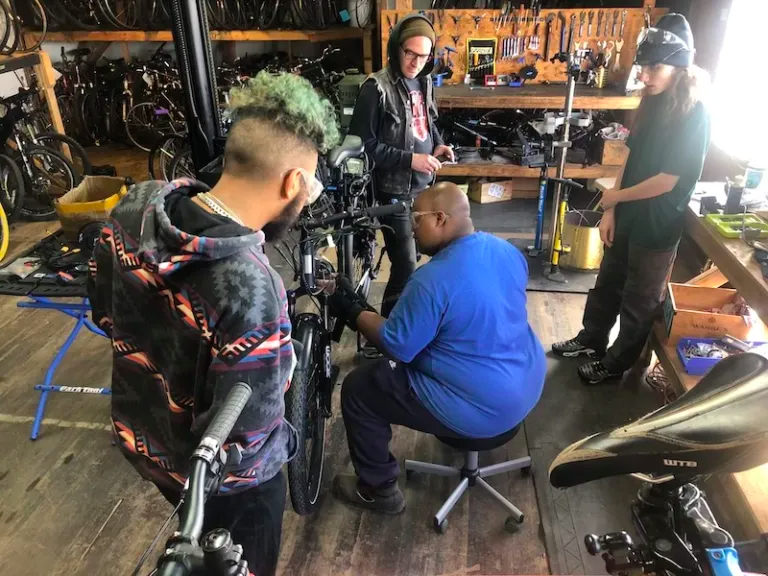
Berkeley’s Climate Equity Fund provides climate change and resilience benefits to income-qualified residents. The $600,000 Fund consists of three program areas:
-
Resilient Home Retrofits for building electrification upgrades for income-qualified households and workforce development for contractors learning about electrification
-
Berkeley E-Bike Equity Project (BEEP) for e-bikes for income-qualified residents and youth education and workforce training for e-bike maintenance
-
Climate Equity Collaborative for capacity building for local community-based organizations and to elevate the voices of under-represented community members along with the distribution of resilience-focused equipment and resources to those who are most vulnerable to climate impacts
|
|
Contributed to CURRENTS by Angela Hacker of the California Climate and Energy Collaborative, and John Vandervort of CivicWell
|
|
With new energy and climate investments, policies, initiatives, and engagement opportunities popping up every day, there is high levels of both excitement and overwhelm from all levels of government. State and federal agencies are under tight timelines, strict statutes, and heavy political pressure to roll out programs that can achieve equitable results. If we actually calculated the sheer number of climate professionals’ hours being spent trying to access external dollars and support, or getting stuck behind statewide administrative or policy obstacles, rather than taking action, w would likely find it staggering and it might help illuminate why more isn’t happening faster. Continue Reading. |
|
Contributed to CURRENTS by Benjamin Druyon of the Western Riverside Council of Governments
|
|
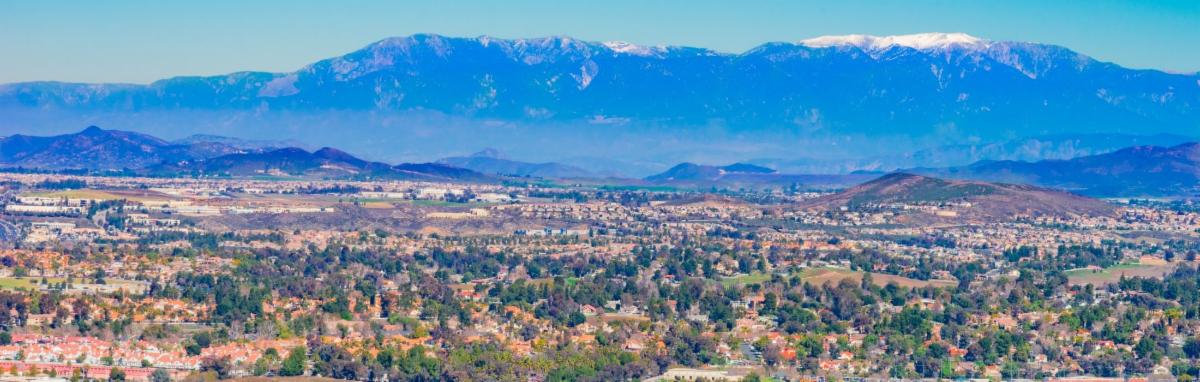
In Riverside and San Bernardino counties, our culture is distinctly different, and our climate is uniquely challenging. Collectively known as the Inland Empire, our geographic location, population, and distance from major metropolitan areas can result in inconsistent and insufficient public services in our region. Not only do we live in one of the most remote regions in California, but every summer we experience extreme heat and intensely dry conditions. As a result, air conditioning is a must in most buildings, resulting in high energy use and costs. Combined, these climatic and economic conditions can be particularly challenging for disadvantaged and hard-to-reach communities with vulnerable residents, including children, the elderly, and lower-income families. Continue Reading.
|
|
Contributed to CURRENTS by Darin Graber of the City of Grand Junction, Colorado
|
|
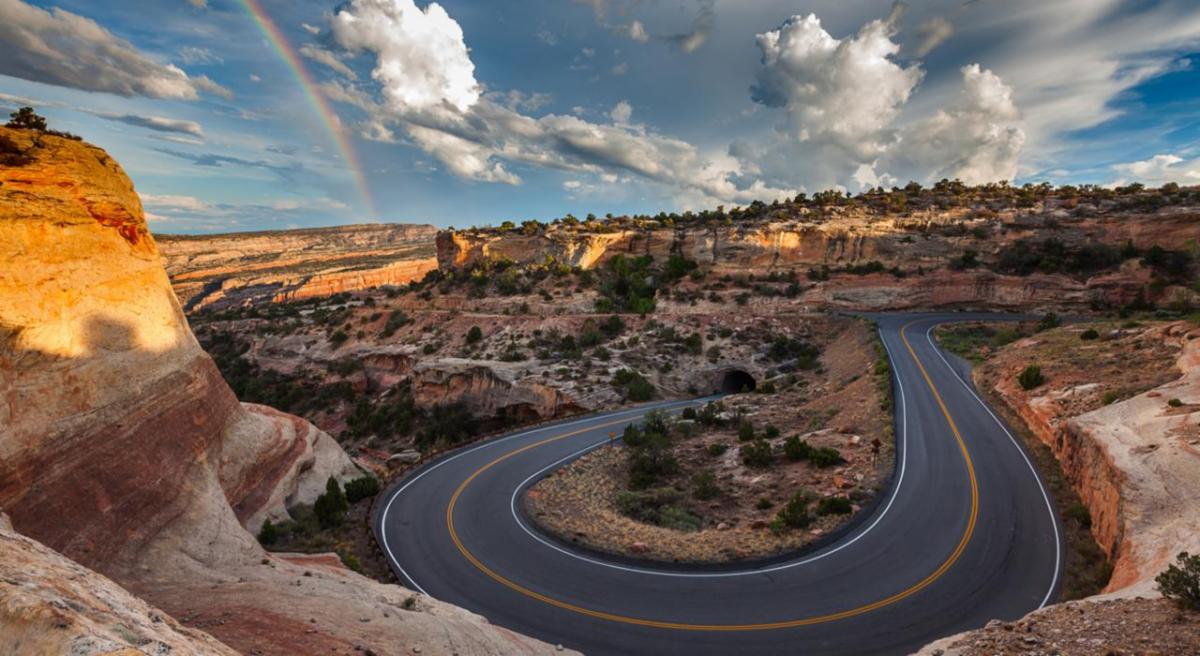
The “Western Slope” of Colorado is a sprawling, visually dramatic environment where oil and gas extraction has historically played a large role in boom-and-bust economic cycles. This region includes Grand Junction, the largest Colorado municipality west of the Continental Divide. Named for its location at the confluence of the Gunnison River and the Colorado River (formerly the “Grand River”) and surrounded by orchards, vineyards, and other agriculture, visitors could be forgiven for assuming that water is abundant here. But residents of all political persuasions and professions know differently. And while we know that oil and gas extraction and related GHG emissions contribute to this water scarcity through warming-exacerbated drought, the community hasn’t yet embraced EV adoption like much of the state. Continue Reading.
|
|
Contributed to CURRENTS by Alero Moju of the County of San Mateo
|
|
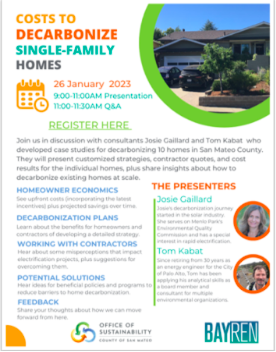
Earlier this year, the County of San Mateo unveiled its groundbreaking study that explores the costs to decarbonize 10 different types of single-family homes on the climatically diverse peninsula. The results of this study added to collective knowledge and can help inform strategies for decarbonizing single-family homes at scale. The County started by wanting to understand the overall industry landscape: the barriers to electrifying existing single-family homes and opportunities for collaboration to accelerate progress. So, in fall of 2020, the County received funding from the Bay Area Regional Energy Network (BayREN) to lead a system mapping project in collaboration with Presidio Graduate School, managed by Susan Wright. Continue Reading. |
|
CURRENTS is CivicWell's free quarterly newsletter providing local elected officials and staff with current information on energy issues affecting California local governments.
Please feel free to pass CURRENTS along to friends, associates and others who may be interested.
Fill out this form if you are interested in submitting content for future issues.
|
|
|
|
|
|
|