|
The School-Based Rehabilitation Services (SBRS) newsletter is for teachers, resource teachers, early childhood educators, educational assistants, administrators and other school staff interested in learning more about creating inclusive, supportive classrooms for students with different needs and abilities.
Crafted exclusively for our school partners, this must-read newsletter offers updates about Grandview Kids' programs and services that are the most relevant to you. We will also share helpful tips from our clinicians that can be used in your schools and classrooms.
| |
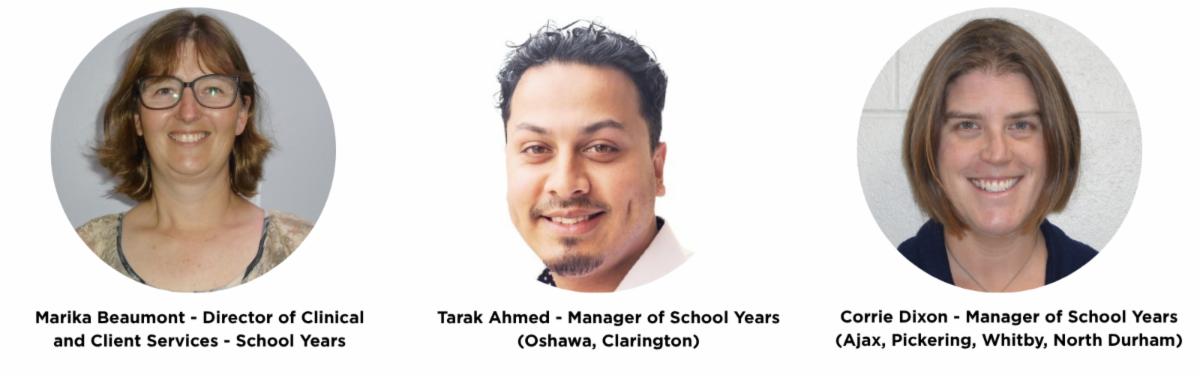
Director of Clinical and Client Services - School Years, Marika Beaumont
E-mail: Marika.Beaumont@grandviewkids.ca | Tel : 437-738-0104
Manager of School Years (Oshawa, Clarington), Tarak Ahmed
E-mail: Tarak.Ahmed@grandviewkids.ca, Tel: 437-738-0072
Manager of School Years (Ajax, Pickering, Whitby, North Durham), Corrie Dixon
E-mail: Corrie.Dixon@grandviewkids.ca, Tel: 437-703-9960
If you have any questions about the content within this newsletter or Grandview Kids’ SBRS, please contact Marika using her contact details above.
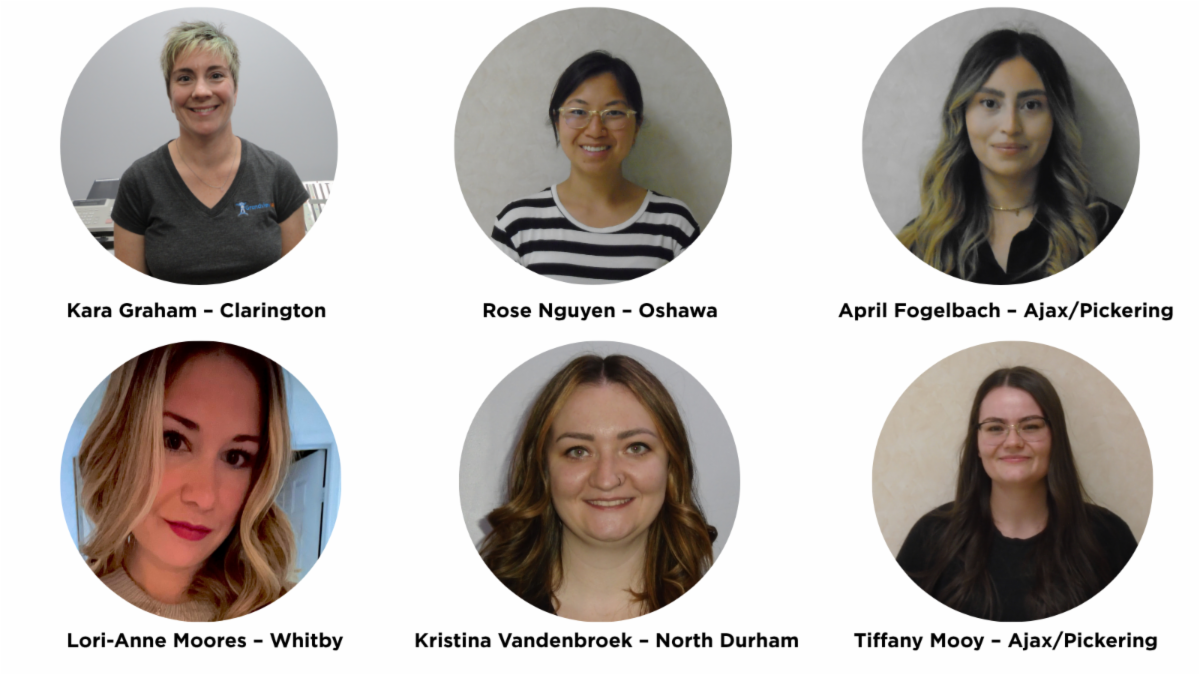
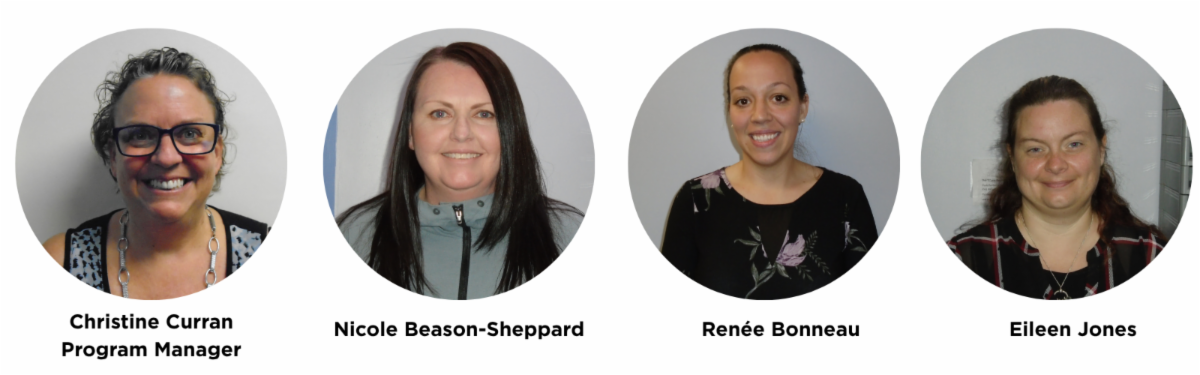
| | Meet the Occupational Therapy Assistant (OTA) team | | Meet the Service Navigation team | | Service Navigation at Grandview Kids helps families and professionals access the right programs and services for children, youth and families. The team guides clients through the referral process, ensuring eligibility is met based on established criteria. Beyond connecting families to Grandview Kids’ own programs, Service Navigation also links them to valuable community resources and supports. This service helps make it easier for families to find the right care and opportunities for their child’s development and well-being. | | What you will find in this issue | |
- A review of our new speech therapy pathways.
- Informative educational sessions focused on occupational therapy that empower you with knowledge and strategies to support your students.
- Clear guidance on who to refer to Grandview Kids services.
| | Speech-language therapy pathways | | |
Our Speech-Language Pathology (SLP) Team at Grandview Kids has worked with educators and families to create three distinct pathways of service in our program. We are focused on early intervention, waitlist reduction and tiered models of service delivery, meaning every student receives the evidence-informed therapy that reflects their needs.
Kindergarten Pathway: This year, Grandview Kids rolled out a new Kindergarten Pathway, starting with Junior Kindergarten (JK) students. JK students were offered an assessment at one of Grandview Kids’ locations throughout the Durham Region with follow-up treatment for up to ten sessions. These students will be reassessed and may also be eligible to be offered sessions in their Senior Kindergarten year. This pathway aims to ensure early intervention and involve the parent or caregiver in each session to build their skills, enabling them to continue to practice at home. If children still meet the criteria for school-based rehabilitation services in speech-language pathology (SBRS-SLP), they will transition to the Elementary Pathway (detailed below). Please note there is still a wait for service in this pathway.
Elementary Pathway: This pathway will support students' reassessment and treatment at their school. Tips will be provided to school staff to help them build communication skills. Parents are invited to attend an additional session to strengthen their coaching skills for home practice. If students continue to meet the criteria for SBRS-SLP once they complete the elementary pathway, they will then transition to the Collaboration Pathway.
Collaboration Pathway: This pathway is for students in grade seven and older and those who have finished their Elementary Pathway. It is a bi-annual appointment upon family request. The student and their parent or caregiver will call Grandview Kids to book an appointment at one of our sites. They will then receive a brief reassessment, a home practice program review and update and coaching support to work on their skills at home. Students using this pathway remain eligible until they leave school.
Eligibility:
Students are eligible for service if:
- They attend a publicly funded school in the Durham Region.
- They are intentionally communicating verbally using at least 50 words.
- They present with three or more speech errors which are not age-appropriate.
-
They can follow directions and tolerate a therapy session for a minimum of 30 minutes (note: this last criterion does not apply to the Kindergarten pathway).
If you have any questions, we are happy to schedule a meeting or provide an in-service on these new pathways. All students referred after April 1 of their Senior Kindergarten year will be seen in the Elementary pathway, unless the reason for referral is fluency only.
| | |
Education sessions – Occupational Therapy
As part of Tier 1 Occupational Therapy, our Occupational Therapists (OTs) and Occupational Therapy Assistants (OTAs) are happy to provide education sessions for teachers and other school staff or families on a wide variety of topics. These can be done virtually, in-person, at the start or end of the school day or as a lunch and learn. You choose the length of time and the topic, and we will ensure you receive tips and strategies or other specific knowledge to support your students.
| | |
| |
Topics can include:
- Understanding the sensory system and its impacts in the classroom
- Self-regulation – what it is and how we can support students
- Developing fine motor skills for printing and scissor skills
- Understanding executive function and how to support needs in the classroom at different ages
- Lifts and transfers
- Universal equipment – what, when, why and how
| | |
The OTAs are a key part of the delivery of Tier 1 services in schools. If you have requested a classroom session, they will reach out to you to book that at a time that works for you and your classroom. Here is an example of a class activity session.
There is also a “Resource Binder” in each school full of handouts for teachers and parents. Please connect with your Special Education Resource Teacher/Program Support Teacher if you don’t know where it is. It is being updated later this fall with new resources.
We want your help to help us plan education opportunities for educators! Please complete this 6-question survey to support our planning.
| | |
Determining when to refer a student to
Grandview Kids' services
| | |
1. Safety concerns
Consultation to support the student’s access to the school environment and manage safety concerns, including access to classrooms, playground/schoolyard, stairs and gym/ physical education program.
*Not related to behavioural concerns, but physical or functional challenges.
2. Equipment needs
Support in recommending appropriate mobility equipment, including walkers, canes/crutches, seating, standers, orthotics and adapted gross motor equipment.
3. Lifts and transfers
Consultation regarding appropriate techniques and safety considerations for various transfers (performed by support staff or mechanical lift systems).
4. Gross motor skills
Consultation to provide adaptations, alternative activities and accommodations based on the student's goal areas identified by the school to maximize inclusion and participation.
5. Post-surgical support
Short-term support and consultation for students post-surgery or with acute injuries requiring mobility equipment or modifications to the school environment.
| | |
Occupational Therapy
Please note: These are guidelines, and school staff must continue to consult with their OT for prior approval of referrals.
| | |
Appropriate
- Senior Kindergarten fine motor/printing concerns (after Tier 1 interventions have been trialled, but concerns persist).
-
Physical/accessibility concerns (not toilet training).
- Sensory equipment needs (after Tier 1 intervention and equipment (i.e., dynamic seating, fidgets, earmuffs, etc.) have been trialled, and a pattern of seeking/avoiding sensory input across various situations/environments has been observed by OT through Tier 1 visits).
-
Assistive technology needs, according to the school board’s specific policies, Durham Catholic District School Board (DCDSB); Peterborough Victoria Northumberland and Clarington Catholic District School Board (PVNCCDSB); Durham District School Board (DDSB) if the student is younger than Grade 7; not including Kawartha Pine Ridge District School Board (KPR) if assistive technology is the only reason for referral, as school staff can initiate AT recommendations.
- DDSB/DCDSB student who has received Entry to School (ETS) services in the current school year, strategies from ETS have been implemented and tried, ETS consults have happened, and a consultation with School-Based Rehabilitation Services (SBRS) OT has occurred. ETS OT must consult with SBR OT prior to discharge from ETS if there are ongoing needs.
- KPR/PVNCC – ETS transition strategies must have been implemented/trialled, phone consult with the school and ETS must have happened, ETS OT to connect with SBRS OT prior to referral being submitted.
- Concerns regarding specific behaviours versus sensory needs where the behavioural service team is involved, strategies are implemented and the behavioural service team has identified impacting sensory difficulties.
Inappropriate
- Junior Kindergarten fine motor/printing concerns. Instead, the OT can provide Tier 1 classroom visits and Tier 1 interventions to school staff.
- No clear school goals (concerns are based solely on a student’s diagnosis or OT is recommended by another clinician).
- Concerns regarding aggression, self-injury, elopement or other behaviours and there has been no involvement from the school board’s behavioural service team (i.e., referrals for behavioural difficulties are not related to sensory processing needs, including behaviours to escape, for attention and/or for a tangible reward). OT can provide Tier 1 consult once the behavioural service team is involved.
- Goals regarding stopping stimming or self-stimulation, as this is not neurodivergent-affirming care.
- Concerns regarding emotional regulation, mental health, social skills and motivation. Instead, school staff should consult with psychoeducational services.
| | |
Speech-Language Pathology
The Grandview Kids School-Based Speech-Language Therapy (SLP) program is currently open to referrals from an SLP only. If you think a student at your school would benefit from our services, please reach out to your school board’s SLP to complete the referral.
Please remember to update Grandview Kids if students are leaving your school or have arrived and have been involved with SBRS services through us or another agency, such as Five Counties Children’s Centre or Children’s Treatment Network (CTN). This allows us to keep track of the student and ensure there are up-to-date consents.
Let us know these changes by contacting our Service Navigation department at service.navigation@grandviewkids.ca.
You can also ask Service Navigation at any time for a list of all students at your school receiving treatment or on our waitlist. If you have any questions or concerns about the services offered at your school, please reach out to Corrie, Tarak, or Marika (contact information noted at the beginning of this newsletter), and we will be happy to connect with you.
| | Adolescent Transition Program | |
Child to adult services transition resources for students with developmental needs aged 15+
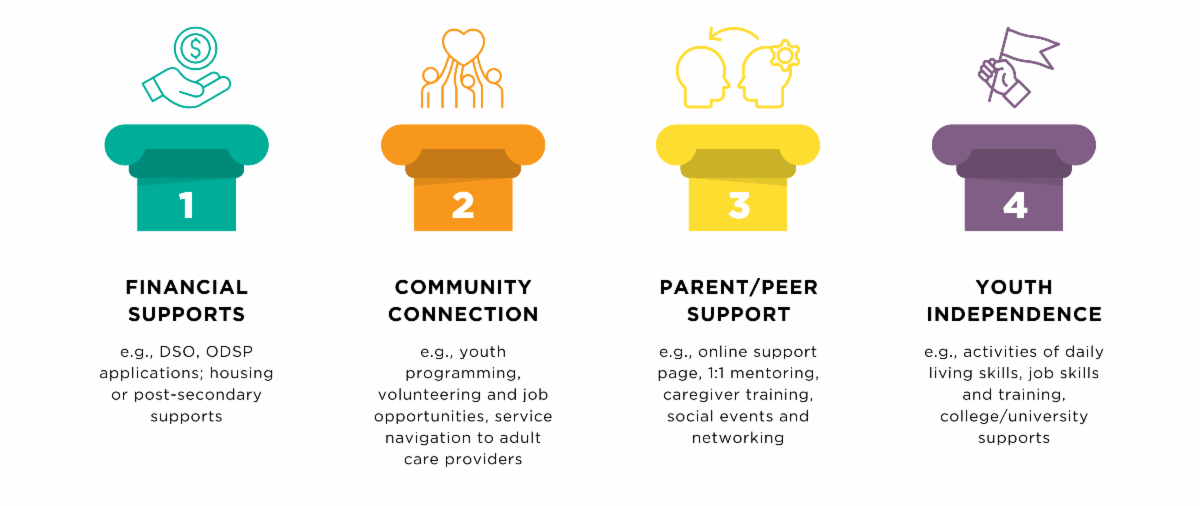
Grandview Kids’ Adolescent Transition Program provides much-needed support to clients and their families that are aging out of paediatric developmental services, such as those offered by Grandview Kids. Families would start this transition planning at age 15 (Grade 10) to prepare for critical applications at ages 16 and 18.
The Program focuses on four goal areas:
| | |
ACTION: Please share this flyer with your students and their families. Share in your newsletters. Post in your schools.
Who is eligible?
Youths, aged 15 to 21, who have communication, physical or developmental needs. There are resources and supports for caregivers, as well as adolescents. The youth may or may not have been a Grandview Kids client in the past. If a client/student is receiving transition support through SBRS, they are still eligible to access to access other tools and resources offered through the Adolescent Transition Program.
Where should clients, caregivers or educators start?
Download our Adolescent Transition Toolkit. This toolkit serves as a roadmap. It can be used by youths on their own, or by their caregivers and educators. The Toolkit reviews steps that adolescents must take as they transition to adult services. We also included other resources, which some clients and caregivers might find helpful throughout the transition process. The Toolkit starts at Age 12 through Age 18.
Caregivers, parents and adult guardians can join our free, online support group, called the Transition: Adolescent Parent Support (TAPS) Facebook page. It offers networking, mentorship, support and resource navigation in a safe, collaborative space. For more information, email familyengagement@grandviewkids.ca.
To make a referral to the Adolescent Transition Program, please visit the Grandview Kids online Referral page.
| | Ability Acceptance Program | | Make your school more inclusive for all students: Host a presentation on Ability Acceptance | | |
At Grandview Kids, we aim to actively contribute to a community that is inclusive and accepting of all abilities. Our Ability Acceptance Program is available to schools, with the goal to enhance the understanding and acceptance of all abilities and promote inclusive practices in the classroom and beyond. We teach about easy ways to be an inclusive ally, the history and prevalence of disabilities in Canada, Accessibility for Ontarians with Disabilities Act (AODA) considerations and more. The presentation is appropriate for staff or students.
Through this program, we offer:
- Presenters with lived experience (former Grandview clients or caregivers)
- Presentations tailored to all audiences, including adults, youth and children (starting in Grade 3)
- Virtual and in-person options
To request a presentation, fill out this form. For more information, visit our website under Resources > Ability Acceptance Program.
| | Want to hear more from Grandview Kids? | | Subscribe to our monthly newsletter, Gather | | Register for our monthly newsletter for Grandview Kids clients, caregivers, their families and our community partners: Gather by Grandview! Distributed on the first of every month, Gather shares all things Grandview: new programs and projects, upcoming events, important announcements and more. | |
Want to view past editions of Gather by Grandview?
View the archived list on our website!
| | The SBRS newsletter will be distributed twice a year: once in the Fall (at the start of the school year) and once in the Spring (before the school year draws to a close). If you have any questions about the newsletter or Grandview Kids SBRS, please email Marika Beaumont, Director of Clinical and Client Services - School Years, at Marika.Beaumont@grandviewkids.ca. | | | | |