|
As communities in the area move into the fall season, be mindful of the pipelines and underground infrastructure that keep homes, farms, businesses, and communities connected.
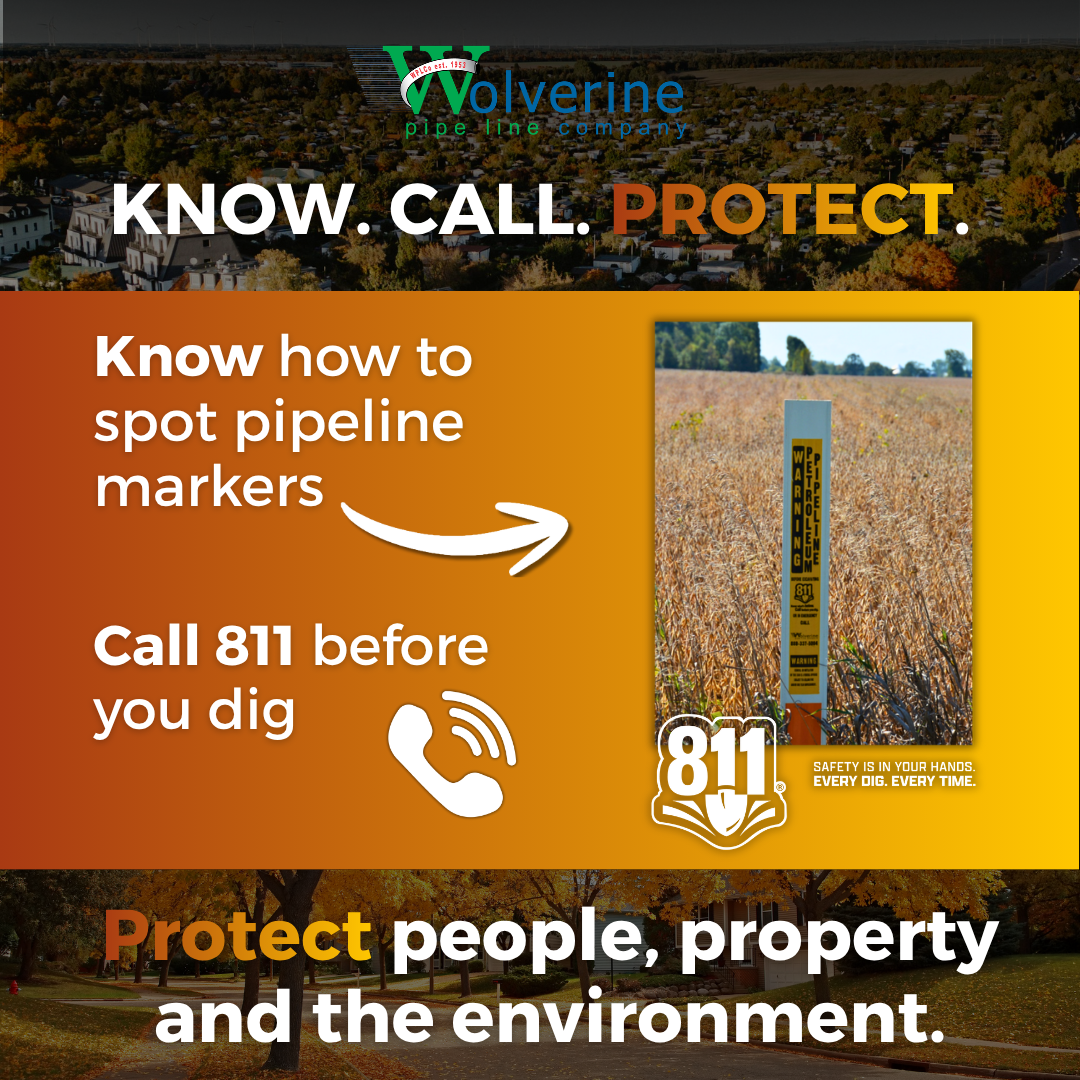
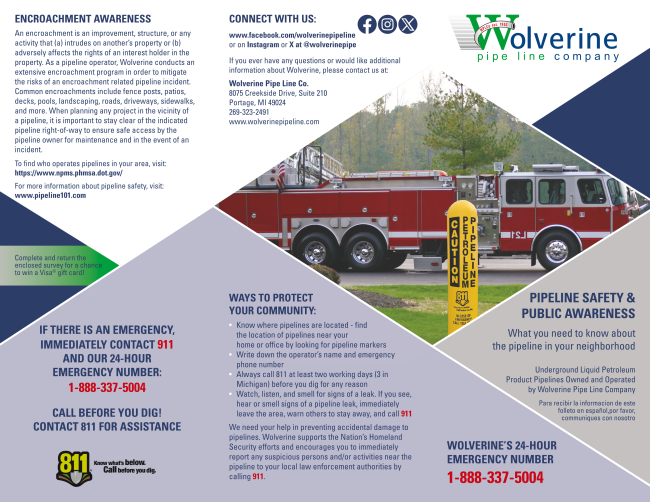
Everyone has a duty to help keep pipelines safe. If you know how to identify pipeline markers, understand what pipelines transport, and follow proper excavation practices, you can help protect people, property, and the environment.
| | |
Pipeline safety starts with awareness.
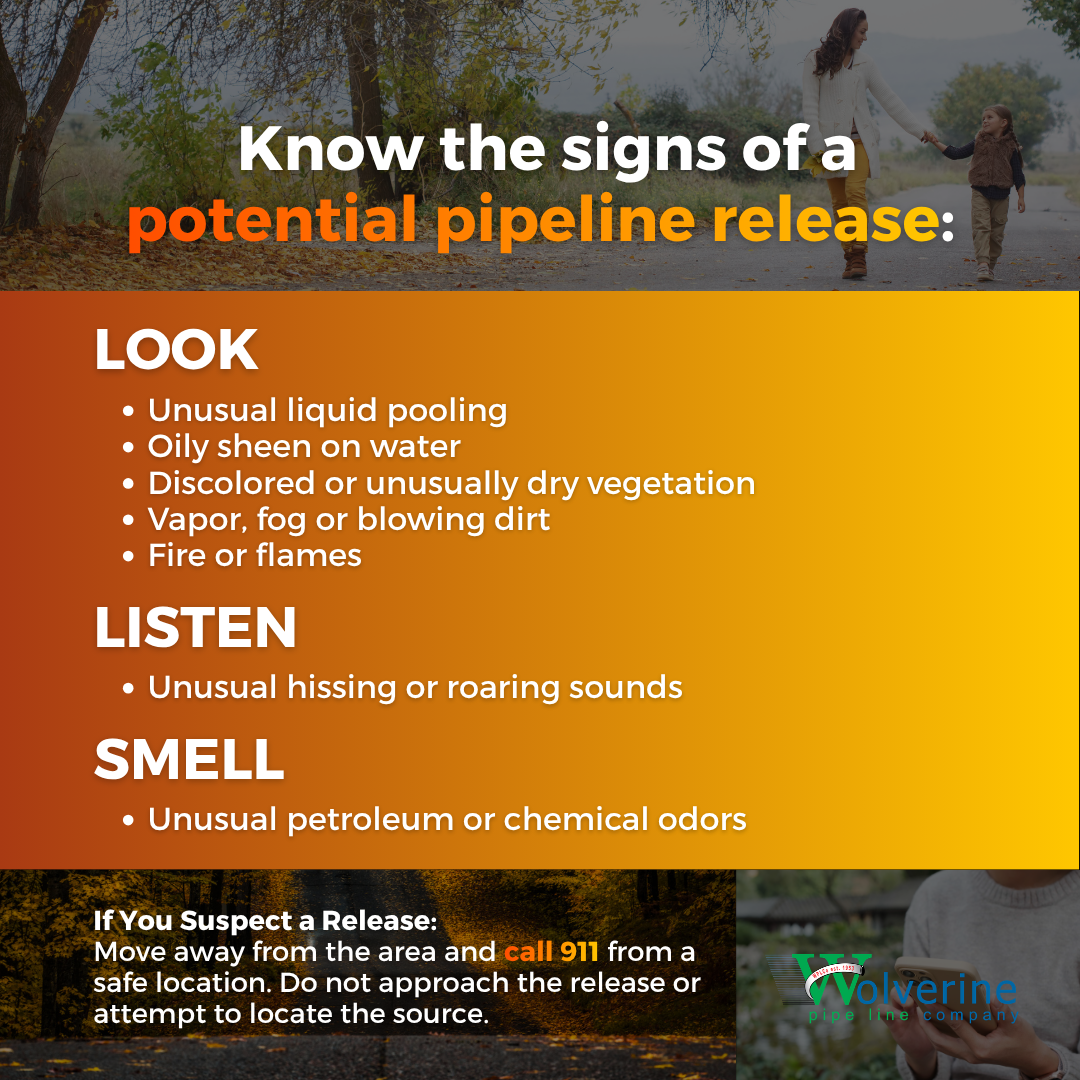
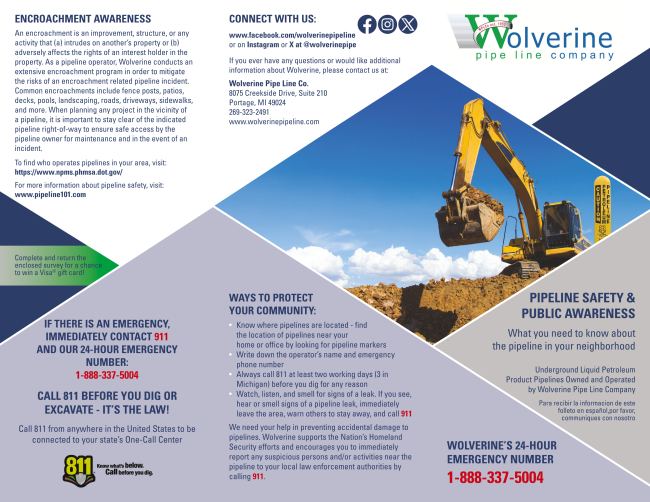
If you live, work, or spend time near a pipeline, knowing what to look, listen, and smell for can help you recognize a potential release.
Know the signs of a potential pipeline release:
| |
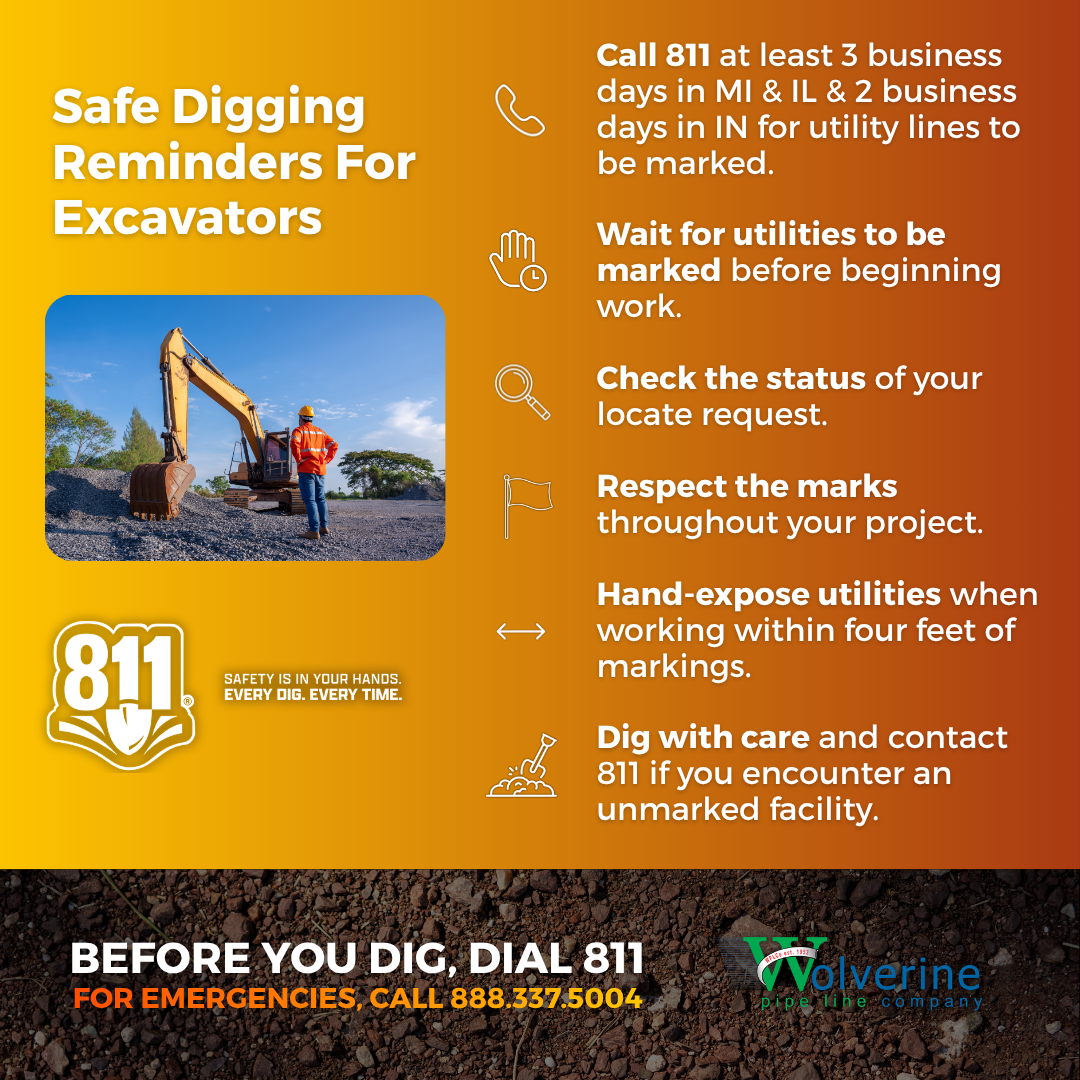
The good news is that preventing these incidents is simple. Before you start any digging project, contact 811 or submit an online request a few business days in advance. Utility companies will mark the approximate location of underground lines.
This way, you can dig safely and help avoid injuries, service disruptions, and costly repairs.
| | |
Before you dig—whether you're installing a fence, taking down trees, winterizing sprinklers, replacing a driveway, or doing a larger excavation—always call 811 first.
In Michigan and Illinois, excavators must give at least three business days' notice before starting any excavation or blasting, and in Indiana, they must give at least two business days' notice. After the underground utilities are marked, you must respect those markings and use proper care when digging near them.
| | Remember: Underground infrastructure can be damaged even if the project seems small. | | |
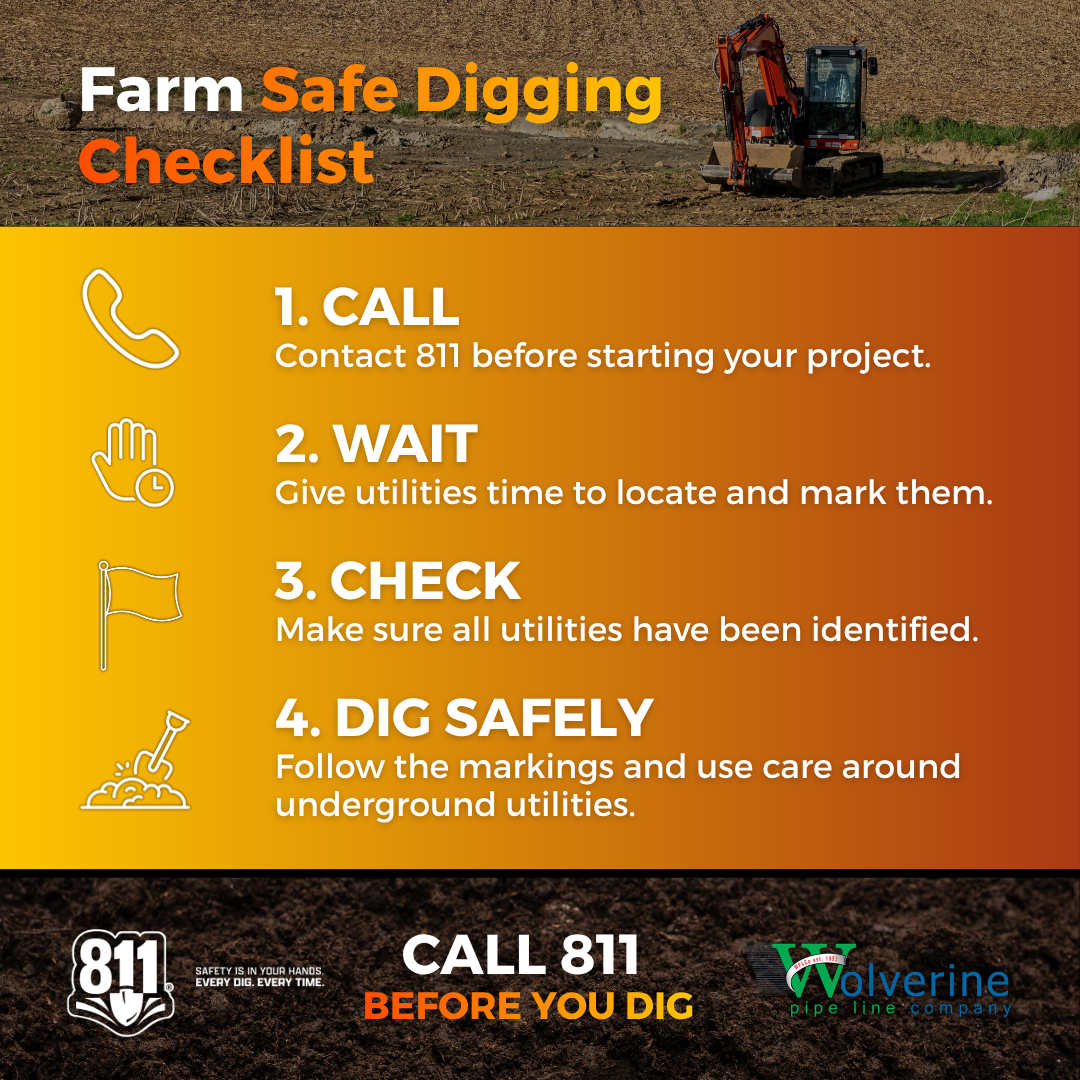
Farmers and agricultural areas can do excavation and soil-disturbing work year-round. For example, installing or repairing drain tiles, digging out irrigation systems, replacing fence posts, leveling land, or carrying out other farm improvements.
Before you begin, call 811 and allow enough time for the utilities to be located and marked.
| | | |
Pipeline and utility locations aren't always visible from the surface, and a few minutes of advance planning can help you avoid damage, service interruptions, and potentially dangerous situations.
Know what’s below before you start.
| | |
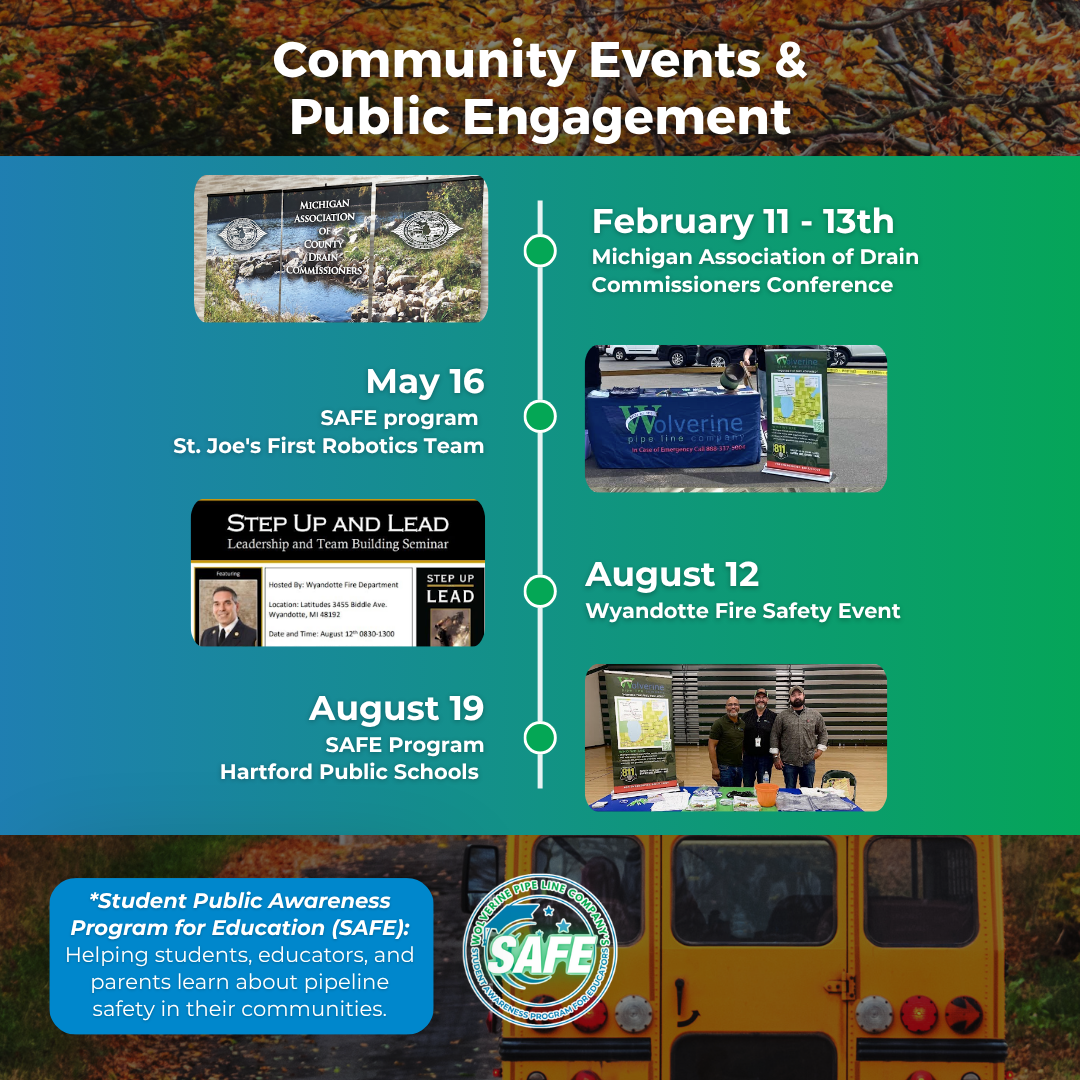
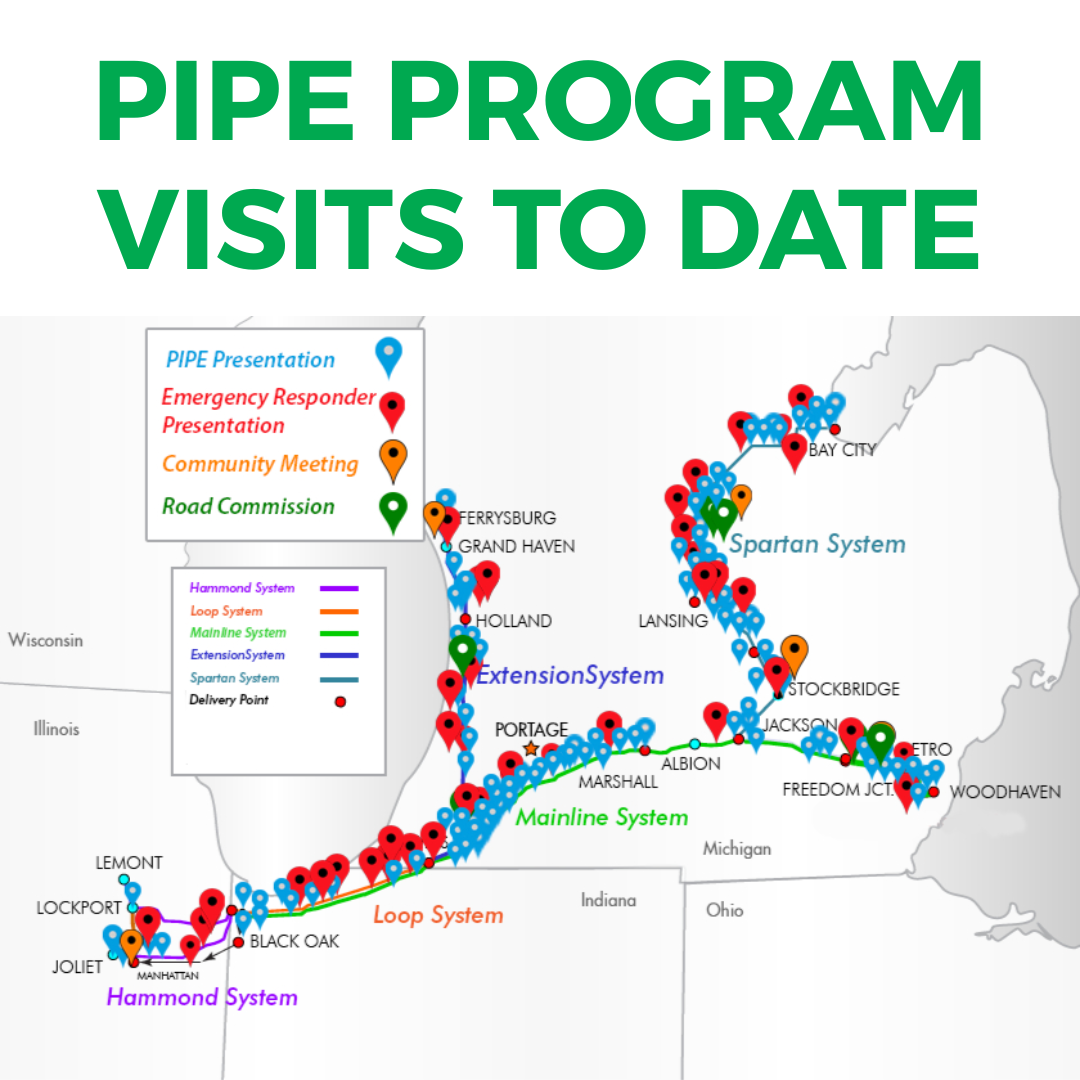
Wolverine Pipe Line Company continues to engage with communities, emergency responders, public officials, and other stakeholders in the areas where we operate through our PIPE and SAFE Programs.
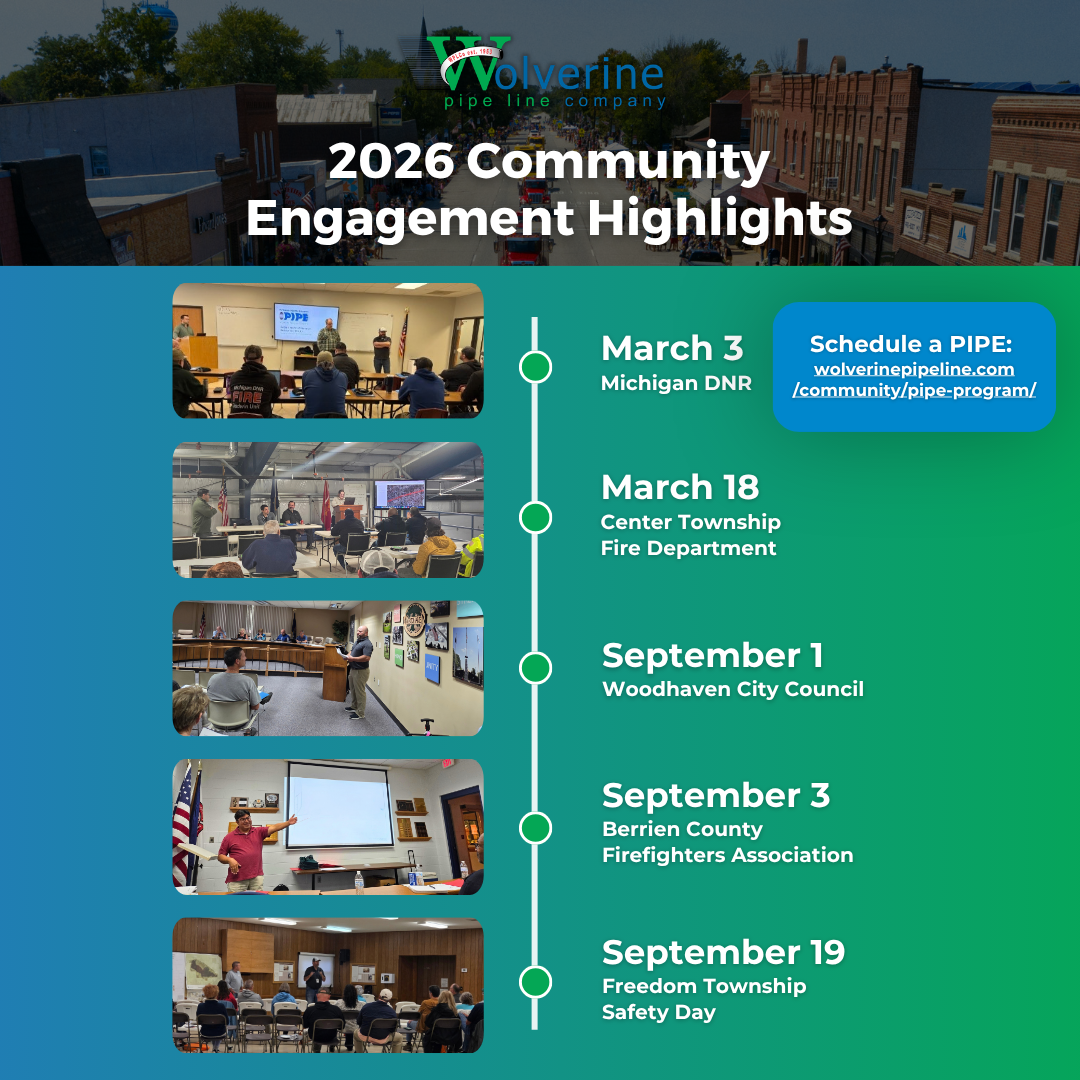
In 2026, Wolverine participated in community presentations, public meetings, conferences, and safety events, giving people the chance to learn about pipeline safety and connect directly with communities along the pipeline.
2026 Community Engagement Highlights
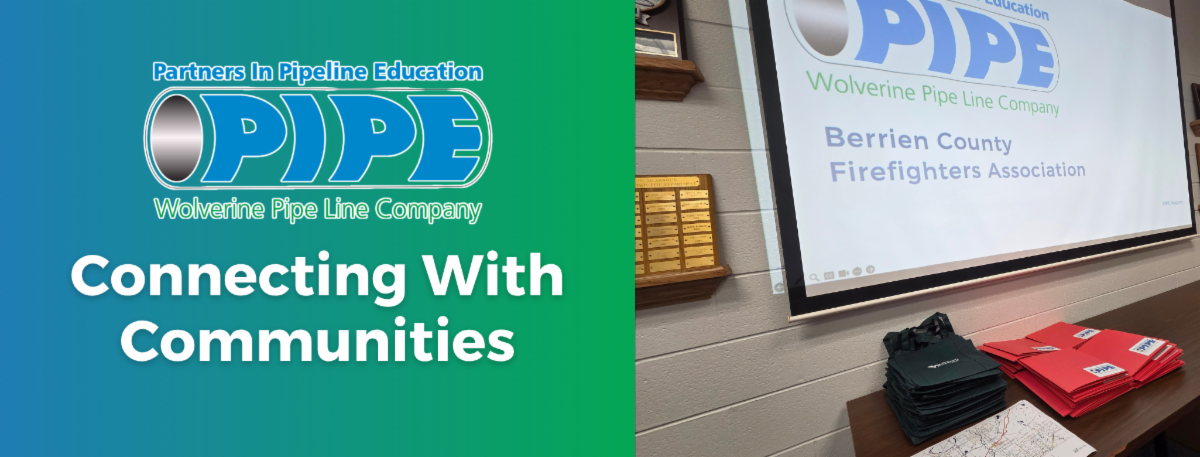
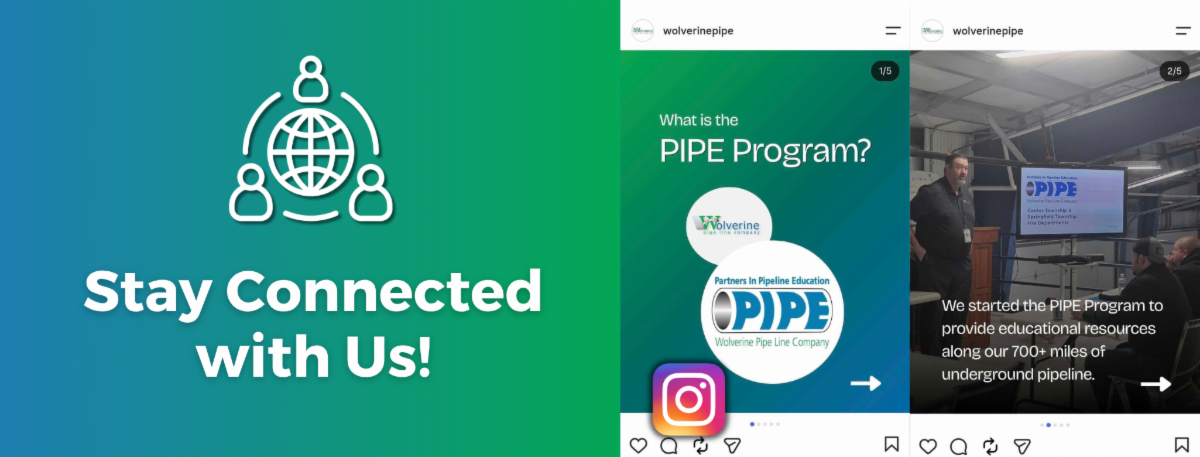
| | We invite you to follow us on our social media platforms for the latest updates, safety tips, and community news. Join the conversation and be part of our commitment to pipeline safety and community engagement! | | | | Wolverine’s community outreach initiative, Partners in Pipeline Education (PIPE), is designed to build strong relationships with the communities we serve. Through the PIPE Program, we make personal connections to the local Fire Departments, Police Departments, Emergency Management Personnel, Government Officials and other stakeholders with whom we work with for normal operation and maintenance activities and in case of an actual emergency. We are currently scheduling virtual and in-person PIPE Presentations for the remaining calendar year. If interested in participating in this program, click here to contact Chelsea Yi. | | |
Thank you for reading the Wolverine Pipe Line Company Community Newsletter. We hope you enjoyed reading about some of the community programs and projects we have been involved in for the past few months.
Please don't forget to share this newsletter with employees, first responders, constituents, and anyone else who might be interested.
Always remember to call 811 before you dig!
| | |
Wolverine Pipe Line Company | [www.wolverinepipeline.com]
FOR EMERGENCIES CALL 888.337.5004
| | Wolverine Pipe Line Company is a fuel transportation company headquartered in Portage, Michigan. Wolverine operates ~700 miles of active pipeline transporting refined petroleum products from refineries in the Chicago area to the Illinois, Indiana, and Michigan markets. Wolverine transports approximately 30% of all gasoline and diesel fuel used in Michigan. | | | | |