|
Summer Airport Master Record Seminar Recap
Kansas City, MO
| |
|
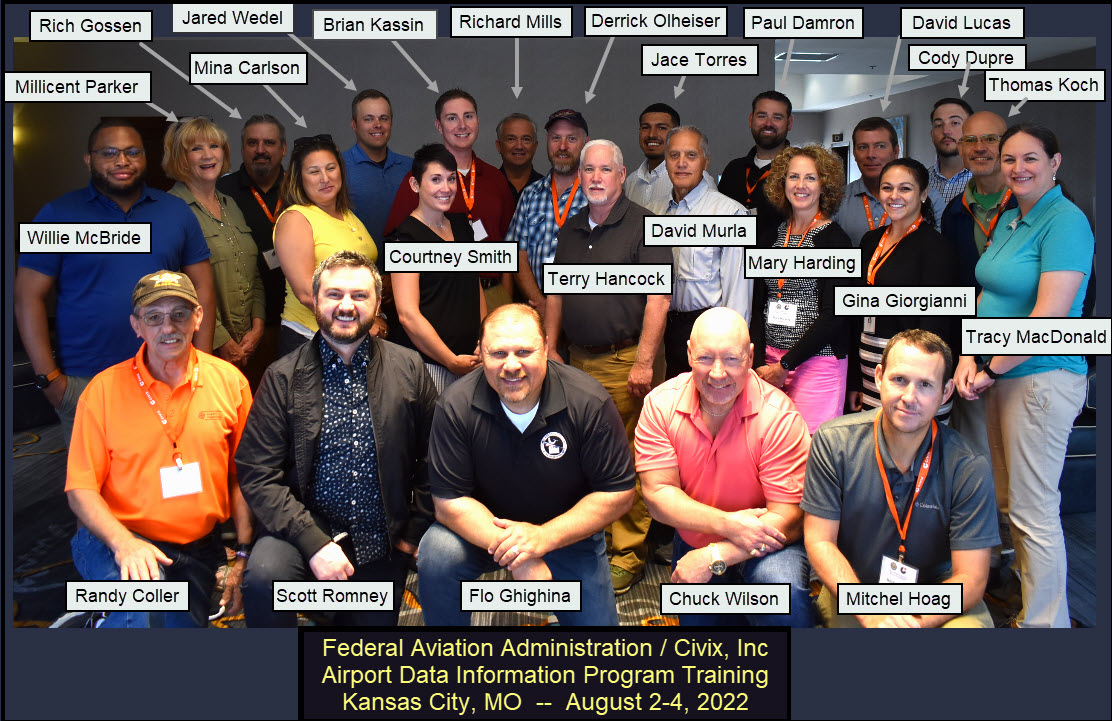
In August, GCR Inc. (dba Civix), in association with the FAA's Airport Engineering Division, AAS-100, Airport Data and Information Program, held another Airport Master Record Seminar, in Kansas City. Twenty inspectors from 13 states attended the seminar. This was the second training for 2022, as the first seminar took place in New Orleans in March.
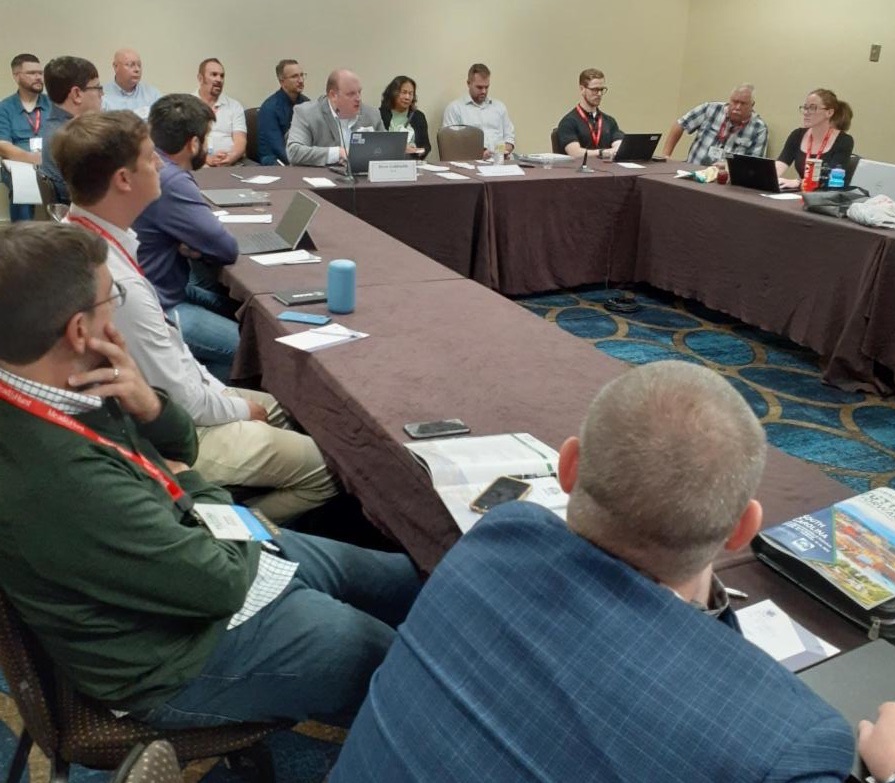
The training was conducted by Randy Coller, Michigan State Inspector and GCR Inc.'s (dba Civix) David Murla and Rich Gossen. Trainers discussed the post inspection reporting process after the airport inspection had taken place. In addition, inspectors learned how to input data into the ADIP (Airport Data and Information Portal) and Airport Master Records (AMR) Module. The class wrapped up with questions from instructors related to airport material records.
For photos from the seminar, click here.
| |
Mock Pre-Inspection at Lee's Summit Airport | |
|
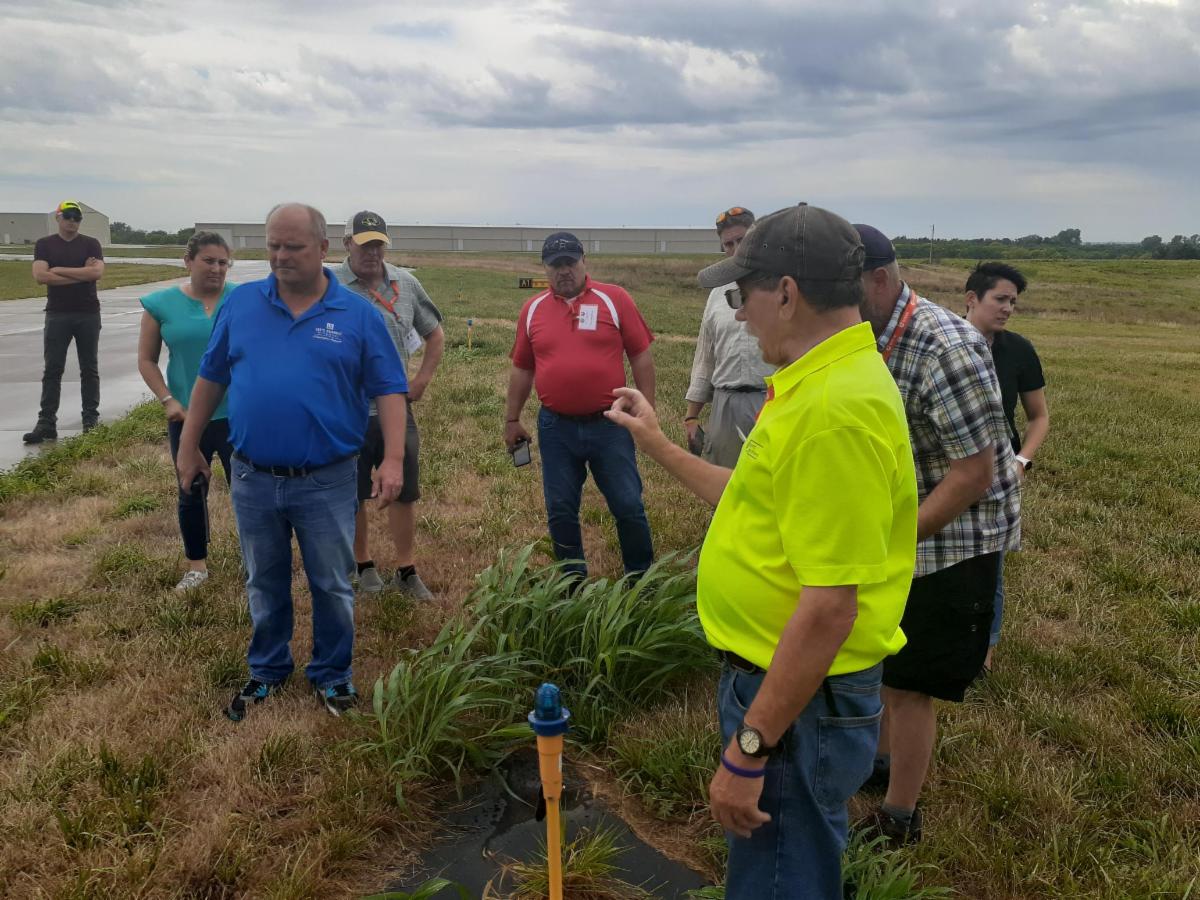
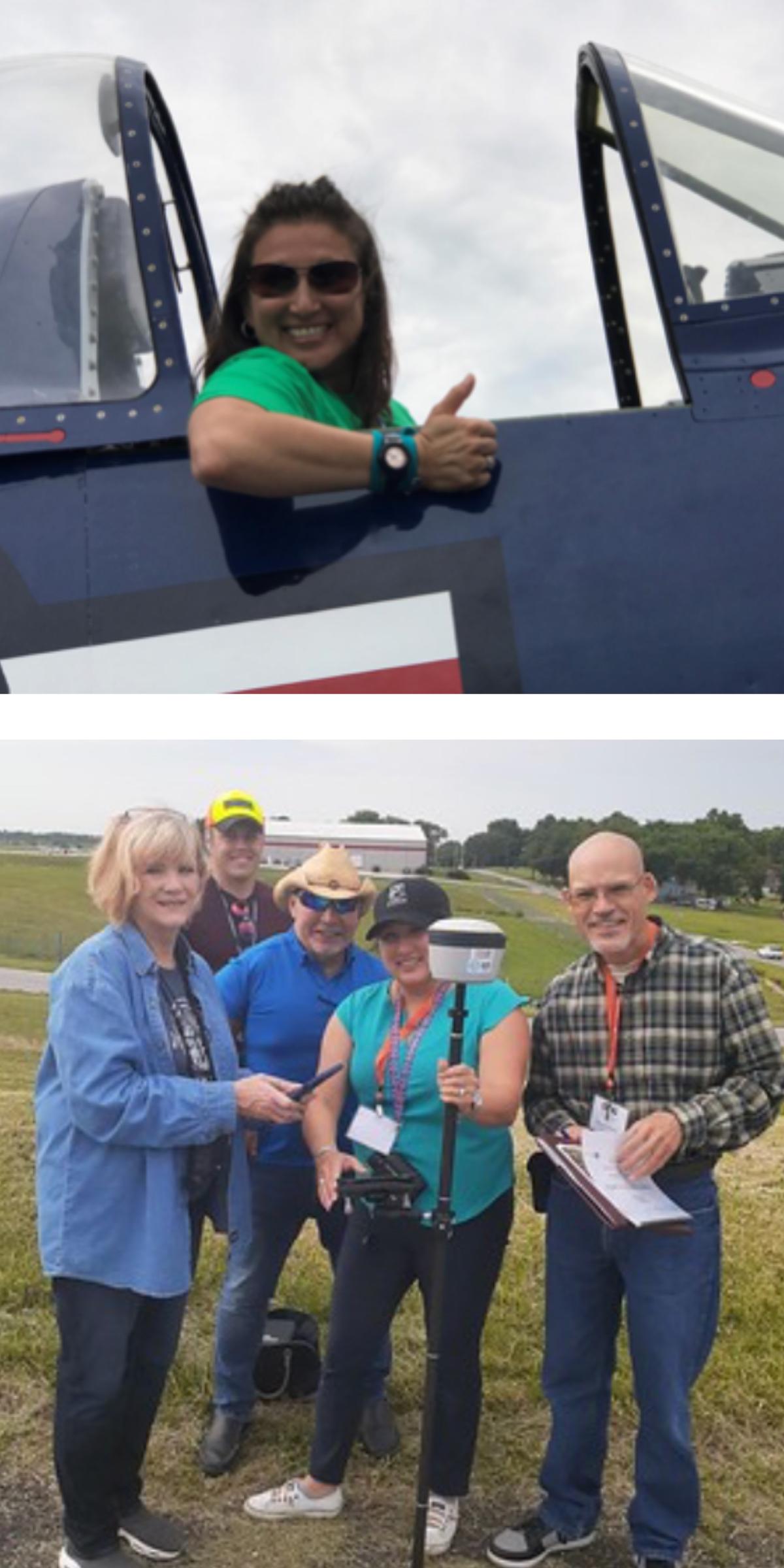
A key highlight of the summer seminar was a visit to Lee’s Summit municipal airport for a training day that featured: inspection components, field procedures, as well as a tour of the airport. While there, inspectors divided into four groups and completed a field work survey sheet. The field work items included 5010 data elements 50-80. Inspectors utilized survey equipment to measure objects such trees, hangars, poles within a part 177 approach surface.
Inspectors also met with Joel Arrington, Airport Manager for Lee’s Summit municipal airport, where he answered questions about the airport’s business plan and master plan. He, along with Randy Coller, walked through the post inspection interview process, that occurs after the airport inspection has been completed.
| |
NASAO Concludes 91st Annual Convention | |
|
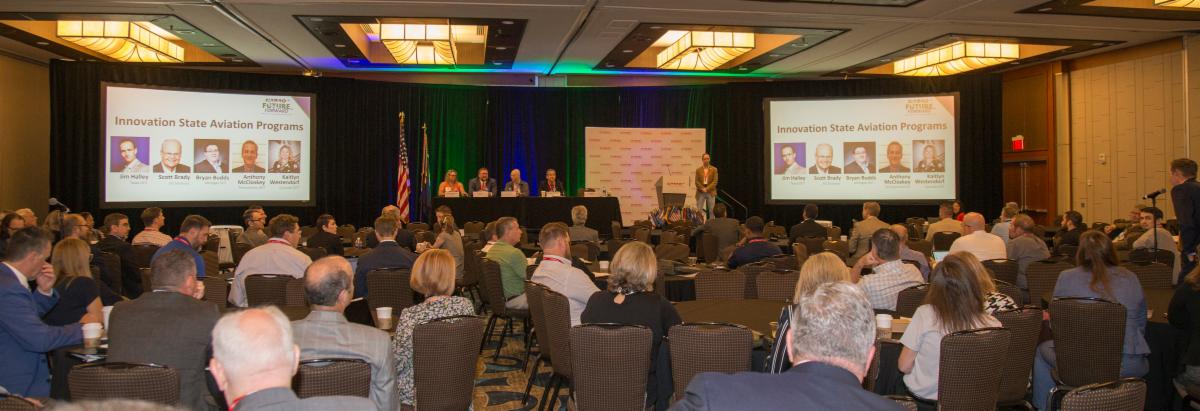
The National Association of State Aviation Officials (NASAO) hosted its 91st Annual Convention and Tradeshow in Greenville, SC, from September 10-14, 2022. More than 300 state, federal and industry professionals attended the convention with nearly 40 state aviation leaders and 43 organizations exhibiting.
The convention sessions addressed a variety of topics including integrating uncrewed aircraft systems into the national airspace system, preparing for advanced air mobility operations, and addressing aviation workforce development challenges. Be sure to check out the convention wrap-up page to view a video recap and photos from the event, as well as speakers’ slide presentations.
During the convention, NASAO announced its 2022-2023 Board of Directors. The new board will be led by Dave Ulane, Director, Division of Aeronautics, Colorado Department of Transportation, as chair. View the the press release for the full list of Board Members.
NASAO will host next year's convention at the Embassy Suites, Northwest Arkansas Hotel, Spa & Convention Center in Rogers, AR, from September 9-13, 2023, followed by
Pennsylvania in 2024. Be sure to mark your calendars!
| Airport Inspection Updates | |
During the convention, Andrew Goldsmith, Project Manager for Aviation Data Service & Software Application Development at the FAA, provided an update on the airport inspection program and policies and procedures associated with the collection and maintenance of airport data.
He discussed updates regarding the Airport Data & Information Portal (ADIP) website, Private Facilities, FAA Form 7480-1, Digital 7480 Landing Area Proposal, Private Airport Survey, and the Runaway Airspace Management (RAM) Tool.
You can view his slides here.
| |
|
Takeaways from the Summer
Airport Master Record Seminar
| |
|
NASAO interviewed three inspectors who attended the Summer Airport Master Record
Seminar in August to learn more about them and find out what their biggest takeaways were from the seminar.
| |
|
Q&A with Millicent Parker
Airport Safety Inspector
Sr. Multimodal Operations/
Airspace Specialist
Missouri, DOT, Aviation
How long have you been an inspector? What motivated you to become an inspector?
I’ve been an inspector since January of 2012. I’ve worked with MoDOT aviation section since 2008. I started my career in aviation with line service at a small general aviation airport, where my passion for aviation developed. I obtained my BS degree in airport technology and my MS in aviation safety, and never looked back. Aviation is not only my career, it is my avocation.
What were some of the most helpful takeaways, from the summer seminar that were useful to you when conducting the inspections?
The demonstrations of technology available for determining obstructions to the Part 77 surfaces.
Can you share a recent inspection experience that was unique?
This fall, I inspected an impeccably maintained turf airport that recently changed from private use to public use. This airport has been through three generations in the same family. Their commitment to hard work and passion for aviation humbled me; all three generations fly, one daughter is a commercial airline pilot. This is the true spirit of what fuels our general aviation airports. Please see the image above of Paul and Carolyn Applegate, their son Matt, their daughter Shalyn Marchetti and Annie, the Saint Bernard.
We visited the Lee Summit airport for the field obstruction and survey evaluation, have you inspected the airport in the past? If so, how has the airport changed since MODOT has started inspections?
I have inspected the Lee’s Summit Airport many times. It is truly a gem in our state airport system. Over the years, during the course of inspections, we identified structures that violated safety surfaces, visual navaids that did not comply with FAA regulations, approached obstructions, and pavement geometry that needed correction. With the improvement projects over the years, this airport has seen a significant increase in operations, especially turbine aircraft, and is slated to become one of our busiest. It will likely be towered in the near future.
| |
|
Q&A with Mina Carlson
Airport Program Manager-Heliports
Minnesota DOT, Office of Aeronautics
How long have you been an inspector? What motivated you to become an inspector?
I joined MnDOT’s Office of Aeronautics in July 2020 as the primary Heliport inspector for the group. MN has over 500+ facilities we inspect/license; I’ve recently started the cross-pollination into the airports (private, public, commercially serviced) and seaplane bases. There are currently only four inspectors (myself included) in our operations group in the office. I have a background in airport management/operations and had initially thought I’d venture down the airport consultant path out of college. Transitioning to an airport inspector role is coming full circle; 20 years in the making. Being an inspector of the state is like being on a state tour 24/7. MN is an excellent state for touring any time of year; plus, as a bonus, we fly to our destinations when able.
What were some of the most helpful takeaways from the summer seminar that was useful to you when conducting the inspections?
The emphasis item regarding creating suitable remarks was the most poignant takeaway. This applies to all of the facilities we inspect and has also been a point of interest within our office. The second notable item were NOTAMs and verifying who the correct person for each airport is that is authorized to create the NOTAMs. As simple as the two sound, they are overlooked frequently. My experience thus far is that many airport managers do not know if they were listed as the proper authority in creating/publishing NOTAMs for their airports, along with the how-to and when for them.
Can you share a recent inspection experience that was unique?
MN is a great stay-cation type of state. Given the business environment we now live work in and the miracle of wi-fi, we can work live almost anywhere in the state. For the past two summers, I’ve been able to combine a bit of MN tour, stay-cation, and work by using my RV. By adapting to the world of telecommuting and the technology solutions available with teleworking, I’ve been able to use my RV as a mobile office during our inspection season.
| |
|
At the seminar, Mina used MNDOT’s innovative technology during the airport inspection, see photo above. Her colleague, James McCanney, who is the Airport Coordinator for MNDOT Aeronautics, shared some insights on the equipment and process MNDOT uses for their inspections that has sped up the airport inspection processing time:
The MnDOT Office of Aeronautics conducts yearly 5010 inspections to verify they meet MN Rules and Statutes. To determine if Part 77 obstacles exceed the limitation, inspectors use Trupulse 200X lasers and Trimble R2 receivers to collect height data. They are typically standing on the runway collecting data at distances up to 2000 feet away. The most common obstacles include trees, power lines, brush, and buildings. The collection program tools include an iPhone/iPad with the Trimble Terraflex app, which allows inspectors to take photos of the obstructions and environments and attach them to the data features. Data is synced to a cloud environment in Trimble Connect. Data transferring is done with an ArcMap extension called Trimble Positions Desktop (which is now converting to TerraOffice). Processing takes place using ESRI tools specific to airports called ArcGIS Aviation Airports. Inspectors write a report and provide a GIS image, a data sheet, and pictures based on their findings.
| |
|
Q&A with Willie C. McBride III
Airport Coordinator
Waterbury-Oxford Airport, Connecticut
How long have you been an airport manager? What are some of the challenges and opportunities you face as an airport manager?
I am currently in my 10th month at Waterbury-Oxford Airport (OXC). In this new role, I have many new opportunities to learn. I am constantly learning new techniques, products, and technologies that together help operate a safe airport. As an airport located in the northeast, one challenge I have faced early on s ensuring we are ready for the upcoming Snow Removal Season. Working with our maintenance staff and outside vendors to ensure we can source parts and schedule preventative maintenance, both of which are difficult in the current climate.
What were some of the most helpful takeaways, from the summer seminar that was useful to you when conducting the inspections?
My greatest takeaway from the summer seminar was meeting like-minded peers and forming partners in the field. I was amazed by the stories shared by other more experienced inspectors. Also being new to the Airport Master Record program, the ability to ask questions and receive feedback in real-time really helped my overall experience.
When we were visiting the Lee Summit airport for the field obstruction and survey evaluation, you were utilizing your IPAD to capture the information. Can you describe your process, for airport inspections with gathering information and using technology?
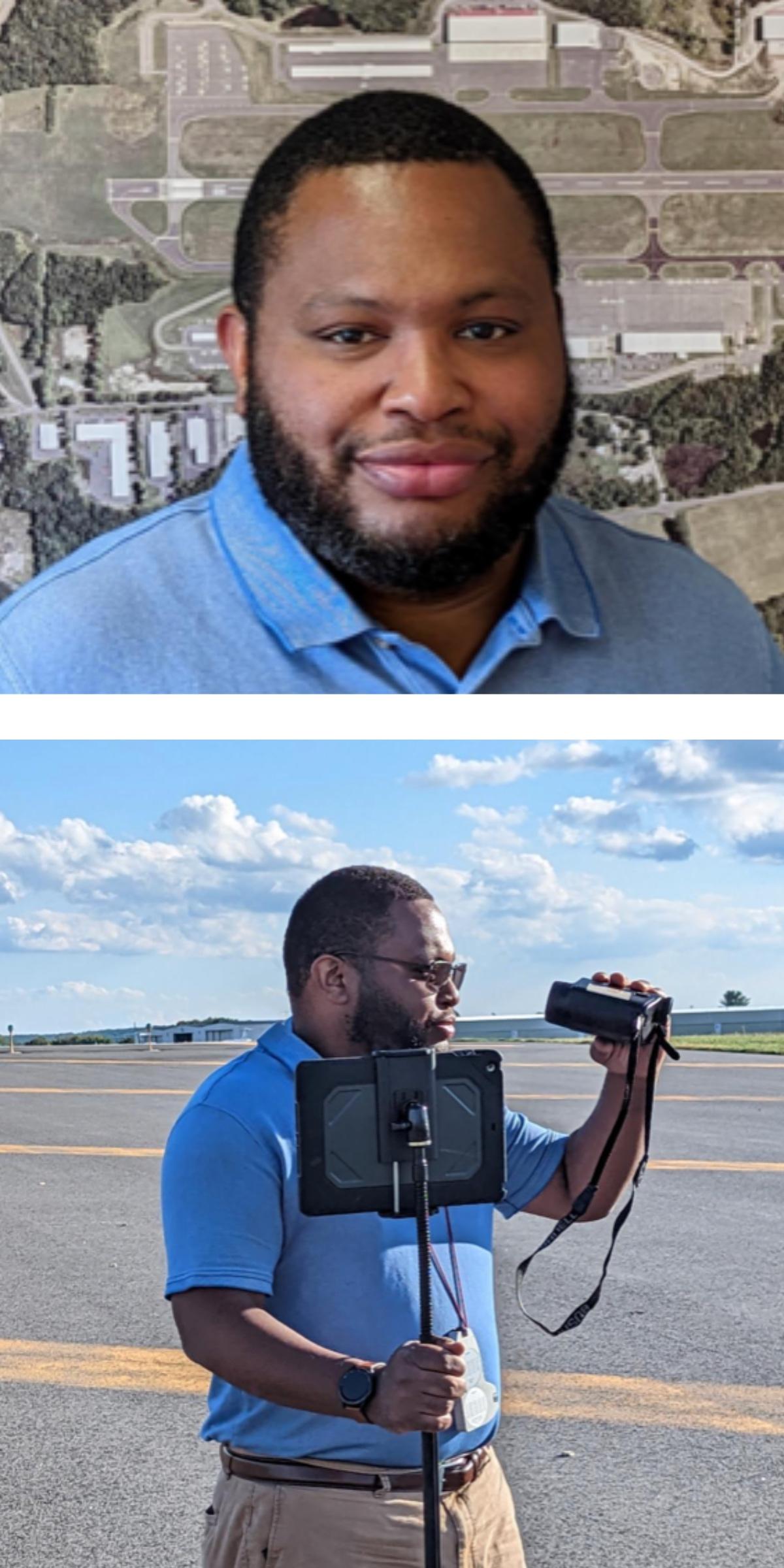
Using technology in the field has proven to be a valuable asset. I use an Apple iPad with cellular data in the field. This allows me to have multiple databases available to me on one device. The iPad also allows surveying apps to capture multiple data points such as GPS location, angles, and compass heading. Using all data available I can accurately present all information to the Airport Manager I am inspecting, starting with the 5010. Pictures with location data overlayed on the airport map allow for a simple presentation of items of interest and discrepancies.
| |
As we start the new fiscal year, be on the lookout for the new state contract. The contracts will start going out mid-to-late October. | |
|
GCR Inc. / CIVIX and the National Association of State Aviation Officials (NASAO) have a longstanding relationship built on the Airport Data and Information Program. NASAO serves as the contractor to GCR Inc., facilitating contract administration for the airport inspection program.
NASAO negotiates a services agreement with each state aeronautics department for completion of public use, non-Part 139 airport data inspections.
Following the agreement execution, NASAO issues an electronic Notice-To-Proceed to the state to begin airport data inspection services. The contract duration is based on the federal fiscal year (October 1 through September 30 of the following year) and the number of inspections is based on one-third of the total number of non-Part 139, civil public-use airports in the state.
NASAO audits the status of each contract until all of them have been executed, or have opted out of the program.
| |
|
We'd Like to Hear From You!
GCR Inc. and NASAO value your input on ways to enhance and improve both the actual airport inspection process and the reporting of the inspections.
For feedback or questions, please contact:
Joyce Piacun
jpiacun@GoCivix.com
Richard Gossen
rgossen@GoCivix.com
| |
|
Sharing is Caring!
Do you have a colleague who should be receiving these emails or were you forwarded this email? To add contacts to the newsletter distribution list, please email Tracy MacDonald.
| |
|
|
GCR Inc. / CIVIX
3300 West Esplanade Avenue, Suite 400
Metairie, LA 70002
(800) 259-6192 | info@gocivix.com
| |
|
National Association of State Aviation Officials
1390 Chain Bridge Road, #A106,
McLean, VA 22101
(202) 925-7340 | info@nasao.org
| | | | | |