|
This Sunday, Nov. 1, we “fall back,” setting our clocks back an hour as Daylight Saving Time (DST) for 2026 ends at 2 a.m. local time. I’ve never been a fan. And neither have most farmers.
Curious about the history—and disconnect with agriculture—I did some googling and stumbled across this excellent account on the House of Representatives’ History, Art & Archives website. In case you’re curious, too, and/or vaguely remember voting for (or against) repealing the time change recently, read on.
| | |
What’s in This Issue?
Scroll down to...
-
Learn why the USDA relocation is now on hold
-
Find out whether satellite data can truly help manage vineyard water use
- Dig into the details of new vineyard mapping tools
- Tune in to our podcast-style deep dive on this month’s research headlines
| | |
DST was first introduced in 1918 during World War I to save coal and fuel for the war effort. The thinking was, an extra hour of daylight meant less time inside lighting people’s homes. The Wall Street Journal estimated then that more than 800,000 tons of coal could be saved under DST, a 5% reduction (a figure that would prove overblown). Plus, at least 12 European countries had adopted a daylight-saving program. Supporters also believed that the longer days would give Americans more time to cultivate home “war gardens” to grow food for the war effort. But real farmers were feeling the pinch. Farms increasingly relied on hired help who, during the fall harvest season, now arrived to work an hour earlier. But because they couldn’t harvest crops until the morning dew evaporated, they spent the first part of the workday idle. A year later, in 1919, agricultural organizations and more than 300 farm publications successfully lobbied for the law’s repeal.
But when the next World War erupted, year-round DST, framed as a patriotic duty, was back. With strong support from industrialized states, President Roosevelt signed it into law in January 1942. And again, farming communities opposed it. A farmer who represented a rural New York district was quoted at the time: “I am distressed at the increasing degree of ignorance on the part of our urban population as to how their food is produced.” (Some things don’t change!) The measure automatically expired at the end of WWII in 1945, leaving states and local municipalities to decide how to keep time.
Interstate commerce was affected by the patchwork of regulations. And farmers no longer had the electoral muscle to oppose daylight-saving. In 1920, 30% of Americans lived on farms; by 1966, only about 6% did. People in urban areas favored DST. So, to alleviate the confusion, the federal government enacted the Uniform Time Act of 1966. Although the law has been amended several times and two states—Arizona and Hawaii—have since opted out, it remains the foundation of timekeeping in the U.S. DST is observed from the second Sunday in March until the first Sunday in November.
A Sunlight Protection Act was proposed in 2022 to make daylight saving permanent nationwide. It unanimously passed the Senate in March 2022, but did not clear the House. A similar Sunshine Protection Act of 2025 was passed by the House this year, on July 14, but stalled in the Senate. President Trump has indicated he’ll sign it if the Senate passes it. But since no legislative action has been taken, we’re stuck with the time change.
Today, 75% of Americans favor ending the twice-yearly time change, but there’s no consensus on which should be permanent—daylight-saving or standard time. So, rather than follow the sun (as the farmers used to urge), we follow the law. At least we get an extra hour of sleep!
| | |
Donnell Brown
President
P.S. We’re on to month three of our podcast-style “deep dive” into the grape research headlines for the month. Take a listen! Love it or hate it, let me know what you think!
| |  | |
*ABOUT THE IMAGE
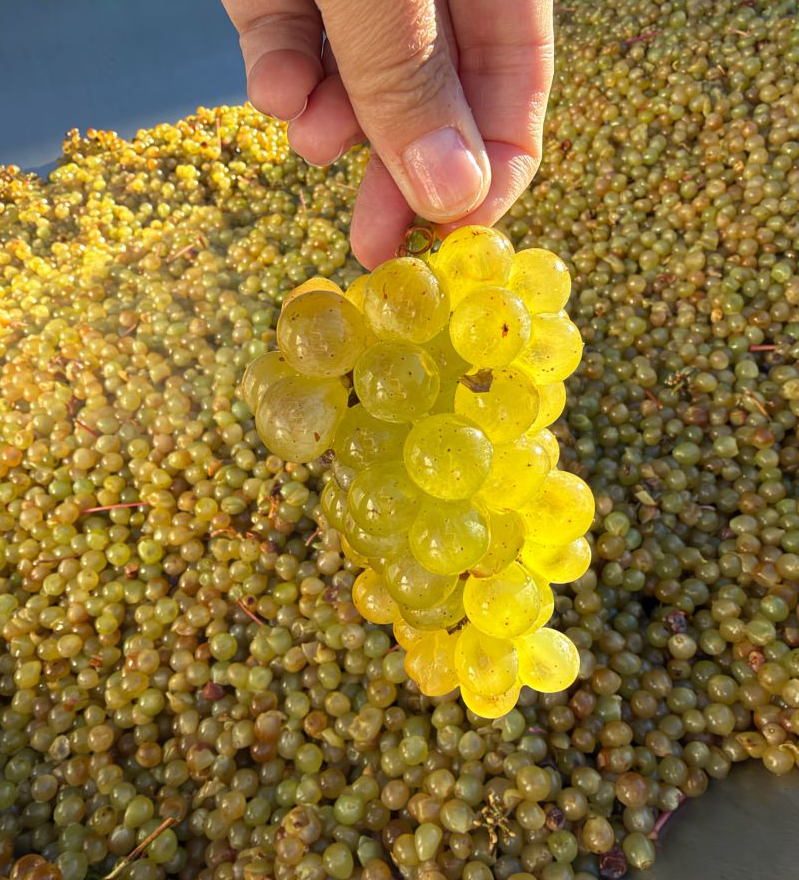
Nancie Oxley, Vice President of Winemaking at St. Julian Winery, Michigan’s first female winemaker and an NGRA Board member, proudly displays a cluster of Auxerrois (“oh-ser-wah”), a new variety for the 105-year-old winery this year. Harvested this month from a partner vineyard in Michigan’s Old Mission Peninsula AVA, this unique variety is one of 55 St. Julian brought in this harvest season.
| | USDA Employee Relocation Is On Hold | | |
A federal judge in San Francisco issued a stay on Oct. 13 that indefinitely bars USDA from relocating about 2,600 employees, Government Executive reports. A coalition of federal employee labor unions, nonprofits and local governments brought sued the government, arguing that USDA is trying to circumvent guardrails on the USDA reorganization established by Congress in its most recent spending package. Lawmakers had included provisions in the FY26 appropriations bill for USDA that blocked officials from reorganizing or relocating offices or employees without approval from the House and Senate appropriations committees. The stay enables the judge, U.S. District Court Judge Vince Chhabria, to review the merits of the case. He wrote, there is “strong evidence that USDA’s planned reorganization activities deviate from Congress’s expectations at the time it appropriated the funds.”
However, Judge Chhabria’s stay does not prevent USDA from relocating or reassigning employees in the Washington, D.C., area to other offices within the region. It only bars USDA from “closing or eliminating offices” at agencies impacted by reorganization plans, or “relocating or reassigning employees or their positions or functions to different and/or new locations outside the local commuting area.” Undeterred by these developments, USDA continues carrying out reorganization activities that aren’t explicitly barred by the stay.
| USDA Announces FY27 Specialty Crop Block Grant Awards | This month, USDA announced the FY27 grant awards for the Specialty Crop Block Grant Program (SCBGP), which is administered by the Agricultural Marketing Service (AMS) via State Departments of Agriculture. The program funds innovation, marketing and research that enhance the competitiveness of specialty crops. Just over 600 projects—40 focused on grapes—received grants totaling $86.6 million. A complete list of these projects can be found on the AMS SCBGP webpage. The 40 grape projects are documented in the latest update of NGRA’s database of funded grape research. | | Napa Valley Launches Red Blotch Research Initiative | | Winegrowers and wineries in Napa Valley have raised $2.5 million to launch Phase One of a Grapevine Red Blotch Virus Research Initiative, a public-private collaboration to fund research into one of the most serious unresolved threats facing wine production. Phase One will focus on red blotch detection and diagnosis, virus and vector biology, mitigation and management, and nursery testing and clean plants. A call for proposals to address these priorities is anticipated in January 2027. The American Vineyard Foundation, a NGRA member-organization, will serve as the fiscal agent for the initiative. | | California Winegrape Growers Issue Second Acreage Report | | |
The California Association of Winegrape Growers (CAWG), in partnership with regional grower and vintner associations including NGRA member-organizations Allied Grape Growers, Lodi Winegrape Commission, Napa Valley Grapegrowers and others, commissioned LandIQ for a second time to develop an in-season, statewide winegrape acreage assessment.
According to the CAWG press release, standing winegrape acreage was assessed as of Aug. 1, 2026, and vineyard removals were identified for the period between Aug. 1, 2025 to Aug. 1, 2026. This year’s report identifies 439,115 standing winegrape acres and 47,229 acres removed. By contrast, the 2025 Land IQ Vineyard Mapping Project, released in November 2025 (reflecting vineyard conditions as of August 2025, and removals from October 2024 to August 2025), identified 477,475 standing acres and 38,134 removed.
| Oregon Wine Board Launches Vineyard Atlas Project | |
This month, the Oregon Wine Board (OWB) announced a partnership with Portland-based geospatial firm Terranthro LLC to build the Oregon Vineyard Atlas, a verified inventory of every vineyard planted in Oregon. It will complement OWB’s existing efforts to quantify grape growing in the state. Starting this fall, Terranthro will map vineyard plantings across the state using high-resolution aerial imagery and in-field verification, documenting key vineyard attributes, including historical planting and removal data from 2020 to present day. Field verification is planned through the first half of 2027.
The Oregon Vineyard Atlas will be presented as a free, interactive 3D map. A Grower Portal will allow grape growers to divide mapped vineyards into individual blocks and provide additional information. Both are scheduled to launch summer 2027. The Atlas will be updated every two years as new statewide aerial imagery becomes available.
| Missouri Opens a New Fermentation Center | The University of Missouri (Mizzou) held a ribbon-cutting this month to celebrate the opening of its brand-new Grape and Wine Institute Fermentation Center. This state-of-the-art center, housed within the Mizzou Grape and Wine Institute, replicates a typical commercial wine production facility, enabling faculty to train and educate new winemakers, winery owners and other wine professionals using modern processing technologies. The $3 million investment also will serve as a hub for advanced research in enology and viticulture. | UC Receives Funding for Farm Research Lab in San Joaquin Valley | The University of California Agriculture and Natural Resources has been awarded $1,479,774 by the USDA’s National Institute of Food and Agriculture to establish a vital research lab in western Fresno County, a critical grape-growing region of the Central San Joaquin Valley. UC ANR is matching the grant so the project investment totals nearly $3 million. The Agricultural Research and Innovation Laboratory Complex at the UC West Side Research and Extension Center in Five Points, CA, will provide environment-controlled laboratory units and associated training, meeting and research-support space for timely, field-integrated agricultural research and extension. | A Century of California Wine Yeast, Reunited | |
For more than 60 years, two of UC Davis’ most important microbiology collections have existed in separate departments. Thanks to support from the American Vineyard Foundation and Washington State Wine Commission (both NGRA member-organizations), they’re coming back together.
The UC Davis Viticulture & Enology Wine Microbe Collection of more than 3,300 strains of yeast, bacteria and fungi will be merged into the Food Science and Technology Phaff Yeast Culture Collection to create a single searchable resource of more than 13,000 strains. The collections date back to the 1890s and include strains that helped rebuild California’s wine industry after Prohibition. This unified collection will support researchers, wineries and industry partners around the world.
| Sunridge Nurseries Breaks Ground on a New Lab | Sunridge Nurseries, an NGRA member-organization, is investing in the science behind producing healthy, high-quality vines. In 2025, Sunridge acquired the Pathology Division of Wonderful Laboratories, bringing with it a proven track record in plant diagnostics and experienced laboratory leadership. In late September, Sunridge broke ground on a new Sunridge Nurseries Laboratory that will build on that foundation. The lab will connect the company’s diagnostic team more closely with nursery operations, allowing them to identify potential plant-health concerns earlier and use that information to make better decisions about propagation and harvest. | Two of TIME’s Best Inventions of 2026 Are Grape Innovations | | |
TIME Magazine annually recognizes the “best inventions making the world better, smarter and more fun.” The 2026 list includes 300 innovations, including two (of six) in the Agriculture category, at work in grape.
Saga Robotics’ agricultural robot, Thorvald, operates autonomously and at night, using UV-C light to control powdery mildew and other diseases in vineyards and strawberry crops and dramatically reducing the need for conventional fungicide applications. The modular platform also collects valuable crop intelligence, helping growers make more informed decisions while reducing their environmental footprint. Thorvald is protecting approximately 2,500 acres of California vineyards and 30% of the UK’s tabletop strawberry production.
The Burro Grande 44 is an “all-purpose farm robot.” “Unlike agricultural robots built for a single task,” TIME reports, this “electric autonomous work platform can haul up to 1,500 pounds; tow up to 6,000; mow, spray and patrol (using) four stereo cameras, 3D LiDAR, precision GPS and AI.” Burro got its start in table grape harvest, where it remains a common fixture. “When you have a robot running around carrying the fruit people pick back to central points, each person is 30% more productive,” CEO Charlie Andersen is quoted. Burro’s existing fleet numbers 800 robots across 15 countries.
| Gretchen Roddick Is Wine Enthusiast’s Person of the Year | Gretchen Roddick, executive vice president of Hope Family Wines and board chair of the Wine Institute, both NGRA member-organizations, has been named Person of the Year by Wine Enthusiast. Gretchen started at Hope Family Wines in 1997, and began serving on Wine Institute’s Board in 2008. “I’m doing the same thing I did from day one: I’m leading by example,” she said. “I represent the wine business. I speak from the heart. I speak authentically about agriculture, jobs, and tourism.” Gretchen and this year’s other winners will be honored at the magazine’s 27th annual Wine Star Awards in January 2027. Check out the full list of 2026 Wine Star nominees. | Arran Rumbaugh Is UC Davis’ New Extension Enologist | |
Arran Rumbaugh, the first “smoke scientist” at USDA’s Agricultural Research Service, this month joined the faculty at UC Davis as Assistant Professor of Cooperative Extension in Enology. She succeeds Anita Oberholster, who passed away in January 2025 and was Arran’s academic advisor and mentor. Arran’s new role bridges academic research and the commercial wine industry by translating winemaking science into practical applications. She says she’ll focus her efforts on two critically important issues to California winemakers: smoke exposure and red blotch.
| | |
Can OpenET Help with Vineyard Water Management?
By Kyle Knipper (USDA-ARS) and the GRAPEX Team
| | |
Vineyards—especially those in water-stressed California—face increasing pressure to use water more efficiently. Growers, water managers and regulators need reliable ways to estimate how much water vineyards actually consume.
OpenET is a free, publicly available tool that launched exactly five years ago (Oct. 21, 2021) to leverage satellite imagery and weather data to estimate actual evapotranspiration (ETa), or the combined water lost through plant transpiration and evaporation from the soil. OpenET uses six satellite models to give daily, field-level water use estimates across the contiguous U.S. Can this data from space help grape growers determine how much water their vineyards actually use?
To find out, the multi-institutional GRAPEX (Grape Remote Sensing Atmospheric Profile and Evapotranspiration Experiment) project team analyzed up to eight years of direct measurements from eddy-covariance flux towers in 11 vineyards in California. Five vineyards are in Sonoma County (North Coast), four are in San Joaquin County (near Lodi, CA), and two are in Madera County in California’s Central Valley. This is the most extensive study to look at how well OpenET works for vineyards.
What They Found
In short, the GRAPEX team found that, yes, OpenET works well, especially for tracking vineyard water use over a season. The OpenET ensemble matched the tower measurements closely, with an error rate of only roughly 15 mm (or about .6 inches) per month and almost no bias at that time scale. But here’s a deeper dive, summarizing their top five findings.
OpenET generally performed very well. The OpenET ensemble product, which combines results from the different ET models, closely matched the tower measurements, especially when looking at monthly or seasonal water use rather than day-to-day fluctuations. This suggests OpenET can be a useful tool for tracking vineyard water use over time.
Different models have different strengths. The ensemble approach was the most reliable for estimating overall water use during a season. However, averaging several models together can sometimes smooth out short-term signals. Some thermal-based models were better at detecting when vines were becoming water stressed, even if they were less accurate at quantifying the exact amount of stress.
Vineyard management practices affect water use. The study found that removing winter cover crops reduced annual water use by roughly 11%, mainly during late winter and early spring. Because OpenET could detect this difference, the technology may help support water accounting and conservation programs.
Vineyard design can influence water consumption. Differences in water use were found to be associated with row orientation. Vineyards with rows aligned in certain directions used more water than others. Both field measurements and some satellite models detected these differences.
Measuring vineyard water use is complicated. The study highlighted limitations in the ground-based measurements used as the benchmark and the pixel-by-pixel nature of satellites. In some locations, especially those farther south in the Central Valley, hot air moving from nearby bare soil or surrounding land affected the tower readings. Additionally, the satellites’ inability to account for the transport of hot air into the vineyard suggests that not all discrepancies between satellite estimates and tower measurements are necessarily errors in OpenET, and that special care needs to be taken when reading tower measurements.
What the Results Mean for Grape Growers
For vineyard managers, OpenET appears to be a practical and trustworthy tool for estimating seasonal water use and supporting irrigation decisions. It is especially useful for tracking trends over weeks or months and for understanding how management practices influence water consumption. (E.g., OpenET is probably not the answer for detecting short-term vine stress or making highly precise day-to-day irrigation decisions.) So, while no model is perfect, the researchers found that the OpenET ensemble product can be considered a useful tool for irrigation management, water accounting and regulatory compliance.
This article was condensed from the research publication, “Evaluating OpenET Evapotranspiration Estimates in California Vineyards: Insights from the GRAPEX Experiment,” by K. Knipper (corresponding author), N. Bambach, M. Anderson, W. Kustas, A.J. McElrone, M. Swintek, F. Melton, D. Salazar-Martinez, L. Hipps, J. Alfieri, J. Prueger, L. McKee, S. Castro, P. Tolentino, I. Wright, A. Gal, N. Dokoozlian and M.M. Alsina. The paper was published online on Oct. 8, 2026, in the journal, Agricultural and Forest Meteorology. Read it here.
| | Exhibit at USDA’s Ag Outlook Forum | | USDA is accepting proposals for Science Innovation Exhibits at its 2027 Agricultural Outlook Forum, scheduled for Feb. 18-19, 2027, in Arlington, VA. Innovations that benefit farmers or directly impact consumers and that are/were wholly or partially funded by USDA are eligible. Learn more. | | Research-Related Job Opportunities | | |
Chief Scientist at Reservoir
Reservoir, an NGRA affiliate member-organization, is a new rural institution built around rugged physical AI and agricultural technology. It operates on-farm innovation hubs, where startups test, validate, and scale their technology alongside commercial growers. It’s looking for a Chief Scientist to lead its technical work: evaluating new technologies, designing on-farm trials, and advising on emerging areas. The Chief Scientist also will represent Reservoir as a voice on where rugged physical AI and agricultural technology is heading.
Extension Plant Pathologist at Oregon State
Oregon State University’s Department of Botany and Plant Pathology seeks a full-time tenure-track Assistant Professor of Extension Plant Pathology, based at the Corvallis campus. The incumbent will develop an Extension research program aimed at the diagnosis and management of plant diseases of Oregon’s various fruit, nut and ornamental/nursery industries, and produce the Pacific Northwest Plant Disease Management Handbook. Apply by Dec. 6, 2026.
Postdoctoral Fellow in Grapevine Abiotic Stress at USDA-ARS
The Abiotic Stress Laboratory at the USDA-ARS Grape Genetics Research Unit in Geneva, NY, is offering a Postdoctoral Fellowship in Grapevine Abiotic Stress Physiology and Genetics. This research opportunity is aimed at understanding the grapevine response to environmental stresses like cold/freezing, drought, heat and nutrient deficiencies. The research goal is to expedite research findings on understanding fundamental plant growth and developmental processes. Apply by Nov. 20, 2026.
| | |
Virginia Wine Board
The Virginia Wine Board is seeking pre-proposals to fund research, education, and marketing projects that implement the state’s Wine Vision strategy to ensure a vibrant and sustainable industry for Virginia farm wineries and cideries. For this grant cycle, the VWB specifically seeks projects in these four areas: viticulture and enology (projects must include extension or demonstration, not just research); financial sustainability and industry data; technical education and workforce development; and marketing for Virginia wine. Pre-proposals are due Nov. 10, 2026.
| | |
Applying for a grant? Request a letter of support!
NGRA is pleased to provide letters of support for research projects that directly address our industry research priorities. Request a letter via our online request form at least two weeks prior to the grant deadline (or any internal deadline you may have). Late requests are not accepted.
|
| |
The Assumption About Farm Automation That May Be Wrong
Oct. 22, 2026 | UC Davis College of Agricultural and Environmental Sciences
In a three-year study of tree fruit orchards in Washington and California, UC Davis researchers examined the “last mile” of agricultural automation—that is, what happens when robotic and AI-enabled tools arrive on the farm. Do jobs disappear? No, says lead author M. Anne Visser. Technology must be adapted to the land, crop and conditions, and that requires human knowledge. No matter how good these machines get, she said, they may not be able to match that embedded place-based knowledge.
Could Grapevine Genes Themselves Be the Key to Controlling Grapevine Red Blotch Virus?
Oct. 20, 2026 | OWRI Vine to Wine
New research led by Oregon State’s Laurent Deluc explores whether RNA interference (RNAi) can temporarily silence grapevine host factors that appear to support GRBV infection. Early findings show substantial reductions in viral load when one candidate gene is targeted, highlighting the potential for next-generation RNAi biopesticides that could complement existing vineyard disease management programs.
This Gene-Edited Banana Doesn’t Turn Brown—and It Could Be Headed to the U.S.
Oct. 8, 2026 | Food & Wine
Not grape research, but interesting: A year ago, an ag biotech company called Tropic Biosciences used gene editing to silence the gene for the browning enzyme, polyphenol oxidase, in bananas. It’s the first new banana variety in more than 75 years, and the world’s first non-browning variety. In April, the company got regulatory approval to sell it in Japan and grow and sell it in Brazil. It estimates the banana could reduce food waste and carbon dioxide emissions along the supply chain by more than 25%. But research suggests willingness to eat gene-edited foods varies widely by country.
Moët Hennessy Directs AI to Sniff Out a Stubborn Problem in Winemaking
Oct. 7, 2026 | The Wall Street Journal
A wine defect known as Fresh Mushroom Aroma is undetectable to humans until after fermentation, when it’s too late to save production. The luxury wine unit at LVMH found the issue cropping up across its vineyards in Champagne in recent years. So, they worked with semiconductor and software firm Analog Devices and UC Davis to develop a new chemical sensor to capture olfactory data from the must, then train an AI model to determine the likelihood that it was infected with Fresh Mushroom Aroma. Early testing showed 99% accuracy.
Agriculture and Natural Resource Programming Has the Largest Share of Extension Personnel
Oct. 7, 2026 | USDA-ERS Charts of Note
The U.S. Cooperative Extension System operates through a system of land-grant colleges and universities in partnership with federal, state and local governments. Extension program areas vary regionally, with agriculture and natural resources being the largest. Averaged over 2007 to 2018, about 40% of all Extension jobs nationwide were devoted to ag. But “an argument can be made that this most traditional of all Extension programs is losing its public support. Many private sector firms now offer production-related information to agricultural producers, and this will likely only expand in the future as farms increase in size,” ERS’s full report says.
Loosening Up Vignoles Wine Grape
Oct. 6, 2026 | Science in Your Shopping Cart
Scientists at the Grape Genetics Research Unit (GGRU) in Geneva, NY, and collaborators at Cornell AgriTech, have developed an improved variety of Vignoles, a French-American hybrid white wine grape popular in the Northeast. Released this year and called Vignoles 2, it features loose clusters that dramatically reduce the original variety’s susceptibility to bunch rots. There’s also a mention of how GGRU researchers identified the genetic trait that gives the Concord juice grape its unique “foxy” flavor.
Red Wine Compound Resveratrol Emerges as a Potential Booster of Brain Plasticity
Oct. 5, 2026 | Bioengineer.org
In a new literature review, medical researchers find evidence that resveratrol, a polyphenol in grapes, can modulate synaptic plasticity, which allows the connections between brain cells to strengthen or weaken in response to activity over time. The effect could help counteract the cognitive decline that accompanies oxidative stress, aging and neurodegenerative disease. The path forward, they suggest, lies in nailing down dosage, improving delivery to the central nervous system and validating the molecular mechanisms.
After Virginia’s Big Chill
Oct. 3, 2026 | Commodity Bread
Damage from the freeze across Virginia in late April “is showing up in the harvest bins,” Commodity Bread reports. Most coverage about the event and resulting low tonnage has focused on Chardonnay, Cabernet Franc and other vinifera varieties. But hybrids, including Chambourcin and Vidal and some cold-hardy varieties, did comparatively well. One grower reported he had planted two acres of Chambourcin as a hedge, because its secondary buds bear fruit. It “was a good move in hindsight.”
Human-Robot Collaboration for Precision Agriculture
Oct. 1, 2026 | Sustainable Winegrowing with Vineyard Team
Agricultural engineers like Cornell University’s Manoj Karkee have been moving from developing “autobots” that target one specific operation to multipurpose robots that can, say, not only harvest fruit but prune vines, monitor vine health and help guide irrigation decisions. Performing many tasks throughout the growing season “improves the practical use and commercial viability of these expensive complex machines,” Manoj says.
A Decade of NDOV
October 2026 | American Vineyard Magazine
Researchers from the USDA’s Agricultural Research Service and UC Cooperative Extension surveyed raisin grape growers about their experience with natural dry-on-vine (NDOV) varieties like Sunpreme (now 10 years post-release) and Rais-One. Although these varieties “offer start-to-end mechanization of pruning and harvest, the two most labor-intensive cultural practices in raisin production,” results of the survey “show a sector still navigating the transition toward mechanization.” They also reveal needs for more research on preharvest fruit drop, yield potential, compatibility with pruning devices and establishment costs.
Making Smoke-Tainted Wine More Appealing
Sept. 30, 2026 | American Vineyard Magazine
Volatile phenols in wildfire smoke are absorbed by grapes and taint the resulting wine. USDA-ARS researchers in Davis, CA, have successfully demonstrated that molecularly imprinted polymers (MIPs) can specifically target and remove these compounds. The novel remediation method means smoke-impacted fruit may still produce quality wine. MIP technology is already available and has been approved for use in wine treatment on a commercial scale.
Can Science Solve Smoke Taint?
Sept. 28, 2026 | Wine Searcher
Researchers at the Tasmanian Institute of Agriculture have found a way to remove smoke taint compounds from sparkling wine during the aging process. Scientists at USDA-ARS in Albany, CA, have discovered a bacterium that occurs naturally on grape leaves that can break down guaiacol, one of the main phenols responsible for smoke taint in wine, rendering it harmless. Another study out of UC Davis is evaluating whether a calcium spray applied to developing grape berries can strengthen cell walls sufficiently to decrease absorption of smoke. And if all else fails, “oak-aged brandies are one of the best alternative uses” for smoke-affected wine.
The Virus We Planted
Sept. 27, 2026 | Tell the Truth and Do the Right Thing (Ted Hall on Substack)
“A market correction is landing hardest on Napa’s smallest, most thinly capitalized growers,” writes Ted Hall on Substack. “A second, unrelated shock is landing on the same acreage: red blotch. The disease is spread partly through nursery stock and partly by an insect no fence can hold, with no cure and, unlike the phylloxera crisis before it, no permanent fix in sight.”
Fruit Sweetness: Will Digital Refractometers Under $50 Give You Accurate Results?
Sept. 23, 2026 | Southern Region Small Fruit Consortium
Researchers at North Carolina State University tested a range of digital refractometers to see if it’s possible to accurately measure total soluble sugar with inexpensive models. What they found is, while less precise than specific sugar identification (which is generally done by chromatography), most refractometers provide a rapid and simple estimation of the soluble sugars (fructose, glucose and/or sucrose) within 2% to 5% of the correct sucrose concentration. Even the $15 model was quite close!
Improved Cultivar Trial Planned for 2027 Planting
September 2026 | OWRI Vine to Wine Newsletter
Oregon grape growers must make 5 to 15 fungicide applications each season to combat powdery mildew and other diseases. Improved cultivars could ease cost pressures—but only if winemakers feel confident they’ll produce high-quality wines. In 2027, Oregon State researchers will plant a first-of-its-kind trial of 16 modern varieties from Cornell, University of Minnesota and European grape breeding programs. Spanning two sites—one in the Willamette Valley, the other in the Rogue Valley—the trial will “help the wine industry explore more sustainable options for reduced pesticide use and truly more resilient farming.”
Vineyards Get Help from Outer Space
Aug. 27, 2026 | Vital Signs (Environmental Defense Fund)
A groundbreaking irrigation research trial spanning several Texas vineyards is using satellite data from OpenET to track water moving from the ground and grapevines into the air to help growers determine when and how much to irrigate. Texas A&M AgriLife Extension’s Michael Cook is leading the trial, having found that, in a study he co-authored, 75% of the state’s grape growers don’t use technology or data to decide when to begin irrigating their vines, how long to water them or how much water to apply. Easily accessible satellite data could take the guesswork out of irrigation and advance the emerging region’s potential.
Growing Food and Power on the Same Land: California Researchers Test Agrivoltaics
Aug. 24, 2026 | Capital Public Radio
Researchers at UC Davis are looking at whether combining farming and solar energy could shield crops from hotter growing conditions while also generating electricity farmers can use or resell. Plus, if it’s recognized as a regenerative ag practice, grants could help fund implementation. But many believe more research—on both the agricultural and economic effects of the practice—is needed for adoption at scale. “You might end up doing two things badly when you could have just been doing one thing well,” one scientist warns.
Growing Grapes in the High Desert
Dec. 20, 2024 | Offrange
An older story but a good one: “A surprising agricultural story is taking root in southern Utah, where scorching summers and stark sandstone cliffs define the landscape. At elevations that expose vines to intense ultraviolet radiation, a small but determined community of vintners is mastering the art of winegrowing,” Offrange reports. “Once considered too hot, too dry and too high for cultivating premium grapes,” Utah’s wine industry is blending historical wisdom, scientific innovation and persistence to make its mark.
| | Find these stories and more, published every weekday on our Facebook and LinkedIn accounts. | | |
Nov. 10-11, 2026
Sustainable Ag Expo
San Luis Obispo, CA
Nov. 12, 2026
NGRA Year-End Board Meeting
Virtual event
Nov. 13, 2026
Grape, Nut & Tree Fruit Expo
Fresno, CA
Nov. 17, 2026
Tree & Vine Expo
Turlock, CA
Nov. 17-18, 2026
Northwest Center for Small Fruits Research Annual Conference
The Dalles, OR
Nov. 19, 2026
Southeastern United Grape and Wine Symposium
Dobson, NC
Dec. 3, 2026
WIN Expo
Santa Rosa, CA
Dec. 8-10, 2026
Great Lakes Expo
Grand Rapids, MI
Jan. 14, 2027
Washington Winegrowers
Winter WineVit
Prosser, WA
Jan. 25, 2027
NGRA Annual Meeting of the Members & First-of-Year Board Meeting
Sacramento, CA
Jan. 26-28, 2027
Unified Wine & Grape Symposium
Sacramento, CA
| | | | |