Fall Foraging with Family

by Gretchen Whitcomb


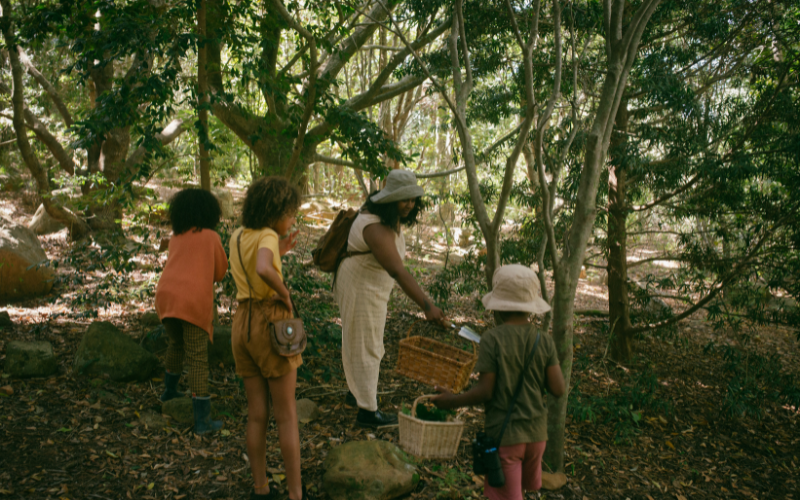
Foraging as a family is a great way to get more outdoors time, learn about your local ecosystem and improve your health! Many foraged foods and medicines are readily available across the country in the fall and are easy to find even in your backyard.


Here's a few simple to find and easy to identify plants you can use for a variety of culinary and household applications. Make sure you only forage items that you are clearly able to identify and that are away from roadsides and any pesticide use or pet debris. Consider grabbing a beginners field guide for your region to help you correctly ID local plants and learn their uses.


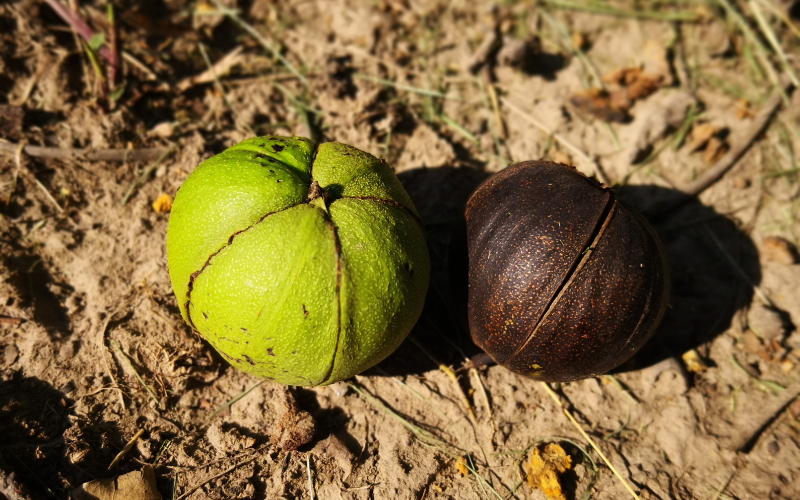
Tree Nuts: Acorns, walnuts and hickory nuts are plentiful and easy to ID with a field guide. Finding hickory nuts is a treat as they require none of the processing of acorns and are easier shelled than walnuts. You can eat them raw or roasted. All hickory nuts are edible but the tastiest is the the shagbark. Look for tall mature shaggy barked trees on the edge of fields where they receive lots of sun and will produce more nuts. Shagbark hickory nuts have golf ball sized greenish yellow outer husks with a smaller nut inside. The outer husk darkens and splits into 4 pieces as it ripens and will often breakopen on handling for when falling from the tree. Use like pecans or walnuts in cooking.

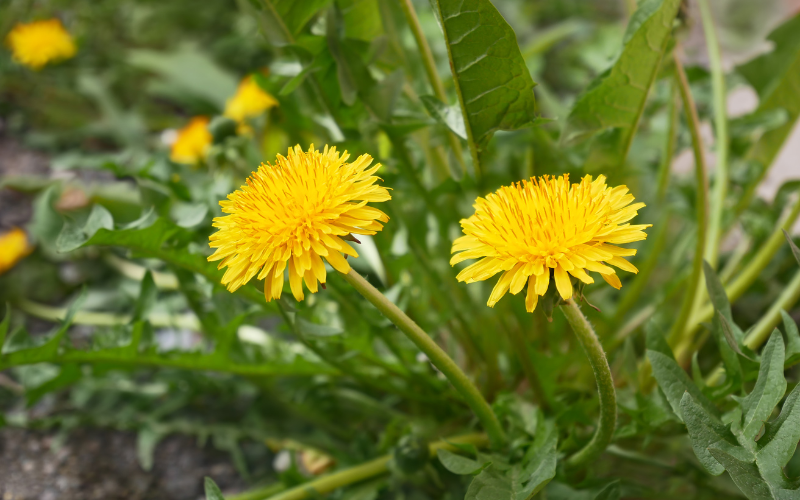
Dandelion: Dandelion is a perennial herb found worldwide. You can identify dandelions by their hollow stem with a milky sap. They have distinctive basal leaves (grown from the bottom of the stem) with spiky lobes. Yellow flowers and puffball seed heads are commonly recognized and easy to spot from a distance making these plants easy to find everywhere! Check out our resource article for benefits of dandelion and some great recipes:

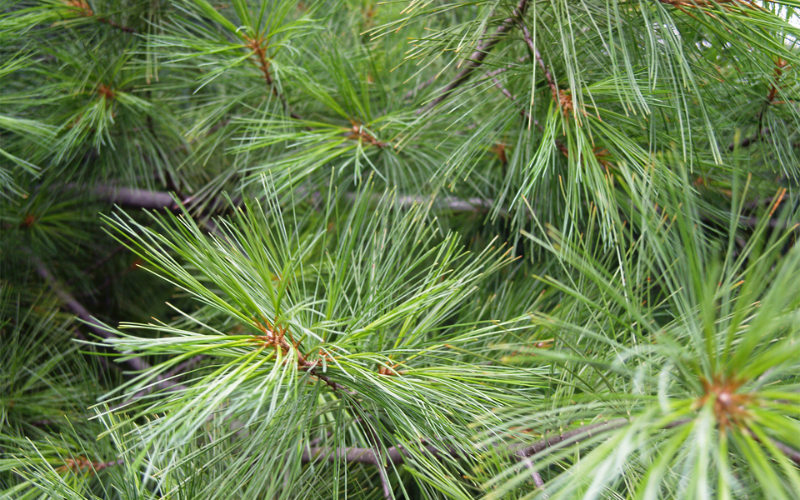
White Pine: Eastern White Pine is easily identified by its long floppy needles. They have 5 needles per bunch or fascicle which are grouped into a larger bundle at the ends of stems. While all pines are edible, pregnant women should avoid Ponderosa Pine. Firs, hemlocks and spruce can also be used for similar medicinal properties. White pine needles are high in vitamin C and have some antibacterial properties and are good expectorants. Add pine needles to tea blends. Infuse vinegar with pine and use in a salad or add to a homemade cleaning solution. Make pine needle syrup with pine tea and honey for a soothing cough remedy or do a quick fermented pine soda with pine needles, honey and water!

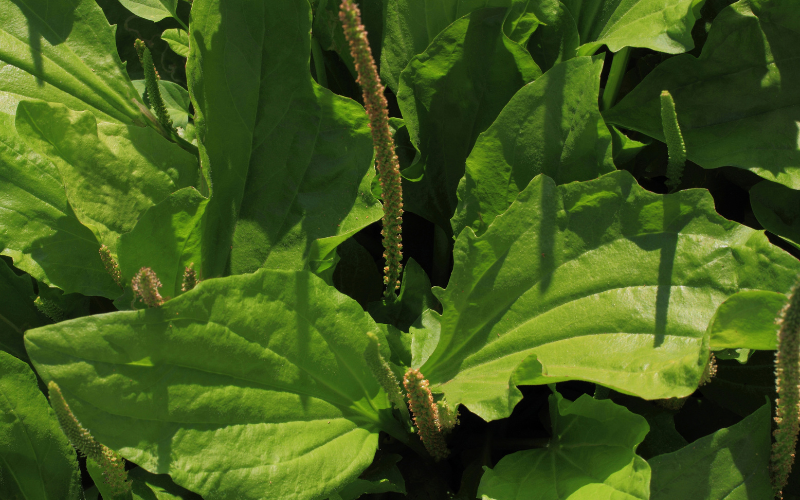
Plantain: Plantain is found everywhere from urban streets to wild parks. Broadleaf plantain has large oval shaped leaves that grow in a rosette pattern with central flower bearing stalks. The leaves have prominent parallel veining. Narrowleaf plantain has thinner leaves with a pointy end. Apply partially chewed or crushed leaves directly to skin for bee stings or bug bites. Leaves are edible but older ones are tough and bitter. Seeds from the flower stalk can be used as a garnish or ground into flours. Consider making oil from the leaves and using in salves or lotion bars.

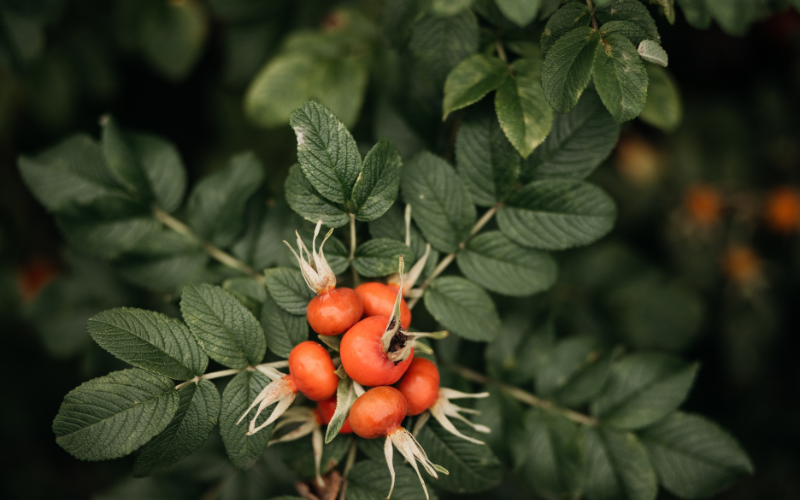
Rosehips: Rosehips form when rose flowers are not pruned after bloom. They are high in vitamin C and a great antioxidant source. Collect rosehips after the first frost for sweeter flavor. They should be firm and smooth and are typically red/orange in color but can be purple or yellow. Rosehips are great in tea, jelly or syrups. The small hairs on the seeds inside can be irritating so when adding to tea they should be first halved and seeds removed or strained well through cheesecloth to remove them. Use fresh rose hips or dehydrate them for use all winter.

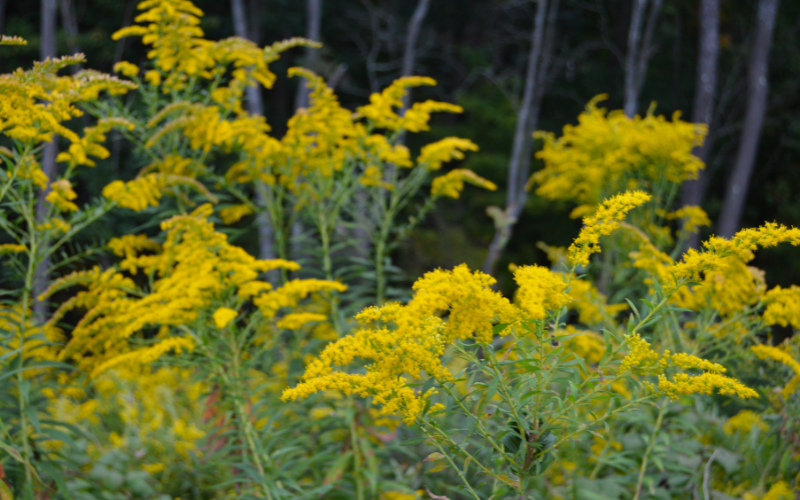
Goldenrod: The beautiful golden flowers on tall woody stalks are found along roadsides and in meadows across the US and bloom thru early fall. A member of the daisy family, these plants have been used to treat wounds by applying directly to the skin as a poultice. Use in flowers and leaves in tea for allergies and urinary tract infections, add the gently curving stems to a bouquet or dye natural fibers with the flowers.

READ ON BLOG

Family Media Use

With the start of the new school year many families find that they are struggling with the use of screens. Perhaps screen time use was relaxed over the summer break and switching back to the school routine is challenging or new demands for devices are constant as kids head back to school and see what friends have.


You are not alone! Responsible media use is challenging for all families. Research continues to mount that social media use is causing a mental health crisis among young people so its worth your time to think about your family's boundaries around media use as well as set a good example for healthy media use yourself!


Depending on the age of your children you will have different challenges. Preschool and early elementary students might not be asking for phones but you might need to set guidelines on TV or video games. Do you have a time limit per day? Only allow devices after specific chores are done or only on weekends?


Older elementary students and middle school students are often asking for phones and social media access. Feel confident in saying no or choosing options for phones that aren't smart and have no internet access. Allow kids to text with friends on a family tablet instead of using a phone.


Wait Till 8th and Screen-Free Week are two organizations with research, realistic ideas and peer support to help you set and stick to appropriate boundaries for media use. Need more of a push to get started? Read the Anxious Generation by Jonathan Haidt which discusses the impact on children from the change from a "play-based childhood" to a "phone-based childhood".

FIND RESOURCES

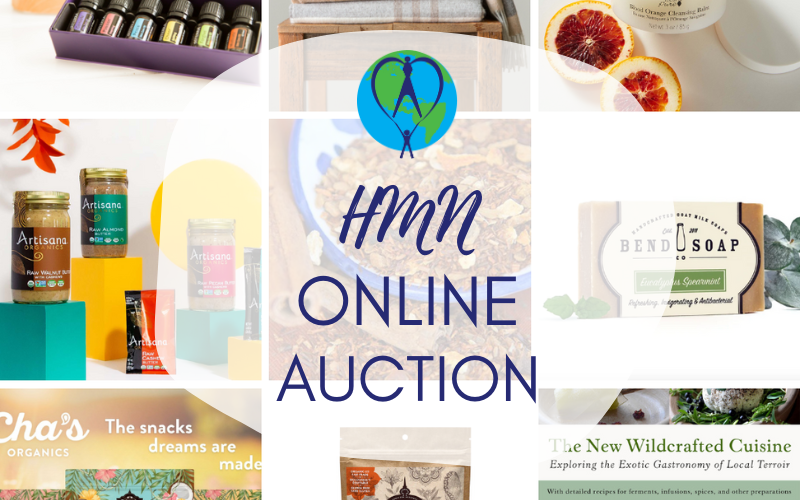
HMN 16th Annual Online Auction

The 16th Annual HMN Online Auction is coming up soon on October 20th 2024. Our auction each year raises much needed funding to help drive awareness of our organization and work.


Companies, individuals, organizations and communities donate holistic, natural and organic items, trips, books and more to our auction. The event is hosted on eBay and all proceeds go to our 501(c)(3) community to help us reach even more families across the United States!


Mark your calendar now for October 20- 27th to get GREAT deals on amazing holistic products from a wide variety of companies. We have tons of amazing donations already and are still taking auction donations through October 16th! See our list of 2024 donors so far here.


Can you donate this year? Just fill out our quick and simple online donation form.


This auction is open to everyone so be sure to share with your friends and family!

DONATE TODAY 

Chapter Gatherings

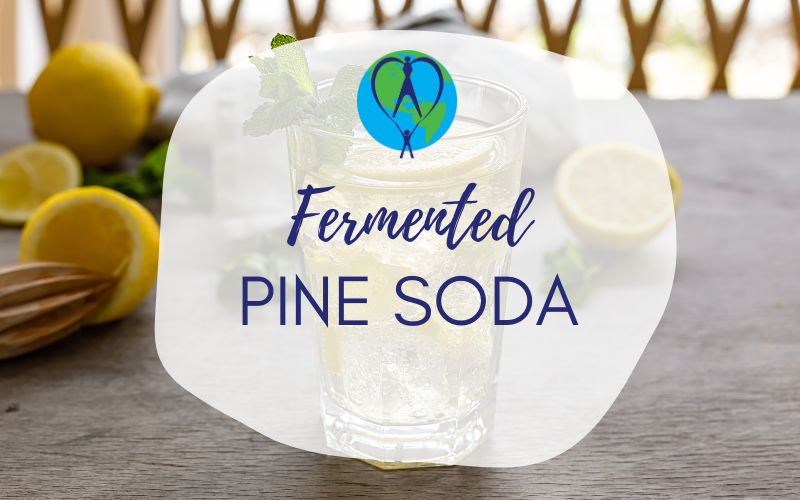
Fermented Pine Soda

In-person gatherings are at the heart of our HMN Communities. You can find the next month's events on our Facebook page. All are welcome to attend. Below is a sample of some gatherings happening soon:


Whether you are a future parent, have babies, children in school, or your children have their own children, you are welcome at HMN. 💚💙💚


FIND COMMUNITY

Make your own bubbly "sprite" like beverage with foraged pine needles, honey and water! This quick fermented drink is great to make with kids after going on a hike to forage your needles. It has tons of vitamin C and is tasty and refreshing.


Ingredients:

  • White pine needles
  • Raw honey or maple syrup
  • Water (filtered preferred)
  • Flip top bottles or pint mason jars
  • Funnel if using flip top jars.


For each flip top bottle or mason jar you will need around 1 cup of pine needles and 1 1/2 cups of water and 2 tablespoons honey or maple syrup.


Lightly rinse pine needles and add to the jar. Add honey and water, close the container and shake to mix. There should be some headspace at the top of the container.


Set in a warm place and allow to ferment for 2-3 days, you should see bubbles forming. Do not allow to sit for longer than 3 days without opening or "burping" the container to prevent pressure buildup! Open the container carefully and strain out pine needles.


Serve over ice with lemon or lime slices. Store leftover soda in the refrigerator. Enjoy!

FIND FORAGING RECIPES
Sponsors and Partners
 
nch logo:  National Center for Homeopathy
 
EcoParent Magazine logo
 
KnoWEwell logo
The Holistic Moms Network™ is a 501(c) 3 non-profit organization connecting parents who are interested in holistic health and green living. We encourage moms and dads to trust their instincts, parent from the heart, use their innate sense of what is best for their children, live in balance with the Earth, and learn about the pros and cons of all healthcare and parenting options. DONATE HERE
Facebook  Instagram  Linkedin  Pinterest