|
Please share this edition of Wildlife Highlights with other outdoor enthusiasts
and help our subscription list grow!
| |
Fall Hunting Season Is Upon Us | |
|
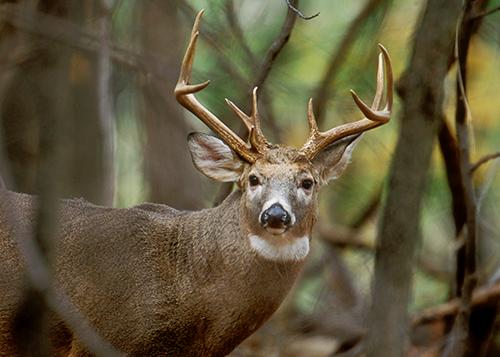
As summer draws to an end, multiple fall hunting seasons will soon be taking place, with two of the more popular seasons, fall archery deer and fall archery turkey seasons, opening on Friday, September 15. The Wildlife Division receives a majority of its funding through the Federal Aid in Wildlife Restoration Program. This means the purchase of hunting equipment and licenses helps fund wildlife habitat acquisition and management, wildlife research, and hunter safety education. We hope you have a successful 2023 season, and remember that safety comes first!
The best way to stay up to date with hunting season information is to check the 2023 Connecticut Hunting and Trapping Guide and the 2023-2024 Connecticut Migratory Bird Hunting Guide.
Visitors to public hunting areas are strongly encouraged to wear fluorescent orange to improve their visibility to other users of the land. As always, dogs must be kept on leashes no longer than 7 feet while on DEEP properties, unless the dog is in the act of hunting or training for hunting.
| |
Hang Out with Us for Bat Appreciation Day | |
|
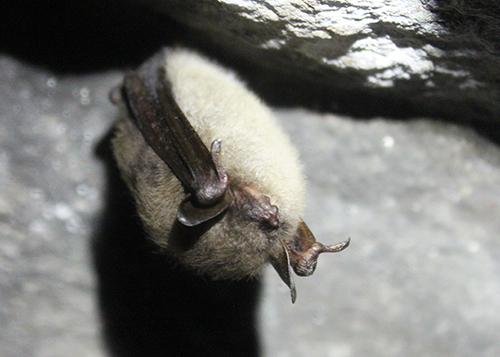
To help raise awareness about the importance of bats, the Connecticut Department of Energy and Environmental Protection (DEEP) Wildlife Division and the Department of Economic and Community Development (DECD) are hosting the seventh annual Bat Appreciation Day at the Old New-Gate Prison and Copper Mine in East Granby on Sunday, September 17, 2023.
This event will feature bat activities for the whole family and include exhibits, bat story time, historical tales, the unique opportunity to sneak a peek at the “bat cave”, and a chance to see a live bat up close! We hope to see you there!
More on Bat Appreciation Day . . .
| |
The Transition to Fall Means Black Bears Are Stocking Up | |
|
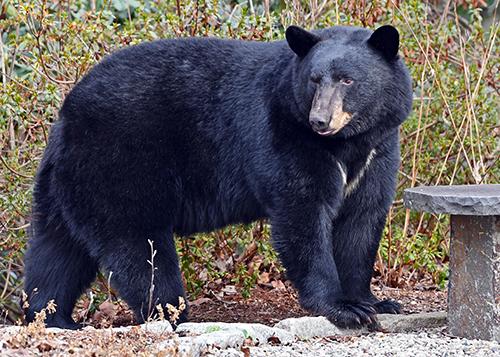
While it may still feel like summer, the first official day of fall is just around the corner, and average daily temperatures will soon begin to drop. It is this change in weather that will signal black bears that it is time to start fattening up for the impending winter. Over the next couple of months, black bears are quite active, spending up to 20 hours a day looking for food! During this time, black bears are focused on finding the most calories for the least amount of work, and they are not picky eaters. Garbage, birdseed, and pet food are easy calorie jackpots for bears. Unprotected livestock, especially chicken coops can be particularly appealing during this time. Fields of corn, pumpkins, and fall veggies, hobby orchards, and other people-provided food are often more concentrated than the natural foods bears forage on in the wild.
Connecticut has an abundance of natural food sources to support our growing bear population. This fall, do your part to keep bears from accessing people-related foods, helping to reduce or eliminate conflicts between people and bears.
More on how to keep bears from your yard . . .
| |
Help Migrating Birds By Going Lights Out | |
|
With fall migration underway, most migratory birds choose to navigate at night, relying on the light of the stars and moon to guide their way. Unfortunately, bright artificial lights in cities and towns can lure birds off course into unsafe areas where they are more likely to crash into windows. Each year, hundreds of millions of birds die from building collisions in the United States alone, but there is a way you can help!
The best way to help migrating birds is to simply turn off your lights at night, especially during migration periods in spring and fall, when great numbers of birds are moving. The time period in fall is August 15 through November 15 from 11:00 PM to 6:00 AM. One recently published study (2021) using two decades of data found that bird collisions can be reduced nearly 60% when light pollution is limited. Join others across Connecticut taking the pledge to go Lights Out!
More on helping birds by going lights out . . .
| |
Motorists: Watch Out for Deer and Moose | |
|
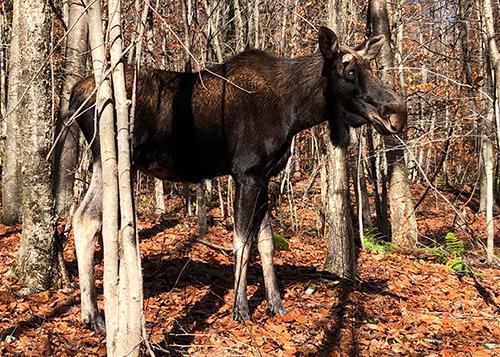
Please watch for deer and moose along roadways, especially during early morning and evening hours. September through October is the peak of the breeding season for Connecticut's small moose population, which mainly resides in the northern part of the state.
The breeding season (also known as "the rut") for white-tailed deer closely follows the moose breeding season, running from late October through late December.
| |
Junior Pheasant Hunter Training Day Opportunities | |
|
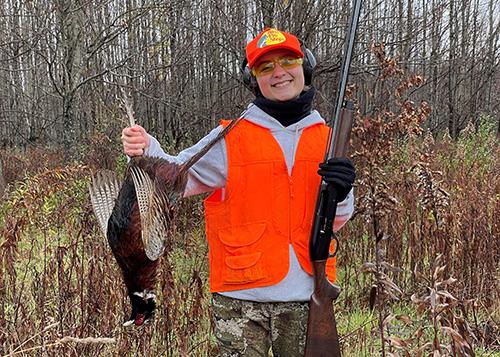
Connecticut designates specific days when experienced adult hunters are encouraged to take a youth hunting, helping them learn safe and effective hunting practices, develop observational skills, and gain confidence and a comfort level they need to discover a passion for hunting and the outdoors.
The Conservation Education/Firearms Safety (CE/FS) Program and several Connecticut sportsmen's clubs offer mentored junior pheasant hunts on Junior Pheasant Hunter Training Day (October 14, 2023) with additional dates in the fall. These events are held FREE of charge for hunters between 12 and 15 years of age.
At each event, participants will be coached on shooting clay targets on a trap or skeet field prior to participating in the hunt. Mentored hunts are staffed with Certified Volunteer Hunter Safety Instructors and experienced hunters, along with a well-trained bird dog and its handler.
In order to participate, youth hunters must possess a 2023 junior hunting license and 2023 Connecticut Resident Game Bird Conservation Stamp, as well as complete and submit a 2023 Junior Pheasant Hunt Day Application.
More on Junior Pheasant Hunter Training Day . . .
| |
In Search of Bobcat Collars | |
|
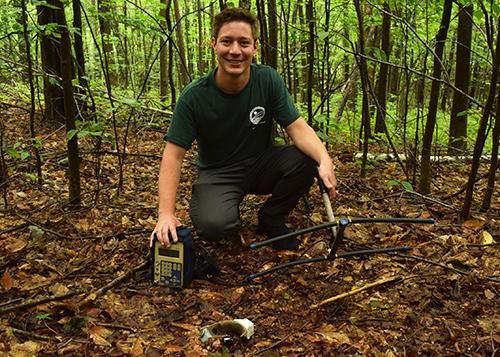
DEEP Wildlife Division staff have been working hard to retrieve the last few remaining GPS/radio collars that have been collecting data on Connecticut’s bobcats.
Initiated in 2017, this study, in conjunction with UConn, is providing biologists with a greater understanding of how the state's bobcats meet their needs in both rural and urban areas, as well as how successful bobcats are at reproduction and survival.
Over the past six years, roughly 150 bobcats were live-trapped and fitted with lightweight GPS/radio collars so biologists could accurately track their movements across the landscape.
Each collar is programmed to automatically detach after a set number of days. Once the collar has dropped, the radio signal is used to help staff home in to the exact location where it detached.
Some collars are not particularly hard to spot once they have detached, but that is not always the case, as many often end up in very thick vegetation or rocky outcrops, making retrieval difficult at times.
More on bobcats in Connecticut . . .
| |
Burlington State Fish Hatchery Celebrates 100 Years | |
|
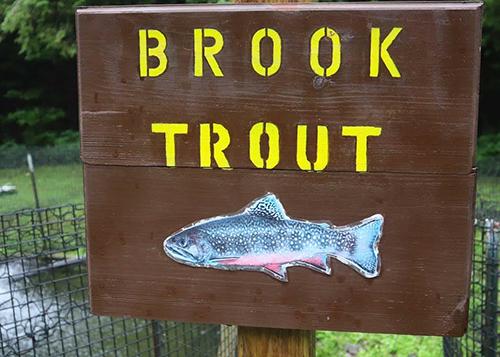
The DEEP Fisheries Division's Burlington State Fish Hatchery turns 100 this year, and you are invited to attend a special event at the Burlington Hatchery (34 Belden Road, Burlington) on Saturday, September 23, 2023 from 10:00 AM to 3:00 PM.
Join Fisheries Division staff for guided tours of the hatchery, fly tying, fly casting and electrofishing demonstrations, and more! Wildlife and State Parks Divisions staff will be there, too. This is great family event to celebrate fishing and the outdoors in Connecticut.
More on the Burlington State Fish Hatchery . . .
| |
Species Spotlight: Peregrine Falcon | |
|
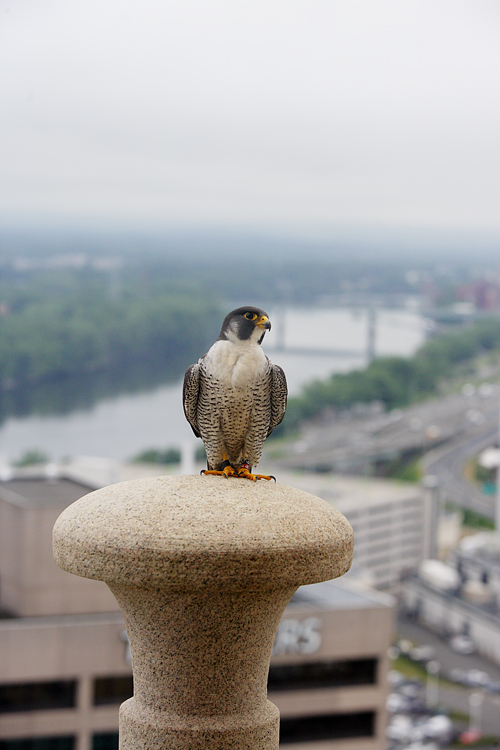
As we continue our celebration of the 50th year of the federal Endangered Species Act, we highlight the peregrine falcon! This small falcon was a regular nester in Connecticut until nesting activity started to declined through the 1920s and 1930s. The last documented nesting at that time occurred on the Travelers Tower in Hartford in the late 1940s.
Peregrine falcon populations also declined rapidly between 1950 and 1965 throughout the United States and parts of Europe. By 1975, the entire population in the eastern United States was considered to be extirpated (disappeared from that region). This decline is directly attributed to the effect of organochlorine pesticides, such as DDT, on breeding populations.
Due to the population crash, the peregrine falcon was declared a federally endangered species, and extensive efforts were made to reestablish birds in the eastern United States. These efforts, coupled with restrictions placed on the use of organochlorine pesticides in the United States (DDT was banned in 1972), resulted in the recovery of the peregrine falcon population. The peregrine was removed from the federal endangered species list in 1999.
In Connecticut, the peregrine was listed in 1992 as a state endangered species. Finally, in 1997, a pair returned to the state to successfully nest once again on the Travelers Tower. Since then, additional pairs have nested and successfully produced young every year in other towns. The population continued to recover enough that the peregrine was reclassified as a state threatened species in 2010.
Learn more about the peregrine falcon . . .
| |
|
Stay Connected!
Follow us on Social Media
| |
|
-- Quick Links --
Your Feedback Is Important to Us!
Send your comments or suggestions to deep.ctwildlife@ct.gov
|  | |
The Connecticut Department of Energy and Environmental Protection is an Affirmative Action/Equal Opportunity Employer that is committed to complying with the requirements of the Americans with Disabilities Act. If you are seeking a communication aid or service, have limited proficiency in English, wish to file an ADA or Title VI discrimination complaint, or require some other accommodation, including equipment to facilitate virtual participation, please contact the DEEP Office of Diversity and Equity at 860-418-5910 or by email at deep.accommodations@ct.gov. Any person needing an accommodation for hearing impairment may call the State of Connecticut relay number - 711. In order to facilitate efforts to provide an accommodation, please request all accommodations as soon as possible following notice of any agency hearing, meeting, program or event.
This program receives Federal financial assistance from the U.S. Fish and Wildlife Service.
Under Title VI of the 1964 Civil Rights Act, Section 504 of the Rehabilitation Act of 1973, Title II of the Americans with Disabilities Act of 1990, the Age Discrimination Act of 1975, and Title IX of the Education Amendments of 1972, the U.S. Department of the Interior prohibits discrimination on the basis of race, color, national origin, age, sex, or disability. If you believe that you have been discriminated against in any program, activity, or facility, or if you need more information, please write to:
Office of Diversity, Inclusion and Civil Rights
U.S. Department of the Interior 1849 C Street, NW
Washington, D.C. 20240
| | | | |