|
|
Kathy Hochul, Governor
Mark M. Finkle, Chairman
John C. Callaghan, Executive Director
| |
|
Message from the
Executive Director
| |
Water, Water Everywhere Nowhere
2025 got off to a rainy start. And then the rain stopped. I mean…stopped. The resulting lack of natural inflow has produced reservoir elevations much lower than normal, and it has also highlighted the other half of the Regulating District’s mission of protecting public health and safety through flood protection…and flow augmentation.
During abnormally-dry periods throughout upstate New York, the Regulating District quietly steps into a critical role: maintaining adequate downstream flows through carefully managed releases from its network of reservoirs. This function—known as flow augmentation—is a cornerstone of the Regulating District’s mission, supporting communities, industries, and ecosystems during abnormally dry periods.
A System Built for Stability and Reliability
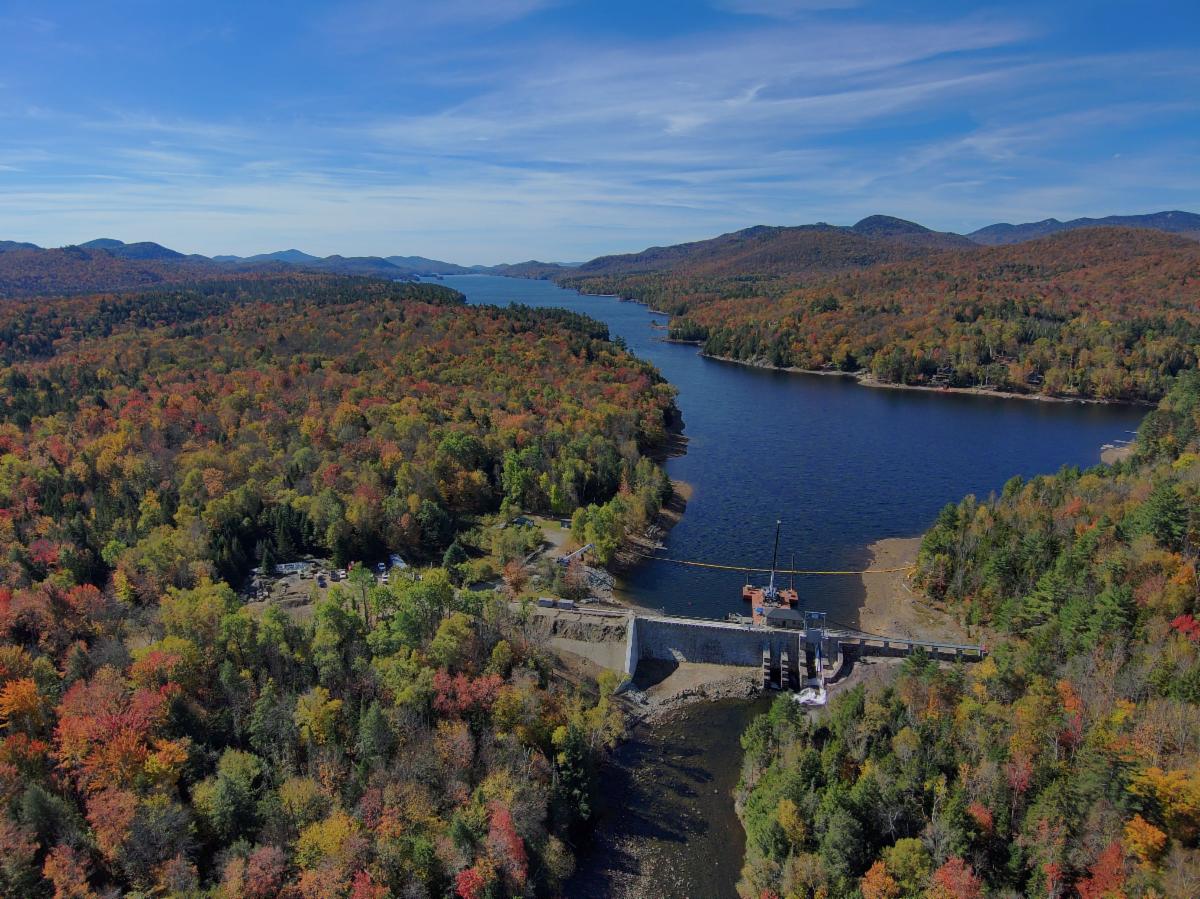
Established in the early 20th century following devastating floods and unpredictable river conditions, the Regulating District operates major storage reservoirs in two watersheds: the Hudson River and the Black River. Key reservoirs such as the Great Sacandaga Lake and Indian Lake (Hudson River watershed) and Stillwater Reservoir (Black River watershed) were designed not only for flood control but also to store vast quantities of spring runoff and precipitation, which are steadily released to sustain river flows when natural inflows decline. When the delta between these required releases from the reservoir, and natural inflow into the reservoir, is extreme…the reservoir drops at a sharper rate than normal. We’ve certainly seen this dynamic play out this year on our reservoirs.
| Environmental and Community Benefits | |
Flow augmentation has significant ecological impacts as well. Cold, oxygen-rich water released from reservoirs can help moderate water temperatures and support aquatic life during critical low-flow periods. This is especially important for fish species that depend on stable habitats for spawning and migration.
Communities along the rivers also benefit indirectly. Consistent flows support safe operation of municipal sanitary facilities and industries, and they help reduce the likelihood or severity of water quality degradation, such as increased concentrations of pollutants or excessive algal growth that often accompany low-flow conditions.
|
| |  | The Hudson River is also a source of drinking water for seven municipalities along the river known as the “Hudson 7”, the largest of which is the City of Poughkeepsie. The river, technically a tidal estuary, is tidally influenced well upstream from the mouth, creating a mixing zone between fresh river water and salt water from the ocean. This “salt line,” or “salt front” – which fluctuates with tides, flow velocity (higher river flow pushes it downstream; low flow allows it to move upstream), seasonal variation, and sea level rise – can gradually move north toward drinking water intakes during abnormally dry periods, threatening the public’s supply of fresh water. For instance, on September 22, the City of Poughkeepsie announced that it was experiencing a salt front episode: elevated sodium and chloride concentrations in the drinking water due to a salt front episode caused by abnormally dry conditions and reduced Hudson River flow. By continuing to make releases from storage reservoirs under its jurisdiction in the Hudson River watershed in accordance with its FERC license and statutory mission, the Regulating District ensures a consistent flow in the lower Hudson River much higher than it otherwise would be, helping to curb further encroachment of the salt line, and helping to protect these communities.
Operating Within a Carefully Managed Framework
The releases made by the Regulating District from its storage reservoirs during various times of the year are guided by federal and state regulatory frameworks, including flow targets set in coordination with the Federal Energy Regulatory Commission (FERC), the New York State Department of Environmental Conservation (DEC), and various downstream stakeholders. Reservoir levels are tracked continuously, and release decisions are made based on hydrologic forecasts, reservoir storage, and downstream needs.
Investing in the Future
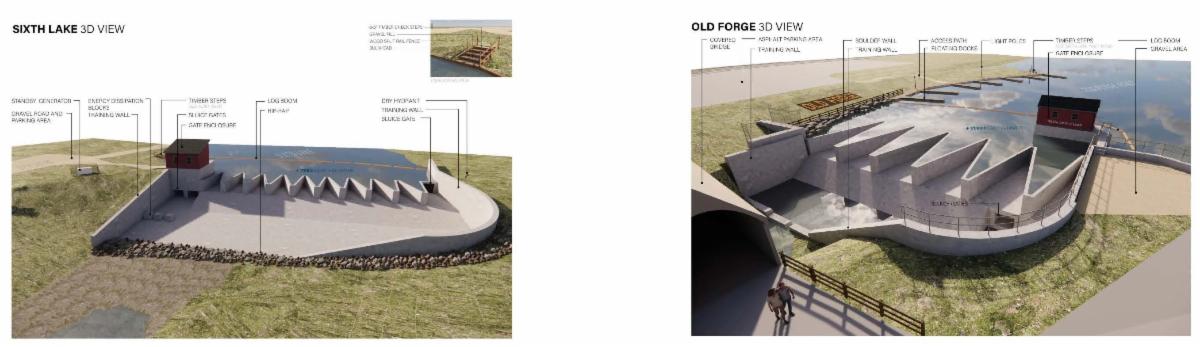
The Regulating District Board voted at its September 9, 2025 to award the comprehensive rehabilitation of the Old Forge and Sixth Lake Dams to Tioga Construction Co., Inc. at a construction value of $12,785,695, the low bid that was received. The work is in response to deficiencies identified by DEC dam safety inspectors at both dams over the years which require remediation to bring the structures into compliance with current DEC dam safety regulations. The construction contract is currently under review by the Office of State Comptroller, with permits for the project under review by the APA and DEC currently. To read more about this important project in the Adirondack Explorer, click here. With the recent completion of the Hawkinsville Dam rehabilitation, the Indian Lake Dam rehabilitation nearing completion, and the upcoming Conklingville Dam rehabilitation project, Regulating District infrastructure is receiving a unprecedented, generational investment. Under the Board’s leadership and with significant support from the administration of Governor Kathy Hochul, during the current ten-year period, Regulating District infrastructure will benefit from nearly $100 million in improvements, a generational investment on par with the creation of the Conklingville Dam and Great Sacandaga Lake.
Righting the Ship
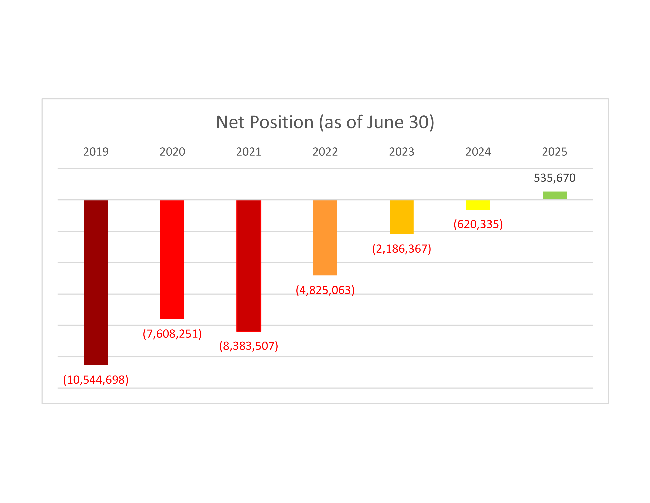
The Regulating District ended its 2024-2025 fiscal year with a positive net position of $535,670, marking the first time in nearly a decade that its net position has been positive, according to the results of an annual independent audit. The significant improvement in the Regulating District’s finances – nearly $11.1 million over the last six years – was a result of belt-tightening, revenue enhancement, and successful work with Governor Kathy Hochul and the New York State Legislature to secure State funding for required capital improvements to critical infrastructure, and to address the responsibility for real property tax payments to local municipalities and school districts.
The improvement in the Regulating District’s net position of 105% in just a six-year period was achieved despite the Regulating District losing a major source of revenue in its Hudson River operating area, namely $1.5 million in annual revenue from Erie Boulevard Hydropower, L.P., a subsidiary of Brookfield Renewable Energy, for the right to use Conklingville Dam and Great Sacandaga Lake for hydroelectric power generation.
| | | | |
Hudson River Area Permit Department: Customer Service and State Lands Management on Great Sacandaga Lake
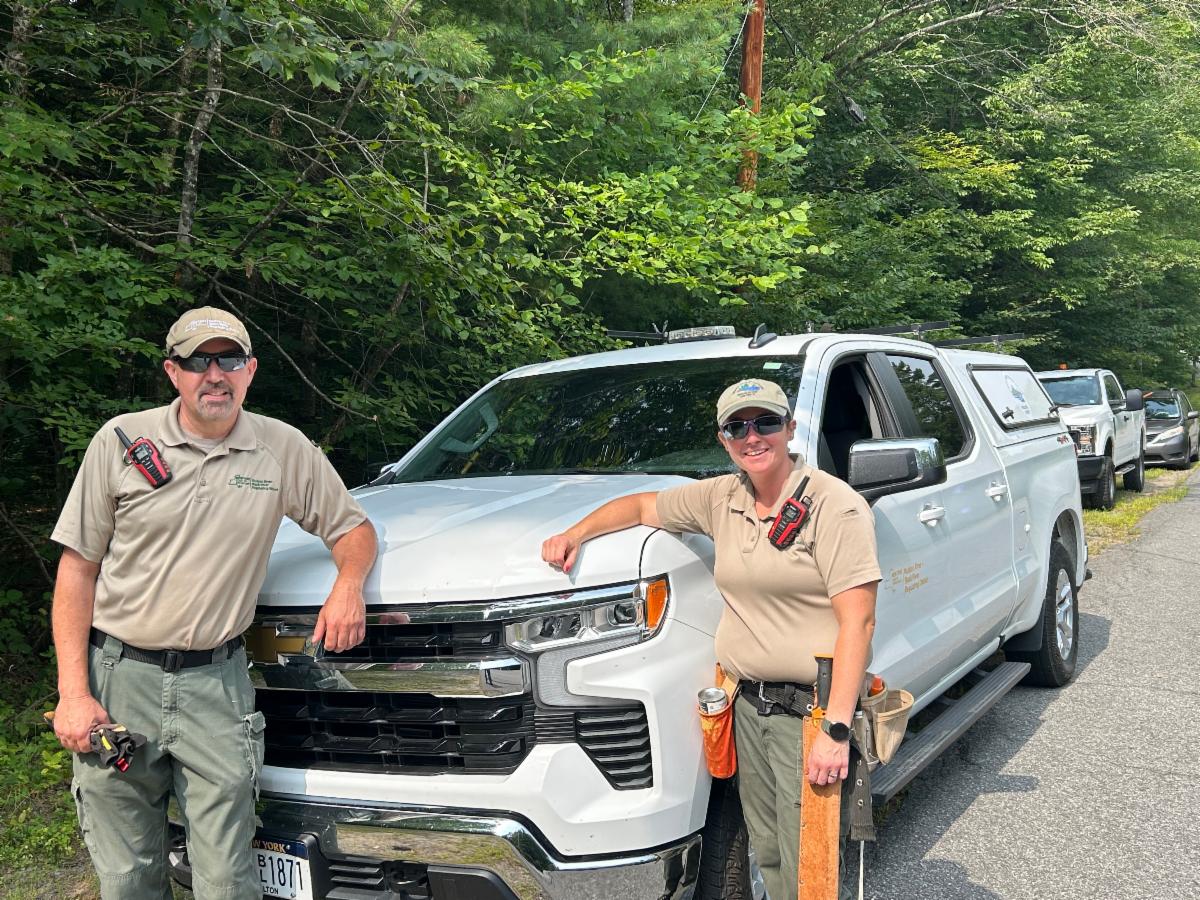
| | The Hudson River–Black River Regulating District’s Permit Department plays a vital role in supporting the thousands of property owners and recreational users who enjoy Great Sacandaga Lake each year. Behind the scenes, the department’s dedicated staff – Field Supervisor Dan Kiskis, Senior Field Assistant Danielle Dunn, and Senior Administrative Assistant Stephanie Loveless – work tirelessly to ensure that the Regulating District is responsive and customer-focused, while ensuring compliance with applicable State laws and regulations. | | |
Each season, the Permit Department issues and manages a wide range of permits related to uses of State lands under the Regulating District’s jurisdiction. This is no small task: with nearly 5000 permits around Great Sacandaga Lake, this team must balance regulatory responsibilities with the practical needs of property owners and the public. The team endeavors to approach each interaction with professionalism, courtesy, and a genuine desire to help.
If you are a permit holder on Great Sacandaga Lake and are contemplating conducting any work on your permit area, please reach out to the team prior to conducting any activity. Most activities on State lands under the Regulating District’s jurisdiction require a work permit prior to any work occurring. If you have any questions at all about whether or not the work you are planning will require a work permit, please assume that it will, and email SACFO@hrbrrd.ny.gov for more information. If you know that you’ll need a permit, kindly find our work permit application online at https://hrbrrd.ny.gov/wp-content/uploads/2021/01/application-work-permit-12-16-21.pdf
Customer service improvement in recent years include a new online system for transactions such as annual renewals, and work permit applications. If you haven’t already done so, visit Online Permit Renewal | Hudson River-Black River Regulating District to register an account.
The Hudson River–Black River Regulating District is pleased to recognize its Permit Department team and their commitment to public service. The work that this team does throughout the year is a cornerstone of the Regulating District’s goal of being responsible stewards of the State land under its jurisdiction, while supporting the residents and businesses that rely on the access and enjoyment these permits provide.
| | |
USGS Discontinuing Support for Indian Lake, Old Forge, and Sixth Lake Gauges
On July 14, 2025, the United States Geological Survey (USGS) notified the Regulating District that it was in the process of decommissioning all the local USGS servers used to process information from individual gauges, and migrating to a national cloud-based server. This would require discontinuation of all modem telemetry for USGS-supported gauges, including gauges based at Indian Lake, Old Forge, and Sixth Lake. At the time, USGS provided a deadline of July 31, but indicated that they were working on a workaround that would allow these gauges to continue to operate as normal.
On July 21, 2025, USGS provided a proposal to upgrade the gauges to be compliant with the new system at an up-front cost to the Regulating District of $50,000, and an additional annual operating cost of $16,230, beyond the $19,689 the Regulating District already pays to USGS for the gauges it supports.
On August 20, USGS notified the Regulating District that it had not been successful in establishing any kind of work-around to permit continued use of these gauges, and that they would “lose the functionality” of those gauges on August 22.
Presently, the Regulating District can still access real-time data from these gauges and has all the necessary information to make prudent, informed water management decisions. The Regulating District is exploring alternate options to restore the public’s real-time access to this data utilizing another vendor, and hopes to have this alternate system up and running by the end of the year.
The Regulating District continues to provide funding to USGS for other real-time gauges it sponsors which do not rely on modem telemetry.
| | |
Presentation on Rehabilitation of Old Forge and Sixth Lake Dams Set for Nov. 5
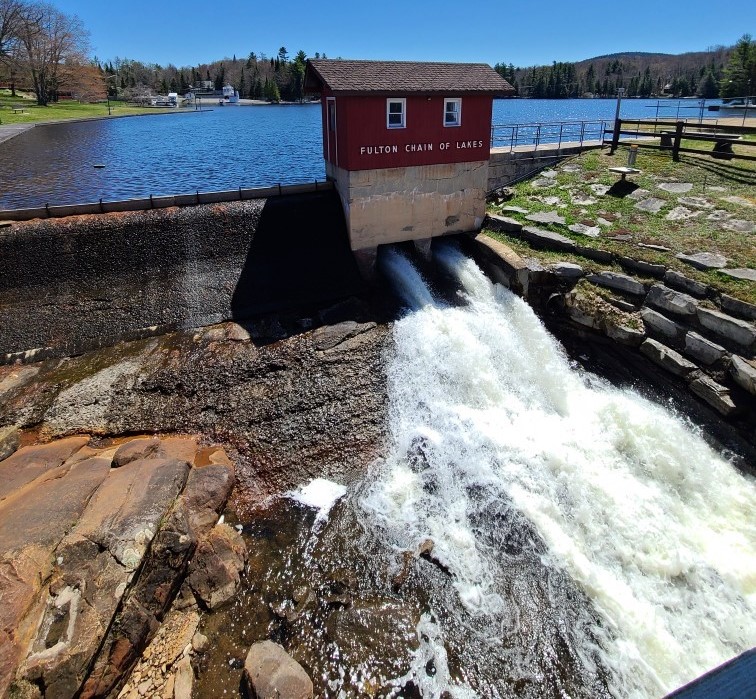
We know, we know…you want some dam information on this upcoming project! Well on November 5th the Regulating District and its engineering consultant Arcadis will present information on the work that will be ongoing over the next two seasons at the Old Forge and Sixth Lake Dams to bring the structures into full compliance with current NYSDEC dam safety standards.
Following a presentation by Arcadis, representatives will answer questions and engage directly with area residents about any concerns they might have related to the work. Importantly, the project team will detail how the project will utilize temporary coffer dams and the work sequenced in a manner that does not necessitate any change to normal water levels during construction.
The sessions will take place at 3 pm and again at 6 pm on November 5th at the Town of Webb offices located at 3140 NY-28, Old Forge, NY.
| | |
Guest Column: Sacandaga Protection Committee
| | | |
The Sacandaga Protection Committee (SPC) was formed in 2009 to develop strategies to protect the environmental, economic and legal interests of the entire lake community. We are 100% volunteers and rely upon the local community, especially permit holders, to fund our efforts. The SPC is the only organization representing the legal rights and interests of permit holders. We have an outstanding law firm on retainer and contract one of the highest ranked lobbyists in New York State to represent us in Albany.
The Great Sacandaga Lake community has enjoyed the beauty and splendor of rural living surrounding a beautiful resource since the dam was built. The SPC’s goal is to maintain the rights of permit holders and the community by monitoring proposed changes to the Rules and Regulations by the Regulating District and NYS DEC, and to be an active participant in representing the views of community stakeholders.
Our formation was spurred on by the proposed permit fee increases and rule changes by the Hudson River-Black River Regulating District and the DEC back in 2007 to 2009.
The SPC successfully fought the HRBRRD and NY State when they unilaterally tried to change permit rules. Their proposals would have banned permit holders from mowing their permit areas, having picnic tables or tents on the state land, and storing docks on the permit area over the winter. It would have eliminated exclusive use.
The SPC didn't stop watching for issues that could hurt permit holders. In a Federal lawsuit filed against the HRBRRD by Niagara Mohawk, Niagara Mohawk claimed the permit system was illegal and should be discontinued. The SPC legal team filed court briefs arguing against this and successfully presented our position in Federal Appeals Court.
When the NYS Assembly and Senate passed legislation requiring the HRBRRD perform a new beneficiaries study (that could have determined permit holders are beneficiaries that would have required permit holders to be responsible for HRBRRD operational expenses) we requested the Governor veto the bill. Through the efforts of the community, the SPC and our lobbyist we were successful in our efforts.
These are just a few of our accomplishments, visit our website www.sacandagaprotectioncomittee.com to check them out.
While there are no threats to permit holders right now, it doesn't mean we're in the clear. We are watching the Brookfield Energy issue of using the GSL head water to produce electricity without compensation to the HRBRRD. Our position is that Brookfield must pay the District for use of the water and resume the $1.5 million annual payments to the HRBRRD. You can follow the issue on the HRBRRD website.
We like to think of ourselves as watchdogs, or an insurance policy protecting the things we love. If you would like to be included in our bi-annual updates and alerts, please send an email to spcgsl@gmail.com.
| | | | |