News from Mission Communications for Water and Wastewater Professionals |
|
New System Streamlines SMS Alarm Notifications
Mission offers notification delivery via several methods. For busy operators, SMS – text message – is often the most convenient way to receive notifications of alarms. This option has been in use for over 10 years, but Mission set out to streamline the process and make it easier for operators to keep up with notifications.
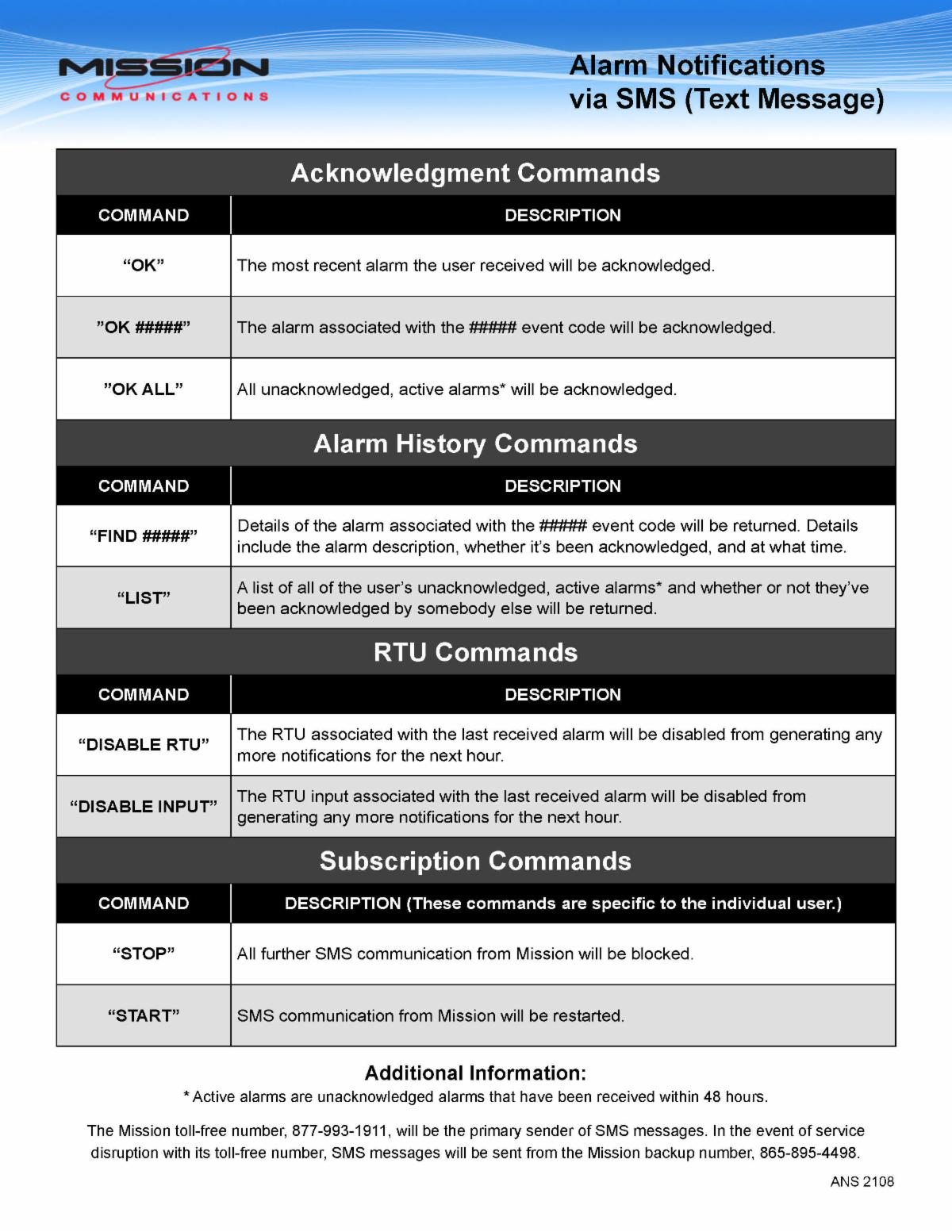
The new SMS system sends notifications from a single originating number. This allows each notification to appear in the same message window. This mimics texting with personal contacts since all notifications will be easily available in the same message thread.
The Mission toll-free number, 877-993-1911, will be the primary sender of SMS messages. In the event of service disruption with its toll-free number, SMS messages may be sent from the Mission backup number, 865-895-4498.
To help users navigate the SMS alarm notification system, Mission has created a short guide that explains the codes used for SMS notifications. For example, “OK” will acknowledge the most recently received alarm. This guide is available in the web portal under Documents in the Troubleshooting and Help Guides folder.
If you have any questions about implementing or using the SMS notification option, contact Mission Technical Support at techsupport@123mc.com or 877-993-1911 option 2.
|
|
Cellular Network Sunsets Set for 2022 |
Mission pioneered cellular managed SCADA more than 20 years ago when the cellular networks were effectively "1G." At the time we knew cellular technology would evolve, so our RTUs were designed with a separate and easily replaceable radio module. This piece of the RTU could be exchanged for an updated component while keeping the rest of the unit's site connections and antenna intact. Enhancements in cellular network technology bring faster and more reliable connections that customers demand. Mobile carriers now need to turn off their 3G networks to make their allocated bandwidth available for new and more spectrum-efficient network protocols.
Our primary carriers are announced the following schedule for discontinuing service to older-generation radios:
• AT&T (3G GSM) – February 22, 2022
• Verizon (2G and 3G CDMA) – December 31, 2022
All legacy, MyDro, or Manhole Monitor units with non-LTE radios will need upgraded radio modules to continue to operate after this sunset occurs. The cellular network sunset is not just local to Mission -- it applies to any cellular device that utilizes 3G or CDMA cellular connection.
|
What does this mean for Mission customers?
The Mission "Technology Obsolescence Guarantee" states that radio telemetry technology will be available for use by the customer as long as they wish to utilize the Mission service. From our Managed SCADA document, “If the originally installed radio telemetry technology becomes unavailable or unusable for any customer unit, then Mission will, at its sole expense, provide to the customer hardware for the customer to swap out and replace the non-performing unit’s radio telemetry module hardware. The new radio module technology will be equal to or better than the original radio telemetry technology.”
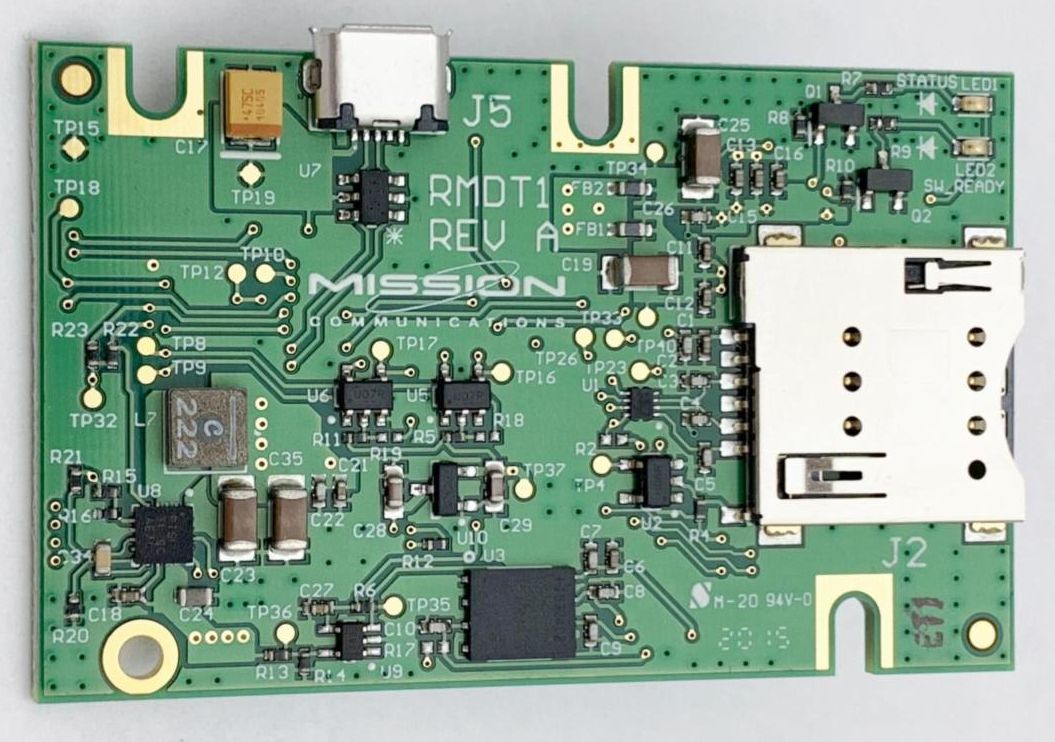
Mission engineers have developed our newest radio modules, the RMDT1 and RLDT1, to support the latest LTE protocols. The RLDT1 plugs on the the legacy M110/M800 main board, and the RMDT1 fits inside the Mydro case and is now standard on all new MyDro and Manhole Monitor Plus RTUs. Radio modules have been through rigorous testing and industry certifications.
The MyDro RTU offers numerous additional features compared to legacy RTUs as described in our Upgrade to MyDro pamphlet. The RMDT1 even allows the the Mydro to switch between carriers without a site visit, meaning that if it is connected to an AT&T tower which goes down for maintenance it can automatically switch over to the Verizon network. Mission currently offers generous trade-in allowances for units less than five years old as part of our technology obsolescence guarantee. Also, for a limited time, Mission is offering enhanced upgrade incentives to facilitate the replacement of legacy M110 and M800 RTUs with state-of-the art MyDro 150 and 850 RTUs.
How do I know if this applies to my RTUs?
On each website there is a banner that will pop up when the user logs in. Also the list of radio modules needing an upgrade is listed on the weekly Management Report.
Our technical support and sales teams are working to notify those customers with older radio access technology to ensure everyone has time to upgrade their equipment to maintain constant connectivity. Even though the earliest confirmed discontinuation is February 22, 2022, carriers may begin to reapportion older spectrum before that, which may cause service disruption for RTUs in that area. Therefore, Mission recommends that radios or RTUs be updated before the end of 2021.
Customers have three options:
1. RTU Upgrade:
This option provides the customer with a new RTU featuring our RMDT1
radio. Aggressive incentives are being offered for this option, so it is your
best option.
2. Radio Upgrade Replacement:
Customers can choose to purchase a new radio for their RTUs for $250
prior to network sunsets. This will ensure constant connection for the
RTUs.
3. Radio Replacement After Network Sunset:
After cellular network sunsets occur, older RTU radios will fail. As part of
our Technology Obsolescence Guarantee, Mission will send a replacement
radio free of charge. However, this option will put the RTU offline until the
new radio is shipped and installed.
With the current uncertainties regarding travel restrictions, shipping delays, and weather, and potential limited availability of chips and radios, replacing your radio module as soon as possible will ensure continued reliable monitoring.
Please reach out to our sales team at sales@123mc.com or tech support at techsupport@123mc.com to start making plans to keep your system up-to-date and connected.
|
|
September 22
Web Portal II—Advanced Features, Reporting, Supergraph, Volumetric Flow
September 29
Special Topics
October 6
Survey of Features
October 27
Web Portal II—Advanced Features, Reporting, Supergraph, Volumetric Flow
November 3
Survey of Features
November 17
Web Portal I—Unit Setup Options, Notification Setup Options, Alarm Groups, Website Tools
December 1
Survey of Features
December 8
Hardware and Instrumentation
December 15
Web Portal I—Unit Setup Options, Notification Setup Options, Alarm Groups, Website Tools
|
Since events are still in flux due to COVID restrictions, please make sure to confirm schedules with individual trade shows. We will update our website as new information is made available.
|
|
Twisp Streamlines Operations with
Mission Tank and Well Remote Control
|
The residents of Twisp, Washington count on safe and stable water and wastewater services. After substantial experience, Andrew Denham took the role of Public Works Director for Twisp.
“I’ve been in municipal public works for 29 years and here with the Town of Twisp for six years,” Denham explained. “I am responsible for all aspects of planning, funding, project oversight, operations and maintenance of the Town of Twisp’s Water System, Wastewater System, WWTP, Transportation System, Parks Department, and Airport Maintenance.”
When looking for a new system, Public Works Director, Andrew Denham put reliability and ease of access at the top of his requirements. He was introduced to Mission via Correct Equipment, a Mission distributor.
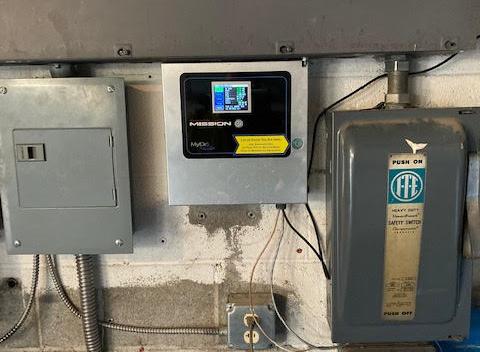
Denham implemented a project to install four remote terminal units (RTUs) as part of a local pilot test program to determine the efficacy and applicability of the Mission system. RTUs were placed at two wells, a sewage lift station, and at a water booster station. Along with each RTU, digital and analog inputs were setup to monitor pump runtimes, pump cycles, pumping rates, and liquid levels.
|
Twisp uses four RTUs to retrieve data about their water system. |
The information from the RTUs is transmitted to Mission servers and made available in various formats. Data can be displayed in real time via the web portal and mobile app or disseminated via emailed reports to operators.
“The web portal and mobile app are routinely used by the operators and myself to verify equipment status, solve irregularities, troubleshoot operation, respond to emergencies, and simply monitor operations,” Denham stated.
This detailed data has allowed Twisp to streamline their operations with a more predictable maintenance schedule and reduced false alarms. Denham also compiles data from pump reports to present as part of water totals reports for Twisp each month.
Twisp uses remote control via the Mission Tank and Well application to alternate well pumps and keeps these pumps on a set schedule. Denham and other operators would previously have to be on site to manually control this part of their system. To ensure pumps operate as desired, Mission offers Positive Relay Feedback. This is a set of business logic that tests several conditions to determine if everything is operating as expected. Operators will receive alarm notifications if any part of the remote-control setup fails to perform according to plan.
Mission produces a Best Practices for Remote Control document that can help operators adhere to best guidelines for remote-control setup. Operators can also rely on technical support from Mission to address any concerns about the system.
|
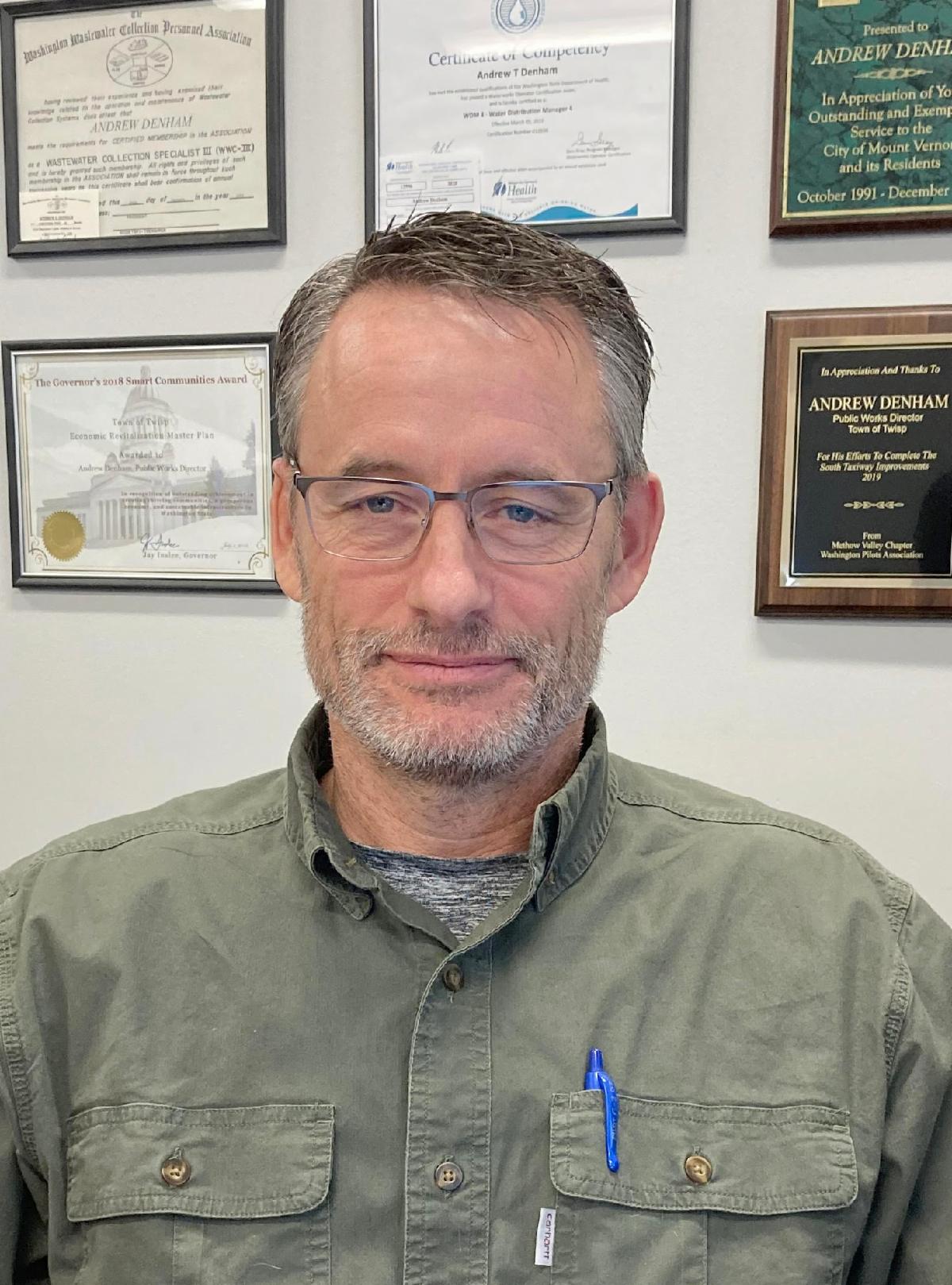
Denham, pictured right,credits Mission technical support with helping Twisp maintain their setup. “I have been impressed with the high level of Customer Service. Teaming up with a company like Mission that shares our mission of extremely uncommon customer service is crucial. Staff can be speaking to a knowledgeable Mission technician within 30 seconds to have simple or complex questions answered any time of day.”
Mission provides reliable and consistent service to help with needs for utilities of any size. For more information about the Mission system, contact sales@123mc.com
|
Senate Passes Bipartisan Drinking Water and Wastewater Infrastructure Act |
Earlier this year U.S. Senate approved the Drinking Water and Wastewater Infrastructure Act of 2021 (DWWI). This legislation provides more than $35 billion toward drinking water and wastewater infrastructure projects throughout the country. More than 40 percent has been allotted for small, disadvantaged, rural, and tribal communities via additional subsidies of State Revolving Funds and direct grants.
For purposes of this legislation, a small system is defined as one that serves fewer than 10,000 and is owned or operated by one of the following:
• a unit of local government
• a public corporation
• a nonprofit corporation
• a public trust
• a cooperative association
• or an Indian Tribe
The bill aims to enhance operational sustainability of small water systems. DWWI defines operational sustainability as “the ability to improve the operation of a small system through the identification and prevention of potable water loss due to leaks, breaks, and other metering or infrastructure failures.”
A significant amount – $1.4 billion over five years – has been designated for sewer overflow and storm water reuse. The goal is better help communities manage flow from storms and further invest in green structures and other water and energy efficiency projects.
Several components of the bill specifically address concerns for disadvantaged communities. For example, a portion of the funding will be used to create a pilot program that will help needy households maintain clean water and proper wastewater access along with providing grants to connect more households to public water systems. To further this initiative, the legislation authorizes funding to reduce lead in drinking water infrastructure as well specifically addressing lead in school drinking water systems.
Additionally, the legislation will promote resiliency projects to mitigate the effects of climate change and prevent cybersecurity vulnerabilities.
According to the U.S. Senate Committee on Environment and Public Works, DWWI will “increase investment to address recruitment, training, and retention challenges facing the water and wastewater utility workforce and provide significant investments in technical assistance and new and emerging technologies that result in cleaner, safer, and more reliable water. It also creates a federal interagency working group to report to Congress on bolstering the water and wastewater utility workforce.”
Since Section 2013 of America’s Water Infrastructure Act (AWIA) went into effect in 2020 with the last of the compliance deadlines ending this year, utilities have been focused on assessing risk and resilience along with emergency response plans in the event of natural hazards or manmade threats. The funding available through DWWI can help with implementing these plans as well as allowing utilities to upgrade and reinforce systems in hopes of avoiding the need for a formal emergency response plan.
A companion bill in the House, the Water Quality Protection and Job Creation Act of 2021, would authorize additional funding for investment in wastewater infrastructure. Bipartisan support for both bills provides a positive outlook that water utilities and municipalities may soon see substantial federal financial support for water infrastructure.
More information about DWWI can be found here.
To read our previous coverage of AWIA, click here.
|
|
“Water is sacred to all Human Beings. If you do not have water, you cannot have life. I always remember to honor and pour the water because it is traditional.”
― Autumn Morning Star
|
|
Newsletter Survey
Mission values your feedback! Please take a few moments to share your thoughts about this newsletter and tell us about your application. You could be featured in the next newsletter! Click here to complete the online survey.
|
|
3170 Reps Miller Rd NW,
Suite 190, Norcross, GA 30071
1-877-993-1911
|
|
|
|
|
|
|
|