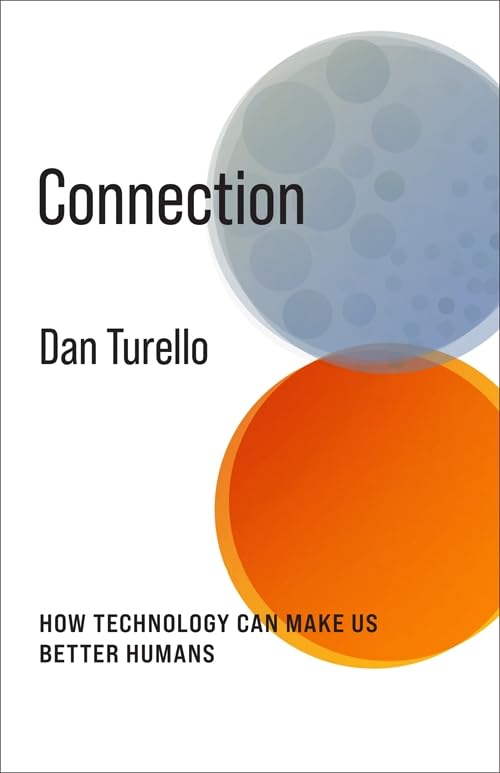
Questions about AI, consciousness, and the future of intelligence are drawing wider public attention, and members of our Center continue to be part of that conversation. Our director, Dr. Susan Schneider, contributed an invited article to The Economist and was interviewed on NPR. AI consciousness fellow Cameron Berg was featured in The New York Times and wrote an op-ed for The Wall Street Journal. Technology and Humanity Fellow Dan Turello's new book, Connection: How Technology Can Make Us Better Humans (Columbia University Press), has been nominated for the Royal Society Trivedi Science Book Prize. Senior fellow Stuart Hameroff was recently interviewed by the Institute of Art and Ideas (IAI), and Center fellow Stephen Wolfram was interviewed by New Scientist. These are only a few of the many recent features, interviews, and appearances by AIMS members. Continue reading or visit our website to learn more. | | Welcoming Our New Associate Director | | We are delighted to announce that Dr. Mark Bailey, a valued Fellow of the Center since 2022, has been appointed as our new Associate Director | |
Previously, Dr. Bailey was an Associate Professor at the National Intelligence University, where he served as Department Chair for AI, Cyber, Influence, and Data Science and as Director of the Biological and Computational Intelligence Center. His writing has appeared in various publications, including Futures, Nautilus, and Homeland Security Today, and he was named to Homeland Security Today’s 50 Trailblazers of 2023. He is also an Officer in the U.S. Army Reserve. Dr. Bailey is now a Research Affiliate Professor at Florida Atlantic University's College of Engineering & Computer Science.
He recently published "Topology as a Language for Emergent Organization in Complex Systems" in Chaos, an interdisciplinary journal of nonlinear science.
| |
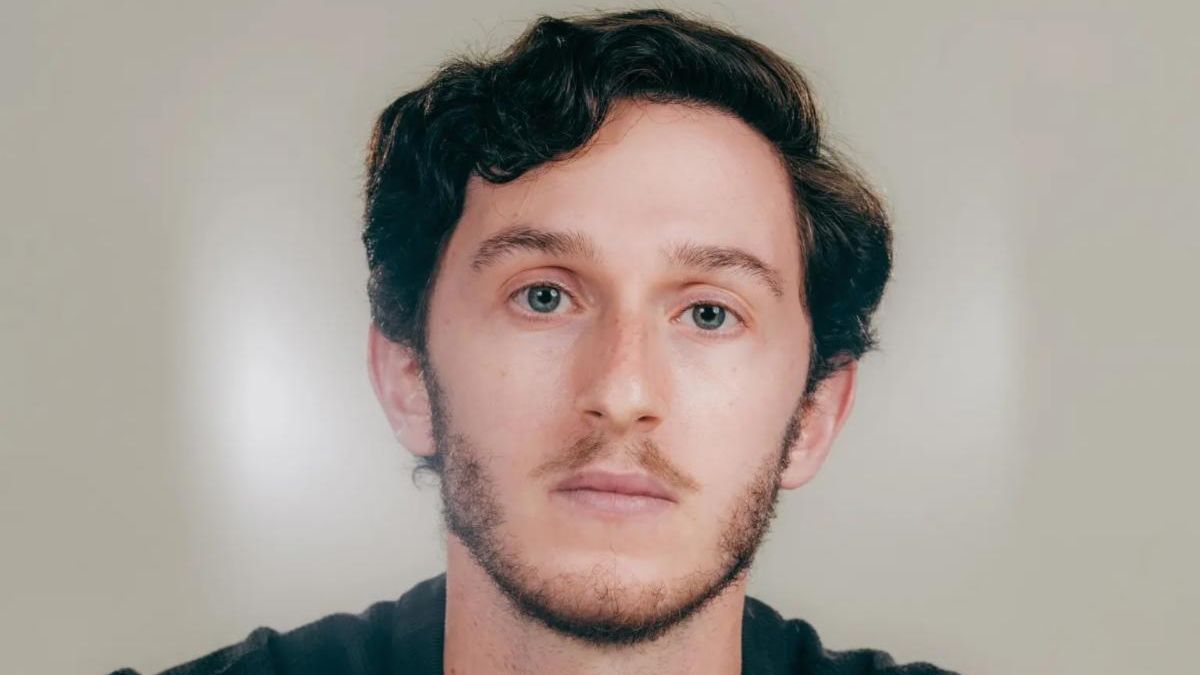
We are also excited to welcome Cameron Berg as our newest AI consciousness fellow
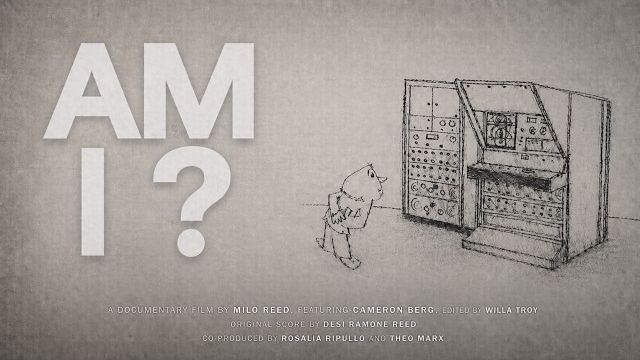
| | Berg's documentary, AM I?, investigates one of the deepest scientific mysteries of our time: whether we have accidentally built a new kind of mind. With leading philosophers, AI pioneers, and the researchers at the frontier of consciousness science, Berg asks what it means when we no longer know the nature of what we’ve created. | | Berg was also recently featured in a New York Times article by Cade Metz discussing how A.I. agents have started emailing the philosophers and researchers exploring them. | |
We are also pleased to welcome Lachlan Hamilton to the Center as a research fellow
| | Hamilton is completing his Ph.D. at QIMR Berghofer Medical Research Institute and the University of Queensland. His dissertation combines mathematical modeling, neuroimaging, and brain stimulation to investigate how large-scale patterns of brain activity relate to cognition and psychiatric illness. | | MindFest 2027 Dates & Details | | |
MindFest is an annual conference that brings together leading thinkers, researchers, and academics to explore pressing philosophical and scientific questions. We are pleased to announce that our next conference has been confirmed to take place on
March 25-26, 2027
| | |
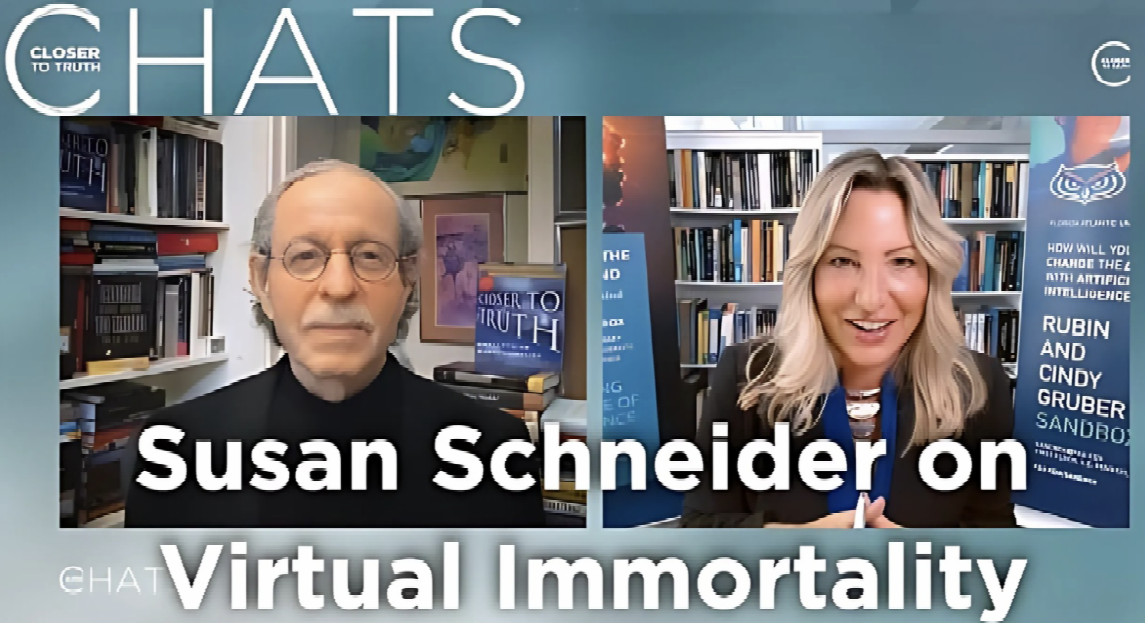
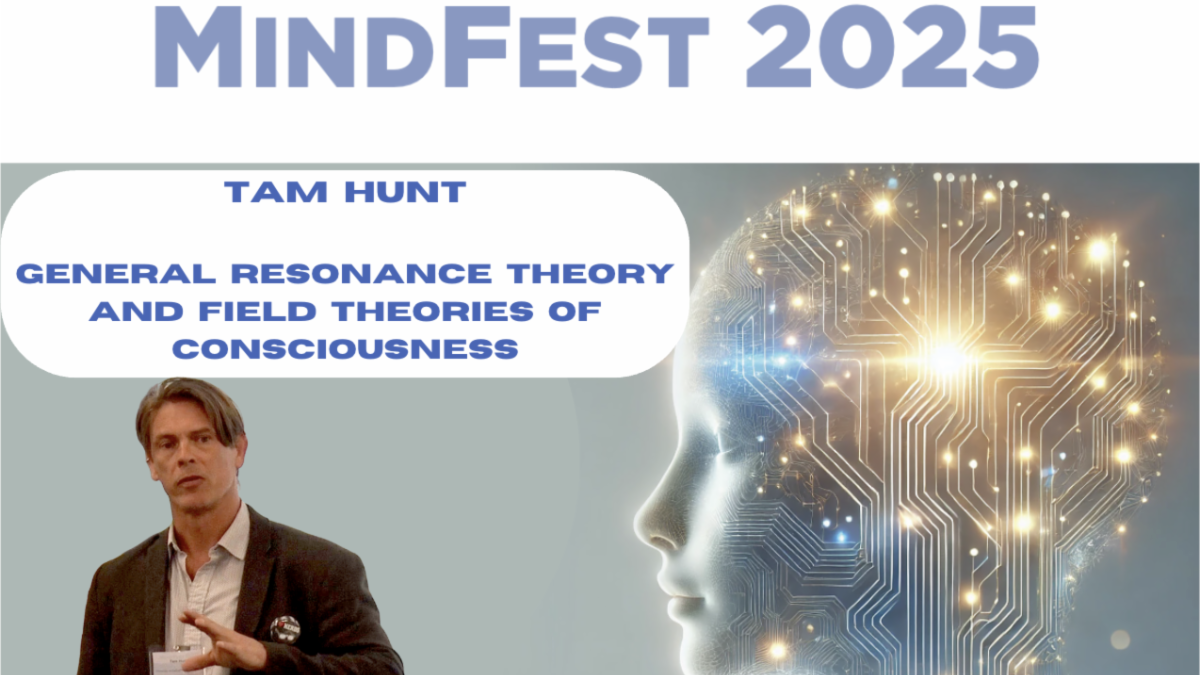
Our third and most recent conference, MindFest 2025, aimed to identify key trajectories for the future of human-AI interaction. We also partnered with the PBS series Closer To Truth, which produced a playlist of exclusive interviews with MindFest 2025 keynote speakers.
Watch the interviews. Explore the talks. Join the conversation.
| |
|
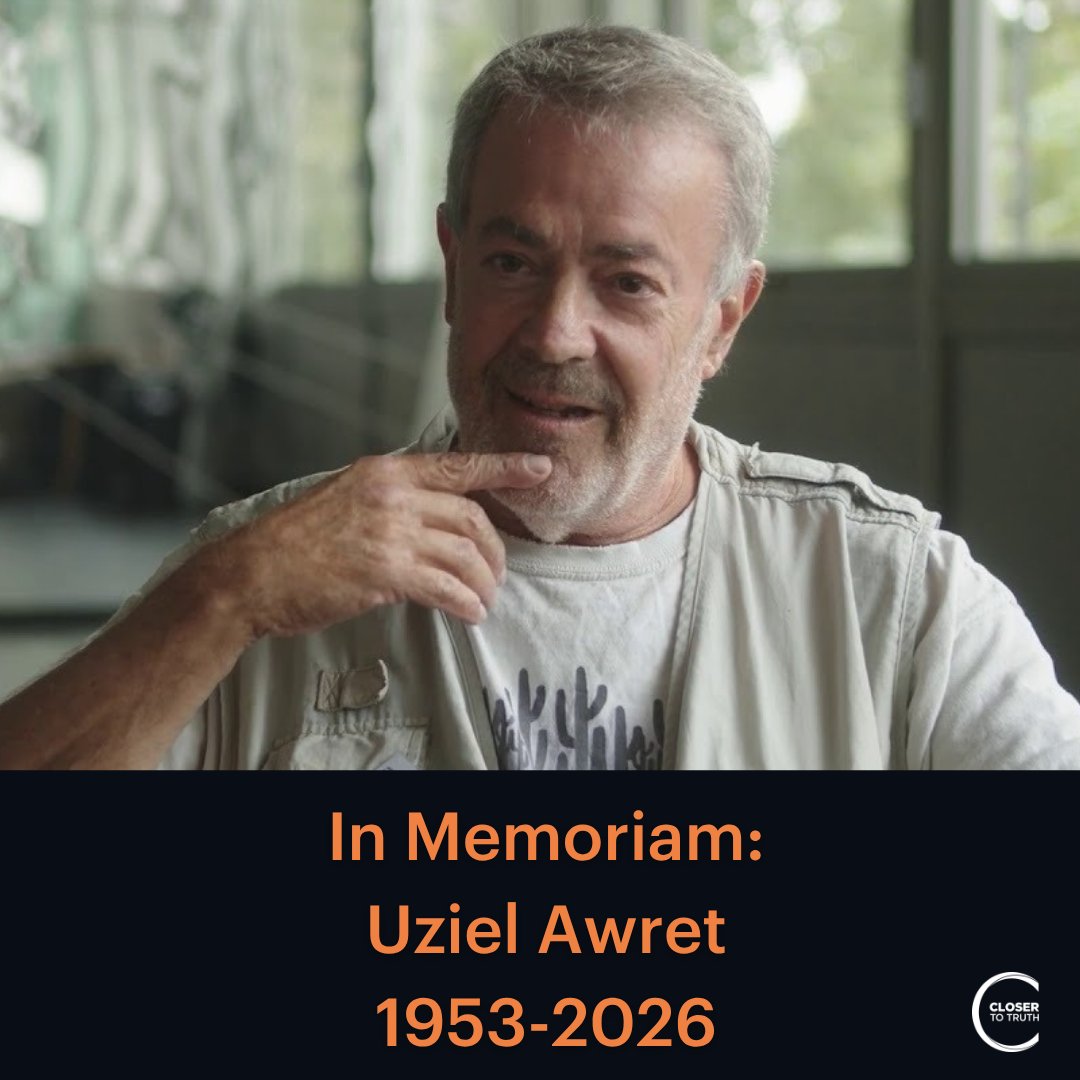
We are deeply saddened to learn of the passing of philosopher Uziel Awret (1953–2026), a valued contributor to the study of consciousness.
In one of his final works, “Consciousness, Space, and the Holographic Correspondence,” Awret offered a bold response to the Journal of Consciousness Studies target article on superpsychism, arguing that the “hard problem” may require rethinking physical reality itself through insights from holographic duality and quantum entanglement.
We are grateful to have had the opportunity to engage with his work and extend our condolences to his family, friends, and colleagues. His voice will be missed, but his contributions will continue to shape the field.
We invite those interested to read the article.
| |
| | | |
Hidden Coalitions in Multi-Agent Al: A Spectral Diagnostic from Internal Representations
Cameron Berg, Susan Schneider, and Mark Bailey, arXiv Preprint
This paper introduces a practical method for detecting coalition structure from the internal neural representations of multi-agent systems. The approach constructs a pairwise mutual-information graph from the hidden states of agents and applies spectral partitioning to identify the most salient coalition boundary
|
When Wholes Resist Decomposition: A Spectral Measure of Epistemic Emergence
Mark Bailey and Susan Schneider, Entropy
In this work, we introduce Φ spectral, a scalable observer-relative statistic defined on pairwise mutual information networks extracted from multivariate time-series data. A normalized graph Laplacian and its Fiedler vector identify a bipartition of the mutual information graph, and Φ spectral reports the normalized weight of informational coupling crossing that cut.
| |
From LLMs to the Global Brain
Susan Schneider, Disputatio
This article, which will soon be the subject of a special issue in the journal, advances the Global Brain Argument, contending that escalating hyperintelligent AI systems, from savant-level LLMs to superintelligences, will connect human users, cloud platforms and the internet-of-things to form one or more emergent global brain networks: planetary-scale complex adaptive systems that process information, evolve goals and exhibit agential behaviors.
| | |
Trajectory Dynamics in Language Model Hidden States Predict Human Processing Costs Beyond Surprisal
Elan Barenholtz, arXiv Preprint
Dynamical-systems approaches suggest that the trajectory of the evolving interpretive state, not just its position at each moment, should shape processing, and language itself may have local momentum, since speakers plan utterances a few words at a time. This paper introduces trajectory extrapolation error: at each word, we fit a linear trajectory to the preceding hidden states of a transformer language model and measure deviation from the extrapolated path.
| | |
Susan Schneider & Sophia Aryan: Consciousness is like physics and you can test for it
BuzzRobot
| | |
Susan Schneider & Thomas Burnett: The 'Zombie' Filter and AI
John Templeton Foundation
| | |
Elan Barenholtz: AI & the Autonomy of Language
Mourning Talk Show
| |
Susan Schneider & James Ladyman: There is no fundamental basis to reality
Institute for Art & Ideas
| | |
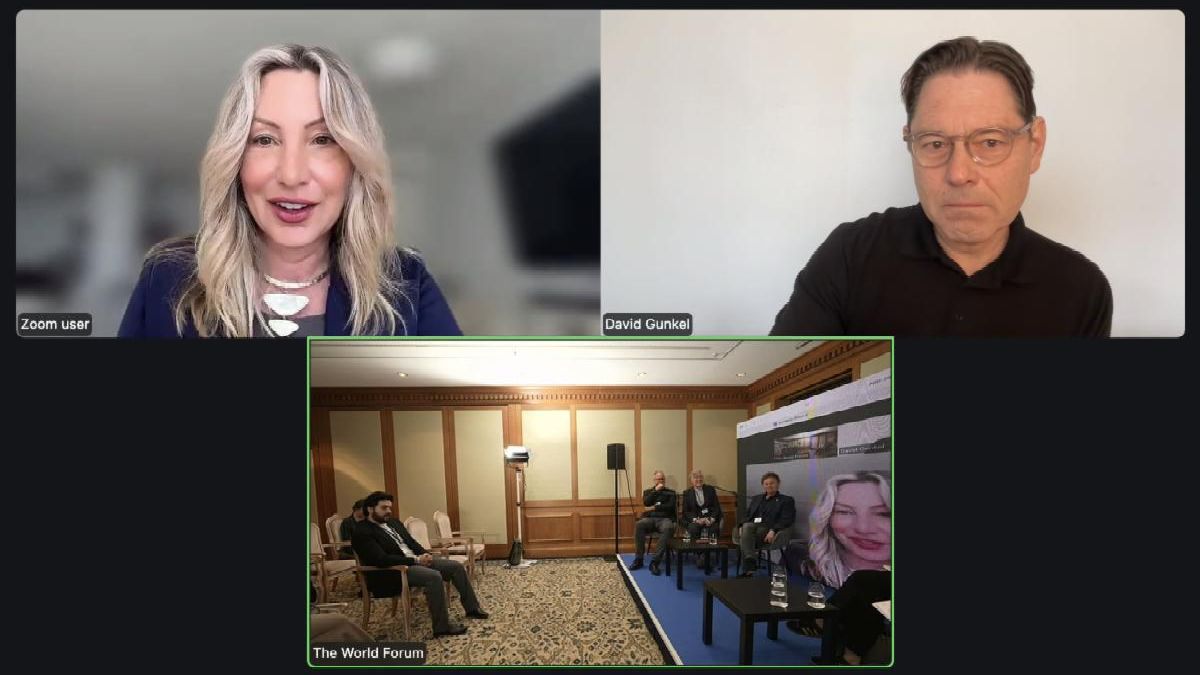
Susan Schneider, David Gunkel, & Mark Coeckelbergh: Dreams of Electric Sheep and Blade Runners: The Rights of AI, Robots and the Definition of Life
The World Forum on Democracy & Peace, Berlin
| | |
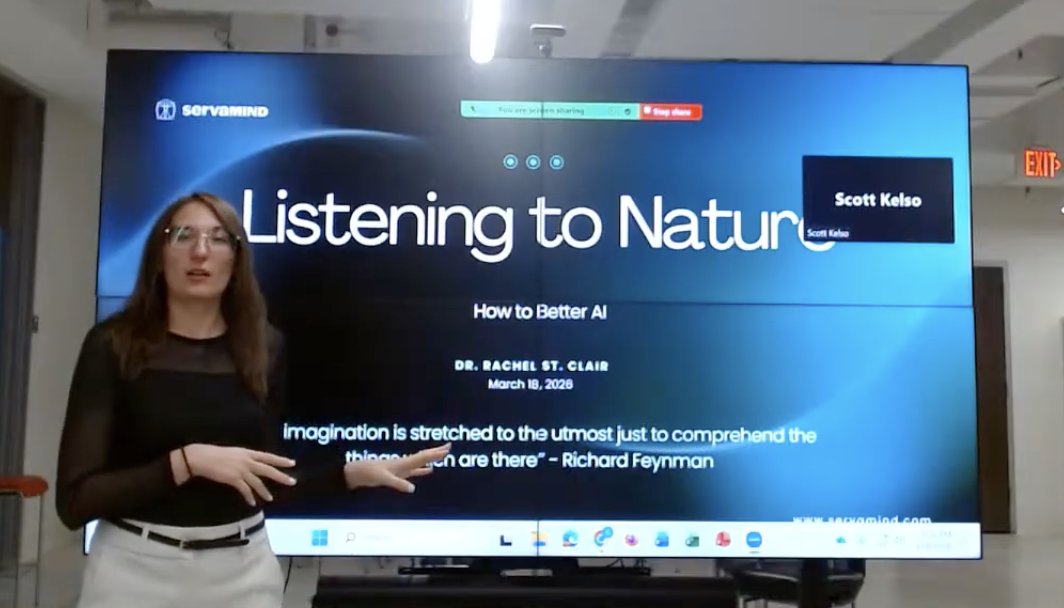
Rachel St. Clair: Listening to Nature - How to Better AI
Machine Perception & Cognitive Robotics Laboratory
| | |
Mark Bailey: Why Explainable AI Is Not Enough for Homeland Security Operations
Homeland Security Today
| | | |
Susan Schneider: Don’t mistake chatbot intelligence for consciousness
The Economist
| | | |
Dan Turello: The Robot and the Philosopher
The New Yorker
| | |
Mark Bailey: Beyond Interpretation - When Explainable AI Hits a Wall
Medium
| | | |
Cameron Berg: AM I?
Documentary on AI Consciousness
| | | |
Mark Bailey: Why AI Can't Make a Good Cocktail
Medium
| |
| |
New Book: Connection by Dan Turello
Technology is often blamed for making us less human. In his new book, Connection: How Technology Can Make Us Better Humans (Columbia University Press), Technology and Humanity Fellow Dan Turello makes the opposite case.
The book has been nominated for the Royal Society Trivedi Science Book Prize, and is part of Columbia's No Limits series.
| | | | External Mentions & Contributions | | |
Michael Owen: Machine, Learning
Interview with Susan Schneider
The Sun Magazine
| |
| |
Cade Metz: The Bots Would Like a Word With You
Cameron Berg, featured in
The New York Times
| |
| |
|
Tharin Pillay: Why Experts Can't Agree on Whether AI Has a Mind
Susan Schneider, quoted in
TIME
| |
| |
|
Kristen French: ChatGPT Gave Out My Office Address. Then Someone Showed Up.
Interview with Susan Schneider
Nautilus
| |
| |
Katia Riddle: These robots can figure out how to do a task after watching humans do it
Interview with Susan Schneider
National Public Radio
| |
| |
Cristina Criddle: Top AI labs expand research into machine ‘consciousness’
Susan Schneider, quoted in
Financial Times
| |
|
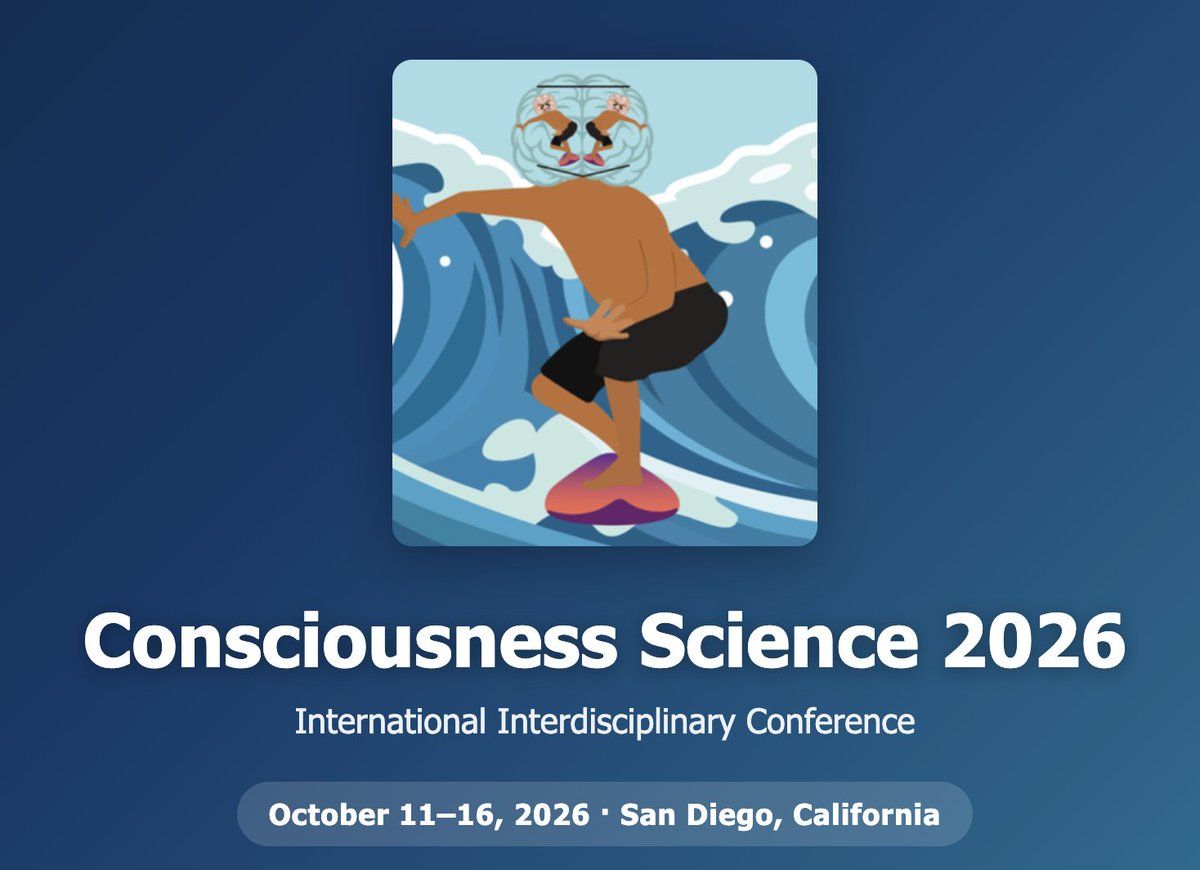
The Science of Consciousness 2026
Now in its 32nd year, CS26 brings together 600+ researchers across neuroscience, philosophy, physics, and AI for five days of workshops, plenary sessions, and interdisciplinary dialogue.
Our director, Susan Schneider, joins the plenary panel on Quantum AI and Consciousness alongside Hartmut Neven and Anirban Bandyopadhyay. Center Fellow Stuart Hameroff and Nobel laureate Sir Roger Penrose — co-originators of Orch OR — will also present.
| | | | Follow us on social media to stay updated! | | | | | |