|
WI-CARH Fall 2026
Newsletter
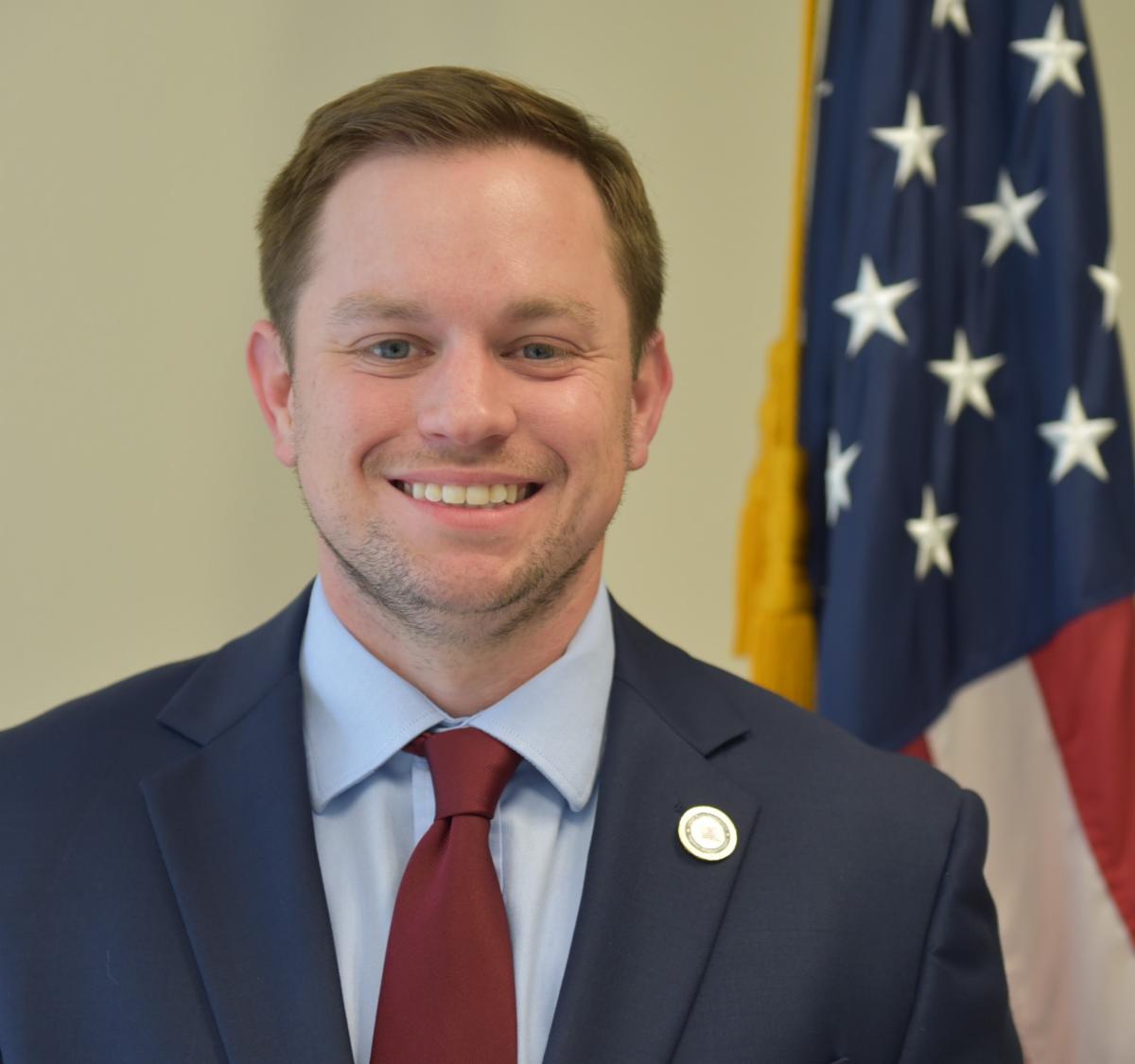
| | Message from Russell Kaney WI-CARH President | | |
Fall Means Conference Time At WI-CARH
Fall brings us falling temperatures, shorter daylight, spectacular leaf color, and the annual WI-CARH conference! Welcome to fall, 2026.
WI-CARH hopes you can join us on November 4 at the Wilderness Hotel & Conference Center in Wisconsin Dells. We have been working diligently in putting together a full-day lineup of topics and speakers that will inform, educate, and maybe exhilarate your knowledge base of affordable housing in Wisconsin.
2026 has been an active year in housing legislation with plenty of changes coming our way. We will break down many of these issues and make you aware of how they may affect your operations going forward.
We will have the latest news and insight from Washington, DC, what to expect with budgets post continuing resolution and delve into the topic of the year, artificial intelligence. Can AI help your operations and save you time and money, or will it be a burden to avoid? Hear our talented speakers discuss the issue. As with each year, our RD approved lease will be discussed, we have door prizes, we feed you and we hope you join us for a reception to wrap up the day.
This is our 27th year for WI-CARH and we have held a conference every year (COVID caused a virtual meeting) since becoming an organization. If you have not registered for the conference, please do so soon. You will not be disappointed.
See you in the Dells!
Russell D. Kaney
President, WI-CARH
| | Wisconsin Council for Affordable and Rural Housing (WI-CARH) 27th Annual Fall Conference - "Navigating Affordable Housing" - November 4, 2026 | | |
Join your housing colleagues for the 27th Annual WI-CARH Conference on Wednesday, November 4, at the Wilderness Resort in Wisconsin Dells. Management of affordable housing is not easy. Property issues, AI, budgets, energy costs, and compliance concerns affect everyone in affordable housing. You will have a chance to network with your peers. A variety of exhibitors will offer services and products to support your housing operations.
Who should attend:This conference is for property managers, owners, developers, housing authorities, decision-makers, and anyone involved in affordable and rural housing.
Check out the Schedule at a Glance for topics, descriptions, and speakers. This year’s conference promises valuable insights, practical tools, and networking opportunities. Highlights will include:
- Overview of USDA RD Housing Programs for Wisconsin
- AI in Affordable Housing: Smart Tool or Compliance Risk?
- View from Washington DC
-
Understanding Key Elements of the 21st Century Road to Housing Legislation
- Lease and Legal Updates for Wisconsin
- WHEDA Housing Resources
- Preservation vs. Prepayment: Why Not Both?
- AI in Affordable Housing: Creating More Time for What Matters Most
- High Energy Costs and Solar Opportunities
- WI-CARH Awards for Site Manager, Property and Maintenance Excellence
Cost: $250/200 (3 or more) for Members and $400/350 (3 or more) for Non-members
Payment: Payment to attend the conference can be made via PayPal or by check. Please make your check payable to: WI-CARH, P.O. Box 258098, Madison, WI 53725. Sorry, credit card payments are not available.
Location and Hotel Information: The 27th Annual WI-CARH Conference will be held at the Wilderness Resort - Glacier Canyon Lodge, 45 Hillman Rd, Wisconsin Dells, WI 53965. Please call them at 1-800-867-9453 and tell them you are with Leader #A93685.
| | |
Andrew C. Iverson, State Director, Rural Development in Wisconsin
We are excited to have Andrew C. Iverson, State Director for Rural Development in Wisconsin, join us and kick off the conference. Mr. Iverson will provide an overview of USDA RD Housing programs for Wisconsin.
| |
Gary Kirkman will be the keynote speaker!
Gary Kirkman has over 20 years of leadership experience in the affordable housing industry and currently serves as the VP of Compliance Training at US Housing Consultants.
Gary began his career as a Regional Property Manager, overseeing Rural Development and HUD properties. His passion for supporting communities and mentoring others led to his promotion to Training Specialist, where he managed multiple affordable housing communities while providing hands-on training to staff on program requirements.
He later advanced to the role of Training Director, where he played a key role in developing company policies and procedures and leading the organization’s training initiatives. During this time, Gary also partnered with property owners and developers to present at town council meetings, advocating for the development of affordable housing in areas where it was most needed.
Earlier in his career, Gary was recognized as an award-winning Community Manager, receiving the Best Overall Compliance in Affordable Housing award for the Southeast Region within a property management company portfolio.
Known for his engaging and relatable style, Gary is a seasoned public speaker who regularly conducts both public and private trainings. He is a frequent presenter at industry conferences, where he provides expert guidance on all major affordable housing programs.
Gary is highly respected by colleagues and industry professionals alike, with many praising his deep knowledge, approachable demeanor, and dedication to helping others succeed. Colleagues have stated, “He has the ability to learn complex compliance requirements and teach them in a manner that others can learn” and “Because of his positive disposition, his reflective way of operating, and all of the character traits that make him so special, Gary’s questions never go unanswered, and his searches always bring him to exciting new discoveries."
| | |
Thank you to the speakers who will share their time and expertise at the conference.
McKenzie Burton - Wisconsin Management Company
Rob Dicke - Bakertilly
Jeff Eckland - Eckland & Blando
Colleen Fisher - CARH
Rebecca Giroux - WHEDA
Keisha Gregerson - Wisconsin Management Company
Andrew Iverson - Rural Development
Russell Kaney - 21st Century Communities, LLC
Gary Kirkman, US Housing Consultants
Jamsie Magee - Wisconsin Management Company
Kevin Martin - Michael Best & Friedrich LLP
Jim Zallar - Wisconsin Management Company
| | Be A Sponsor and/or an Exhibitor at the 27th Annual Meeting and Conference | | |
You are invited to join us as a Sponsor and/or Exhibitor at the 27th Annual Conference. Please sign up today to help make this education and training opportunity affordable for everyone in the rural housing industry.
Click here for more information and to sign up; please complete this form.
Register as a Sponsor or Exhibitor
| | Thank you to the 2026 Sponsors and Exhibitors | | Please click on the logos to go to their websites | | |
Preserving Rural Rental Housing: A New Webinar Series from HAC (Housing Assistance Council)
October 14, 21, 28, 2026 1:00-2:00 pm EDT
| |
September 4, 2026 - Events, Rental Housing Preservation Rental Housing, Rental Housing Development and Preservation
USDA’s Section 515 Rural Rental Housing program has been a cornerstone of affordable housing in rural communities for more than 60 years. Since the program’s inception in 1962, Section 515 loans have financed nearly 28,000 multifamily properties, providing more than 533,000 affordable apartment homes across the United States.
As the Section 515 portfolio continues to age and face new challenges, preserving these critical housing resources has never been more important.
The Housing Assistance Council (HAC) is excited to announce a new webinar series focused on some of the most pressing issues affecting the USDA rural rental housing portfolio. These sessions will provide practical information for nonprofit organizations, housing developers, community leaders, and others interested in preserving affordable rural housing.
Webinar 1: Understanding the Section 515 Portfolio and Transfer Process - October 14, 2026 | 1:00 - 2:00 PM EDT
Explore the current state of the Section 515 portfolio and learn about the transfer process, key requirements, and preservation opportunities.
Register Now
Webinar 2: Stand-Alone Rental Assistance Explained - October 21, 2026 | 1:00 - 2:00 PM EDT
Learn what Stand-Alone Rental Assistance is, how it works, what is changing, and why it is an important preservation tool for rural affordable housing.
Register Now
Webinar 3: Owning and Operating Section 515 Properties - October 28, 2026 | 1:00 - 2:00 PM EDT
Gain insights into the day-to-day realities of ownership, property management, compliance, and long-term stewardship of Section 515 housing.
Register Now
https://ruralhome.org/preserving-rural-rental-housing-a-new-webinar-series-from-hac/
| New Affordable Housing Law Has Something For 'Everybody' Experts Say | |
|
By Will Briggs and Olivia Herken
August 30, 2026
The Cap Times
Wisconsin housing advocates and lawmakers are optimistic that a new federal law will help address the state’s shortage of affordable housing, but how agencies will fund and implement provisions in the law remains to be seen.
Known as the 21st Century ROAD to Housing Act, the law is a sweeping package of measures that touch many corners of the housing industry and largely aims to increase the country’s stock of affordable housing.
The Wisconsin Housing and Economic Development Authority, which oversees affordable housing in the state, has called the bipartisan law “the most significant update to affordable housing programs in the United States in decades.”
But others, like Todd Mandel, who leads the Wisconsin Partnership for Housing Development Inc., which builds and consults on affordable housing projects, are more cautiously optimistic about the law’s exact impact.
“It’s overall a pretty good piece of legislation. It’s not like ‘blow the doors off,’ but I don’t know that they did harm in passing it, and that seems to be a win these days in dealing with the federal government,” Mandel said. “They made things better. So that’s a plus.”
What does the law do?
Russell Kaney, president of the Wisconsin Council for Affordable and Rural Housing, a nonprofit housing advocacy group, said the law is essentially a combination of 47 previous proposals. It touches on rental assistance, lending rules, manufactured housing, incentives for local governments and more. It also makes permanent some federal pilot programs.
“There's a lot of material in there for everybody,” Kaney said.
Garnering the most attention before and after passage was a provision barring large institutional investors that own over 350 single-family homes from purchasing more, amid public outcry over private equity’s involvement in the residential market. Kaney said that provision is a “very small piece” of the law, though.
“I think it’s less exciting than people want to make it,” Mandel said. “These investors are well-funded creatures with really powerful and large law firms, and they will simply figure out a way around that restriction. And it really won’t take them that long, I think.”
Another area the legislation acted on was creating more assistance for home repairs, including a new pilot program that will provide grants and loans to homeowners and landlords to make repairs and modifications.
“That’s usually something that’s really hard to get Congress’ attention (on),” Mandel said. “New housing is sexy and cool. Fixing somebody’s roof is not sexy or cool.”
Mandel called the unmet need for housing repairs “immense” and said the new assistance will help low-income families because so much of their net wealth is tied up in their homes. The measure will help future generations of homeowners by improving the housing stock, too.
The law streamlines environmental reviews for federally-supported housing projects around sites that have already passed environmental muster, a provision Kaney said could bolster infill development projects. It establishes an “innovation fund” for local governments that can demonstrate increases in housing supply in an effort to incentivize reforms to zoning and permitting.
Another provision sets up a grant program allowing communities to develop “pattern books” of preapproved housing designs that would require fewer preconstruction approvals.
Other sections of the law are meant to boost the supply of manufactured housing, raise banks’ allowable investment levels in housing projects, boost community land trusts and increase assistance for “homebuyer activities” — the definition of which will be clarified during federal rulemaking.
While the law authorized and expanded many programs, it doesn’t directly fund those initiatives. Federal agencies must now figure out how to implement the programs and may need to request money to fuel changes.
“This is the challenge at the federal level between what is authorized in legislation and then what is appropriated in budget,” Mandel said. “If those two things don’t align, then you can authorize all the stuff you want. But if there’s no way to pay for it, then it doesn’t happen.”
“It’s going to be a wait and see,” Kaney added.
What’s in here for cities?
Several measures in the law could prove particularly beneficial for cities like Madison, Mandel said.
The law tweaks funding rules for federal Community Development Block Grants, historically a major source of funding for affordable housing development in urban areas. Cities are now allowed to use 20% of grant funding for physical housing construction. That use had been prohibited.
A requirement that every community receiving CDBG grants create an inventory of developable land could also speed up the building process by allowing developers to find properties faster.
“Otherwise, you're literally just gumshoe on the street, knocking on doors, being like, ‘Hey, we see you got a dilapidated building over there? Who owns it?’” Mandel said.
The law’s boosting of manufactured homes could prove to be a boon for urban areas, Mandel said, as companies develop new models designed for narrower urban lots rather than wider farm and ranch properties.
Incentivizing local zoning changes could bear fruit for communities willing to experiment with increased density.
“They've created the Innovation Fund, which is an incentive to communities to kind of get off their butts and fix things,” Mandel said.
Madison Mayor Satya Rhodes-Conway has called the legislation “an important first step” for the federal government and said it did not go “far enough” to give communities tools to solve their housing problems.
“If Congress is serious about getting housing built, they need to put their money where (their) mouths are,” she wrote in a statement this summer. “Madison will take advantage of the good things in this bill, while continuing to fight for more progressive housing policies and the funding to implement them.”
What’s in here for rural communities?
Perhaps the law’s biggest impacts will be felt in Wisconsin’s rural areas.
The law permanently authorizes a pool of rental assistance affordable housing, providing more long-term certainty for renters and property owners after years of temporary funding, Kaney said.
Another provision aims to keep more low-income housing in rural areas available for rent. Around 300 federally-subsidized multifamily housing complexes are in small communities in Wisconsin, Kaney said. That number has fallen from a high of 400 as owners paid off mortgages and dropped out of the program.
Under the new law, owners of “Section 515” multifamily housing in rural areas can choose to continue receiving federal rental assistance after their mortgages are paid off, which could keep more of the existing 13,000 affected units on the market. Owners done with the program are required to give notice to their tenants years in advance of the change.
“This legislation, as a pilot program, was put out there, and it seems to be working,” Kaney said. “And what it did is it made it a permanent program. So going forward, there are some enhancements. In the past, it was on a year-to-year basis. All the money for the program came from appropriations. Now it's law.”
Considering developers often focus their new construction efforts in higher-density areas, Mandel said the changes are important for rural residents.
“If you're in Ontario, Wisconsin, and you lose your (Section 515 housing), nobody's coming back into Ontario anytime soon to build another 10 units of rental housing that's especially affordable,” he said. “It's just not going to happen.”
Other tweaks to lending rules — such as extending the length of federal low-interest mortgages on single-family homes for low- and very low-income homebuyers in rural areas from 33 to 40 years — could also benefit rural areas, Kaney said.
“Wisconsin gets an allocation of those funds,” he said. “That's a win.”
Who supported the bill?
The legislation gained unusual bipartisan support in Congress, including from members of Wisconsin’s delegation.
Republican Sen. Ron Johnson was the only delegation member who voted against the bill, and it’s unclear why. Johnson’s spokesperson didn’t respond to requests for comment, and Johnson has not issued a public statement on his opposition.
His spokesperson previously told The Center Square that Johnson opposed the government “imposing itself” into the housing marketplace.
Republican Rep. Tom Tiffany, who is running for governor this fall, was absent for votes on the legislation. Before the legislation became law, Tiffany told Spectrum News 1 he supported the legislation and missed the votes due to scheduling conflicts.
Every other member of Wisconsin’s congressional delegation voted in favor. Republican Rep. Bryan Steil was one of 31 cosponsors of the House version of the bill.
“Everywhere I go in Wisconsin, I hear from renters seeing more of their paycheck go toward rent every month and young families wondering if they’ll ever be able to afford their first home,” Democratic Sen. Tammy Baldwin said in a statement. “While some of my Republican colleagues voted against it — or did not even show up to work to vote at all — this bipartisan bill actually does something about those concerns by building more affordable housing, lowering costs and taking on Wall Street investors that are buying up homes in our neighborhoods.”
Will Briggs is the housing and transportation reporter for the Cap Times. Will writes about housing, transportation, development and more related to growth in the Madison region. Email story ideas and tips to wbriggs@captimes.com.
Olivia Herken is the state government and politics reporter for the Cap Times. Olivia writes about the outcomes of policymaking, such as the effectiveness of state government services, as well as state and federal elections. Email story ideas and tips to oherken@captimes.com.
| | Become A WI-CARH Board Member | | The Wisconsin Council for Affordable and Rural Housing has an opening for a Board position. Board members serve on a voluntary basis. The Board meets three times each year and sets training and conference schedules, content and participates in other activities relevant to affordable housing in Wisconsin. It is a great way to give back and support rural housing in Wisconsin. For details, please contact Diane Hamm at 608-437-2300 or diane@wicarh.org. | | WI-CARH 2027 Residential Lease | | |
The WI-CARH Lease is being updated and orders are being accepted.. Using this lease for your property will ensure that you are in compliance with Wisconsin law and RD regulations while saving you the expense of hiring a lawyer to do the same thing. Just like last year, it is available in three formats:
FHA Software Generated Lease - WI-CARH has teamed up with Simply Computer Software to give FHA Software users the access and ability to generate their WI-CARH Residential Lease and Amendments forms within their FHA Software program. Users of this program can generate the lease through the RD 3560-8 Tenant Certification - PRINT options window. All of the applicable project, unit and tenant information will automatically be inserted.
Stand-alone WI-CARH Lease Generation Program - A link will be sent to you from Simply Computer Software that will allow you to download and install the WI-CARH Lease Generation Program which includes pre-entered property listing information you provided. To produce a lease, just open the program, select the property, enter pertinent tenant information, and print.
Paper Lease - A package of 10 leases and 10 amendments will be shipped to you which you will use to handwrite all pertinent tenant information.
To purchase the lease, complete the lease order form and mail it in with your payment to the WI-CARH Office at: P.O. Box 258098, Madison, WI 53725. Orders will be processed when the lease is available with the signed form and when payment has been received. Your check will not be cashed until the lease is available and ready for your use.
| | RD Management Fees Published for Fiscal Year 2027 | | |
CARH’S BROADCAST EMAIL – Regulatory Update
August 31, 2026
RD Management Fees Published for Fiscal Year 2027
Today, Rural Development (RD) published Procedural Notice (PN) 661 announcing management fees for Fiscal Year (FY) 2027. The updated fees are included in HB-2-3560.
As you know, last year, RD did not adjust the management fees for FY 2026. This year, as CARH requested in a letter to RD dated May 15, 2026, management fees will be increased based on HUD’s Operating Cost Adjustment Factor (OCAF) which varies based on location in the country and is applied to each state’s current maximum fee. Except for last year when RD did not increase the FY 2026 management fees and FY 2023 when they based the management fee increases on HUD’s FY 2022 Income Limits, they have used OCAF as the base since FY 2015.
To view the chart listing your state’s FY 2027 management fee adjustment, visit Chapter 3, Attachment 3-F which can be found on pages 127-128 of HB-2-3560. For convenience, Attachment 3-F can be viewed here also. The cost of managing properties continues to increase and the minimum fees that had previously been used did not reflect actual property operations. Thank you to the efforts of management committee members who advocated for higher base fees to officials in the national RD office. The third column provides the OCAF adjustment percentage, and the final column provides the final FY 2027 fee rounded up to the nearest dollar.
The PN includes allowable add-on fees of $5.00 per unit per month. CARH has advocated for add-on fees since 2014, and RD began making them available beginning with the FY 2021 budgets. See section 3.8 B.2 (page 85 of HB-2-3560) for the list of add-on fees. This list can also be found here. Of particular interest to many CARH members is the $5.00 add-on fee for properties where there are multiple subsidies (i.e., reporting requirements in addition to and separate from Low-Income Housing Tax Credits or project-based Section 8).
For those properties wanting to claim the add-on fee for management of properties in a remote location, beginning in FY 2023, RD provided a definition of “remote location” as those properties located within the USDA Economic Research Service (ERS) Level 4 Frontier & Remote (FAR) Area codes. According to the PN, “the following states/territories do not have areas that meet the Level 4 FAR definition: Connecticut, Delaware, Indiana, Massachusetts, New Jersey, Ohio, Puerto Rico, Rhode Island, South Carolina, and the Virgin Islands. Properties in Alaska or Hawaii that are authorized to take the “off-road” management fee are not eligible to claim an additional add-on fee for remote location. If the property does not suffer difficulty retaining staff, obtaining services, or if management offices are located near the Level 4 FAR property, management should refrain from claiming this add-on fee. If a property is not located in a Level 4 FAR area, and management can justify a remove location add-on fee, they may request an exception. Reasonable justification must be submitted to the MFH servicing specialist for review. Justifications could include extensive travel time, difficulty obtaining services or retaining staff, or required unique means of travel (4-wheel drive, ferry, etc.).”
CARH will continue our discussions with RD regarding any future concerns regarding management fees. We would like to thank the CARH members who participated earlier this year on the management fee subcommittee and for their input into the letter that CARH sent to the agency. Please contact the CARH National Office at carh@carh.org or 703-837-9001 should you have questions or concerns.
For other news and information affecting the affordable rural housing industry, please visit the Newsroom on CARH’s website, www.carh.org.
| RD Launches Multifamily Housing Preservation Pilot and Increases Section 538 Loan-to-Cost Percentage Management | |
CARH’S BROADCAST EMAIL – Regulatory Update
September 25, 2026
RD Launches Multifamily Housing Preservation Pilot and Increases Section 538 Loan-to-Cost Percentage
Today, the U.S. Department of Agriculture Rural Development (RD) published a Federal Register Notice entitled, Multifamily Housing Preservation Pilot and Multifamily Housing Guaranteed Loan Notice of Loan-to-Cost Percentage Change for Option 3 (Continuous Guarantee).
The Notice implements two significant actions that directly address longstanding concerns raised by CARH and our members: a two-year Multifamily Housing (MFH) Preservation Pilot (Pilot) designed to reduce regulatory barriers and processing delays for ownership transfers and Section 538 transactions, and a separate increase in the Section 538 Continuous Guarantee loan-to-cost percentage from 70 percent to 80 percent of total development cost. The Pilot becomes effective 14 days after publication and runs through September 25, 2028. The Pilot covers three transaction types: Section 515 ownership transfers outside the existing Simple Transfer Pilot; Section 515 ownership transfers involving LIHTC; and Section 538 guaranteed loan transactions, whether or not a transfer is involved, for the first 200 loans.
1. Appraisal and Transfer Processing
The Pilot streamlines the transfer approval process by reducing appraisal requirements and allowing broader participation in processing applications. Changes include the following:
- RD may forego the requirement for a technical appraisal review by a RD appraiser under 7 CFR 3560.753(b), conducting reviews only when necessary to protect the government’s interest.
- Where RD holds the first lien and assumed loans total 50 percent or less of the property’s current value per tax records, RD may determine security value through monitoring reports or a borrower-paid appraisal, eliminating the need for a separate appraisal.
- Qualified lenders, nonprofit preservation partners, and other approved participants may process low-risk transfer applications using RD-approved templates, certifications, and checklists. RD retains final determination authority.
- RD may designate a property as distressed or at risk of loss from the affordable housing stock and apply accelerated review, expanded preservation tools, or modified documentation requirements.
- Borrowers may use Section 515 subsequent loans to purchase a property as part of the transfer.
2. HUD Documentation Reliance and Environmental Reviews
For properties that also receive HUD financing, subsidy, insurance, or recapitalization support, the Pilot reduces duplicative documentation requirements in the following ways:
- RD may accept recent HUD environmental review documentation, capital needs assessments, or related third-party reports to satisfy overlapping MFH program requirements.
- RD may accept HUD reserve analyses or lender certifications for reserve adequacy in establishing annual reserve deposits, while retaining authority to require additional reserves when warranted.
3. Construction and Design Flexibilities
The Pilot replaces the prescriptive construction standards in 7 CFR Part 1924 with a streamlined framework. Under this framework:
- Pilot properties must meet applicable federal accessibility requirements, state and local codes, and RD affordable, decent, safe, and sanitary standards.
4. LIHTC-Specific Provisions
For Section 515 transfers involving LIHTC, the Pilot makes several changes to improve deal economics and reduce duplicative assessment requirements. These changes include the following:
- Developer fee aligned with the applicable state housing finance agency’s Qualified Allocation Plan maximums, replacing the cap in 7 CFR 3560.63 or, where applicable, any lower maximum that other Federal or State funding sources require. The Pilot developer fee will replace the developer fee set forth in 7 CFR 3560.63.
- Additional ROI standards under 7 CFR 3560.68(a) and (b) will not apply. The owner’s return will follow 7 CFR 3560.68(c), provided rents do not exceed Conventional Rents for Comparable Units (CRCU).
- RD may accept a Physical Needs Assessment or tax-credit-agency-approved CNA in lieu of a RD-prescribed CNA and may accept LIHTC allocating agency underwriting amounts for annual reserve deposit requirements. For HUD-financed properties, a HUD-compliant CNA may also be accepted.
5. Section 538 Pilot Variations (First 200 Transactions)
For the first 200 Section 538 guaranteed loans processed under the Pilot, RD makes the following adjustments.
- DSCR reduced to 1.11, with discretion to approve a lower ratio based on the lender’s analysis of current market conditions and comparable properties.
- For transactions involving LIHTC and HUD financing, RD may defer to applicable federal or state program requirements for rent and income standards, reducing duplicative administration.
- RD may apply risk-tiered underwriting and documentation standards, with tiers determined by rental assistance, LIHTC equity, operating history, and market strength.
Section 538 Loan-to-Cost Increase (not part of Pilot)
Separate from the Pilot, the notice increases the loan-to-cost percentage for Section 538 Option Three (Continuous Guarantee) loans from 70 percent to 80 percent of total development cost. This programmatic change is not limited by the Pilot’s 200-transaction cap and applies to all qualifying Section 538 guarantees going forward. RD expects this change to increase both preservation and new production applications.
CARH and our members have long advocated for reducing processing delays, eliminating duplicative documentation requirements, and removing regulatory barriers that jeopardize preservation transactions. This notice represents a major step forward. CARH encourages all members to review the Notice carefully and assess how the Pilot and the Section 538 loan-to-cost increase may benefit their portfolios and pipeline transactions.
Please contact the CARH National Office at carh@carh.org or 703-837-9001 should you have questions or concerns.
For other news and information affecting the affordable rural housing industry, please visit the Newsroom on CARH’s website, www.carh.org.
Don't miss CARH's 2027 Midyear Meeting
January 25-27 at the Arizona Biltmore in Phoenix, Arizona!
| |
USDA Rural Development - Section 538 Guaranteed Rural Rental Housing Program |
Multifamily Housing
Section 538 Guaranteed Rural Rental Housing Program Revised Initial and Annual Fee Structure
USDA Rural Development’s Rural Housing Service (RHS) revises the initial and annual guarantee fee structure for the Section 538 Guaranteed Rural Rental Housing Program (GRRHP) to increase affordable rural rental housing production and align with the Trump-Vance Administration priorities.
Consistent with the Trump-Vance Administration actions to expand investment, strengthen rural housing markets, and direct federal support toward high‑impact communities, RHS modernizes the GRRHP guarantee fee structure to better promote development in Qualified Opportunity Zones in RHS rural eligible areas.
RHS assesses an initial guarantee fee of 60 basis points and an annual guarantee fee of 25 basis points for projects in Qualified Opportunity Zones. The new GRRHP fee structure takes effect immediately. View the Federal Register notice here.
To receive USDA Rural Development updates, visit the GovDelivery subscriber page.
For program information...
| | Join the Badger State Housing Alliance - Curds of Wisdom on October 14, 2026 | | |
Where Wisconsin’s Gubernatorial Candidates Stand on Housing
October 14, 2026, 12p - 1p
Moderator:
Lynnsey Erickson, Advocacy Committee Chair, Badger State Housing Alliance
Summary
Whoever wins the governor race in November will inherit a long list of housing challenges: a shortage of homes at every price point, rising rents and home prices, low rental vacancy, aging housing stock, growing homelessness, and uncertainty about federal housing funding. Our next Curds of Wisdom session will look at how the two major-party candidates for governor, David Crowley and Tom Tiffany, propose to respond. We’ll explore what the candidates have publicly shared about housing affordability, supply, homeownership, homelessness, and other key housing issues, as well as where questions or information gaps remain. Depending on speaker availability, the conversation may include a representative from one or both campaigns and/or a journalist who has closely followed the race and the candidates’ housing platforms. As a nonpartisan alliance, BSHA does not endorse candidates. Our goal is to help housing advocates understand what's on the table and what to watch after the election.
LinkedIn Event
https://www.linkedin.com/events/7510828798716694529?viewAsMember=true
Facebook Event
https://www.facebook.com/share/1DV41HNYNC/
The Curds of Wisdom speaker series is a free, monthly forum focused on creating and preserving housing options throughout Wisconsin. Through the series, the Badger State Housing Alliance aims to share effective practices and build relationships among advocates and practitioners. Please join virtually from 12-1 p.m. on the second Wednesday of the month. You can stay up to date on Curds of Wisdom by signing up for the Badger State Housing Alliance's monthly newsletter.
Also, check out their new website: badgerstatehousingalliance.org
| | Fall 2026 Competitive Loan Applications Now Open | |
The Fall 2026 round of funding for the Infrastructure Access, Restore Main Street, and Vacancy-to-Vitality Competitive Loan Programs, which WHEDA administers, is open as of today, Monday, October 5, 2026.
Learn more about the Competitive Loan Financing Products, created to increase affordable housing options across Wisconsin, by visiting our website. Specific details such as funding availability, current Term Sheets, Award Plans, FAQs, and other resources can be found on each product's corresponding webpage.
| |
Housing developers can apply for loans to build or upgrade public infrastructure that supports workforce or senior housing.
Learn More
| |
Rental housing owners can access loans to renovate upper-floor housing in buildings with ground-level commercial space.
Learn More
| |
Developers can obtain loans to transform vacant commercial buildings into workforce or senior housing.
Learn More
Procorem WorkCenter Requests
Developers and governmental units who intend to apply for any of these funding opportunities must complete a Procorem WorkCenter Request Form. Procorem Workcenter Request Forms are being accepted starting today, October 5, 2026, and must be submitted by Friday, October 30, 2026.
All Competitive Loan Program applications are due by 5:00 p.m. Central Standard Time (CST) on Friday, November 6, 2026. Questions? Please get in touch with us at home@wheda.com.
| 2027 Low-Income Housing Tax Credit Programs | | |
Cycle Now Open and Application Materials Available
WHEDA has published 2027 Low-Income Housing Tax Credit (LIHTC/HTC) Application Materials to our website and is now accepting Procorem WorkCenter Request Forms. Procorem Workcenter Requests will be accepted through Thursday, October 29, 2026. Project Concept submissions are due by 5:00 p.m. Central Standard Time (CST) on Monday, November 2, 2026.
Newly published materials include:
· Project Concept Submission Checklist
· Procorem WorkCenter Request Form
· 2027 Multifamily Application for Project Concepts
· Development Team Experience Forms (UPDATED LINK)
After reviewing Project Concept applications, WHEDA will upload Multifamily Applications (MFAs) to each project's Procorem Workcenter for use in submitting a full application along with a notice of the Development Team score.
Questions may be sent to HTC.FAQ@wheda.com.
| | HOTMA and WI-CARH Members | | |
For WI-CARH members only, US Housing Consultants will be available to answer questions on leasing, income and asset compliance issues that members confront due to the Housing Opportunity Through Modernization Act (HOTMA) which took effect on July 1, 2025. This legislation passed in 2016, has been delayed several times while the regulations were rewritten and finalized.
The contract with US Housing Consultants will allow you to submit questions and issues to Diane Hamm at WI-CARH, which will be passed along to our housing specialists at US Housing Consultants. This service will be free to all WI-CARH members in 2025.
WI-CARH acknowledges that not all housing management agents and owners have the resources to hire consultants to assist with difficult issues. USDA-RD response times are not always consistent and timely. The service will run through 2025, when the bulk of the HOTMA changes are effective. We encourage every member to contact WI-CARH, diane@wicarh.org if they have questions.
More information on the benefits of membership can be found on our website and here is the form to complete.
| Youth Grant and Scholarship Opportunities | |
Wisconsin Council for Affordable & Rural Housing (WI-CARH) is accepting applications for the Youth Grant and Scholarship program.
WI-CARH is expanding the opportunity to not only current residents, but now to property employees, or a direct family member of a property employee of a WI-CARH member affordable housing community.
Please spread the word and help us make a difference in a student's future! Youth grants not exceeding $500 per student per year, until all funds are used, will be awarded to enable students in grades 3-12 to participate in an academic enrichment activity. Eligible activities include Driver Education, Little League, Soccer, Volleyball or Basketball Leagues, 4H Camp, Music or Band Camp, Sports Camp, Cheerleading Camp, Girl Scouts or Boy Scout Camp, and an International Youth Exchange Program. These activities are on a year-round basis and not limited to the summer.
Help your residents achieve their educational goals. A $500 scholarship will be awarded to a graduating high school senior or adult wishing to further their education. Eligible applicants can use the scholarship at any two (2) year or higher accredited public or private school in the State of Wisconsin that offers an associate or undergraduate degree or a vocational/technical
program.
Download the attached grant and scholarship flyer and post it in your lobby or breakrooms. Please contact the WI-CARH office with any questions.
| | |
Please visit our links below to gain the most up-to-date information pertaining to affordable housing providers and managers.
CARH - link
Rural Development - Wisconsin - link
USDA - link
WHEDA - link
WI-CARH - link
| | Mark Your Calendars - 2026/2027 Dates | | |
November 4, 2026 - WI-CARH's 27th Annual Conference will be held at the Wilderness in Wisconsin Dells, Wisconsin
November 5, 2026 - WI-CARH's Board of Directors Meeting at the Wilderness in Wisconsin Dells
January 25-27, 2027 - CARH's Midyear Meeting, Arizona Biltmore Hotel, Phoenix, Arizona
May 5-6, 2027 - WI-CARH's Spring Training at the DoubleTree in Madison, Wisconsin
June 28-30, 2027 - CARH's Annual Meeting and Legislative Conference, Ritz-Carlton, Pentagon City, Arlington, Virginia
October 21, 2027- WI-CARH's 28th Annual Conference will be held at the Wilderness in Wisconsin Dells, Wisconsin
October 22, 2027 - WI-CARH's Board of Directors Meeting at the Wilderness in Wisconsin Dells
| |
Do you have news to share?
We would love to hear about it!
| | | | | |