|
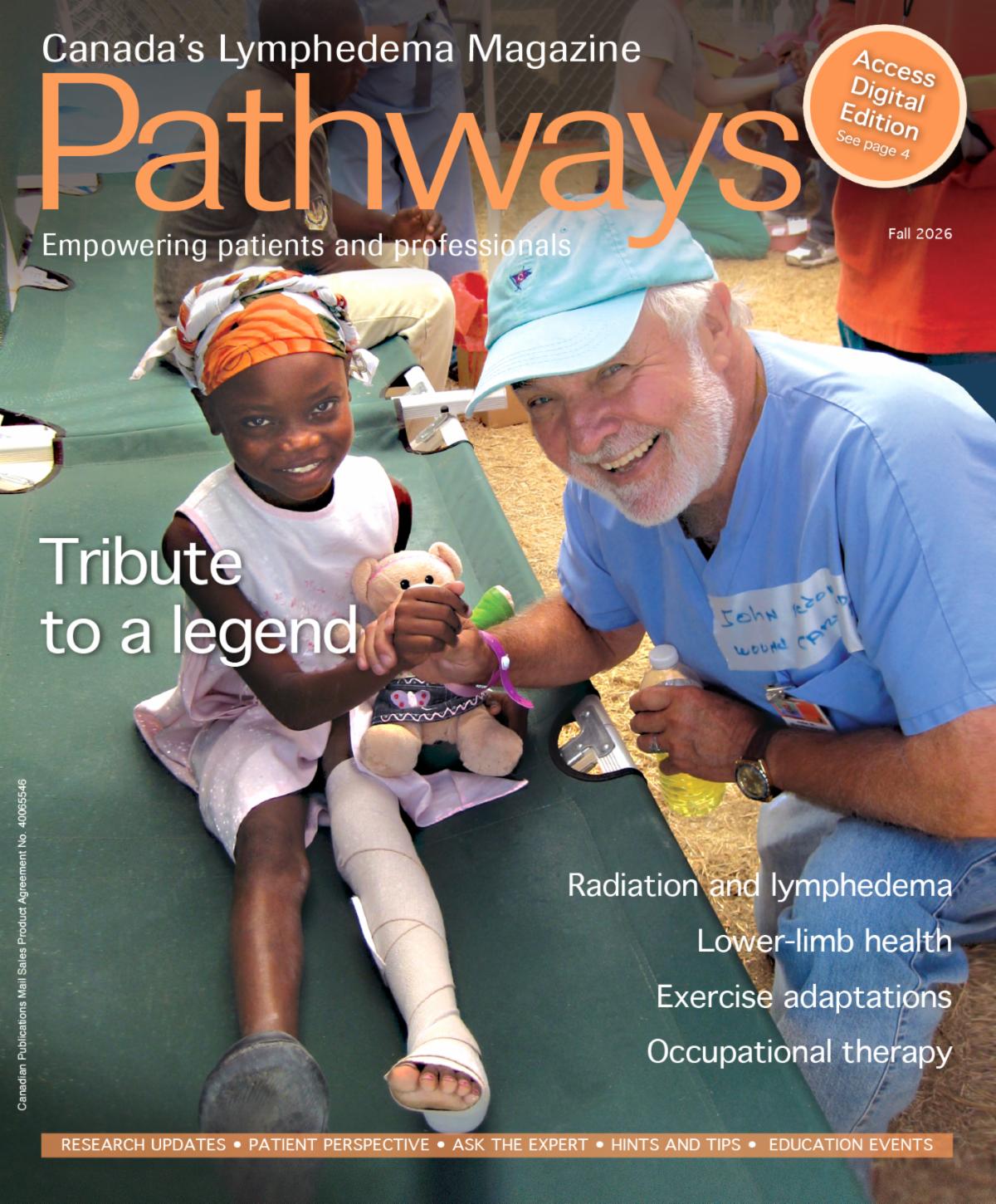
Dr. John M. Macdonald is widely known for both his clinical and research contributions to connecting wound healing with lymphatic function, establishing global health standards for disaster medicine, and founding international organizations to standardize clinical training. In this article, Anna Kennedy, with the support of Dr. David Keast, pays tribute to the career of Dr. John M. Macdonald, highlighting his significant contributions and the lasting impact he has made throughout his career.
Cancer-related lymphedema affects approximately 350,000 Canadians and can develop following surgery or radiation treatment. Spencer Gibson and Karina Pereira Gomes explore their recent findings into why cancer survivors develop lymphedema based on how radiation therapy impacts lymphatic cells.
Mariam Botros, Janet L. Kuhnke, and Tobi Mark discuss why lower-limb health belongs in every chronic disease conversation. They highlight the growing clinical and health-system burden associated with chronic lower-limb wounds and emphasize the importance of prevention and early identification into chronic disease strategies.
Exercise can be an essential component of lower-limb lymphedema self-management when tailored to the unique biomechanical and physiological needs of the lower limbs. Margie McNeely offers practical guidance on moving from understanding “what” exercise to prescribe to knowing “how-to” effectively incorporating exercise into care for individuals with lower-limb lymphedema.
Occupational therapy is an important but often under-recognized professional support for people living with lymphedema. In this article, University of Alberta Master of Science in Occupational Therapy students Lauren Samycia, Tina Do, Rheanna Ramos, and Jordan Chabeniuk explore the unique role of occupational therapy in lymphedema management, explain how OT differs from other forms of therapy, and highlight practical ways occupational therapists can support people in managing everyday challenges.
In our Ask the Expert column, Mei Fu shares practical tips and strategies for minimizing acute and chronic inflammation.
As always, you will also find Hints & Tips, Event Listings, and our regular
"Did you know?" research roundup.
|