|
Understanding Your Assessment Tools: Screening, Progress Monitoring, and Benchmarking
As K–2 literacy teachers, you use several assessments throughout the year to guide reading instruction and support every learner. While these tools sometimes overlap, each one plays a different role in understanding and supporting your students’ growth. Let’s look at how Universal Screening, Progress Monitoring, and Benchmarking work together.
Universal Screening: Your Early Warning System
Universal screening is like your classroom’s early alert. It’s a short assessment given to all students, usually once a year, to find out who might need extra help with early reading skills.
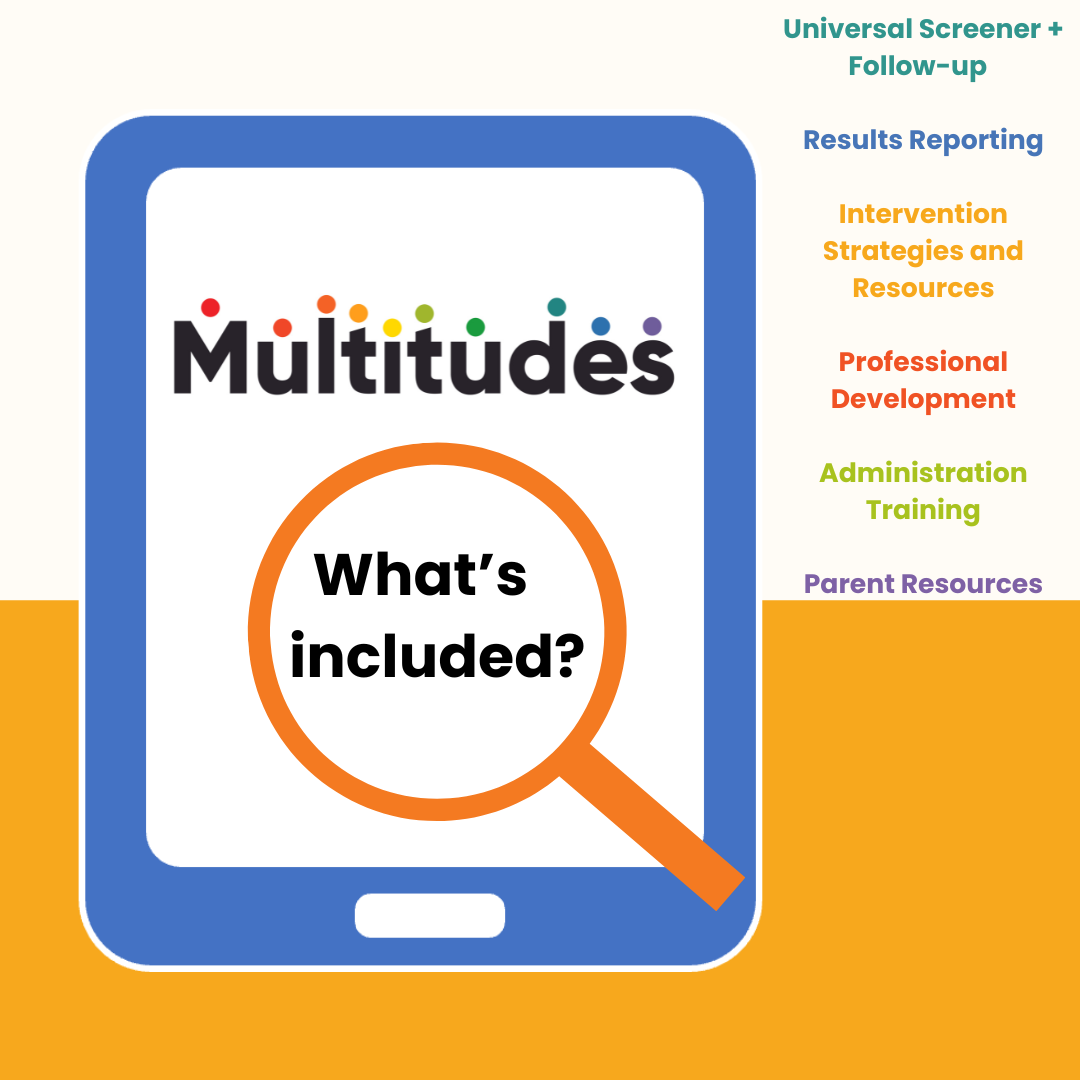
The Multitudes Universal Screener focuses on:
- Phonological awareness
- Letter-sound knowledge
- Early decoding skills
The goal isn’t to diagnose — it’s to flag students who may need additional support. If a student’s results show “Support Needed,” that’s your signal to provide targeted instruction or intervention early, before small challenges become bigger ones. Students will also receive percentile scores on each Multitudes screening task, which will compare their performance to other California students in their grade.
Progress Monitoring: Tracking the Journey
Progress monitoring acts like a GPS for learning — it helps you see whether students are moving in the right direction and whether your teaching strategies are working.
- Used more often than screening (weekly, biweekly, or monthly)
- Focuses mainly on students receiving extra support
- Tracks specific skills being targeted in instruction
For example, if a student was flagged for weak phonological awareness on the screener, you might use short progress monitoring checks to track growth in that area while you teach and adjust your approach as needed.
Benchmarking: Checking Against Grade-Level Goals
Benchmarking assessments show how students are performing compared to grade-level expectations at set times during the year — usually fall, winter, and spring. They are more comprehensive than screeners and include:
- Reading comprehension
- Fluency
- Vocabulary
While the screener tells you who might struggle, benchmarking tells you how your students are performing overall relative to grade-level standards. Schools also use this data to see how the curriculum is working and to plan for broader support.
|