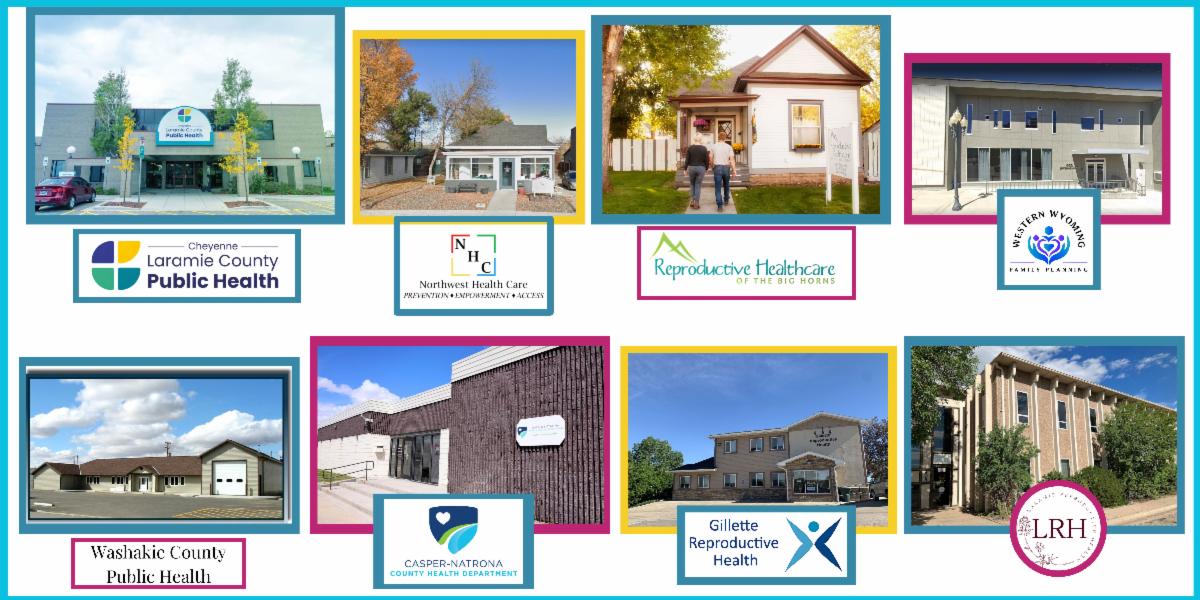
The Wyoming Health Council works to ensure that all people can access equitable, inclusive, high-quality, and affordable reproductive and sexual health care. | |
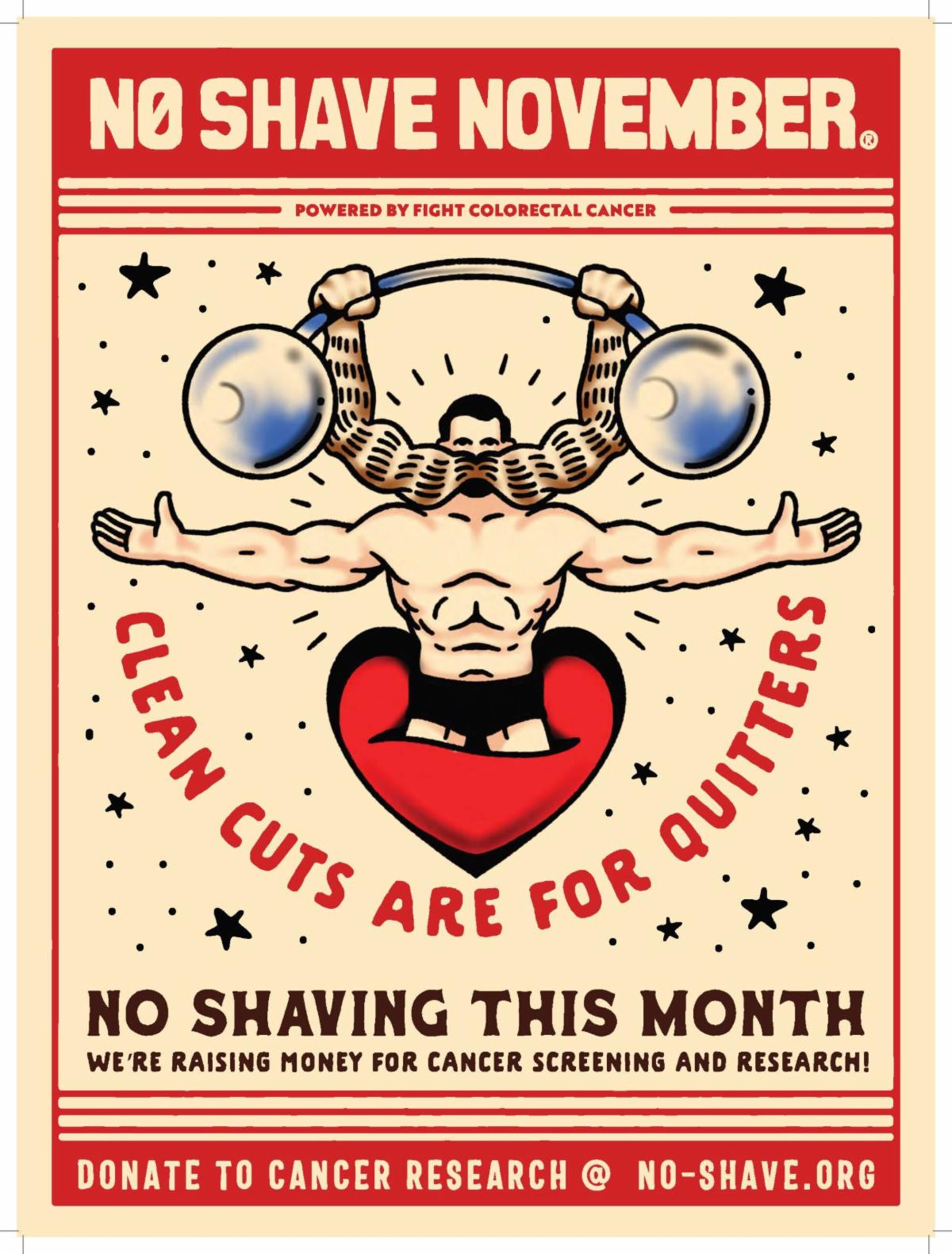
What is No Shave November?
No Shave is fundraising campaign built to support cancer education and awareness. Every November, we invite you to grow your hair, raise awareness, and support cancer advocacy, education, and research. Pledge the dollars you'd normally spend on grooming and hair care to support the cause.
Together, we can build a vibrant community committed to change--One hair at a time.
| | |
HPV-Related Cancer in Men — Stories from Survivors
In ASHA’s 2022 survey of 1,040 men in the U.S., only 31% of respondents knew that HPV can cause anal and penile cancer and even fewer (23%) knew that HPV can cause oral/throat cancer.
We know that one important way to raise awareness about HPV-related cancer in men is by sharing stories of those who have experienced it. For patients diagnosed with cancer and survivors, stories from others who have been through the same experience can be a source of comfort, support, and possibly guidance on how to manage the experience. For spouses and family members, such stories can offer a window into the world of their loved ones. Healthcare providers also benefit from the insight offered by patients—insights they may not otherwise hear.
Below we share stories from three men on their experiences with HPV-related cancer.
| |  | |
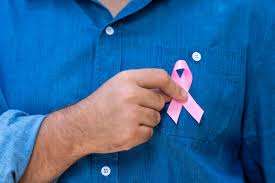
Man with breast cancer shares 1 symptom he ignored for months: 'It wasn’t a lump'
Robert George’s mother had breast cancer so he’s no stranger to the disease as a supportive family member. He never thought he would become a patient himself.
“It never crossed my mind,” George, 61, who lives in New York, tells TODAY.com.
“I’m sure like most men, if we have any thoughts about cancer at all, we might think about lung cancer, if you’re a smoker, or prostate cancer.”
But after dismissing a breast symptom for months before getting the diagnosis this summer and undergoing a mastectomy, he’s warning other men and especially Black men: “It can happen to you,” he says.
| | |
Help is growing for the heavy emotional toll cancer takes on young men
It's been more than seven years, so Benjamin Stein-Lobovits is now able to crack dad jokes about the inoperable brain cancer diagnosis he received, just before his 32nd birthday.
"I like to say that I turned 30-tumor," he says.
Ba-dum-tssh.
But, at the time, the news was devastating; Stein-Lobovits spent many months sobbing on the couch, immobilized by loss and fear.
"You feel so beat up and powerless," says Stein-Lobovits, who quit his job as a Silicon Valley programmer, having lost his balance and ability to type quickly. "It's such a shock to your ego, your sense of being as a man," he explains.
Coping with cancer is rarely easy for anyone, but men tend to fare worse — emotionally and physically — than women. Evidence shows male survivors isolate more, seek less peer and other support and, alarmingly, die earlier.
| | |
How I Worked Through My Depression Treatment and Resulting Sexual Dysfunction
As an adult, Jason experienced multiple symptoms of MDD, including depressed mood, loss of interest in things he once enjoyed, fatigue, trouble sleeping, poor concentration, and restlessness. At the direction of his psychiatrist, Jason eventually began treatment with antidepressants, but soon he learned that managing side effects was an important part of his journey.
One of the more difficult side effects for Jason was sexual dysfunction, which he began noticing after he started taking various treatments his psychiatrist prescribed for his MDD. “Sexual side effects aren’t something you openly talk about at work or with friends, and it can feel isolating.” According to Jason, it wasn’t easy for him to discuss what he was experiencing—especially delayed or absent climax—with his psychiatrist either. When he finally did talk about it, his doctor explained that what he was likely experiencing was called treatment-emergent sexual dysfunction (TESD), which can affect as many as 80 percent of patients.
“But it’s not just a physical issue—it’s emotional and mental one too,” says Jason. “When you lose sexual function, it chips away at your confidence. It can make intimacy feel awkward or disconnected. In my case, it created a quiet, persistent frustration in my marriage—not because of my partner’s reaction, but because of how it made me feel about myself. It made me avoid initiating intimacy at times, and that created some distance in our relationship.”
| | | |
If You Love Your Penis, You Need To Do Pelvic Floor Therapy
WHEN YOU HEAR “pelvic floor”—if you’ve heard of it at all—there’s a good chance you’ve written it off as something only women have to deal with, particularly after giving birth. Although that’s true, men absolutely have a pelvic floor, and when it experiences dysfunction, it can lead to a host of health problems, including different types of erectile dysfunction and sexual dissatisfaction.
Men’s health—general and sexual—are closely connected to the function of the pelvic floor, says Susie Gronski, P.T., D.P.T., C.S.C., a pelvic floor physical therapist and sexuality counselor in Asheville, NC. (Her colleagues in the field call her the guru of the male pelvic floor.) Found in the lower abdominal region, between the pubic bone and the tailbone, the pelvic floor reaches front to back, and between the hips, side to side. Think of it as a hammock of muscles, which holds organs, including the bladder, prostate, and rectum, says Lauren Garges, P.T., D.P.T., a board-certified pelvic floor physical therapist with St. Luke’s University Health Network in Bethlehem, PA.
Men also have a set of pelvic floor muscles called the urogenital triangle, which play vital roles in achieving and maintaining erections, and supporting healthy ejaculation, Gronski says. (FYI: Women also have a urogenital triangle, although the muscles that make up this part of the body differ from those of their male counterparts.)
| | | |
Should we be recommending STI testing for all sexually active heterosexual men?
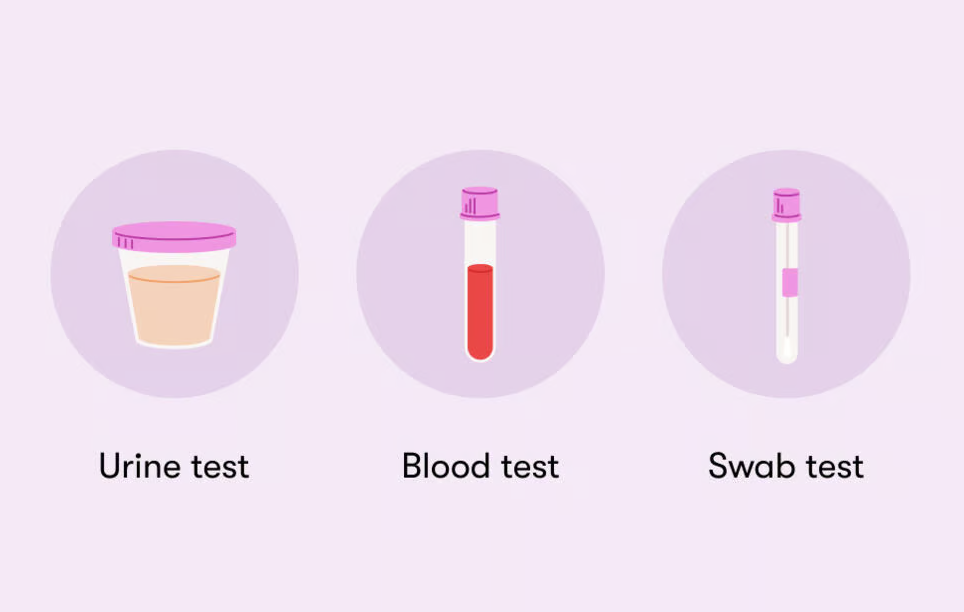
When it comes to getting tested for sexually transmitted infections (STIs), there are some basic guidelines that apply to everyone who is sexually active regardless of sex, gender, or sexual partners. The most obvious piece of advice is to get tested right away if you have any symptoms like itching, burning, sores, or discharge. Of course, a lot of STIs have no symptoms, so it’s also a good idea to get tested when you have a new sexual partner or if you have multiple sexual partners.
There are other more specific screening recommendations for certain populations. For example, the CDC recommends that sexually active women under 25 get tested for chlamydia annually. There are also specific recommendations for gay, bisexual, and other men who have sex with men and for transgender and gender diverse persons. Missing from this list—heterosexual men. Instead, the CDC recommends “risk-based” screening for this population.
| | | National Diabetes Awareness Month | | |
It’s Not Your Age – It’s Your Sugar: What’s Really Driving Men’s Sexual Decline
A long-term study of healthy men shows that even non-diabetic glucose levels can slow sperm, weaken erections, and reduce libido. The findings suggest that controlling blood sugar — not just hormone levels — could be key to preserving sexual and reproductive health in aging men.
Blood Sugar Drives Male Reproductive Changes
Changes in reproductive and sexual health among aging men are more strongly linked to metabolic factors, especially slight rises in blood sugar, than to age alone, according to findings shared at ENDO 2025, the Endocrine Society’s annual meeting in San Francisco, California.
“Although age and testosterone levels have long been considered an impetus for men’s declining sexual health, our research indicates that these changes more closely correlate with modest increases in blood sugar and other metabolic changes,” said Michael Zitzmann, M.D., Ph.D., professor and doctor of medicine at University Hospital in Muenster, Germany. “This means that men can take steps to preserve or revive their reproductive health with lifestyle choices and appropriate medical interventions.”
| | | |
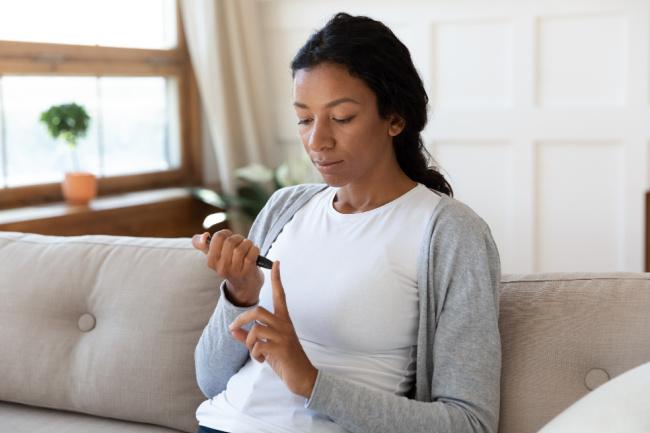
The Biggest Problem In My Sex Life? Diabetes
When you have diabetes your sex life, just like everything else, is much more complicated. Whatever type of diabetes you have, whatever your gender and whoever you choose to have sex with, intimacy comes with a number of caveats and precautions that have to be negotiated. But thanks to the persistent taboo that surrounds talking about sex, as well as a lack of understanding about diabetes, the issue is rarely discussed.
As Emma Elvin, Senior Clinical Advisor at Diabetes UK puts it to R29: "Many people will experience sexual problems at some point in their lives. If you have diabetes, it doesn’t mean you’ll definitely have a problem with your sex life. But people with diabetes are more at risk of sexual dysfunction."
The disruption to men’s sex lives is slightly more discussed (a quick google of the words ‘diabetes’ and ‘sex’ prioritises results about erectile dysfunction) but the effect is marked for women too, both physically and psychologically.
Simone*, a 29-year-old type 1 diabetic in Glasgow, tells R29 that her diabetes absolutely affects her sex life.
| | | |
Wednesday, November 12, 2025, is Power to Decide’s 13th Annual #ThxBirthControl Day
For over a decade, they've joined with partners nationwide to celebrate the power of birth control – supporting our health, protecting our freedom, and shaping our futures. This year, as reproductive health continues to face relentless attacks, raising our voices together is more important than ever.
| | |
From Acacia to IUDs: The History of Birth Control in the United States
Birth control is a fundamental human need, and historical evidence agrees.
Modern forms of birth control — latex condoms, IUDs, birth control pills — are still very new, in the context of overall human history. Records of ancient Greek and Egyptian birth control methods suggest that control over reproduction has been a concern for, well, pretty much as long as humans have been reproducing.
Early birth control methods from around the world included:
- condoms (external and internal) made of animal bladders, linen, silk, or plants
- spermicides made of acacia, honey, rock salt, or crocodile dung
- sponges made of moss, grass, or bamboo
- vaginal douches or sponges soaked in oil, vinegar, lemon juice, or cedar oil — substances believed to slow or weaken sperm
- oral contraceptives, including Queen Anne’s lace seeds, lead and other toxic metals, pomegranate seeds, silphium, unripe papaya, and blue cohosh
And, of course, withdrawal — or pulling out — has long been a popular approach to birth control. “Coitus interruptus,” or withdrawal followed by ejaculation, dates back to the Bible (though the spilling of seed was considered a sin rather than a method of birth control).
Some of these methods were successful. Others came with dangerous side effects, including infection and poisoning. Similarities between Queen Anne’s lace and toxic plants, like hemlock, for example, likely led to many accidental deaths.
Fortunately, plenty of options for safe and effective birth control exist today. (Good crocodile dung is so hard to come by, after all.) Here’s a look at how those methods evolved in the United States.
| | | |
A Guide to Birth Control in Your 40s and 50s
During perimenopause, your menstrual cycles become more irregular as your reproductive hormones start winding down. You’ve officially reached menopause when you haven’t had your period for 12 consecutive months. For most people, this process typically begins in their 40s and 50s, but it can start even earlier.
But even with irregular periods, you can still get pregnant.
“You still need birth control if you want to prevent pregnancy because your ovaries can still ovulate,” says Ob/Gyn George Drake, DO. “You may have a menstrual cycle once every two, three or even six months, and then go back to menstruating every month again for a while.”
Dr. Drake explains the best birth control options for perimenopause and how they may impact menopause.
Birth control options for midlife and perimenopause
There are two main types of birth control: Hormonal birth control, which uses hormones to prevent pregnancy, and nonhormonal birth control, or barrier methods, which physically stop sperm from fertilizing an egg.
During perimenopause, your personal preferences and medical history continue to be important factors in choosing the right birth control for you.
| | | |
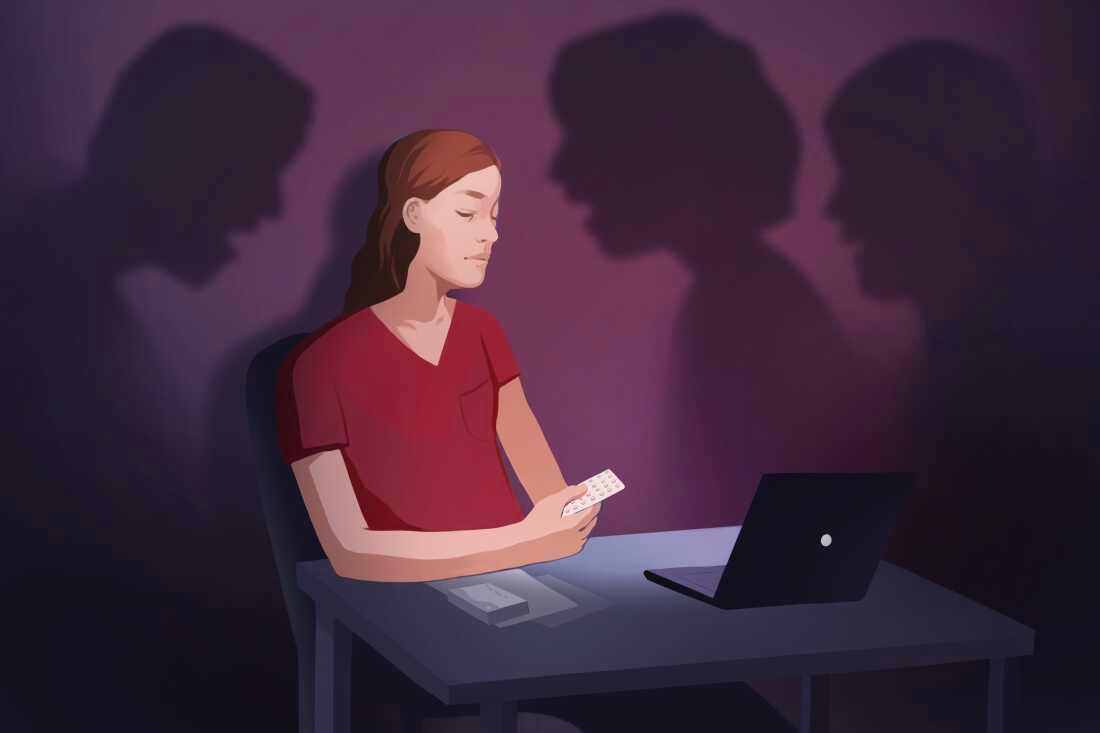
As young women turn to social media for birth control advice, doctors try to counter misinformation
"I kind of just [wanted] to, like, meet myself in a way that I hadn't since I was 16, 17," she said. "And, you know, maybe I would experience some changes in my mental, emotional, physical well-being that I didn't even really know were a possibility."
So Freed took out her IUD. Social media is full of stories from women like Freed quitting or questioning hormonal birth control — but not because they want to get pregnant.
Some are concerned about effects on their mood and mental health. Others say doctors dismissed their complaints about weight gain, nausea and decreased sex drive.
But doctors and researchers say misleading and inaccurate claims about birth control — which decades of research has shown to be safe and effective — abound on social platforms.
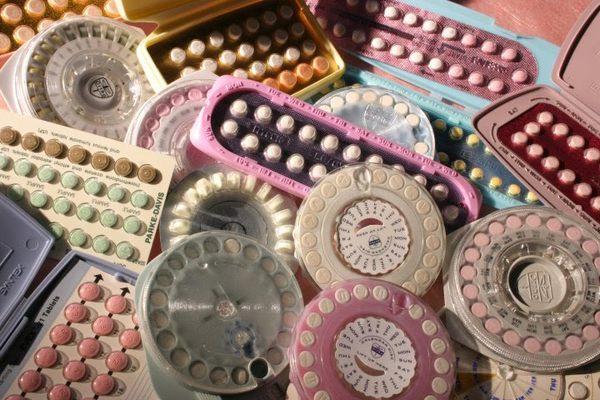
Birth control pills pack. Prescription medicine that contain female hormones like estrogen and progestin to prevent pregnancy.
Healthy or hype?
Influencers criticize birth control and push 'natural' methods. Here's what to know
They worry that some women may be making key decisions about family planning based on those dubious claims, which could lead to unintended pregnancies and create more confusion around the drugs.
Dr. Jennifer Lincoln tries to combat that misinformation. She's an OBGYN based in Portland, Ore. who makes videos debunking common myths that circulate online.
| | | |
Scared To Talk To Your Parents About Birth Control But Still Want To Be Safe? Here’s How To Navigate It
You can literally still feel the heat of embarrassment on the back of your neck from when you had the dreaded Birds and the Bees talk with your parents. But you’re in college now, making your own decisions. Your most recent decision? You want to get on birth control, which means it may be time to have another potentially awkward convo with your parents.
If you need a little more guidance on how to navigate the convo, we’ve got you covered. We chatted all things birth control with quadruple-boarded physician, Dr. Lonna Gordon, MD, PharmD, who gave us tips on starting the convo, the questions that may come up, and info on accessible birth control options like Opill®, America’s first and only FDA-approved over-the-counter daily birth control pill. But just remember that no matter how your convo goes, it’s your right as an adult to make your own choices about your reproductive health and take your own future into your hands.
Here’s everything you need to know about navigating the birth control convo with your parents.
| | | |
'As a sex expert, this is why self pleasure is so important – and 4 ways to do it better
How do you feel when you hear the word 'pleasure'? As a sex expert and head of brand at sexual wellness company Smile Makers, Samatha Marshall wouldn't be surprised if your answer was awkward or ashamed. In fact, she's used to the word rousing anything but joy. And yet, 'Isn't the purpose of pleasure to be joyful?' she asks.
The problem is we're thinking about pleasure all wrong. To start with, it's not a 'nice to have' – it's a right. 'When The World Health Organization define sexual health, pleasure comes into it,' she says. Secondly, we (in particular women) continuously put other people's pleasure first.
'Sex is always discussed in the context of somebody else, which make us feel like it's not relevant to our own wellness.
And I think that has has made us as a society think a certain way about what pleasure is and when we're allowed it,' says Samantha.
Self-pleasure, then, is a radical act, she says – especially right now, when alt-right politics and tradwives are both encouraging the idea that women's lives – and bodies – exist to serve others.
'Even if you believe in equality in all other aspects of life, many of us still fall into gender roles in the bedroom,' says Samantha. 'That is why self-pleasure is so important: it gives us greater body autonomy and a feeling ownership and connection to our physical selves.'
| | | |
The History of 1000 Years of Sex Toys - We've COME a Long Way
In the not-too-distant past, adult sex toys were considered taboo and were hidden away in dark corners.
Today, however, they are more openly accepted and are even considered mainstream. You can find sex toys online or in sex toy stores in broad daylight, and why shouldn’t they be accessible?
Sexuality is an intrinsic part of our lives, so the taboos against sex toys are insane! Sex toys have certainly come a long way in recent years.
Regarding innovation, sex toys are no longer the simple objects they once were. When sex toys first became commercial items, i.e., objects you could purchase in markets, their form was fairly restricted. But now, they come in various shapes, sizes, and colors and have a variety of functions, ranging from simple vaginal stimulation to deep clitoral stimulation and prostate massage via Bluetooth and remote controls.
But the history of sex toys doesn’t start in the modern age. Since the beginning of time, people have been using various objects for sexual pleasure, even if they weren’t widely available in markets. Sometimes, these objects were carved or fashioned out of natural materials, like stone, wood, or ivory. Other times, they were made from more mundane materials, like leather or even bread!
| | |
Webinar: Sexual pleasure and Sexual and Reproductive Health and Rights
Findings from a systematic review and meta-analysis.
What is the added value of incorporating pleasure in sexual health interventions? A systematic review and meta-analysis
WHO’s working definition of sexual health emphasizes a positive and respectful approach to sexuality and sexual relationships, one that cannot be separated from sexual well-being.
This Valentine’s Day webinar will explore the role of sexual pleasure in sexual and reproductive health and rights (SRHR) programming. The technical webinar will:
- Explore the role of sexual pleasure as an often overlooked but integral part of sexual health and wellbeing;
- Present new evidence from a systematic review and meta-analysis which explored whether SRHR interventions which incorporate sexual pleasure have better outcomes than those that do not; and
- Spotlight SRHR programes from around the world for an example of what ‘pleasure-inclusive’ interventions looks like in practice.
| | | |
National Rural Health Day
November 20, 2025
| | |
Rural and Urban Women Have Differing Sexual and Reproductive Health Experiences
Even though all rural communities are distinct, many feature well-documented social and structural barriers for women to access sexual and reproductive health (SRH) care. Compared to urban areas, rural communities are less likely to have sufficient SRH providers and medical facilities. Rural family planning clinics are more likely be understaffed and under-resourced, and rural clinicians have lower levels of training—specifically in contraceptive provision—than their counterparts in urban areas. Rural patients also face low appointment availability, long travel times, and other logistical challenges, and privacy and confidentiality concerns. Furthermore, cost, lack of health insurance, and poverty are frequently noted barriers to accessing care for rural patients. Rural residents of color and immigrants in rural areas are disproportionately impacted by these barriers.
| | |
Improving Sexual Health in U.S. Rural Communities: Reducing the Impact of Stigma
Sexually transmitted infections (STI), including HIV, are among the most reported diseases in the U.S. and represent some of America’s most significant health disparities. The growing scarcity of health care services in rural settings limits STI prevention and treatment for rural Americans. Local health departments are the primary source for STI care in rural communities; however, these providers experience two main challenges, also known as a double disparity: (1) inadequate capacity and (2) poor health in rural populations. Moreover, in rural communities the interaction of rural status and key determinants of health increase STI disparities. These key determinants can include structural, behavioral, and interpersonal factors, one of which is stigma.
Engaging the expertise and involvement of affected community members in decisions regarding the needs, barriers, and opportunities for better sexual health is an asset and offers a gateway to sustainable, successful, and non-stigmatizing STI prevention programs.
| | |
Connecting Rural Youth to Sexual and Reproductive Health
True You Maryland brings together partners in six rural Maryland counties with the shared mission to advance the sexual health and well-being of youth—no matter who they are and where they live.
Rural youth are not a monolith, and yet, many face shared structural and systemic barriers that make it harder to access quality sexual and reproductive health care and education.
When compared to their urban counterparts, youth living in rural areas have fewer healthcare options, longer distances to reach providers, less—if any—public transportation options, higher poverty rates, and lower rates of insurance coverage, amongst other challenges. The results of these inequitable systems and structures can lead to disparities in sexual and reproductive health outcomes.
As the sexual and reproductive health landscape in America changes, young people are (and will continue to be) among the first to experience the impacts. There are concerted efforts to strip the bodily autonomy, care, and options for young people in America—but the evidence is clear—fewer rights and less education is not the answer. We know that sexual and reproductive health is not just about risk reduction or preventing pregnancy or disease—it’s also about healthy relationships, sex positivity, gender and sexuality, and so much more. It’s about equipping young people with the information and services they need to thrive.
| |
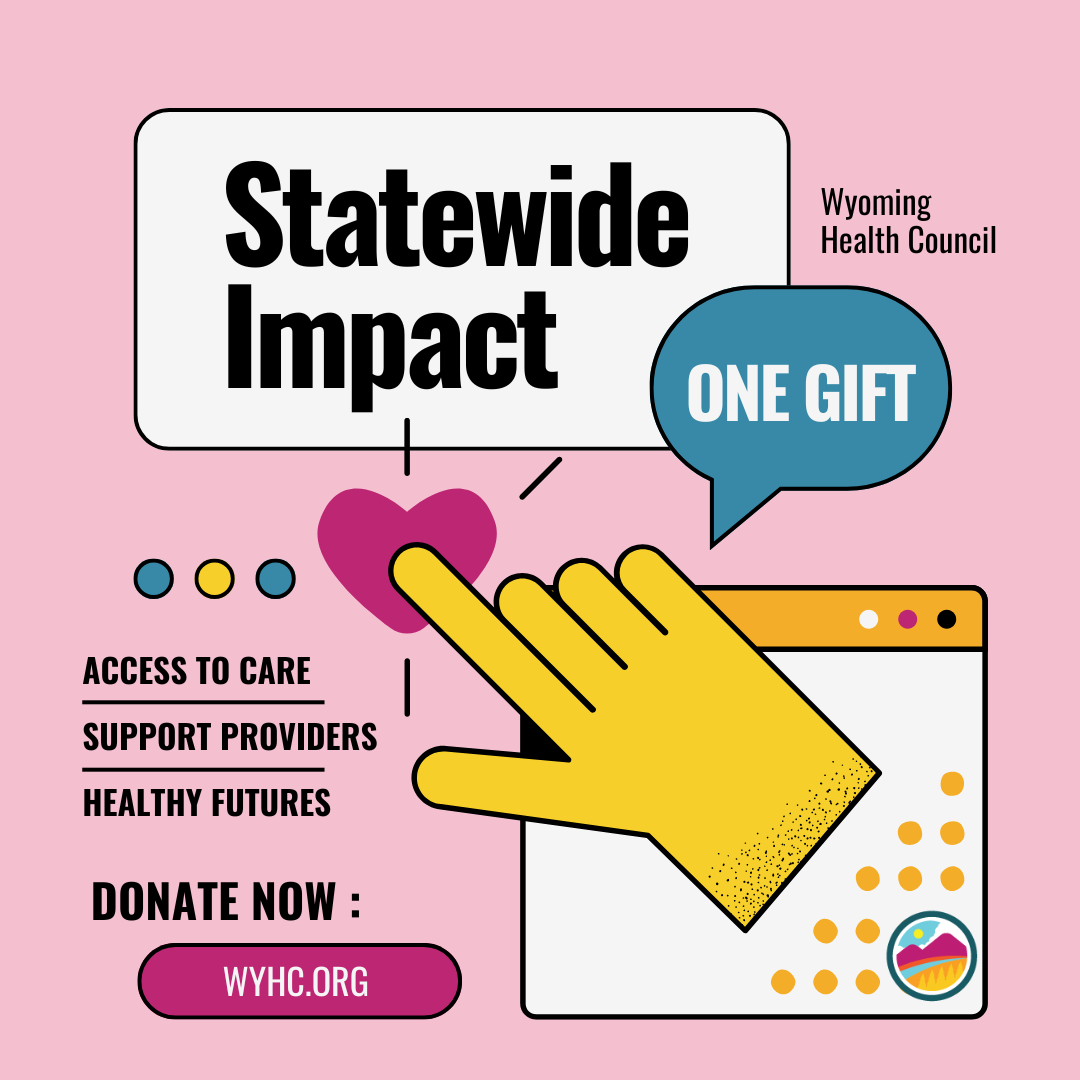
Please consider supporting reproductive and sexual health care in Wyoming!
You can donate directly to us—100% of your contribution goes toward supporting health care access in our state.
| | | |
This newsletter was developed (in part) with federal funds from the Office of Population Affairs. For more information on the rules and regulations that apply to our programs, please visit
https://opa.hhs.gov/grant-programs/title-x-service-grants
This project is supported by the Office of Population Affairs (OPA) and the Office of the Assistant Secretary of Health (OASH) of the U.X. Department of Health and Human Services (HHS) as part of a financial assistance award 1 FPHPA 006541-0-00 totaling $978,380 with 100 percent funded by OPA/OASH/HHS. The contents are those of the author and do not necessarily represent the official views of, nor an endorsement, by OPA/OASH/HHS or the U.X. Government.
| |
WYOMING HEALTH COUNCIL
111 S. Durbin, Suite 200
Casper, WY 82601
Call Us: (307) 439-2033
| | | | | |