News & Updates From Routt County Search & Rescue
Fall Edition - November 2024
| |
Tactical Plan - Table of Contents | |
-
Team Debrief: Stats and Missions
-
Radio Chatter: News & Announcements
-
Backcountry Beta: Tips & Trends - It's Getting Cold!
-
Team Talk: Preparing For Winter Recreation
| |
Team Debrief - RCSAR Mission Reports | |
By The Numbers
RCSAR Mission Statistics
| 2024 Year-to-Date Statistics | |
| Calls For Service | 55 | | Fieldable Missions | 46 | | Hours Spent On Missions | 1,135 | | Number Of Trainings | 39 | | Total Training Hours | 1,233 | | |
Dispatch
Select Mission Summaries - Q3
RCSAR had 14 fieldable missions in the third quarter of 2024. Below are a few highlights.
| |
July 11, 2024
Dehydrated Hiker at Fish Creek Falls
RCSAR was paged to assist a hiker suffering from heat exhaustion on the Fish Creek Falls trail. The hiker and his companions had run out of water on a long, hot hike. Several RCSAR team members hiked in to assist the subject with fluids and electrolytes. After a short period of time, they were able to walk to the trailhead with the RCSAR team.
| | | |
July 19, 2024
Injured Dirt Biker on Buffalo Pass
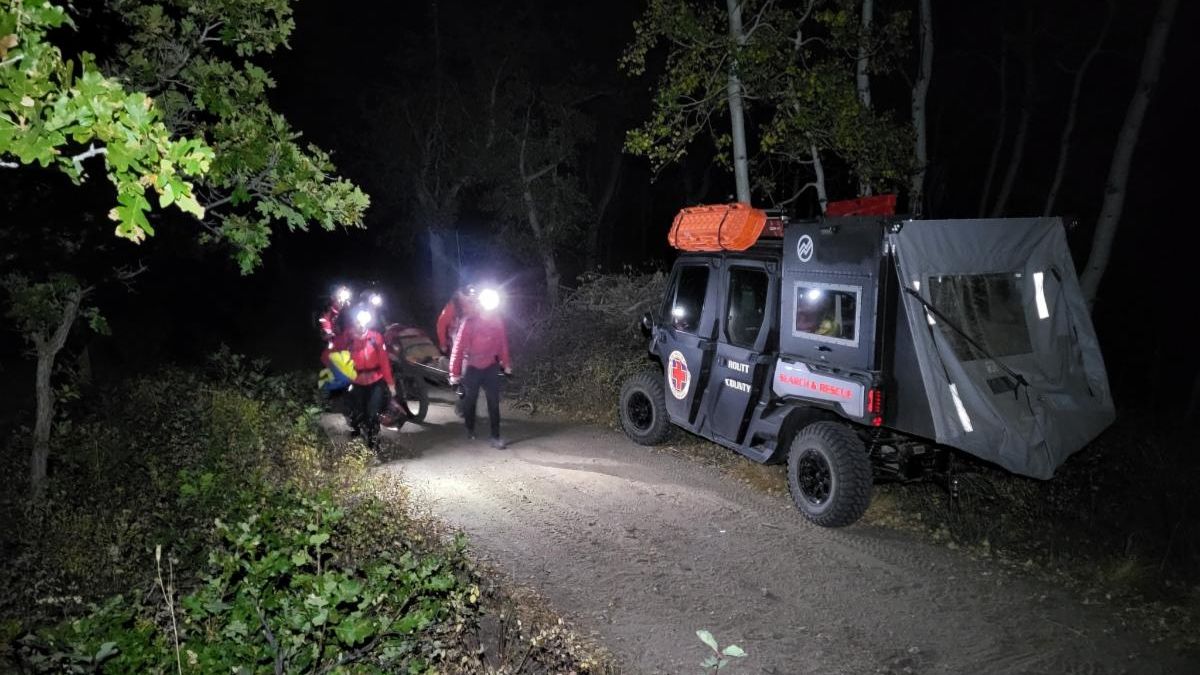
RCSAR was paged to assist a dirt biker with a lower leg injury on Buffalo Pass. Rescuers used the team’s UTV to travel up the pass to the dirt biker’s location near Summit Lake. Upon arriving the team stabilized the injured dirt biker and transported him off the pass to a waiting family member. RCSAR’s UTV has proven to be a valuable asset for immediate and rapid response to locations like Buffalo Pass, Emerald Mountain, and Spring Creek.
| | | |
September 2, 2024
Injured/Lost Hunter in Elk Park
RCSAR was paged for a lost hunter in Elk Park. That evening, RCSAR’s Incident Commander communicated with a hunting partner at the party’s camp. The partner was able to locate his friend and help him back to camp. However, the lost hunter had a lower leg injury and requested assistance out of the backcountry. Early the following morning, two RCSAR team members traveled to the location in the team’s UTV and transported the hunter out to the trailhead.
| | | |
September 22, 2024
Injured Hunter in the Flat Tops Wilderness
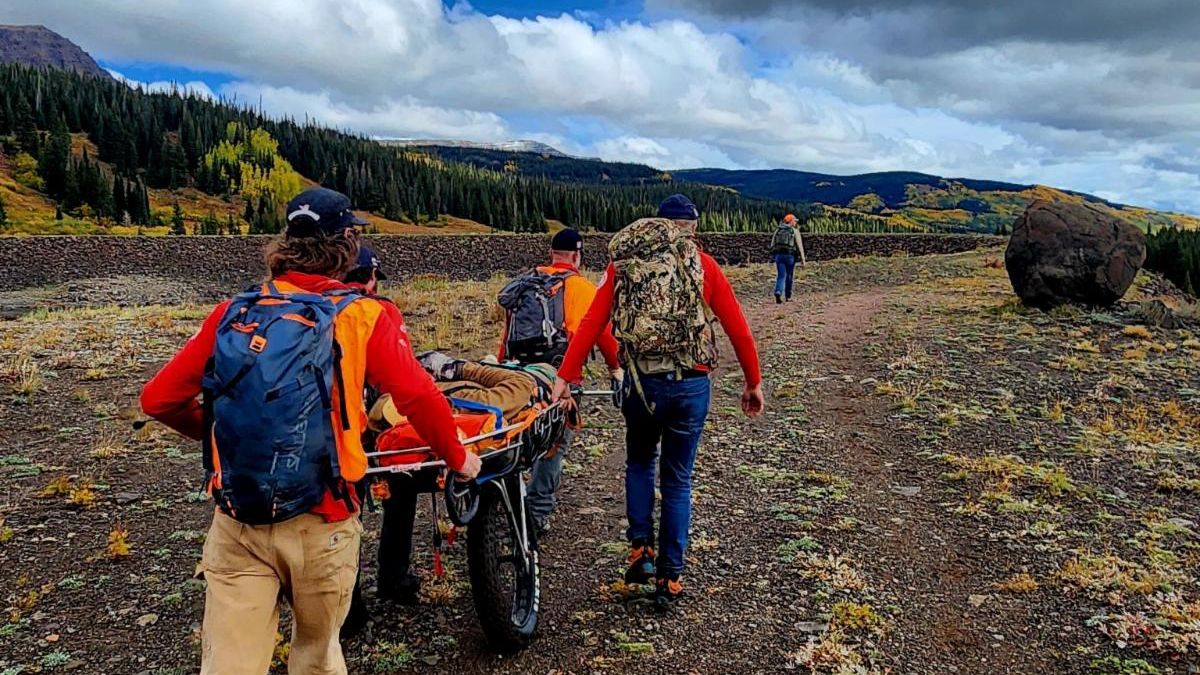
RCSAR received a mutual aid page to assist with the rescue of a hunter with a lower leg injury who was unable to hike out to the trailhead. Although their location was in Garfield County, RCSAR frequently assists with searches and rescues in this area of the Flat Tops since we have a faster response time than GCSAR. Several RCSAR team members traveled to the Stillwater Reservoir area and hiked into the field, where they stabilized the injury and packaged the patient for transport in the wheeled stokes. The team then transported the hunter to a private vehicle at the trailhead.
| | | |
September 26, 2024
Sick Backpacker in the Flat Tops Wilderness
RCSAR was again paged to assist with a rescue in Garfield County in the area of Stillwater Reservoir in the Flat Tops Wilderness area. A backpacker was ill and unable to hike out to the trailhead. Given the remote location and challenging trail conditions due to recent snowfall, RCSAR engaged Classic Air Medical to assist with the rescue. The Classic crew was first on the scene and assessed the hiker. Classic then flew two RCSAR team members into the location so they could hike out with the sick hiker’s partner and their dogs. Classic then flew the sick hiker to a hospital. While the two RCSAR team members began hiking back to the trailhead with the remaining hiker, a second team hiked in from the trailhead to meet them. All parties were safely out of the field by nightfall.
| | | |
September 30, 2024
Injured Hunter in North Routt County
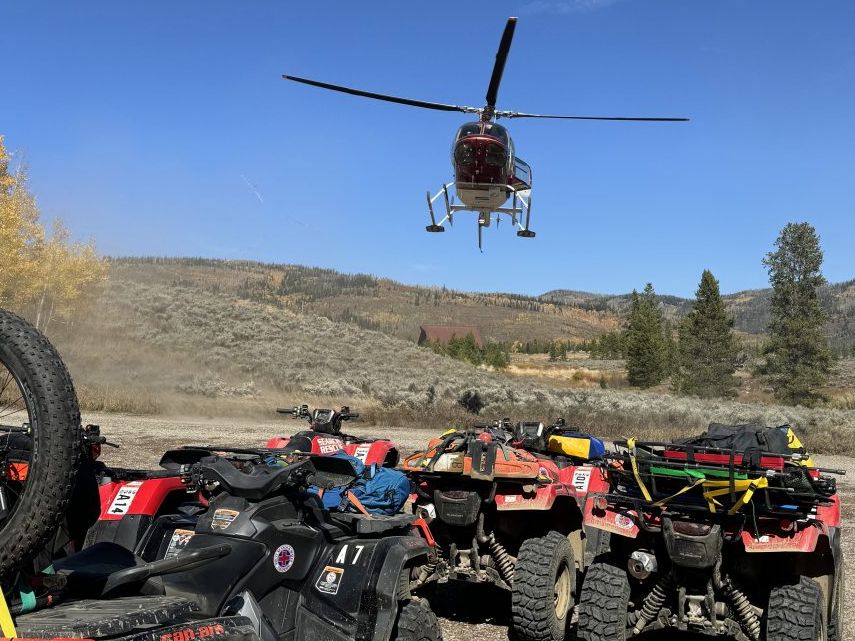
At approximately 1 PM, RCSAR was paged to assist the North Routt Fire Protection District and Classic Air Medical with the extraction of an injured hunter in North Routt County. The hunter suffered a lower leg injury and was off-trail in challenging terrain. Classic Air Medical flew two North Routt firefighters, two RCSAR team members, and a flight nurse, to a landing zone approximately 1/2 mile from the hunter’s location. Because the hunter needed to be hand-carried to the waiting helicopter, additional RCSAR team members brought more rescue equipment to the hunter’s location via ATV’s and assisted with the hand carry. Due to significant downed trees between the landing zone and the hunter, the original landing zone was not viable for extraction. Classic Air Medical and the RCSAR Incident Commander worked to locate another landing zone. When the winds died down, Classic was able to land approximately 1/3 mile downslope from the hunter, giving the ground teams easier egress to the helicopter. The ground teams carried the hunter to the waiting helicopter for transport to the Yampa Valley Medical Center. All teams were out of the field by 8 PM.
|  | | | |
Radio Chatter - News & Announcements | |
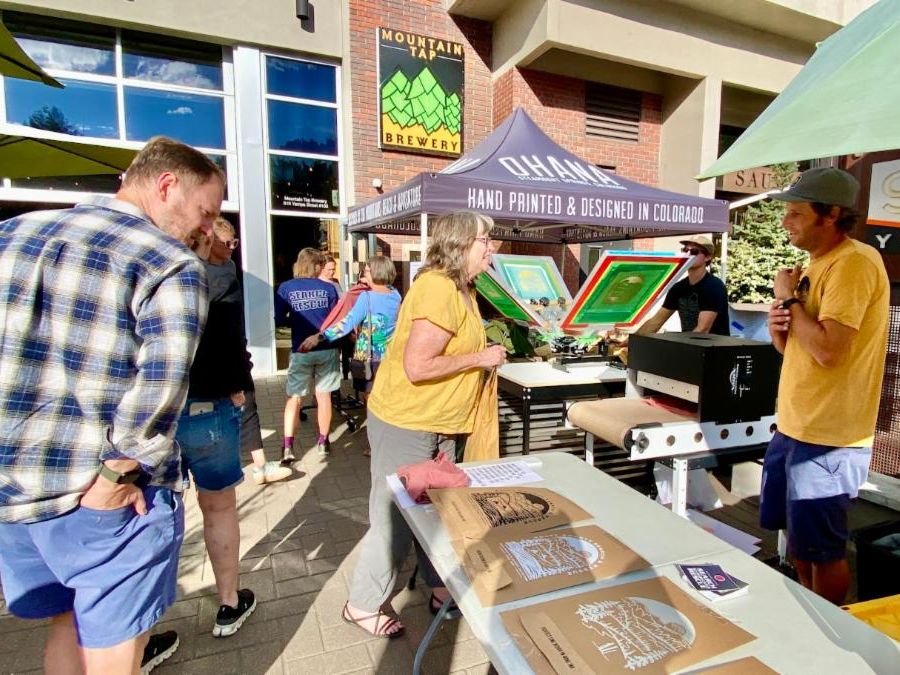
Ohana/Mountain Tap Live Print
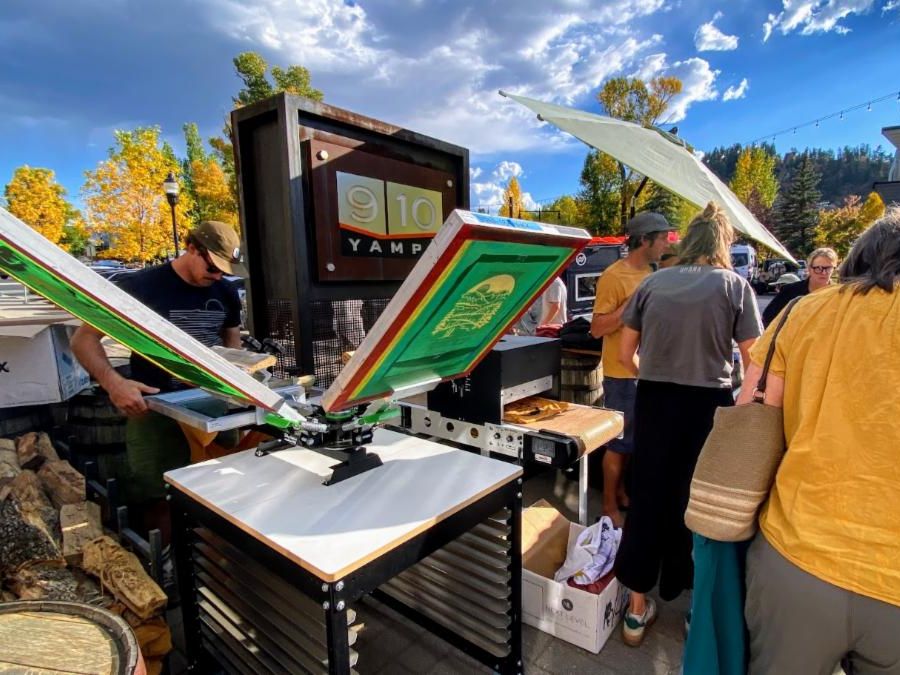
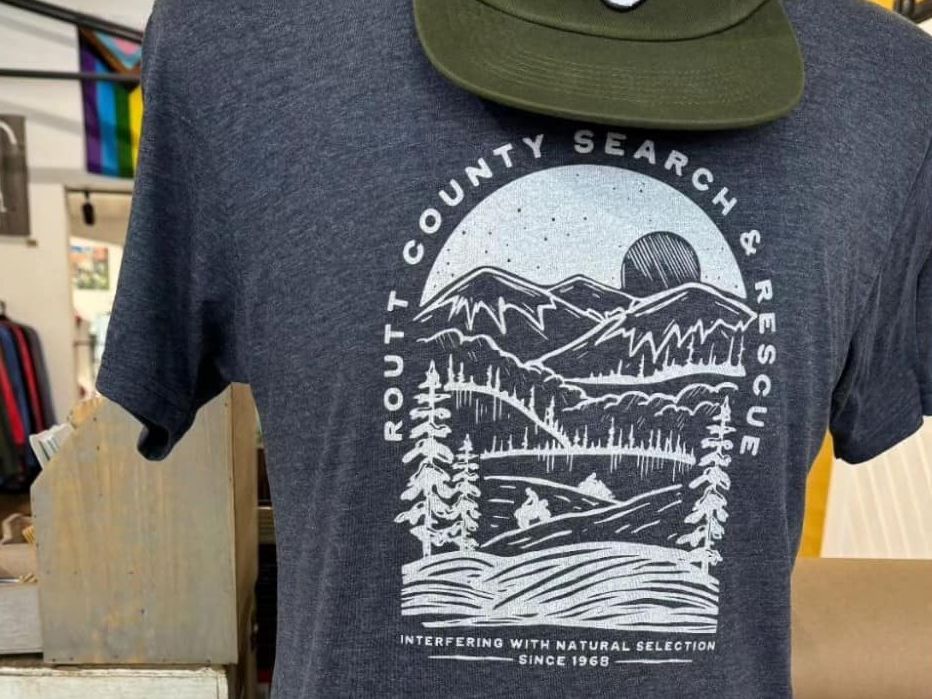
On September 27, 2024, Ohana and Mountain Tap Brewery hosted a live shirt printing event benefiting RCSAR. Ohana created an awesome and unique design for the shirts. Thanks to everyone who came out to support us at the event!
| |
SARCon
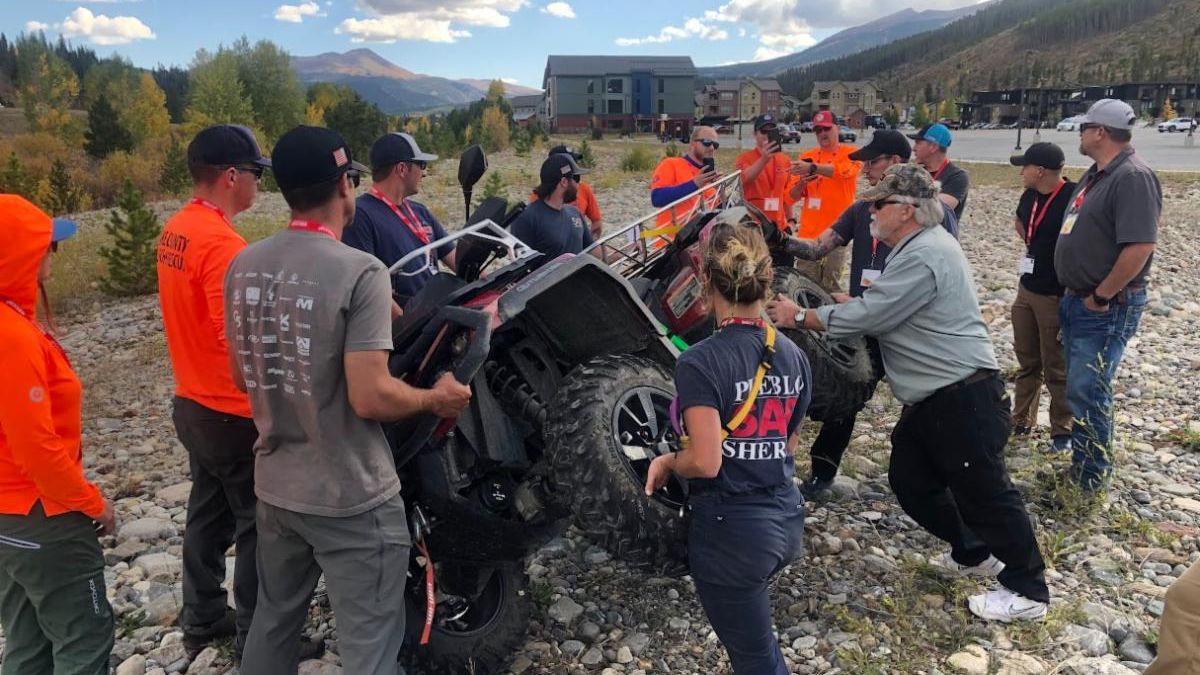
At the end of September, RCSAR team members attended the annual SARCon conference in Breckenridge. The conference offers a way to connect with and learn from other teams across the state. This year, RCSAR Incident Commander Harry Sandler presented a workshop on transporting patients in a litter attached to an ATV. While this is a type of rescue RCSAR trains for and conducts, many other teams in the state are not familiar with the rigging for attaching a litter to an ATV. In addition to Harry’s session, SAR team members participated in workshops on numerous topics, including patient packaging, technical rope training, medical topics, and technology updates.
| |
Backcountry Beta - Tips & Trends | |
It's Getting Cold!
Recognizing & Addressing Cold Stress & Mild Hypothermia
When traveling in the backcountry in winter, it’s important to keep an eye on one another, watch for signs of cold stress and mild hypothermia, and address issues before they get worse. If you are unable to address these concerns, the person doesn’t improve, or conditions worsen, call 911. Hypothermia is a potentially life-threatening condition. Below are some tips for recognizing and addressing Cold Stress and Mild Hypothermia.
A number of factors may increase risk for hypothermia, including exhaustion, dehydration, age, mental health/dementia, alcohol or drug use, medical conditions, and medications.
With Cold Stress you are alert, know you are cold, and typically are shivering and moving normally to try to get warm. With Mild Hypothermia you are no longer able to move normally and may be less alert but not confused. Treatment for either condition involves sheltering from adverse weather conditions. Remove any wet clothing - as moisture quickly lowers body temperature - and add dry layers. Drink plenty of high-calorie liquids, as our bodies use lots of energy to combat the cold. If possible, start a fire for warmth or place heat packs on the person’s chest, back, and armpits. Body-to-body contact can also provide some additional warmth.
In addition, Cold Stressed individuals should continue to move, but Mildly Hypothermic individuals should be kept horizontal and moved carefully. If you cannot prevent additional heat loss and the person either does not improve or gets worse, call 911 and plan to evacuate the person out of the backcountry.
| | | |
Preparing For Winter Recreation
Winter is coming, and it’s time to prepare for your outdoor adventures. We asked several of RCSAR’s most dedicated backcountry skiers what they do to get ready for winter recreation.
Brush up knowledge and skills: Recreating safely in the backcountry during the winter requires both knowledge and skills.
- Take an avalanche safety course if you have not done so already.
- Practice with your transceiver, shovel, and probe.
-
Reacquaint yourself with the Colorado Avalanche Information Center (CAIC) https://avalanche.state.co.us/ website and practice using their maps and forecast system. CAIC also has an app you can download for info on the go.
- Learn basic life saving skills. Consider taking CPR, Wilderness First Aid, or a Wilderness First Responder course.
- Read up to refresh your knowledge. A couple of recommended books are Staying Alive in Avalanche Terrain (Bruce Tremper) and The Avalanche Handbook (David McClung).
Gear: It’s important to have appropriate gear that is in good working order.
- Clothing: Make sure you have appropriate non-cotton layers and your outerwear is still water/snow proof and sheds moisture.
- Skis, bindings, poles: Do your skis need a tune-up? Check your bindings and tighten screws. Check your DIN setting.
- Backpack: Check for rips and damage to buckles and straps. Ensure zippers work. A pack with a dedicated snow safety compartment so you can store your shovel and probe in an easily accessible inside compartment is recommended.
- Transceiver/Beacon: Put batteries in your transceiver. If you left batteries in your transceiver over the summer, ensure the battery terminals did not corrode. Check functionality and test the range. Some transceivers can be checked through online apps. With some, you may need to find a friend or partner to test functionality. Check for firmware updates.
- Probe: Check the cord and locking system for fraying and damage. Throw the probe to make sure it’s working properly.
- Shovel: Check for rust and make sure you can assemble the shovel easily. Consider filing your shovel blade. With use, it can get dull. This not only affects shovel use but can cause the shovel to snag and tear your pack.
- Airbag: Check cylinder pressure and make sure there are no air leaks. Deploy it to make sure it’s good to go for the winter.
- Skins: Check the glue on your skins to see if it denatured over the summer.
- Repair kit: Check your kit to ensure you have everything you need and you know how to use the items. Consider including extra screws, a binding buddy multi-tool, hose clamps for binding repairs, baling wire for skin repairs, matches for stripped screw holes, and an extra pole basket.
Load your pack: In addition to the 10 Essentials, our backcountry experts pack:
- Tarp, emergency bivy, or bothy bag. If you regularly venture into the backcountry, consider investing in a ski guide tarp/rescue sled.
- Insulated pad for sitting or standing in snow
- Additional warm layers
- Saw (for cutting wood for a fire and for digging snow pits)
- Extra batteries and battery pack/charging cord
- Ski straps
Favorite gear: We asked our experts, what's your favorite piece of winter gear?
- Max loves ski straps! He always carries several. He’s used them for a variety of purposes, including cinching broken boots and jerry-rigging makeshift skins.
- Laraine always carries clear lens glasses, a scraper for skins/bases, a thermos with a hot beverage, and hand warmers.
- Gabi never forgets her helmet. She also always carries a big, fat puffy coat and an extra toasty pair of gloves or mittens, in addition to a Garmin InReach.
- Michael’s secret weapon is bacon for a high-calorie snack. He also always packs a warm puffy coat and skin wax and frequently uses a rain jacket rather than a heavy ski shell as a lightweight outer layer option.
- Harry supplements the 10 Essentials with a metal cup. If you build a fire, you can melt snow to drink and stay hydrated.
| | | | | | |