Volume 4:  Find your Critical Reagents

FasTrain Website

FasTrain Course Registration

Free Bioassay Month Newsletter

Find your Critical Reagents

Building on our discussion of dose-response comparisons, we now turn to a key component of many potency assays: the cells used to measure biological activity.

Past Volumes

Volume 1: Bioassay Month Kickoff


Volume 2: It's All Relative Potency


Volume 3: Comparing Dose-Response Curves

Upcoming Volumes

Volume 5: Using Statistical Tools to Accelerate Development


Volume 6: Modern Approaches to Bioassay Validation


Volume 7: Monitoring the Bioassay


Volume 8: The Audit of Bioassays


Volume 9: Lessons Learned Throughout the Month

Cell-Based Assays in Bioanalysis

Each bioassay presents unique challenges and requires its own set of critical reagents.


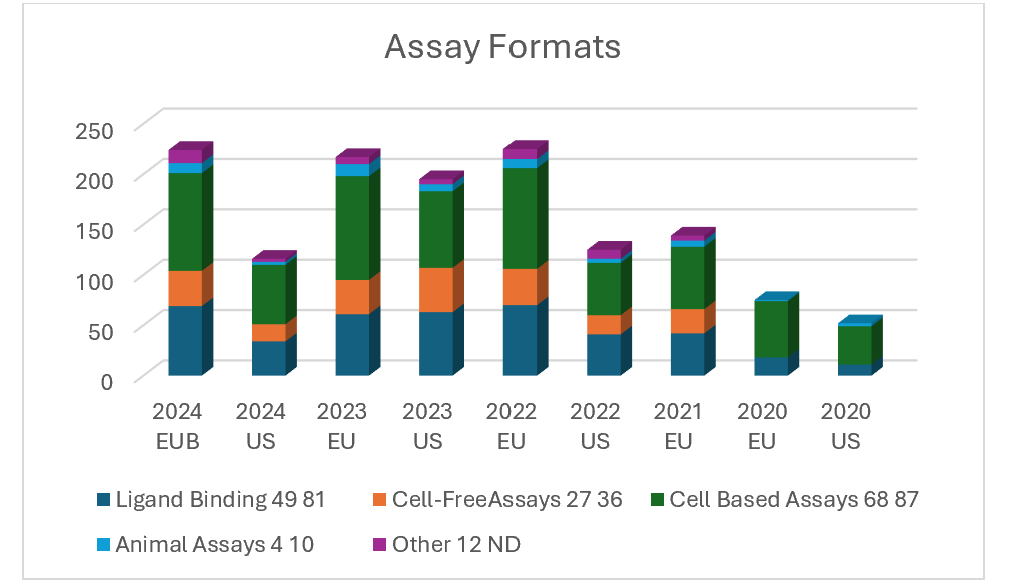
According to multiple industrial polls, the cell-based potency assays have emerged as the primary tool within the bioassay field. (Green bars in the graph below)


Why?


This prevalence is attributed to their optimal balance between biological relevance and analytical feasibility. The presence of target cells integrated directly into the assay method is critical.


Bingo!

Data Source


Note: Values above come from BEBPA, a nonprofit organization (www.bebpa.org), which runs annual bioassay conferences in both the US and EUR.

Why Cells Are Critical

Cells are therefore essential reagents for many of us.


Each product’s distinct Mechanism of Action (MoA) dictates the need for highly specific cell types; for example, oncology immunotherapy may require target cancer cells, while ocular therapeutics may necessitate specialized eye cells.

General Requirements for Cell Lines


Nevertheless, there are general requirements applicable to cell lines used across different assays, including:


Stay away from donor cells whenever possible. Primary cells are notoriously variable and often have poor viability and limited quantities won't support all formats of the assay.


Verify legal permissions for cell use. When acquiring cells from universities, cell bank, or other organizations, consult your legal group before you invest your resources to develop the potency assay. Note that the same applies to cells received from the research department within your own organization. Often these cells have not been vetted for commercial use. Many cell lines are restricted to research and development purposes and cannot be utilized for releasing commercial products.


Assess the biochemical stability of critical receptors or proteins in your cells. Many cells are phenotypically unstable and may dedifferentiate during passaging. Select cells, which can be passaged a minimum of 20 times without losing key functional attributes; stability at greater passage numbers (e.g. more than 50) are preferable.


Plan that a significant amount of your development will center around the care and handling of your cells. For plate-based formats (such as 96-well or 384-well), prioritize plate homogeneity early in development. This assessment can include a combination of viability dyes and antibodies targeting critical receptors and does not necessarily require complete assay execution.


Where feasible, consider using frozen-ready-to-use (FRTU) cells. Over the past two decades, there has been a transition toward cells that can be pipetted directly into assay plates and employed within a day. In contrast, traditional methods involve extensive passaging and culture periods prior to assay initiation. This single technology change has resulted in more QC friendly assays with greatly enhanced precision.

Why This Matters


Cells serve as the foundational component of cell-based assays and must be managed with rigor and precision.


Do not rely on subjective cell culture practices.


Identifying the most appropriate cell handling protocols for your assay will yield substantial benefits, enhancing robustness, improving precision, and reducing the variance of potency measurements.


Importantly, having these practices proceduralized in method protocols will ensure the transferability of the method in the future.

Newsletter Information

Looking Ahead

In our next newsletter, Volume 5: Using Statistical Tools to Accelerate Development, we will discuss statistical tools designed to support the development of robust analytical cell banks.

Have Questions?

We want to hear your burning bioassay questions.


Send your questions to Dr. Laureen Little (laureen.little@fastraincourses.com) and she and our team of instructors will answer them in the coming newsletters.

If you ever miss a volume or want to revisit key points from previous issues, we will be updating the Bioassay Month page throughout the series.

Interested in FasTrain Bioassay Courses?

Explore the full list of bioassay courses we offer.


Potency Bioassays Development & Validation


CMC Relative Potency Analytical Methods: A Technical Deep Dive


Introduction to Statistics for Potency Bioassays


Statistical Method in Bioassay


Cell Culture and Cell-Based Assays