- Featured stories -
History/Culture: Old service station is where tourists today fill'-er-up with preservation gifts.
In His Own Words: Sullivan's Island native teaches, cracks wise as church monsignor.
Politics: Mrs. Taft found Charleston's liquor was quicker via police.
Business: Whipping up good meals, relying on 'delivery angels' make nonprofit work.
|
|
|
|
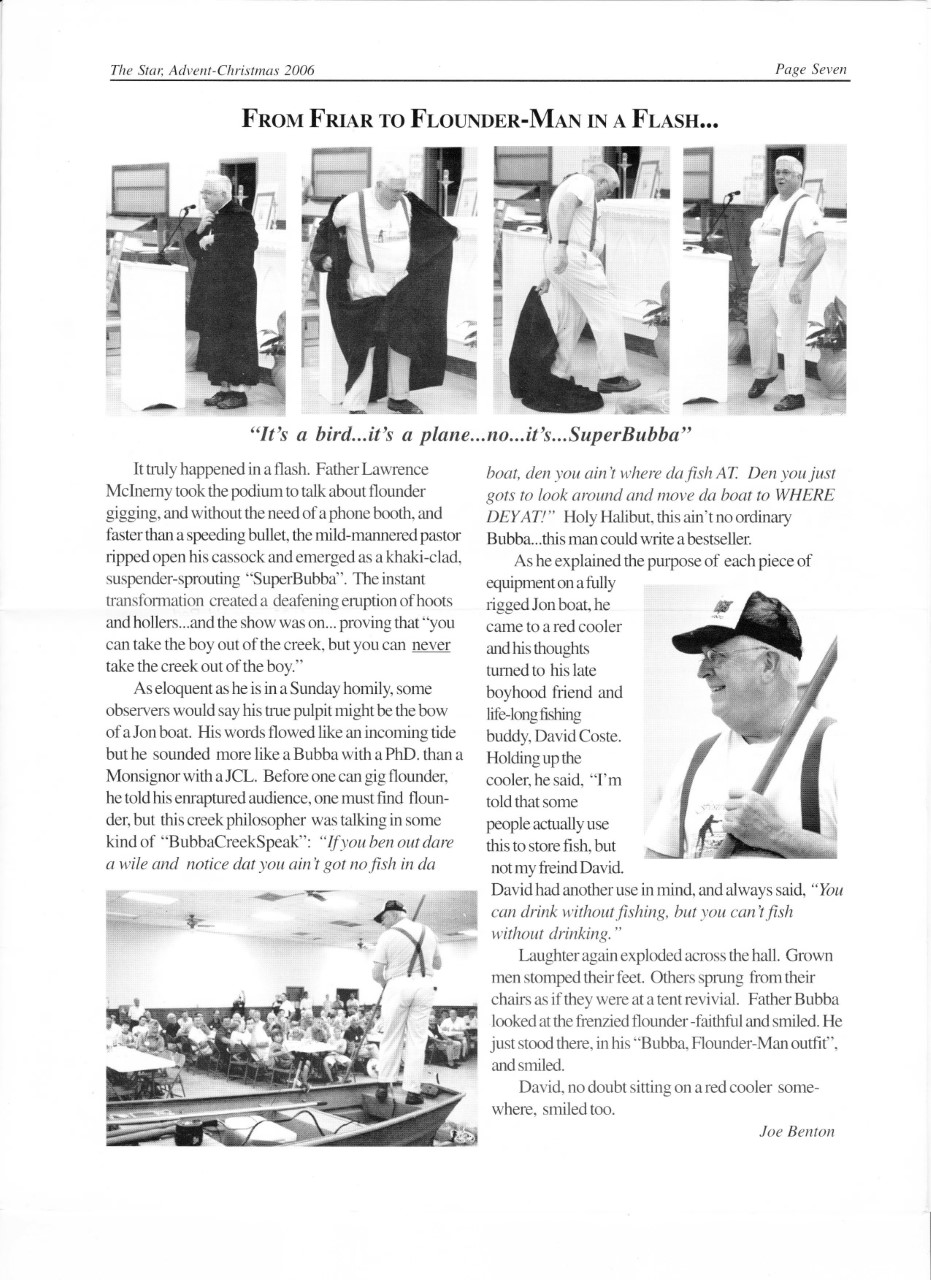
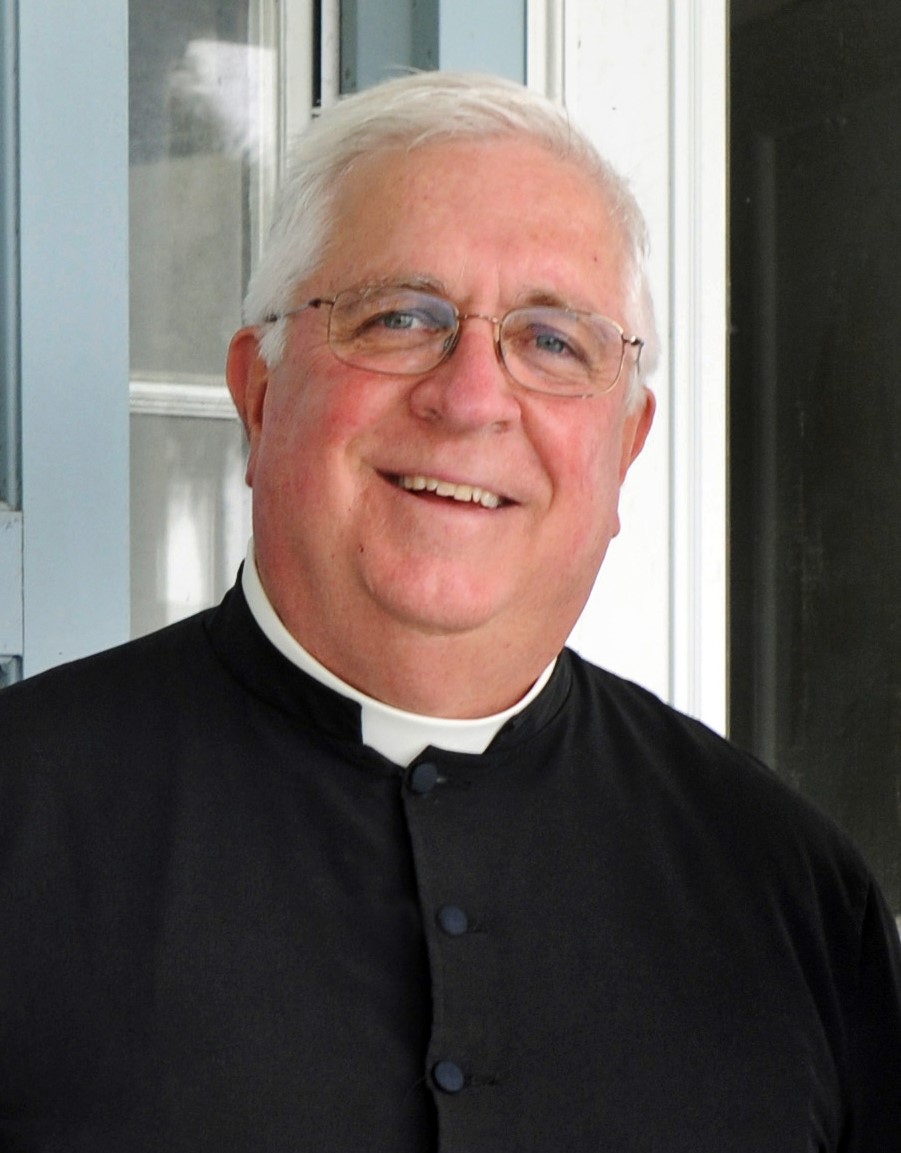
Father Lawrence McInerny: From Island Boy to Pastor
|
|
Graphic and text by Joe Benton |
There are stories of the McInerny family dating back to the 1840s and the role of family members in building the harbor jetties, forming the 1909 Town of Sullivan's Island government, and building the first island public school. On a lighter note, there are stories of a boyhood filled with bicycles and boats and how an island boy ended up as pastor at Stella Maris.
|
|
|
|
“I think we lived up to our mission of mutual respect for one another and Gospel values.”
Msgr. Lawrence McInerny
|
|
By Charles deV. Williams and Joe Benton
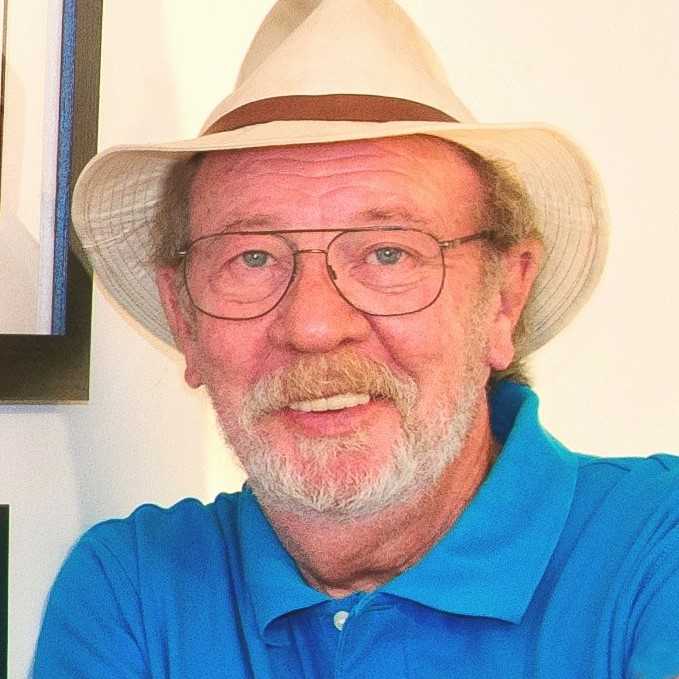
Take these words as gospel: Almost everybody on Sullivan's Island loves Father Lawrence McInerny, the mid-mannered pastor of Stella Maris Catholic Church.
He's in demand: Families want him for weddings, baptisms, confessions and funerals. And since he's widely recognized as a dynamic speaker, he's in big demand. Such is the life of a beloved pastor whose family has been on the barrier island since relocating there from County Clare, Ireland, in 1840.
As eloquent as he is when delivering a Sunday homily, some observers say his true pulpit might be the bow of a john boat.
A keen wit and sense of humor are his storytelling hallmarks in both places.
While giving a demonstration on gigging for flounder to the Stella Maris Men’s Club, the Father playfully lapsed into his native, Lowcountry dialect to make a point. Some might call that vernacular, “Bubba-Speak."
“If you ben out dare in dat creek a while, an you ain’t got no flounder in da boat, den it pretty obvious you ain’t ware da fush at. Den, you just gots to look around and move yo’ boat to ware DEY AT!”
His audience roared, but he was just getting started. His thoughts then turned to the memory of his lifelong fishing buddy, the late David Coste.
He held up an empty ice cooler and stared at it mysteriously. “Now, I’m told that some people actually use this to store fish. But not my friend, David. He had another use in mind. He had to use two hands to tote this cooler and I can still hear him say: ‘You can drink without fishing, but you can’t fish without drinking.’” Grown men howled, jumped from their chairs and stomped their feet as if raptured at a Holy Ghost revival. The Island Boy, turned Pastor, had turned back into Island Boy. And his congregation loved it.
His days are full from celebrating the Mass in the morning and afternoons, to hearing confessions, visiting the sick and elderly and counseling people who need a shoulder to lean on.
Bishop England
Several years ago, Bishop England High School, where McInerny graduated, needed a rector. The Bishop chose McInerny since he was an alum and had experience teaching there for several years.
While there he occasionally met with students trying to get them to say what they liked and did not like about the school.
"I don’t consider myself a model student but I only had one demerit in school and that was because I didn’t have uniform socks on one day,” McInerny said.
He says young students need counseling when they arrive and are uncertain. “It’s a sense of belonging and we all need that. Uncertainty is never good and I guess with me they know what they are dealing with,” he said.
Those talks reinforced the mission at BE. “I think we lived up to our mission of mutual respect for one another and Gospel values,” he said.
McInerny extols the values that the school instills in students.
“The tradition of academic excellence and high standards sets us apart. We have a great faculty and great kids. Life is a series of chapters and adventures, and I treasure the chapter at Bishop England.”
|
|
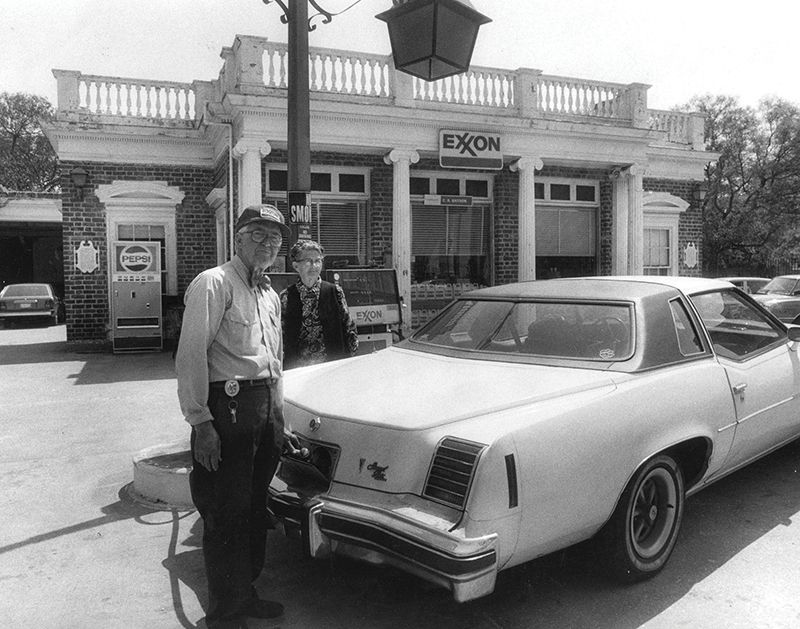
When Batson’s Exxon Station (pictured here with owner C.R. “Charlie” Batson and his wife) closed in 1981, just after this photograph was taken, the Historic Charleston Foundation acquired the building and opened the Frances R. Edmunds Center for Historic Preservation there in 1985.
|
|
Learn the history in the making behind this humble downtown gas stop |
|
By Emily Turner
When the Gabriel Manigault House — a two-story home constructed by the wealthy American architect in 1802 at the southeast corner of Meeting and George streets — as well as three more historical homes nearby were demolished in 1929 to build two gas stations on Meeting Street, the destruction was met with public outcry. In fact, it helped inspire Charleston City Council to create the country’s first historic district and Board of Architectural Review. In response, the Standard Oil Company hired preservation architect Albert Simons to construct the station at 108 Meeting Street in a Colonial Revival style using wood and brickwork from the former Manigault residence.
When Batson’s Exxon Station (C.R. "Charlie" Batson was the owner and his wife pitched in) closed in 1981, the Historic Charleston Foundation acquired the building and opened the Frances R. Edmunds Center for Historic Preservation there in 1985. Today, the building serves as Shop Historic Charleston, HCF’s flagship retail space, which helps to fund the organization’s preservation efforts.
|
|
|
Michael Trouche: Booze ran freely in old Charleston
|
|
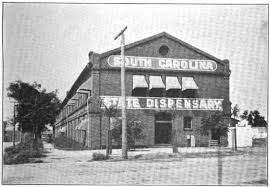
It was intended to curb alcohol consumption, but only ramped up the bottling of booze; it was enforced by politicians and police who were breaking the law themselves; it’s familiar flasks emptied saloons and filled speakeasies; and it helped cause riots and a change to the Constitution before dying with a fitting epitaph from a former first lady. It was the South Carolina Dispensary.
|
|
|
It was intended to curb alcohol consumption, but only ramped up the bottling of booze; it was enforced by politicians and police who were breaking the law themselves; it’s familiar flasks emptied saloons and filled speakeasies; and it helped cause riots and a change to the Constitution before dying with a fitting epitaph from a former first lady. It was the South Carolina Dispensary system, enacted into law in 1893, which made it illegal to buy or sell alcohol from any other than state-run dispensaries in each county.
The plan was conceived and pushed by Governor “Pitchfork” Ben Tillman, who railed self-righteously against the evils of consumption that was so much a part of the Charleston society he despised. The law gave him the power to appoint a board of dispensary commissioners who were “to be abstainers from intoxicants” who would oversee procurement and sale of alcohol that would be “tested by chemists at South Carolina College and declared pure and unadulterated”.
There was to be one dispensary location for each county (although two abstained), with the exception of 6 in Richland County and 10 in convivially-consuming Charleston County, with the dispensary location downtown at the Northwest corner of King and Princess streets in the former Victoria Hotel building.
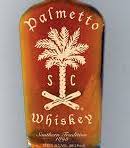
Booze was typically bought from out-of-state distilleries, but there were also concoctions cooked up by the state itself, including one that is still sold as a novelty today that would probably turn any lush to a teetotaler with the first sip. The containers were either glass “Jo-Jo” and “Onion” flasks or masonry jugs, embossed with a symbol that included a palmetto tree with crossed logs beneath, or in some cases, a monogrammed “SCD”.
Purchasers could only buy one container per day, cash only, in daylight hours, and sale prices were supposedly set at 50 per cent above the net costs, but county controllers quickly found ways to charge more and report less, so corruption was rampant. As the law forced saloons to close and constricted freedom to buy and sell, it led to some predictable responses. One was the proliferation of hundreds of “Blind Tigers”, which were shops where, for a fee, you were allowed to see an exotic animal in the back of the building.There was no animal, of course, just alcoholic drinks supplied by bootleggers.
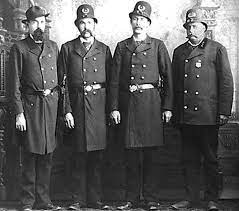
The Metropolitan Police Act of 1894 placed constables under state authority to enforce the dispensary law which, despite fines and jail time, was broken regularly, with more than 200 arrests in Charleston in the first year. The crackdown led to angry protests as the desire for shooters led to shootings, and in Darlington, a full scale riot broke out, prompting Pitchfork Ben to call in the militia.
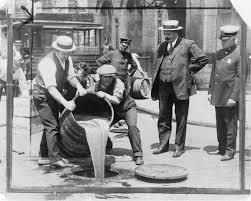
The alcohol consumption that was supposed to be suppressed soon exceeded predispensary days, and here in Charleston, some officials made a big show of condemning illicit sales simply because it was cutting into their own manipulation of the system. For example, official reports in old Charleston year books will describe how many gallons of bootleg whiskey were “flushed down the drains” at the police station, when it was common knowledge that the confiscated stuff was going out the back door to be resold. There were rumors that Charleston Mayor Tristram T. Hyde, who was hard on bootlegging, made such a fortune on confiscated resales that it helped build the Francis Marion and Fort Sumter hotels, whose boards he directed during the “dry” era. Despite the immense popular dislike of the dispensaries, the system stayed in effect statewide until 1907, when the law was repealed, but a few counties continued dispensing on their own until 1918, when South Carolina ratified the Volstead Act “prohibiting the manufacture, sale, or transportation of intoxicating liquor” and it became the 18th Amendment to the Constitution two years later.
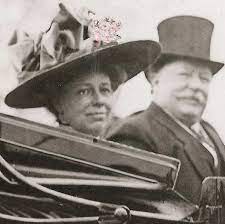
The long battle between the “wets” and the “drys” that began with the Dispensary Law finally came to an end with the repeal of the 18th Amendment in 1933, only a year after former first lady Nellie Taft gave it a resounding coup de grace. She moved to Charleston and was living on Tradd Street after the death of her husband, President William Howard Taft, and she liked having cocktails for her dinner parties. So, being a former president’s wife, she simply picked up the telephone on a dinner party day and called the Charleston police station to tell the duty sergeant how many bottles she needed, and they were promptly delivered by local cops, who transported them in police cars and carried the boxes of bottles inside her house ... and there were people alive then that I knew who saw this first hand, so that’s no legend.
Michael Trouche is self-employed at Charleston Footprints Walking Tour
|
|
|
Charitable kitchen avows that fine food -- 'lovingly prepared' -- can nourish the ailing
|
|
"When people become so sick that they don’t want food anymore, their bodies are starting to shut down. But we need food to heal,” says executive director Maria Kelly, who was with her mother through a three-year battle with colon cancer. “When my mom didn’t feel well, I would bring her meals as a way to comfort her and give us time together!" |
|
|
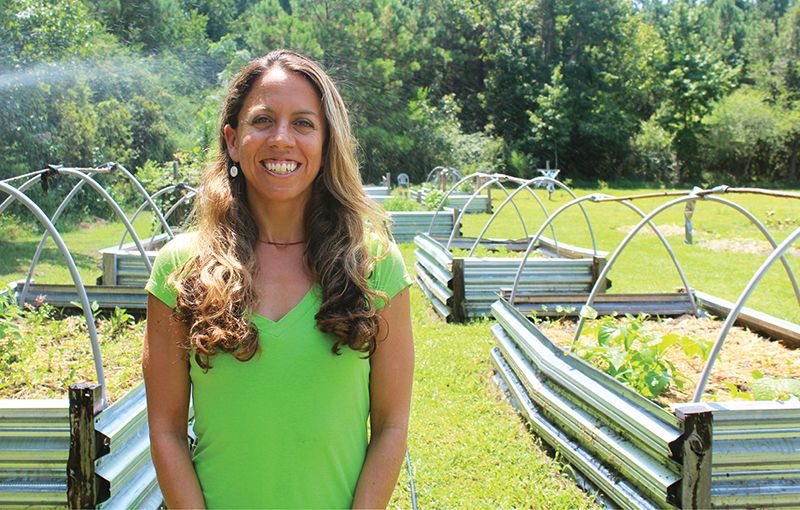
Amor Healing Kitchen founder Maria Kelly stands beside the garden where volunteers grow produce for meals.
By Lauren B. Johnson
Charleston Magazine
“Thank you for getting me excited about food again.”
This simple sentiment, written to Amor Healing Kitchen by a woman in the midst of cancer treatment, boils down the mission of the nonprofit. “When people become so sick that they don’t want food anymore, their bodies are starting to shut down. But we need food to heal,” says executive director Maria Kelly, who was with her mother through a three-year battle with colon cancer.
“When my mom didn’t feel well, I would bring her meals as a way to comfort her and give us time together.”
In 2018, eight years after her mother’s passing, Kelly founded Amor Healing Kitchen based on the tender idea that good food, lovingly prepared, serves to embrace and revive the sick. “We support clients facing chronic illnesses and health conditions like cancer, HIV, and diabetes as well as cardiac rehab patients and people recovering from surgery,” says the former high school teacher. For 12 weeks, clients receive weekly deliveries of healthy plant-based dishes. And thanks to a model that calls for high schoolers to work with community members behind the scenes, these nutritious meals buoy body and spirit not only for the recipients but also the volunteers who cook and deliver them.
Every Wednesday and Thursday afternoon, teams of teens and adult mentors gather in the small farm kitchen at Johns Island’s Sweetgrass Garden. Under the tutelage of culinary director Justin Booher, they chop, stir, sauté and whir components for Friday deliveries. Each week, roughly 25 Charleston-area clients receive three nutritious ready-to-heat meals, a soup or salad, snack and dessert, all alongside a fresh bouquet donated by a local florist. The vegan menus include dishes such as eggplant mushroom penne pasta with marinara, tahini banana muffins and pumpkin seed roasted squash pesto.
“We believe in a plant-based model,” says Kelly, a vegetarian with personal experience in the healing power of produce. “A diverse diet has a very positive effect on our bodies’ microbiomes.” Relying on donations from Charleston Parks Conservancy, Fields to Families and Haut Gap Middle School’s learning garden, Amor Healing Kitchen uses in-season ingredients -- opting for organic when possible. “Our teen volunteers learn that food doesn’t come out of a plastic package. They work with vegetables pulled straight from the ground and discover how seasonal eating supports local farmers and, in turn, the economy,” says Kelly.
Beyond new veggie varieties and culinary techniques, Booher shares with the youth any feedback received from the people for whom they’ve cooked. “The kids see that what they’re doing directly impacts someone’s life. That has value,” emphasizes Kelly.
The executive director hopes that with a chef on board full time, a move the nonprofit made earlier this year, they’ll be able to double their reach with additional cooking and delivery days and perhaps a second kitchen facility.
Amor Healing Kitchen also has begun nurturing additional income streams, a practical expansion required when the organization’s event-based model screeched to a halt because of COVID-19. Ninety percent of clients receive the program for free, while the remaining 10% purchase packages or receive gift subscriptions from family, friends and coworkers. To fund its work, the nonprofit leans on small grants, community donors, and virtual fundraisers. Several clients have expressed an interest in learning to cook plant-based meals for themselves, so Amor has also begun offering two virtual cooking series each month — a free community workshop and a fee-based class taught by a guest chef.
“Life is so isolating right now for many of our immunocompromised clients. They’ve needed us during the pandemic more than ever,” stresses Kelly. And what better way to connect than over a delicious meal? One volunteer has started joining a client for tea on the back porch every Friday during drop-off, bringing not only healing food but also friendship. It's fitting that Amor Healing Kitchen dubs these helpers “delivery angels.”
|
|
Joe Benton: Magnificent crossing
|
|
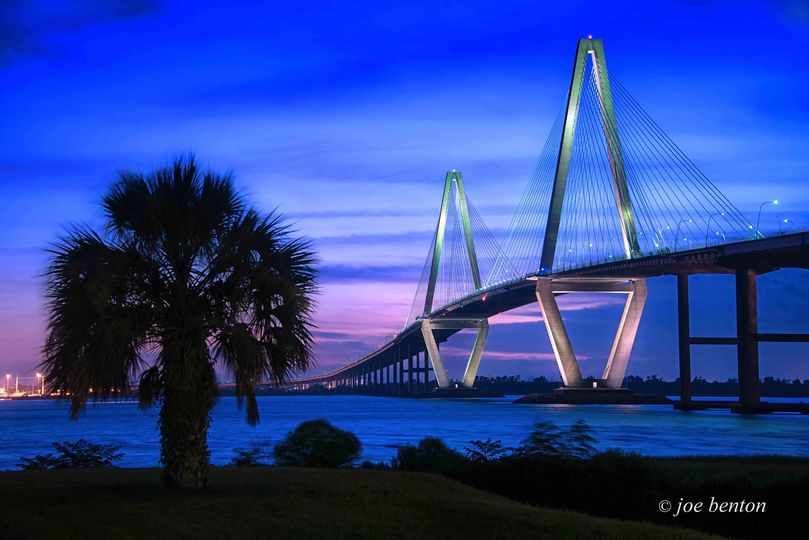
In 2005, when the magnificent, eight-lane Arthur Ravenel Bridge opened, it made history as the third longest cable-stayed bridge in the Western Hemisphere.
To Charlestonians and travelers alike, it was far more than history we celebrated. It was the answer to more than 70 years of prayer. Many of those prayers were spontaneous. They came in terrified shouts from panic-stricken, white-knuckled motorists squeezing across a rickety, 2-lane bridge built in 1929 for Model A's. Most of those shouts, however, couldn't really be classified as prayerful. In the 60's, an attempt at improvement came when a new, three-lane bridge was erected alongside the original disaster. It proved to be woefully inadequate.
Anxiety did not abate. Nor did the potential for head-on collisions. When a stout blow came off the ocean, we now had two bridges that swayed -- in unison. A Boy Scout could earn a merit badge in courage simply for being a passenger. The hardest thing in life, they say, is to know which bridge to cross and which to burn. Long-suffering Charlestonians had no such dilemma. Then, like a miracle, our prayers were answered. Rising majestically over the Cooper River, our very own Messiah, the glorious Ravenel, appeared. Happily, we now cross over a jewel in the crown of the original "King's Highway" -- U.S. Route 17 -- one of the oldest roads in America. And what a magnificent crossing it is!
|
|
We would love to hear from our readers.
We want to know what you like and what you don't like or if you have an idea for a story you'd like to see.
It's your newspaper so let us know.
Email Charles deV. Williams at charleswilliams245@oooutlook.com or Jim Parker at jimhparker@att.net
|
|
|
Climate on the Carolina coast
|
Friday: A high around 68 and low of 54.
The Coast is published once a week.
Publisher: Charles deV. Williams.
Ass't publisher: Jim Parker.
Office: 264 Molasses Lane, Mount Pleasant.
|
|
|
Support local journalism: Make a donation to The Coast at Williams & Williams at 264 Molasses Lane 29464-2517. |
|
|
|
|
|
|